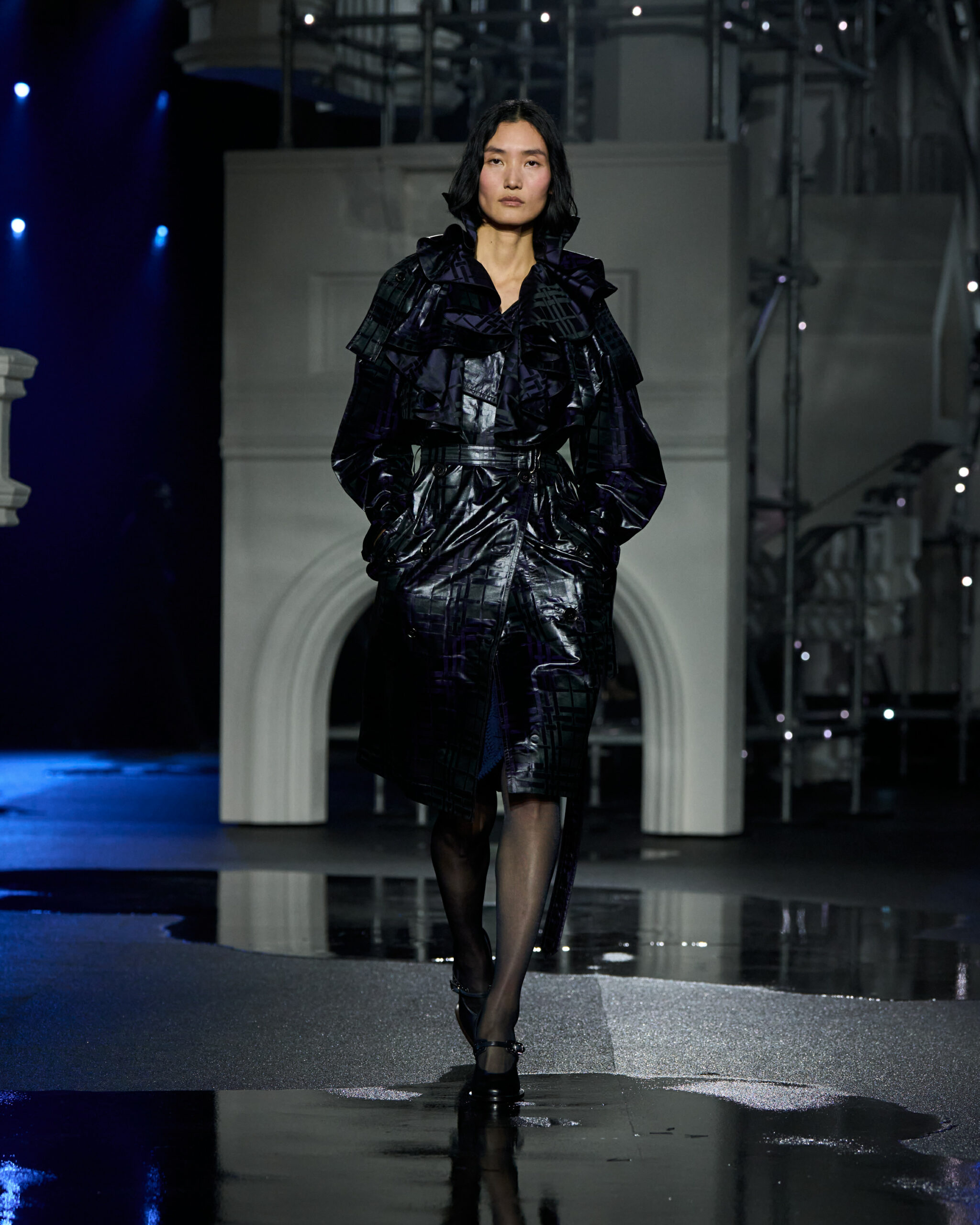
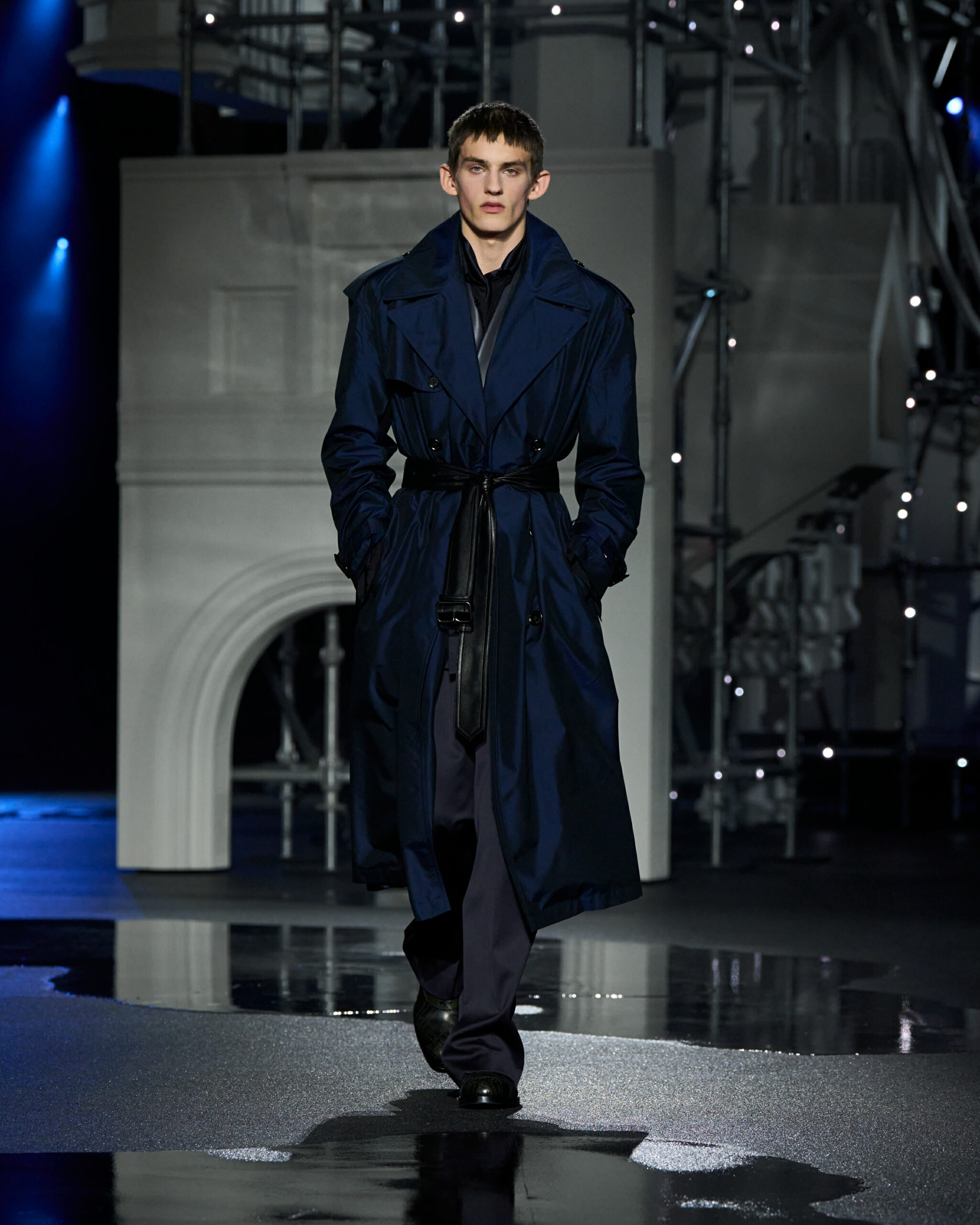
Inside Old Billingsgate, fragments of Tower Bridge rose through scaffolding while resin puddles spread across the floor, forcing guests into careful choreography on arrival. Editors, buyers and friends of the house performed small acts of balance, stepping sideways, pausing, doubling back to avoid the “water” – we were all disappointed to find it was indeed resin. Before the first look appeared, the mood was already clear. The city dictated behaviour.
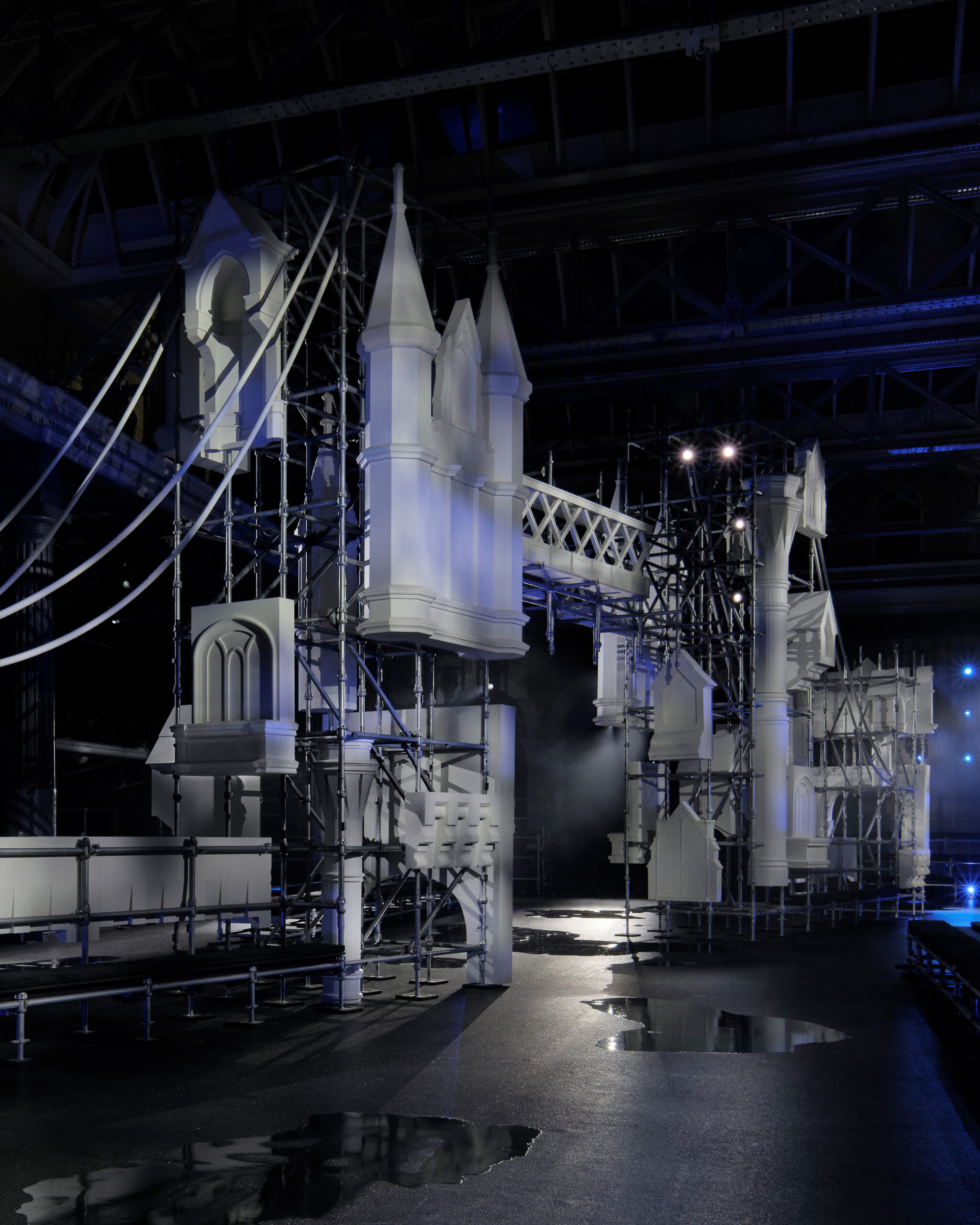
Daniel Lee framed the season around “going out in a particularly London way,” and the staging made that idea tangible. Wet ground, industrial lighting and exposed structures created a familiar urban condition: moving through the city at night, slightly alert, slightly theatrical, aware that getting dressed is part preparation and part performance. The set carried the energy of somewhere between a late train platform and the walk to the next party.
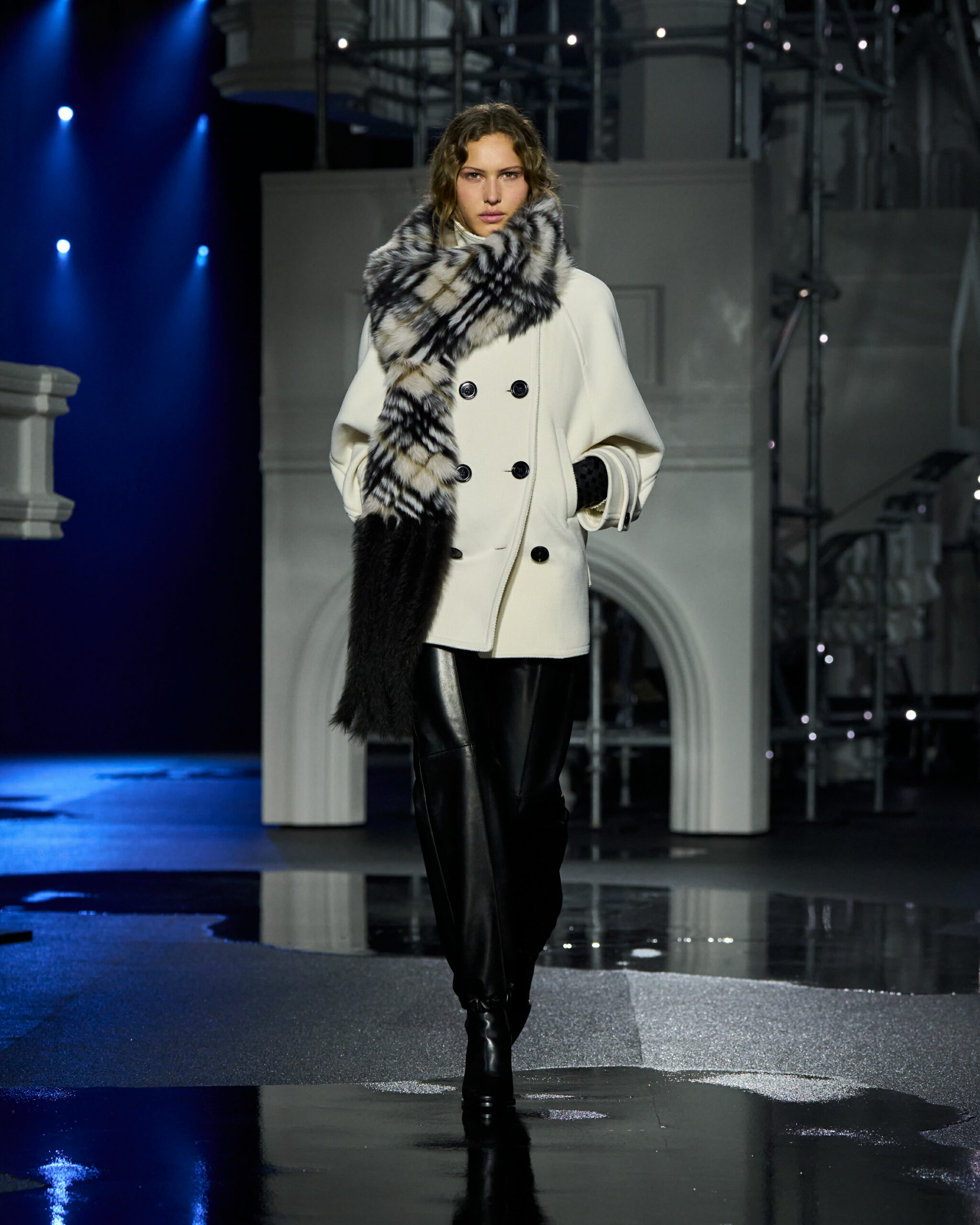
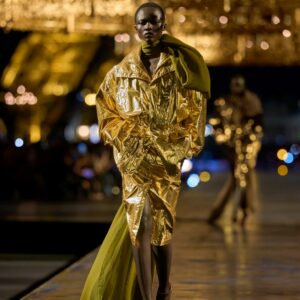
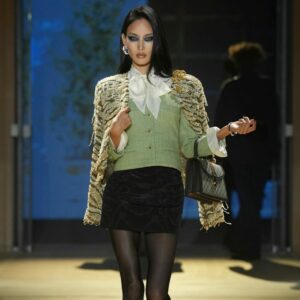
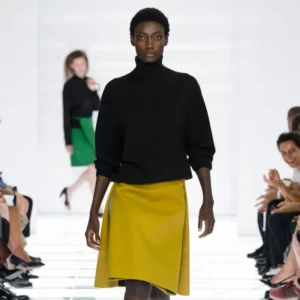
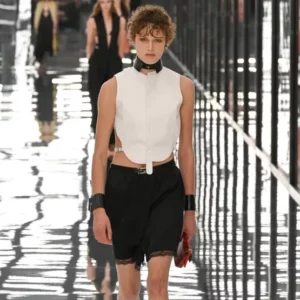
That sensibility extended into the clothes. Silhouettes remained restrained, almost quiet, allowing material to hold attention. Leather, shearling and dense textures absorbed light, while fringe and sequins revealed themselves only in motion. Nothing demanded attention immediately; the collection rewarded looking twice. It felt close to how people actually dress in London, layers built for weather that slowly give away personality.
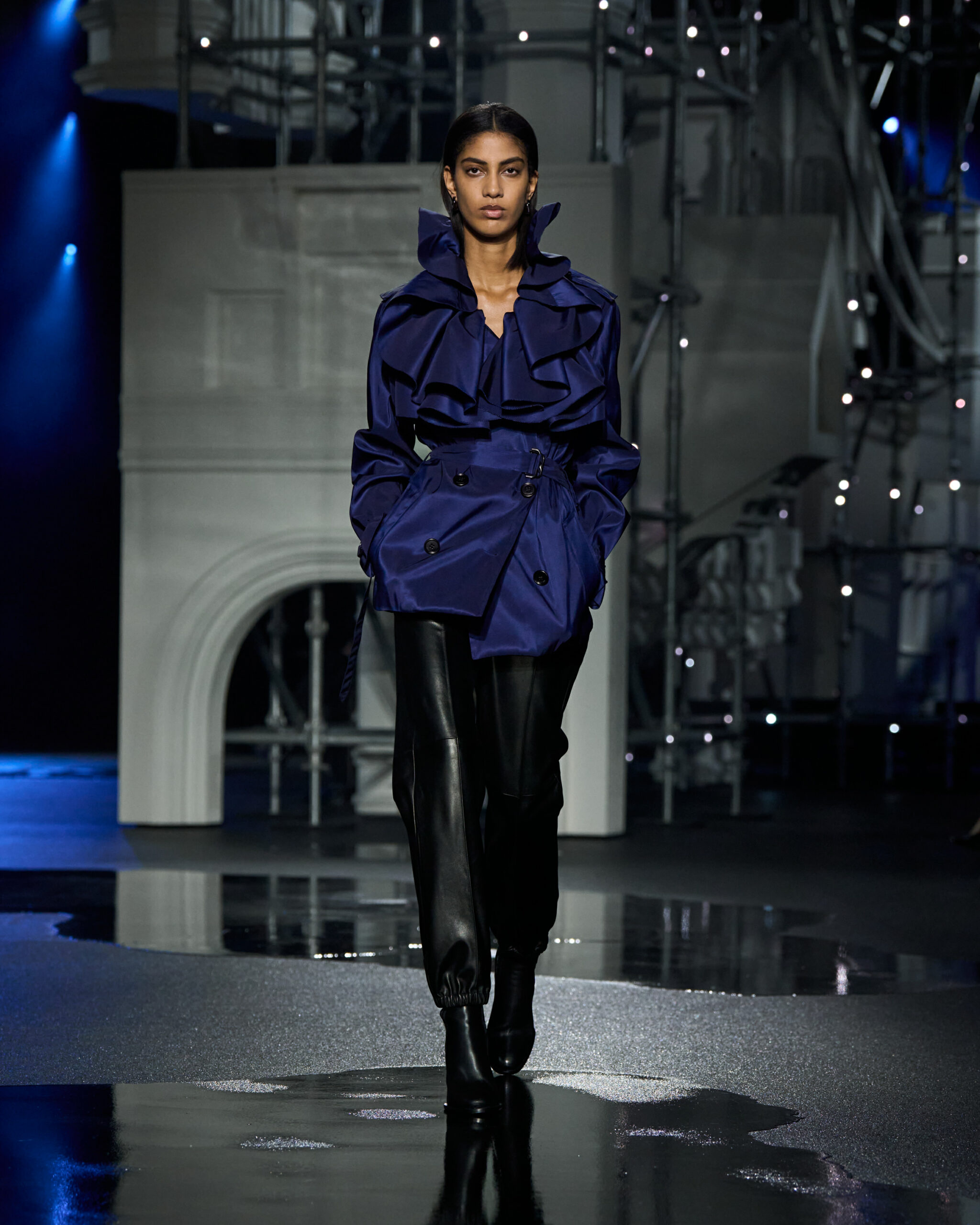
Outerwear dominated, though its purpose felt social as much as practical. Coats opened as models walked, exposing shimmer underneath, garments designed for transitions between pavement and interior, taxis and crowded rooms, cold air and overheated dance floors. The idea of arrival hovered throughout.
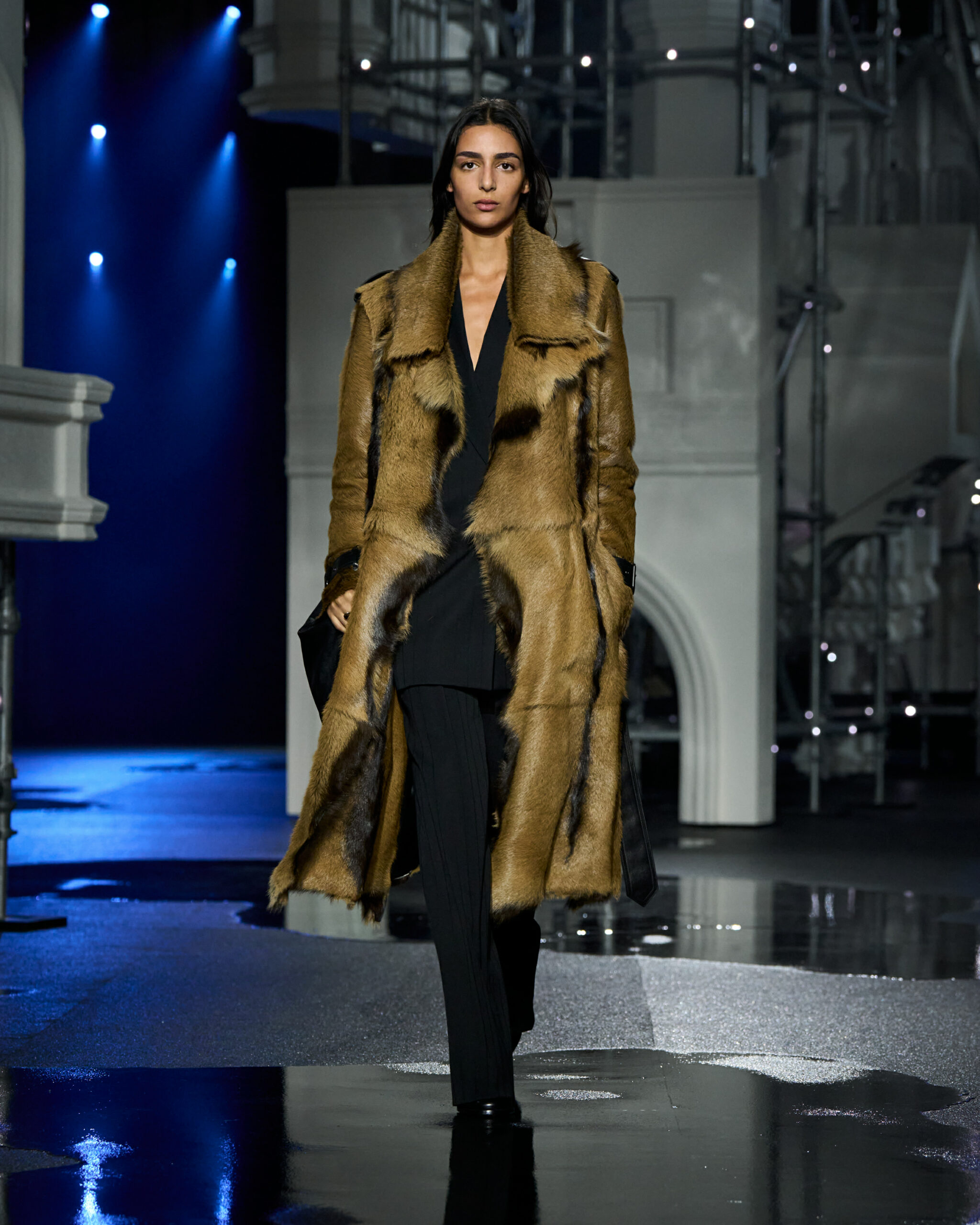
Among the cast, Nora Attal stood out in a sweeping fur coat that captured the show’s atmosphere perfectly, grounded yet glamorous, protective yet indulgent. The British-Moroccan model brought a quiet confidence that reflected the city’s layered identities. Romeo Beckham also appeared on the runway, extending Burberry’s long-standing dialogue with British youth culture and reinforcing the sense that the brand continues to orbit around London’s evolving social landscape.
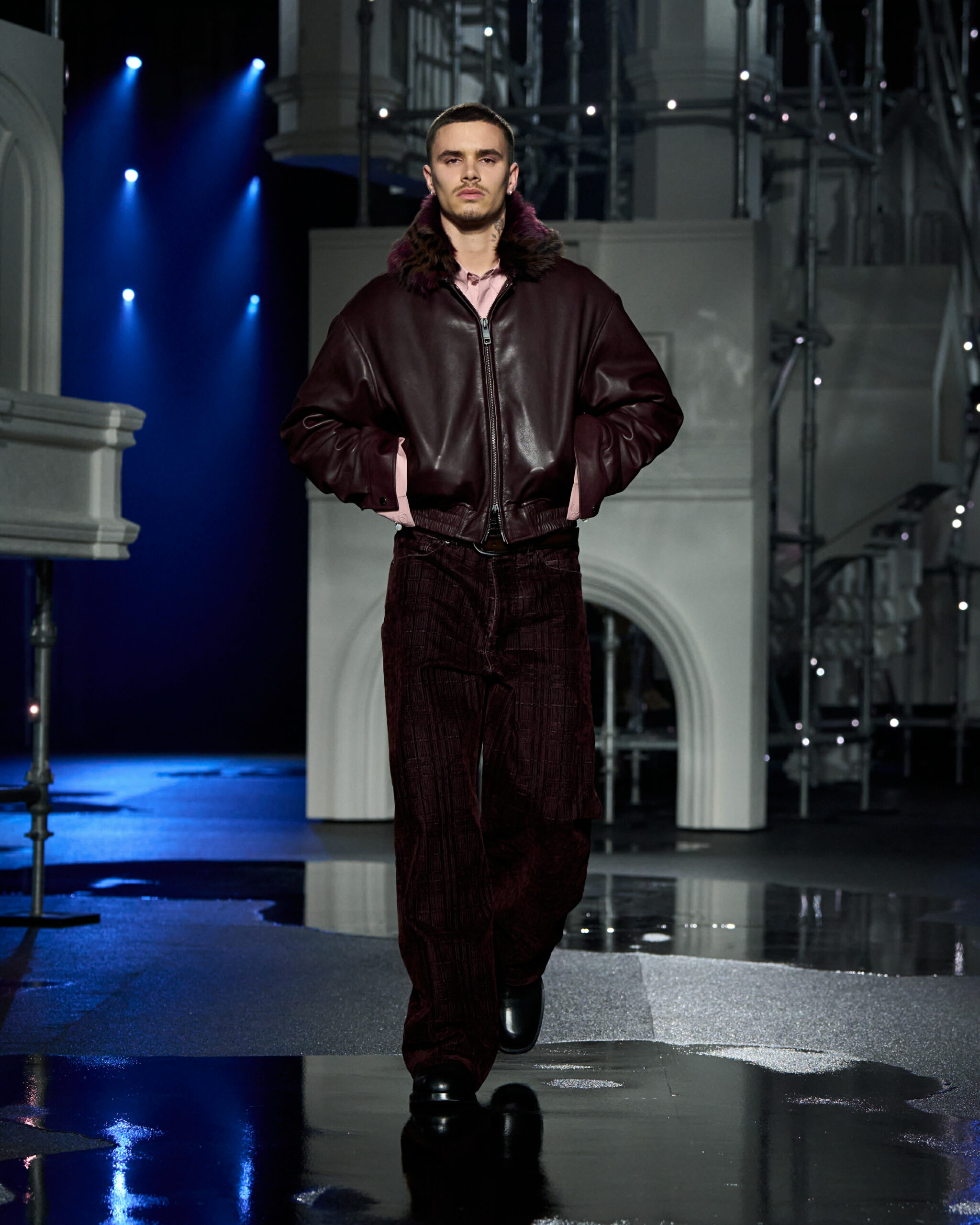
Sound played a decisive role. A relentless techno beat pushed the show forward with restless momentum, shifting familiar Burberry codes into a more nocturnal register. Hoods framed faces throughout, officially a response to the cold, though they introduced anonymity and attitude, the posture of someone moving quickly through the night.
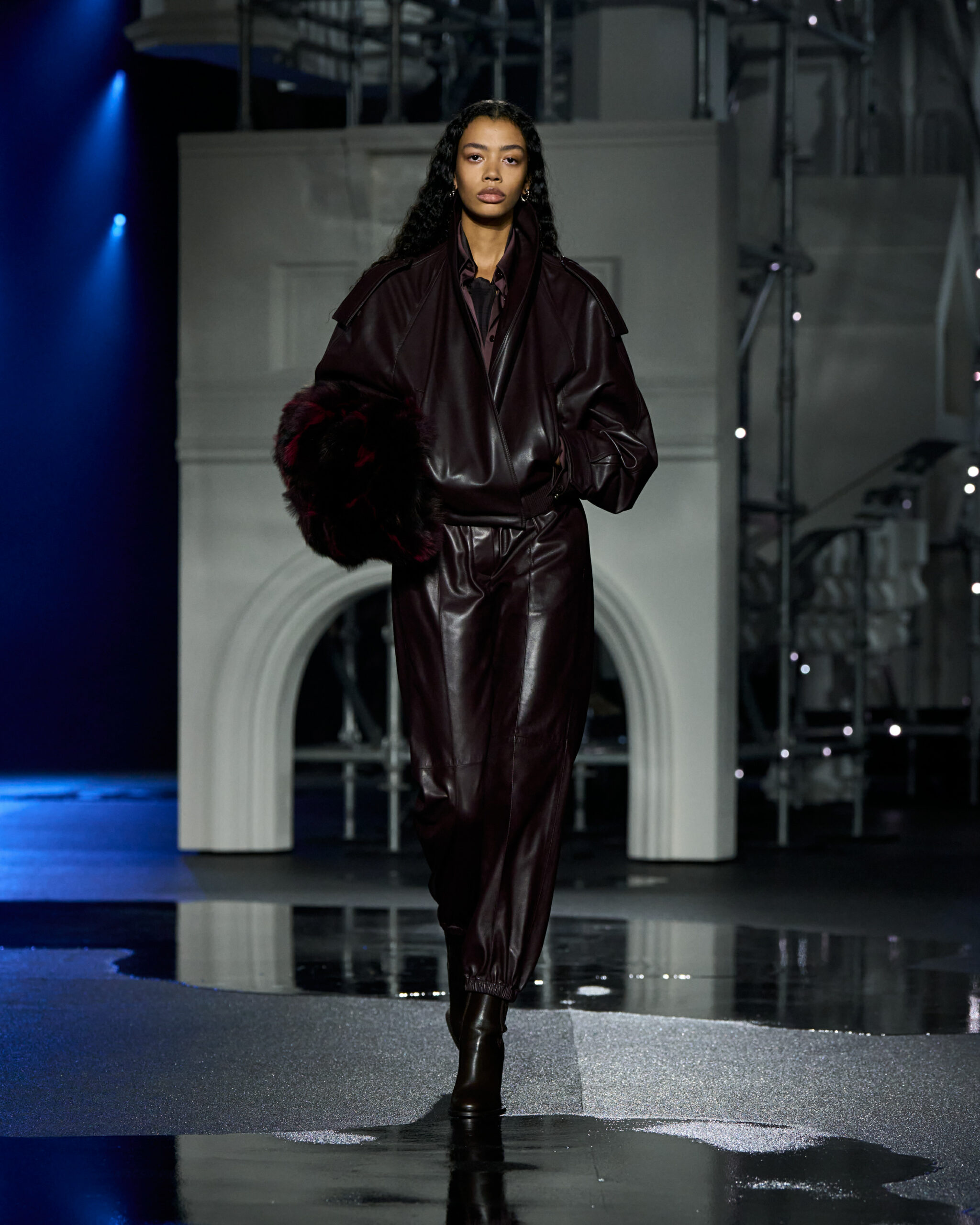
Plaid remained present but understated, woven into textures rather than presented as declaration. A London map motif printed onto leather grounded the collection geographically, less souvenir than statement of belonging. Even the reconstructed Tower Bridge, scaffolded and unfinished, suggested a city permanently in progress.
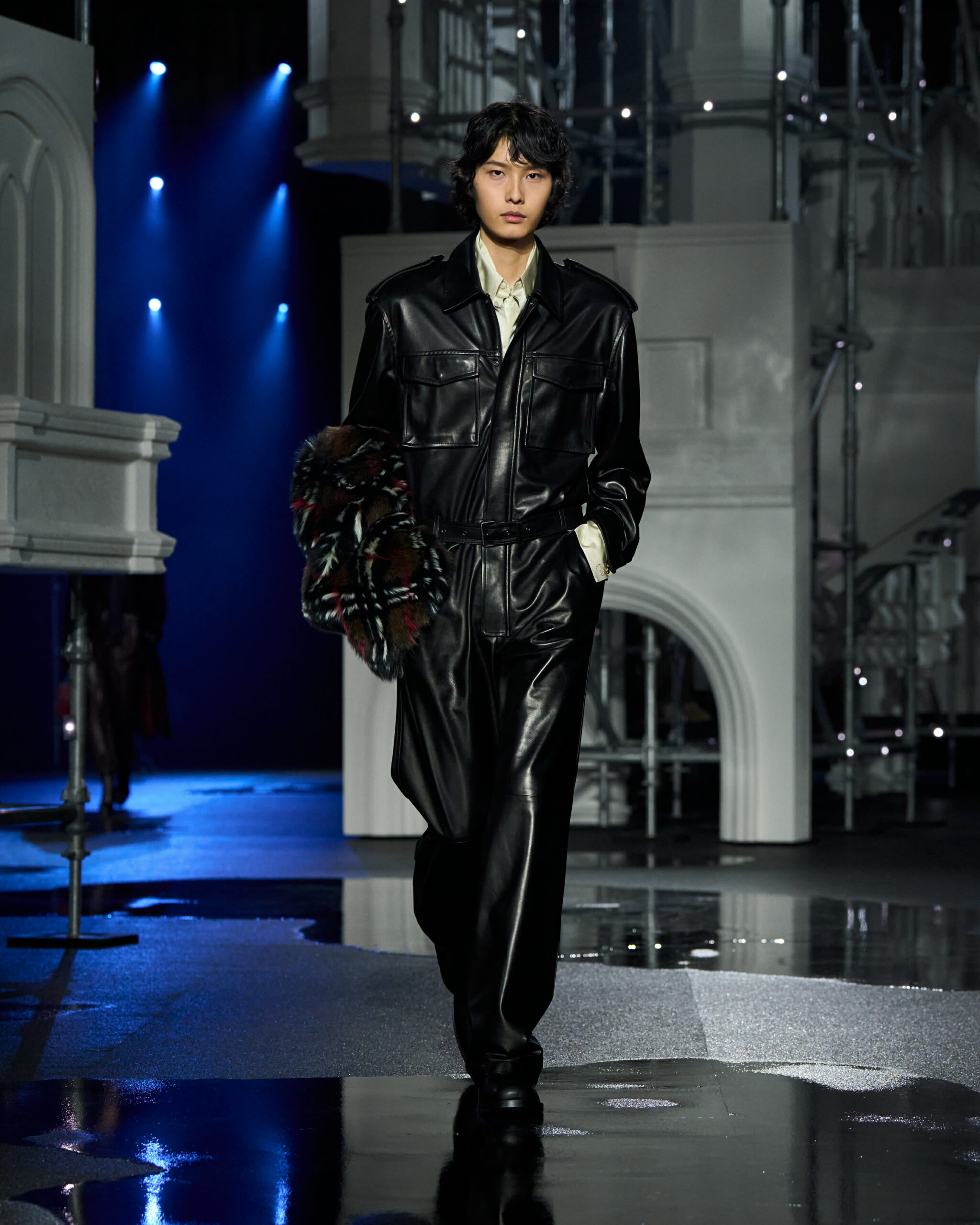
What lingered after the show was not a single look but a feeling. Clothing, staging and sound aligned around a shared experience: going out in London, where practicality and glamour exist side by side, where rain becomes atmosphere, and where getting dressed is inseparable from the rhythm of the streets waiting outside.
For more stories of fashion from around the world, visit our dedicated archives and follow us on Instagram.