Before the world, there is the sound. Then come the colours, texture, and atmosphere.
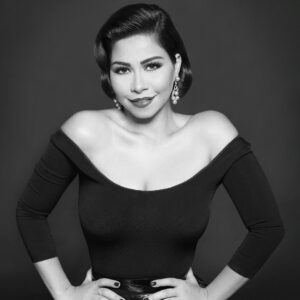
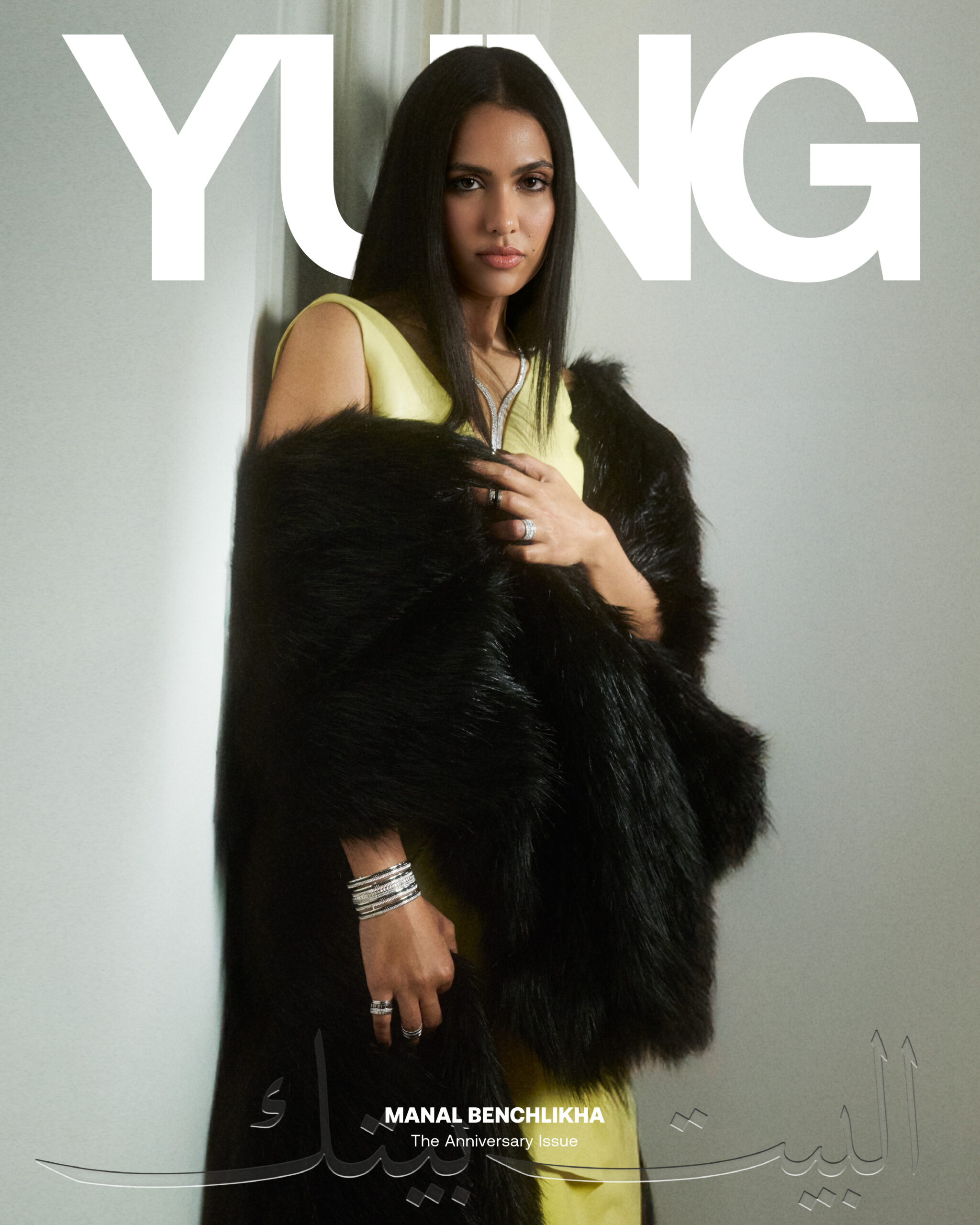
For Manal Benchlikha, music has never been a fleeting auditory experience. It starts with a temperature, a specific shade of light, and a texture that eventually hardens into a world. A decade into her career, the Marrakech-born artist has successfully transitioned from a breakout presence in Morocco’s hip-hop scene to an established, cross-genre auteur. Her trajectory is marked by a conscious reworking of sound, weaving the sensibilities of contemporary R&B and pop into the foundational DNA of North African sound.
From early releases like Denia to her more recent project Arabian Heartbreak—a record that places women’s stories at its core—Manal has steadily widened her lens. It is a consistent evolution of both her sonic palette and her visual vocabulary, turning each release into a more immersive study of her own identity. Her impact has not gone unnoticed, earning her recognition across the region, including being named ‘Top Female Artist – Magharebi Dialects’ at the inaugural Billboard Arabia Music Awards.
Ten years ago, she was pushing her way into the room. Today, she’s shaping what that room looks like, moving far away from the boundaries of a three-minute track to create something bigger.
You’ve been navigating the industry for over ten years. If you could place the Manal who released Denia in a room with the Manal of today, what is the one thing they wouldn’t recognize about each other’s relationship to music?
If the Manal who released Denia walked into a room with the Manal of today, the biggest thing she probably wouldn’t recognize is the freedom. Back then, music felt more like something to prove. There was this constant pressure to justify being there and to show that a Moroccan girl could occupy that space, that she could rap, sing, perform, and build a place in an industry that didn’t always feel built for her.
The relationship with music was very instinctive and emotional, but also a bit defensive… like every song had to fight for its existence. Today, the relationship is calmer and much more intentional. Music isn’t about proving legitimacy anymore, it’s about expression and authorship. There’s a clearer vision, a stronger sense of identity, and the confidence to build a whole universe around the songs either visually, culturally, and emotionally.
If those two versions of Manal met, the younger one might be surprised to see that the biggest shift isn’t the sound or the success. It’s the mindset: music is no longer a battle to enter the room, it’s a space she knows she owns.
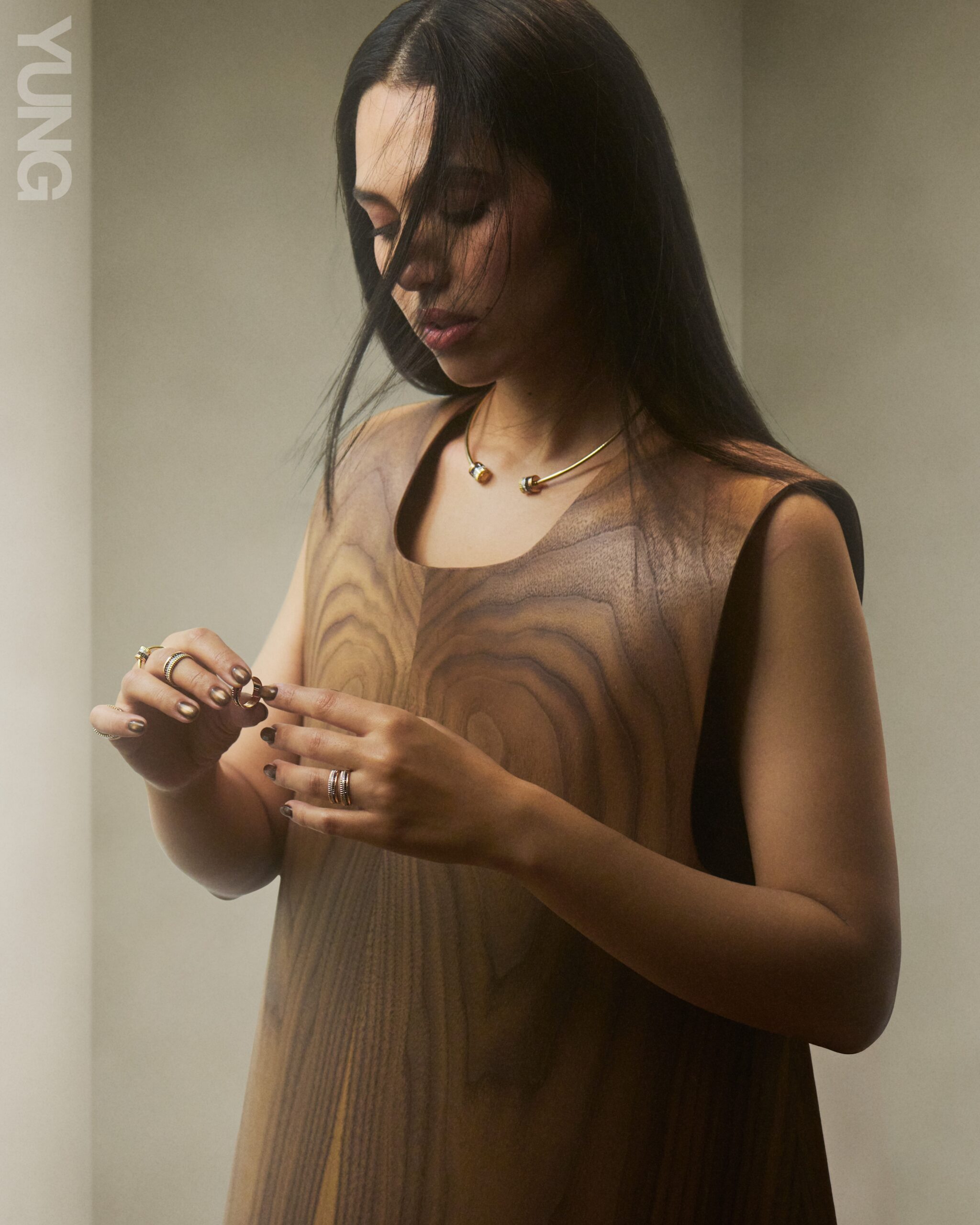
You’ve moved past the desire to just be a “successful singer” toward becoming a “musical icon.” In your mind, what is the difference between a hit-maker and an icon? What is the specific weight of that legacy?
The difference between a hit-maker and an icon is time and meaning. A hit-maker knows how to create songs that work in the moment. They understand trends, they understand what people want to hear right now, and they can deliver records that succeed on charts or streaming platforms. But those songs are often tied to a specific era or wave. An icon goes beyond that. An icon builds a world, a language, an identity that people recognize instantly. It’s not just about one song working; it’s about creating something that shapes culture.
When people think of that artist, they think of an aesthetic, a point of view, a way of expressing emotion that becomes part of the cultural memory. For me, the weight of that legacy is about representation and permanence. Coming from Morocco, it means showing that our stories, our language, and our sensibilities deserve to exist on the same global stage as any other culture. If a hit disappears after a summer, an iconic body of work should still feel relevant years later.
The real difference is this: A hit-maker creates moments. An icon creates reference points that people return to, even after the moment has passed.
You’ve often cited your father’s advice as your guiding light. In an industry that constantly asks you to pivot or trend-hop, how does that internal compass help you say “no” to the noise?
In an industry like music, there’s constant pressure to adapt to whatever is trending, a sound, an image, a formula that seems to be working at that exact moment. And sometimes those opportunities look very tempting because they promise quick visibility or quick success. But that internal compass my father gave me helps me ask a very clear question before saying yes to anything: “Does this actually belong to my story?”
If the answer is no, even if it’s a big opportunity then it’s probably just noise. And learning to say no is just as important as knowing when to say yes. For me, staying grounded in that advice means protecting the coherence of my identity as an artist. Every project, every collaboration, every song has to feel aligned with the world I’m building. Because trends pass quickly, but the way people remember you, your voice, your message, your vision, that’s what stays.
In a way, that compass doesn’t just help me filter opportunities. It helps me remember that the goal isn’t to follow the industry’s rhythm, but to build my own.
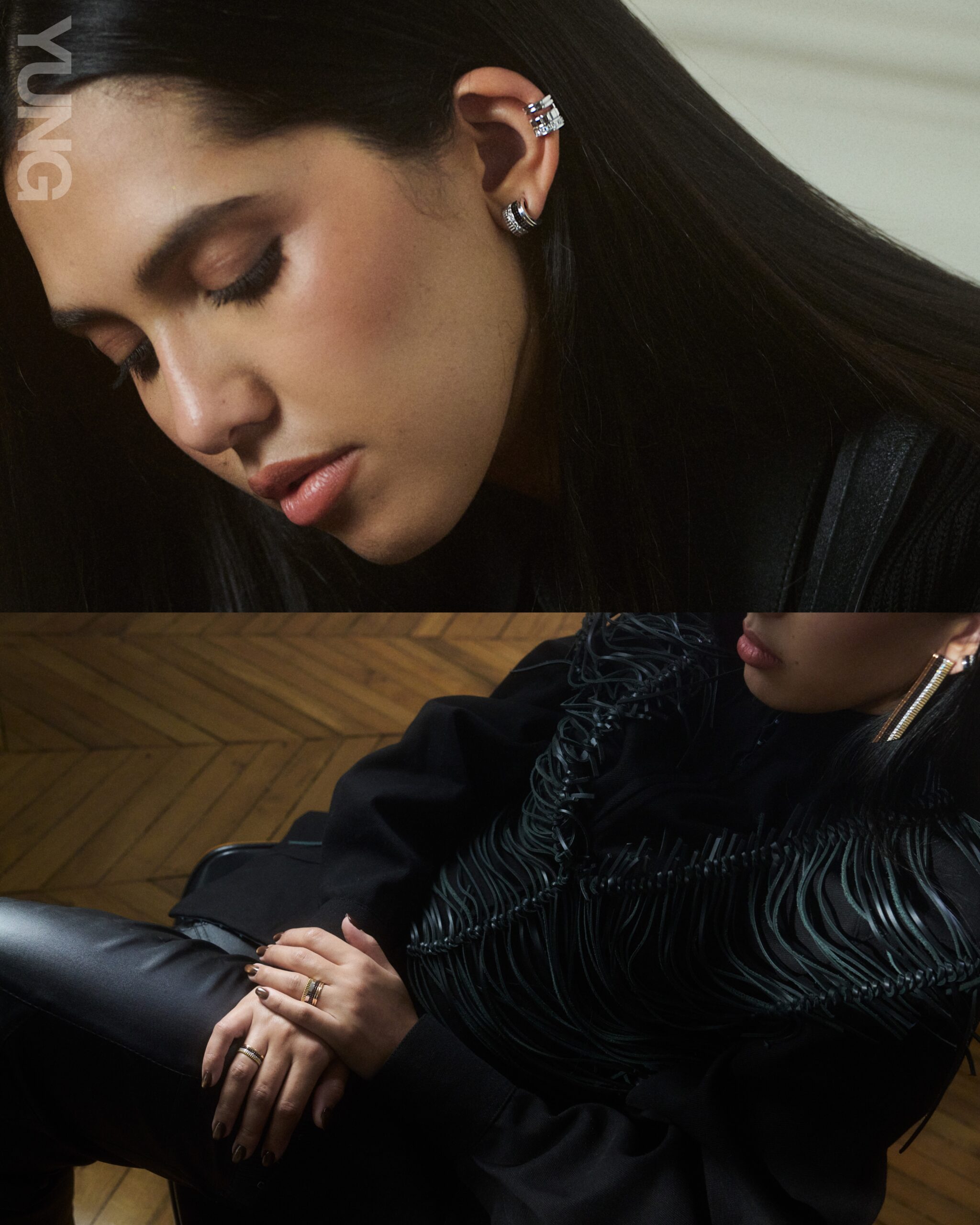
Moroccan Arabic has a very specific, percussive energy. How does the linguistic DNA of Darija dictate the actual composition of your melodies? Does the language lead the beat, or vice versa?
Darija has a rhythm of its own when you speak it, almost like percussion. But it’s also a bit tricky, because the language can sometimes sound harsh, so it’s always a challenge to make it feel smooth, and musical in a song. I actually always start with the topline first, the melody, and then I write the lyrics after. That makes it even more challenging, because I have to make the Darija fit naturally into a melody that already exists.
A big part of the process is finding that balance, keeping the raw energy of the language while shaping it into something that still feels emotional and melodic. That tension is actually what makes it interesting.
You’ve spoken about ushering Raï into a new era. How do you preserve the soul and melancholy of traditional Raï while making it sound like the year 2026?
For me it was really exciting to explore Raï and reinterpret it in my own way. Raï carries a lot of emotion, there’s something very raw and nostalgic about it and also rebellious. I felt like my alter ego was free, and playing with that feeling while bringing in modern sounds was a very fun creative process. But at the same time, I think every artist eventually feels the need to return to their core.
Right now I feel like I’m going back to the essentials, to the kind of music that truly defines me. I’m about to release an EP that, honestly, feels like some of the most honest and accomplished music I’ve made so far. It’s the project that represents me the most, not just musically, but emotionally and artistically. It feels very aligned with who I am today.
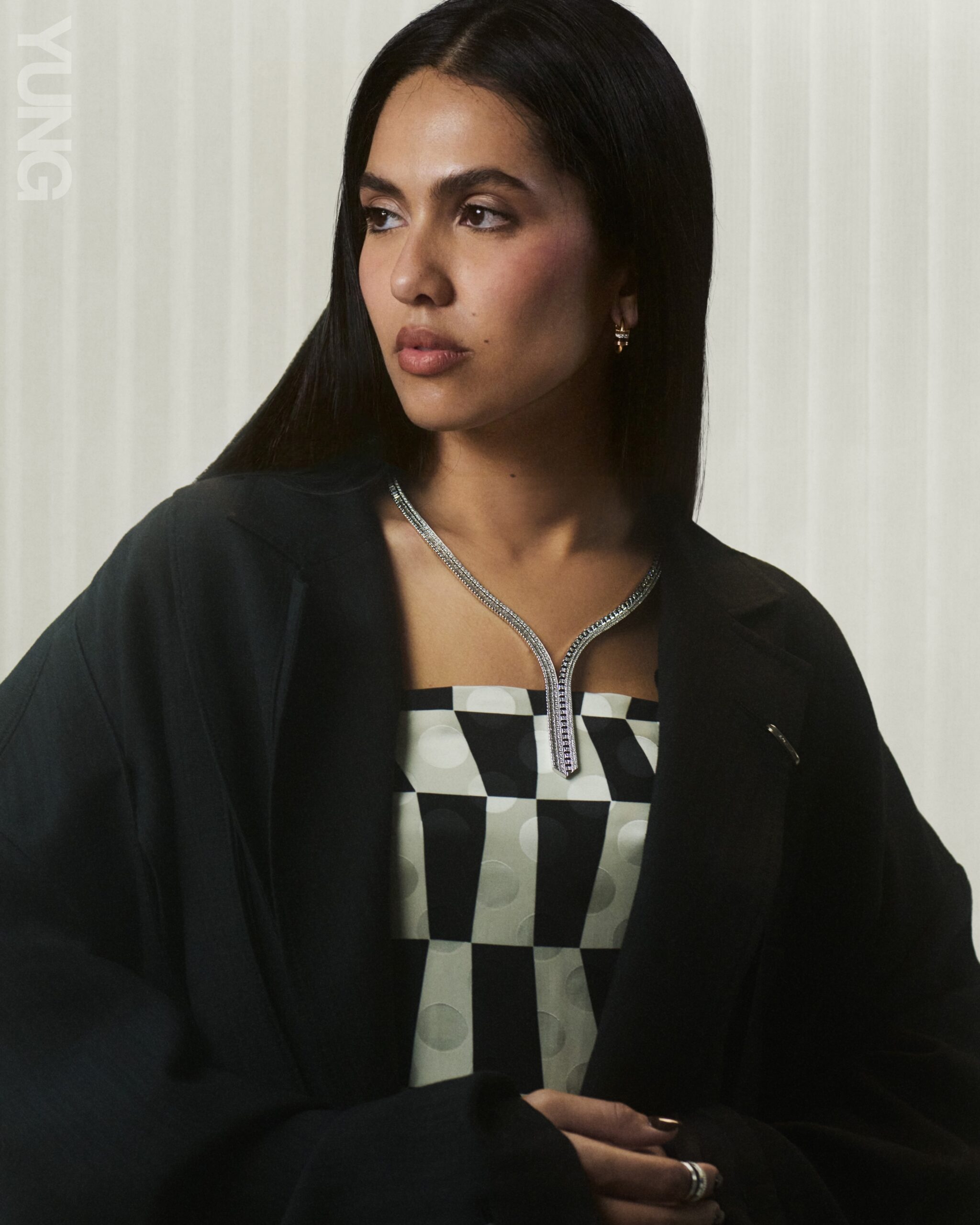
As your audience becomes more international, how do you ensure your Moroccan roots remain the foundation of your work rather than just an “aesthetic” layer?
For me it starts with intention. My Moroccan roots aren’t something I add at the end to give the music a certain colour, they’re the starting point of everything I create. The language, the emotions, the way I tell stories, even the way melodies move, all of that comes from where I’m from. Even if the sound evolves or the audience becomes more international, the foundation stays the same.
I think people can feel the difference between something that’s just an aesthetic and something that’s actually lived. For me, Morocco isn’t an influence I borrow from… it’s simply who I am, and naturally that’s what shapes my music.
Your visuals are notoriously cinematic. When a song is in its infancy, do you hear it first, or do you see the “world” it lives in? Walk me through the moment a sound becomes a visual concept.
It always starts with the sound. The first thing that exists is the emotion of the song, the melody, the topline, the feeling it carries. But very quickly after that, I start seeing colours. Every song has its own palette in my head, certain tones, textures, atmospheres. Sometimes it’s darker and cinematic, sometimes it’s warmer and more nostalgic. It’s almost like the music creates a visual temperature.
From there, little scenes begin to appear. Not a full storyboard yet, but fragments of a world the song could live in. Building that visual universe is honestly very exciting for me, almost as exciting as creating the song itself. I actually wish every song of mine could have its own music video, because visuals are such an important part of how I express the music.
You use fashion as a secondary language. Is your style a protective armour against the industry, or is it a vulnerable extension of the stories you’re telling in your lyrics?
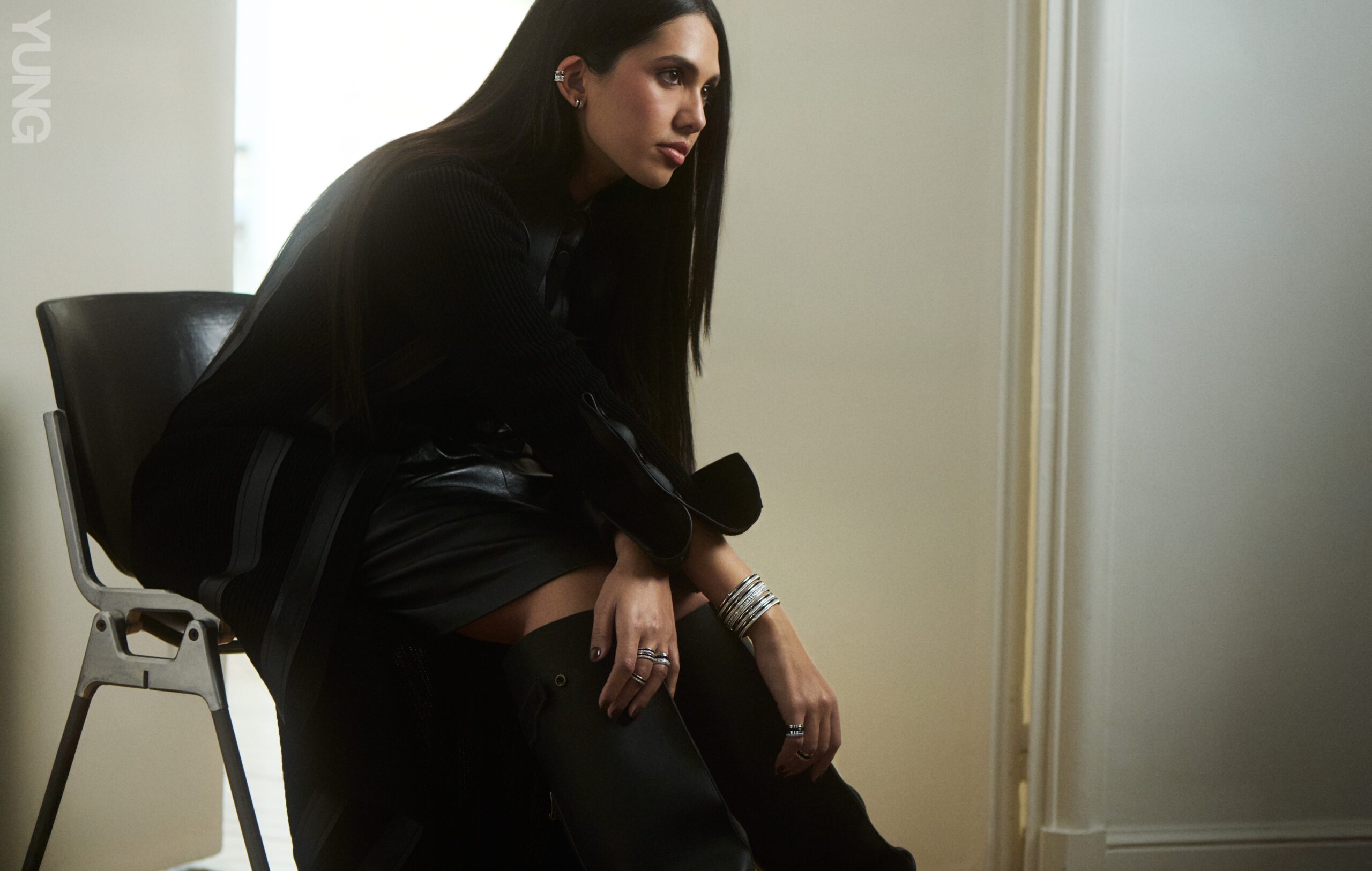
I think my style is still something I’m shaping. It’s an ongoing exploration more than something fixed. What matters to me is that it evolves with my music. Every era of my work carries its own aesthetic and visual language, so naturally my style shifts with those chapters. In my everyday life, my style is actually much more relaxed, more sporty, a bit boyish. But when it comes to my artistic world, fashion becomes another layer of storytelling. It’s a way to extend the emotion of the music beyond the song and translate it visually.
Working with your husband as your producer and manager creates a unique creative ecosystem. How do you navigate the tension that inevitably comes with high-level creative collaboration while maintaining your personal sanctuary?
Working with my husband creates a very special dynamic because there’s a lot of trust and honesty between us. We’ve built something where the creative vision and the business side can really move in the same direction. Of course, when you care deeply about what you’re creating, there can be tension sometimes. He’s actually even more demanding with me than anyone else, because he knows me better than anyone. He knows my potential and he knows when I can push further or do better.
Over time we’ve learned how to find our balance. At the end of the day, beyond the music and the work, we’re a family. That’s the foundation, so we always try to protect that space and remember that our relationship matters more than any creative disagreement.
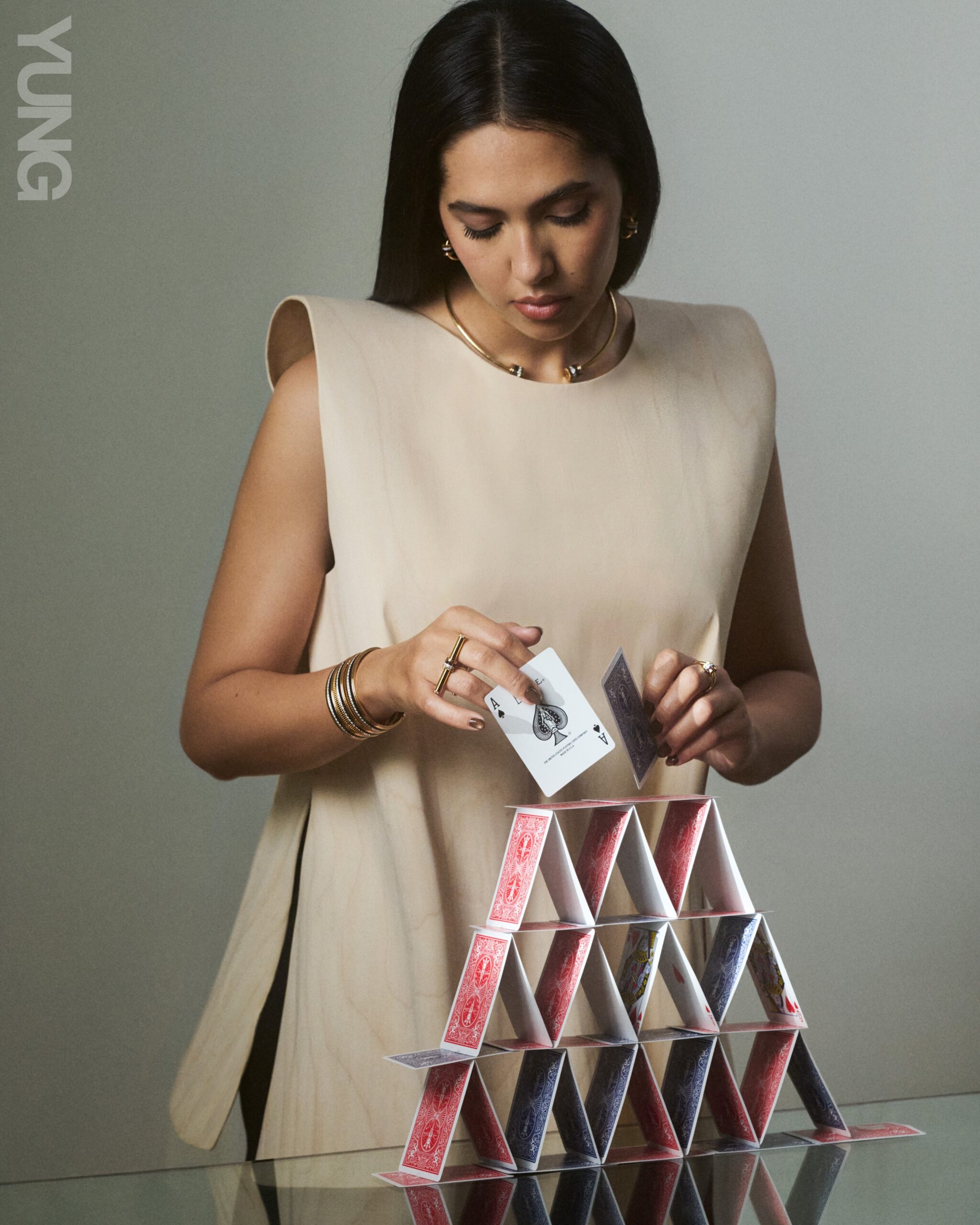
Motherhood and this new phase of your career arrived simultaneously. Has becoming a mother narrowed your focus to what truly matters, or has it expanded the empathy you bring to your songwriting?
Becoming a mother has completely changed the way I see life. Everything now revolves around her, and naturally my priorities have shifted. Things that once felt very important suddenly feel smaller, and what truly matters becomes very clear. At the same time, it opened a whole new emotional world for me. You start experiencing love, protection, and even vulnerability in a much deeper way, and it changes the way you look at people, at life, and at the future. It also made me realize how much stronger I actually am.
Suddenly you’re able to sleep late, wake up early, keep going no matter how tired you are. It made me discover a strength in myself that I honestly didn’t know I had. In a way it does both; it both grounds you and sharpens your focus, but it also expands your empathy. And as a songwriter, those emotions inevitably find their way into the music.
How do the identities of “Artist” and “Mother” speak to each other? Do they ever argue, or have they found a way to co-exist in your creative process?
Honestly, they definitely argue sometimes. Being an artist means you can disappear into your world for hours, thinking about melodies, visuals, ideas… and being a mother means someone very small suddenly has very different priorities for your time. At the same time, they’ve also learned to coexist in a funny way.
Motherhood made me much more organized and focused, because you simply don’t have the luxury to waste time anymore. And sometimes my daughter actually becomes part of the creative process whether it’s writing while she’s asleep, or suddenly getting an idea while I’m playing with her. So instead of competing, I think the two roles ended up balancing each other.
You are a pioneer for women in the Moroccan trap/rap scene, do you feel the door you kicked open is being used by the next generation of girls in the way you hoped?
When I started, there really weren’t many women in that space, so in the beginning it definitely felt like pushing against a lot of walls. At that time the goal wasn’t necessarily to be a pioneer, it was just to exist as an artist and be taken seriously.
But today, when I see more girls entering the scene, expressing themselves freely and not feeling like they need permission, that’s very beautiful to watch. It shows that things are evolving. And honestly, I don’t think the goal was ever just to open a door… it was to show that the door was never supposed to be closed in the first place. Now, the next generation can walk through it and shape the scene in their own way.
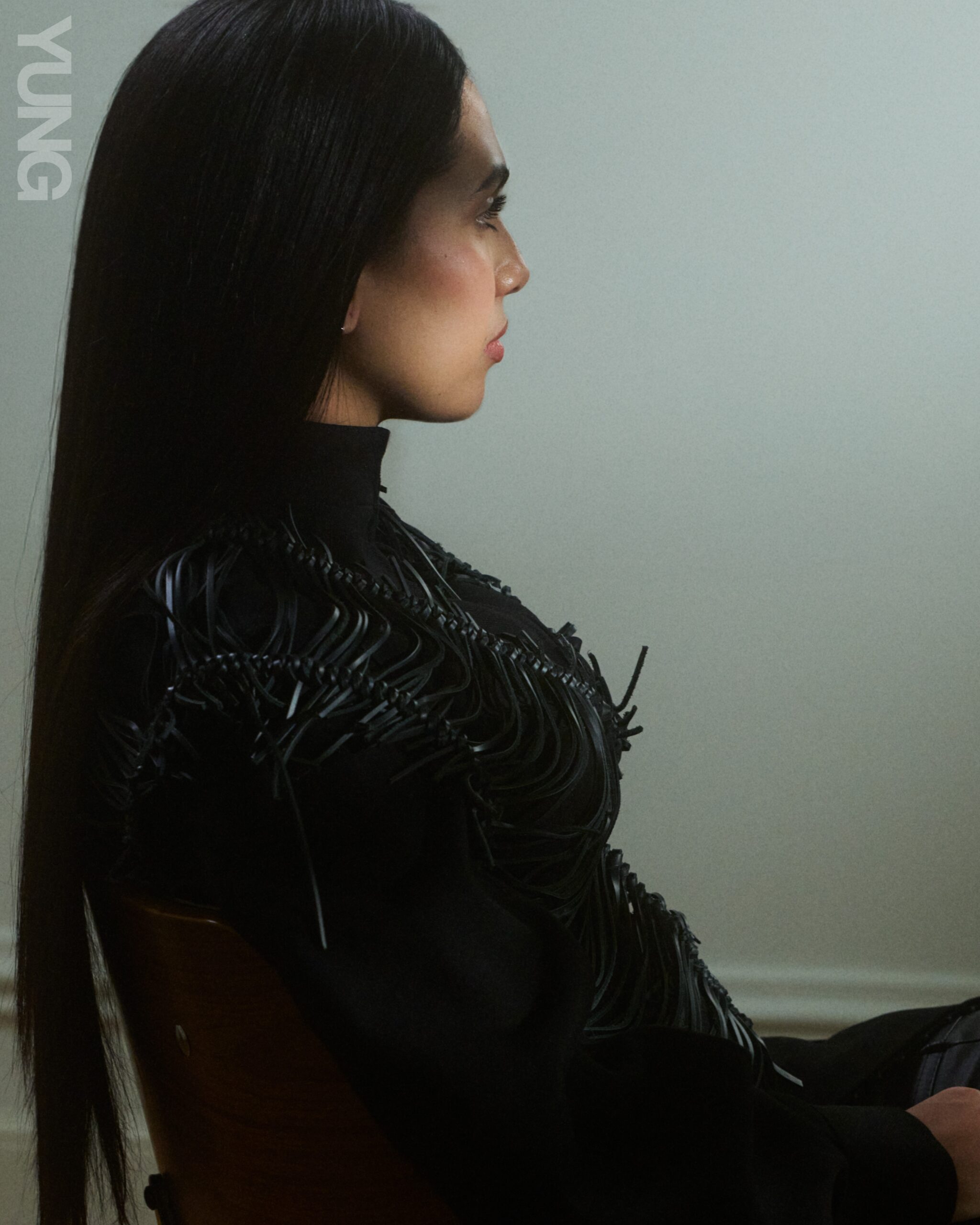
Many of your tracks act as a form of social commentary without being ‘preachy.’ When you’re writing about womanhood, are you writing for the woman who has already found her power, or are you specifically trying to reach the woman who is still silenced by social expectations?
When I write about womanhood, I’m not really thinking about one specific type of woman. I try to write something that feels honest and real. Some women who listen to my music may already feel confident and empowered, while others might still be navigating social expectations or trying to find their voice. I hope the music can speak to both. But I also write for women who feel like they don’t have a voice, for minorities, for people who feel unheard.
Sometimes I’m expressing things they feel but can’t say, or things they wish they could scream out loud. And as a woman myself, I know the reality of it. I know how hard it can be. You often have to work ten times harder, and sometimes you still don’t receive the recognition you deserve, so a lot of the emotion in my music comes from that truth.
You’ve connected with so many people throughout your career. What is one thing a fan or a stranger told you about your music that fundamentally changed how you see yourself?
Over the years, many people have told me that my music helped them go through difficult moments in their lives, or that it had a real impact on them. Hearing that your songs can accompany someone through a tough time is something very powerful for any artist.
But one story that really stayed with me was a mother who told me that her child was very sick, and that my music was one of the only things that could soothe them. That moment really touched me deeply. It made me realize that music can go far beyond entertainment, it can bring comfort, calm, and sometimes even a little light in someone’s life. And that completely changed the way I see the responsibility of what I create.
What’s next for Manal? Tell us what we should expect in one word, one line, one melody, or one lyric.
ECHOES.
For more stories of music from around the region, visit our dedicated archives and follow us on Instagram.