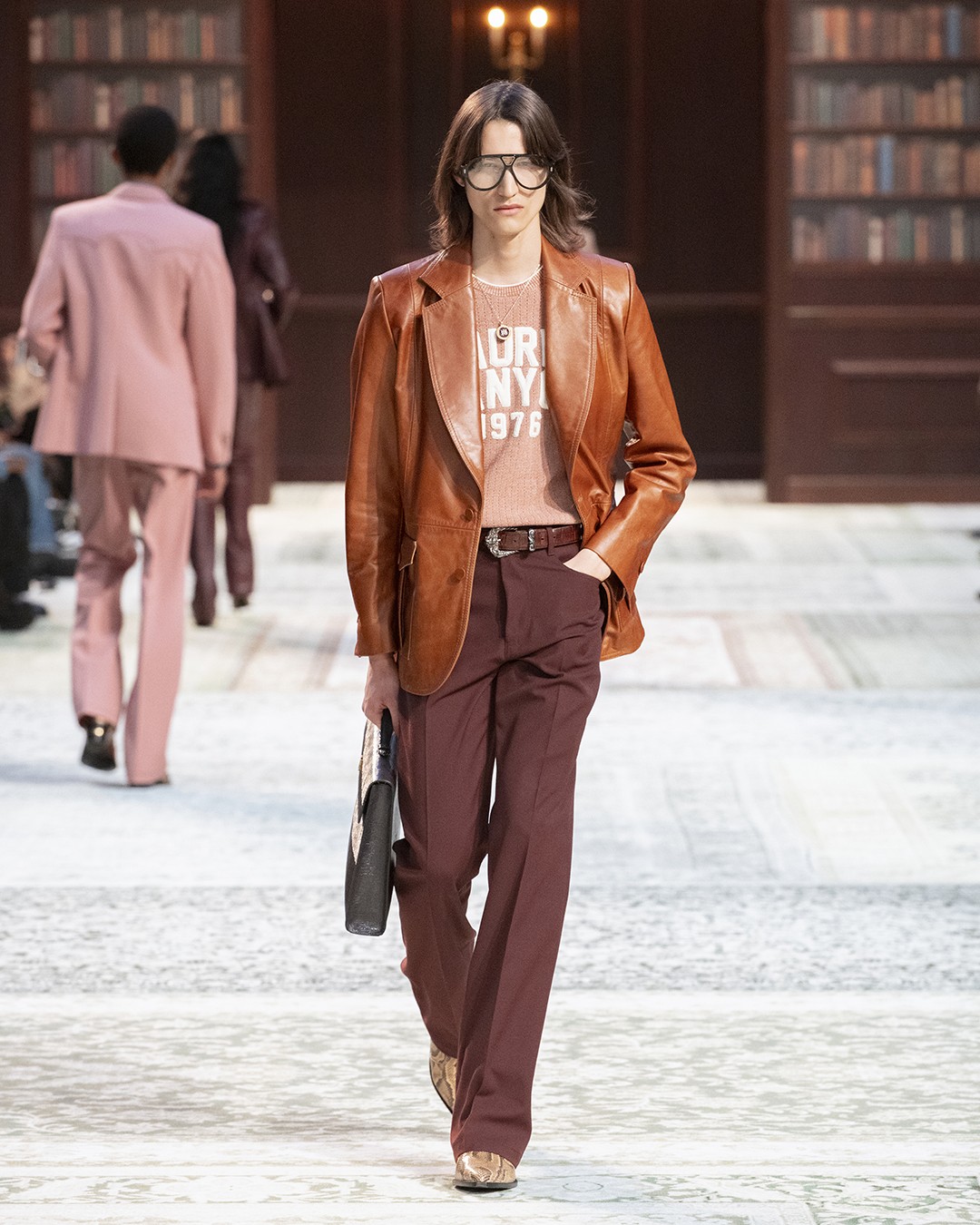
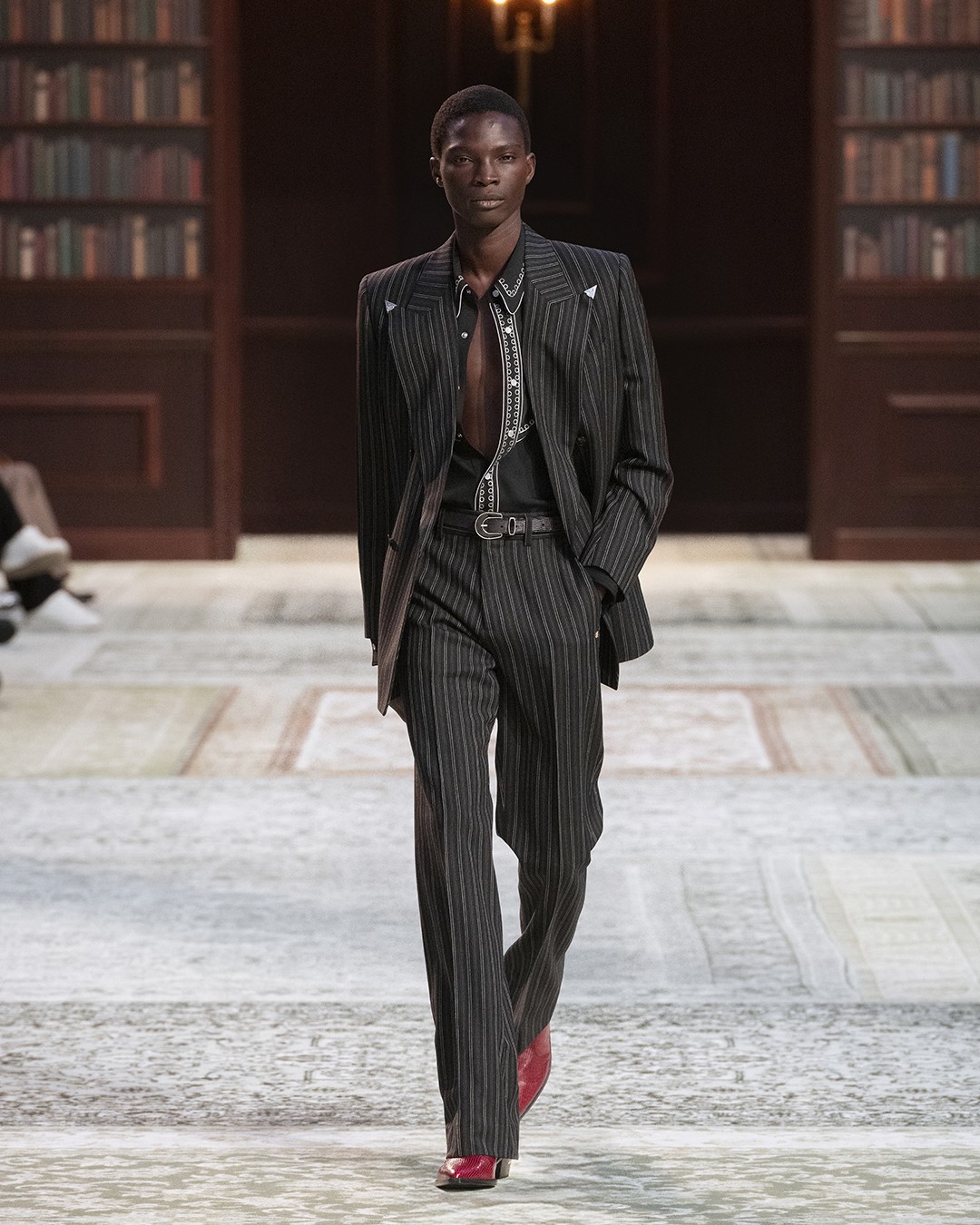
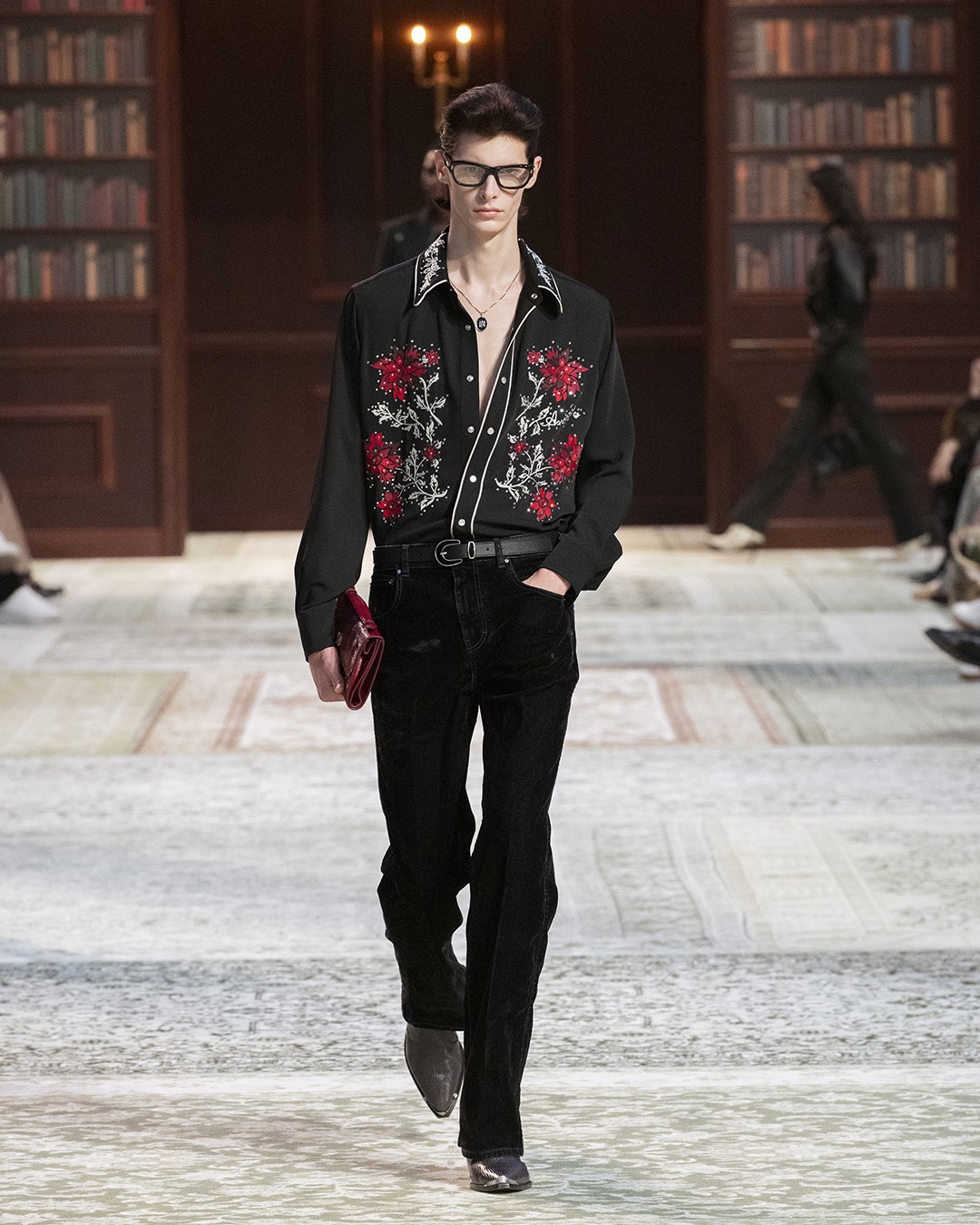
Cowboy boots, bolos, fringe, bell-bottoms, aviator glasses. What Mike Amiri showed in Paris in January 2026 was something more controlled than a mood board of American references. It was an environment, then a wardrobe built to match it.
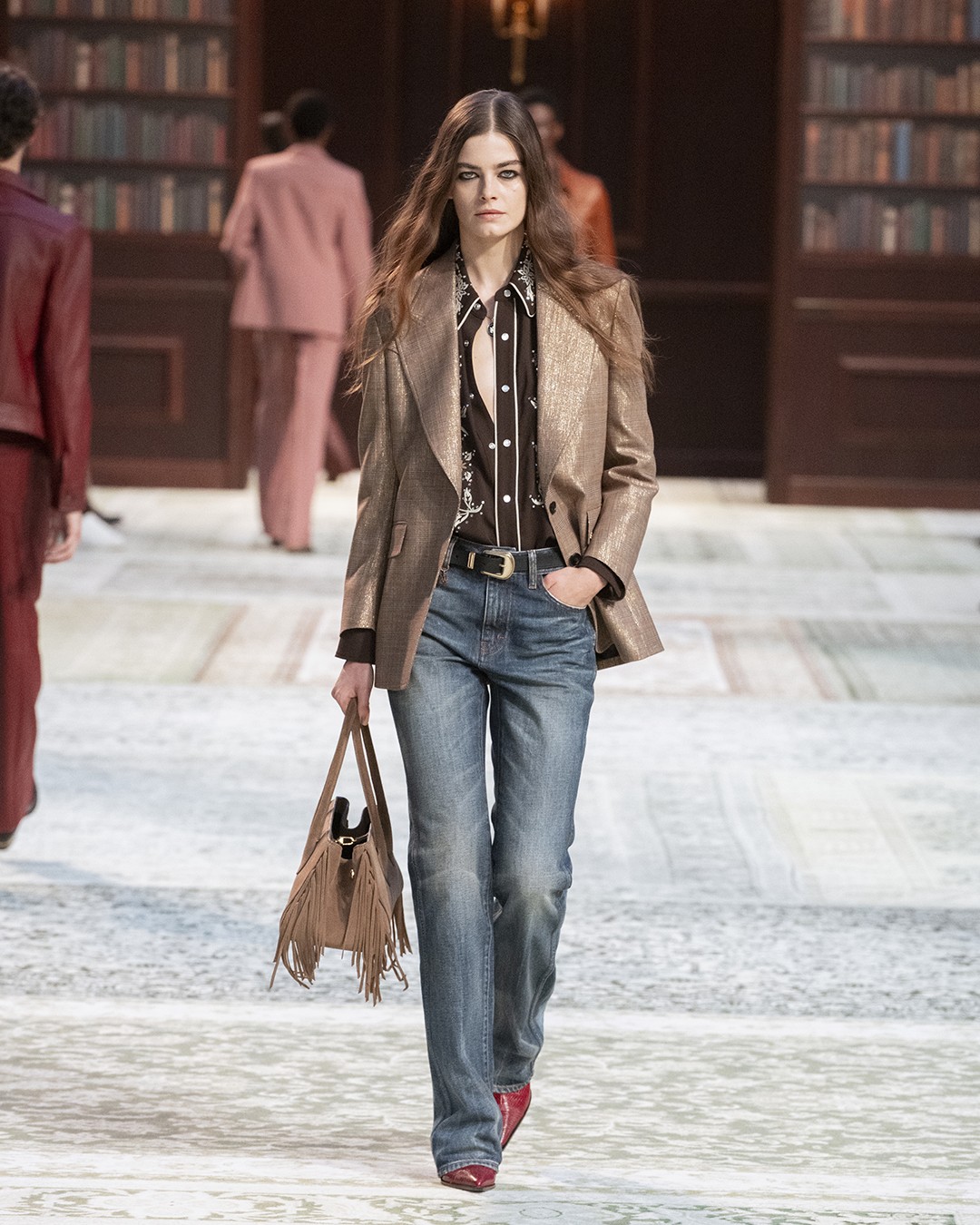
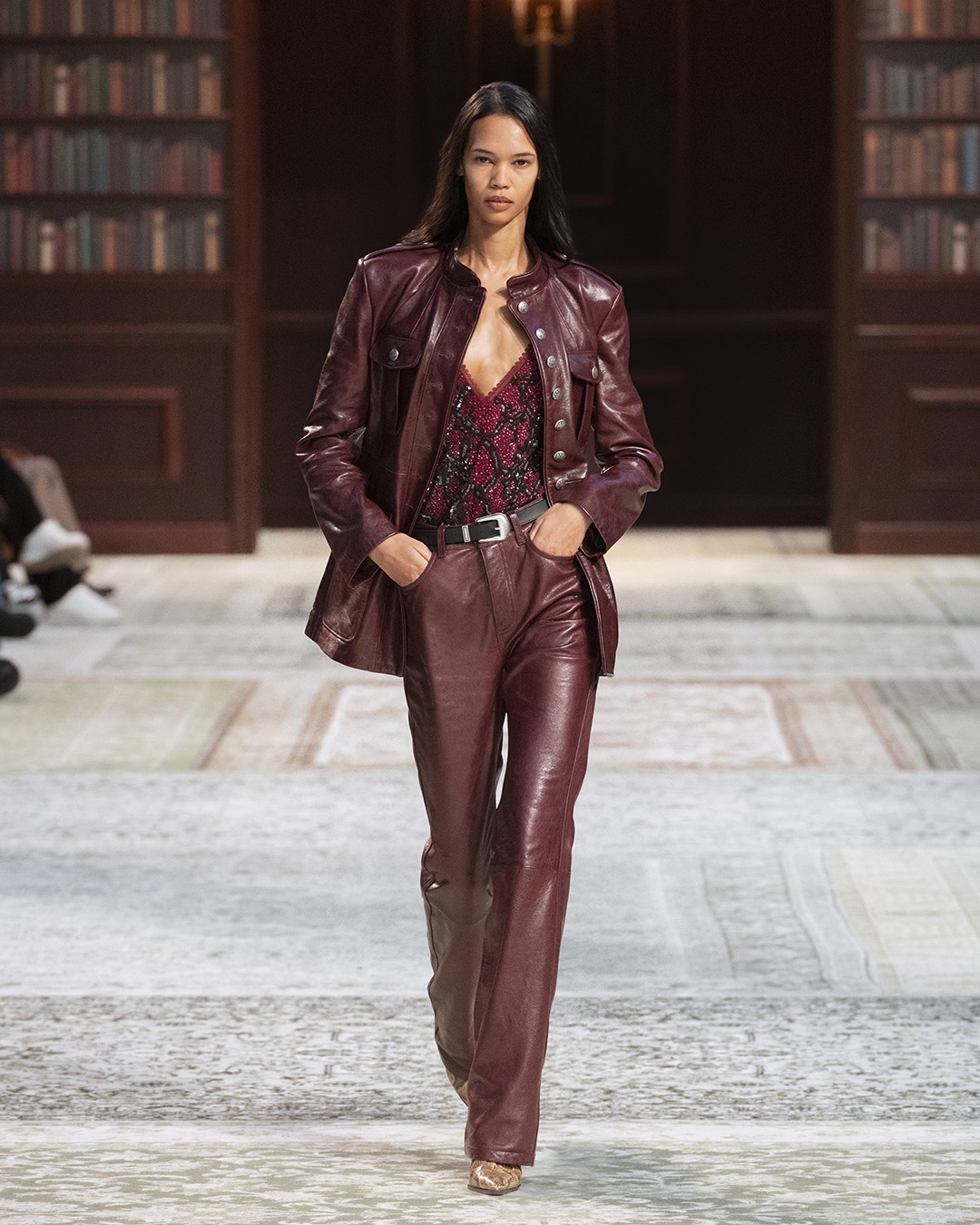
The Fall/Winter 2026 show took place at Le Carreau du Temple, the set read like a library crossed with a recording studio: rugs layered across the runway, guests sitting on mid-century furniture, everything softened and intimate, as if the room had been designed for listening as much as looking.
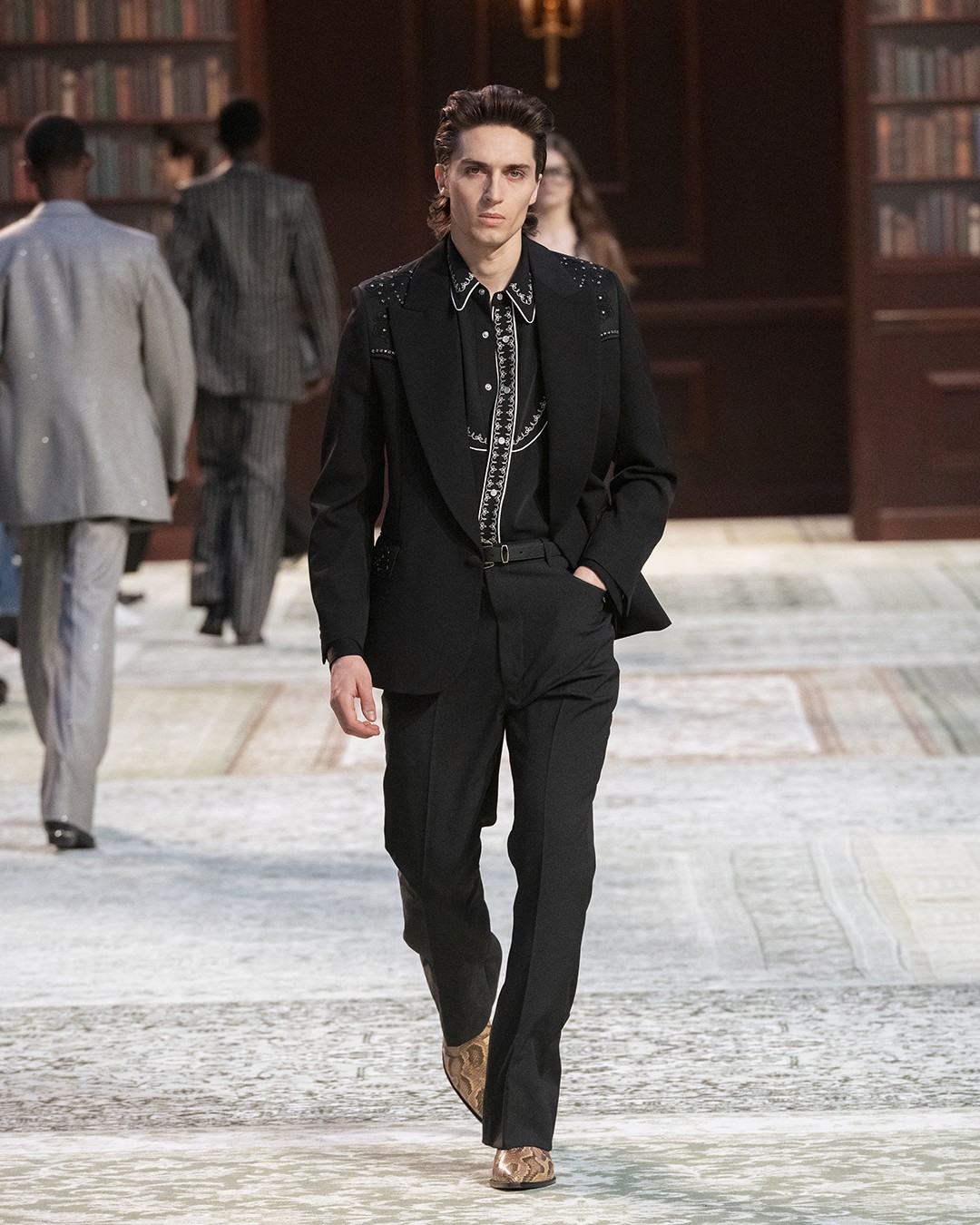
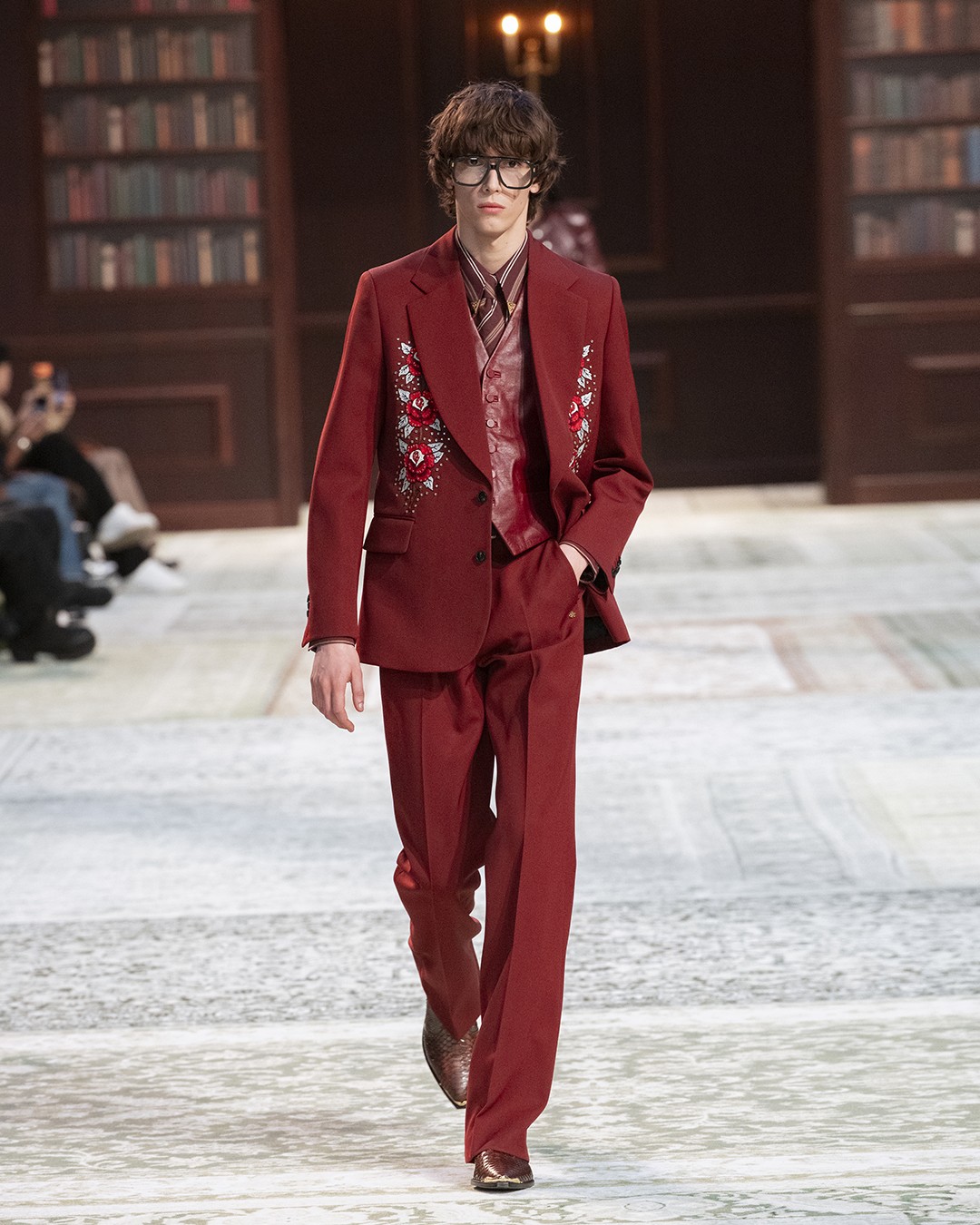
That atmosphere set up the collection’s central proposition: a version of the 1970s that feels lived-in and warm. The silhouettes and styling were consistent from the start. Bell-bottoms appeared early and kept returning, paired with cowboy boots. Glasses were almost a uniform, turning the casting into a coherent “scene”. The effect was a kind of calm charisma, closer to studio-session ease than stage-door chaos.
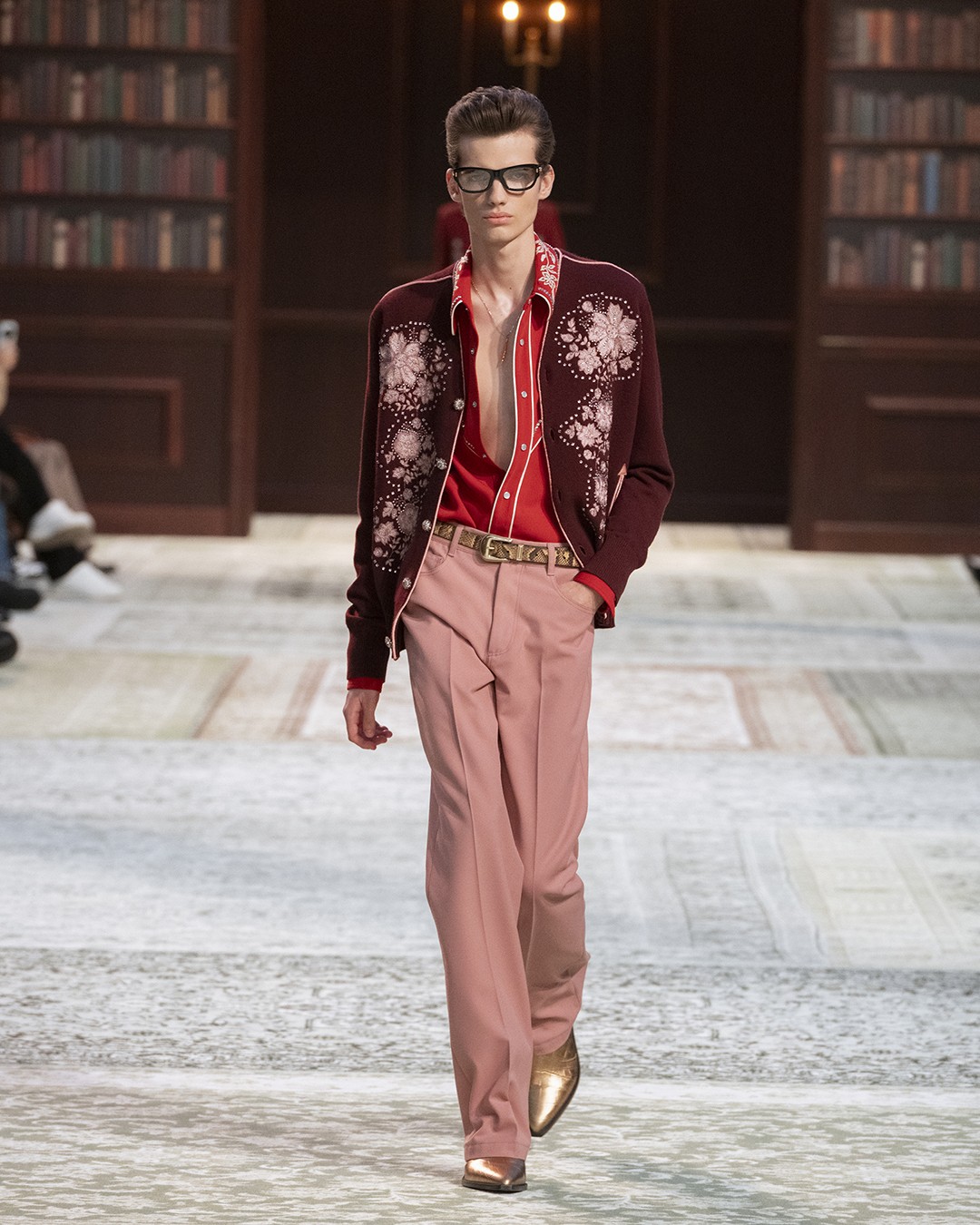
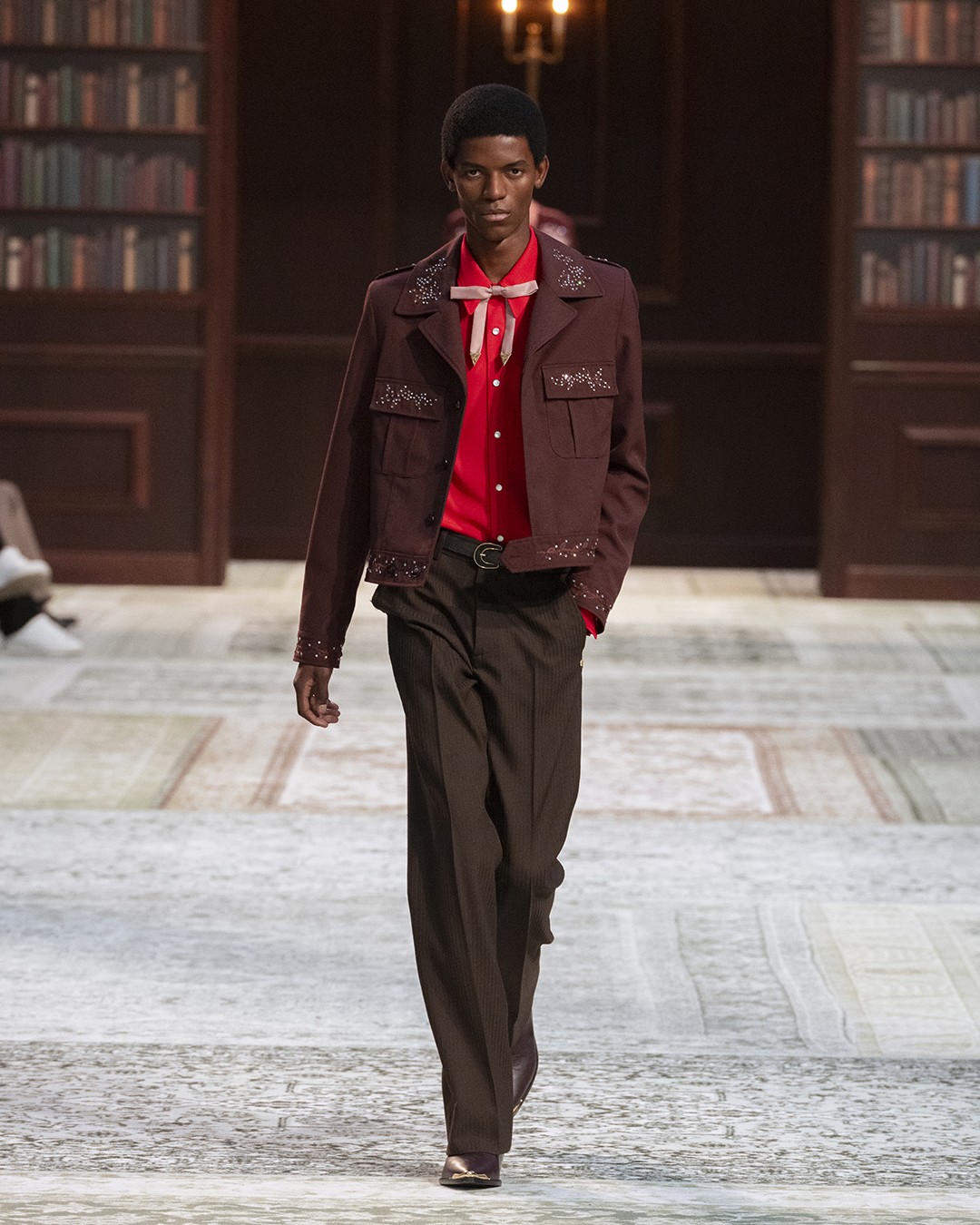
Colour did not fight for attention. It held the collection together. There were earthy, natural tones running through most looks, with a controlled run of pinks and reds washing over Western shirts. Then, a few unexpected jolts, including aqua suiting, did exactly what a well-placed interruption should do: it refreshed the eye without breaking the world. The palette felt intentional, which is why the references never tipped into costume.
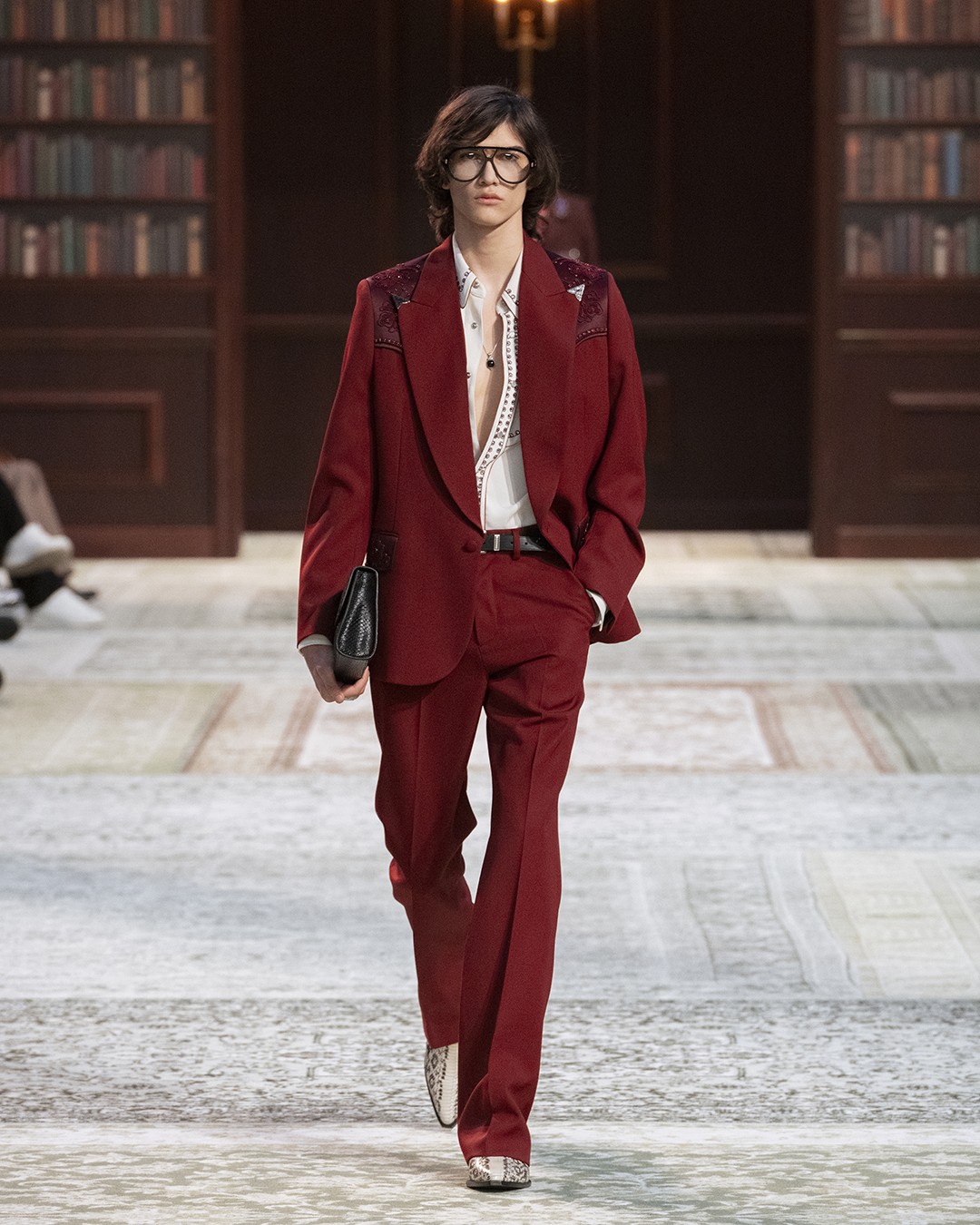
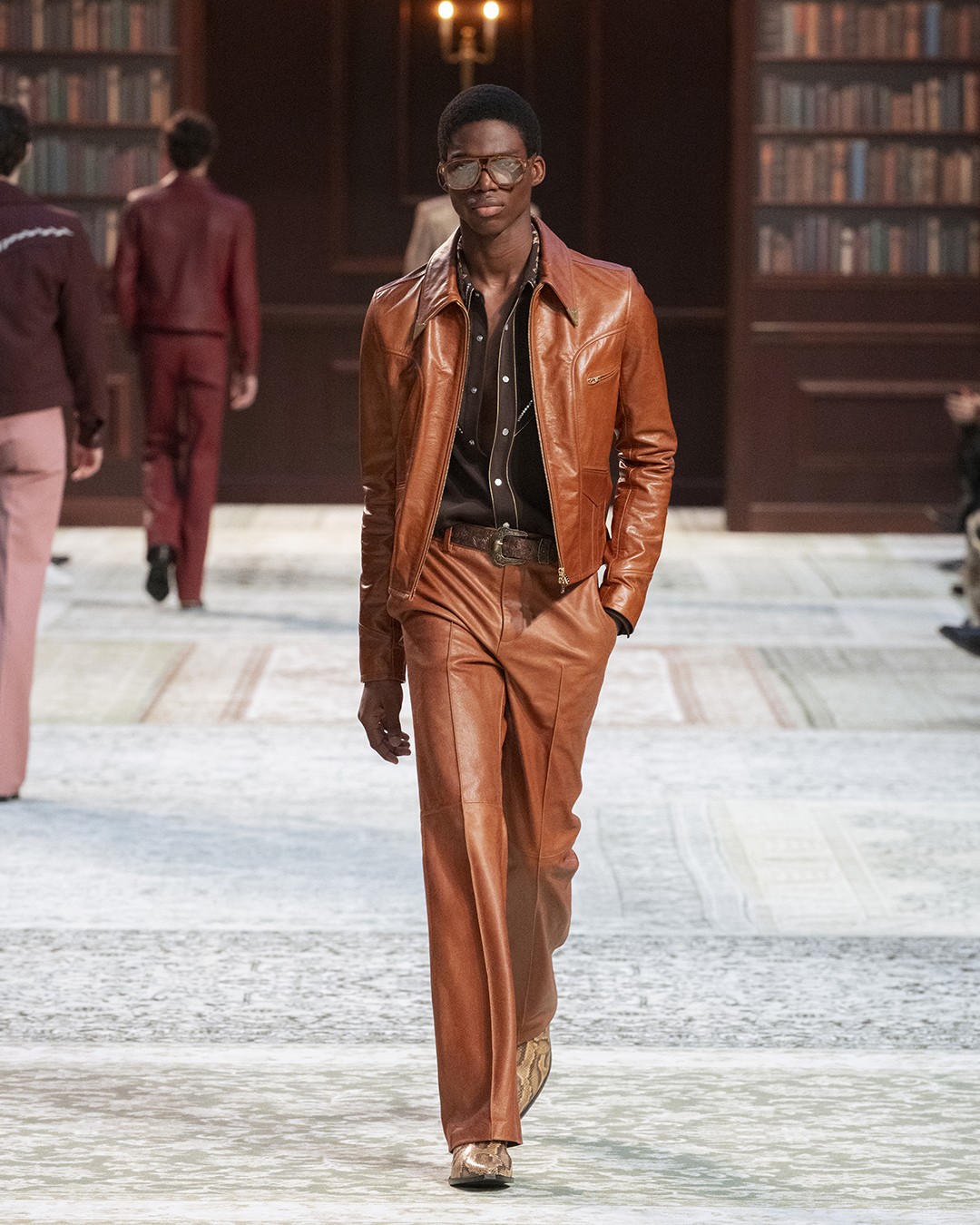
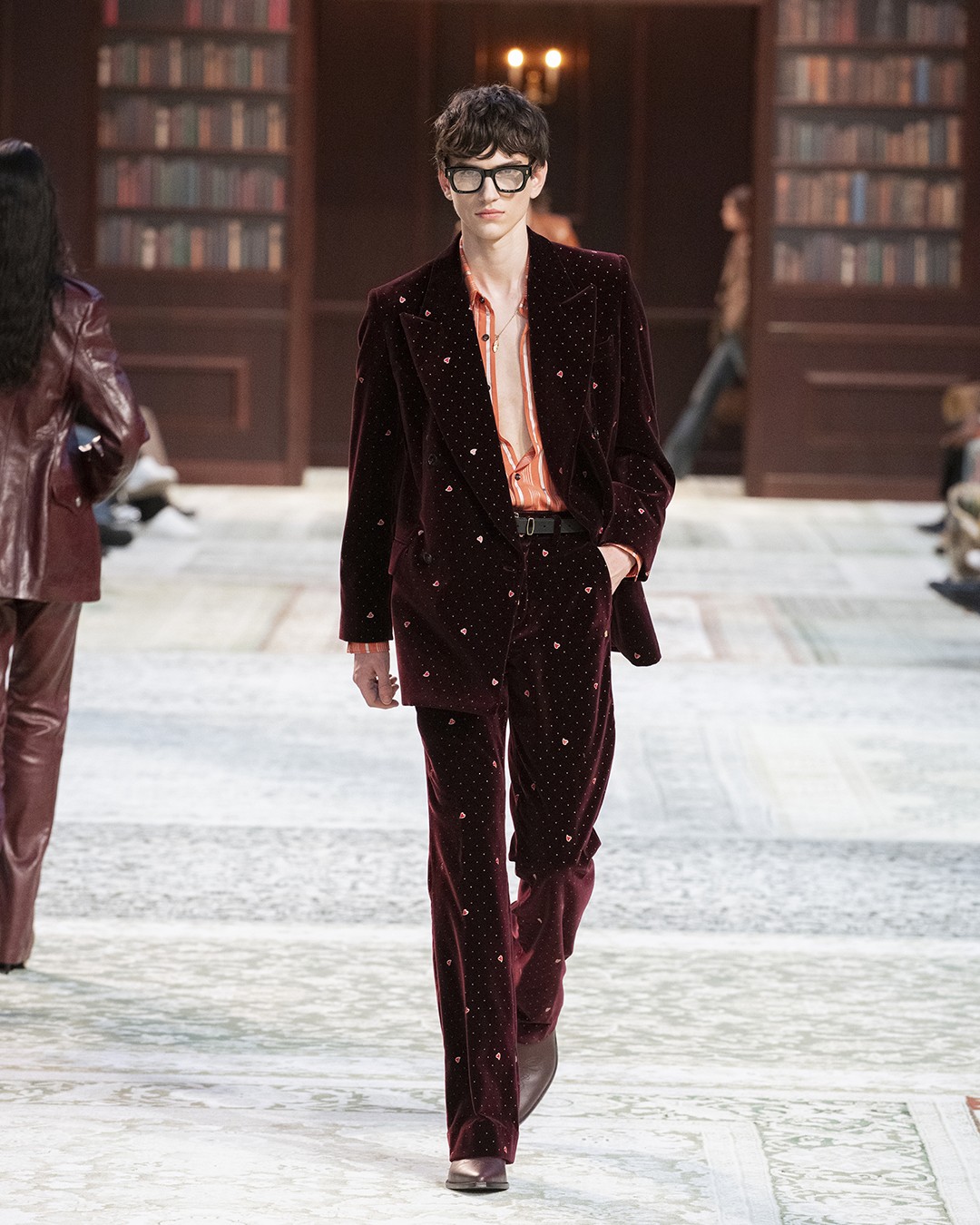
Where AMIRI really insisted on itself this season was surface. Decoration was not a one-off “statement piece” trick. It was the baseline. Embellishment, sparkle, embroidery, and texture appeared across most looks, so that even neutral garments had life. A denim jacket arrived bedazzled, treating denim like eveningwear. Suits often carried a shine that caught light like stage fabric. Knitwear came loaded, too, in embellished cardigans that brought an odd tenderness into the Western storyline.
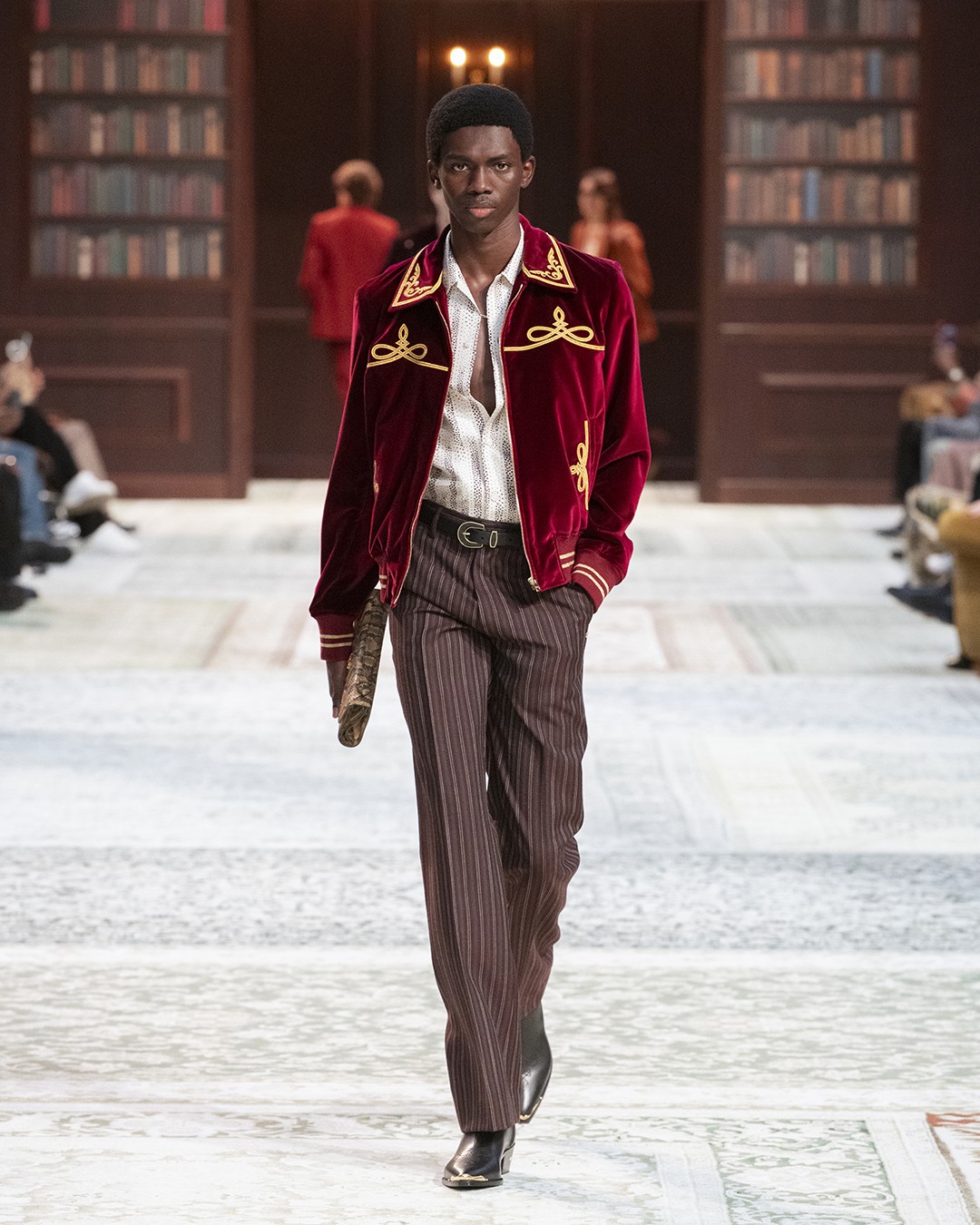
That is where the show’s most interesting tension sat: what you could call “granny meets cowboy”. Those embellished cardigans worn over shirts with bolo ties were one of the clearest styling ideas of the collection, and they kept repeating until they became a code. It read as comfort made decorative, heritage dressing made louche, the domestic made nightlife.
There was also a self-awareness in the way the set bled into the clothes. Jackets with carpet-like square motifs echoed the rugs underfoot, a visual rhyme between interior décor and tailoring. It was a simple device, but effective.
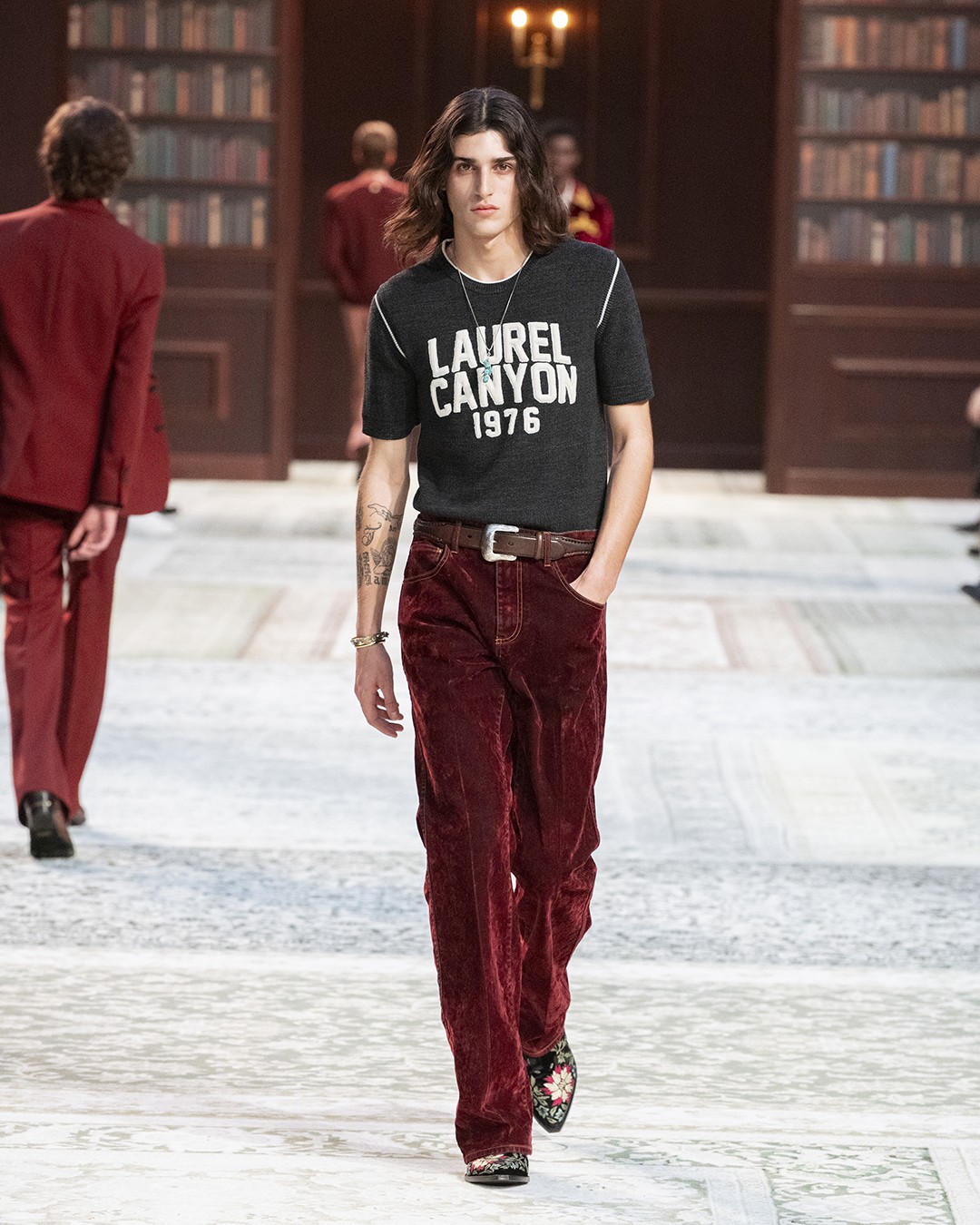
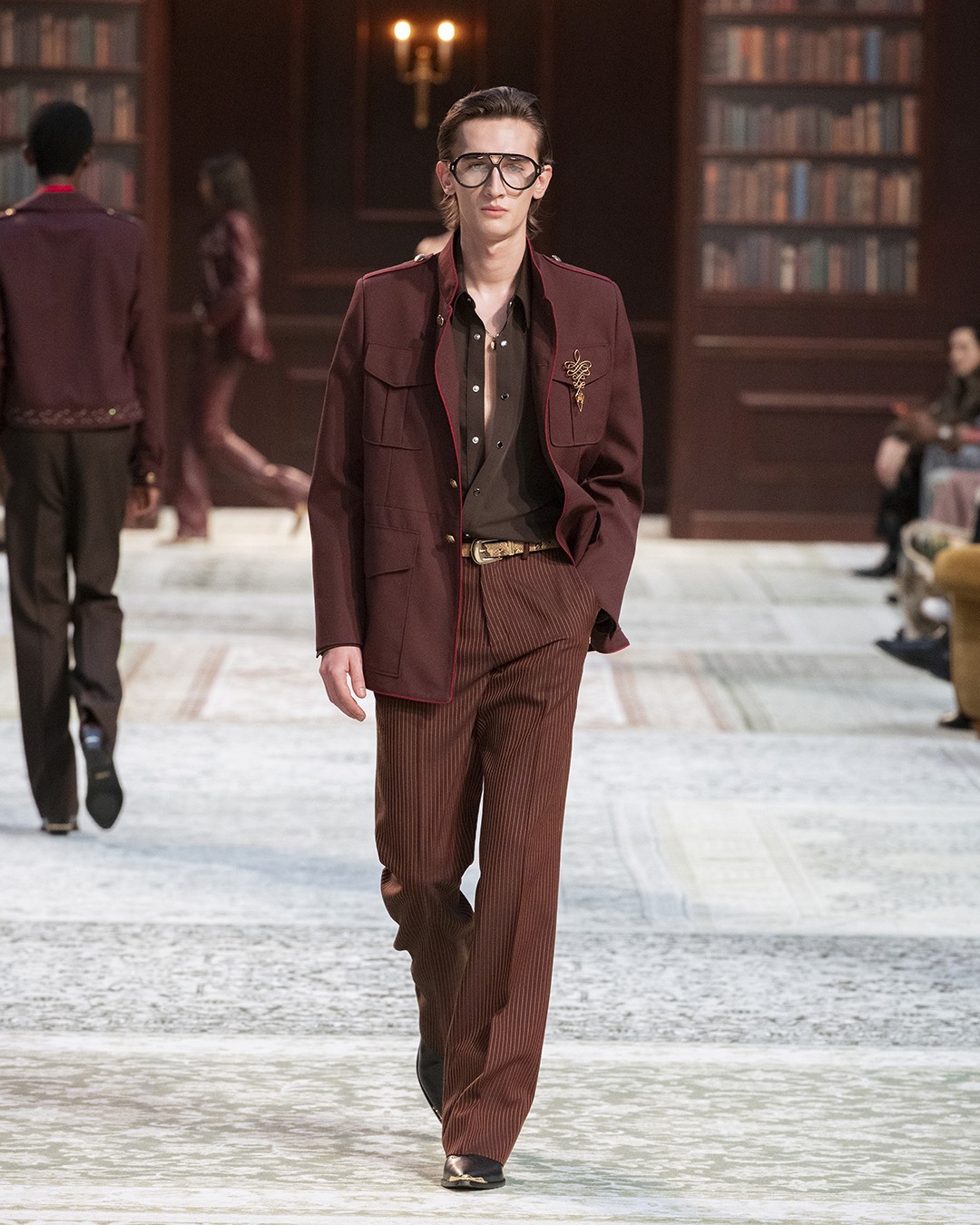
The most explicit signal was text: “Laurel Canyon,” written across shirts under velvet suiting with Western details. The reference is direct, and it places the collection in a very particular mythology of Los Angeles culture, one that has always been as much about rooms and communities as it is about celebrities. Here, for AMIRI, it functioned like a signpost for the entire show’s logic: a world where music, interior taste, and personal style fold into one another.
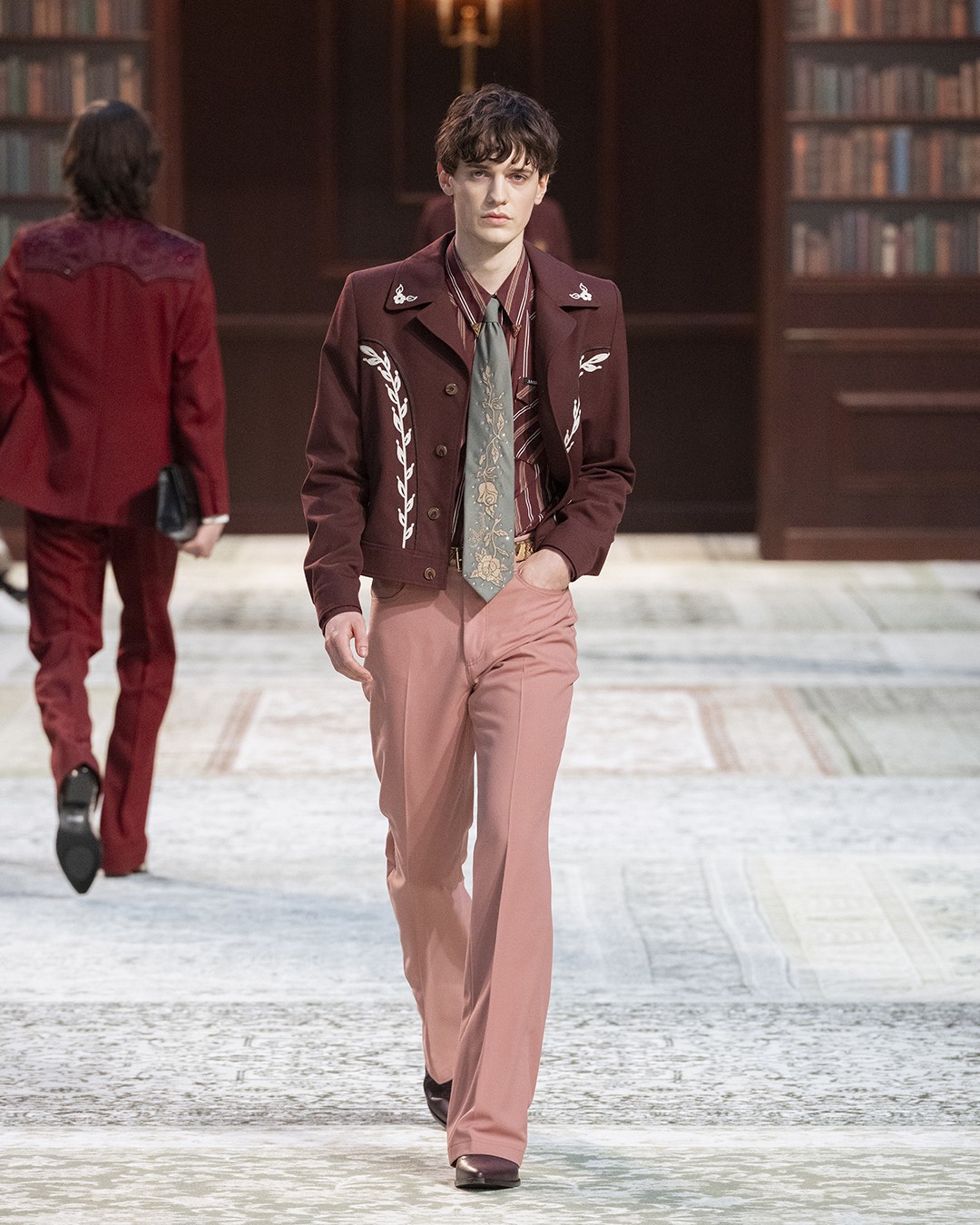
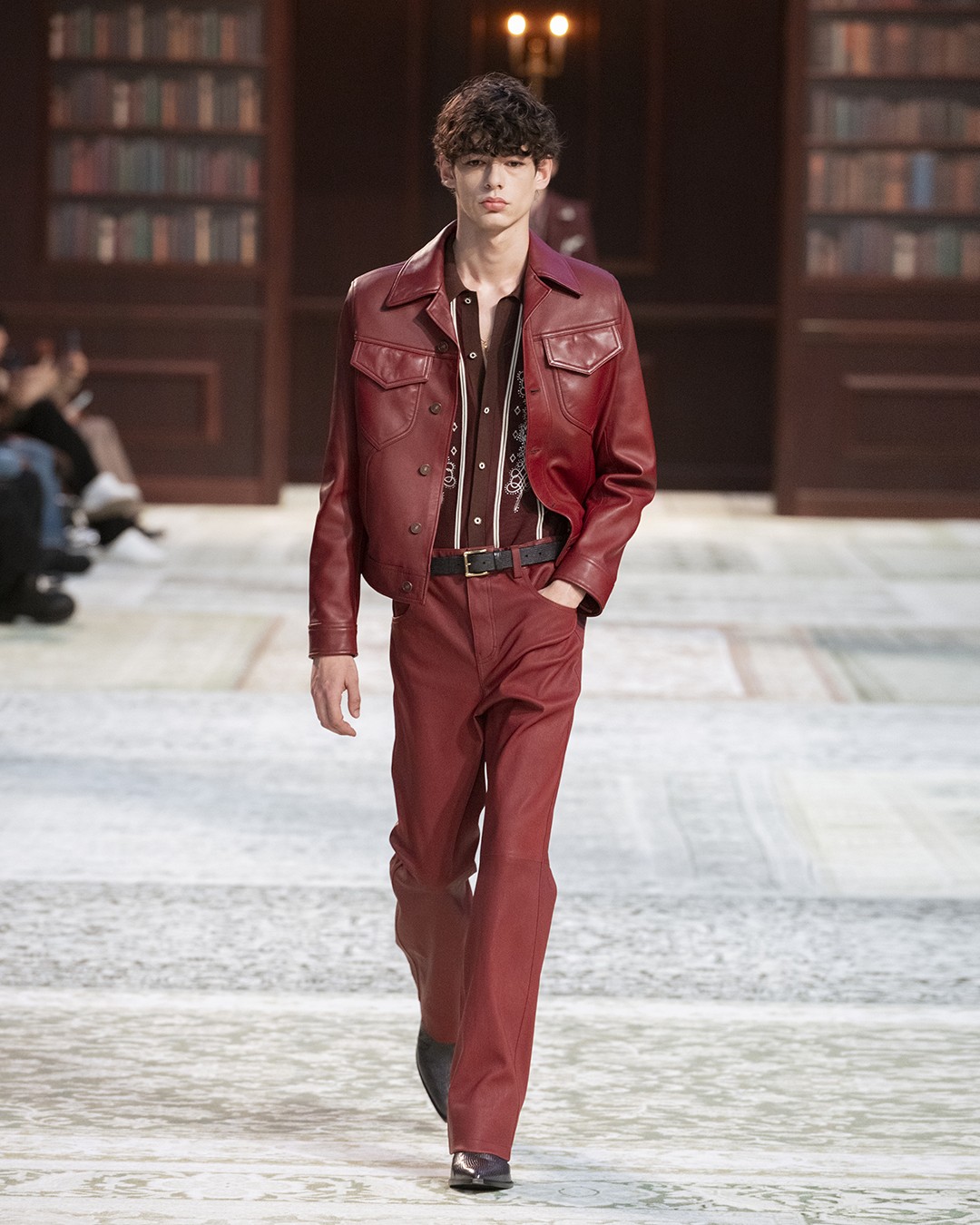
The Western elements were present, but they were not doing the heavy lifting alone. The real story was the discipline of the palette, the insistence on embellishment as a house language, and the way the show staged a specific kind of masculinity: soft-edged, slightly theatrical, and completely committed to texture.
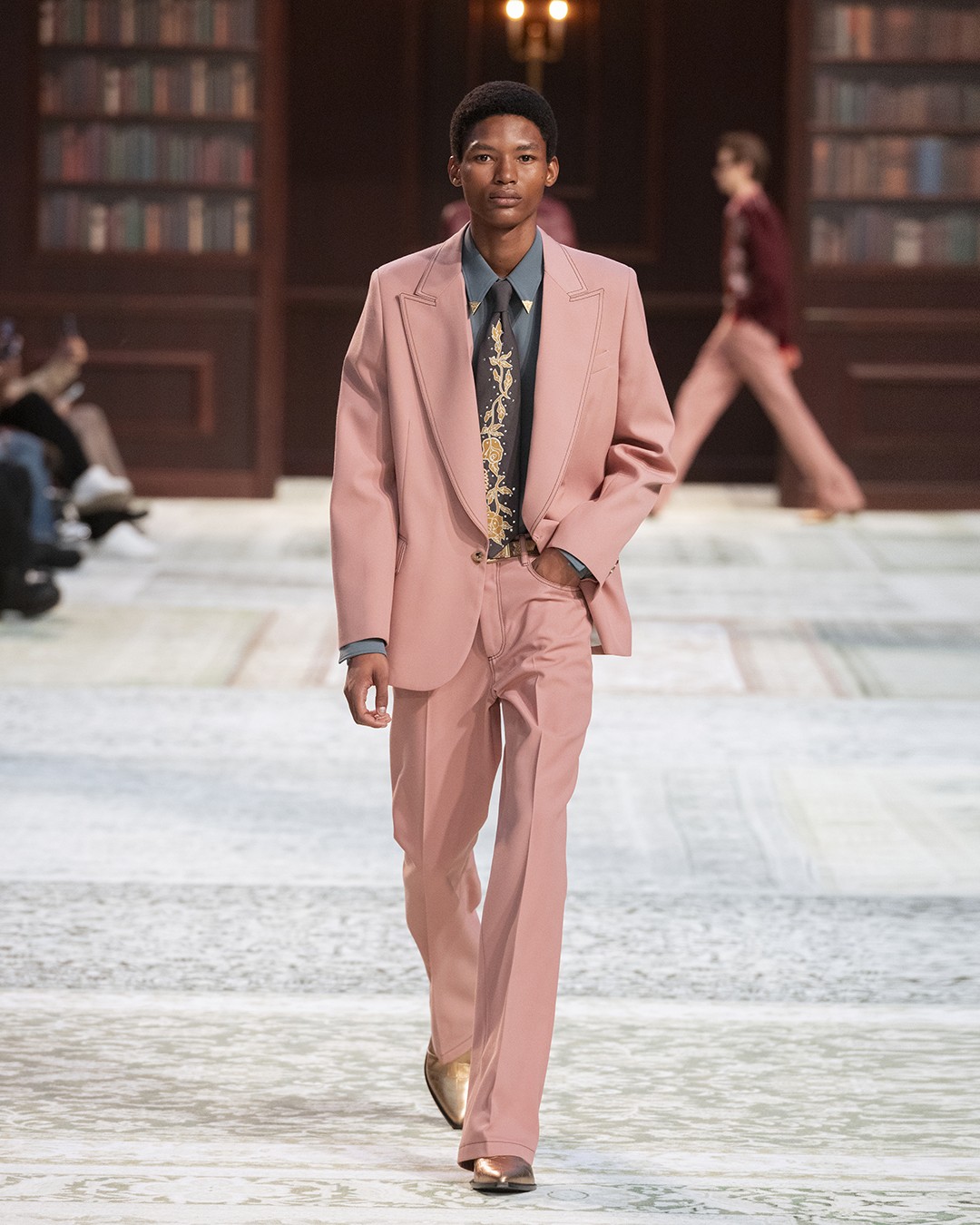
If there is a takeaway, it is that AMIRI’s fantasy has matured. It is less about proving cool and more about designing an environment where cool can happen naturally. Rugs on the runway. Mid-century chairs. A library hush. Cowboy codes filtered through craft. The kind of clothes you wear when you know the room, and you want the room to remember you.
For more stories of fashion from around the world, visit our dedicated archives and follow us on Instagram.