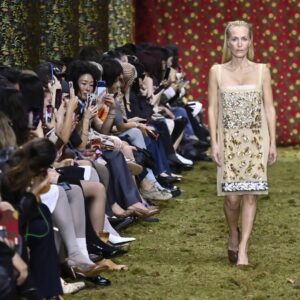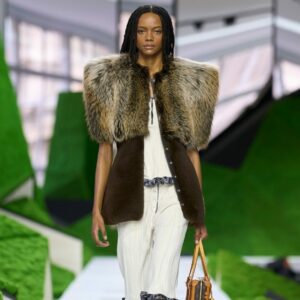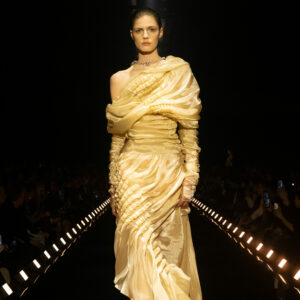
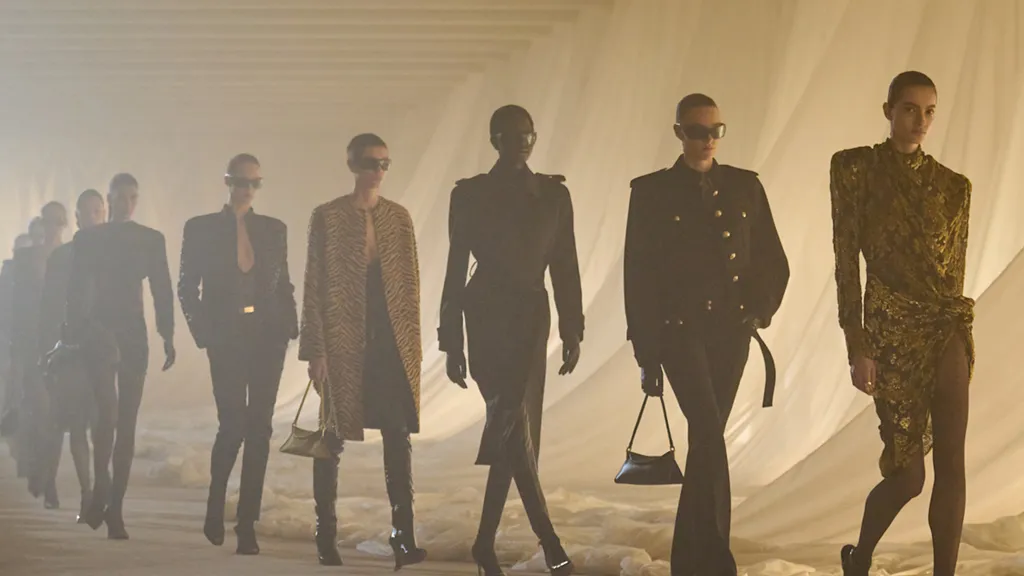
A new era dawned at Paris Fashion Week as Antonin Tron staged his debut for Balmain. The Fall/Winter 2026 collection transcended the typical runway, unfolding instead like the opening sequence of a noir film; atmospheric, enigmatic, and pulsing with a hushed, cinematic power.
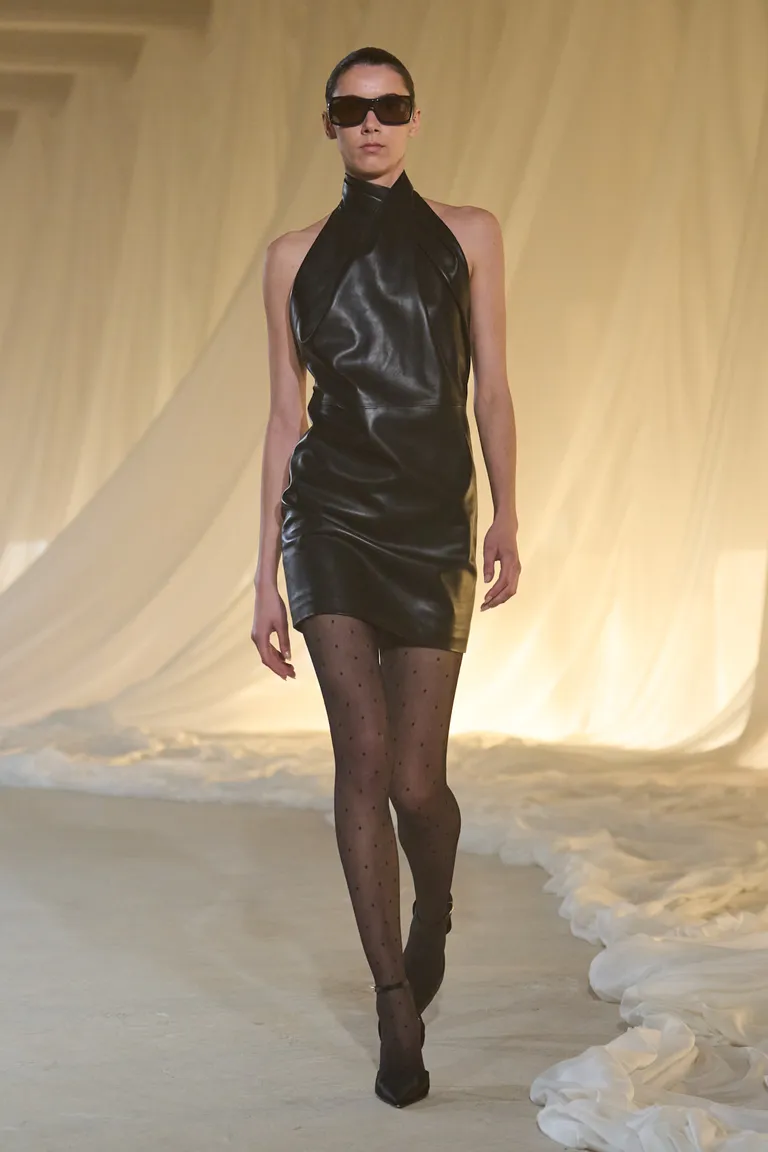
The show began in near darkness. Gauzy white fabrics draped the vast concrete space like forgotten furniture sheets in an abandoned mansion. Slowly, blinds rose and light spilled across the room, revealing silhouettes emerging through narrow pathways between the veiled forms. The mood was haunting and cinematic, as if the ghosts of Balmain’s past collections were guiding the audience toward a new era.
Then the techno hit, a rhythmic, predatory pulse that felt like a heartbeat. On cue, the models began their march, moving with a hypnotic, urgent precision.
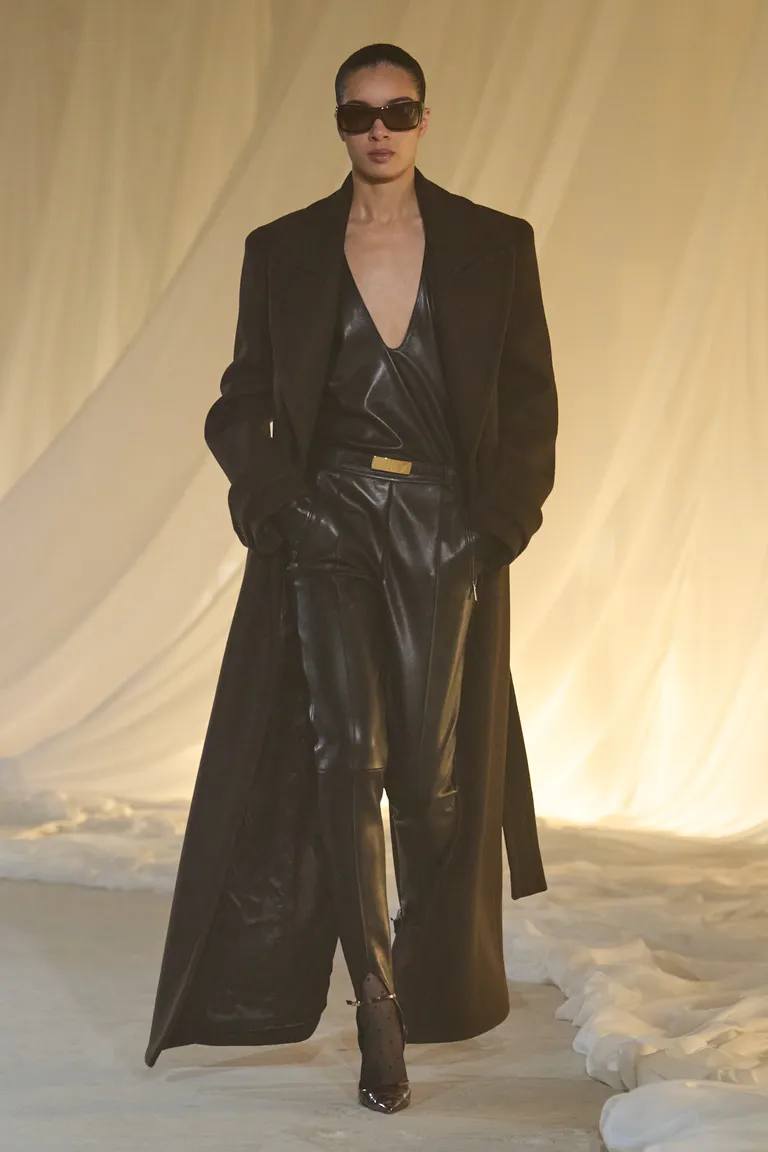
Tron’s vision for Balmain marks a seismic shift toward the noir. The high-wattage glamour of previous seasons has been eclipsed by a moodier, more subterranean energy; what the designer terms ‘minimal opulence.’
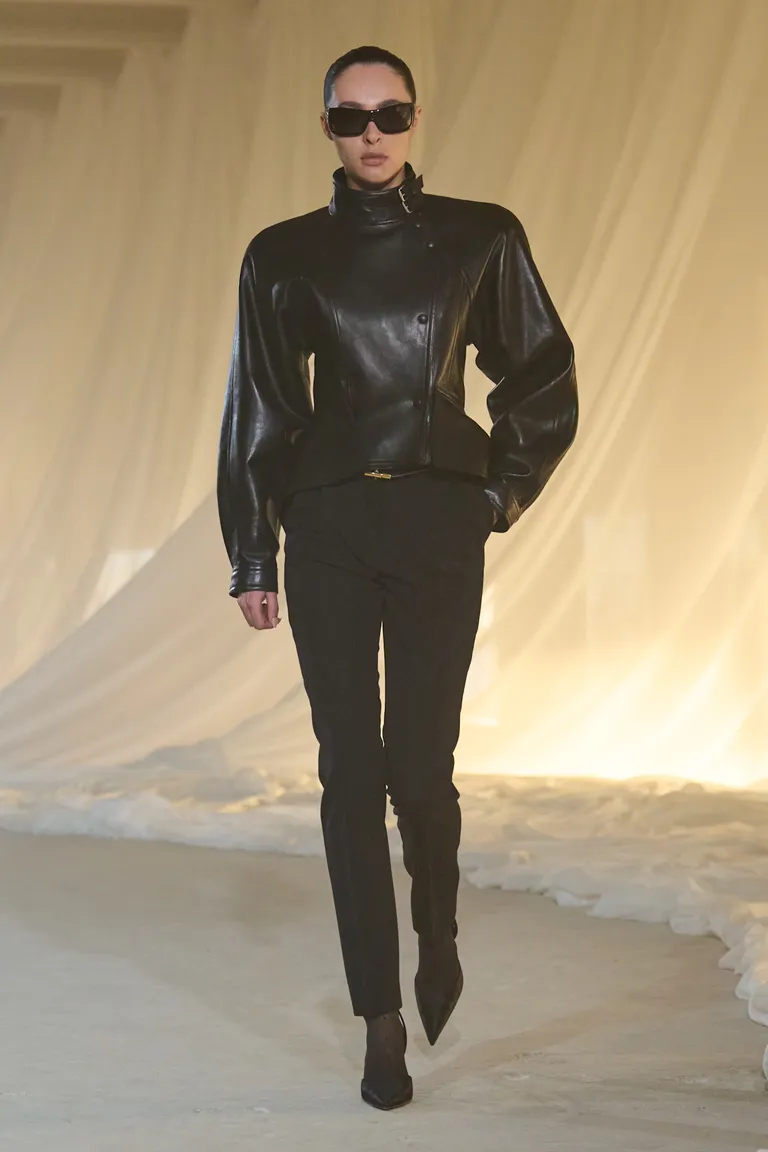
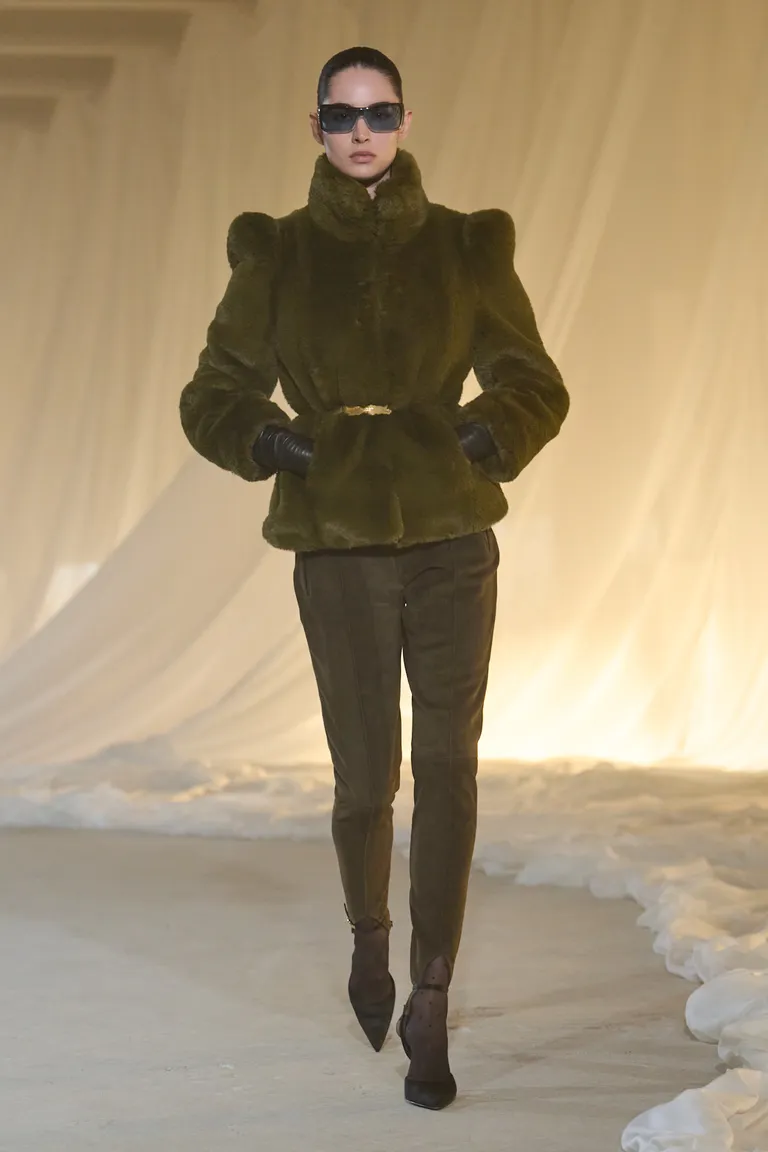
Here, the collection leans heavily into 1980s power dressing, featuring razor-sharp shoulders and architectural waists that sculpted the frame. By playing deep V-necklines against austere turtlenecks, Tron found the sweet spot between vulnerability and severity.
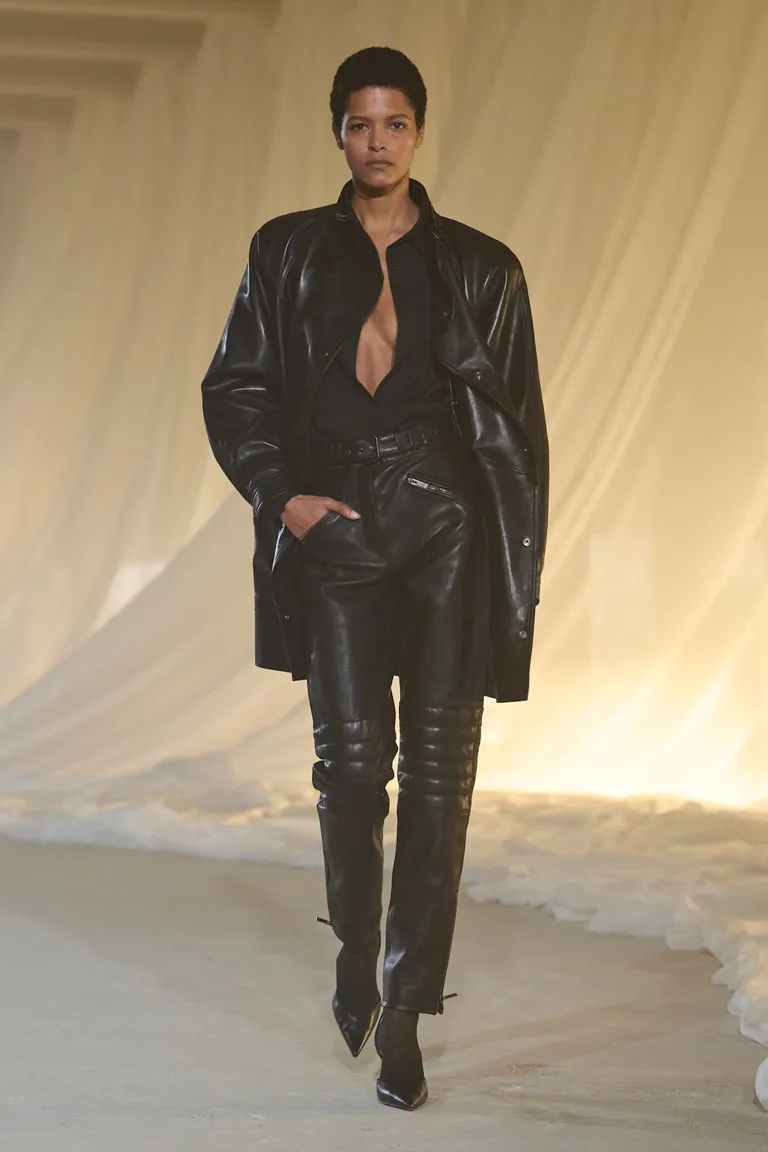
To understand Tron’s Balmain, one must look at his inspirations: a blend of celluloid mystery and archival rigor. His creative compass pointed as much toward the soundstage as the atelier. With a mood board anchored by the fever-dream shadows of Mulholland Drive and the gothic hunger of Tony Scott’s The Hunger, the runway felt like the flicker of a vintage film strip caught in a high-tech projector.
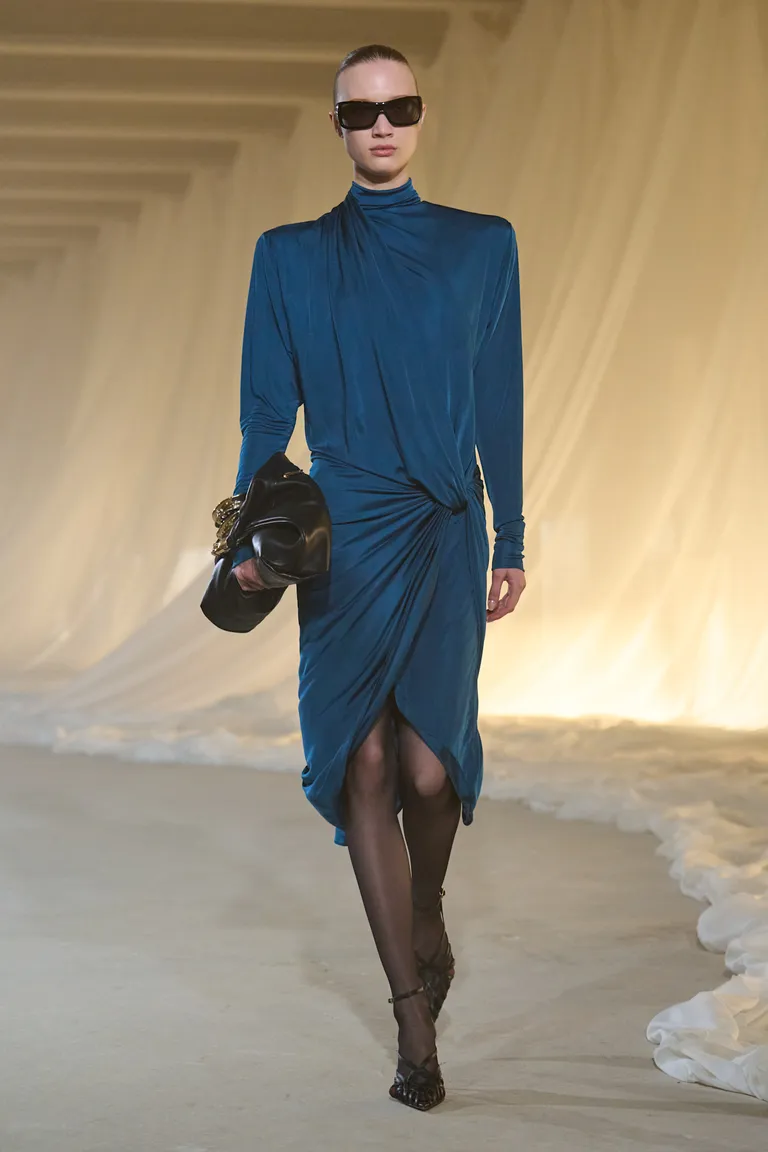
Deep in the house archives, Tron found a kindred spirit in Pierre Balmain’s post-war 1940s collections, a period defined by a haunting tension between austerity and allure. It is this exact equilibrium that Tron has resurrected for 2026: a severe, sensual elegance.
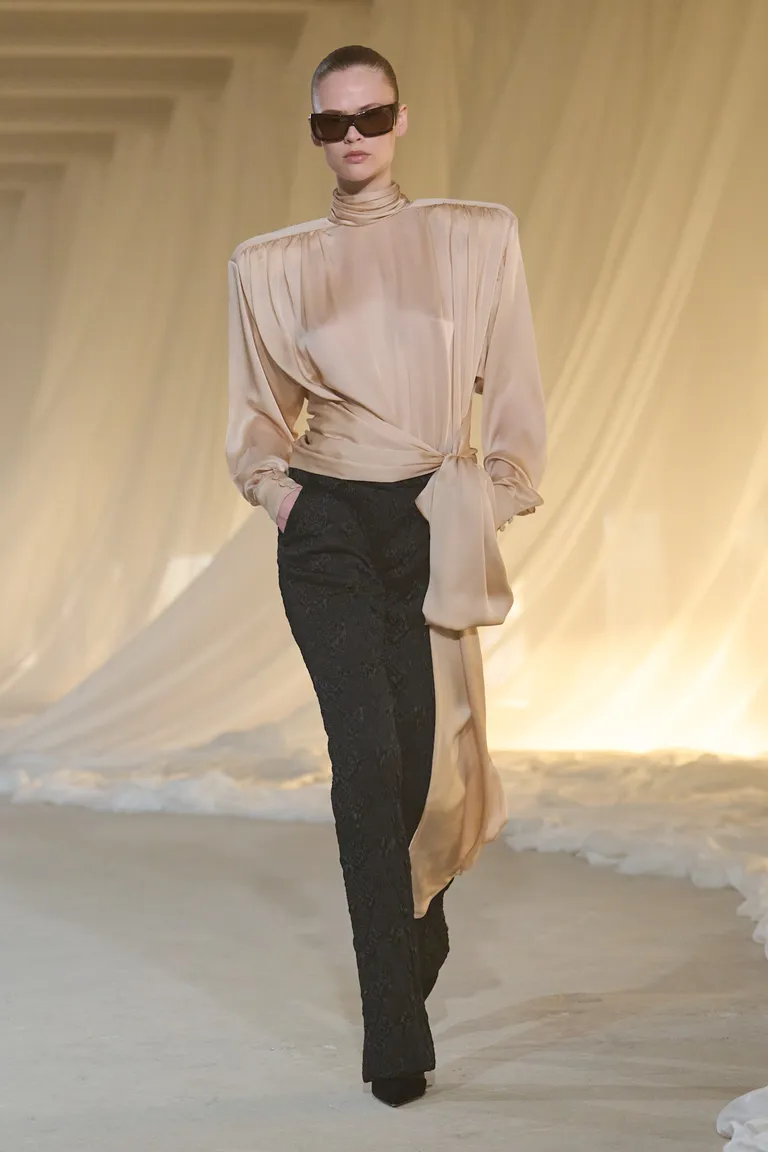
The runway was a study in shadows, occasionally interrupted by the saturated hues of a city at 3:00 AM: mustard, tobacco, and petrol blue. Tron treated the house’s signature gold like a rare commodity, scattering it with a jeweller’s precision to highlight, never to distract. The animalia (once a Balmain firework) was here re-imagined as a shadow-play of leopard spots and tiger ripples, emerging from the jacquards like creatures caught in a fleeting headlight.
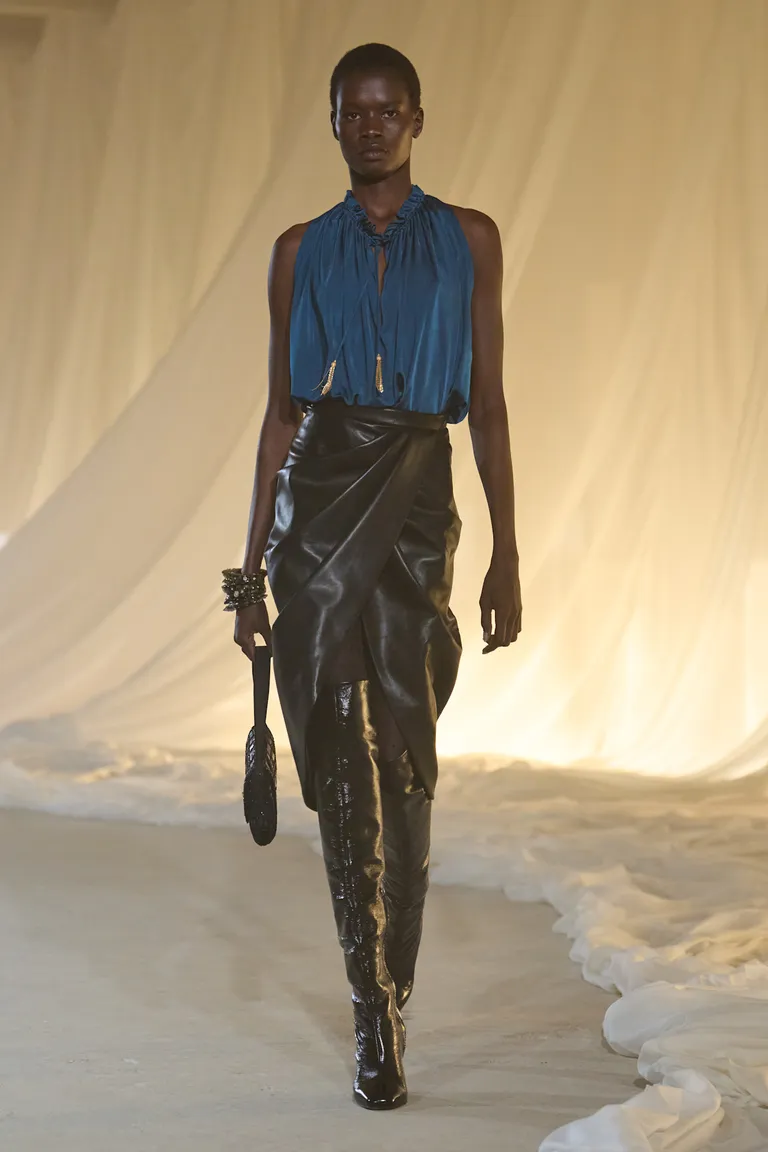
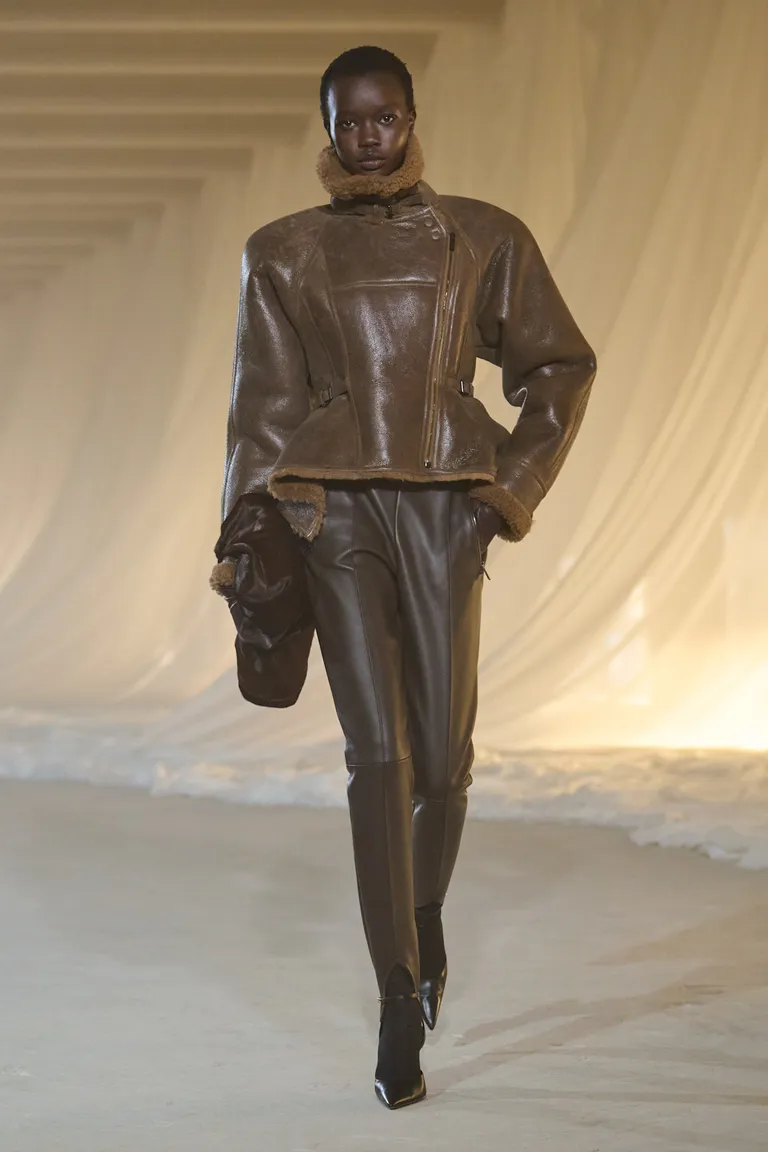
The collection’s backbone was its outerwear: a series of oversized leather coats and sculptural jackets that felt like modern-day breastplates. These glossy, aviation-inspired silhouettes, a nod to Balmain’s mid-century flight, provided a rigid exterior, yet Tron was careful to let the light in.
He softened the blow with his signature Atlein-esque draping: liquid silks and gossamer lace that slipped through the tailoring like a secret. With every slit and peek of a bralette, Tron revealed a flash of skin, a heartbeat of vulnerability beneath the architectural armour.
Stepping into the Balmain atelier meant inheriting a legacy defined by the high-wattage maximalism of Olivier Rousteing. For over a decade, Rousteing steered the house into the centre of the cultural zeitgeist, crafting a brand synonymous with daring glamour and a relentless celebrity pull. Tron’s arrival marks a recalibration of that very energy; same same, yet entirely different.
For more stories of fashion from around the world, visit our dedicated archives and follow us on Instagram.