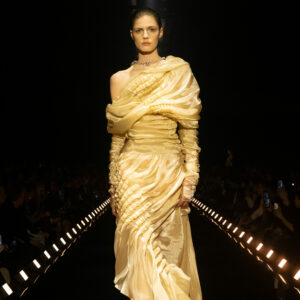
Guests arrive and the camera follows like a passenger in the car, close enough to catch the temperature of the moment before anyone steps out. In the intro, a young man runs, then stops short. There is writing on the pavement. Paul Poiret. He looks up and there stands the Dior building. The show begins like a sentence already mid-thought, as if the house is reminding everyone that fashion history is a live wire.
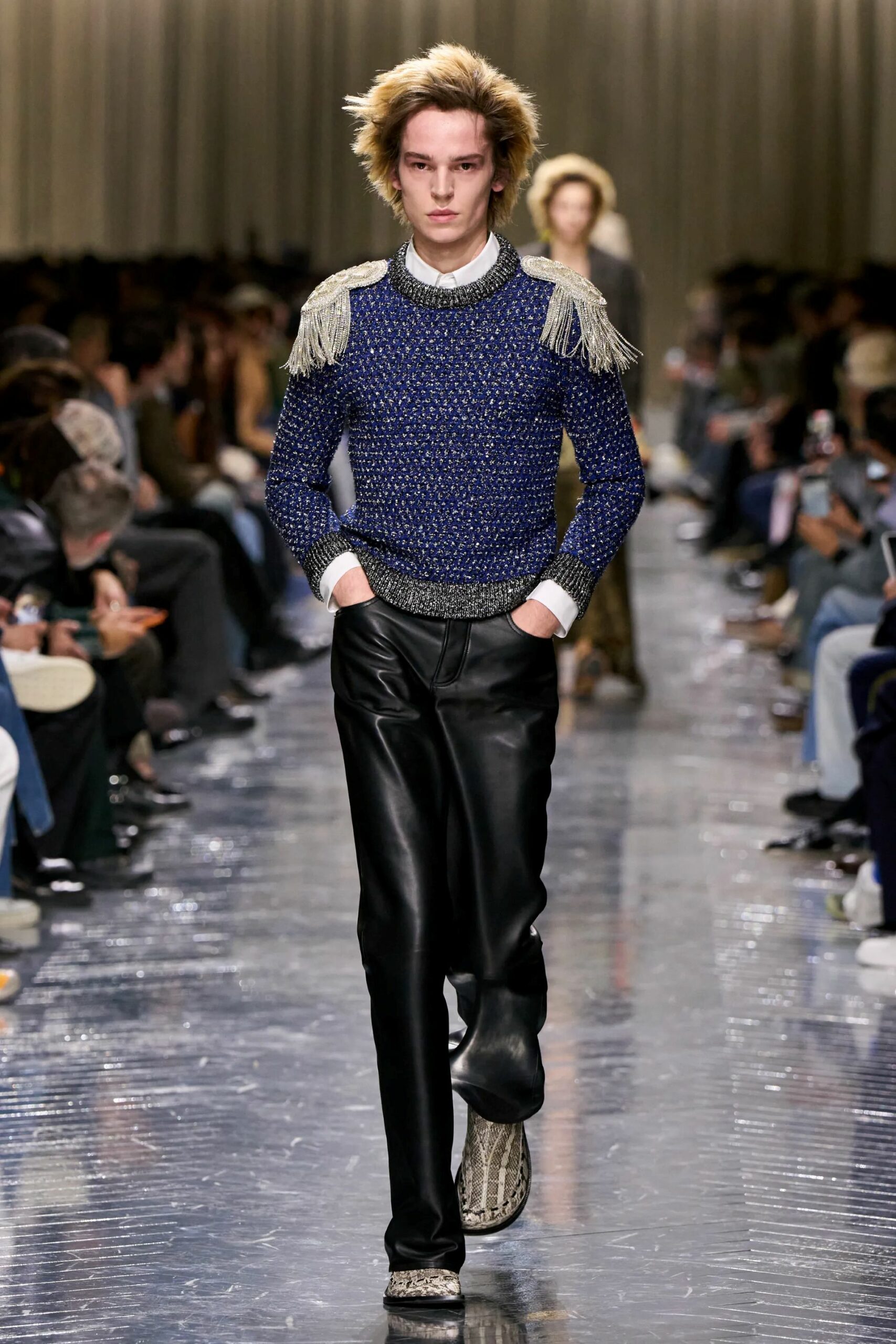
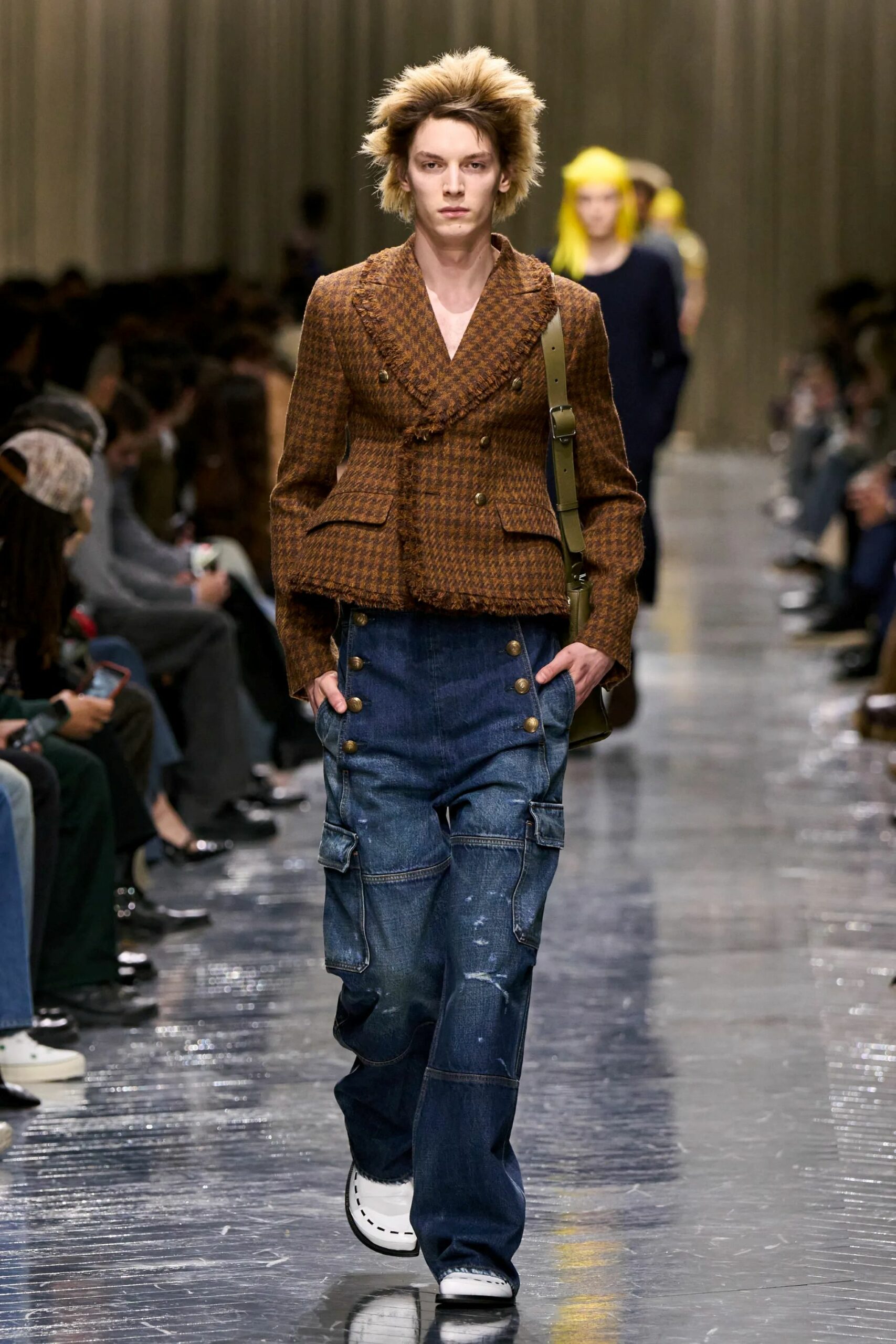
The runway looks like ice, the effect is immediate: cold, slick, theatrical. Then the clothes start talking, and they speak in a very specific dialect. Early 2000s comes through fast: Skinny jeans. Jewelled collar tops. Belts. And then the bag, the bag that used to go to school in eighth grade, except now it is Dior.
Menswear tips into femininity, the tops are openly feminine on the men’s runway, and the styling commits. Sequins with suede, a combination that sounds wrong on paper but lands, somehow. The jeans stay narrow. The hair goes strange. The wigs are weird. That deliberate wrongness becomes a kind of technique, because nothing sits quite right, and yet the overall effect is perfect.
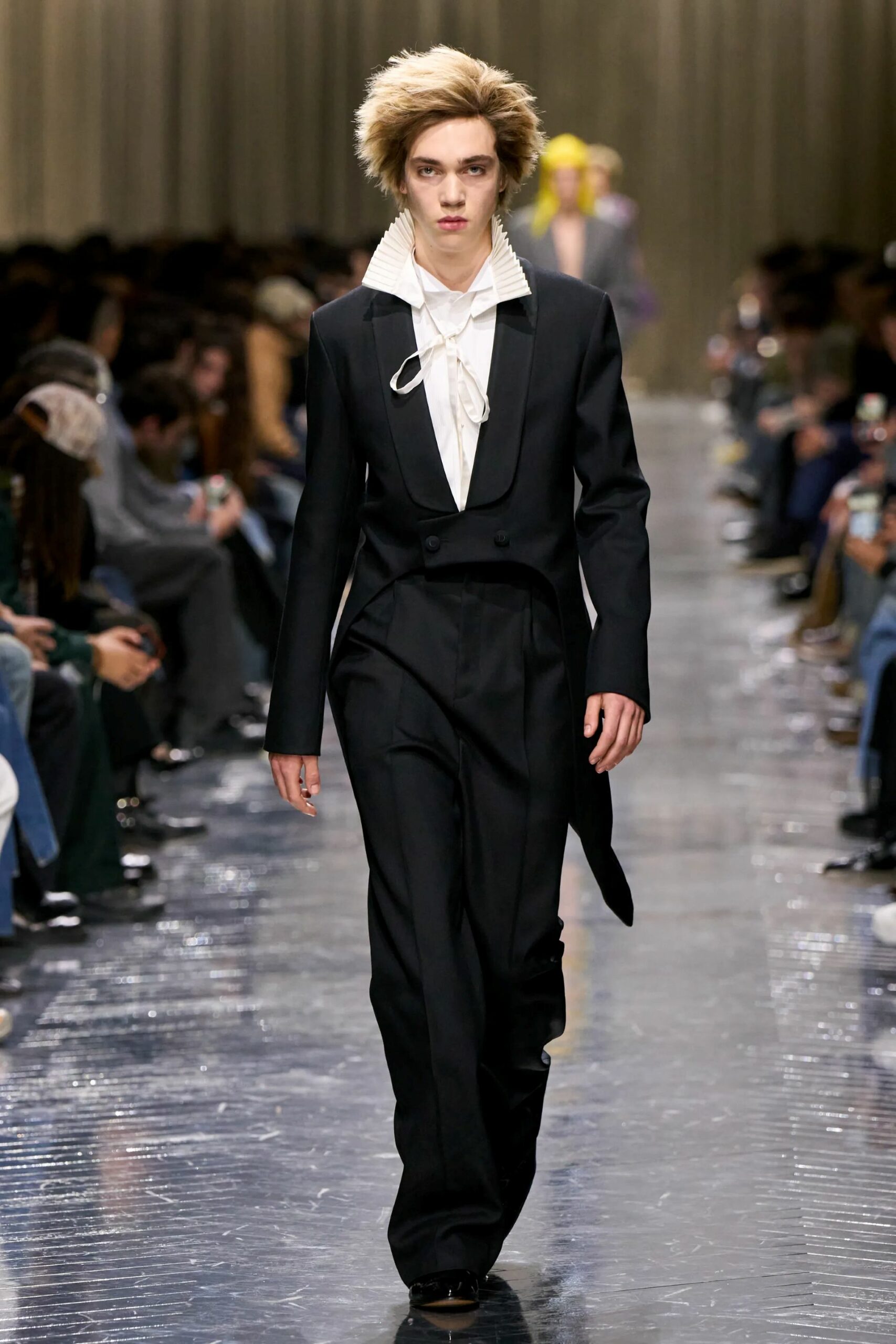
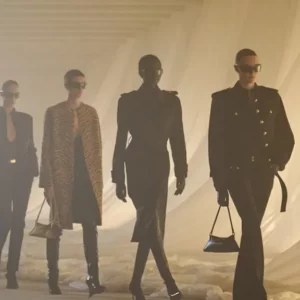
The noughties keep surfacing, but the silhouettes do not stay stuck in throwback mode. Structured jackets cut through the flashback with something more formal in the line, something that recalls the logic of the New Look in menswear proportions. It is an exciting idea when it appears, because it suggests discipline under whatever the early 2000s were. With Dior, every man is wearing a bag.
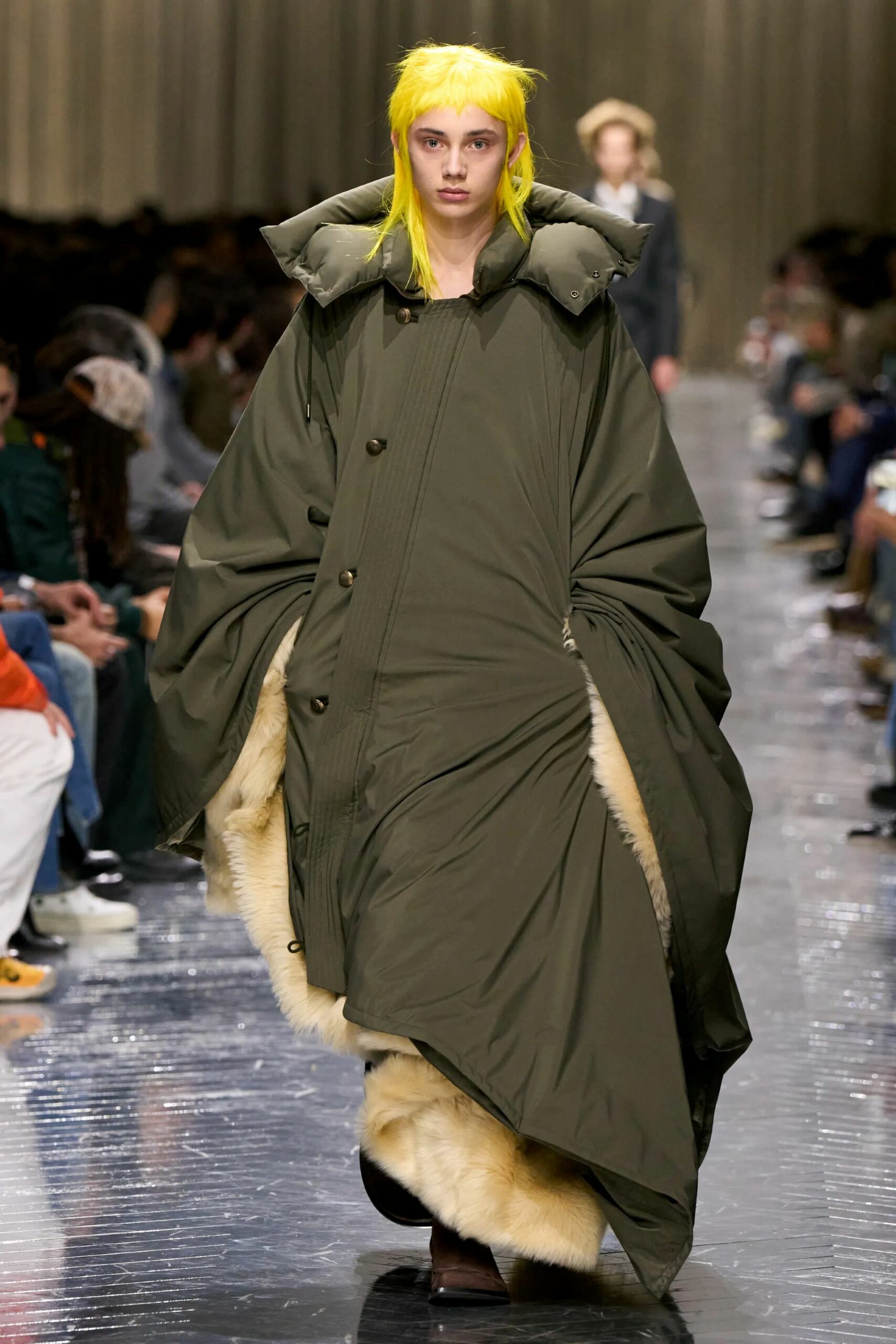
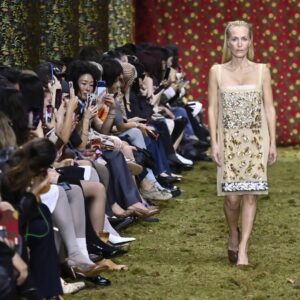
Women enter with styling that is almost provocatively unglamorous. Yellow wigs, identical and intentionally bad, like they were bought from a corner shop on the way to the venue. It is not subtle. It is not trying to be pretty. It reads as a choice, a visual interruption that keeps the show from becoming too elegant, too correct, too easy.
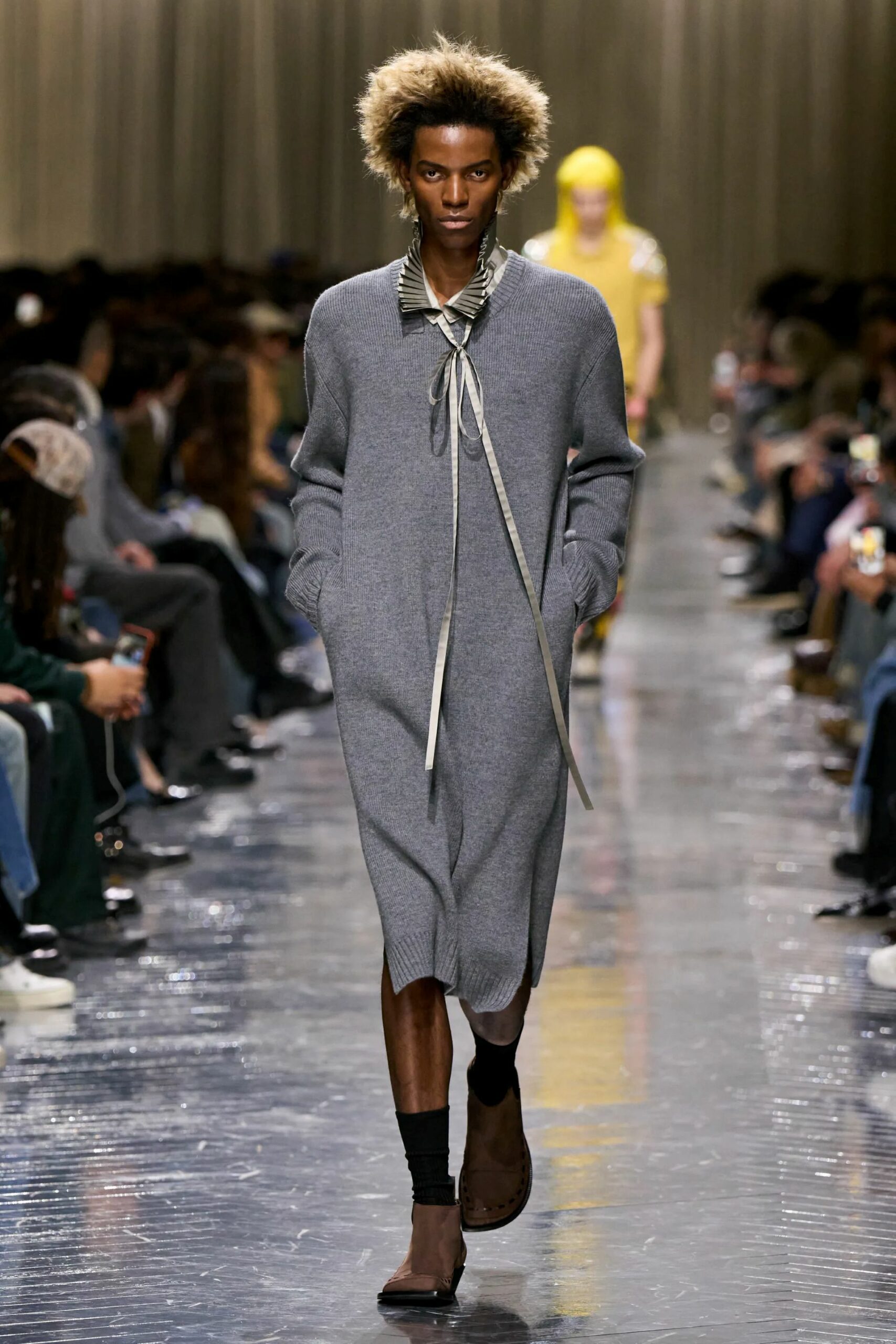
Patterns and surfaces pile on: florals, sequins, weird clashes that refuse harmony. Then come the details that mash codes together. Epaulettes, the kind generals wear, but rendered in sequins and finished with fringe, like the trim on the bottom of cowboy jackets. Military and Western, filtered through sparkle. It is not costume. The clothes keep playing with authority and performance at the same time.
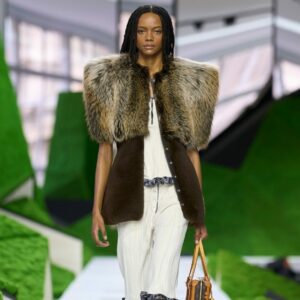
Then the suit section arrives and the grammar changes again. Suits with tails. Outerwear that looks like suiting. Parkas that behave like jackets. More tails, bows, and the hair gets crazier. Categories start swapping roles: outerwear as suits, suits as outerwear. Fur sleeves migrate across everything, appearing on coats and on suiting, while the styling insists on bare skin. Lots of nothing underneath. The collection leans into androgyny as a practical reality on the runway. Some models are hard to place as men or women, as it has never mattered.
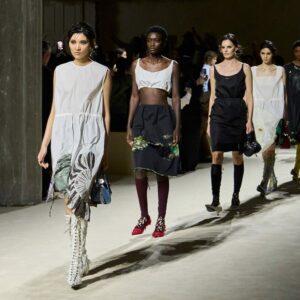
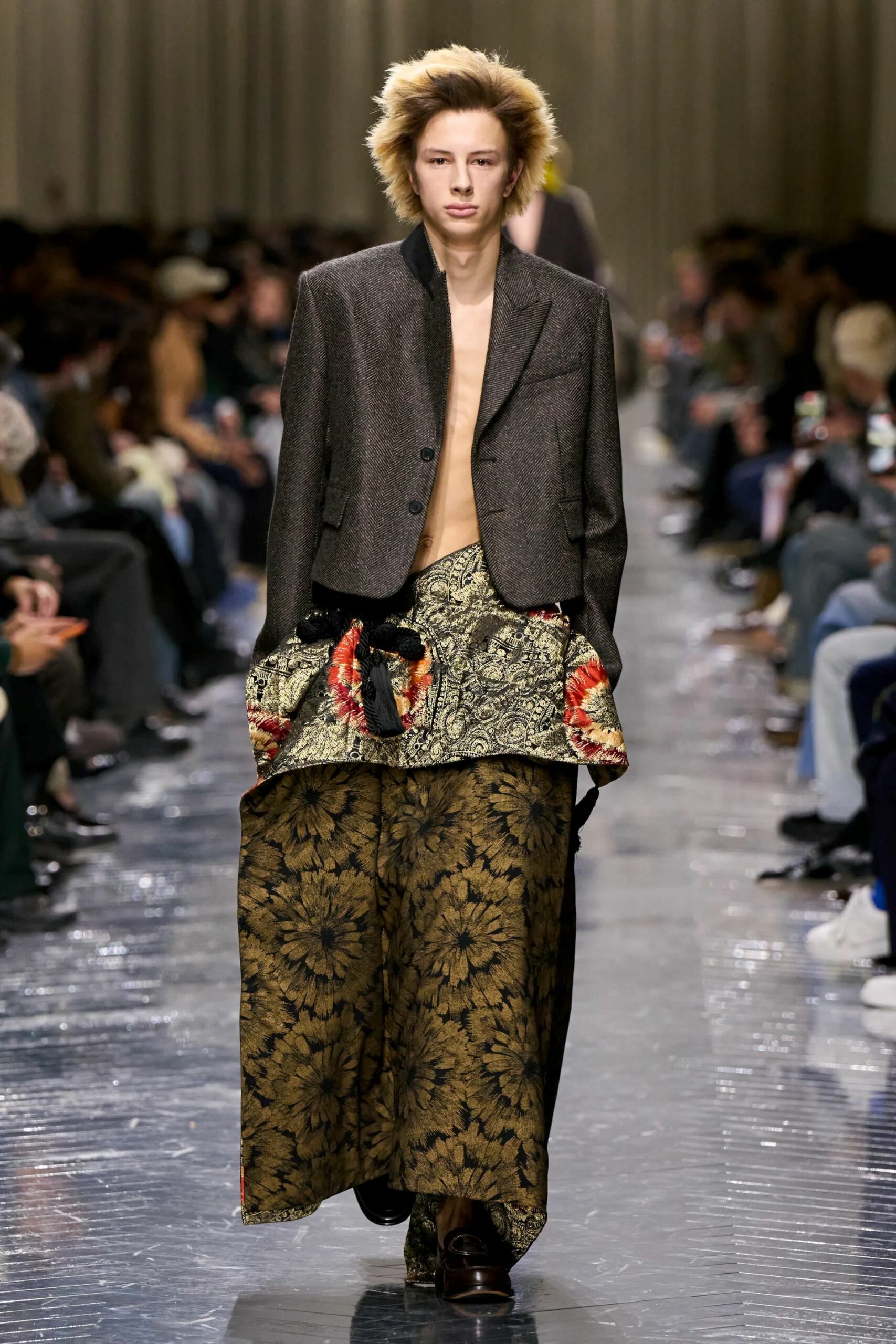
Midway, the silhouettes stretch into full-length pieces that feel South Asian–inspired: a tunic on one model, a larger overall-coat on another. Gold brocade appears, rich and ornamental, adding a ceremonial weight to the line. Some coats move like skirts. The show keeps blurring boundaries, not just between genders, but between categories of dress, between daywear and costume, between memory and invention.
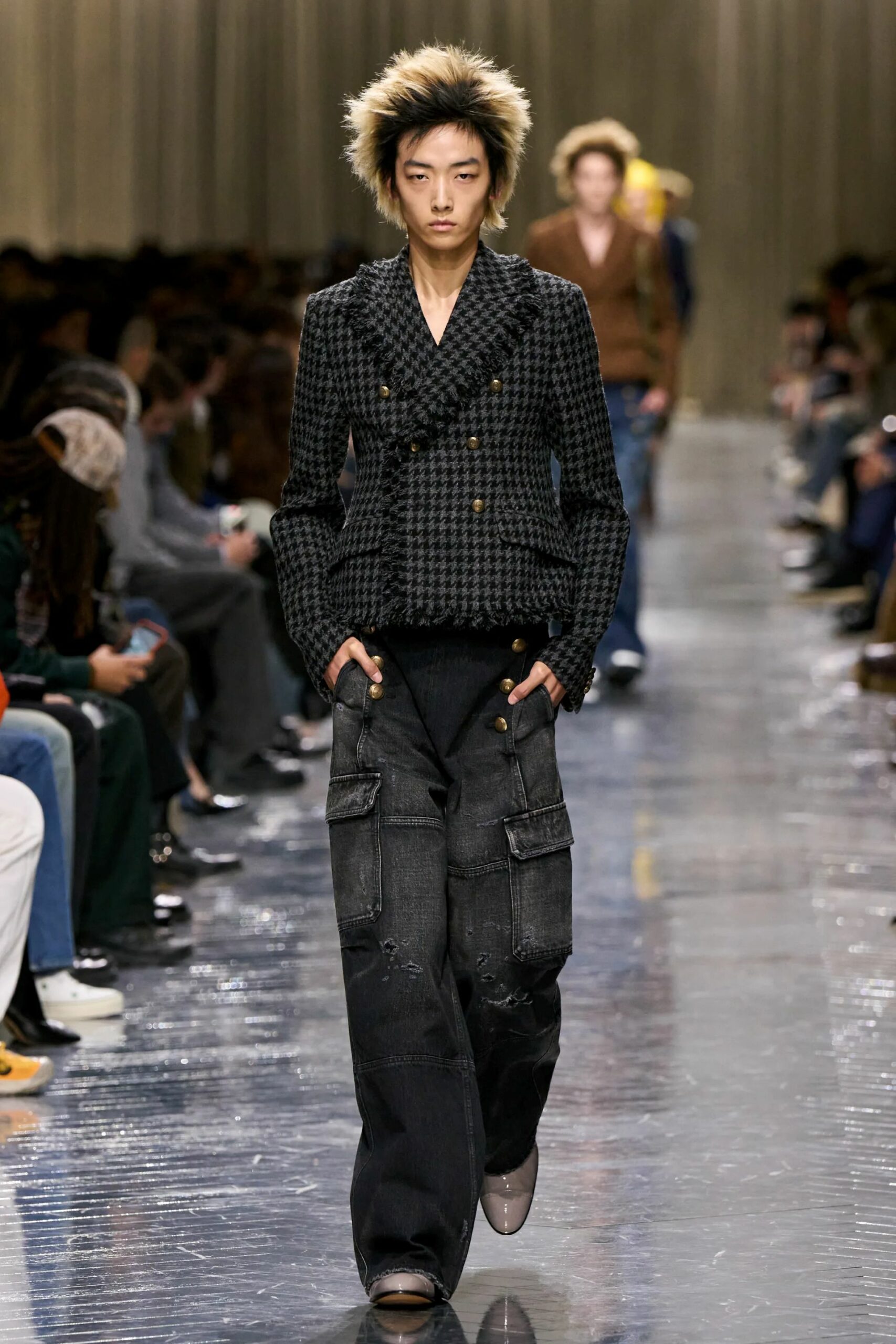
Through all of it, the hand behind the clothes reads as sculptural. There are structured looks with capes and voluminous upper parts, creating an artistic architecture that still nods to the Bar jacket. The silhouettes hold themselves, even when everything around them is intentionally off-kilter.
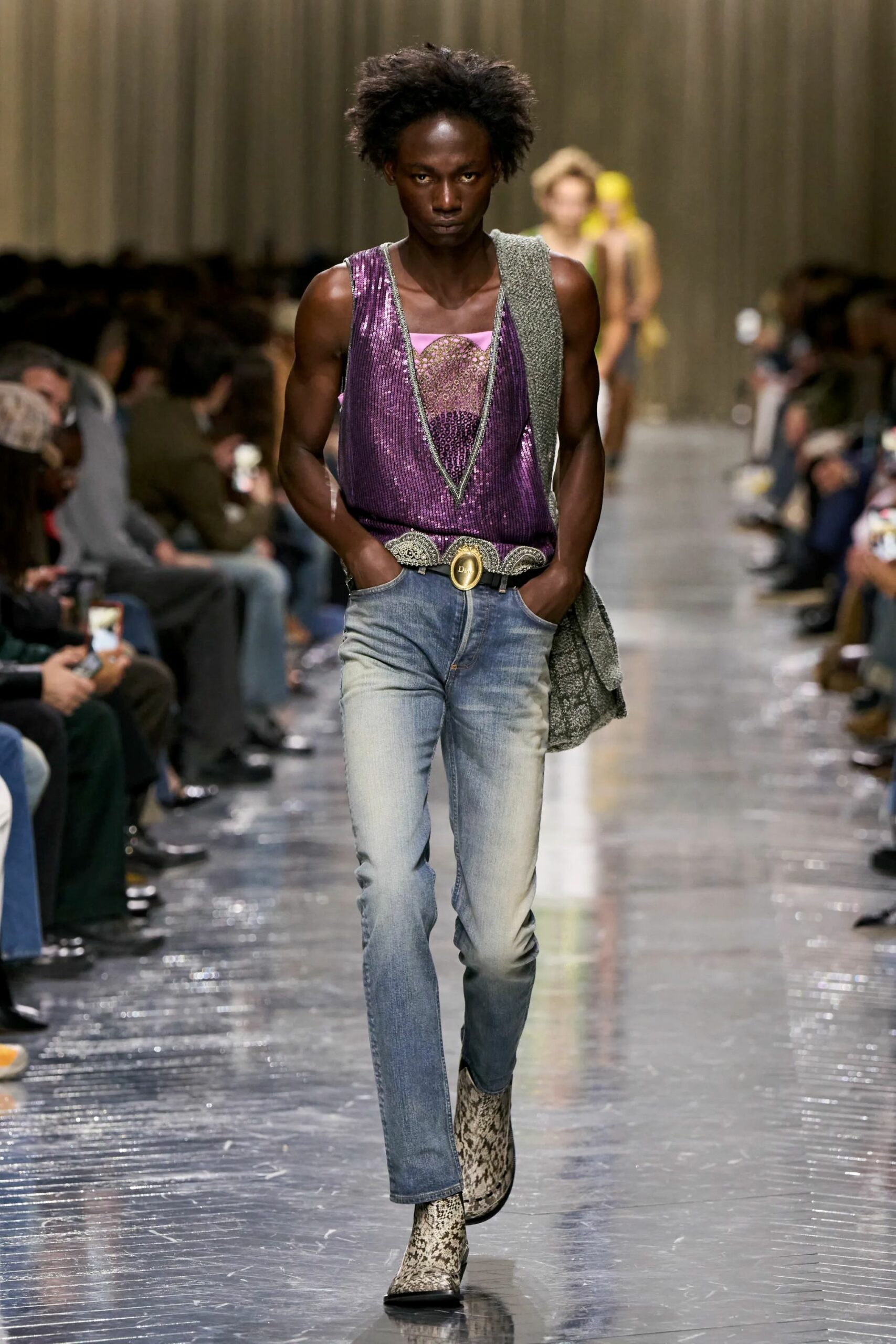
It feels like Diesel meets Gianni Versace in the 90s. It is rock and roll, but the fun kind, with pieces of disco and pieces of grunge. Even the soundtrack, as it reads in the room, feels melancholic but cool and grunge. That becomes the emotional centre: a kind of bruised glamour that refuses seriousness while still taking serious craft. Dior kept flirting with chaos, with wrongness, with excess. Nothing sits quite right… still perfect.
For the latest fashion news visit our dedicated archives and stay across our Instagram.