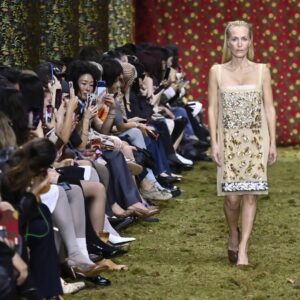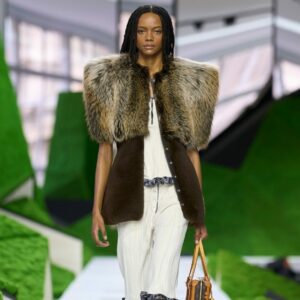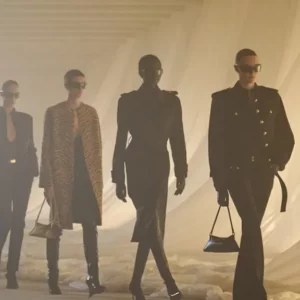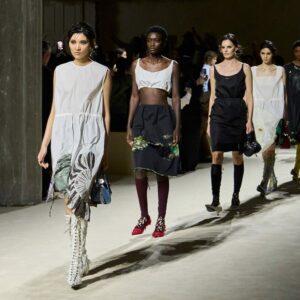
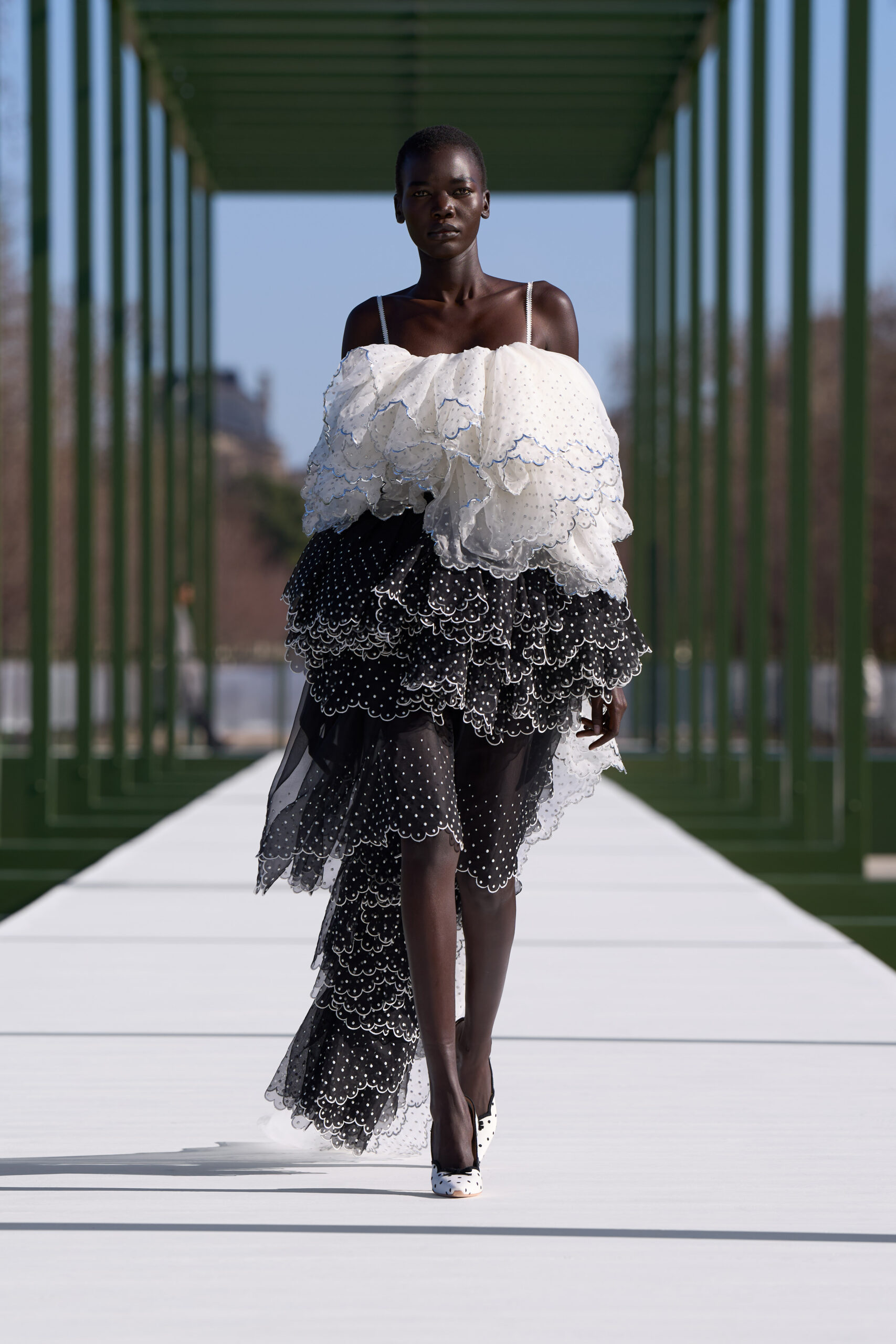
Flowers have always been part of Dior’s vocabulary. Christian Dior grew up in a house in Granville surrounded by gardens that his mother carefully cultivated, and he often credited those early landscapes with shaping his sense of beauty. Later in life he recreated that world around himself, building extensive gardens at his homes in Milly-la-Forêt and La Colle Noire. He once said that after women, flowers were the most beautiful thing God had given the world. The influence went beyond decoration. Dior’s first collection in 1947 introduced the Corolle line, a silhouette conceived like a flower, with a cinched waist and skirts that opened like petals. For Autumn Winter 2026, Jonathan Anderson returned to that origin point and pushed it further. The entire show unfolded like a study of flowers.
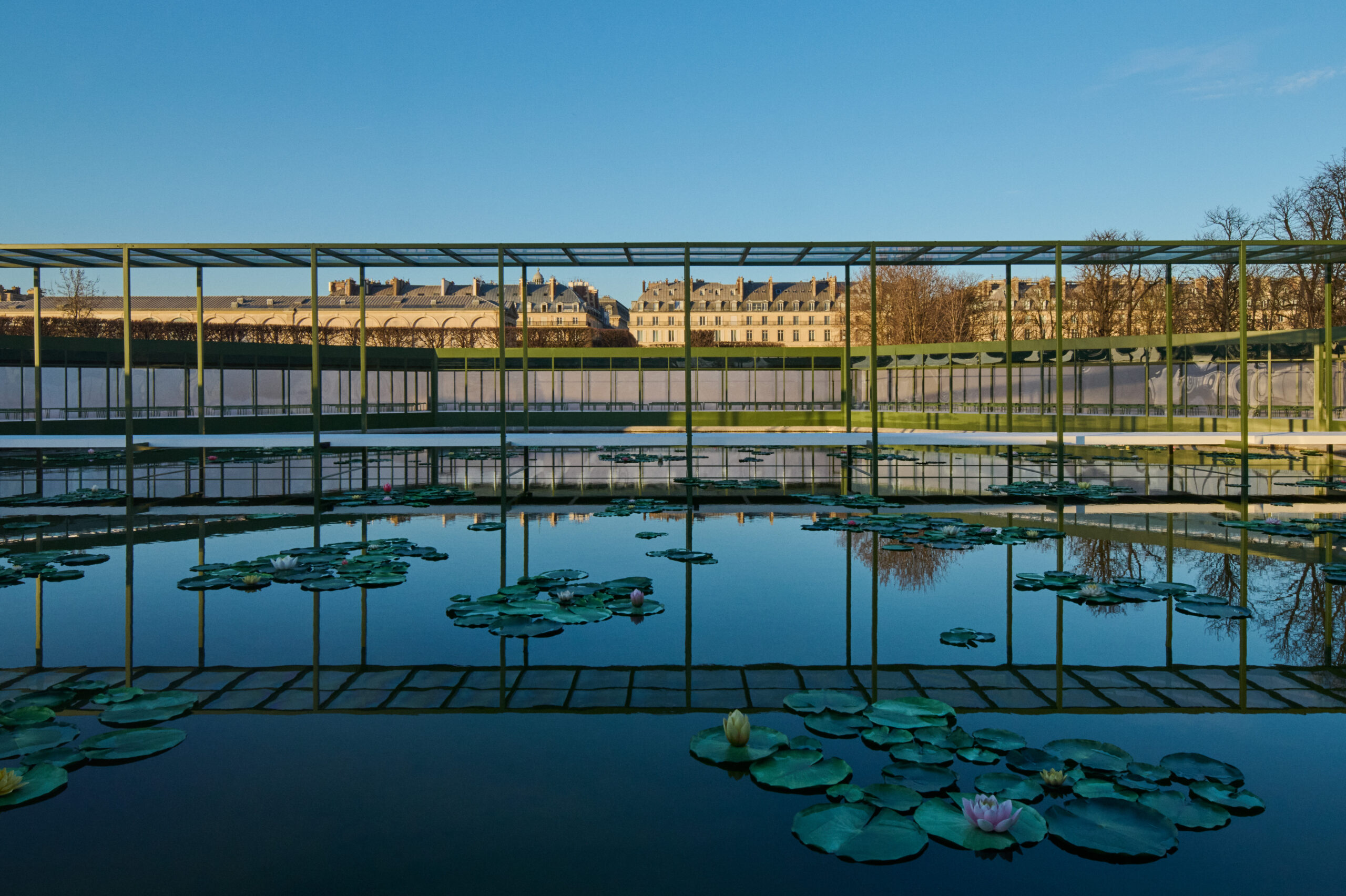
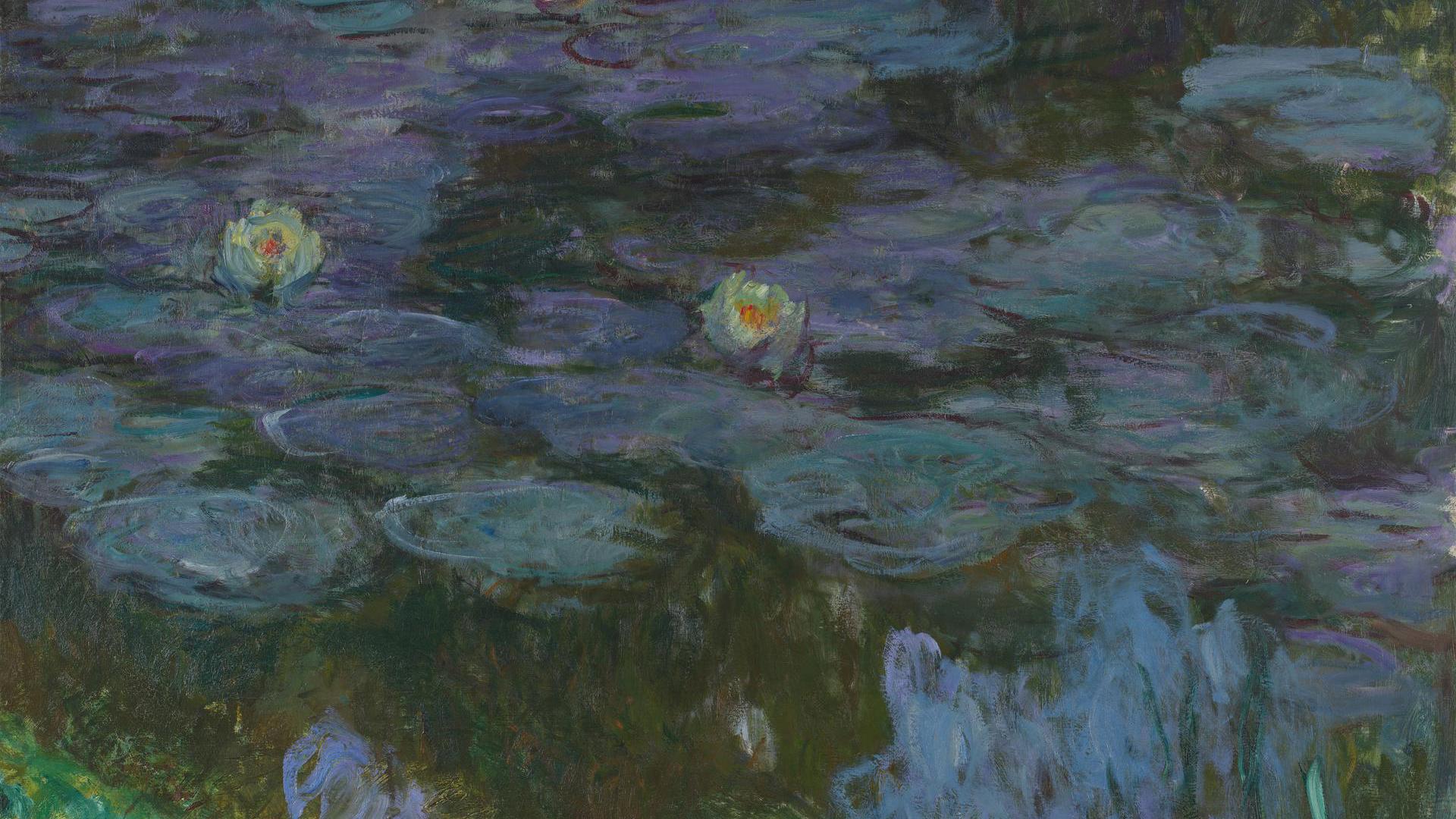
The setting made the idea unmistakable. Guests arrived to a pond scattered with water lilies inside the Jardin des Tuileries. Models crossed the space as reflections moved in the water beneath them. The scene immediately recalled Claude Monet’s water lily paintings from his garden in Giverny, a series he worked on for more than three decades. Monet built that garden himself in the late nineteenth century, diverting a stream to create the pond and planting water lilies so that he could study light, colour and reflection on its surface. Those paintings became some of the most influential works of Impressionism. In the middle of Paris, the atmosphere felt suspended in that same quiet attention to nature. Fashion week often thrives on intensity, but here the pace felt slower, almost contemplative, as though the collection had grown out of the garden itself.
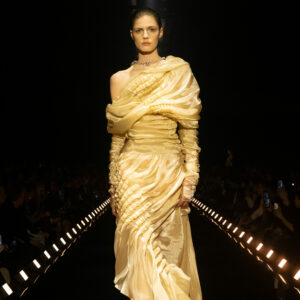
The clothes continued the theme with remarkable consistency. Flowers appeared everywhere. Sometimes they were literal. Fabric blooms were pinned onto bodices, placed along straps, or clustered across skirts. Embroideries traced floral shapes across lace and silk. Shoes carried lily references and accessories followed the same direction. Decoration alone, however, was never the point.
Anderson approached flowers as a system of construction. Many silhouettes opened around the body the way petals unfold. Peplum jackets curved away from the waist. Ruffled blouses layered into soft rings. Skirts held volume that spread outward like a bloom reaching full height. Movement was essential. When the models walked the garments seemed to lift and settle with a natural rhythm.
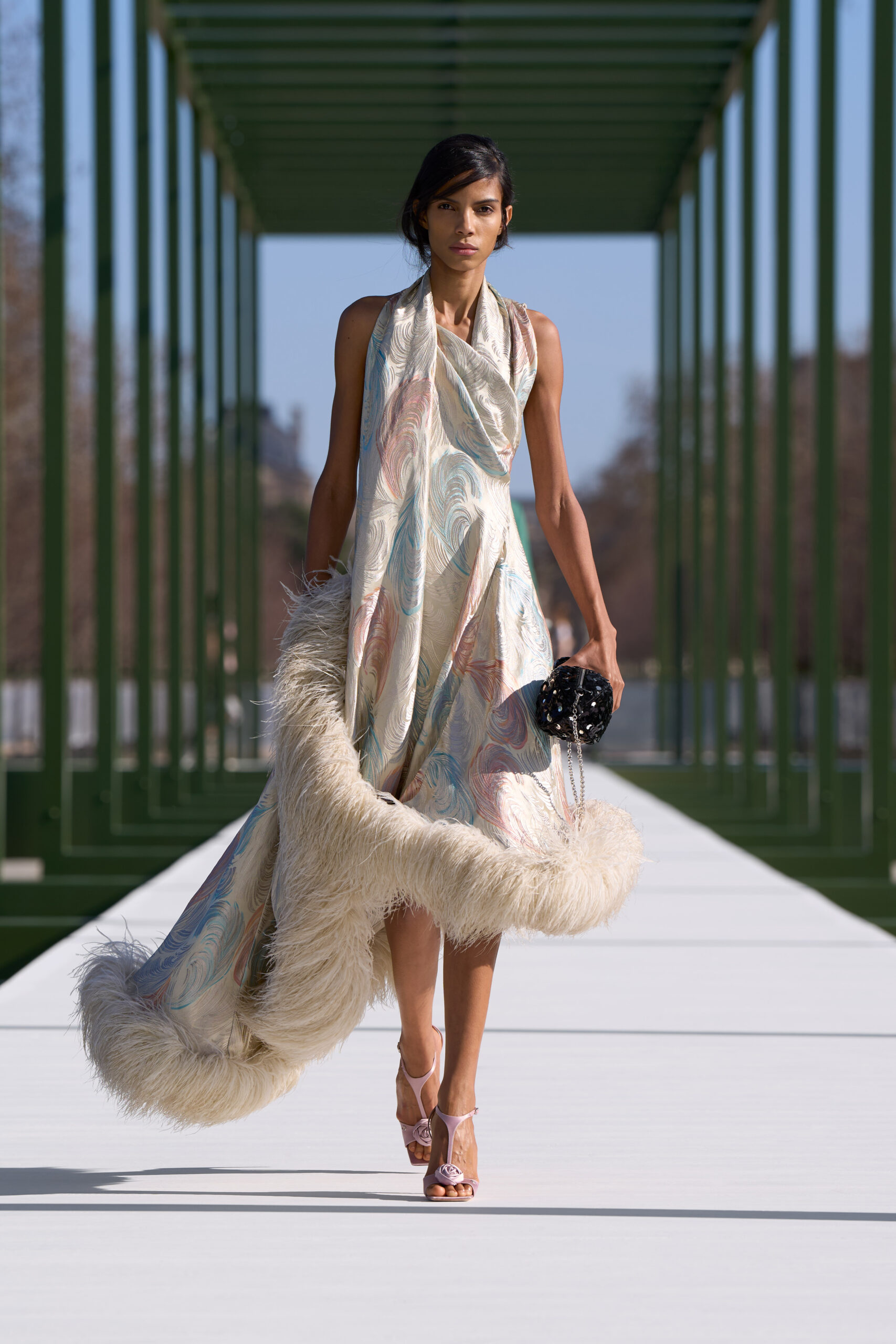
Texture played a major role. Chantilly lace, silk, tweed and tulle created surfaces that felt tactile and alive. Some dresses gathered into rippling layers. Others carried small trains that trailed behind the body like petals on water. Even the house’s historic Bar jacket appeared within this language, the waist flared outward with the logic of a flower.
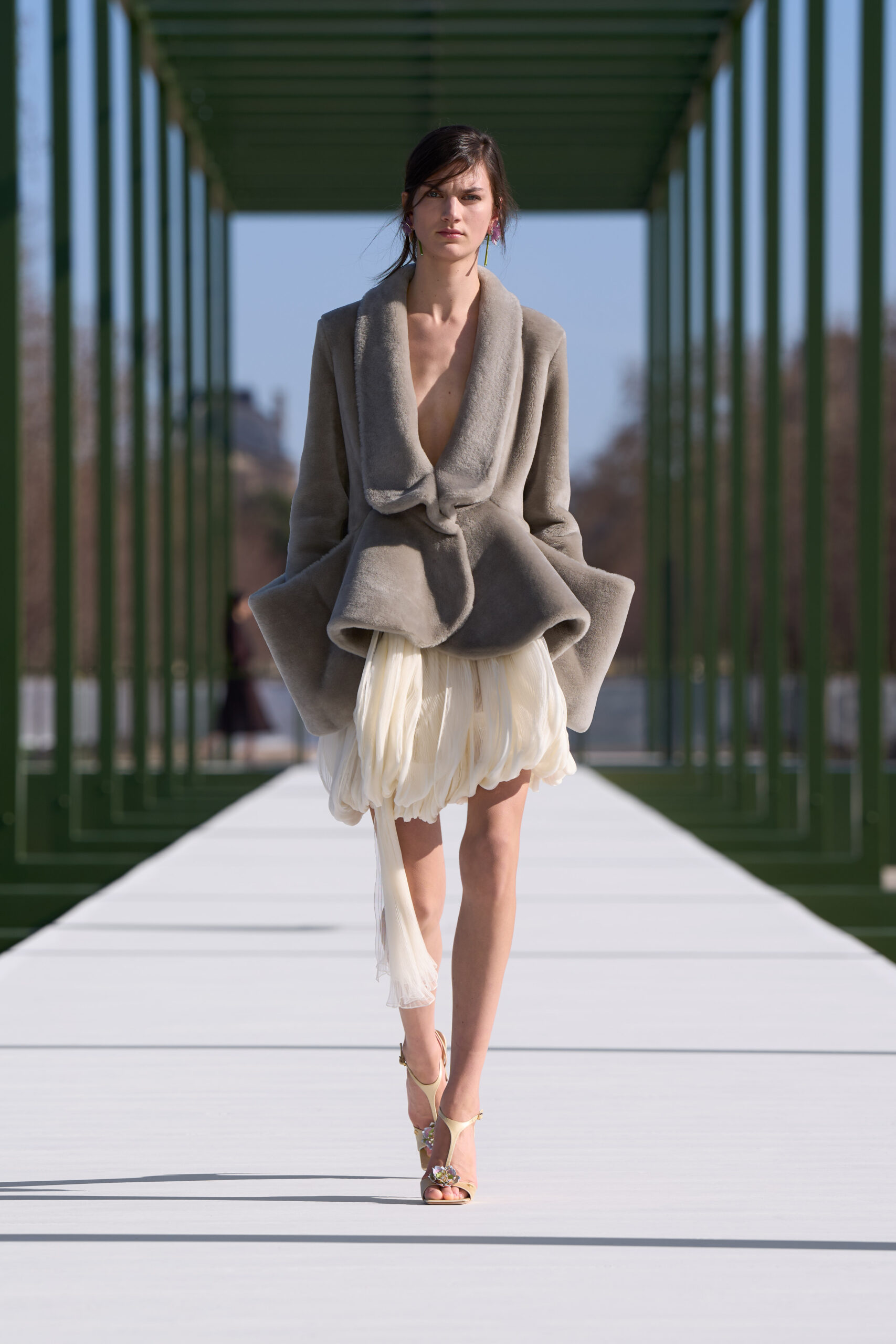
What made the collection compelling was its clarity. Anderson did not treat florals as a seasonal motif. He treated them as a principle. Flowers informed the environment, the invitation, the silhouette and the smallest embellishment. The result was a collection where every element spoke the same language.
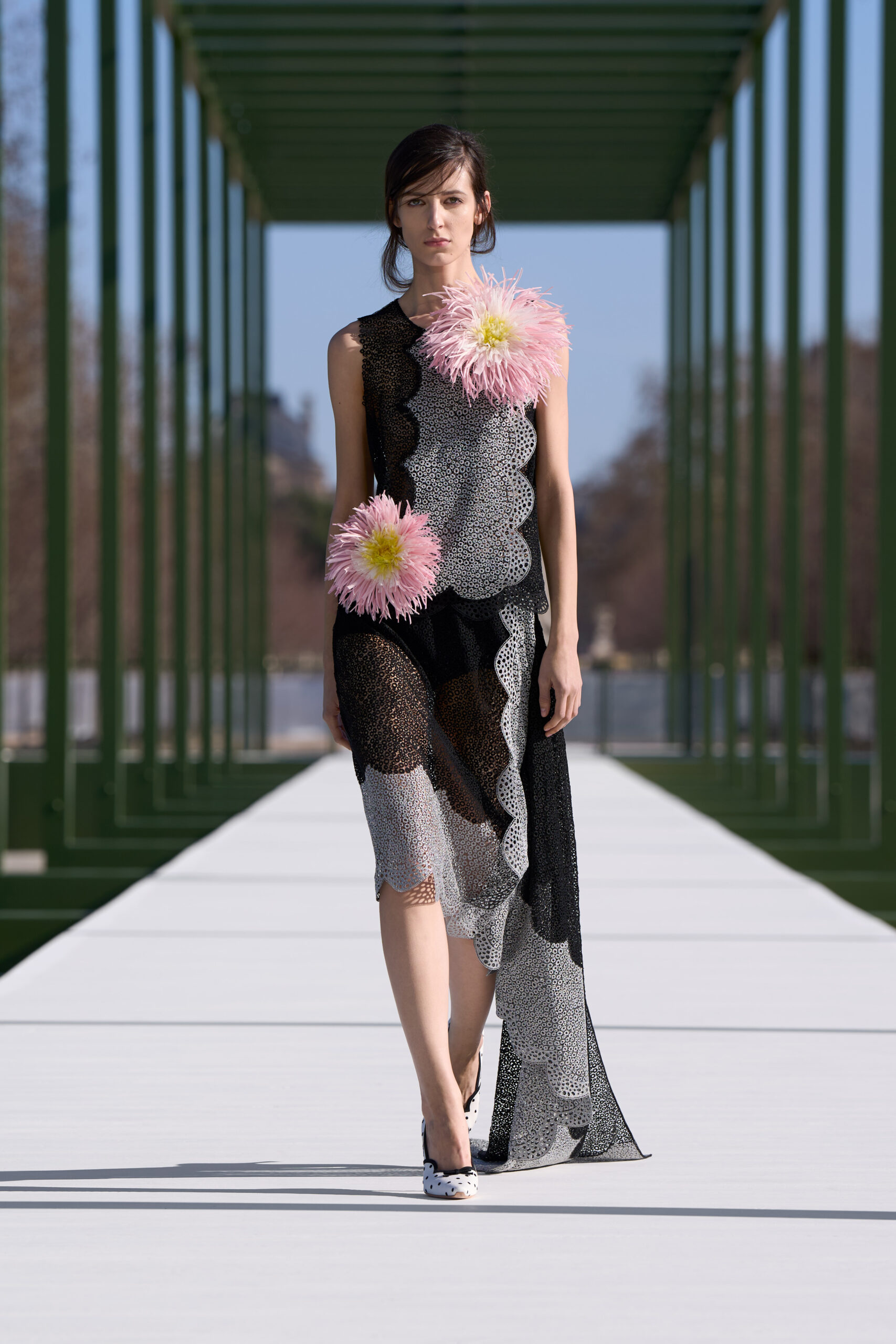
Dior has always returned to the garden. This season it felt as though the entire house had stepped back inside it.
For more stories of fashion from around the world, visit our dedicated archives and follow us on Instagram.