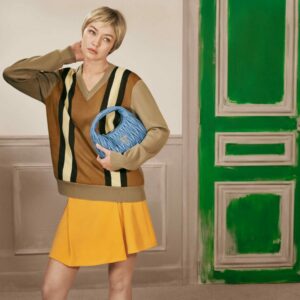
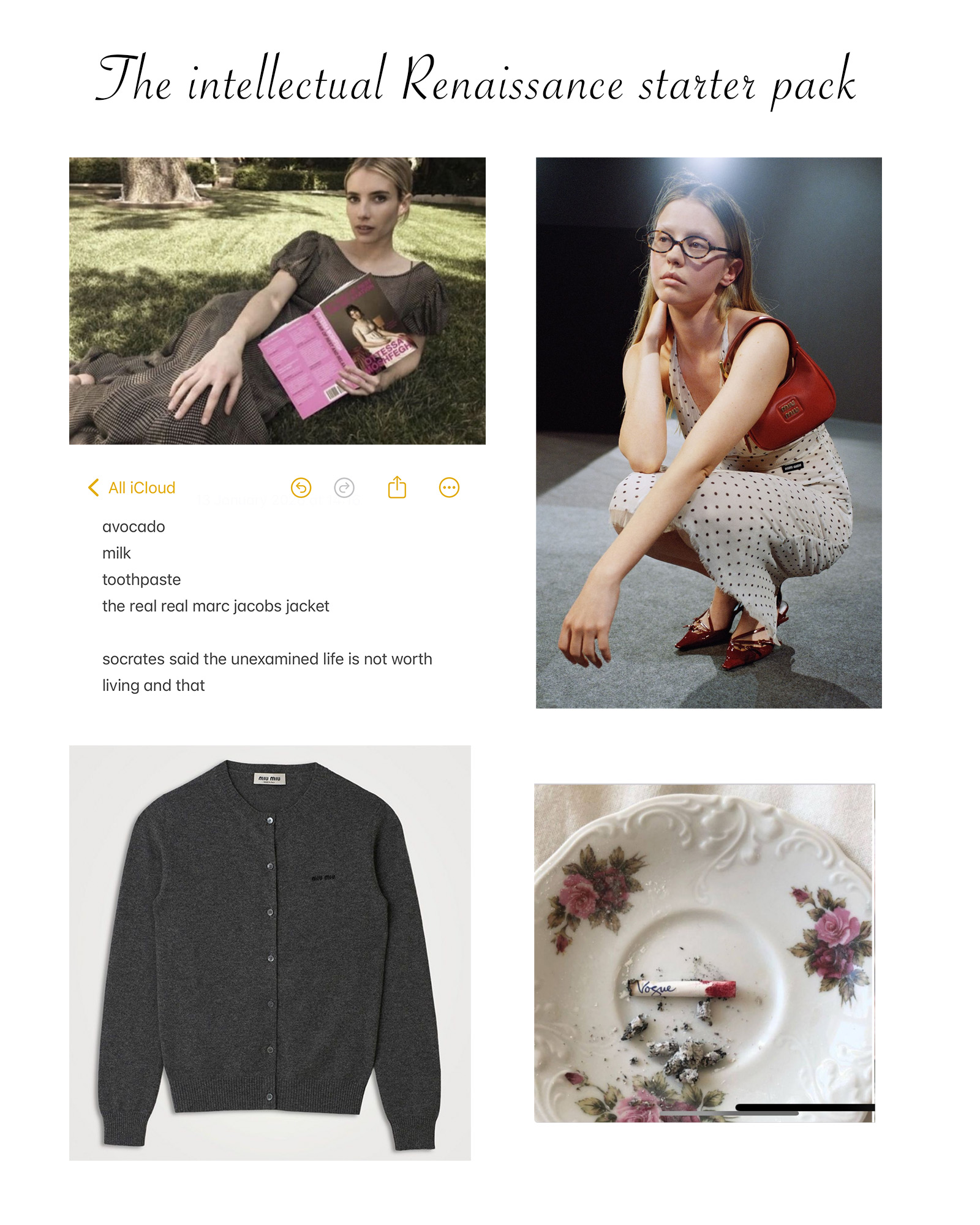
Somewhere between runways and reading lists, fashion has started dressing not just for taste, but for thought. At its clearest, that shift reveals a new archetype taking shape. You’ve seen them: Miu Miu glasses pushed up the bridge of the nose, cardigans shrugged on like literate armour, tote bags collapsing under the weight of paperbacks, evenings spent at book clubs instead of nightclubs. They are the anti-thesis to the hyper-trendy, chronically online, screen-burnt ensemble.
This subculture is the patron saint of humanities, a space of rebellion and refinement. Literature. Philosophy. Anthropology. Sociology. History. If academia has a muse, fashion has now decided to dress her.
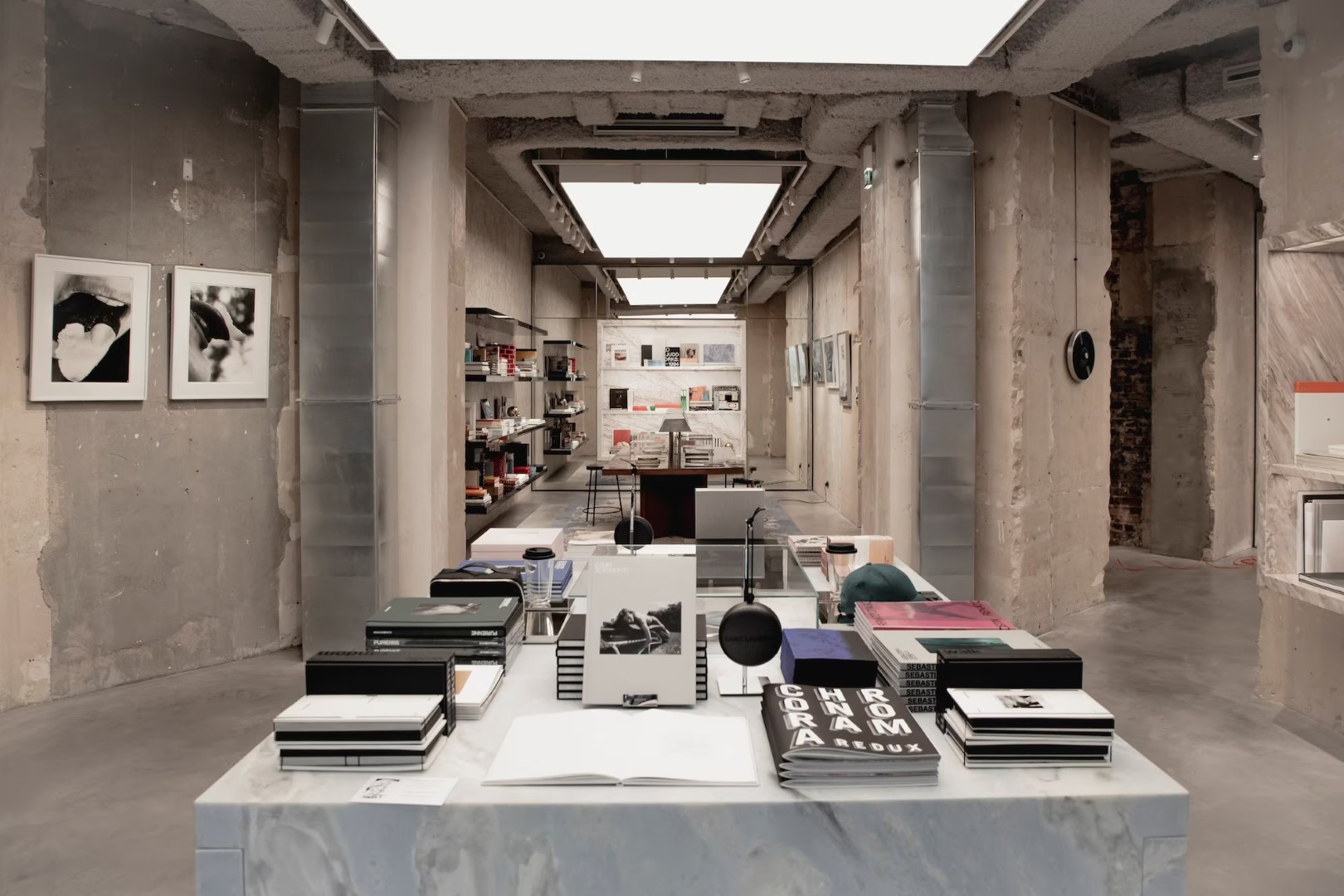
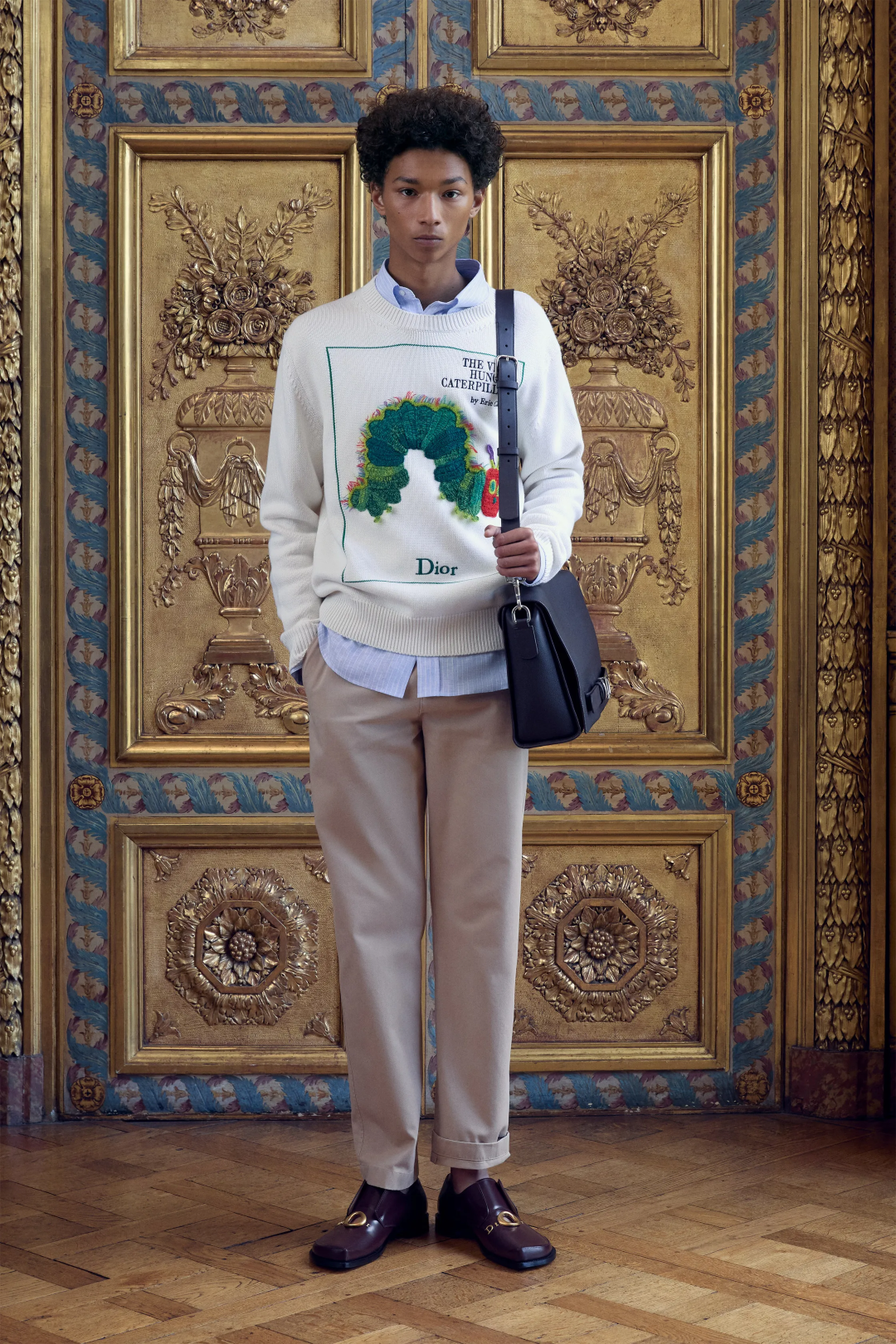
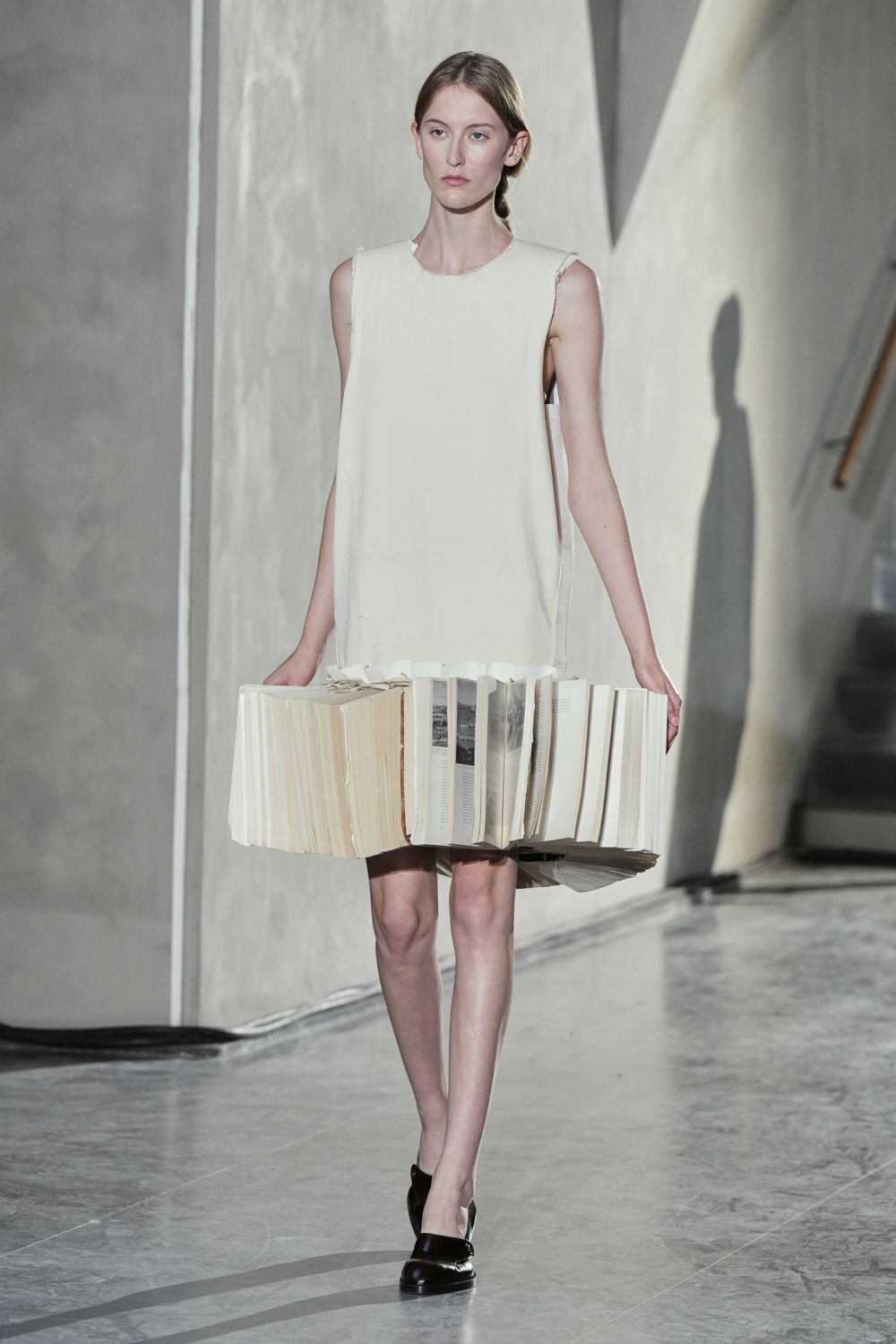
Across the industry, brands are no longer just referencing books, they’re institutionalising them. Saint Laurent opening an entire Paris storefront devoted to art, books, and cultural ephemera. Valentino staging ‘The Narratives’ in Milan’s public university and sponsoring the 2024 International Booker Prize ceremony. Joseph Altazzura gifting every SS26 attendee a copy of ‘The Memory Police’ by Yōko Ogawa, annotated with references. Chanel resurrecting literary salons. Thom Browne turning Edgar Allen Poe’s ‘The Raven’ into theatre. Prada commissioning Ottessa Moshfehgh for 10 short stories starring Carey Mulligan. Dior printing penguin classics onto totes. Dior men leaning into Ivy League patrician codes. Miu Miu frames becoming shorthand for literacy. Hodakova turned discarded books into a dress. The list extends far past the runway.
What once read as novelty has become a choreography that insists on the value of humanities.
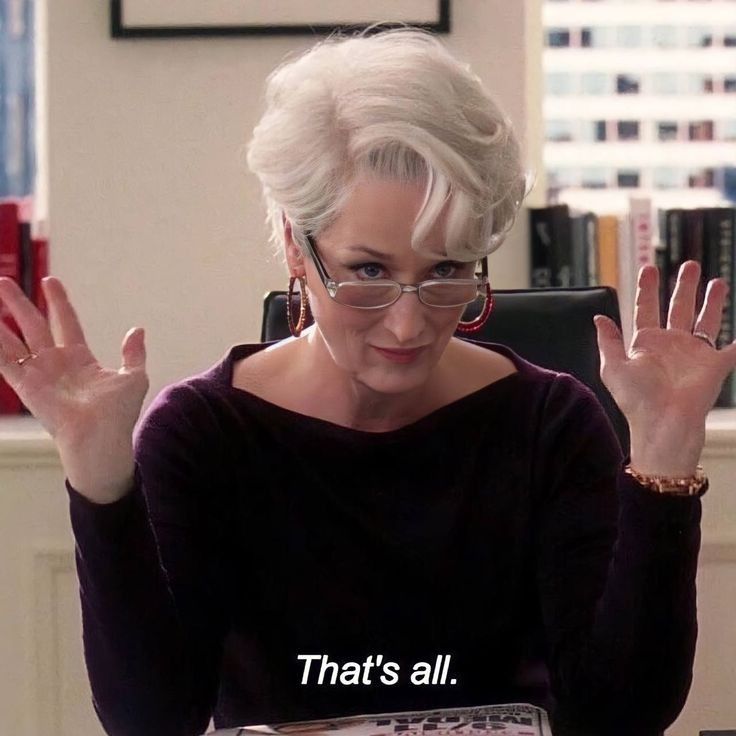
The shift isn’t happening in a vacuum. It’s a response to the anti-intellectualism shaping modern attention habits. The social media economy has created an attention landscape of surface-level content, AI slop, hyper-velocity information, doomscrolling, and overconsumption-core. A cultural language was defined. The art of nuance, the art of depth waned as convenience toppled consideration and volume overshadowed nuance.
The National Library of Medicine reports a 20-year decline in reading for pleasure in the U.S., a statement that the Harvard Gazette attributes to the consumption of other forms of media. And it’s true. It’s not that we read less, in fact we probably read more. Constant messaging. Corporate emails. Infinite social media posts. TikTok captions. News snippets. Substack shopping lists. The result? A generation that reads constantly yet rarely with intention.
A cognitive exhaustion has set in. A hunger for texture and depth was craved. And a modern renaissance is rising out of yearning for substance.
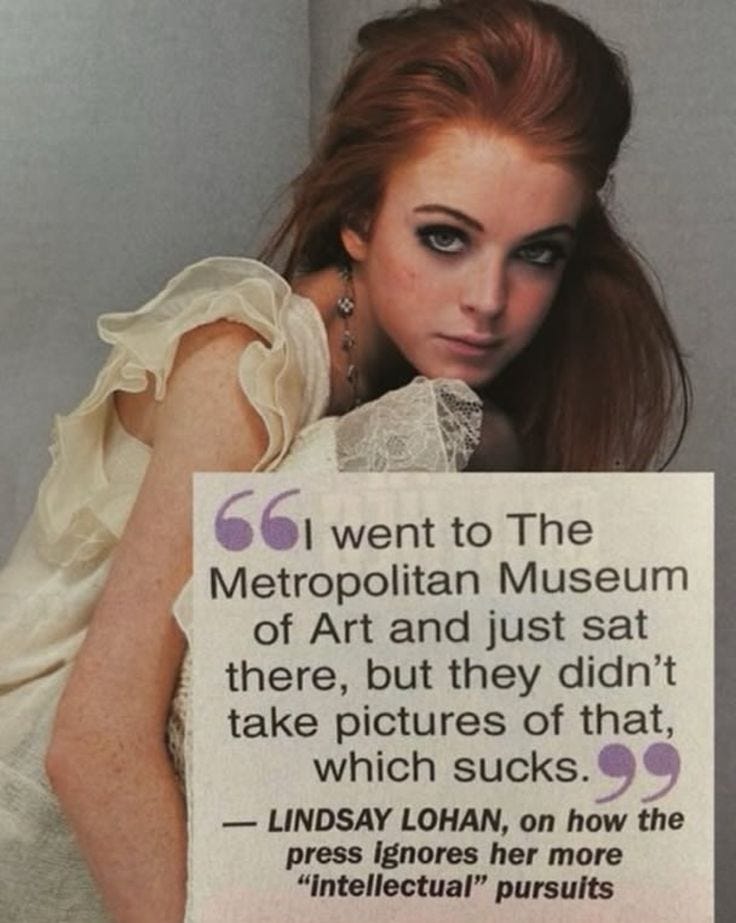
Fashion, sensing the vacuum, reframed literacy itself as cultural capital. By literalising the link between garments and books, it transformed literacy into a visual language of discernment, an oppositional posture against cultural brain-rot. A pair of Miu Miu gasses or a Penguin paperback stands as a form of resistance against cultural flattening. Reading, much like luxury fashion, has become a marker of opulence and status. Not because it’s elite, but because it requires time; a resource rare and coveted now more than ever.

If this intellectual renaissance pushes even a handful of people to pick up a novel, attend a lecture, or actually finish a book languishing on their nightstand, then just maybe, fashion has accomplished something greater than dressing mannequins.
So, in Miuccia Prada’s words “Study, study, study. Learn, watch movies, watch art, read literature.”
For more stories of art, culture and fashion visit our dedicated archives and follow us on Instagram.