Gucci welcomed guests into a grand hall lined with Roman sculptures, a setting that immediately grounded the show in history and permanence. Celebrities gathered at the entrance before a single, elongated runway stretched through the space, cinematic in scale and atmosphere. The anticipation was unmistakable. This was Demna’s first runway for the house, and the industry arrived knowing it would signal a new direction for one of fashion’s most influential brands.
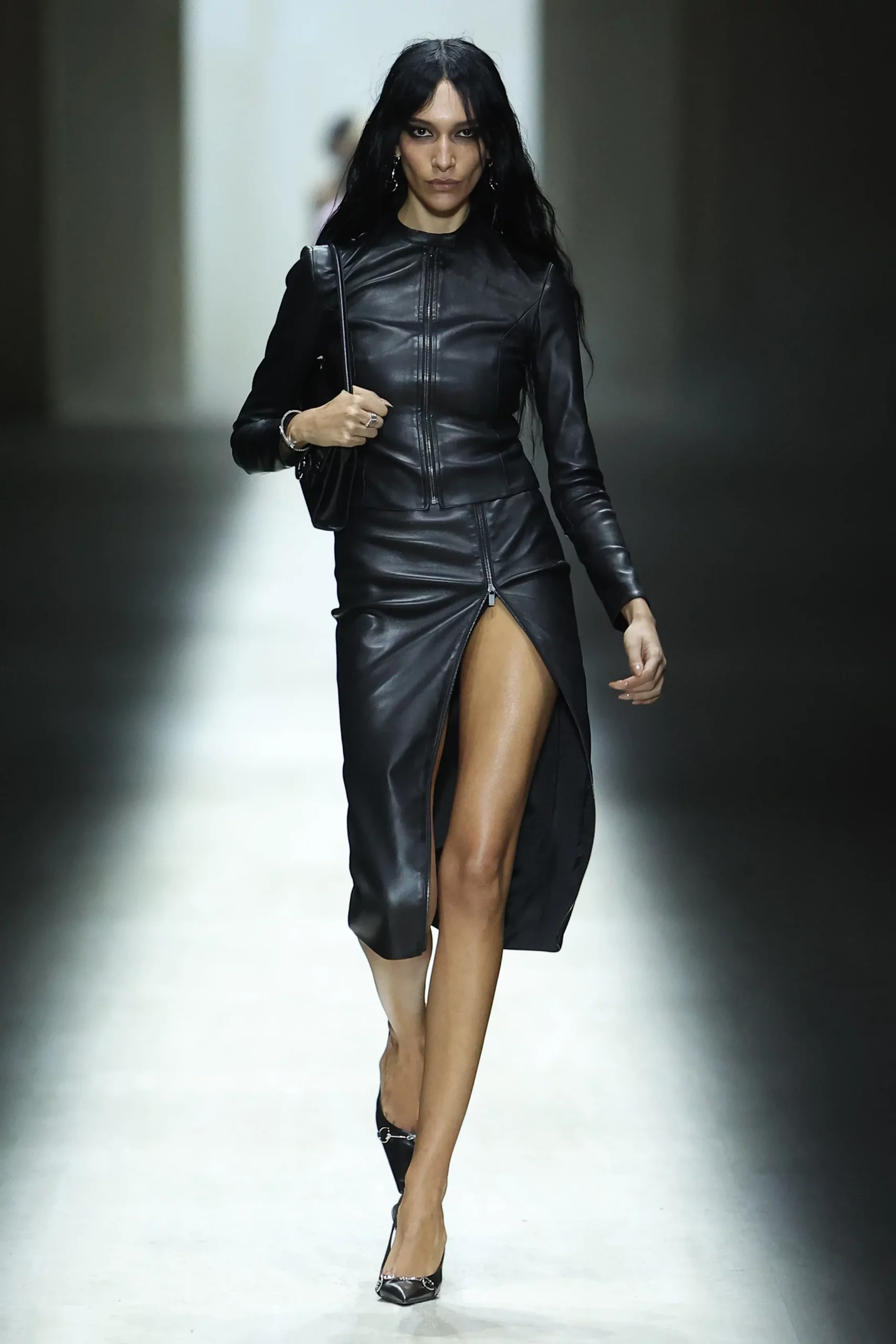
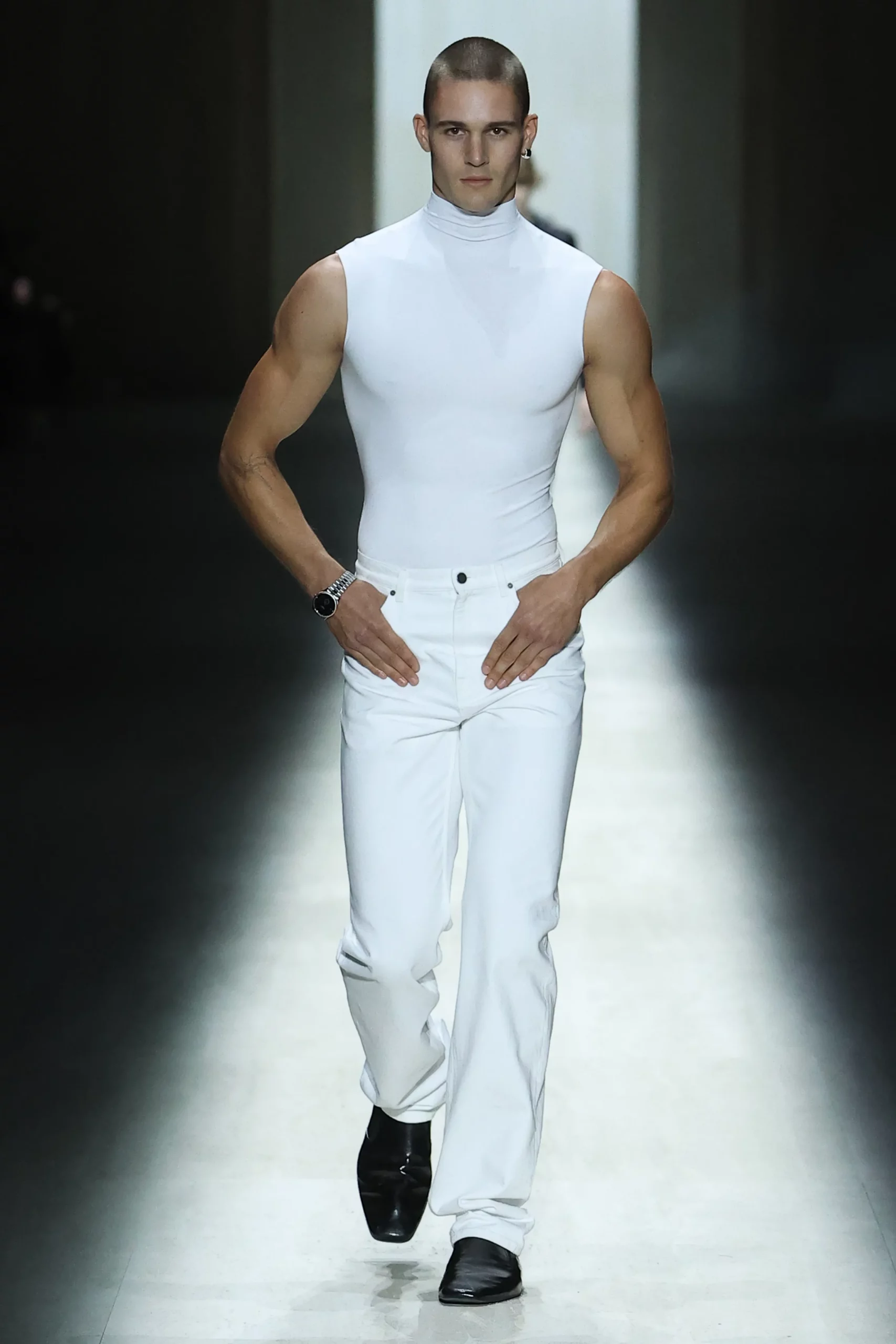
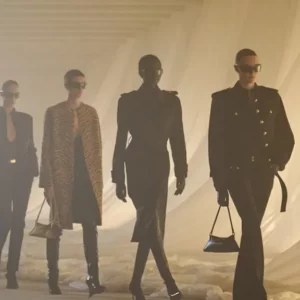
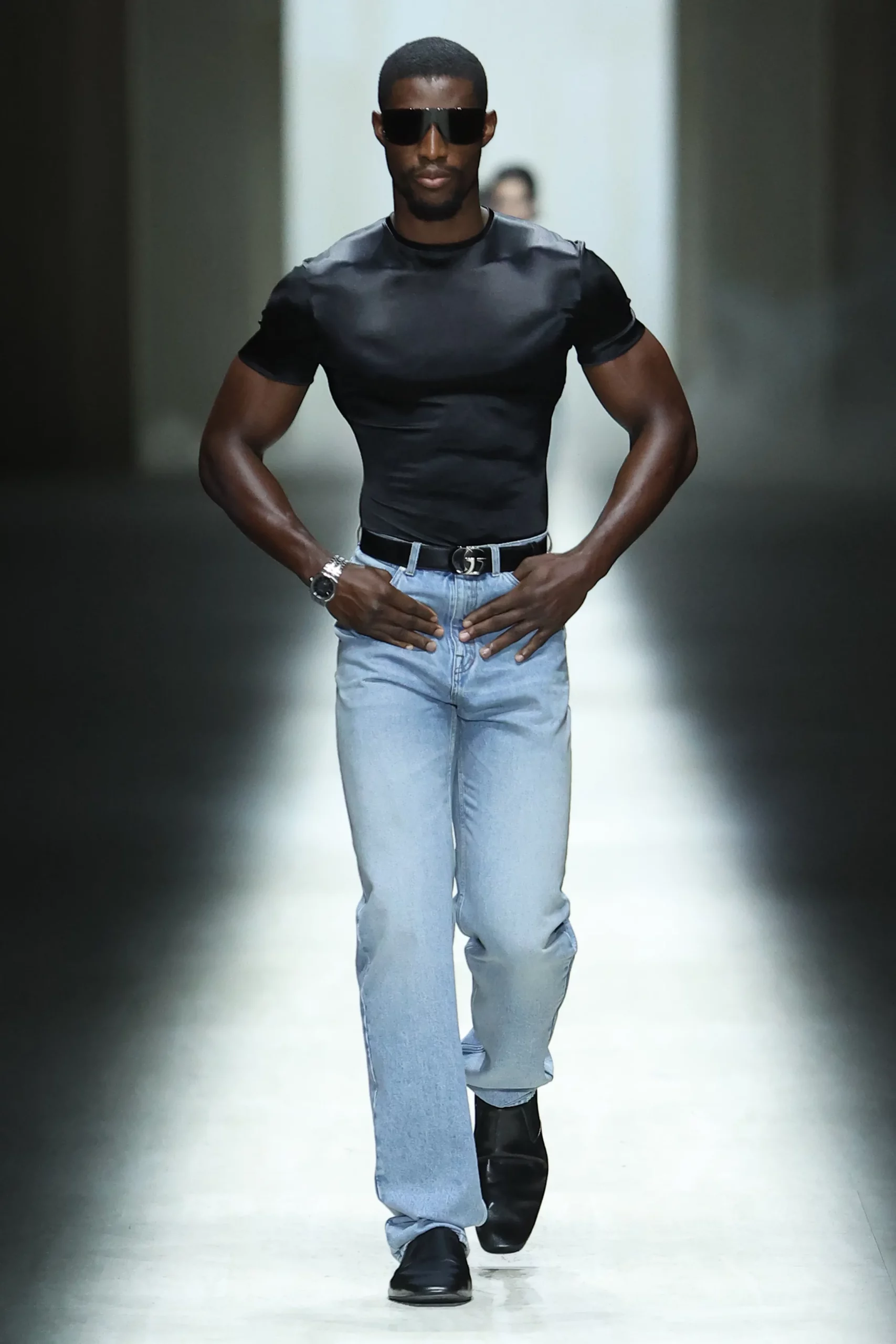
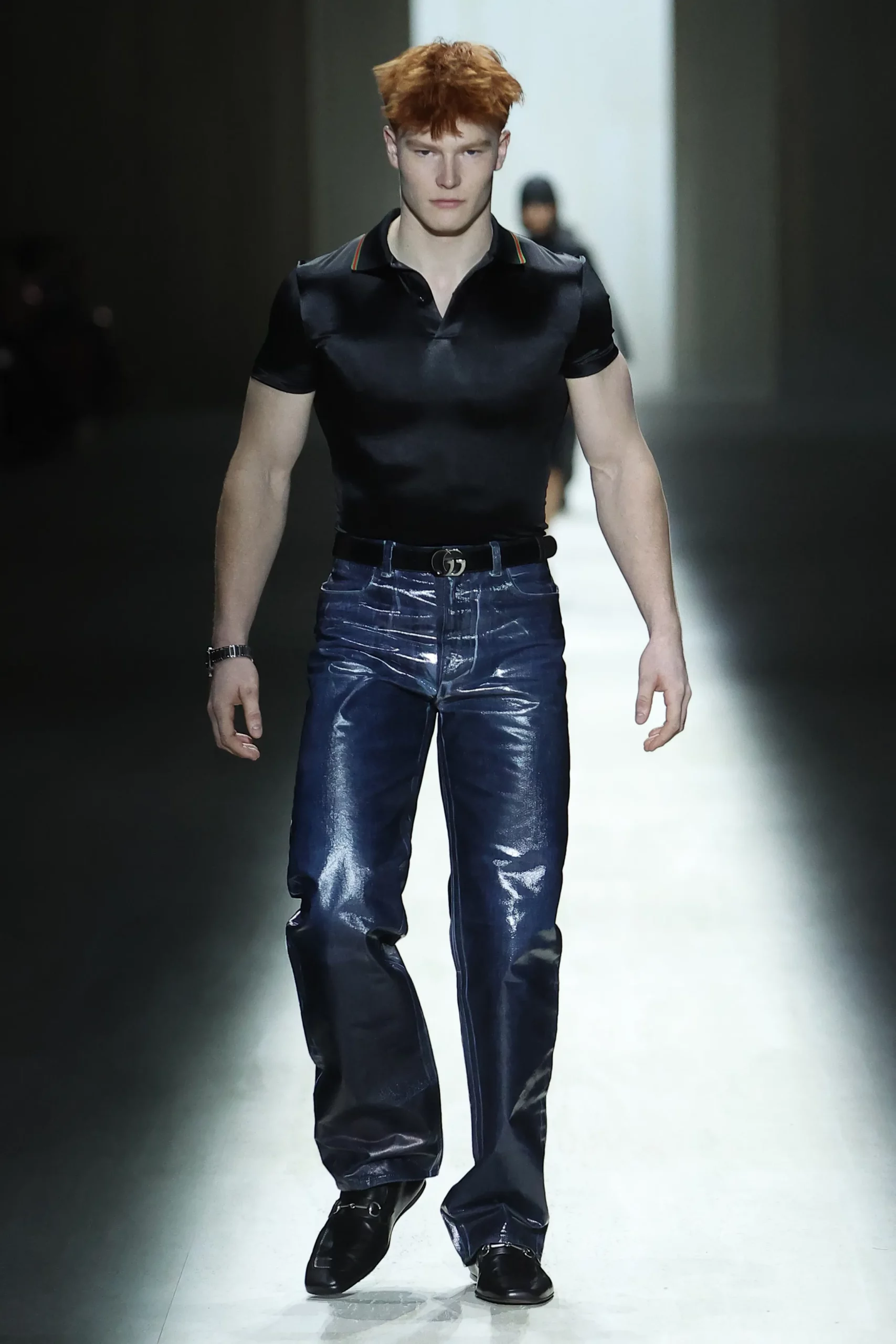
The show opened with a fierce, minimal white dress that established the tone instantly. The silhouette was clean, close to the body, confident. From that first look onward, the collection unfolded through Italian sensuality expressed almost entirely in black and white. Skin-tight latex and leather defined many of the looks, bringing attention back to the body and to movement. Models walked with the hip swing of the early 2000s, weight shifting side to side, an attitude that felt deliberate and familiar.
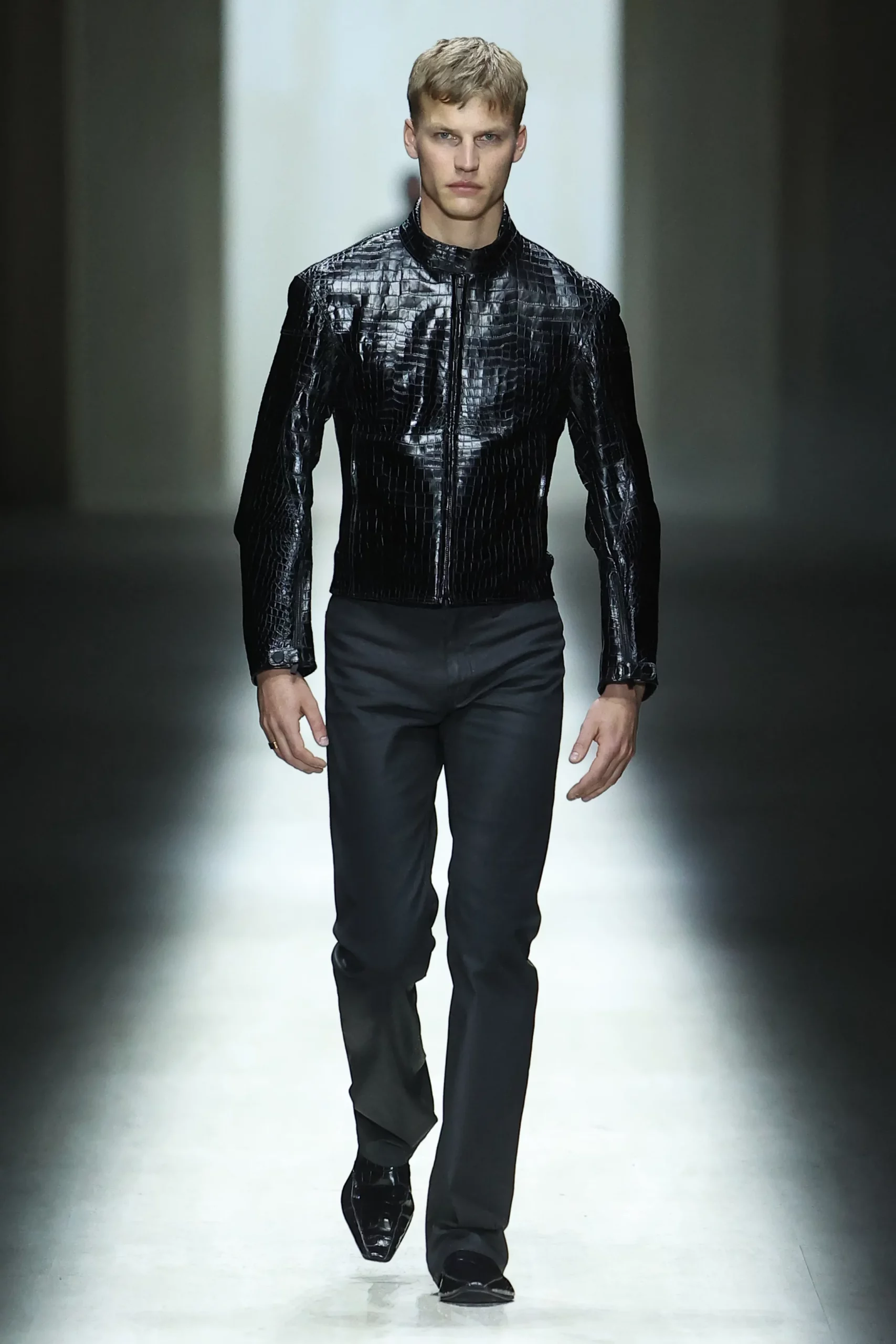
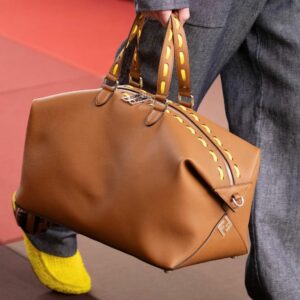
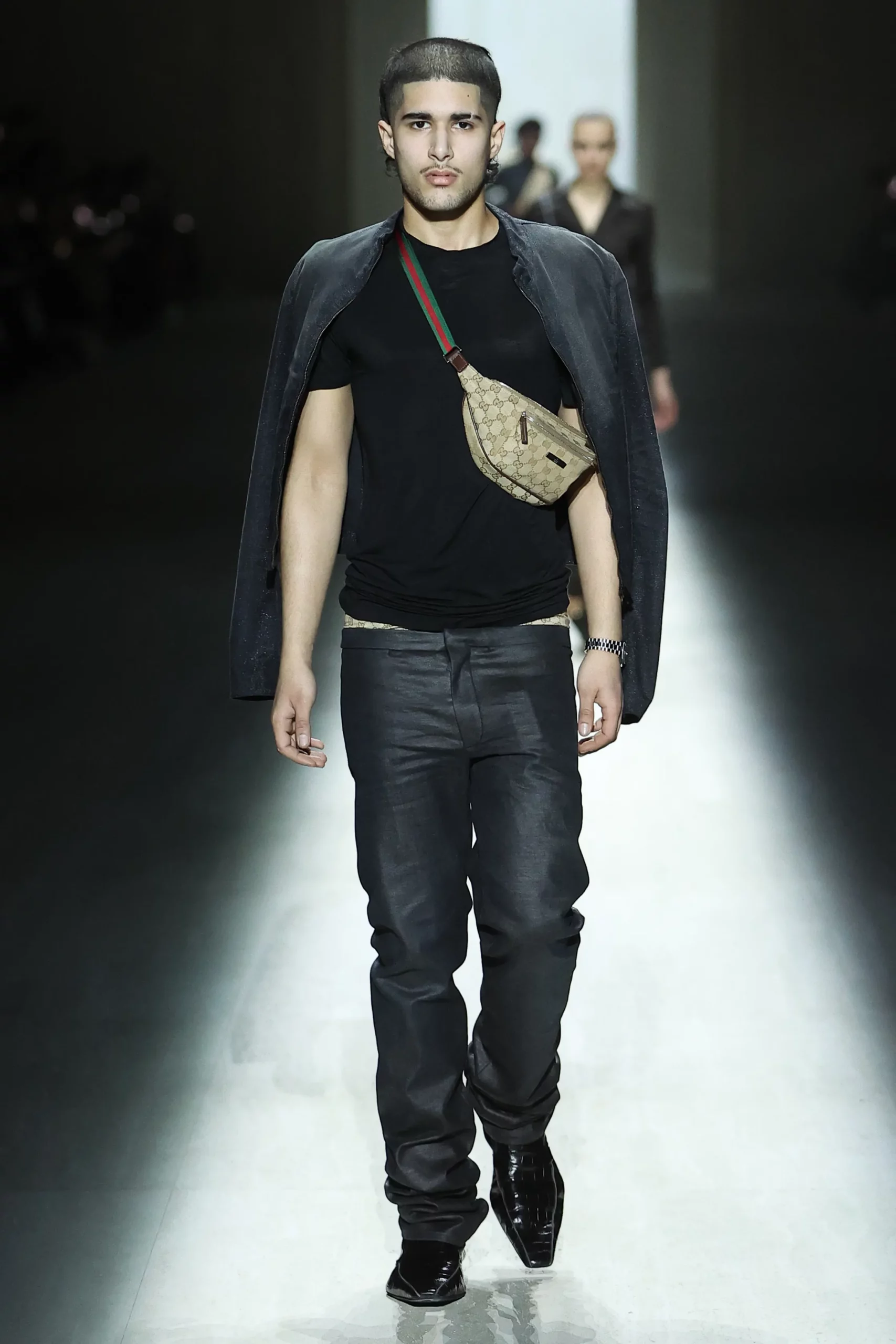
Accessories played a central role. Belts returned in full force, worn visibly and unapologetically. Fur-back slippers reappeared, alongside logo bum bags and vintage-inspired handbags that reinforced the house codes. Prints were largely absent, replaced by block colour and texture, with branding appearing strategically across accessories and tights. At one moment, a model casually pulled a phone from his bum bag and checked it mid-runway, a gesture that broke the theatrical illusion and brought the show back into contemporary reality.
It felt like a reconnection to Gucci’s late-1990s and early-2000s legacy. The emphasis on sex appeal, sharp tailoring and body-con silhouettes echoed a Tom Ford-era confidence while arriving after several years in which the brand had moved in very different visual directions. Demna’s approach reintroduced a directness to the way Gucci communicates desire. Women appeared in short, skin-tight dresses, men often half-naked or barefoot.
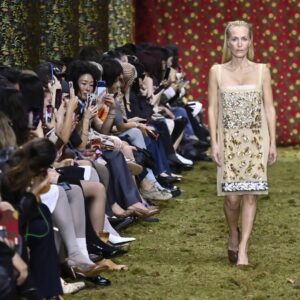
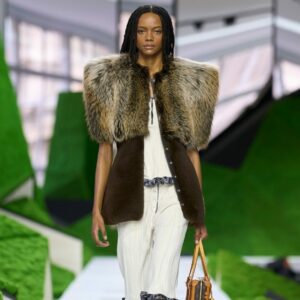
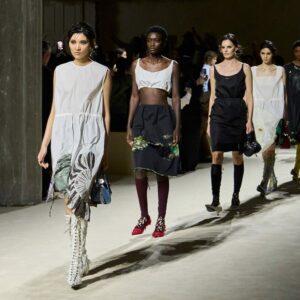
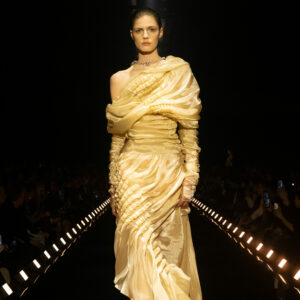
Midway through, texture entered the monochrome palette through sequins and sparkle, followed by flowing pleated floral dresses that clarified the meaning behind the show’s title, Primavera. The mood then shifted again. Fur coats, feathers, plumes and heavily styled handbags pushed the collection into exaggerated glamour, flirting with a mob-wife sensibility that felt knowingly theatrical. A Gucci mohawk appeared, instantly iconic, followed by moments of full logo mania that embraced excess without hesitation. A clear crescendo from minimal to (contained) extravaganza.
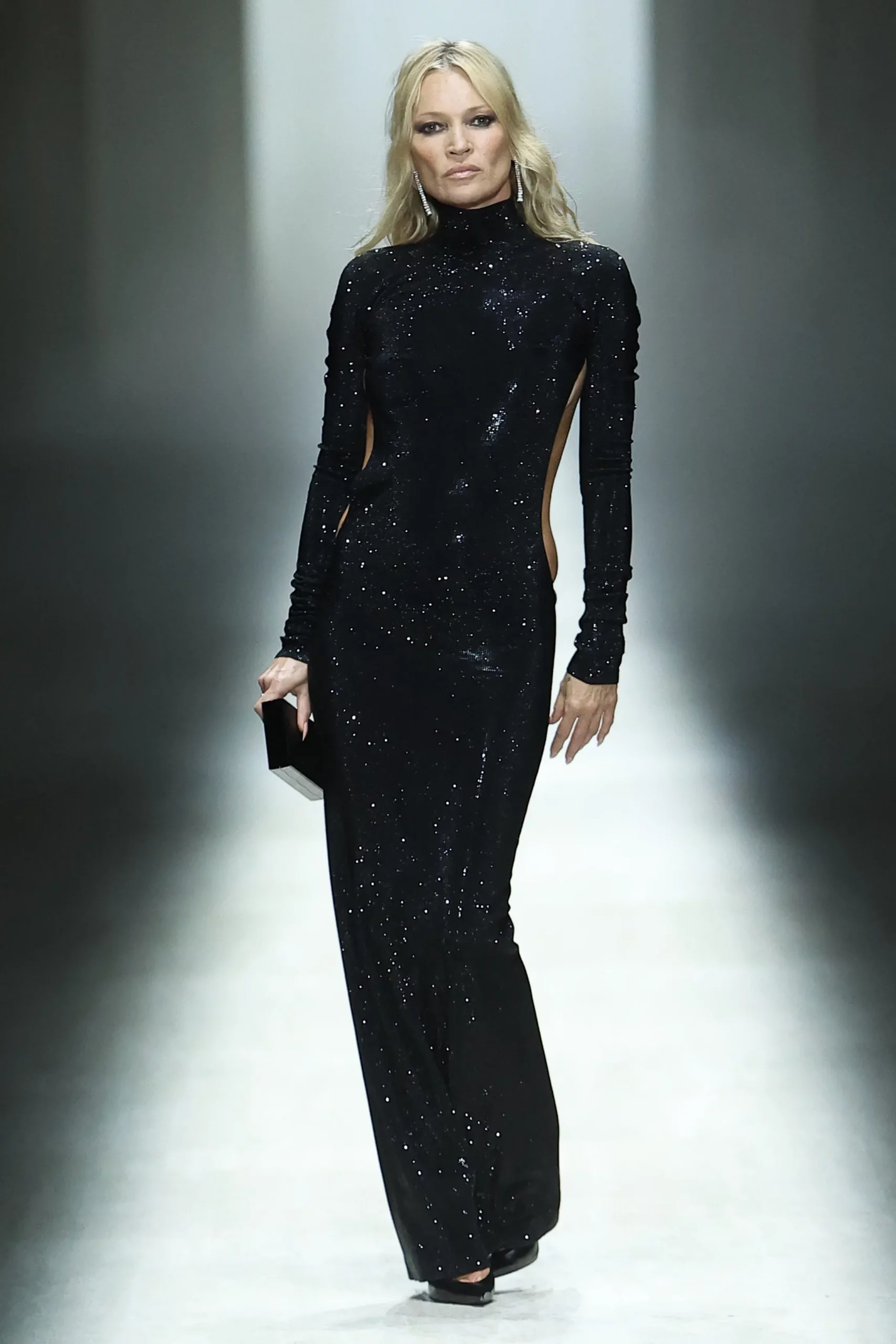
Among the standout pieces was a richly bejewelled floral brocade dress that punctured the restraint of the earlier looks. The finale arrived with Kate Moss in a backless, skin-tight dress, whale tail visible, closing a show built on image, attitude and recognisable fashion fantasy.
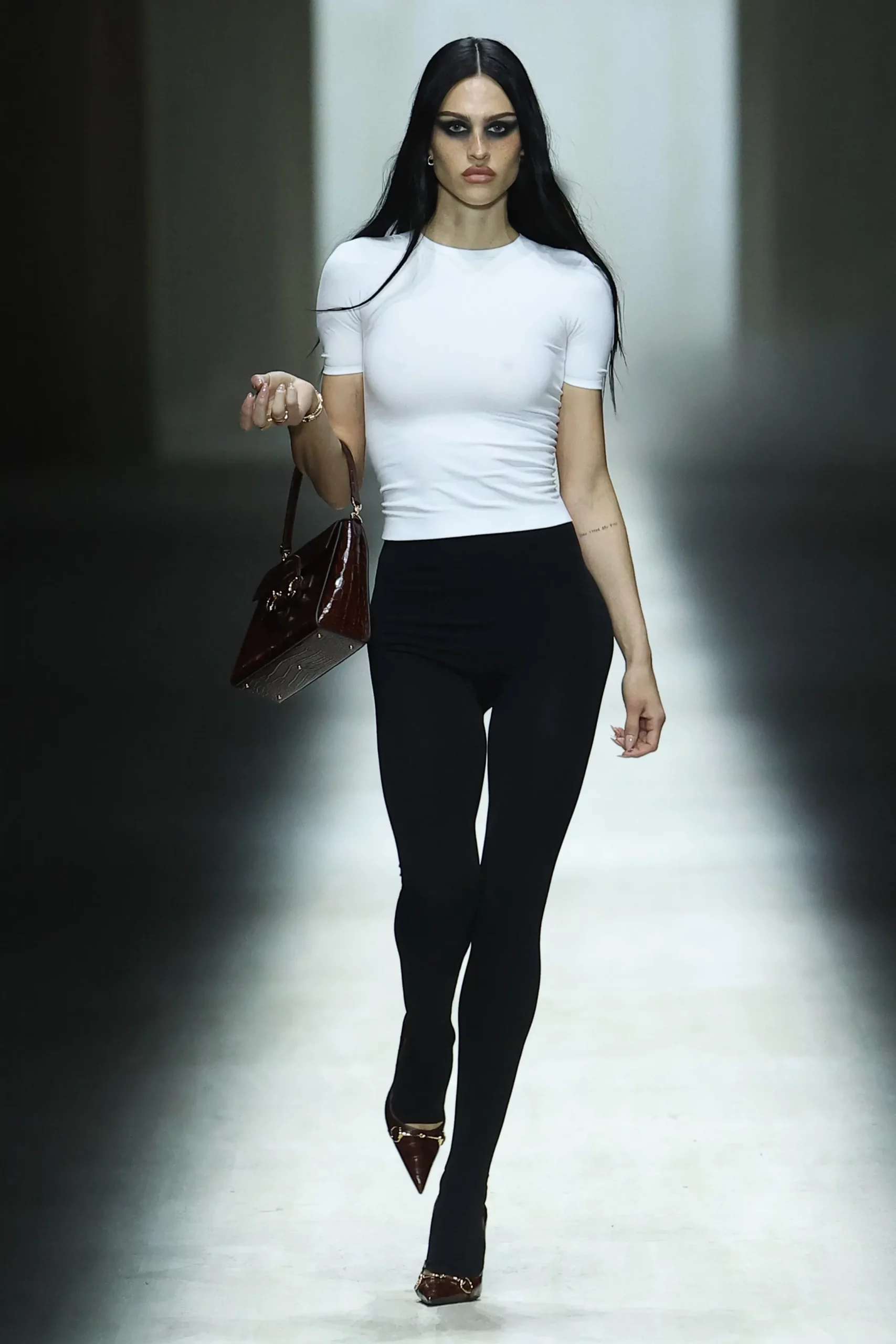
There were an extraordinary number of looks, each reinforcing a clear message. With this debut, Demna places Gucci back in conversation with its own mythology, reconnecting the house to sensuality, recognisable codes and the enduring power of fashion as physical desire.
For more stories of fashion from around the world, visit our dedicated archives and follow us on Instagram.