For Jean Bou Doumit, art is not a reinvention. It is a continuation. Known as the founder of ID Beirut and the mind behind Jean 327, Doumit has built a multidisciplinary practice that moves between architecture, product design, and fashion. With The Space Between Us, presented at Rebirth Beirut, he extends that investigation into painting and sculpture, approaching fine art with the same architectural precision that defines his broader body of work.
He does not see this exhibition as a career shift. “I never saw art as a departure from architecture or fashion,” he explains. “For me, they are all part of the same investigation: identity and presence. Architecture constructs space. Fashion constructs the body. Art constructs the invisible.”
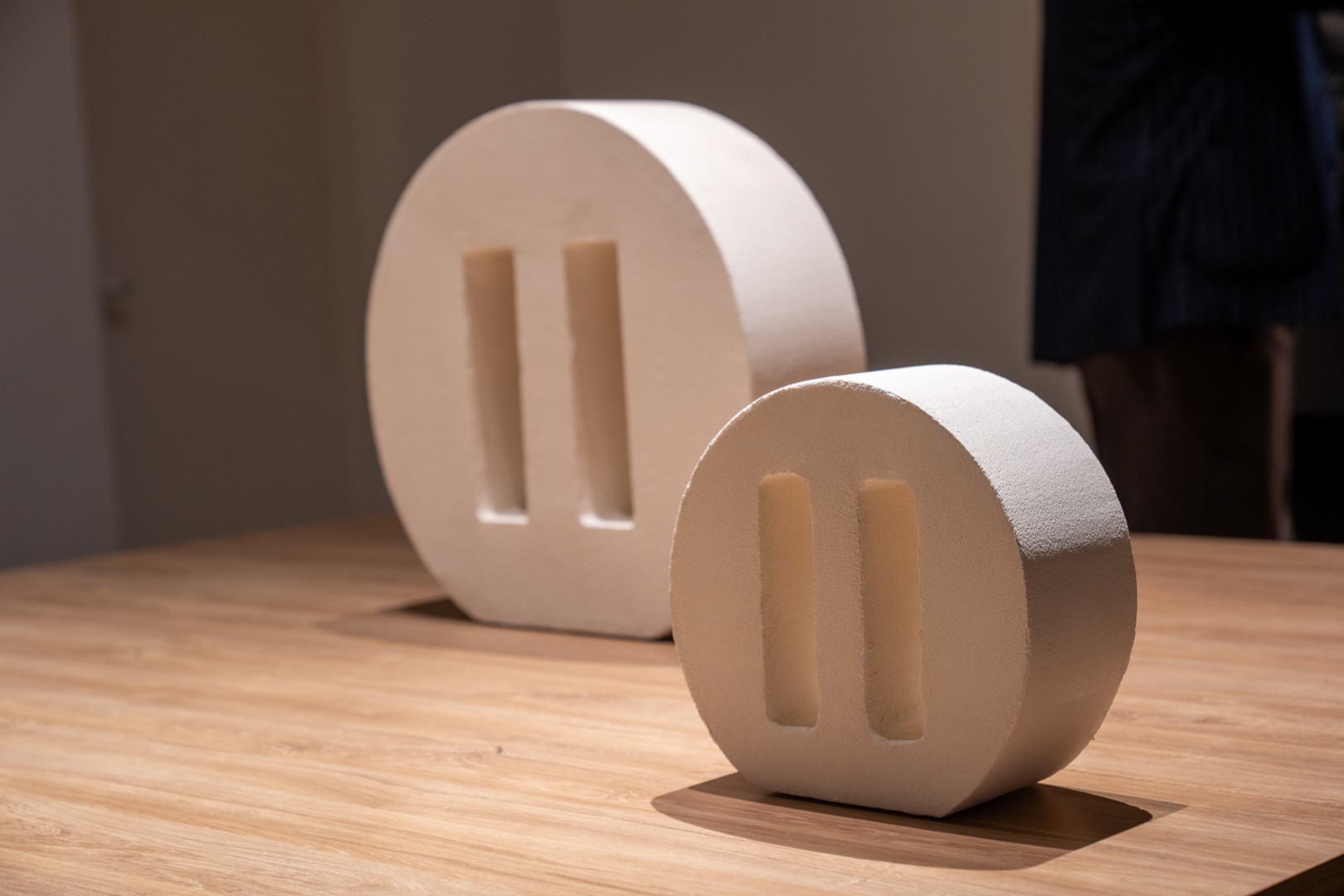
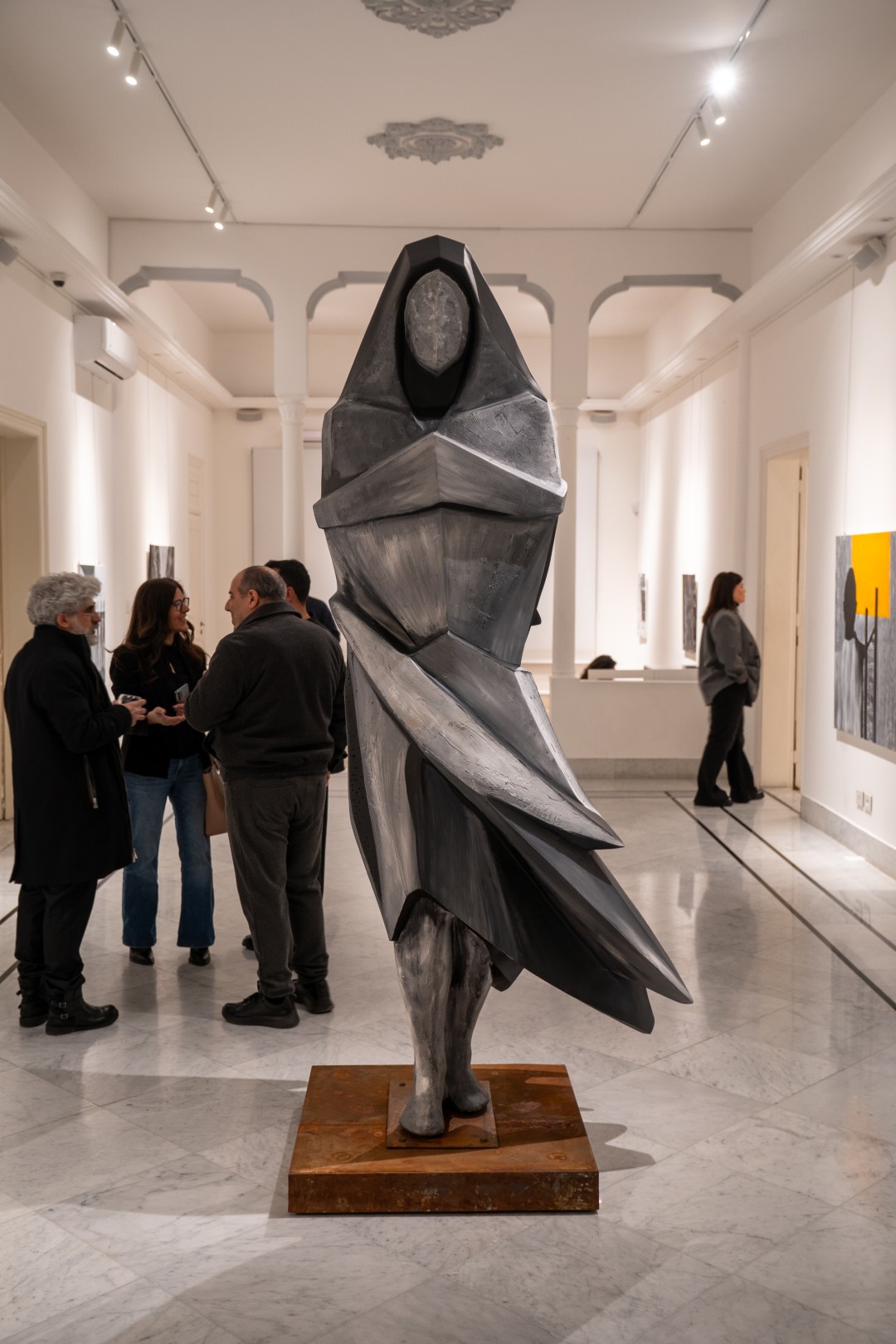
That invisible dimension sits at the heart of the exhibition. Installed inside a historic Beirut house, the show unfolds as a carefully constructed environment. Ten monochrome paintings surround a central vertical sculpture, accompanied by a single object that inhabits the space quietly but deliberately. Together, the works create a field of tension between surface and volume, presence and absence, matter and memory.
The title, The Space Between Us, speaks to distances that cannot be measured physically. Doumit describes it as an exploration of “the invisible distance between beings, human and non human, present and absent, memory and matter.” For him, space is never empty. It carries what was said and unsaid. It carries trauma, affection, silence, inheritance.
“We think space is empty, but it is not,” he says. “It carries what was said and unsaid.”
At the centre of the exhibition stands a towering faceless figure titled The Witness. Elongated and still, the sculpture feels suspended between human form and shadow. It does not act. It does not judge. It witnesses. The figure represents what Doumit calls the silent observer within all of us, the part that records and absorbs without speaking.
The materiality of the piece reinforces this psychological dimension. Constructed from a styrofoam core and coated with fibre before being treated like a painted surface, the sculpture combines fragility and rigidity. The interior is light and vulnerable. The exterior appears solid and architectural. This contrast mirrors the human condition itself, a protective shell surrounding a sensitive core.
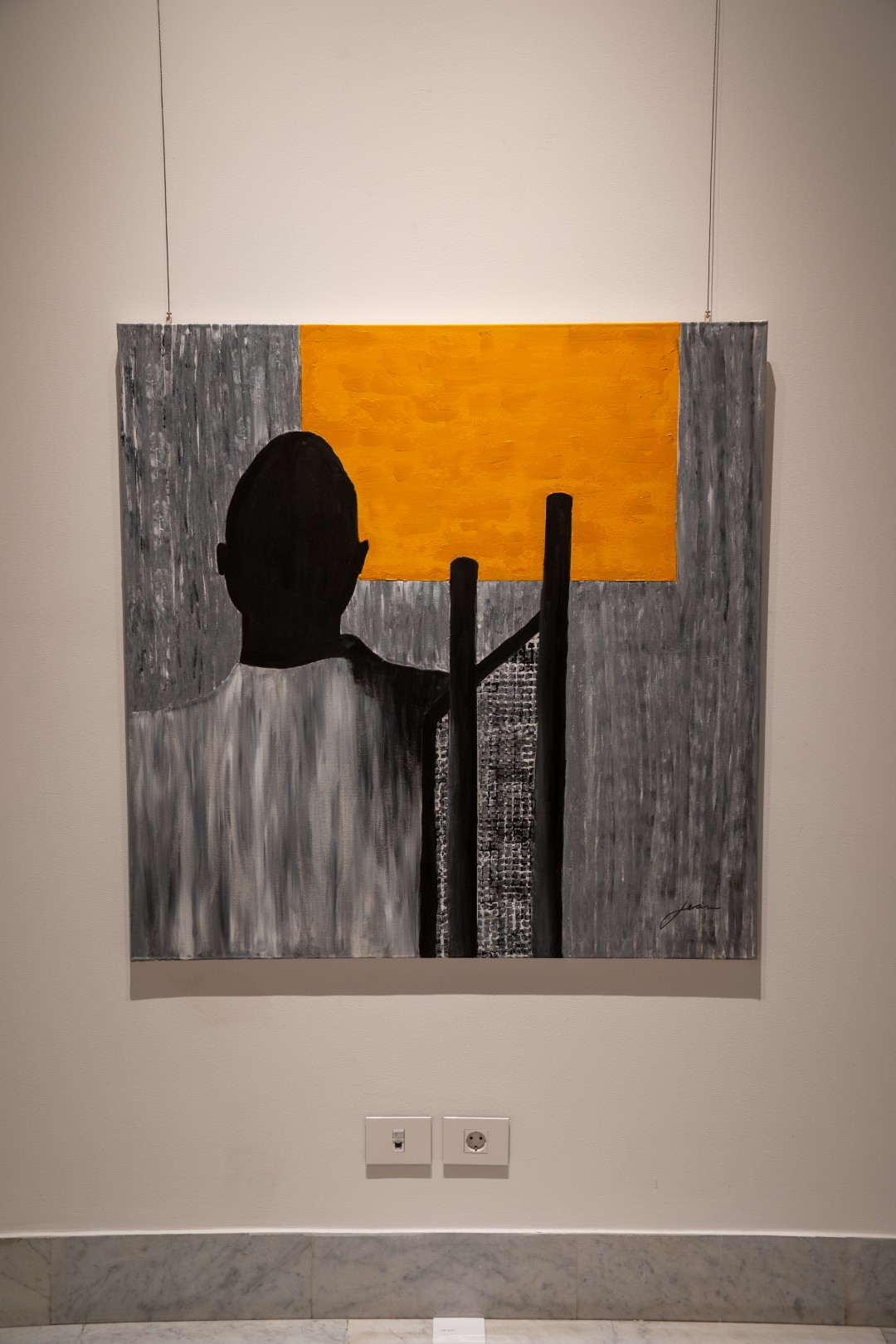
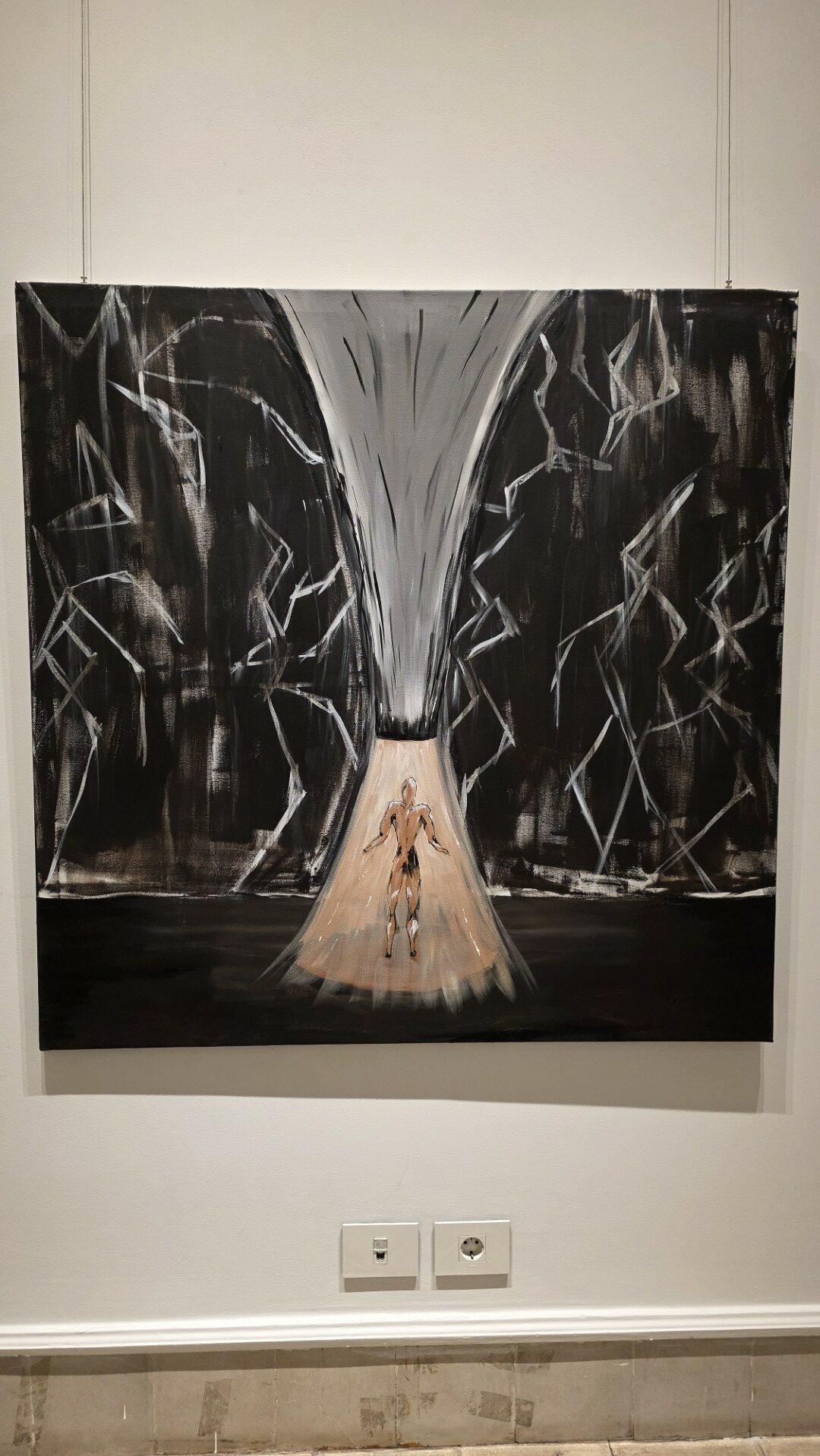
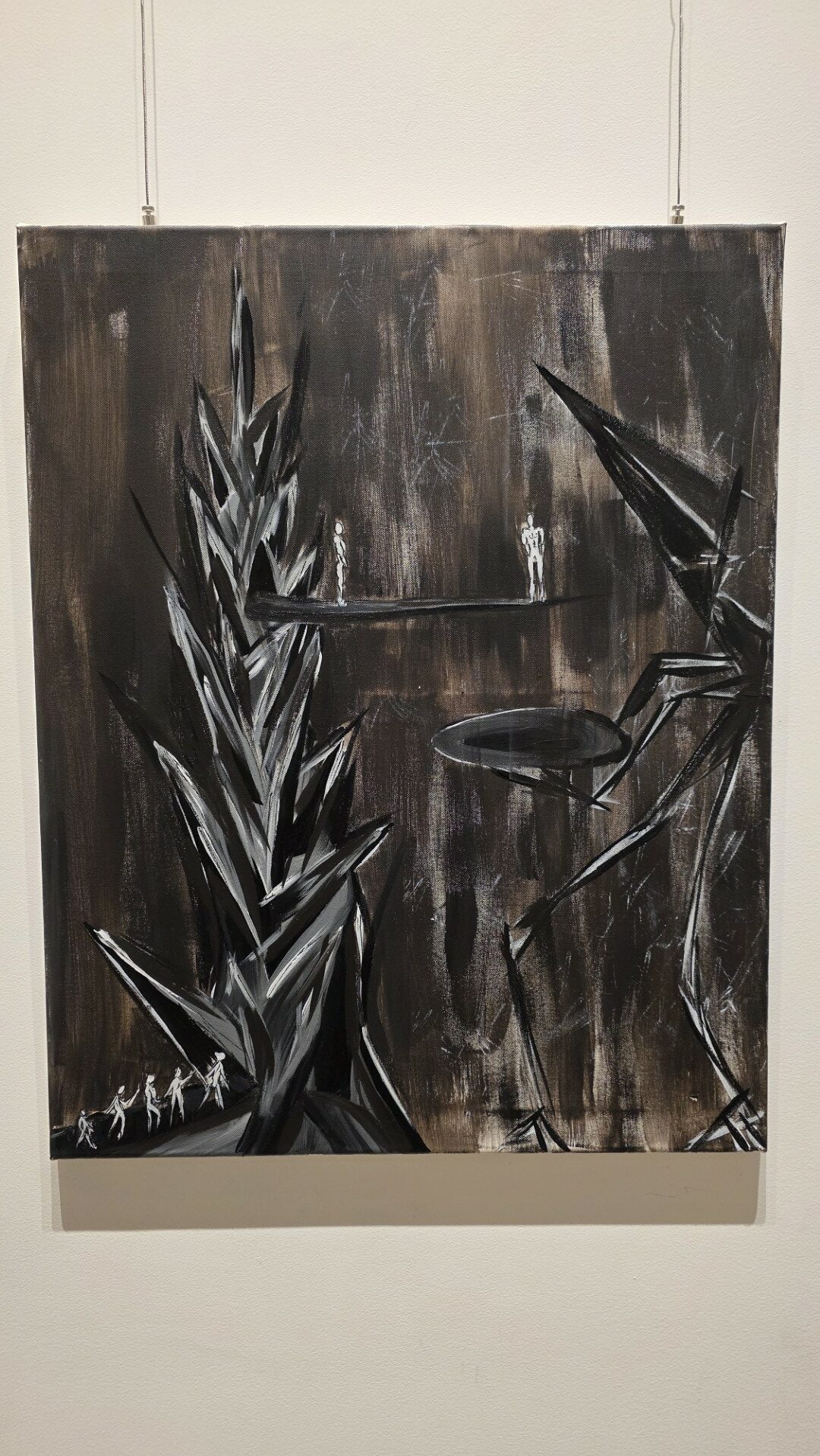
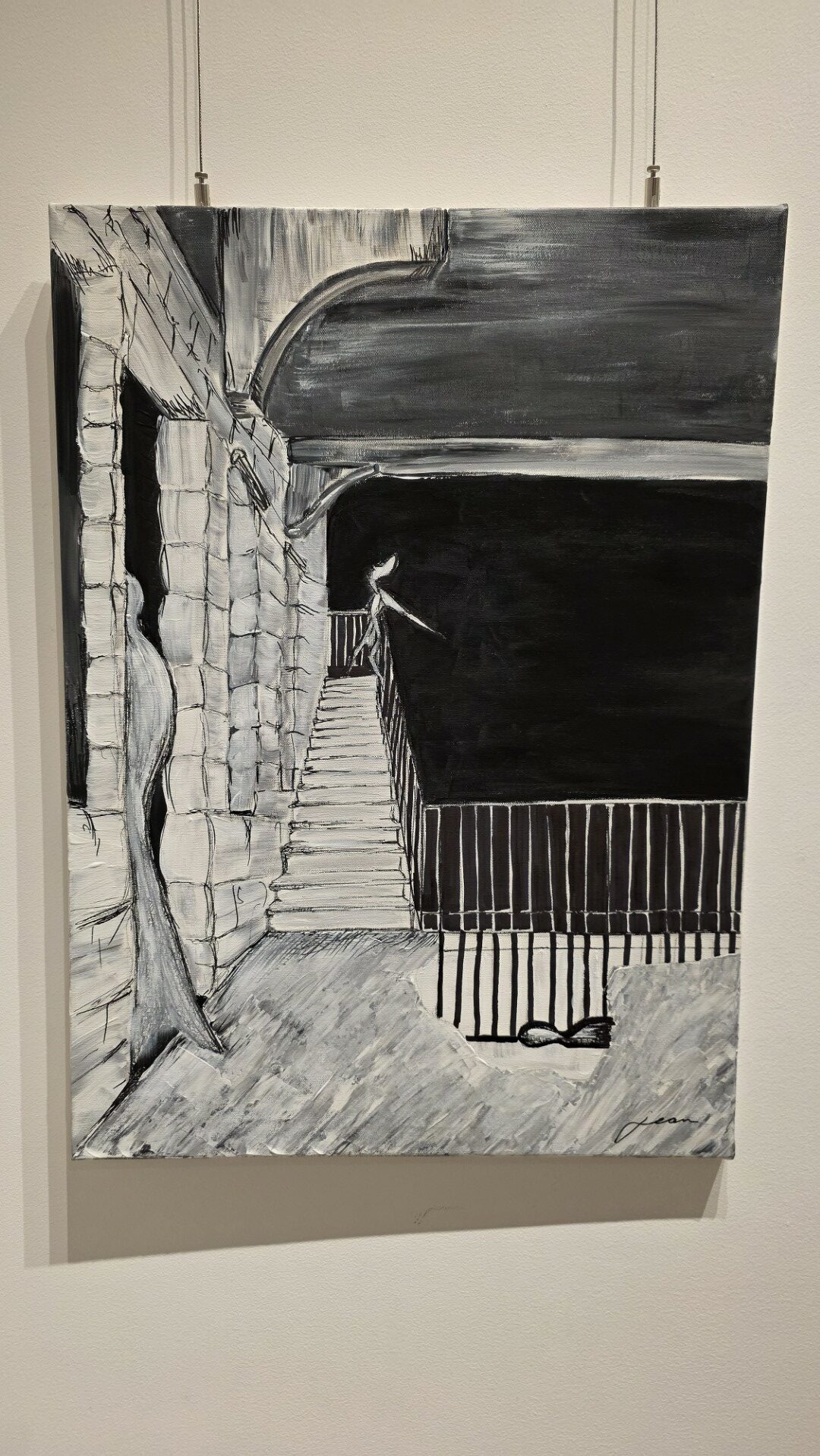
The surrounding paintings echo this dialogue. Created through layered acrylic techniques on canvas, the works are built gradually, sometimes erased, sometimes reconstructed. Figures appear fractured, doubled, partially concealed beneath dense black fields. Planes rotate like architectural sections, suggesting structure without walls. What is hidden is never fully erased. It remains as trace.
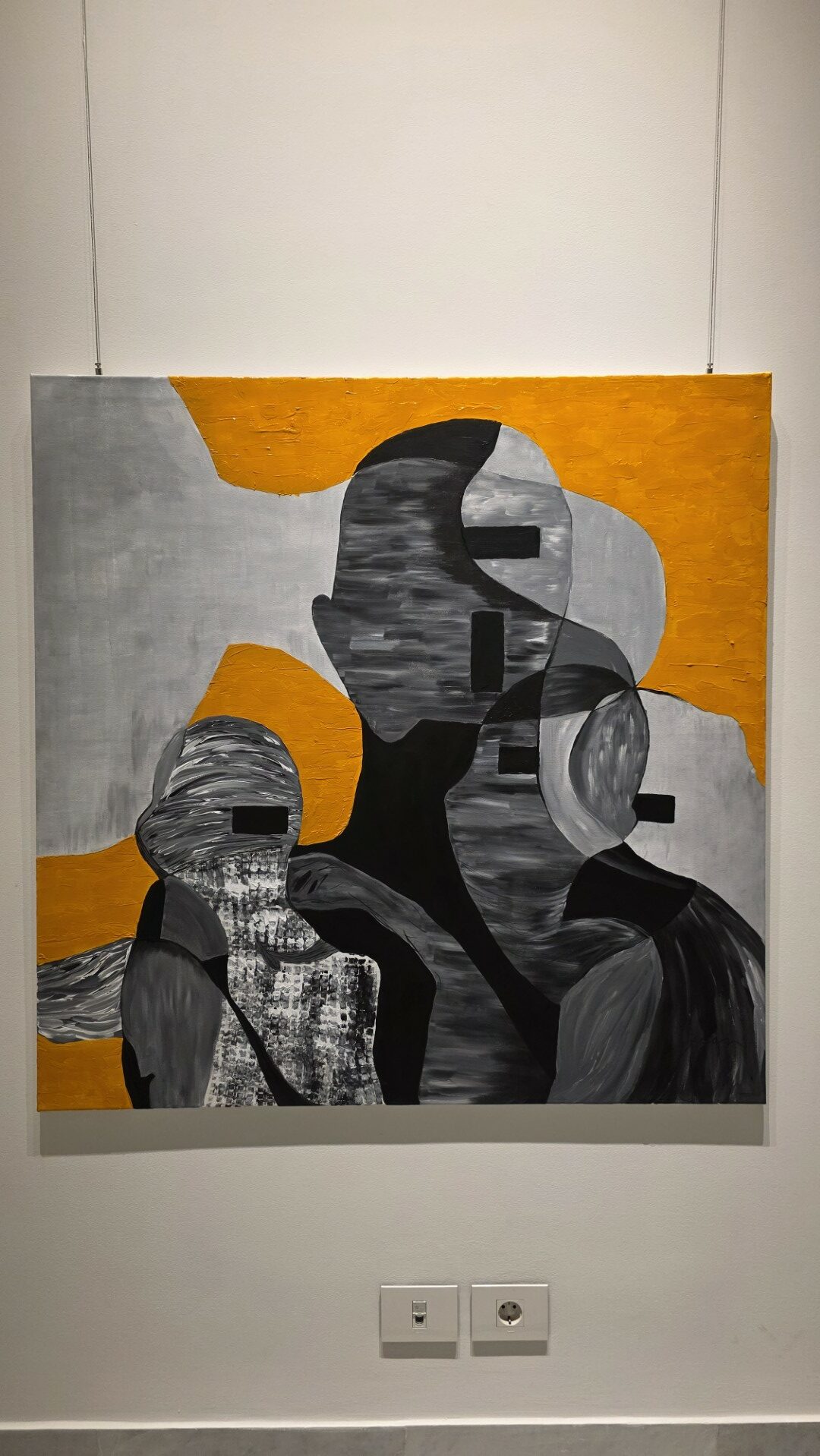
Monochrome is essential to this language. Doumit deliberately works in black and white to remove distraction and narrative comfort. “Black and white remove distraction,” he explains. “Colour carries emotion very directly. Monochrome demands deeper looking. It strips the narrative to presence, light, shadow, contrast, almost like architectural drawings of the soul.”
For him, black is not darkness but density. White is not purity but space. Between them, tension emerges. That tension becomes the site of meaning. The contrast acts as a pivot and anchor within the exhibition, reflecting the friction between individuality and collective systems, between visible identity and hidden self.
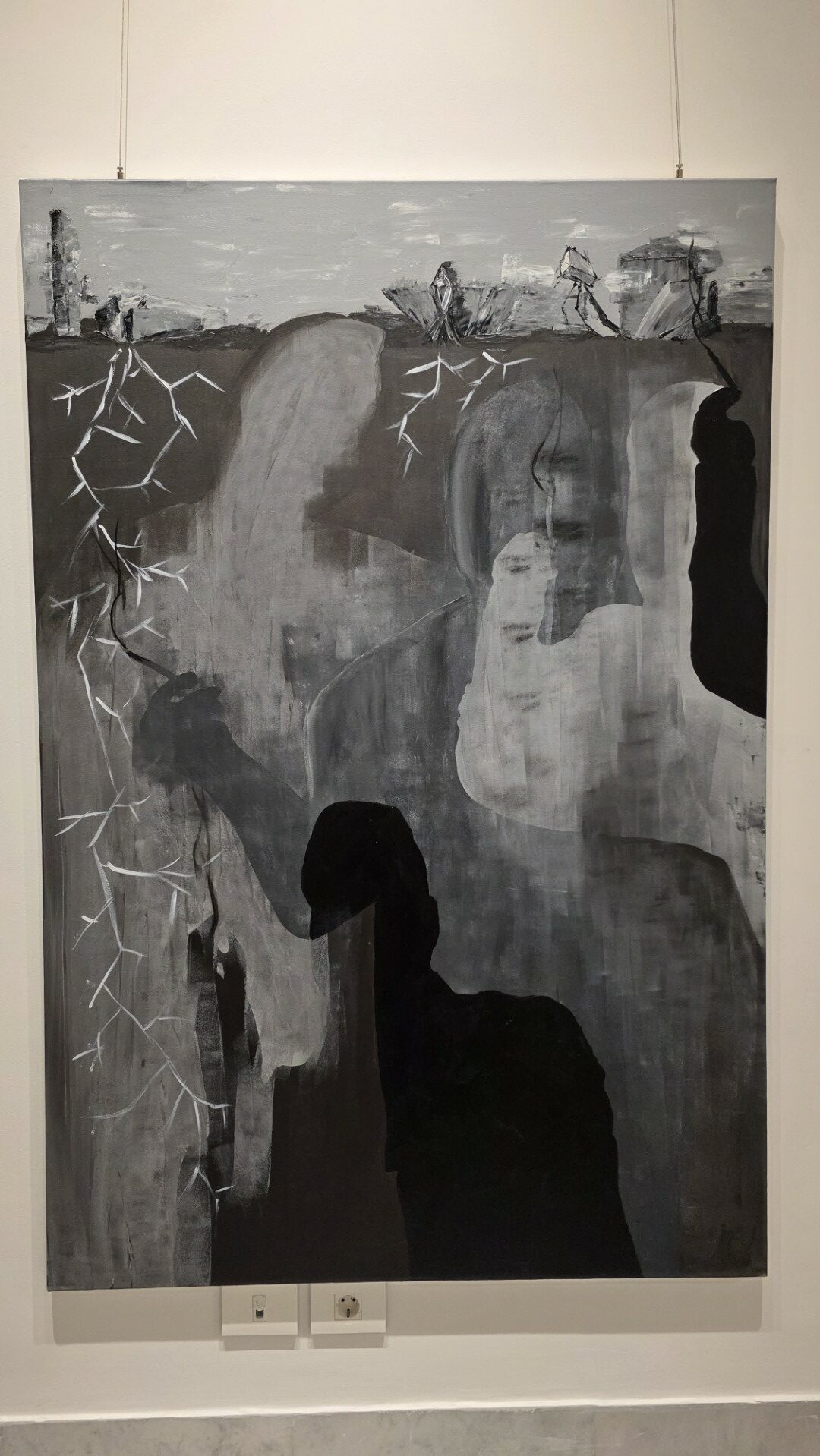
The exhibition also speaks to constructed identity. Doumit’s architectural training is evident in the way each composition feels measured and intentional. These works do not simply express emotion. They structure it. Emotion becomes spatial. Memory becomes layered surface. Presence becomes residue.
“I don’t want people to understand or love the work,” Doumit says. “I want them to pause. To feel suspended for a moment. To sense that what they consider empty is actually charged.”
In a city like Beirut, where absence and presence coexist intensely, this exploration carries particular resonance. The historic house that hosts the exhibition becomes more than a venue. It becomes part of the narrative, holding its own layers of memory and trace.
Ultimately, The Space Between Us is about awareness. Awareness of distance. Awareness of what remains unseen. Awareness of the silent witness within. Doumit’s work invites viewers to slow down and inhabit that in between space, where nothing is truly empty and every trace carries the unfolding map of time.
For more stories of regional art and culture, visit our dedicated archives and follow us on Instagram.