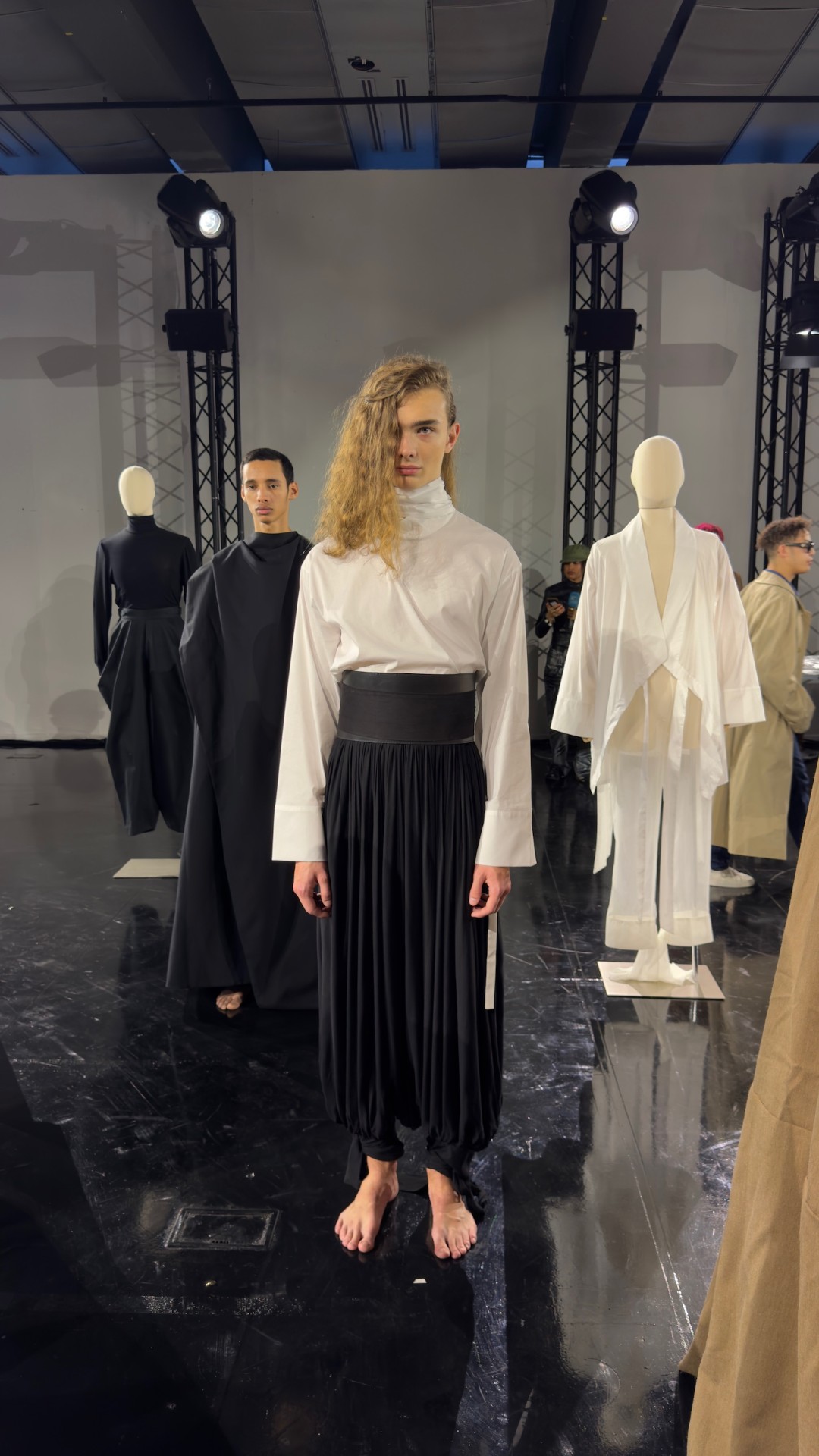
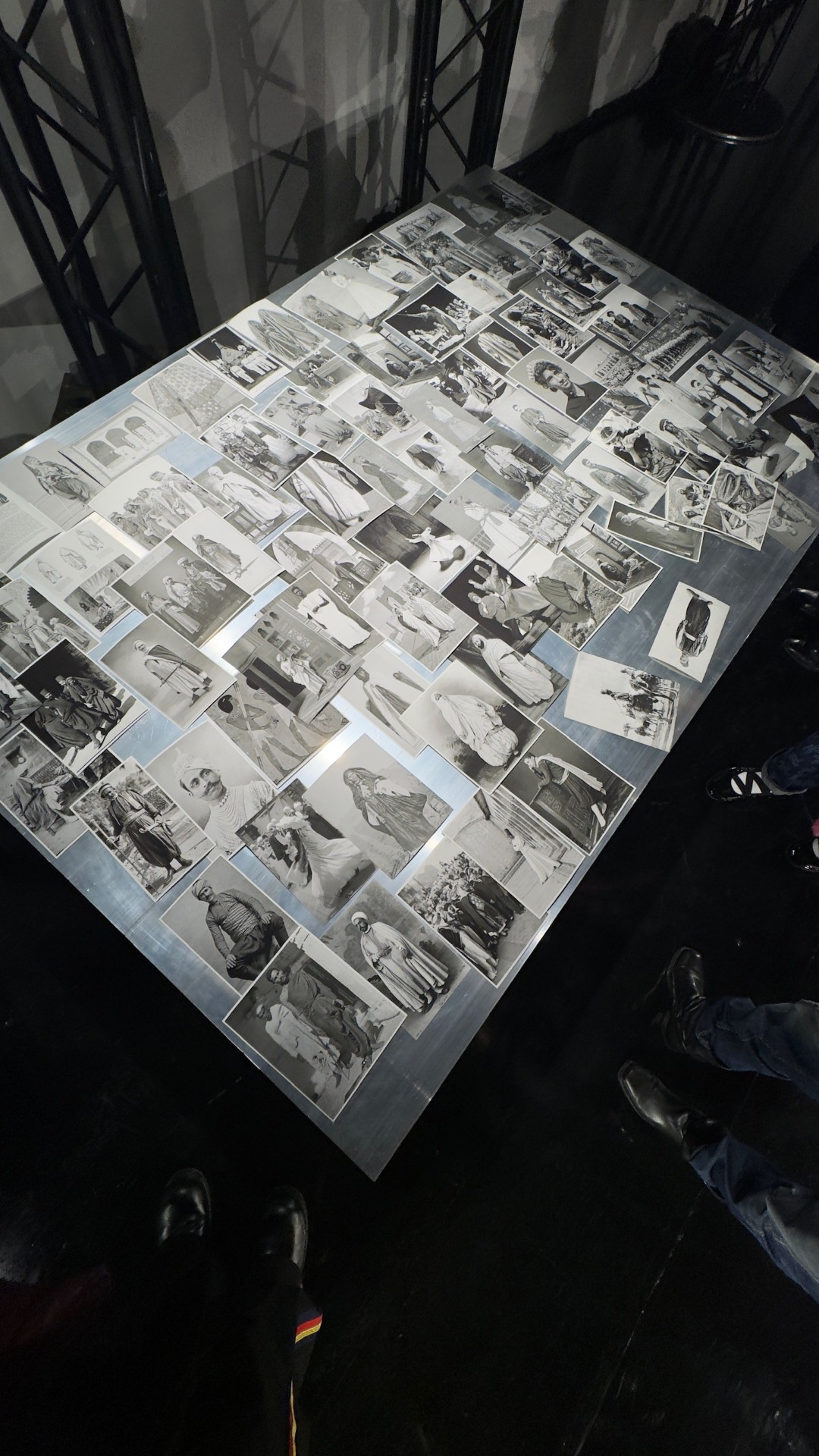
Saudi house KML (Instagram) arrived in Paris with a point of view that feels unusually complete. The work is rooted in research and lived dress codes, with the creative director describing the studio as “bookworms” and the clothes as “research based design,” where “everything you see is a development of an existing tradition.” That matters here, because the collection does not rely on novelty to justify itself. It comes with method, cultural specificity, and a clear proposal for contemporary menswear. Their 2025 LVMH Prize semi-finalist status adds another layer of industry validation, placing the brand inside a pipeline that tends to accelerate visibility, press, and commercial seriousness.
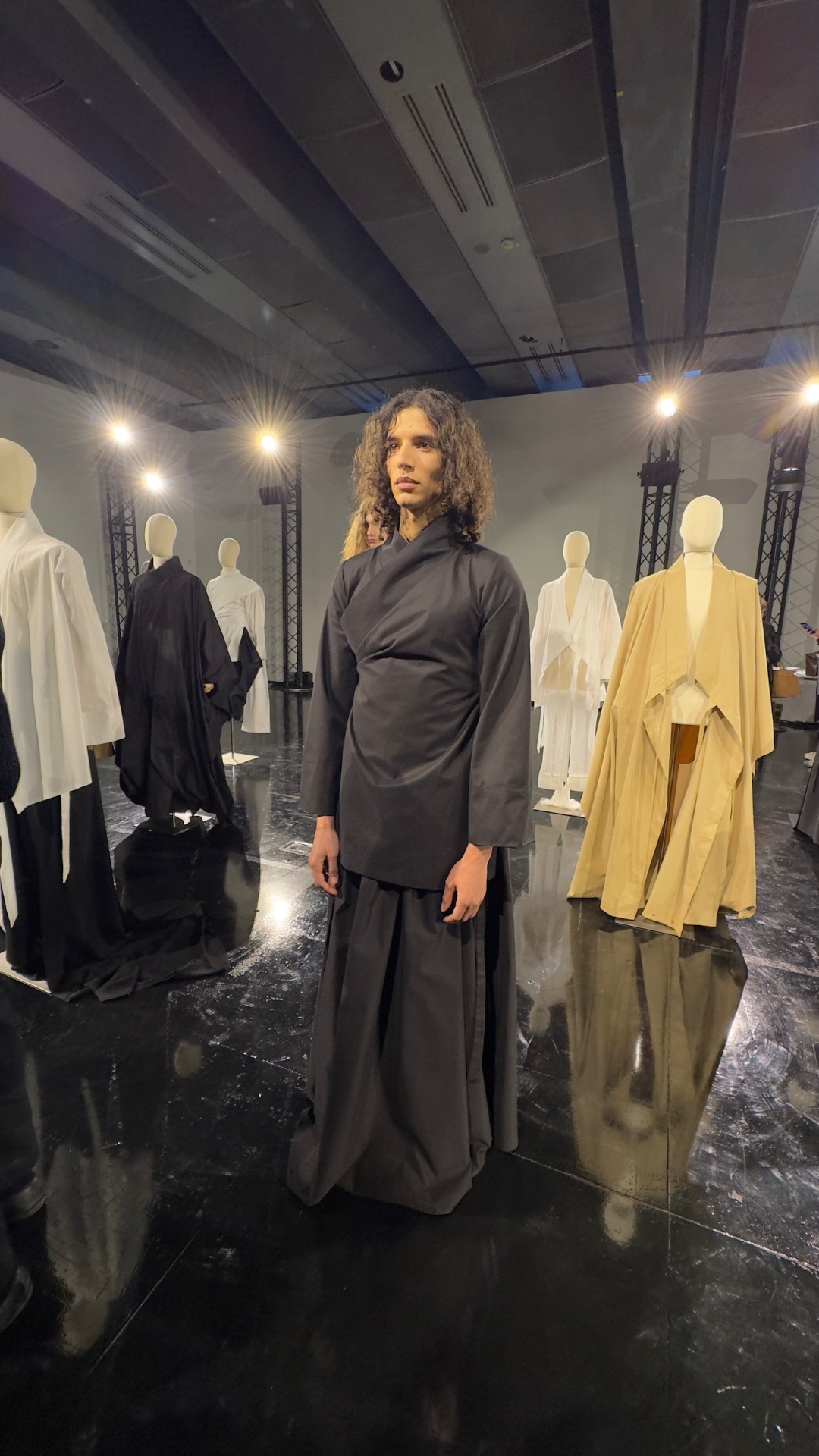
KML works with a disciplined vocabulary. Black, white, and sand. Styling stripped back to essentials. Silhouettes that read as a wardrobe system rather than one off statements. The clothes hold attention through proportion and construction, with surface kept intentionally quiet.
The line is long and continuous. Ankle-length tunics, robe-length shirts, and coats that skim the body in clean columns. Shape is controlled through waist engineering that becomes a recurring signature. Wide obi belts and wrap ties compress the middle and organise volume into a deliberate outline.
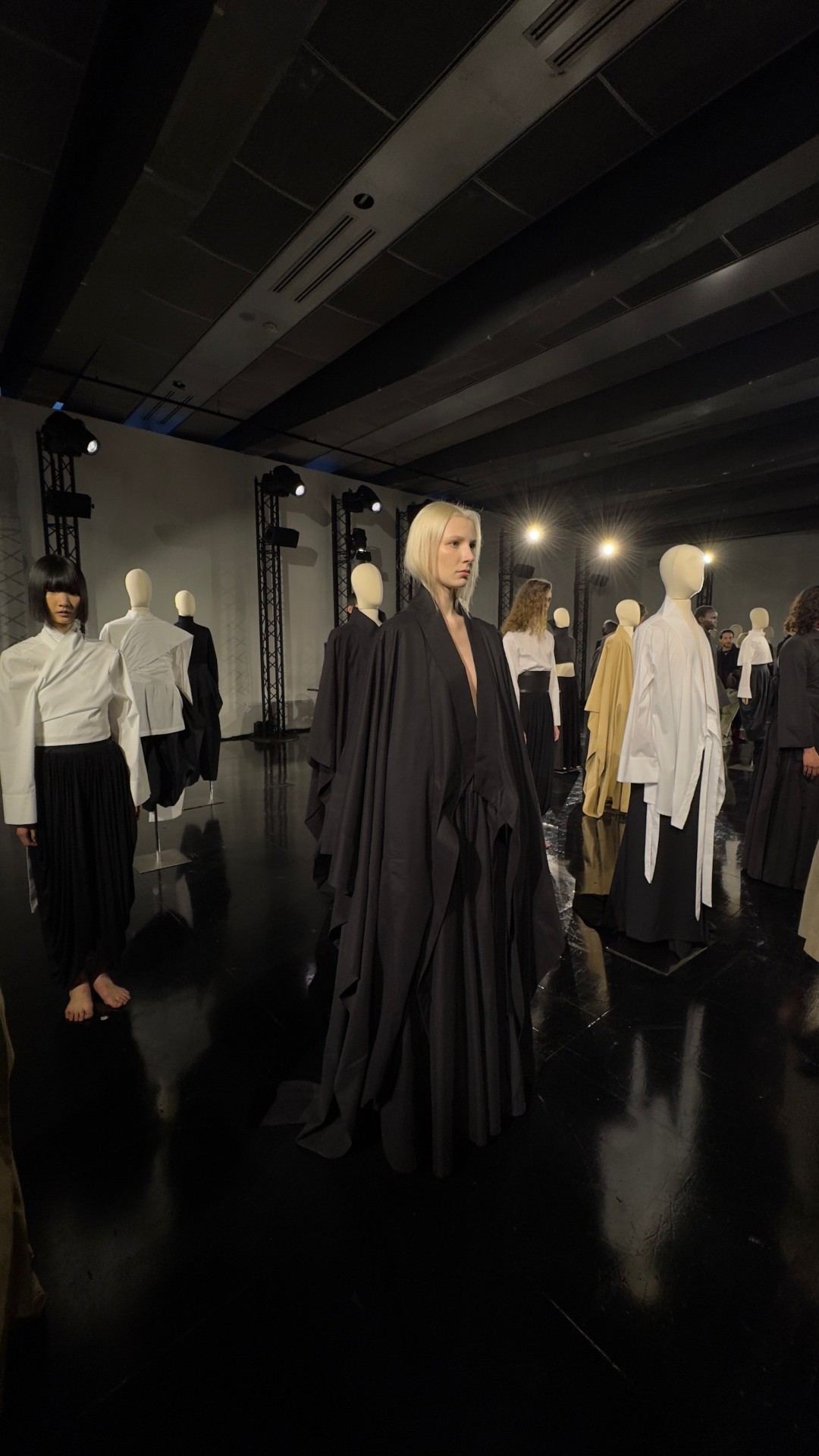
That focus on silhouette connects directly to the brand’s cultural starting point. The collection builds on regional dress traditions without turning them into costume, moving between volumes and fits in a way that echoes the creative director’s description of how silhouette shifts across Saudi Arabia, from “flowy skirts with volume” in some regions to “fitted skirts” in the south. The result is clothing that feels specific, not symbolic, with proportion doing the storytelling.
The house’s sand looks show the method at its sharpest. An asymmetric wrap jacket sits over a full gathered skirt that drops in weighty folds, creating a silhouette that feels both ceremonial and functional. The fabric has a matte, workwear steadiness that lets the pattern cutting lead, while the wrap construction introduces movement and adaptability.
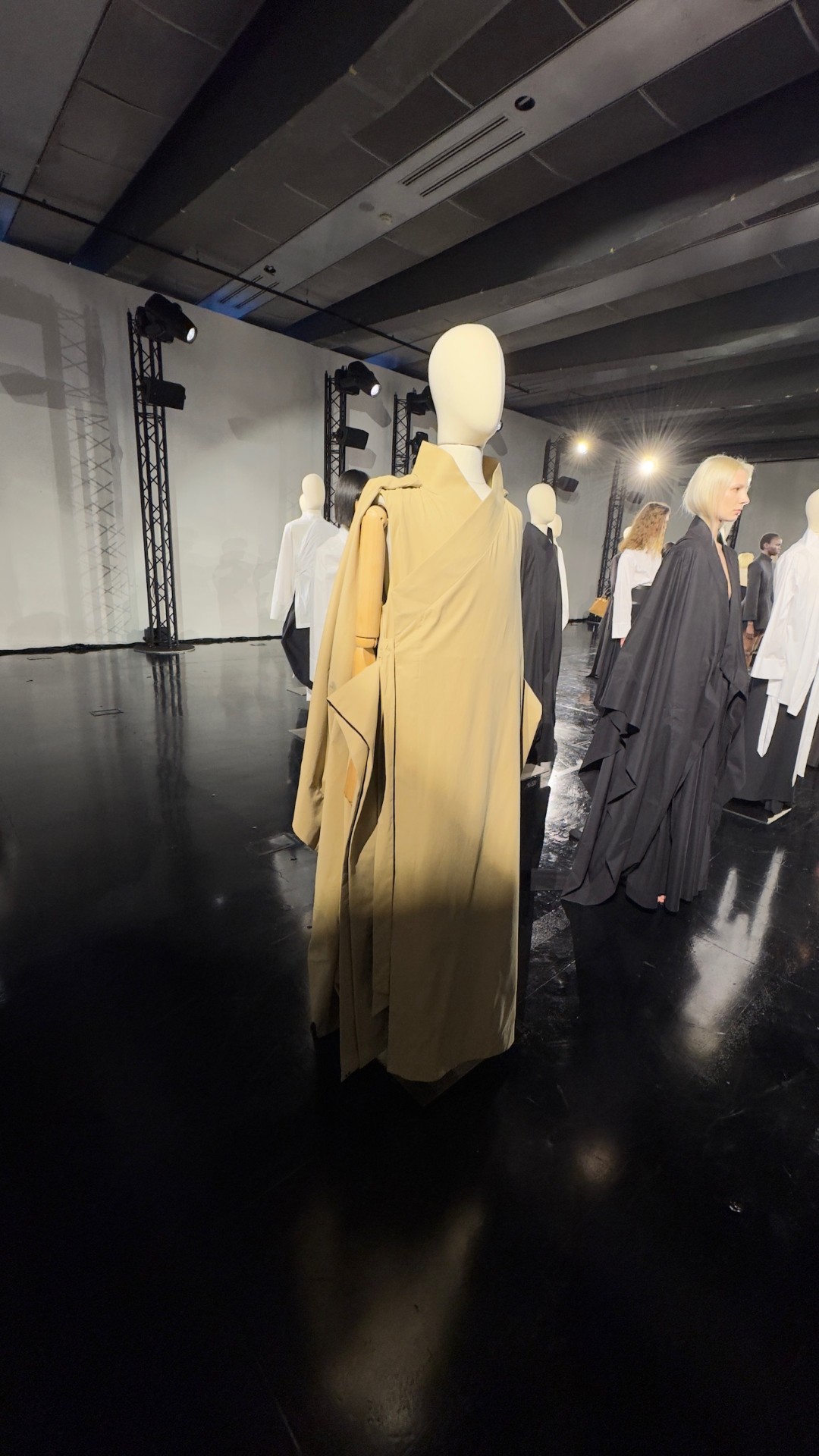
White appears as crisp expanded shirting, pared back and precise. Clean fronts, controlled collars, and a clarity that makes the silhouette feel architectural. Black shifts the tone into something more severe. Coats and jackets feel tailored but simplified, with discreet closures, long lines, and controlled shoulders. Wrapping and layering appear as quiet architecture, with the same composure as the rest of the wardrobe.
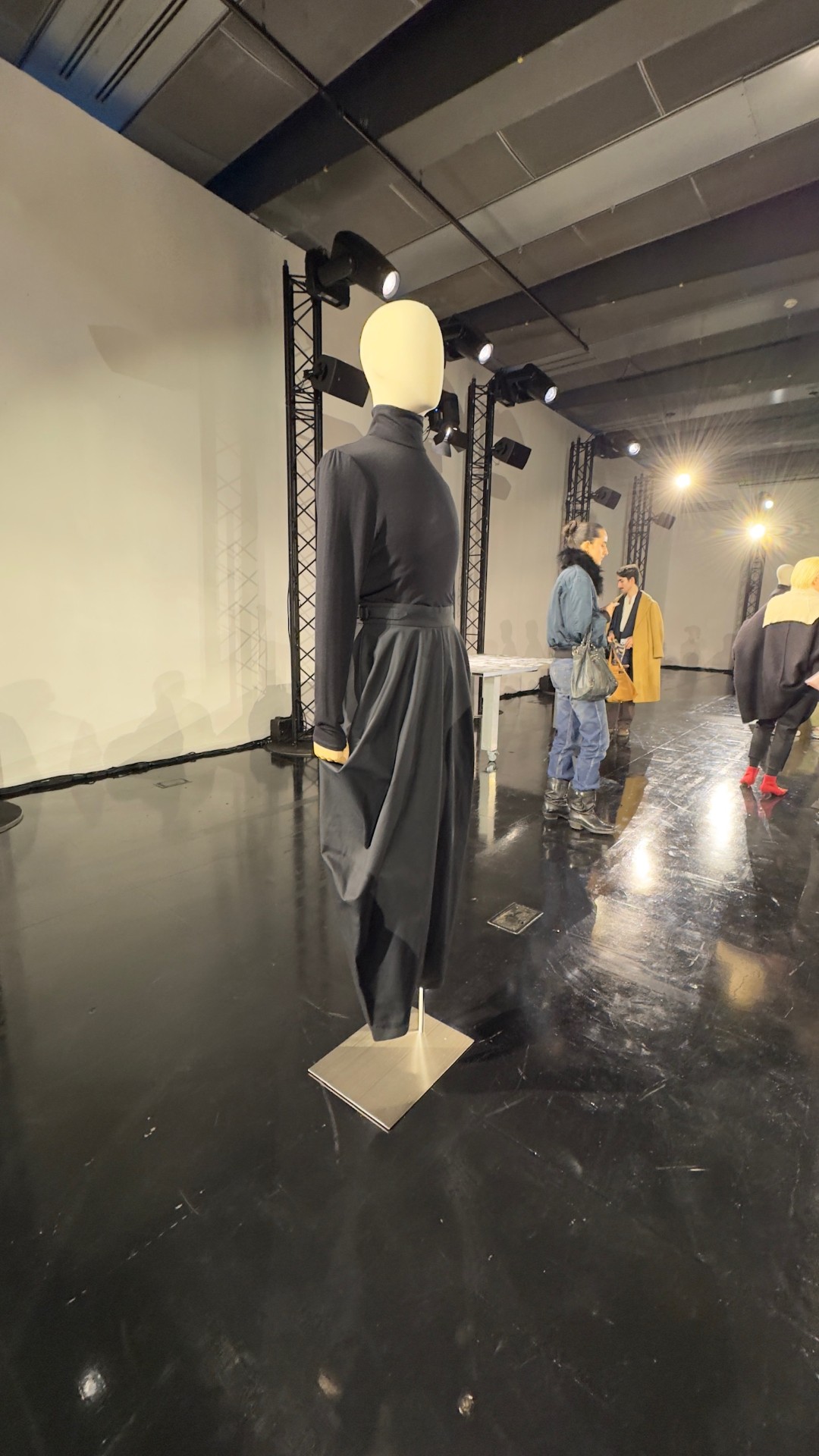
Versatility sits at the centre of the collection’s ethics, framed as tradition rather than trend. This connects to a practical history of garments that shift use and form, describing a cape that could be lifted and placed on the ground “and use it as a carpet,” and extending that into a belief that “fashion is not disposable” and should be kept “for as long as possible.” In that context, the repetition across looks reads as intentional structure. A white top with long dark volume and a wide belt returns as a foundation. Robe shapes recur with small shifts in proportion and closure. Everything is designed to recombine and re-wear.
The strength of the collection is its control. A limited palette, a focused silhouette family, and enough variation in cut to keep the language alive. It feels coherent, serious, and visually intelligent, with a commitment to design as a living continuation of tradition rather than an aesthetic reference.
For more stories of the finest fashion, visit our dedicated archives.