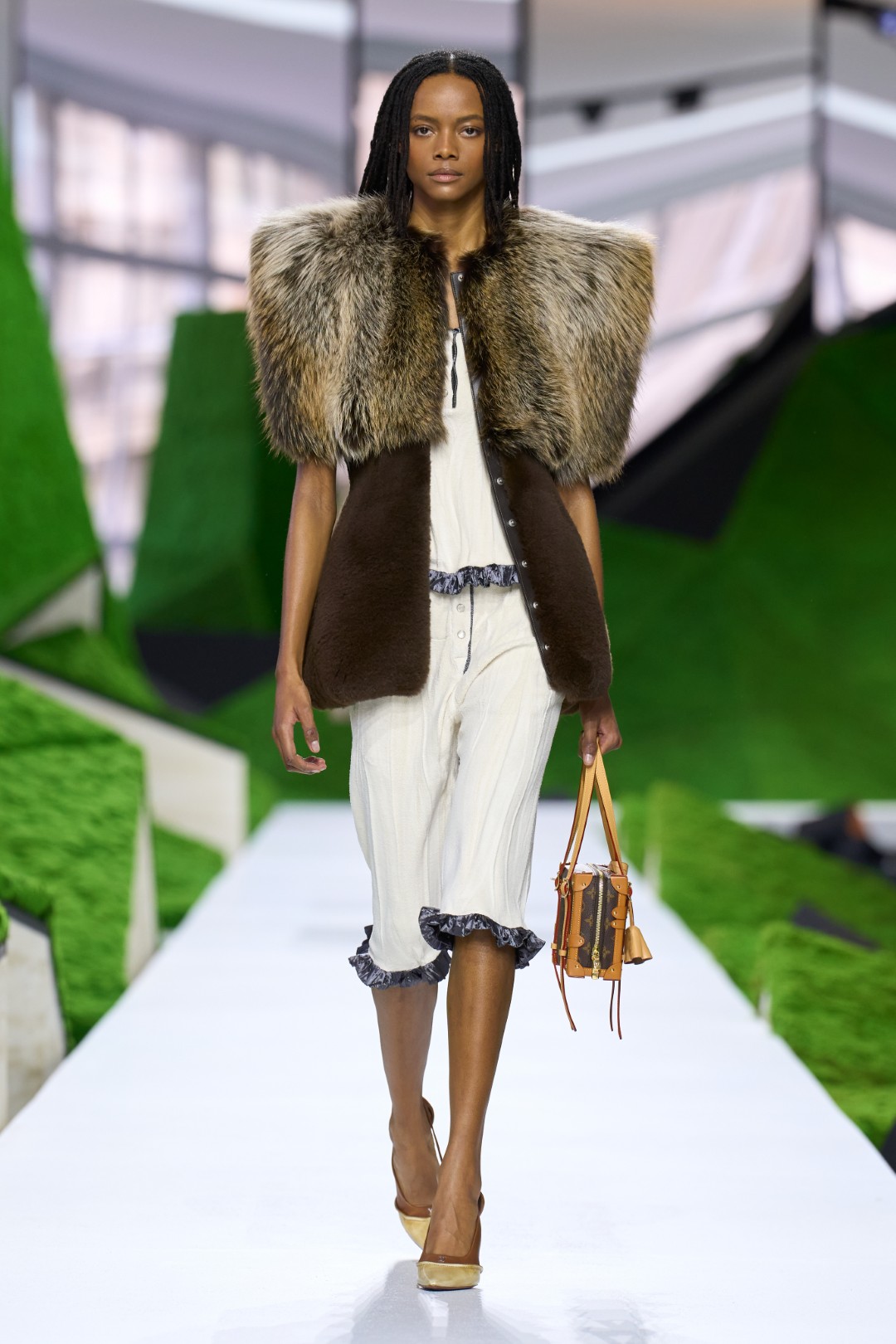
The Cour Carrée of the Louvre became something uncanny for Louis Vuitton’s Fall/Winter 2026 show. Creative director Nicolas Ghesquière installed a surreal topography: angular hills coated in vivid green, rising around a stark white runway like a digitally rendered countryside. The set, devised by production designer Jeremy Hindle, felt almost like a simulation of nature; an artificial pastoral landscape revealed inside the museum’s historic courtyard.
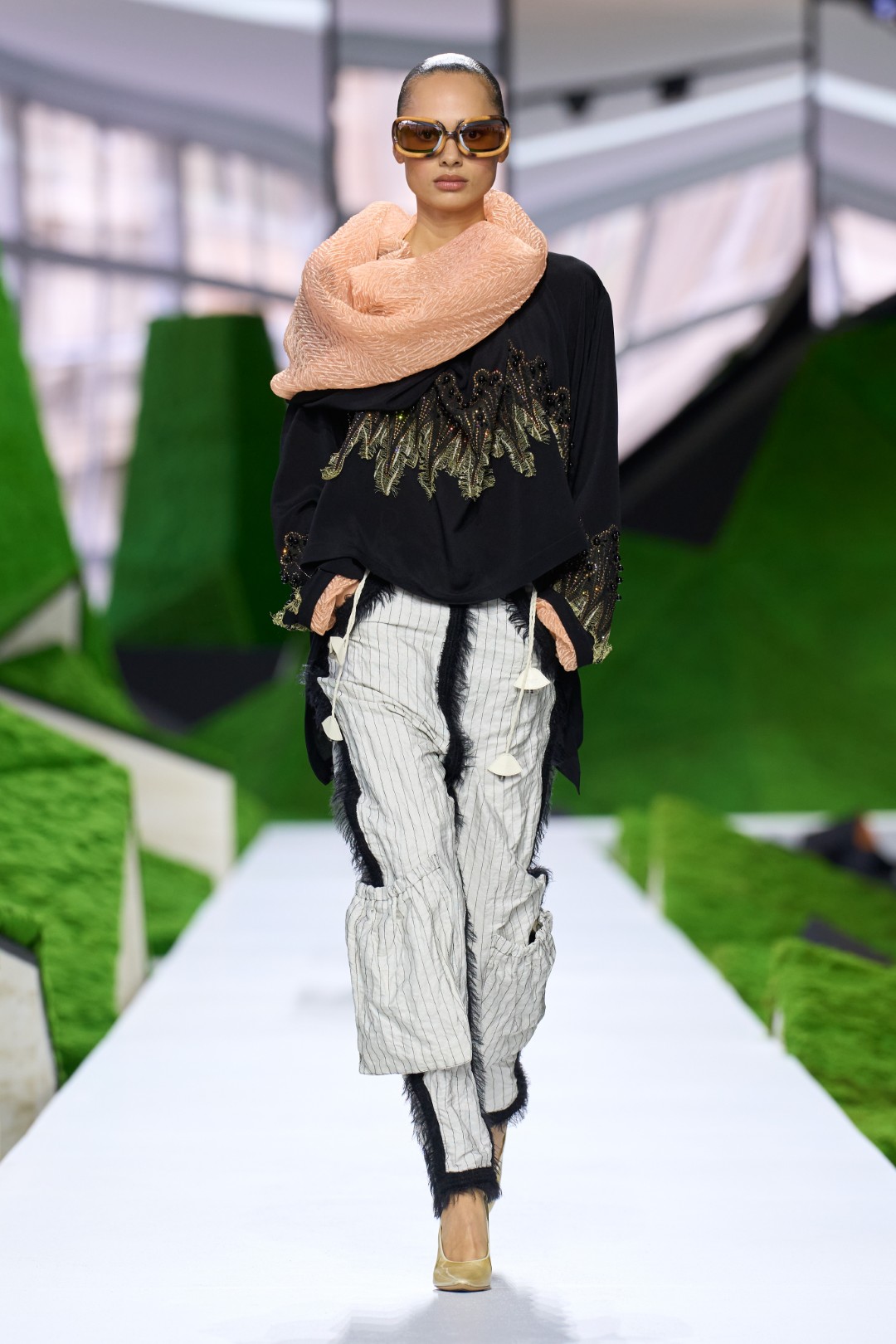
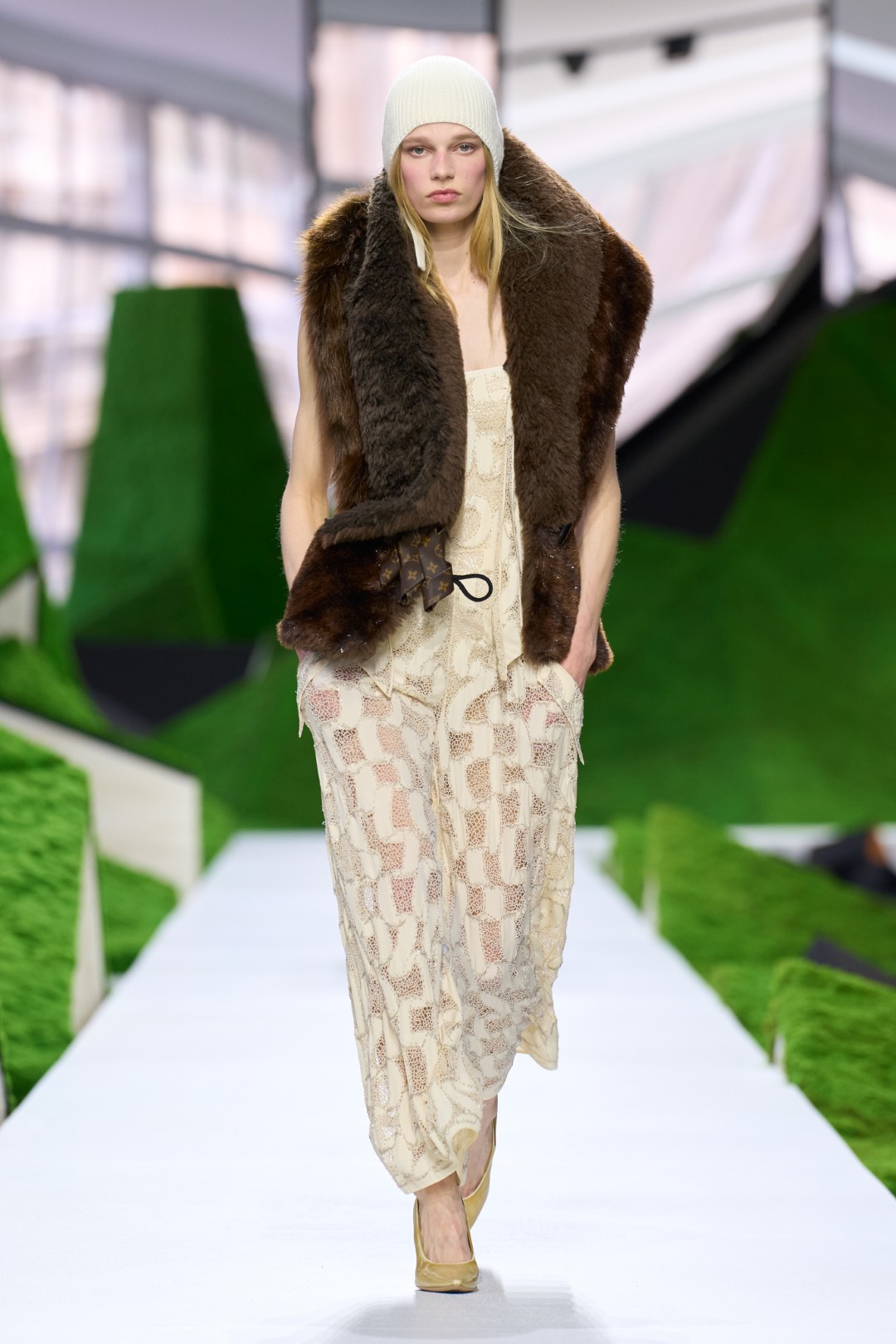
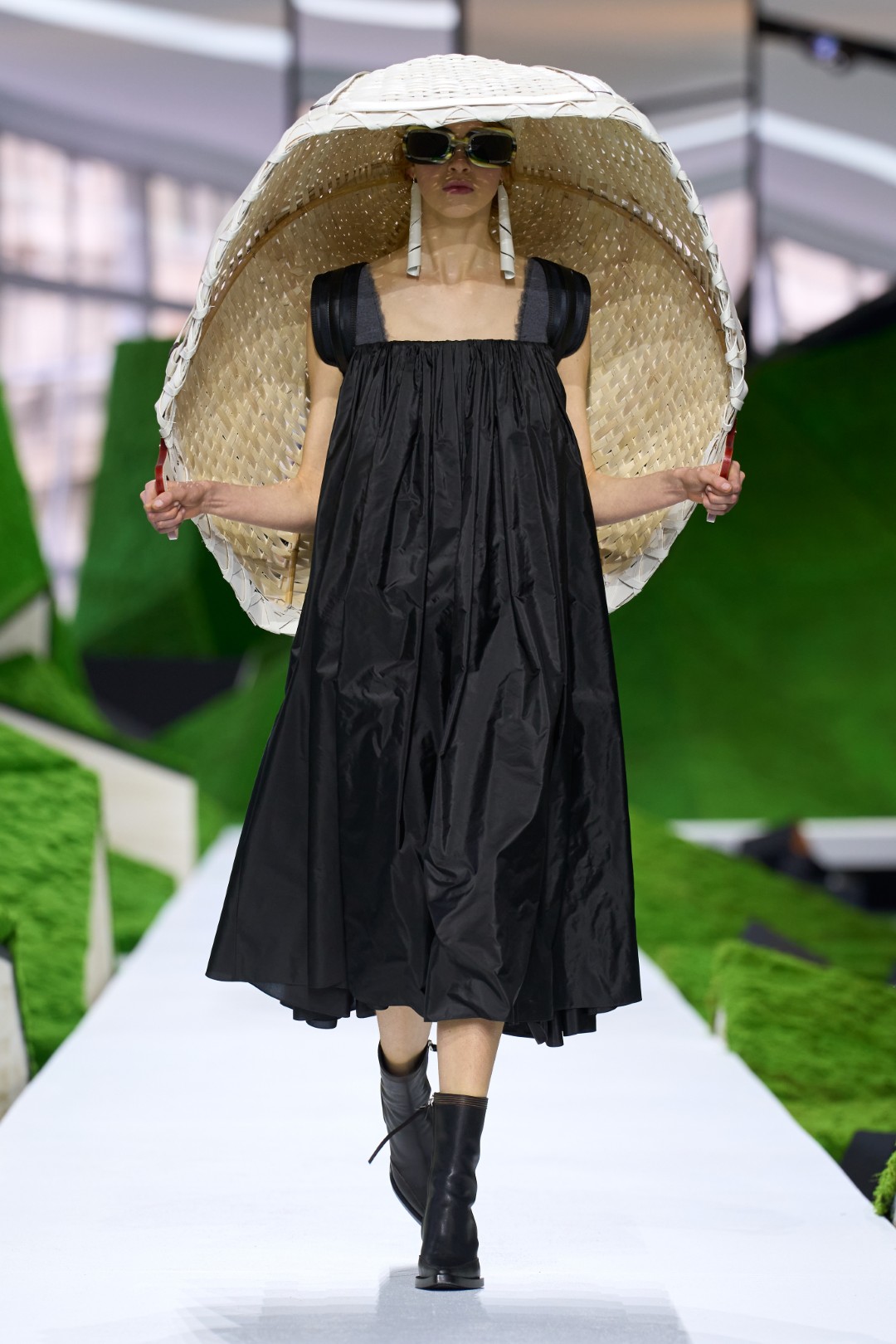
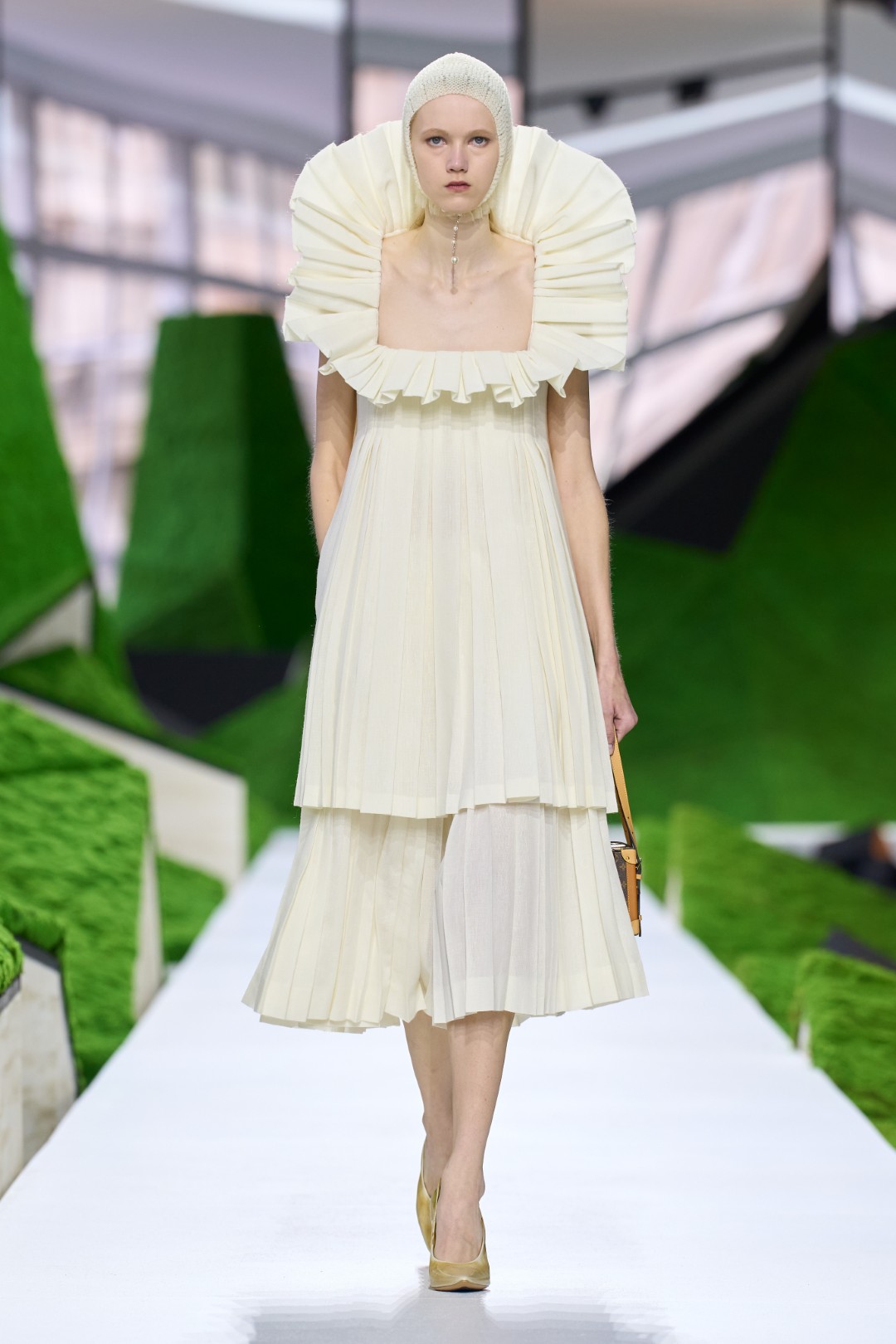
Through this strange terrain, the collection began to emerge. Moving through it were silhouettes crowned with exaggerated headwear: towering cones, oversized pastoral hats and sculptural bonnets that transformed the models into figures from a strange, futuristic folklore. A form of ‘hyper-craft’, LV draws from nature, not by imitation, but by merging advanced technologies like 3D printing and resin fabrication, with the art of human craftsmanship.
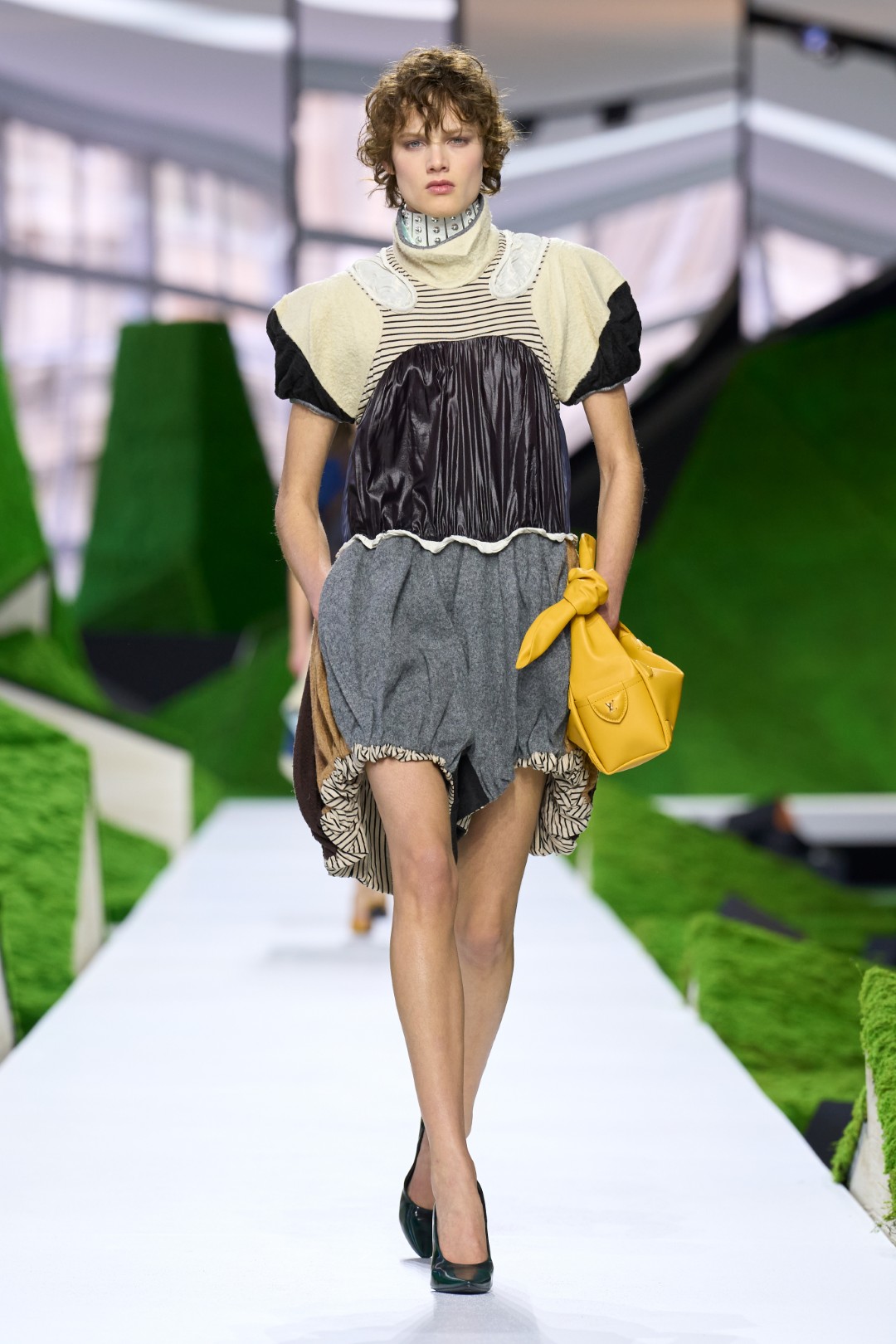
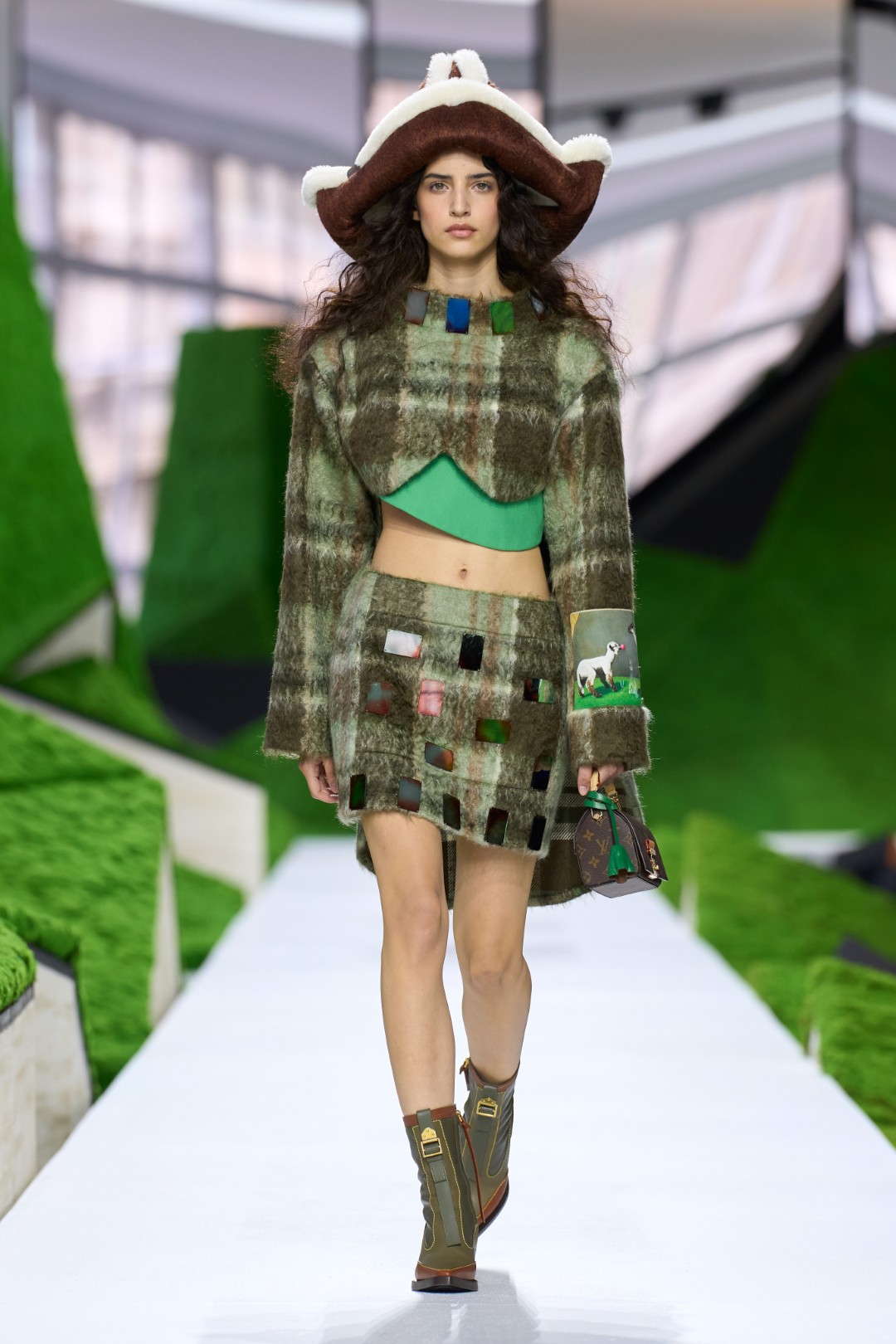
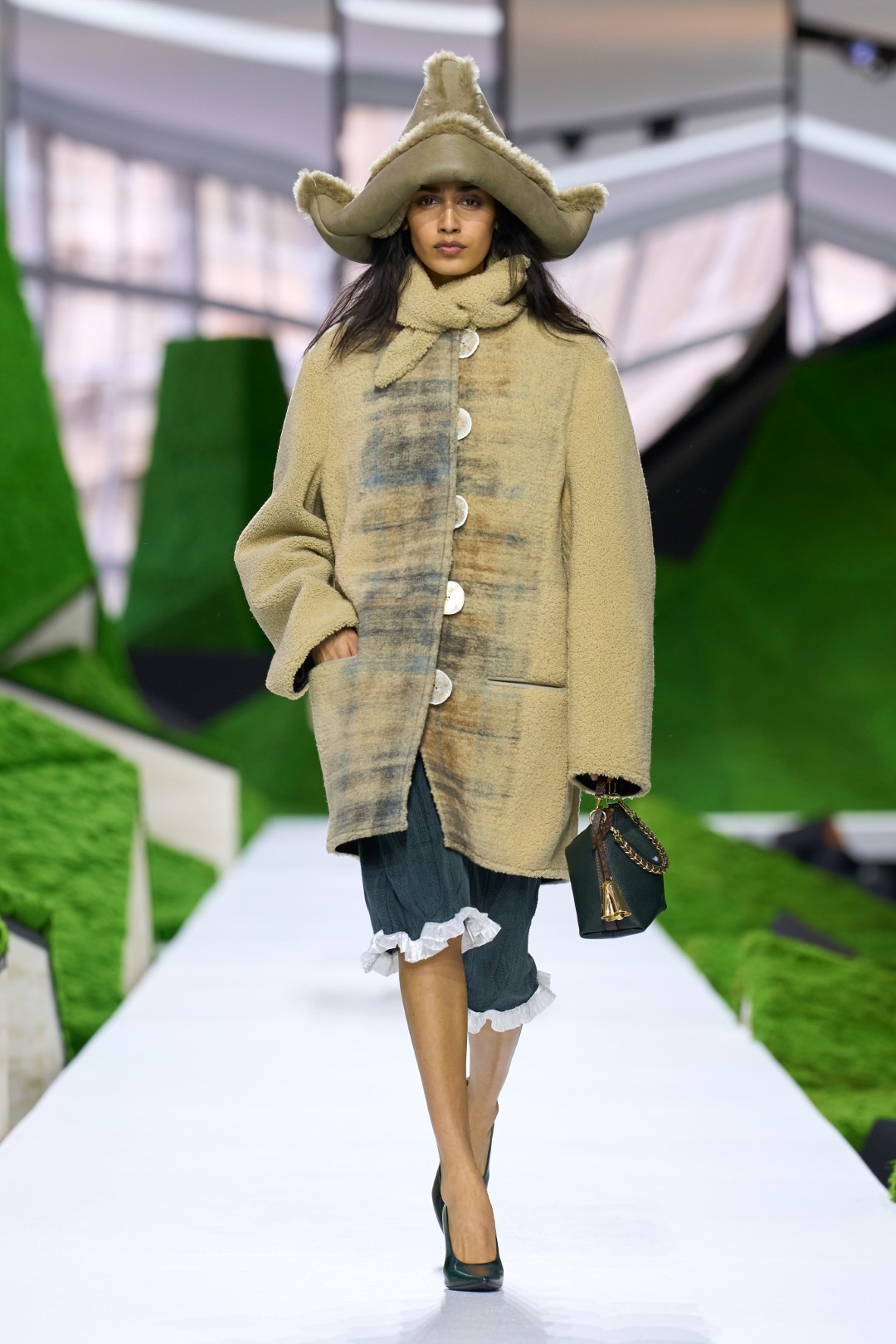
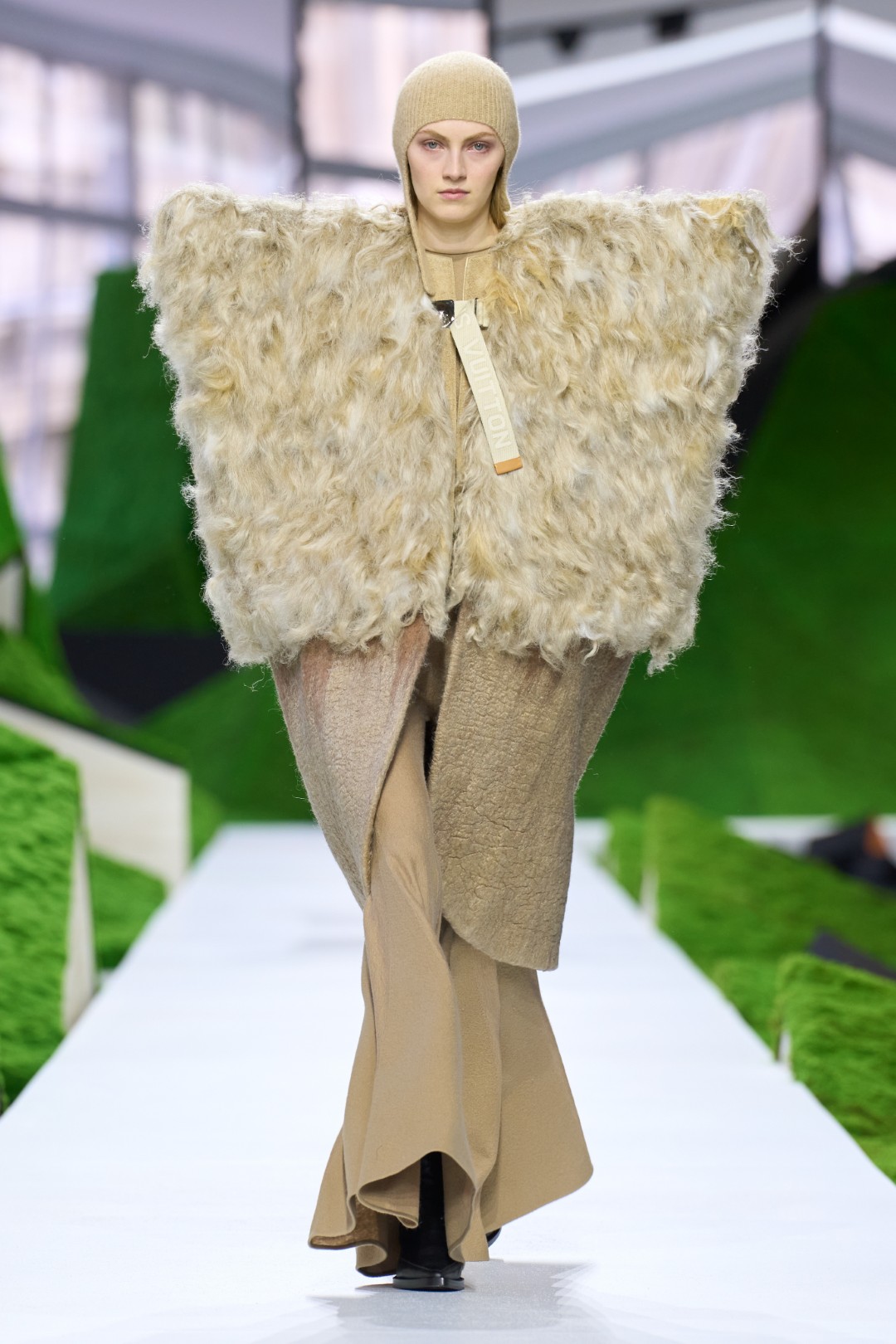
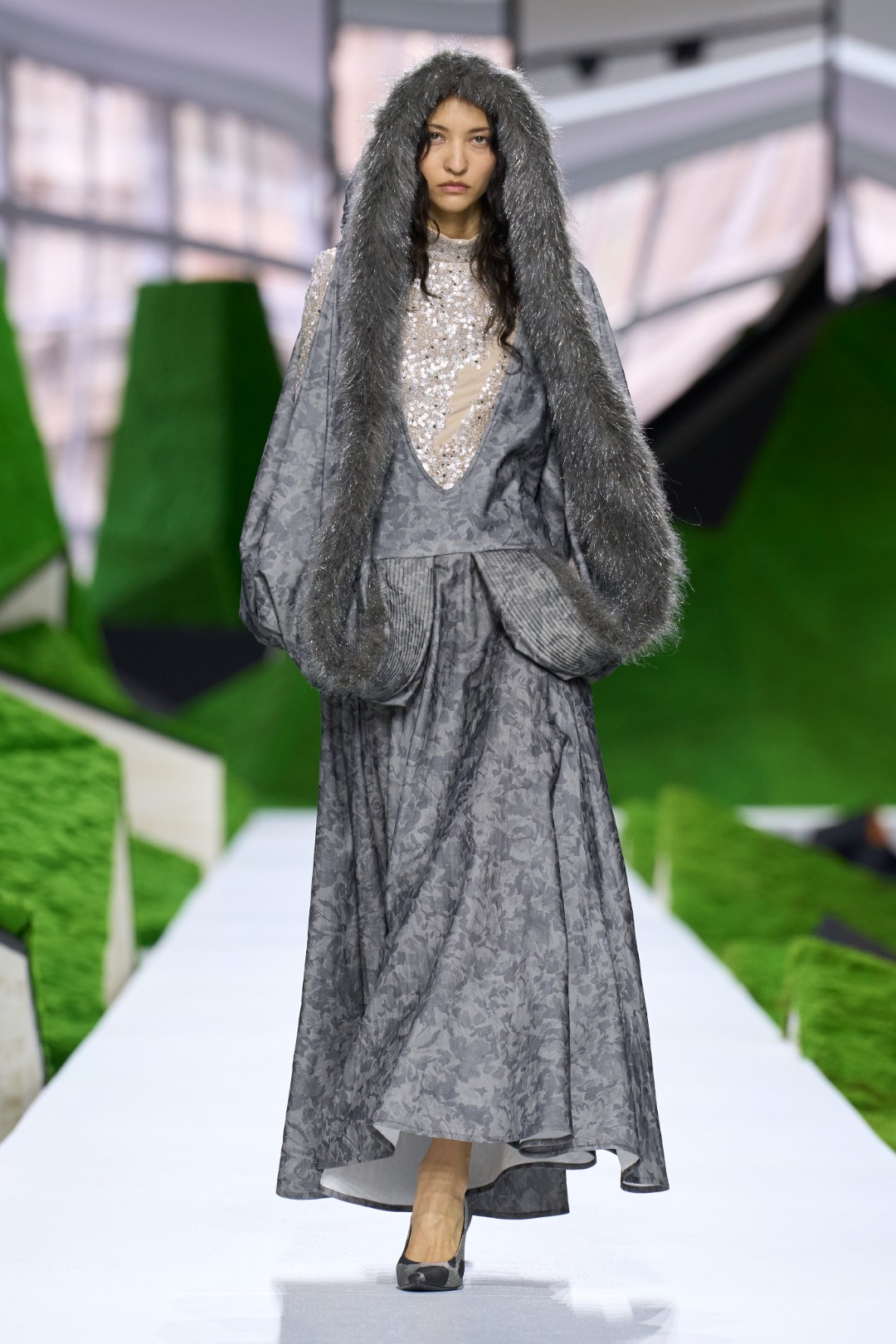
Some silhouettes carried the language of rural dress. Cloaked figures appeared in textured wool and furred hoods, their shapes recalling shepherds or travellers crossing imagined mountains. One model walked the runway wrapped in a mottled grey coat and hooded texture that evoked animal pelts, while another wore a plush shearling jacket topped with an enormous, sculptural hat. It sat somewhere between alpine folklore and futuristic costume.
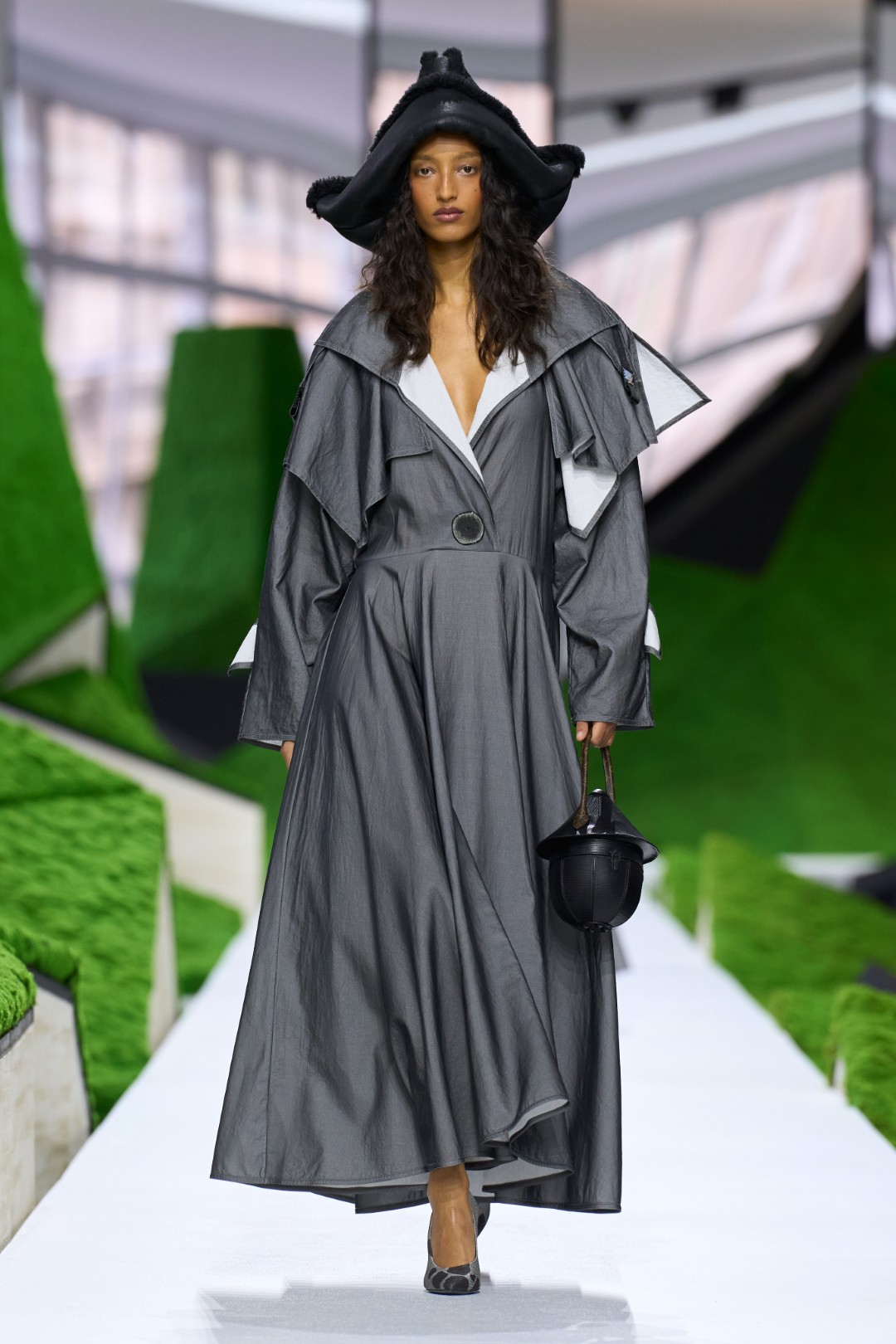
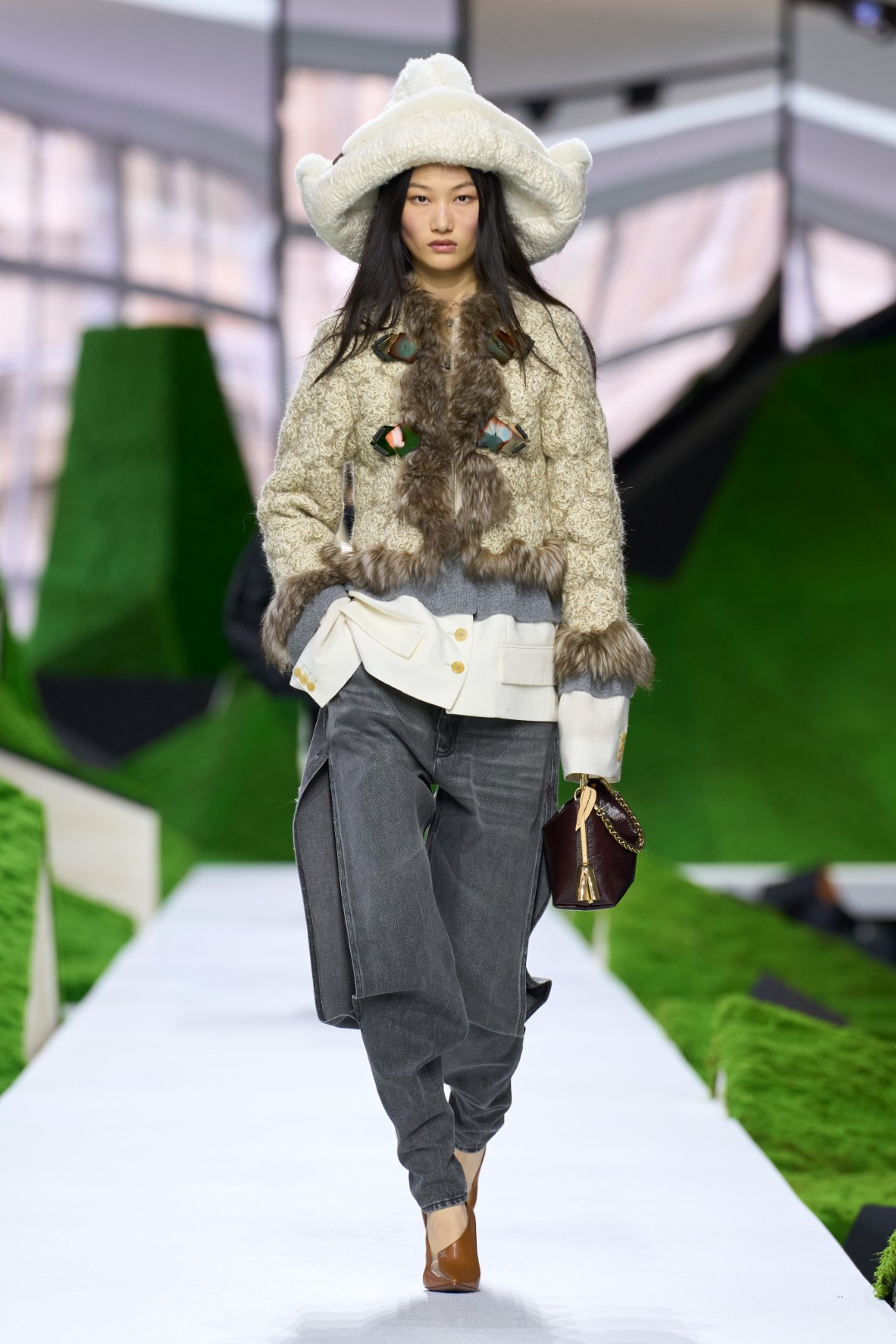
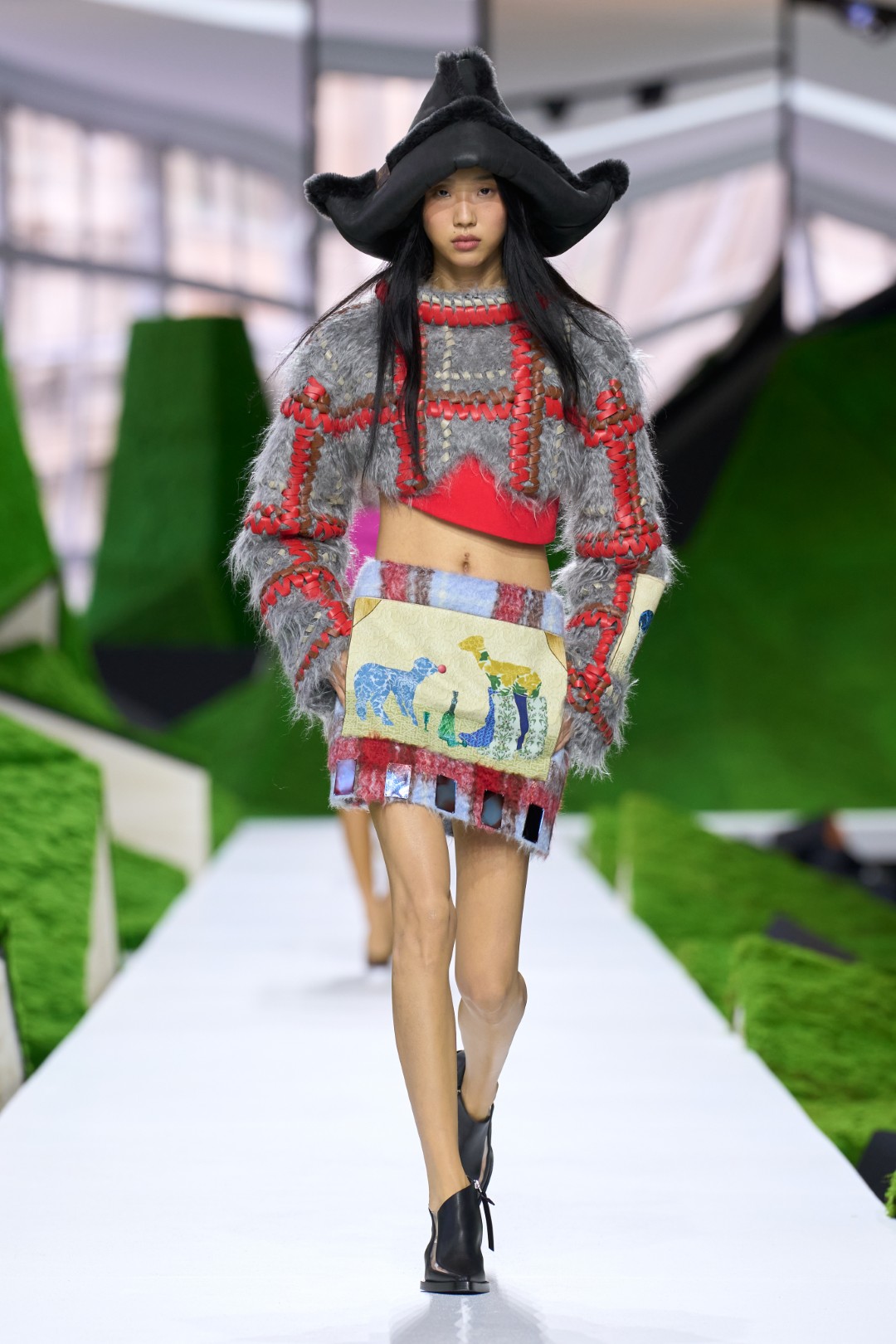
Fabrics mimicked natural surfaces without fully replicating them: vegetal fur-like trims, grainy textiles, grooved leather, and mottled prints suggested stone, animal hide or bark. The effect aligned with Ghesquière’s central premise of “Super Nature” — not a return to nature, but its reinterpretation through design and craft.
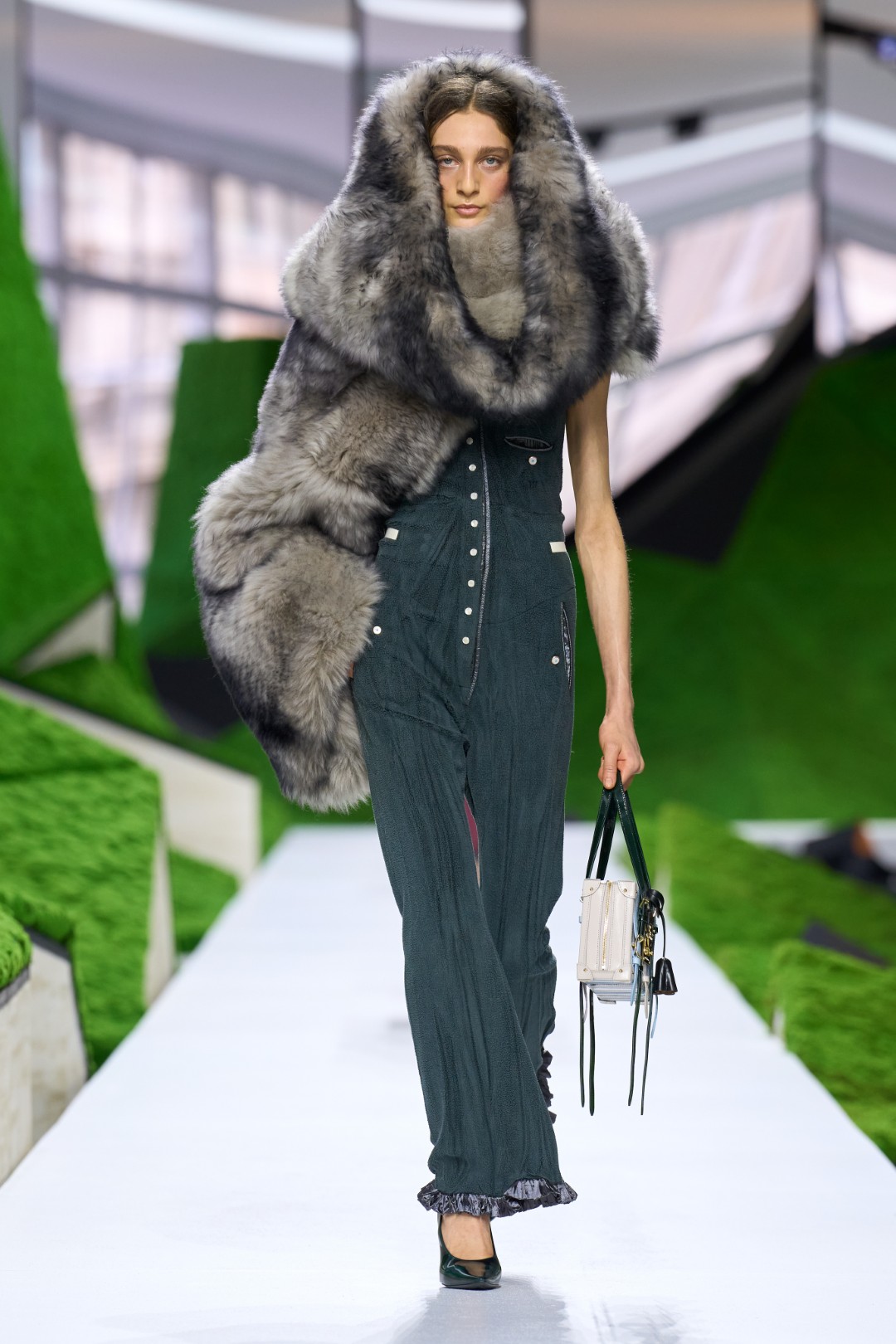
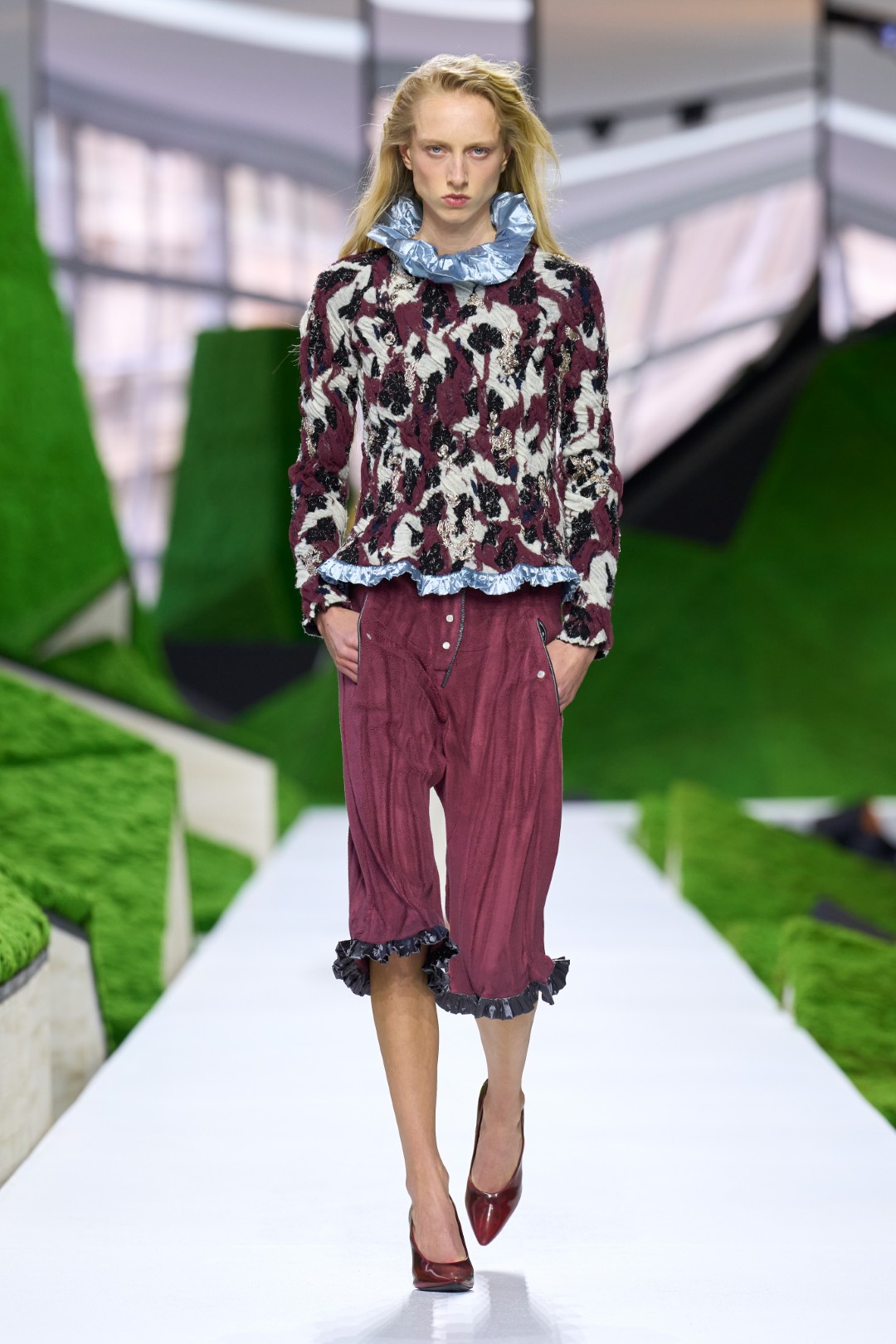
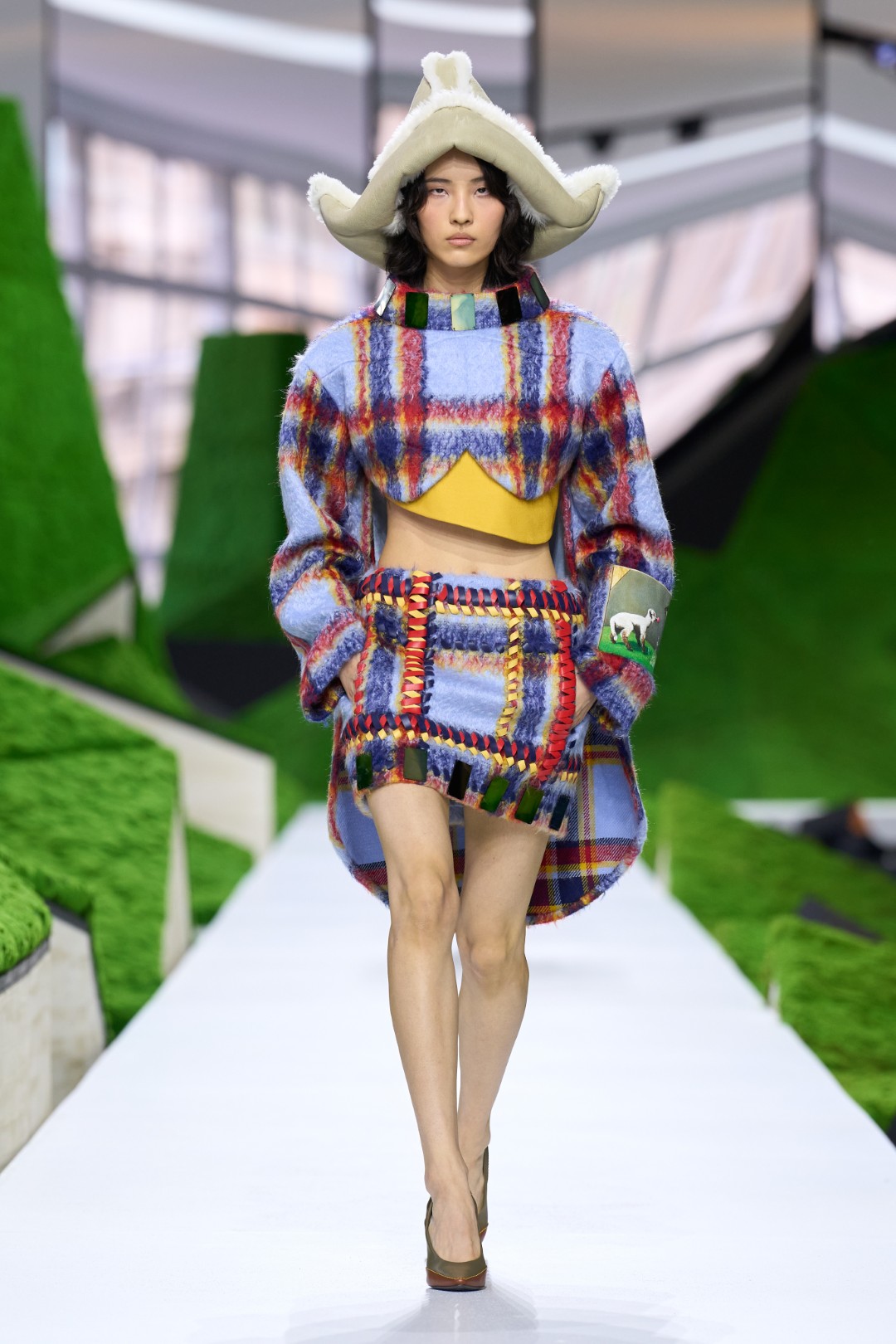
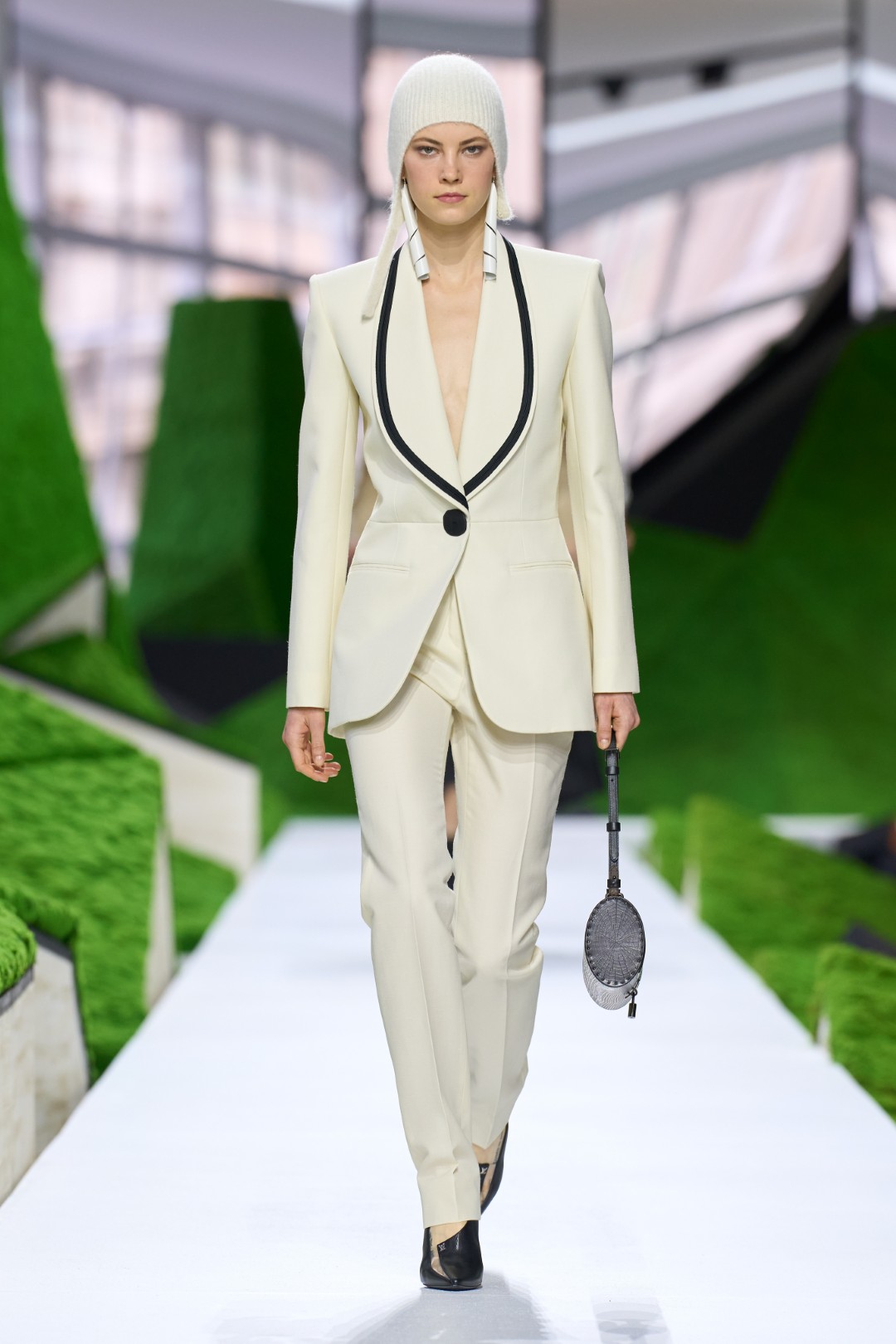
Headwear quickly drew the eye throughout the show. Wide-brimmed hats curved dramatically around the head, while others stretched upward into elongated cones — one towering black silhouette resembling a ceremonial headdress. Accessories also referenced the house’s trunk-making legacy: a collier punctuated with Louis Vuitton trunk nail-heads appeared alongside elongated rectangular earrings. These shapes pushed the idea of folklore into something stranger: less heritage costume than speculative future.
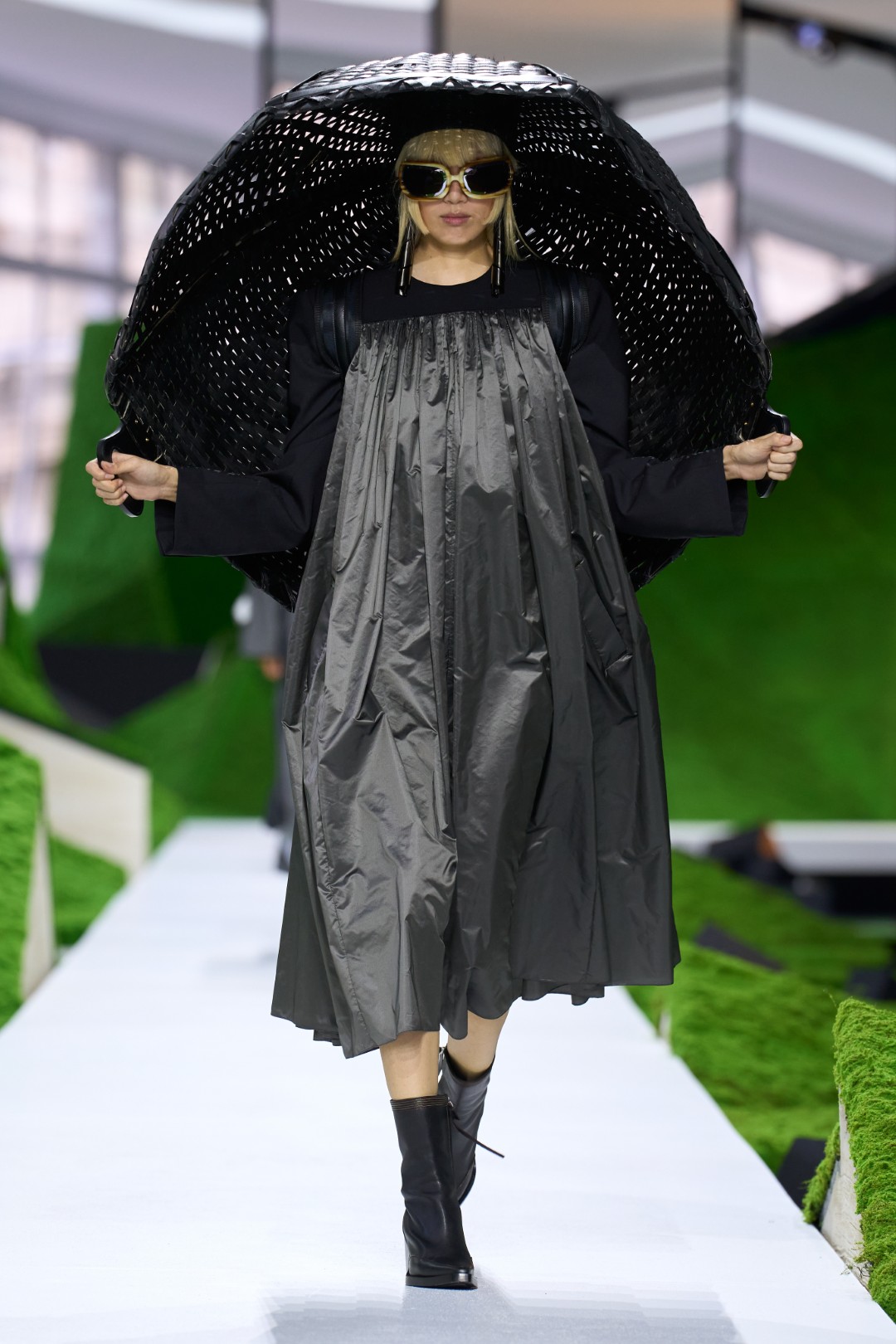
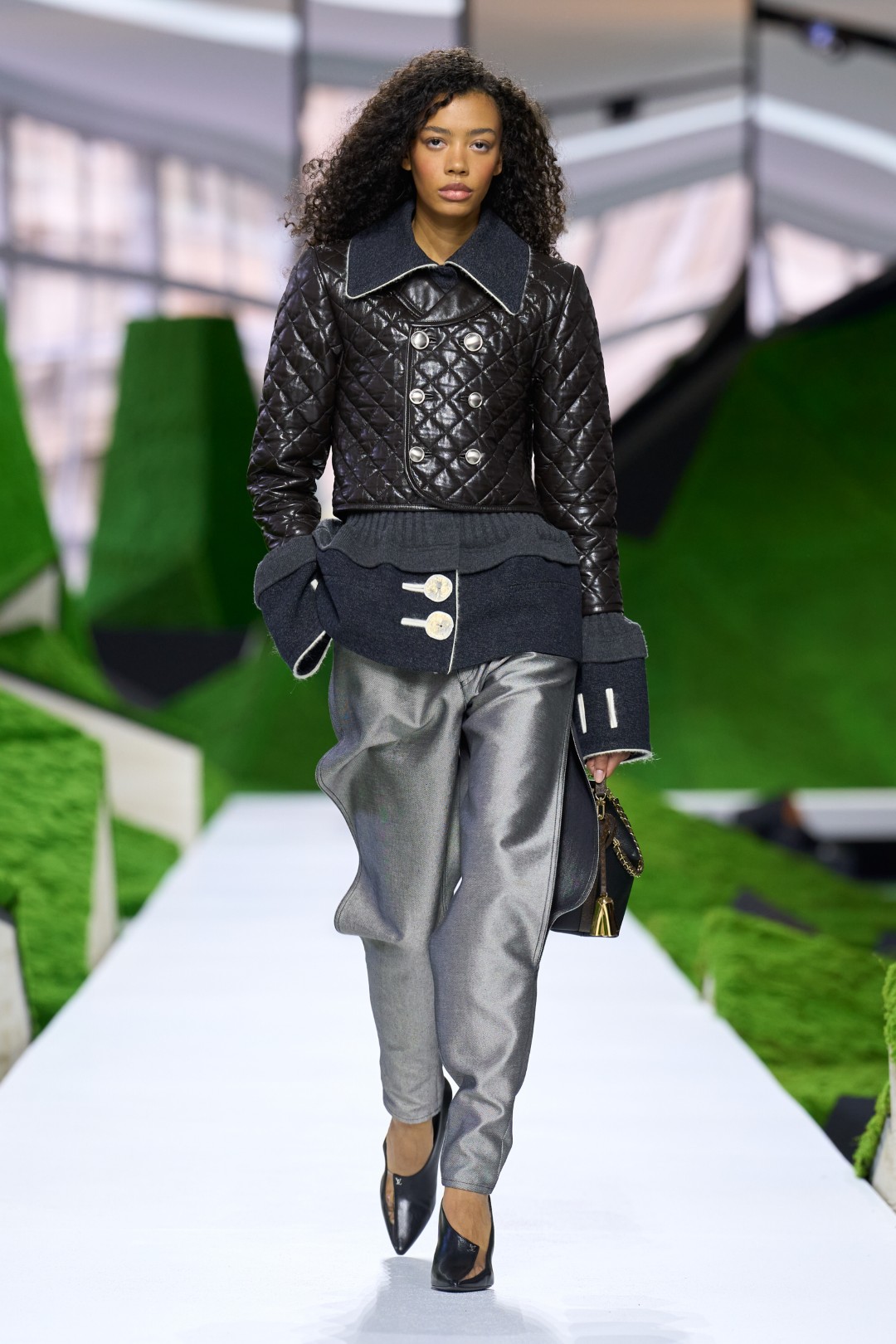
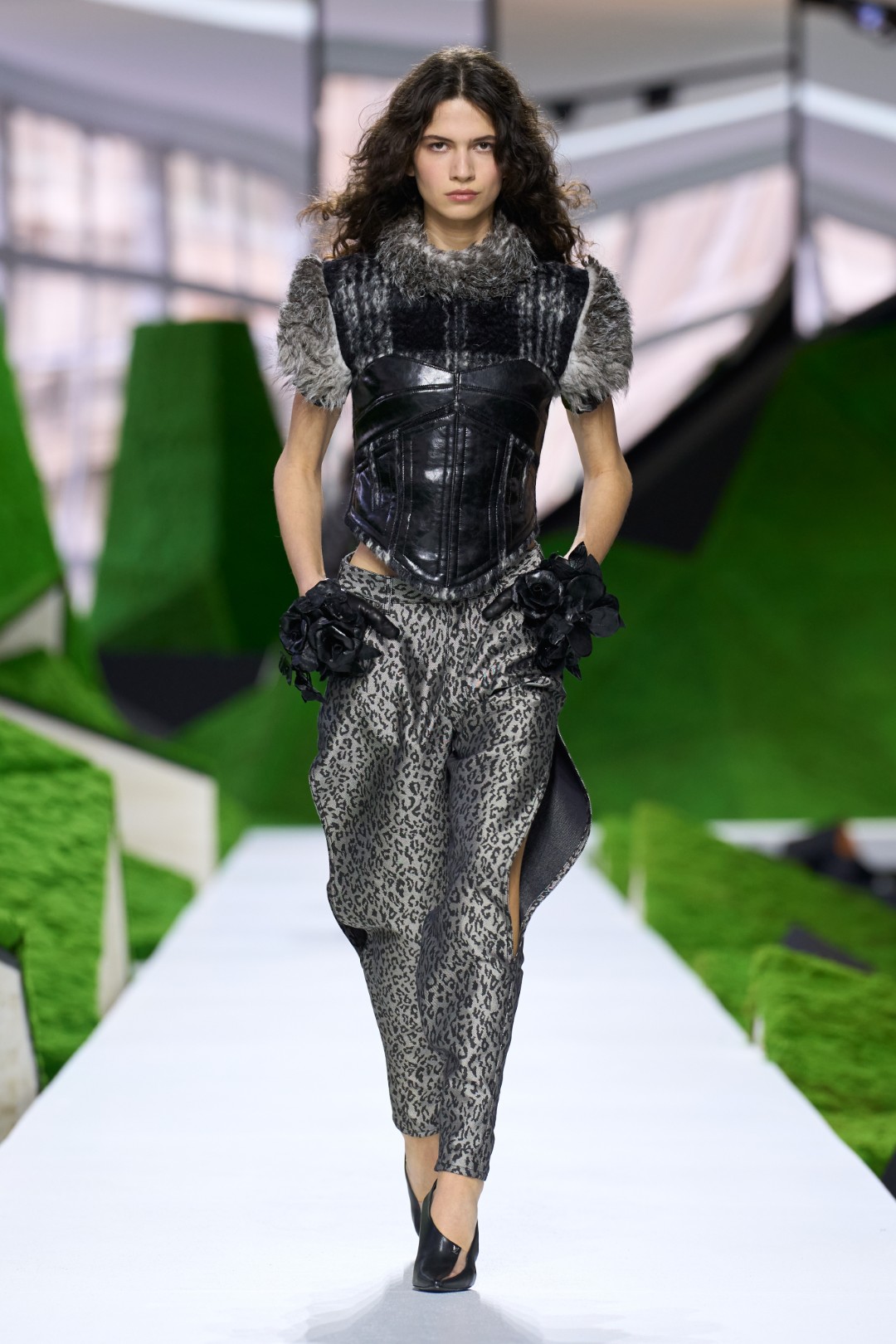
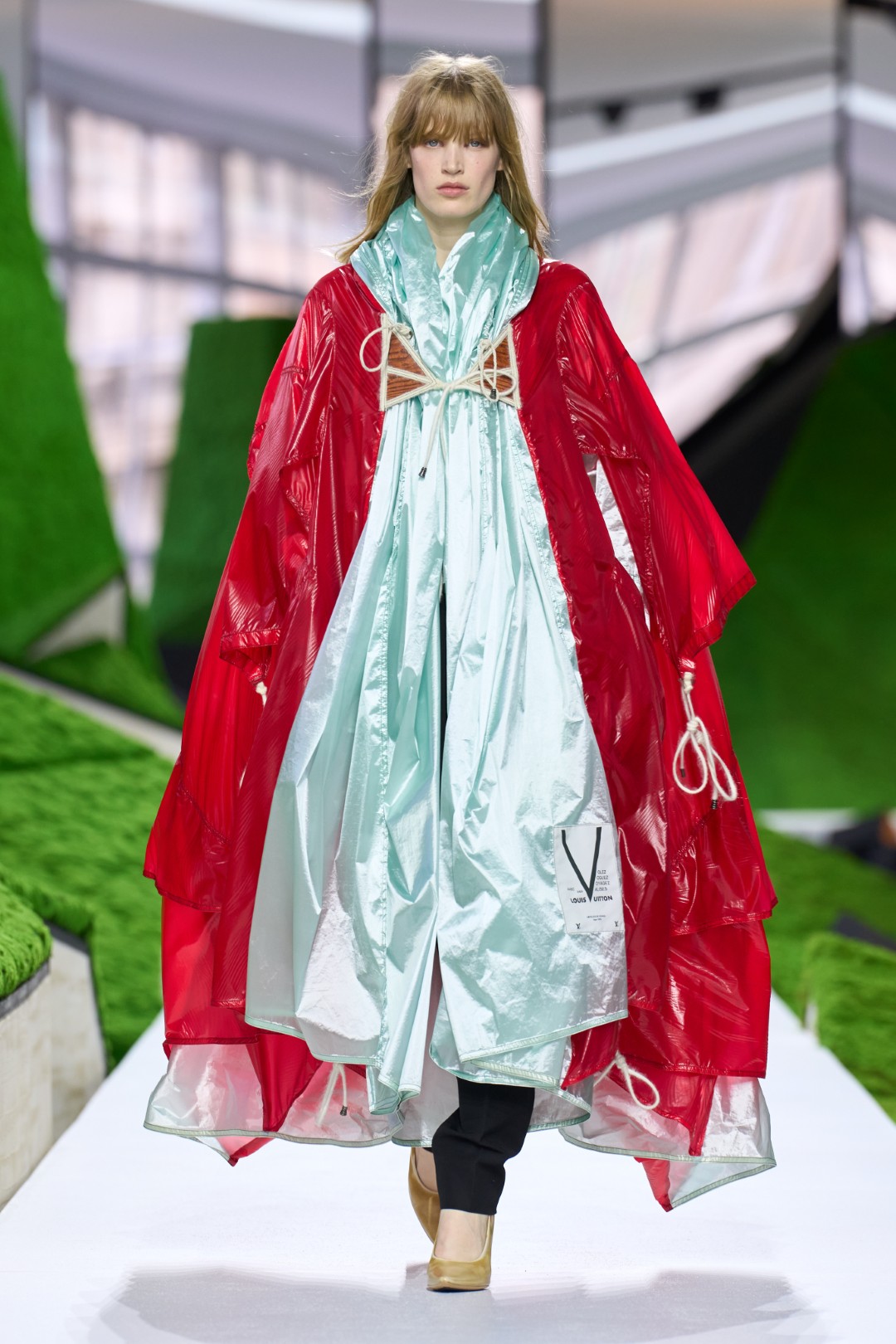
Despite the theatrical proportions, the clothes remained rooted in Louis Vuitton’s ongoing conversation with travel and movement. Quilted jackets, fitted vests, layered skirts and protective outerwear suggested garments built for endurance. A cuttingly-tailored jacket laced tightly down the front paired with a structured skirt hinted at armour. Elsewhere, sculpted coats flared outward like protective shells, their volume commanding space along the runway.
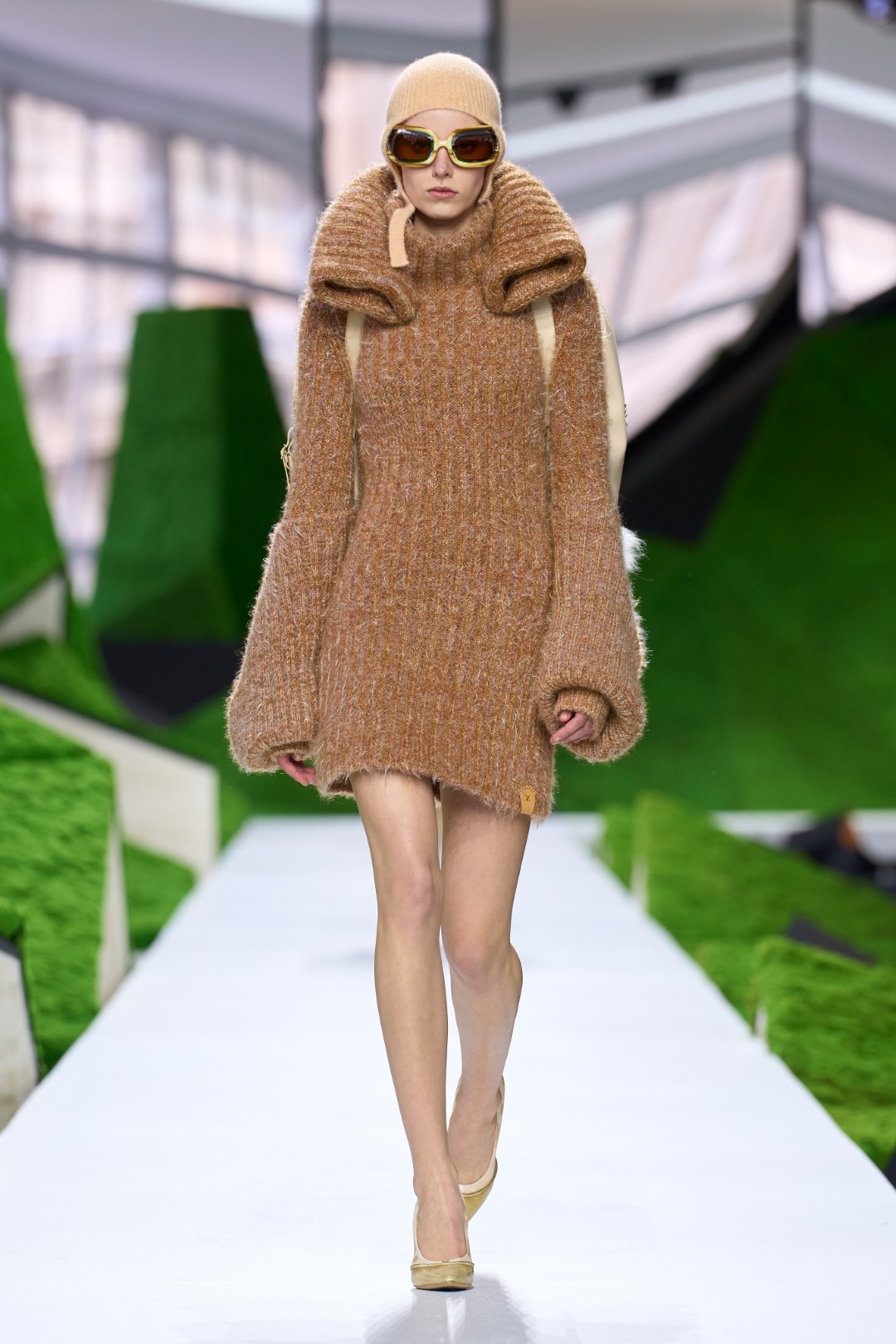
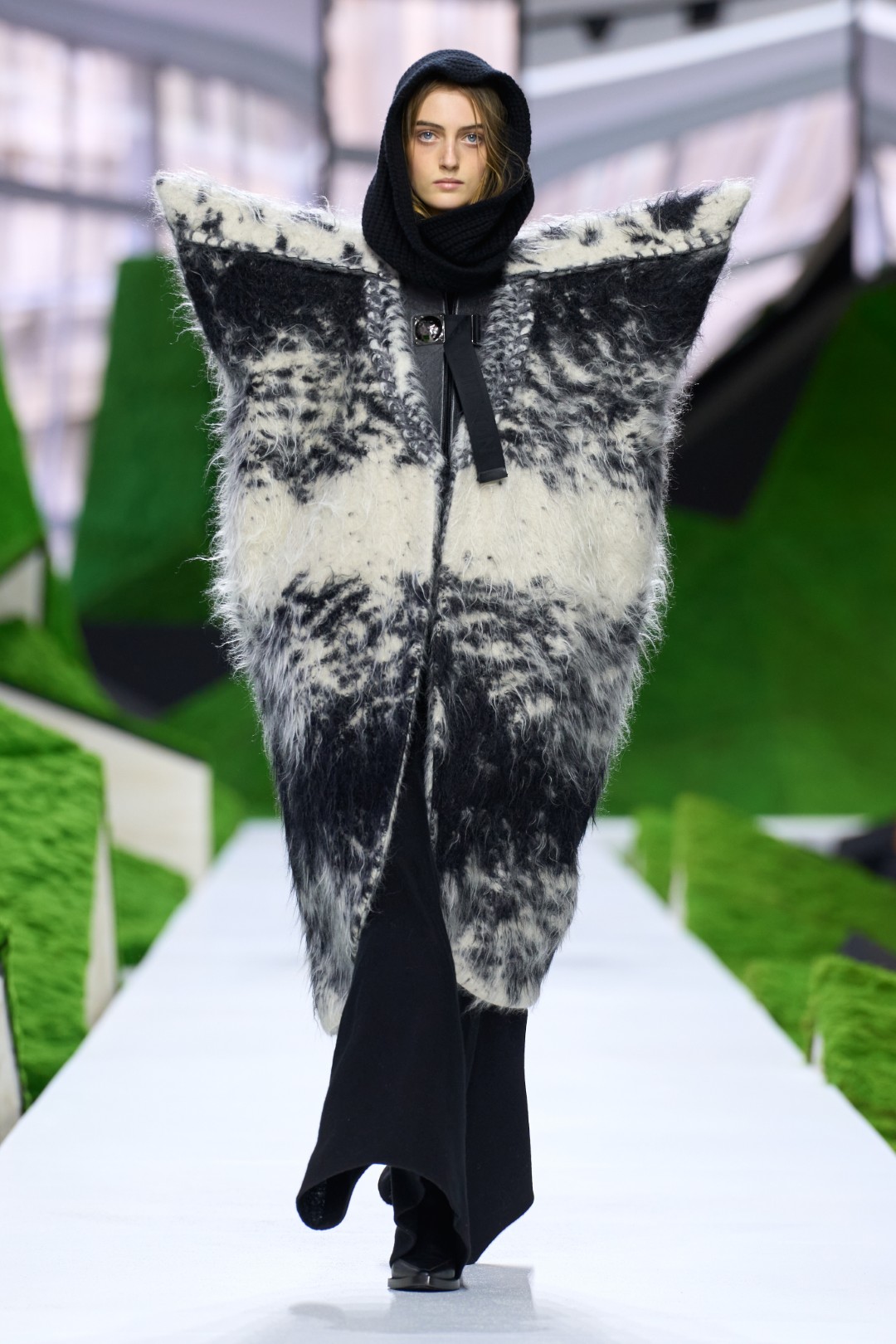
As the finale procession wound back through the bright green terrain, the models appeared like travellers crossing an imagined landscape. Around them, the synthetic hills remained perfectly still — nature, re-engineered. Ghesquière proposed something curious: a future folklore. One where clothing absorbs fragments of landscape, history and technology, metamorphosing them into silhouettes that feel both ancient and speculative at once. Nature is fashion’s greatest designer, at least in the eyes of Ghesquière.
For more stories of fashion from around the world visit our dedicated archives and follow us on Instagram.