The show opens under red light, the room held in a quiet kind of anticipation. This is Meryll Rogge’s first outing for Marni, and the energy feels attentive. Everyone is watching closely, trying to understand how a new designer steps into a house so strongly shaped by identity – including Chloe Malle who has graced this audience.
Before any look appears, the camera lingers on objects. A painting of a security camera. Small staged interiors. A file resting open. A mirror reflecting a counter marked only by an orange peel. The space feels familiar and slightly strange at once, somewhere between an office and a domestic setting. Everyday life becomes the starting point.
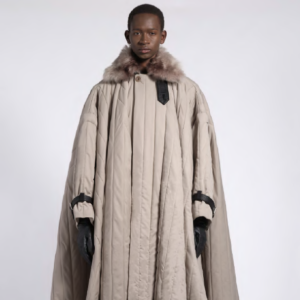
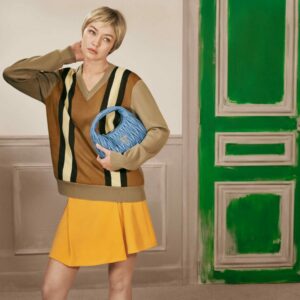
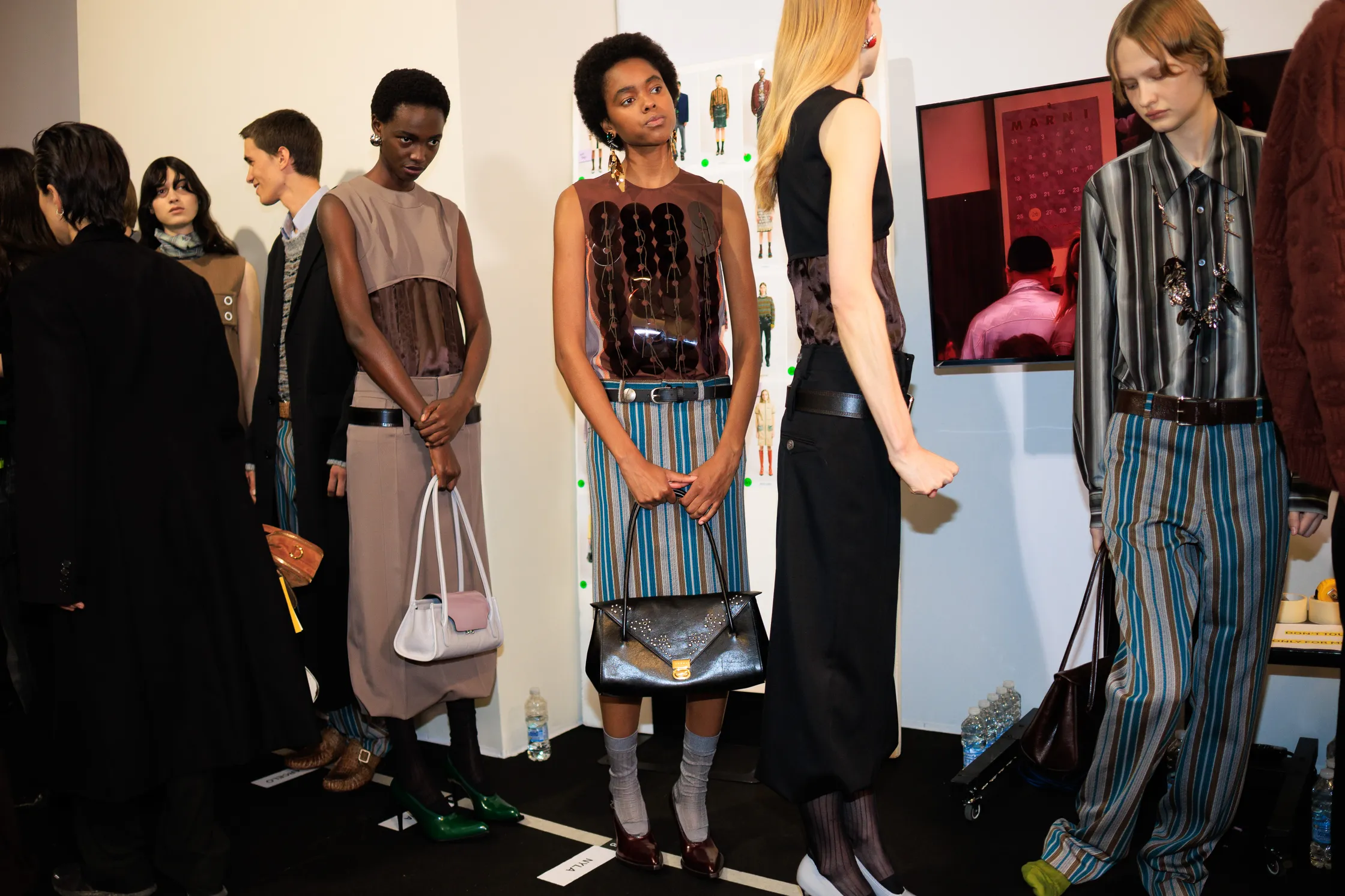
When the clothes arrive, the Marni vocabulary is immediately present. Sequins, dense textures, and preppy references appear with ease. Seventies earth tones run through the collection, joined by long necklaces that move with the body and fabrics that feel tactile and considered. Colour combinations lean toward the unexpected, the kind that shouldn’t quite work but somehow do.
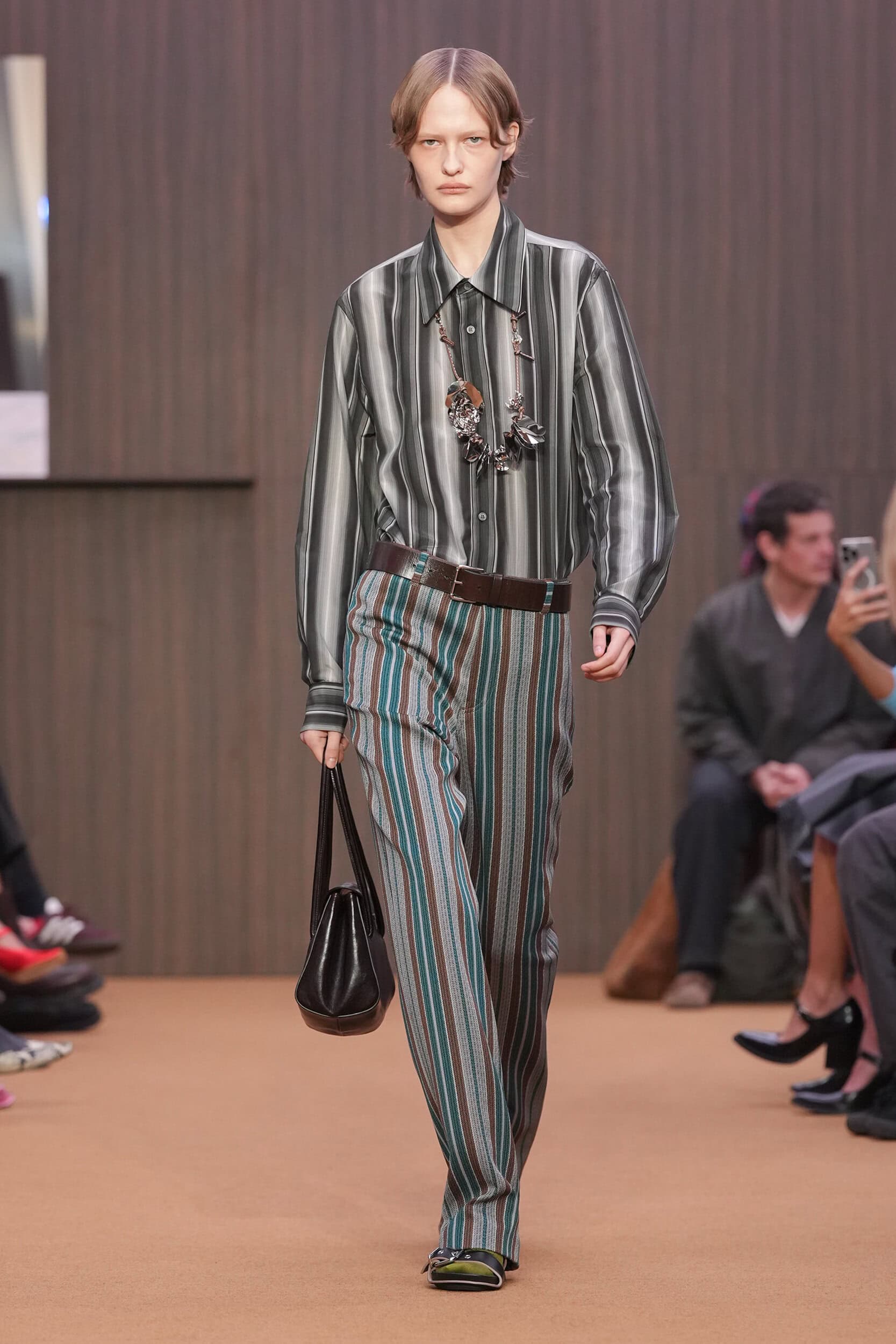
Boxy silhouettes, cut-outs, belts and heavy buckles introduce a practical edge. There’s a sense of clothing designed to exist in motion rather, “you and me are the same”, they say, “we are both real”. The collection feels comfortable inside the brand’s language while subtly adjusting its tone.
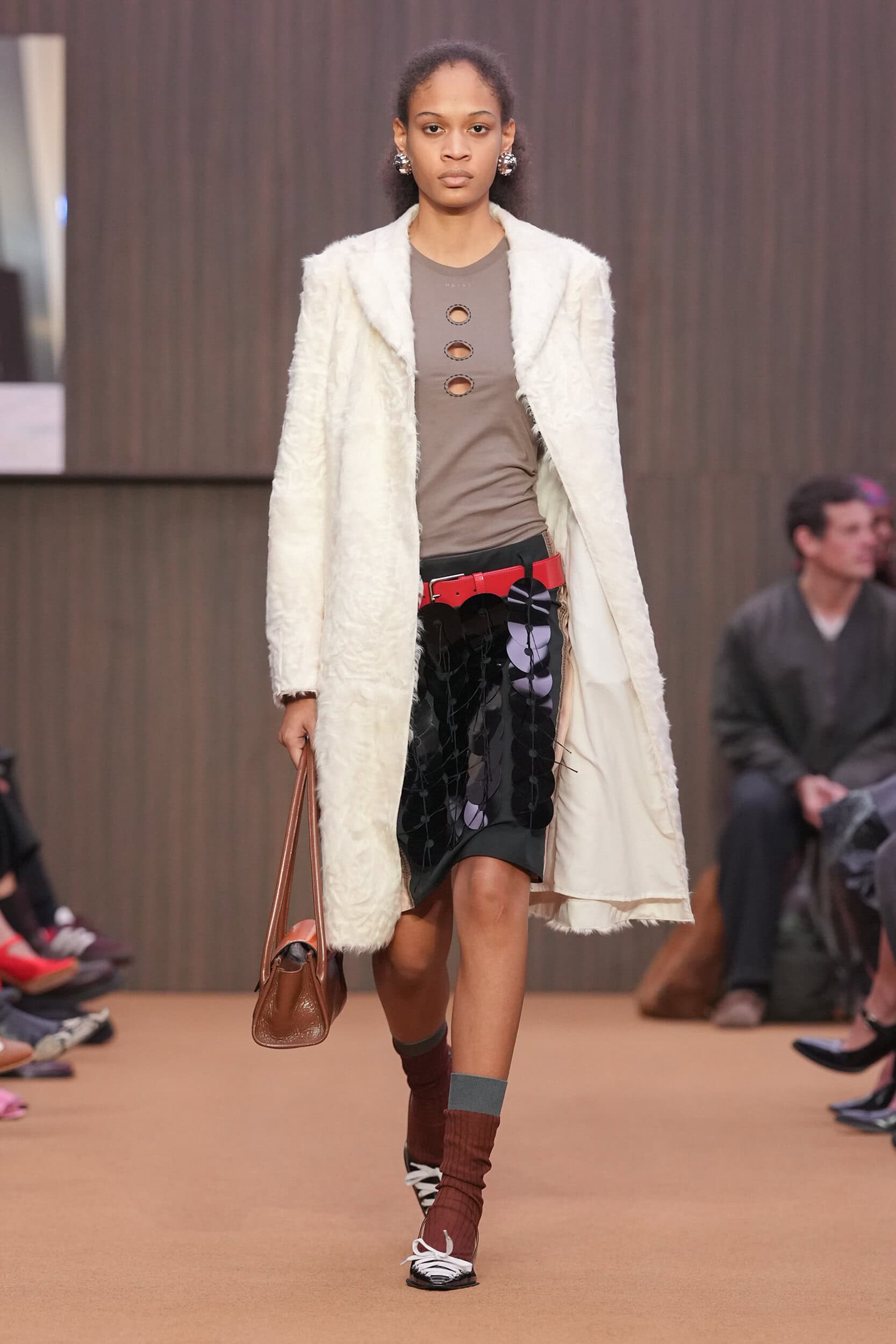
There’s also a sense of recalibration in how the show communicates with its audience. Nothing feels exaggerated for attention; the pace allows details to surface slowly, a texture catching light, a colour combination revealing itself in movement, a silhouette making sense only once it passes twice. It asks for a closer look, repositioning Marni as a brand built on sensitivity, where meaning accumulates gradually rather than arriving all at once.
Debut shows often carry pressure to define a new era instantly. Rogge approaches the moment with patience. The emphasis sits on texture, proportion, and familiarity, small adjustments that gradually reshape how the brand reads. The result feels confident without forcing attention.
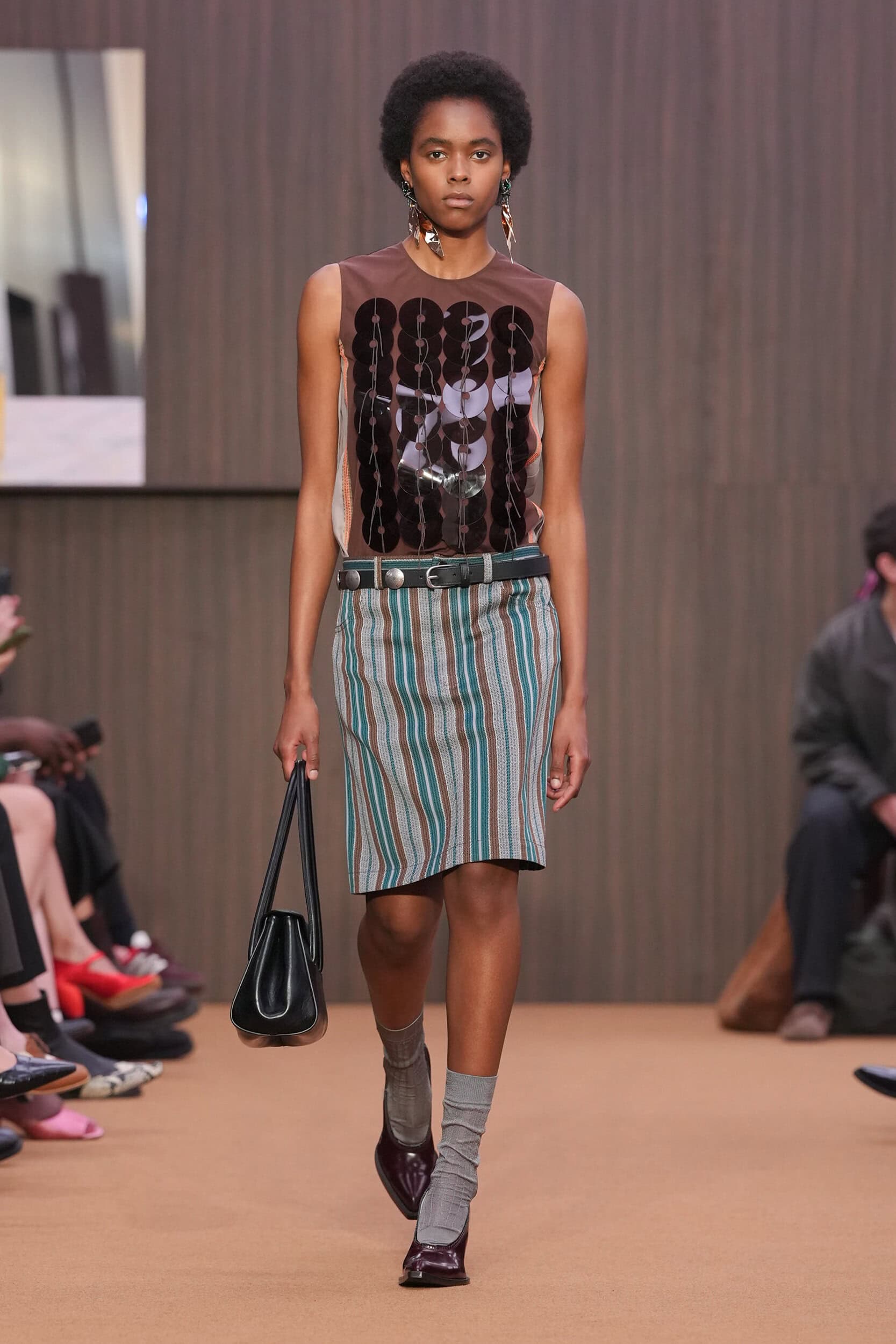
What emerges is a version of Marni that feels grounded again. The clothes suggest daily life, allowing eccentricity to sit alongside wearability. That balance has always been central to the house, and here it returns with clarity.
Accessories play a decisive role. Jewellery adds movement and weight, while the lace-up deserve a love letter. They feel strong, slightly stubborn, and entirely memorable, the kind of piece that stays in your mind long after the final walk.
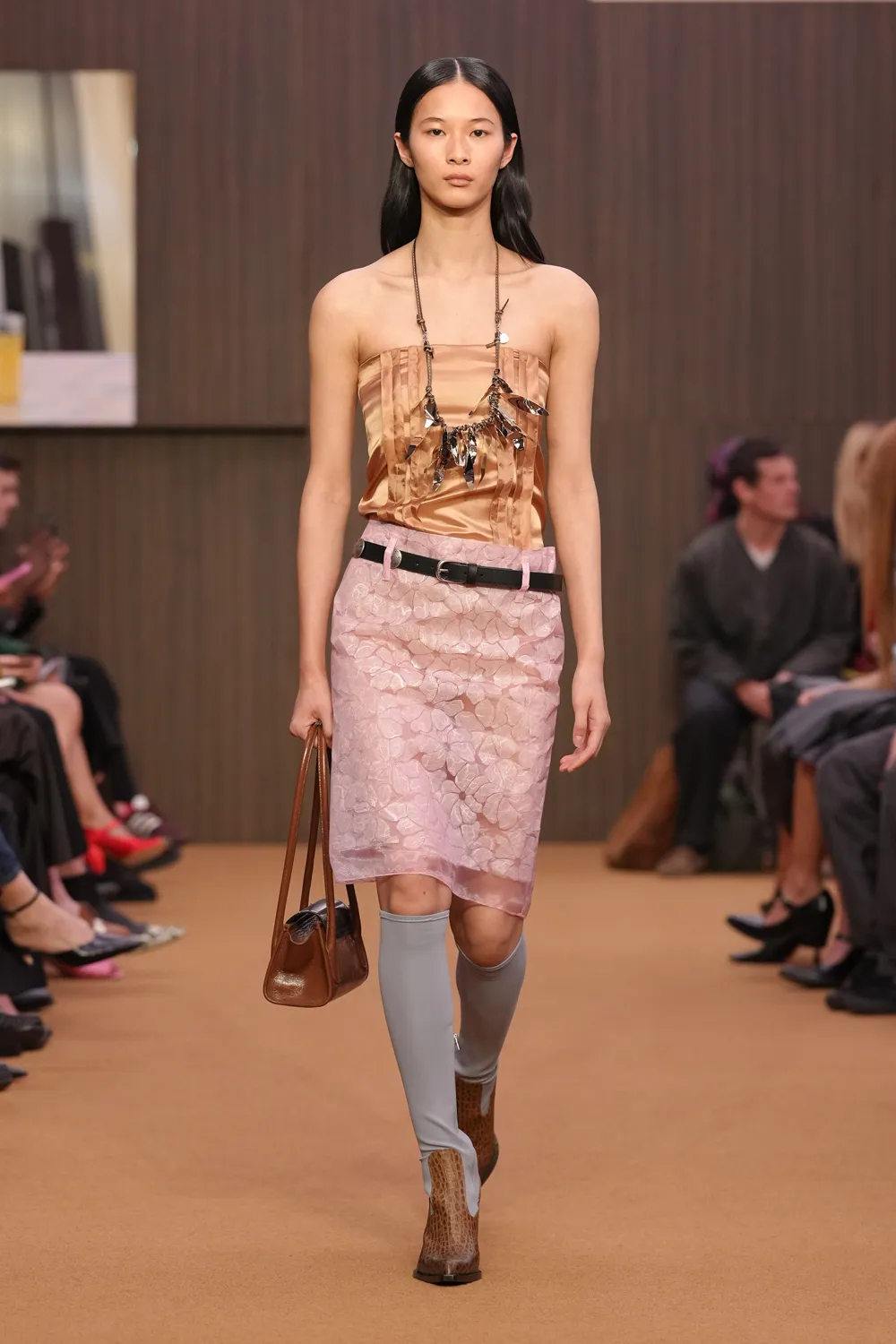
A first show rarely resolves everything. What it can do is set direction. Rogge’s debut suggests a brand settling into a new rhythm, guided by careful observation.
For more stories of fashion, visit our dedicated archives and follow us on Instagram.