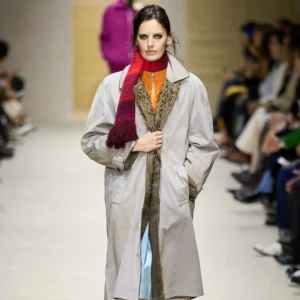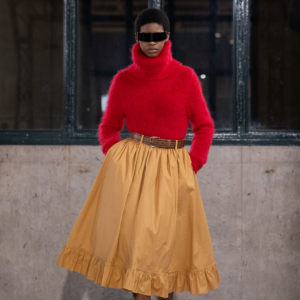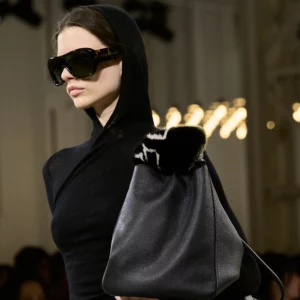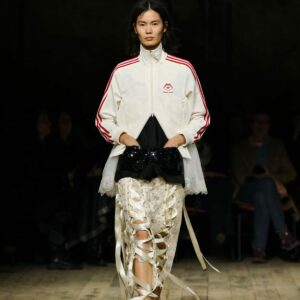
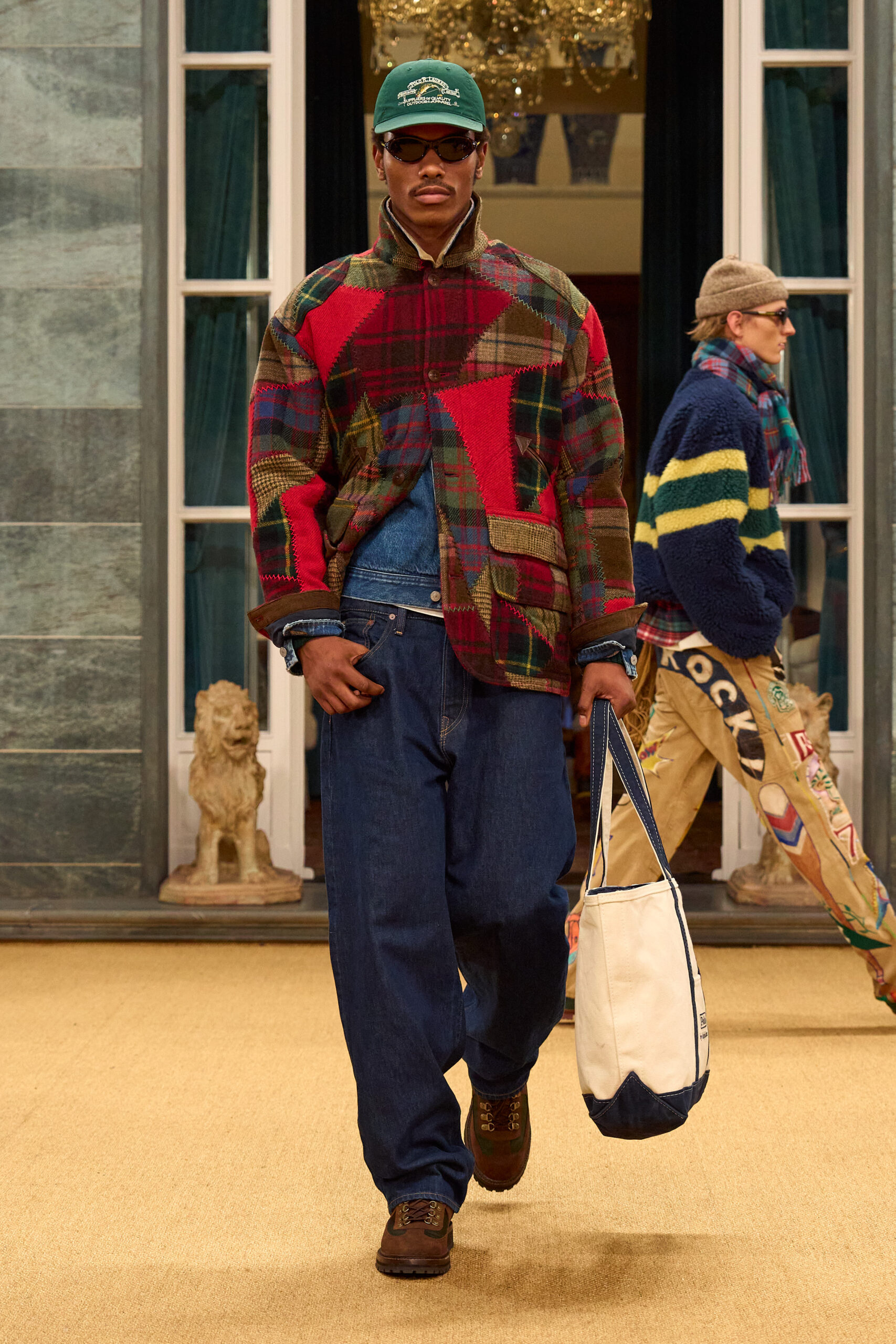
Milan Men’s Fashion Week (A/W 2026) ran like a tight little movie: heritage brands staging scale, designers trying to describe the present without turning it into a slogan, and a guest list that made the front row feel like part of the cast. The week was anchored by four very different headlines: ZEGNA’s opening spectacle, Prada’s mood-shift at Fondazione Prada, Ralph Lauren’s rare menswear runway return, and Dsquared2’s pop-culture collision with the runway. Together, they sketched a season where “menswear” is less a category than a language: memory, power, performance, and the daily act of getting dressed as an emotional decision.
ZEGNA
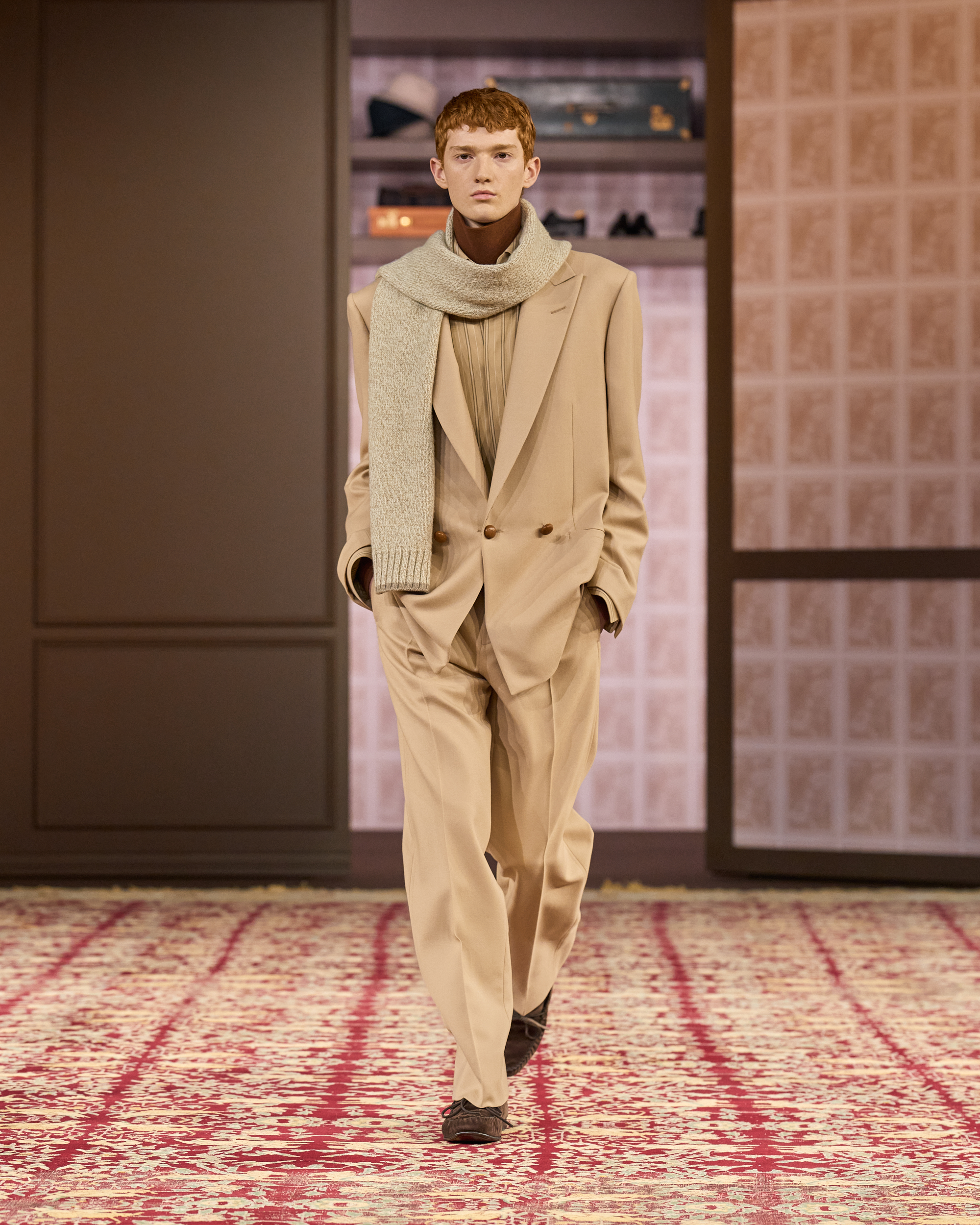
ZEGNA opened the week inside Milan’s Palazzo del Ghiaccio, transforming the ice rink into an all-white environment that read like an oversized dressing room, complete with closet-door entrances. The concept leaned into lineage and the private life of clothes – an idea framed as “keeping it in the family,” with fabrics and tailoring doing the heavy emotional lifting. Even at this scale, the point wasn’t theatre for theatre’s sake; it was a controlled argument about continuity, where luxury is measured in time, wear, and care rather than novelty. The result felt like a brand statement: authority with an intimate heartbeat.
Prada
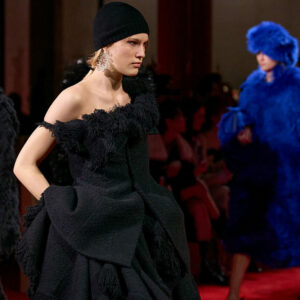
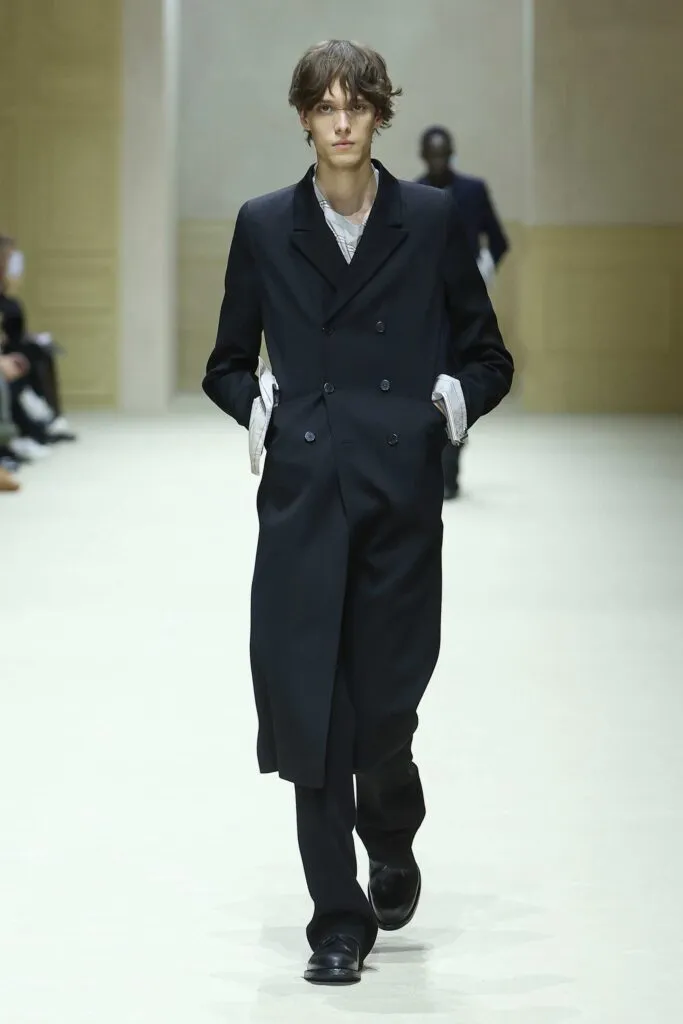
At Fondazione Prada, Miuccia Prada and Raf Simons built their A/W 2026 collection around excavation, an “archaeology” of the past used as a tool for inventing what comes next. The clothes intentionally swerved away from polished, establishment masculinity, with the designers describing the mood as “uncomfortable” in response to the wider world. Styling pushed odd, vivid pairings that short-circuited the usual idea of “correct” (the kind of friction that makes people look twice and then start copying it). It landed as Prada often does when it’s sharpest: not a trend forecast, but a recalibration of what confidence can look like.
Ralph Lauren
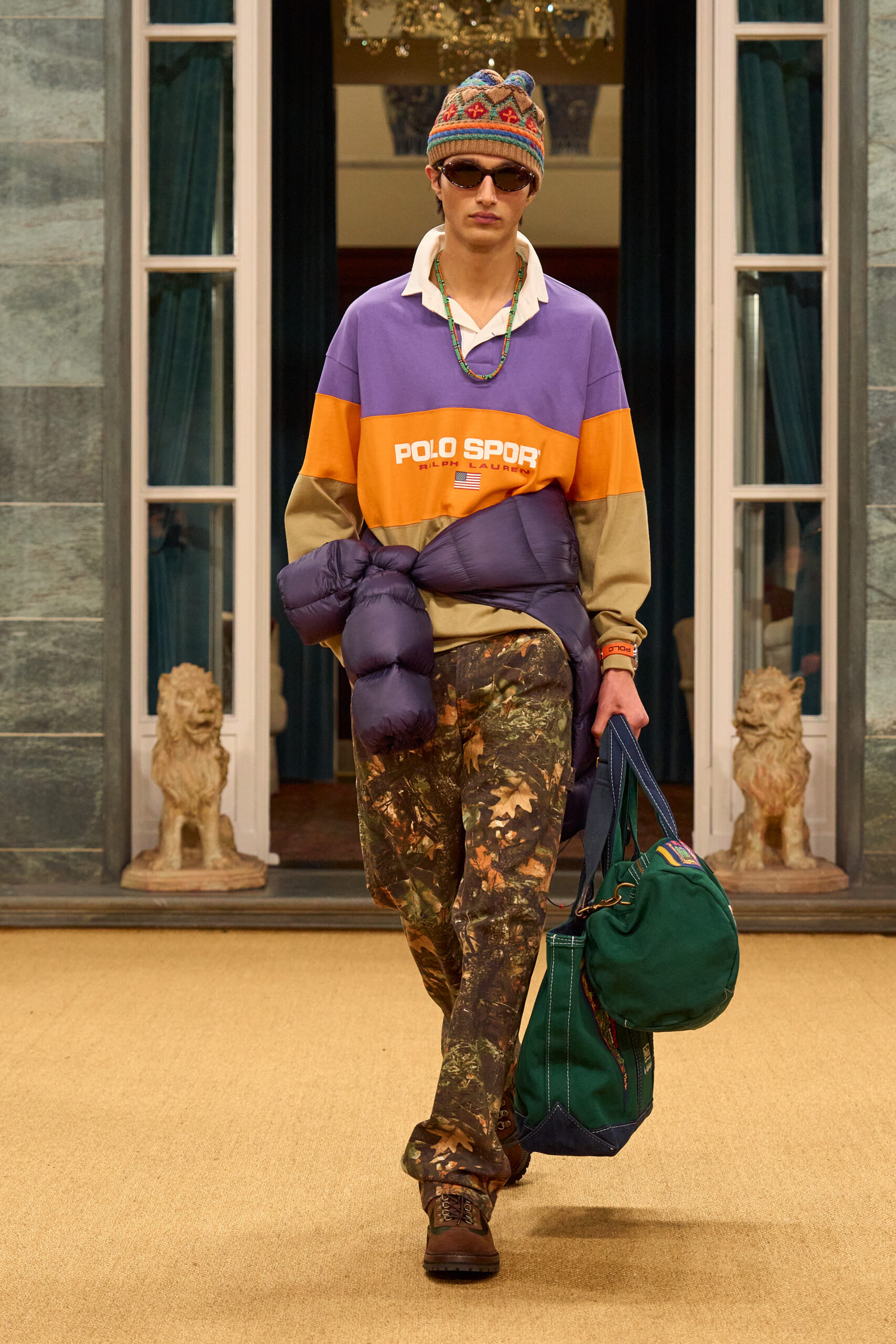
Ralph Lauren’s Milan show carried the weight of rarity: it was the brand’s first dedicated menswear runway show since 2004, staged inside the Palazzo Ralph Lauren space and built around a big, cinematic version of Americana. We saw 73 looks spanning Purple Label and Polo, with props and detail that made it feel like a world you could step into, equestrian polish, western cues, and luxury as narrative. The front row turned into its own headline, with names like Liam Hemsworth, Tom Hiddleston, and Colman Domingo folding celebrity gravity into the return. The takeaway was simple and slightly audacious: this is a house that can skip the menswear calendar for years, come back in Milan, and still make the room play by its rules.
Dsquared2
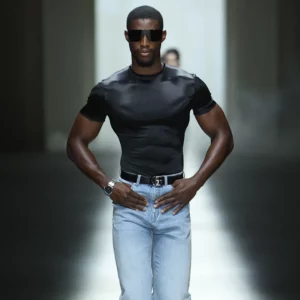
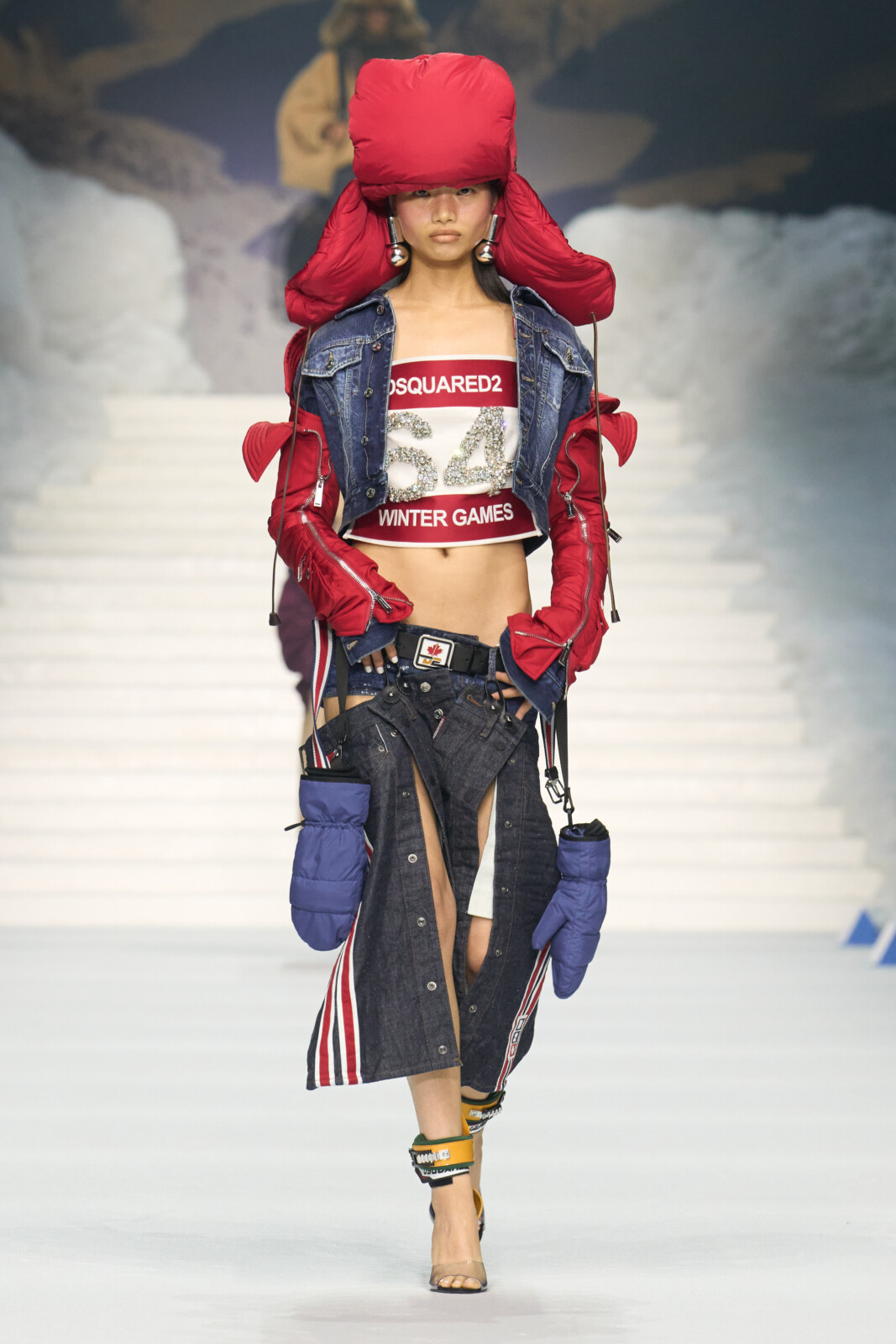
Dsquared2 went for speed, spectacle, and internet chemistry, then landed it. Hudson Williams, the breakout star of Heated Rivalry, opened the show, a move that instantly injected fandom energy into the runway and lit up coverage across fashion media. The staging leaned into winter-sports codes, matching the brand’s long-running taste for bold, body-forward casting and high-impact styling. It was one of those shows where the cultural moment is part of the design brief, and the front row response becomes a second runway. The broader message was clear: the brand isn’t chasing “relevance” – it’s manufacturing it in real time.
Tod’s
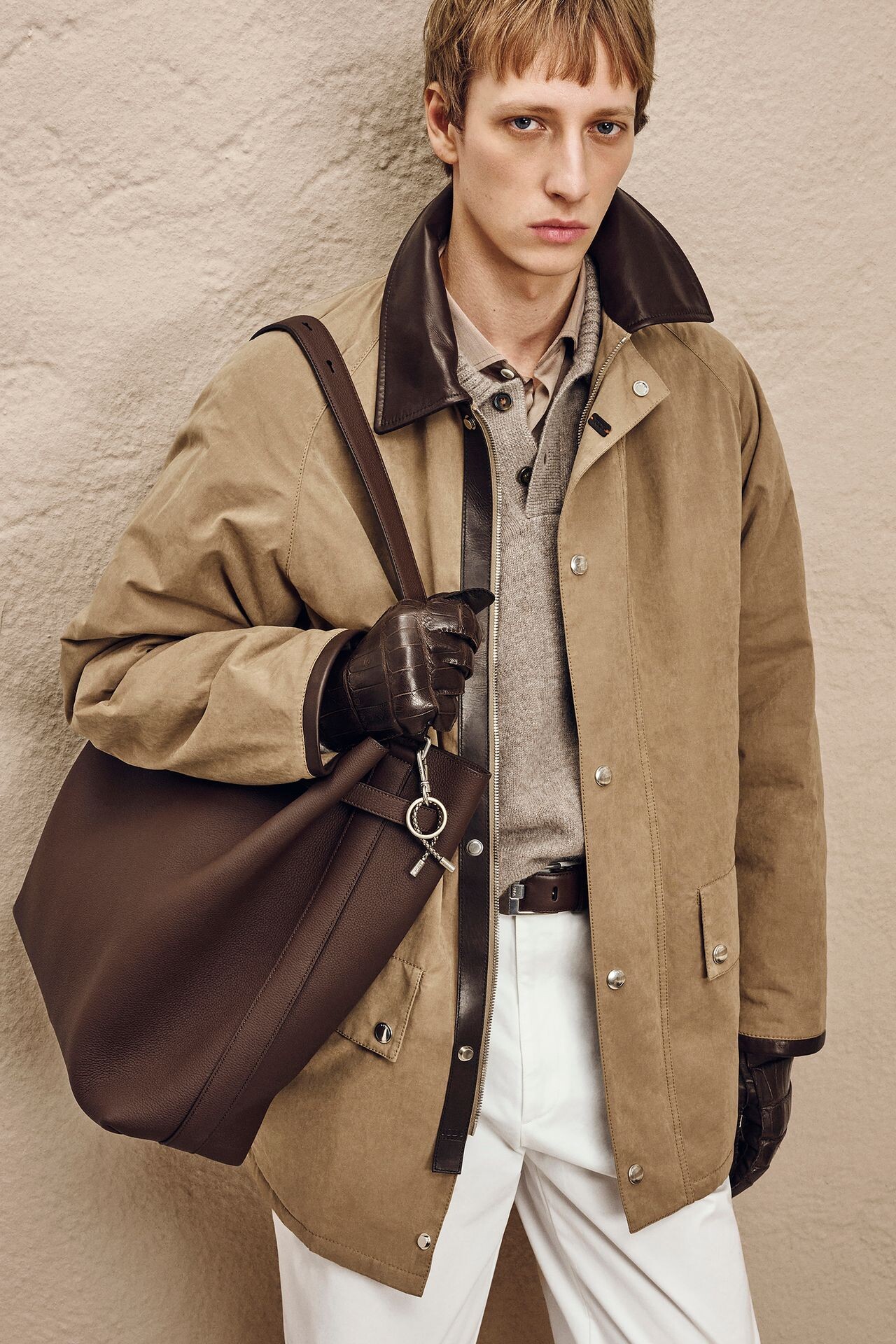
Tod’s showed this season via a menswear lookbook/presentation rather than a runway spectacle, which suits the brand’s entire proposition: wardrobe logic, materials, and finish. It’s the kind of collection people in Milan actually wear – outerwear, leather, and elevated basics that communicate taste quietly. In a week full of big sets and big statements, Tod’s reads as a reminder that the Italian system also runs on product excellence. It’s not the loudest highlight, but it’s a meaningful one if you care about what will filter into real closets.
Stone Island
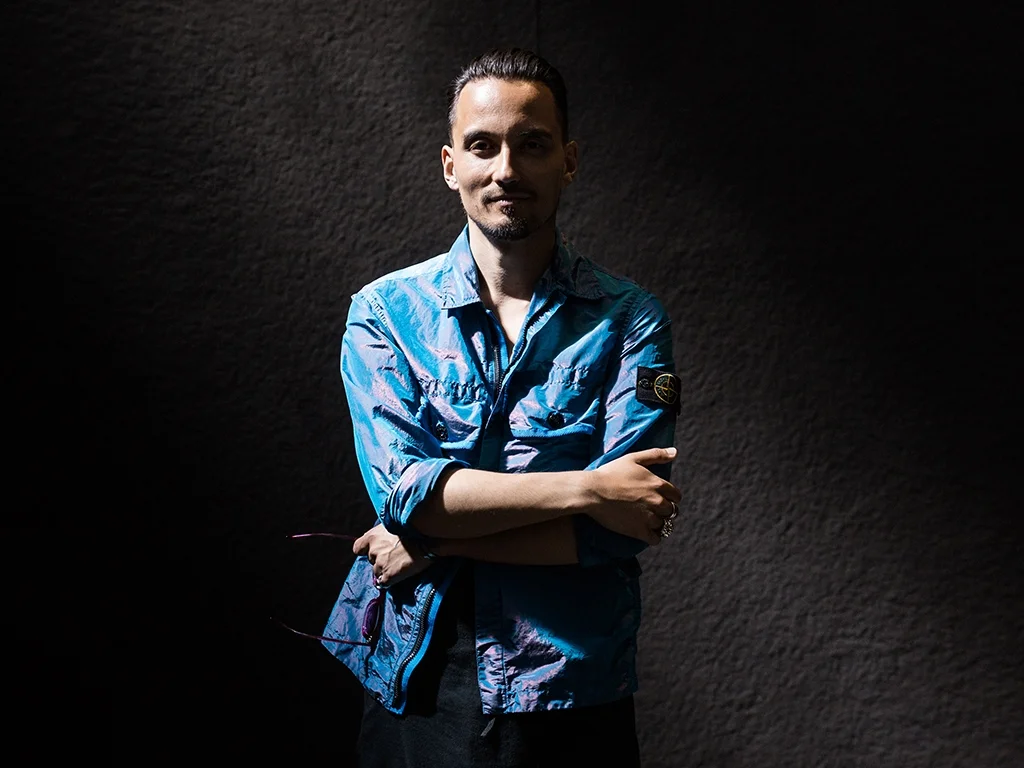
Stone Island came into the week as a cultural event, not just a clothing drop, presenting an installation tied to its Prototype Research line – specifically Prototype Research_Series 09 (“Air Blown Lamination on Knit”). The installation was created by artist Ken-Tonio Yamamoto, with an emphasis on garments born out of experimentation and non-industrial research processes. That matters because it positions Stone Island as one of the brands most comfortable treating innovation as an aesthetic in itself. It’s very Milan right now: technical product, design language, and an art-world frame without needing to cosplay “luxury.”
Paul Smith
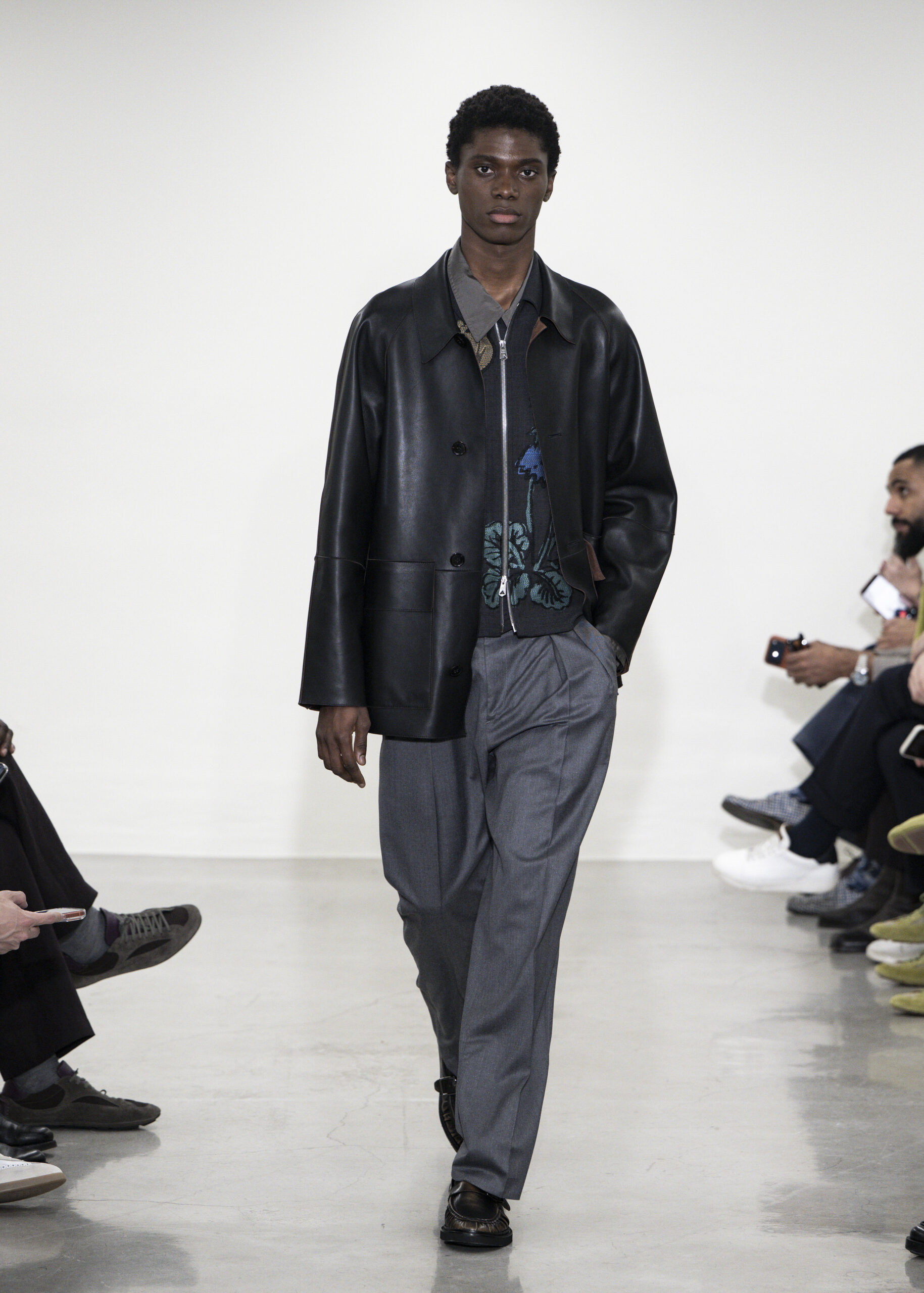
Paul Smith’s January 2026 moment in Milan was deliberately intimate: a salon-style show at his Milan headquarters, with Smith himself essentially hosting the room and narrating the thinking behind the clothes. The collection worked like a rear-view mirror in the best way, with the team dipping into his archive – especially the 1980s – to pull forward prints, tailoring ideas, and specific garments worth revisiting rather than “reinventing.” It landed as a masterclass in what Paul Smith does when he’s most himself: colour used with intelligence, suits made human, and references that feel lived-in rather than costume. In a week of big sets, this one proved that personality can be production value.
Setchu
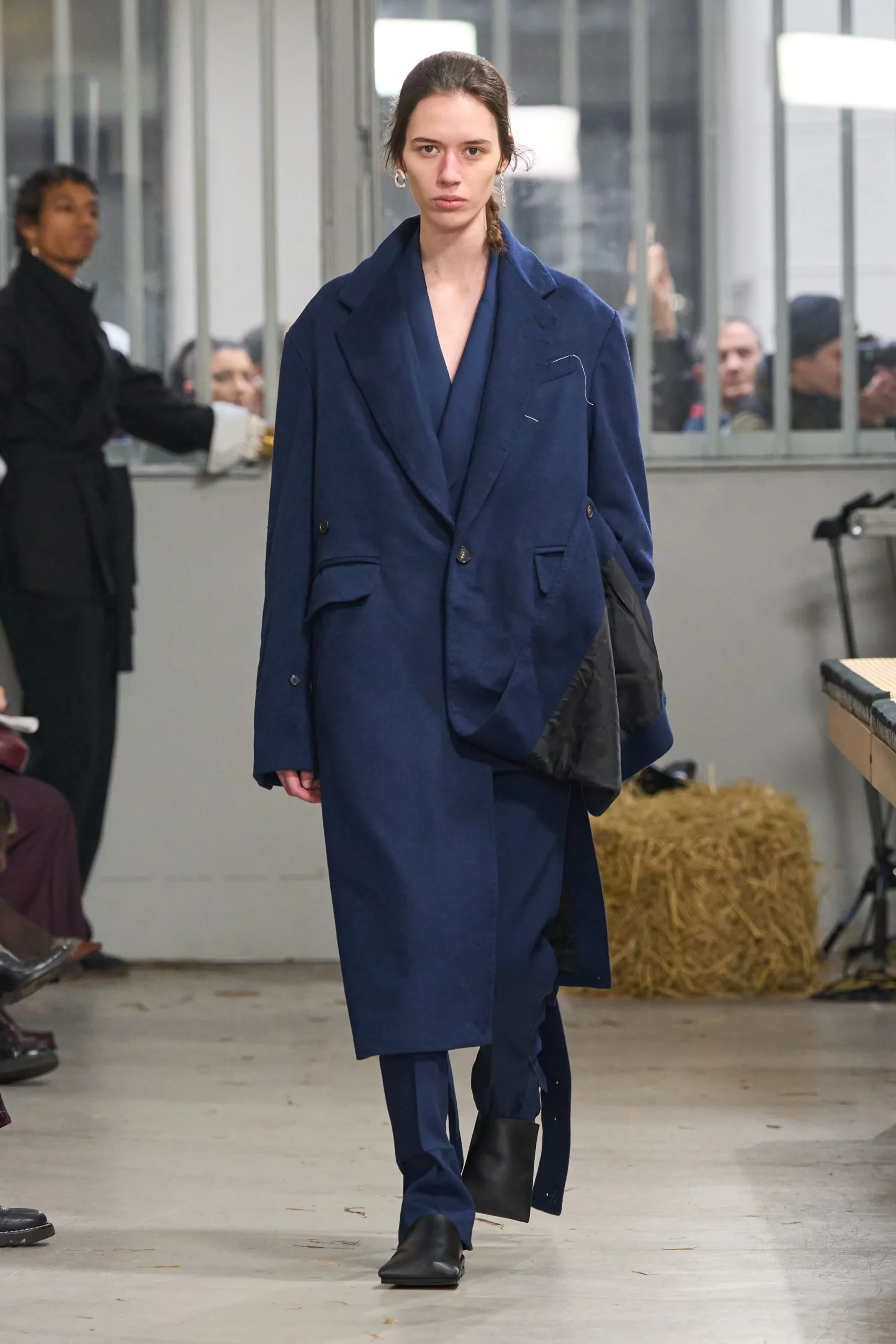
Setchu’s Milan men’s show landed as one of the week’s sharpest mood-setters, pulling the city away from pure polish and into something saltier and more lived-in. Through a fisherman’s lens – practical, weathered references made deliberate rather than costume. The appeal is how it handles utility: pieces that look built for movement and real conditions, but edited with designer restraint. It read as Milan at its best when it makes space for a different kind of masculinity – functional, tactile, and styled.
Soshiotsuki (Pitti Uomo, Florence)
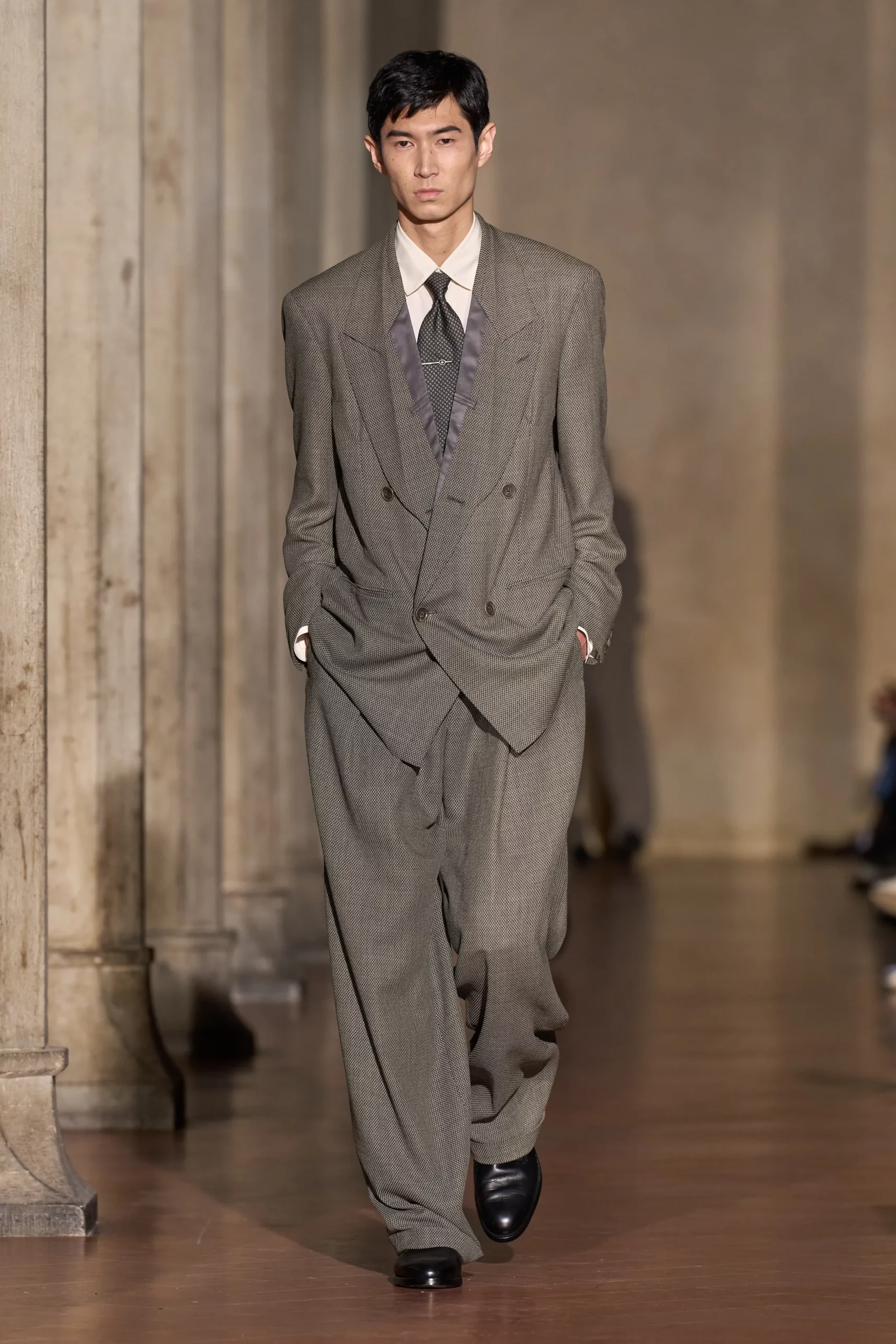
Before Milan even started, Soshiotsuki’s A/W 2026 runway in Florence was one of the menswear circuit’s most talked-about moments. A confident international debut, rooted in classic tailoring while deliberately bending its codes. The silhouettes and attitude nodded to power dressing without feeling like cosplay, a controlled kind of nostalgia with a modern bite. Japanese designers driving the conversation across the Italian leg of the men’s season.
The week’s most telling through-line was contrast: intimacy versus spectacle, heritage versus provocation, and “classic” as a comfort versus “classic” as something you deliberately disturb. ZEGNA treated clothes like inheritance, Prada treated them like a question, Ralph Lauren treated them like myth, and Dsquared2 treated them like a live broadcast. Milan’s menswear season didn’t produce one neat silhouette to summarise everything; it produced four different reasons to care. And that’s the healthiest version of a fashion week.
For more stories of fashion from around the world, visit our dedicated archives and follow us on Instagram.