The runway looked like a room someone had forgotten to tidy.
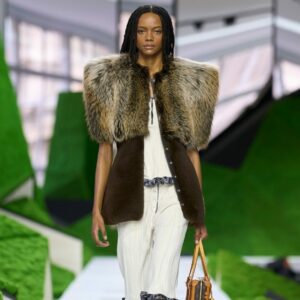
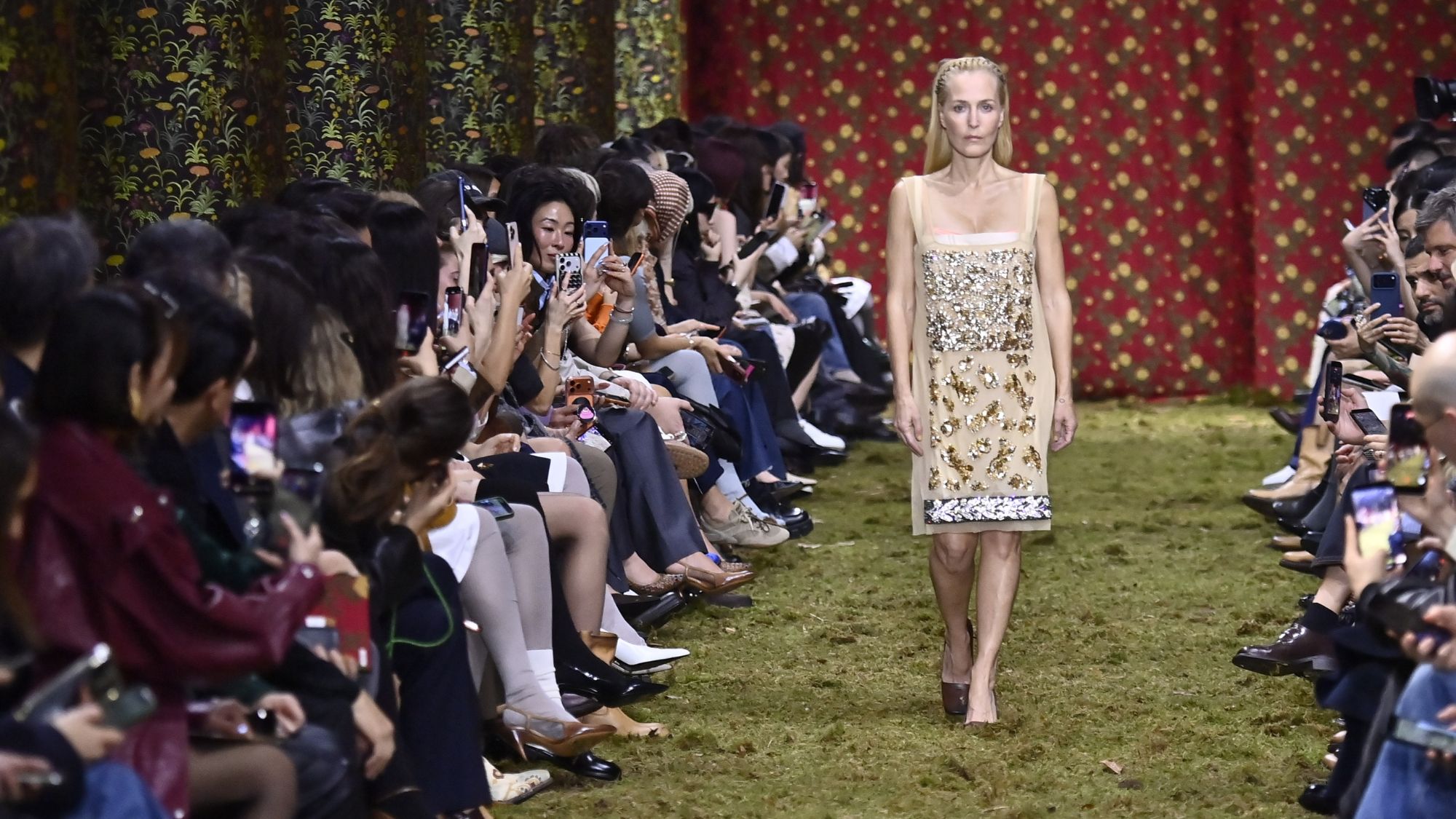
Inside the Palais d’Iéna, the floor was covered in patches of moss, the kind that belongs outside on damp stone rather than inside a modernist building. The walls were wrapped in old-fashioned wallpaper, slightly domestic, slightly unsettling, as though a living room had been lifted whole and dropped into the middle of Paris Fashion Week. Models walked slowly, brushing past greenery that crept across the runway like something that had been left to grow on its own.
Then the clothes appeared, and the atmosphere shifted.
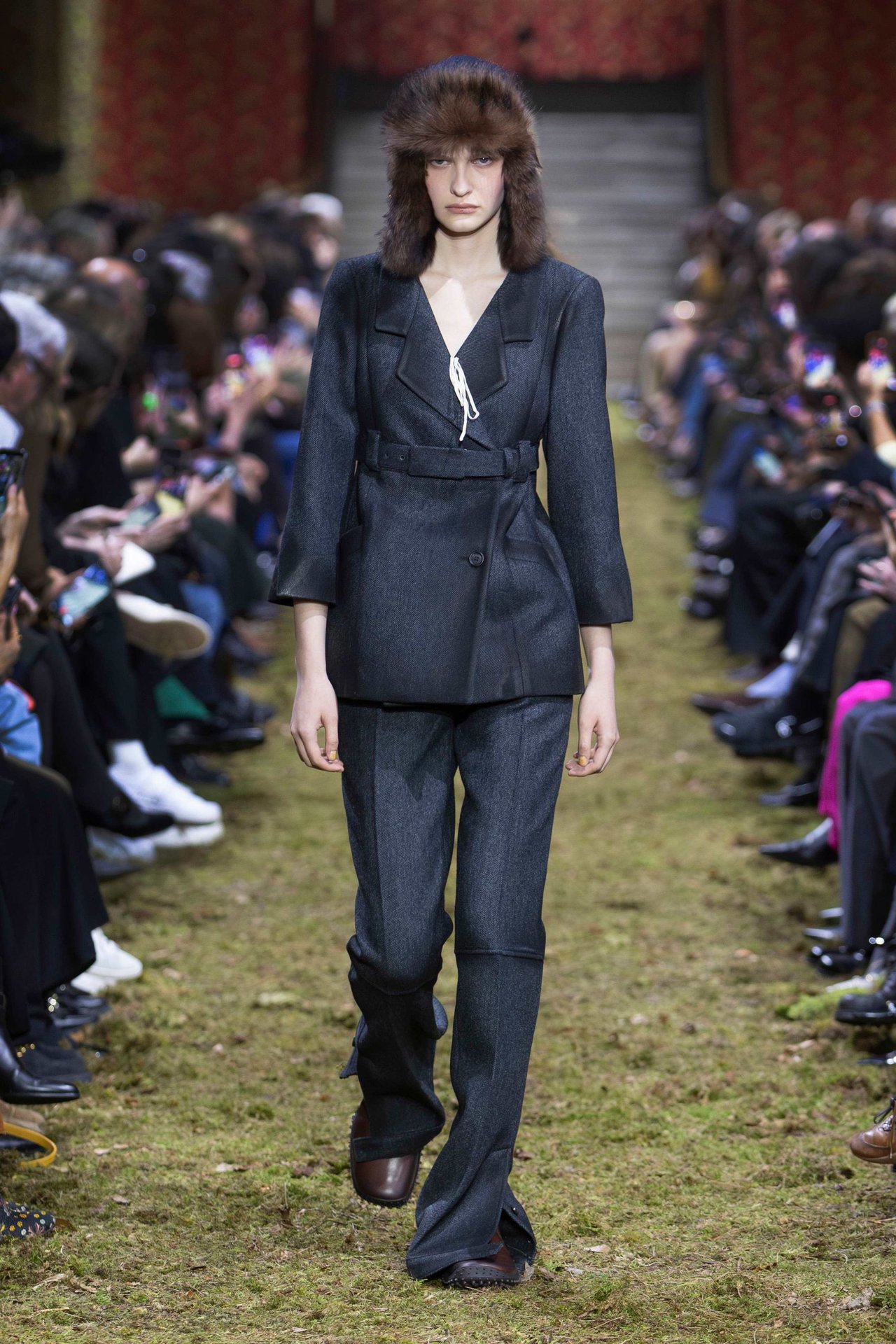
This Miu Miu show circled around a very specific idea: the body inside clothing. Not clothing as armour, or fantasy, or spectacle. Clothing as something that sits on the body in imperfect ways.
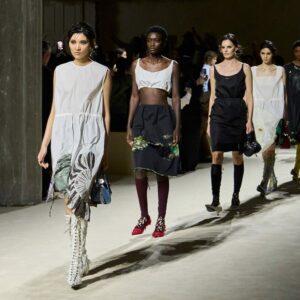
Leather jackets hugged the shoulders but stopped short at the waist, just slightly too small. Slip dresses clung lightly to the torso and then fell away from the hips. Cotton dresses hung from thin straps, the fabric moving loosely as models walked. Nothing felt engineered to look perfect.
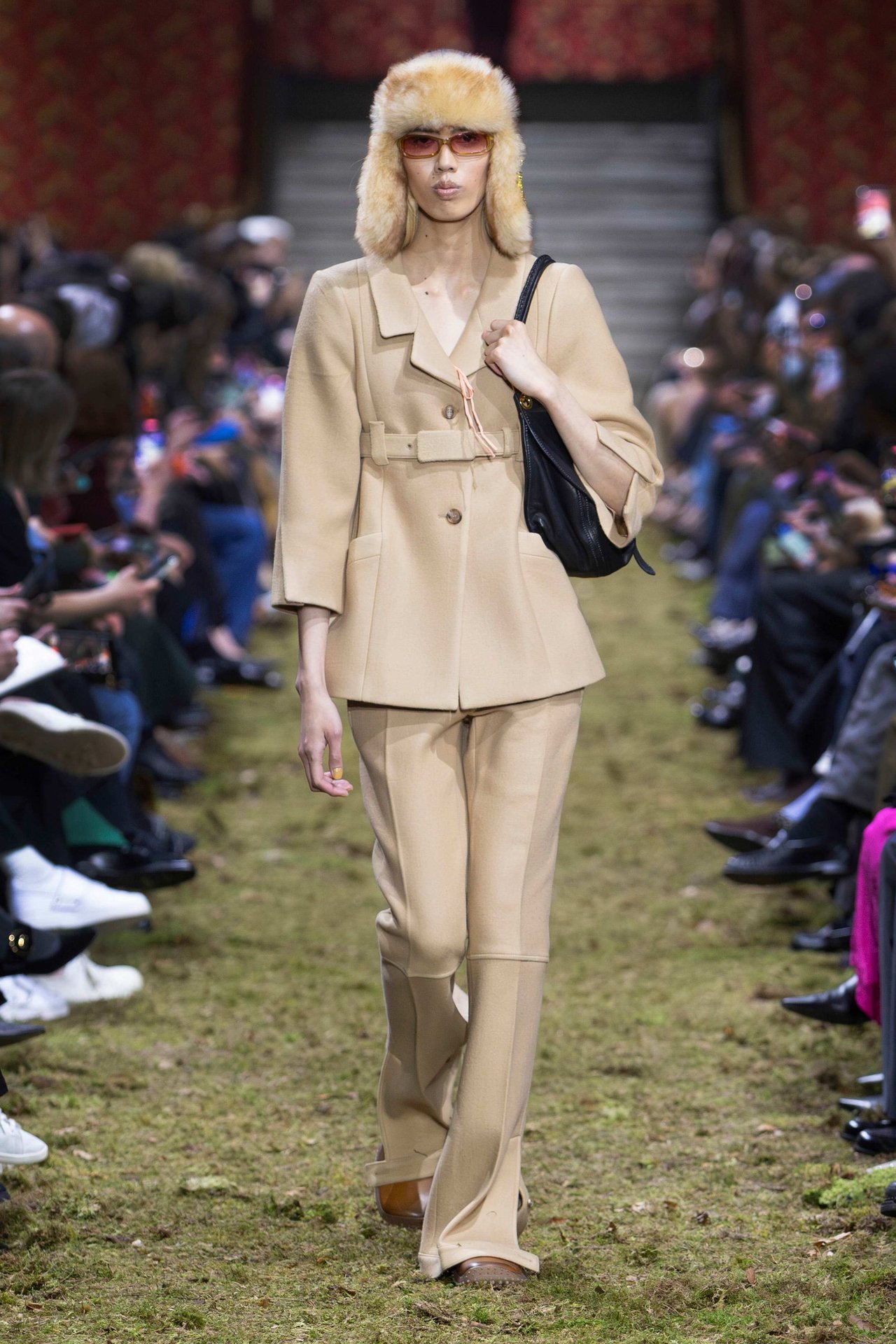
There was something almost intimate about it.
As if the audience had arrived a little too early, catching people halfway through getting dressed.
Colours drifted through the show in a palette that felt worn rather than polished: burgundy, mustard, dusty pink, beige, grey. Fabrics looked soft, lived-in, occasionally crumpled. Bootcut trousers skimmed the floor. Cardigans hung from narrow shoulders. A leather coat swung open to reveal a simple dress underneath.
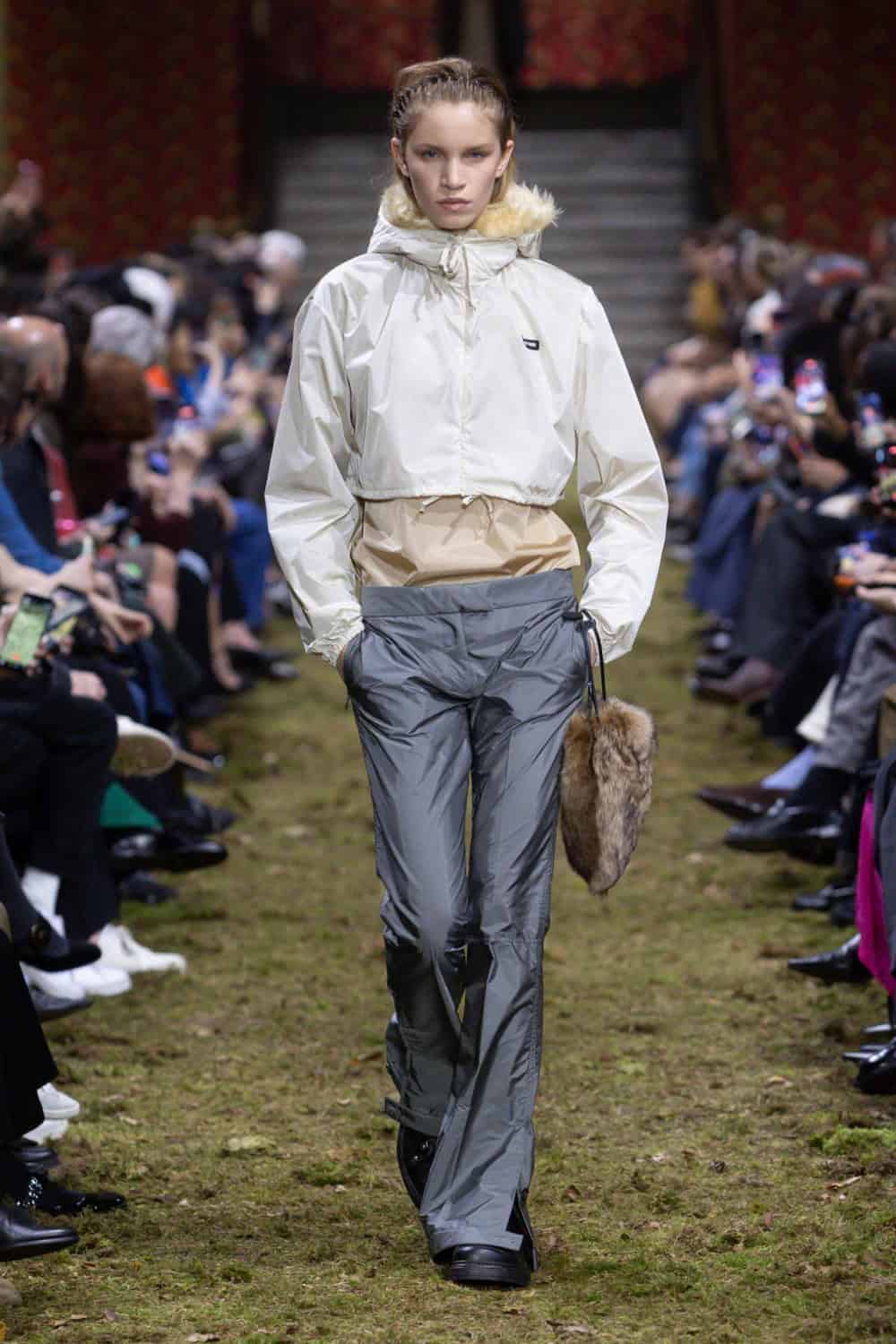
The standout detail wasn’t a single garment but the way the clothes behaved around the body. They moved with a slight hesitation, like garments that had already been worn all day.
Hair reinforced the mood. It looked flattened in places, as though someone had been leaning back against a sofa moments before stepping onto the runway. Dresses clung gently in that fragile way silk sometimes does when it has been slept in.
Then the casting began to reveal itself.
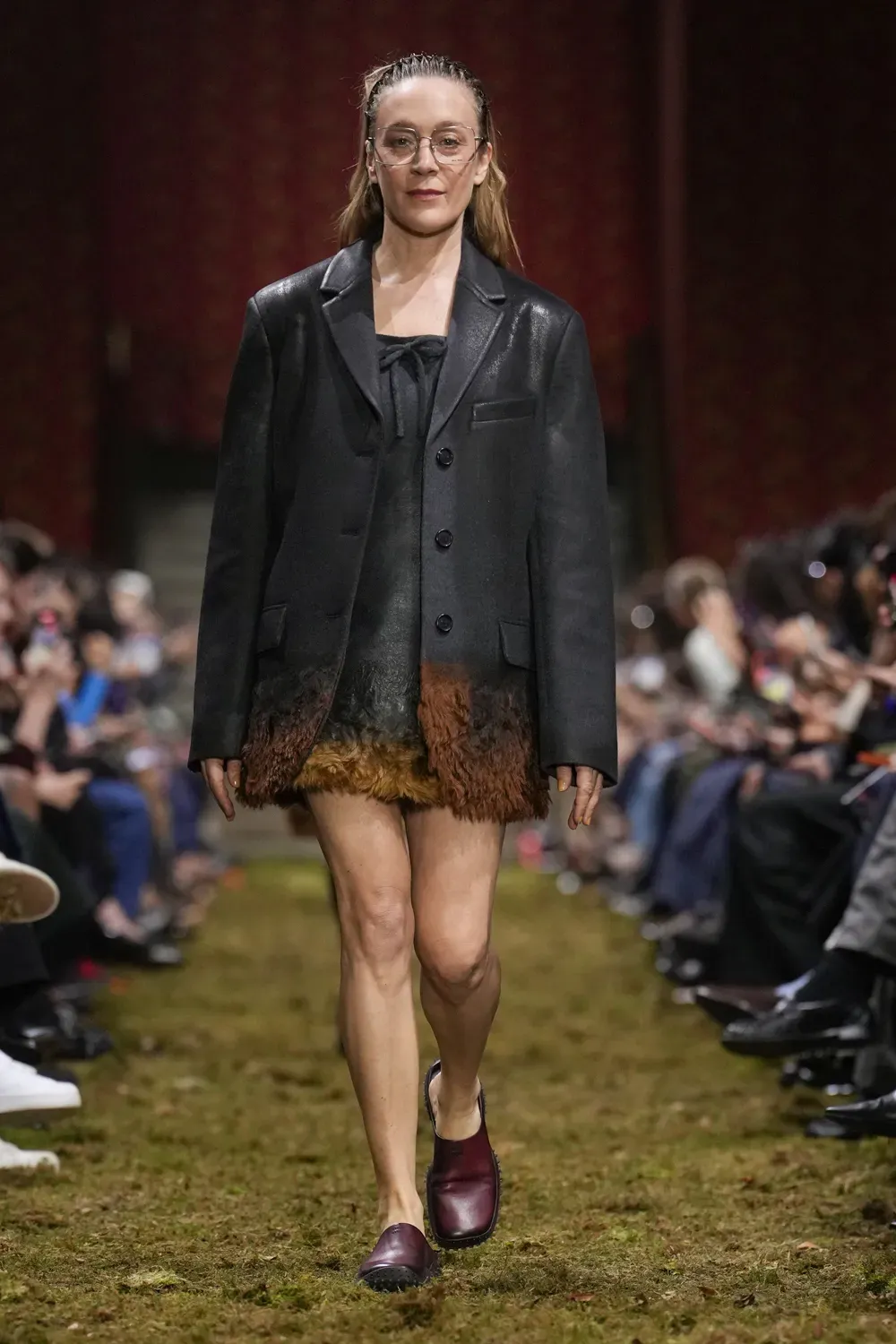
First Chloë Sevigny, walking with the ease of someone who knows exactly how clothes should sit on a body. She first walked for Miu Miu nearly thirty years ago, and seeing her here again felt like the brand folding its own history into the present.
Gemma Ward followed. Then Kristen McMenamy, her presence unmistakable even from the back row.
Finally Gillian Anderson appeared for the closing look: a pale dress scattered with embellishment, the fabric catching light as she moved across the moss-covered runway.
The lineup created a subtle shift in the show’s atmosphere. These weren’t anonymous figures carrying garments down the runway. They brought their own biographies with them, and the clothes seemed to absorb that weight.
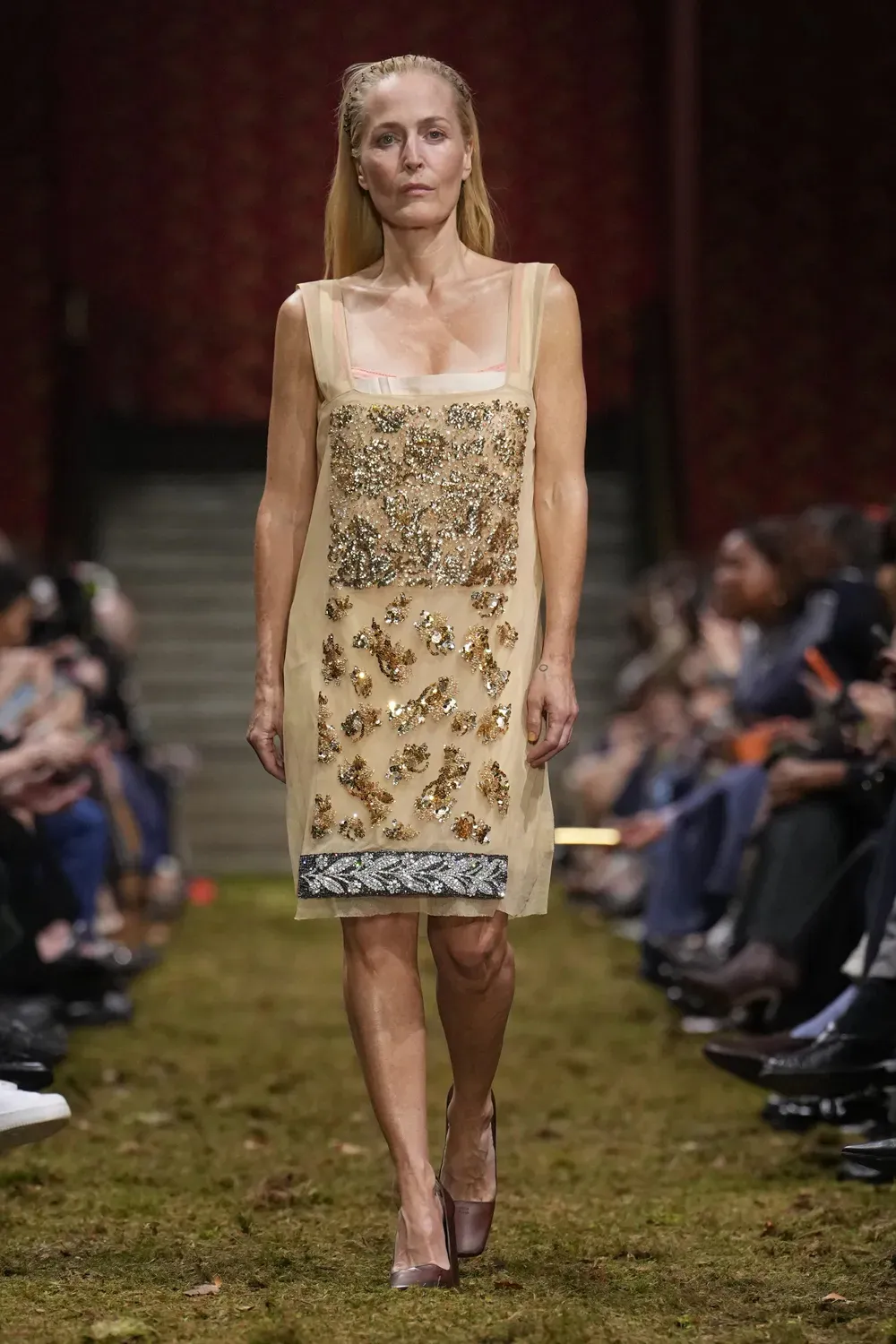
Behind the staging was a simple but unsettling scale trick. The moss-covered floor and domestic walls made the models appear smaller, slightly exposed inside the space around them. The body felt vulnerable against its surroundings.
That same vulnerability echoed through the clothes.
A cardigan slipping off one shoulder.
A jacket creased at the elbow.
A dress hanging just slightly away from the body.
Small gestures, repeated again and again.
By the end of the show, the audience had watched dozens of variations on the same quiet scene: a person stepping into clothes that fit imperfectly, walking through a room that feels a little too large.
Getting dressed, and then stepping out into the world.
For more stories of fashion from around the world, visit our dedicated archives and follow us on Instagram.