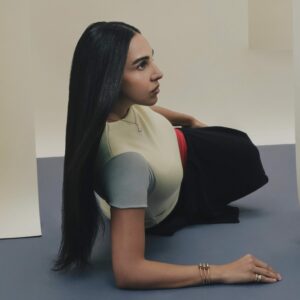
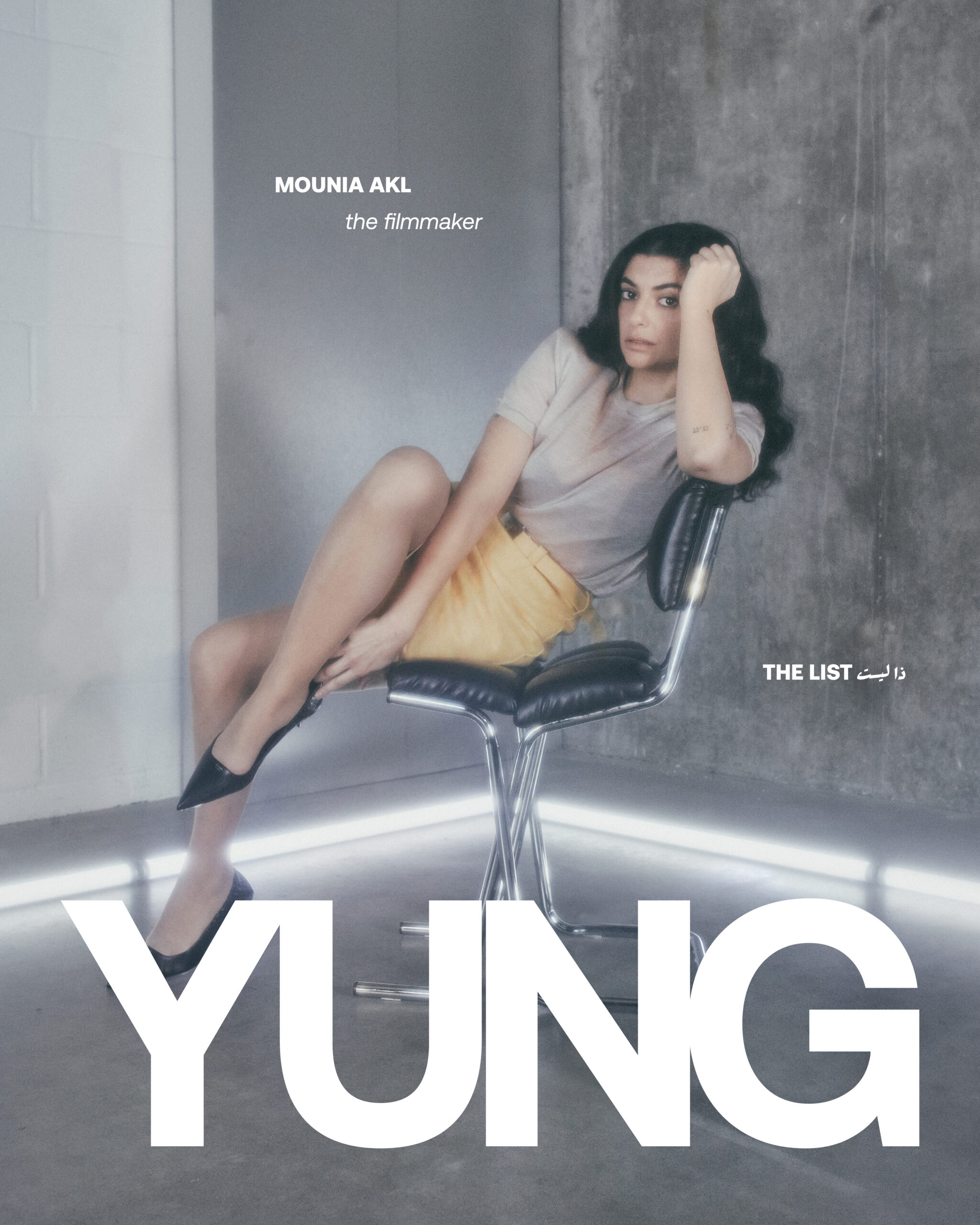
Lebanese filmmaker Mounia Akl is quietly redefining what it means to be a director from the Arab world on the global stage. Known for her Cannes- and TIFF-premiering short film Submarine and Venice-premiering debut feature Costa Brava, Lebanon, which won the Audience Award at the London Film Festival, Akl has carved a unique path across international cinema and television, combining a deep understanding of character with an unwavering commitment to storytelling. In recent years, she has taken on projects that span continents and genres: from intimate, character-driven cinema to high-profile international television series such as the BBC’s The Responder and Netflix’s period drama House of Guinness.
Now based in London, albeit with very frequent visits to Beirut, Akl has been navigating a rich schedule: the release on Netflix of House of Guinness, the premiere of a film in which she stepped into acting for the first time, A Sad and Beautiful World by Cyril Aris, and directing all six episodes of an upcoming television series produced by A24 and written by Leo Reich. It’s a balancing act that reflects both her versatility and her ambition.
Akl’s acting debut came at the invitation of Lebanese director Aris, who wrote a role specifically for her in A Sad and Beautiful World. The film, which premiered in Venice and later at the London Film Festival, tells the story of two lovers with radically different perspectives on life and Lebanon. Akl plays a woman marked by melancholia, grappling with hope in a world that has fallen apart. “It was scary at first,” she recalls. “As a director, you’re used to being responsible for every decision, and here I had to completely let go and trust the process. But it became a cathartic experience. I learned to reconnect with my feelings and gained a new perspective on what it means to work with actors.”
This lesson in relinquishing control has had a profound impact on Akl’s approach to directing. “Stepping in front of Cyril Aris’s camera – who I love and admire – allowed me to see the actor’s experience from the inside. It made me more generous, more patient, and more attentive to nuance. And I think that ultimately improves my work as a director.”
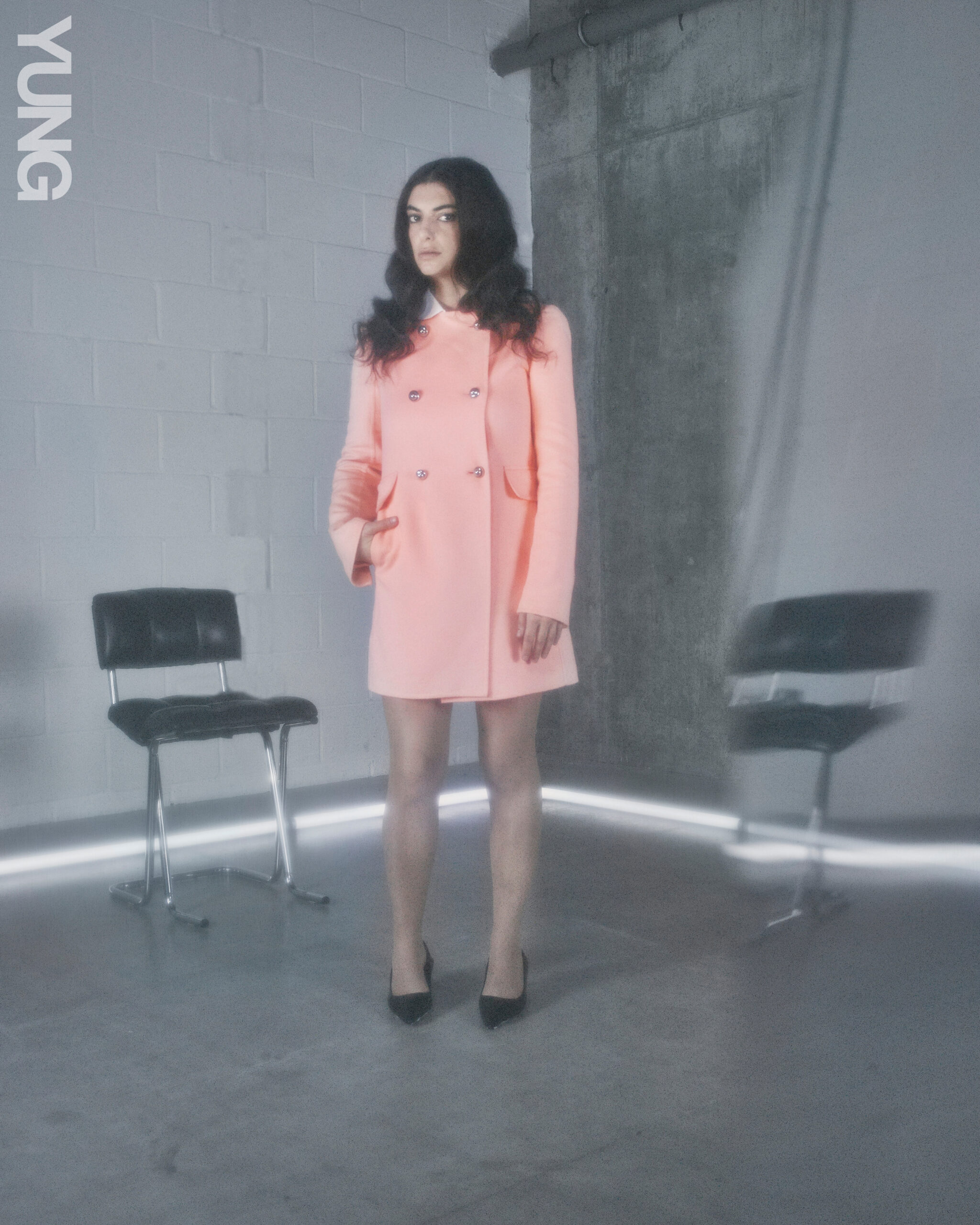
Yet for all her international success, Akl’s roots remain firmly planted in Lebanon, a country whose complexity has shaped her both personally and professionally. “Growing up in Lebanon, life has never been easy,” she reflects. “It’s where I’ve loved and suffered the most. Where I have my first memories, where my family fought to keep things alive, even in the midst of chaos. Lebanon has given me a sense of adaptability, of resilience, and a deep awareness of fragility and survival.”
Her relationship with Lebanon, she says, is a paradoxical mix of love and discomfort. “It’s like an unhealthy love relationship. You don’t always feel safe, but it’s also where you feel safest. That has created in me a particular perspective on life, an ability to find structure in chaos. That perspective comes into my work, especially when I’m telling stories that involve trauma, love, or survival.”
This perspective was crucial when she took on House of Guinness, a sprawling 19th-century drama about the Guinness family, one of Ireland’s wealthiest and most influential dynasties. Written by Peaky Blinders creator Stephen Knight, the show begins with the death of Sir Benjamin Guinness, and follows his four children as they navigate the inheritance of a vast empire while dealing with their complicated interpersonal relationships. “It’s a period drama with a very large scale, but at its heart, it’s about intimacy and human connection,” Akl explains.
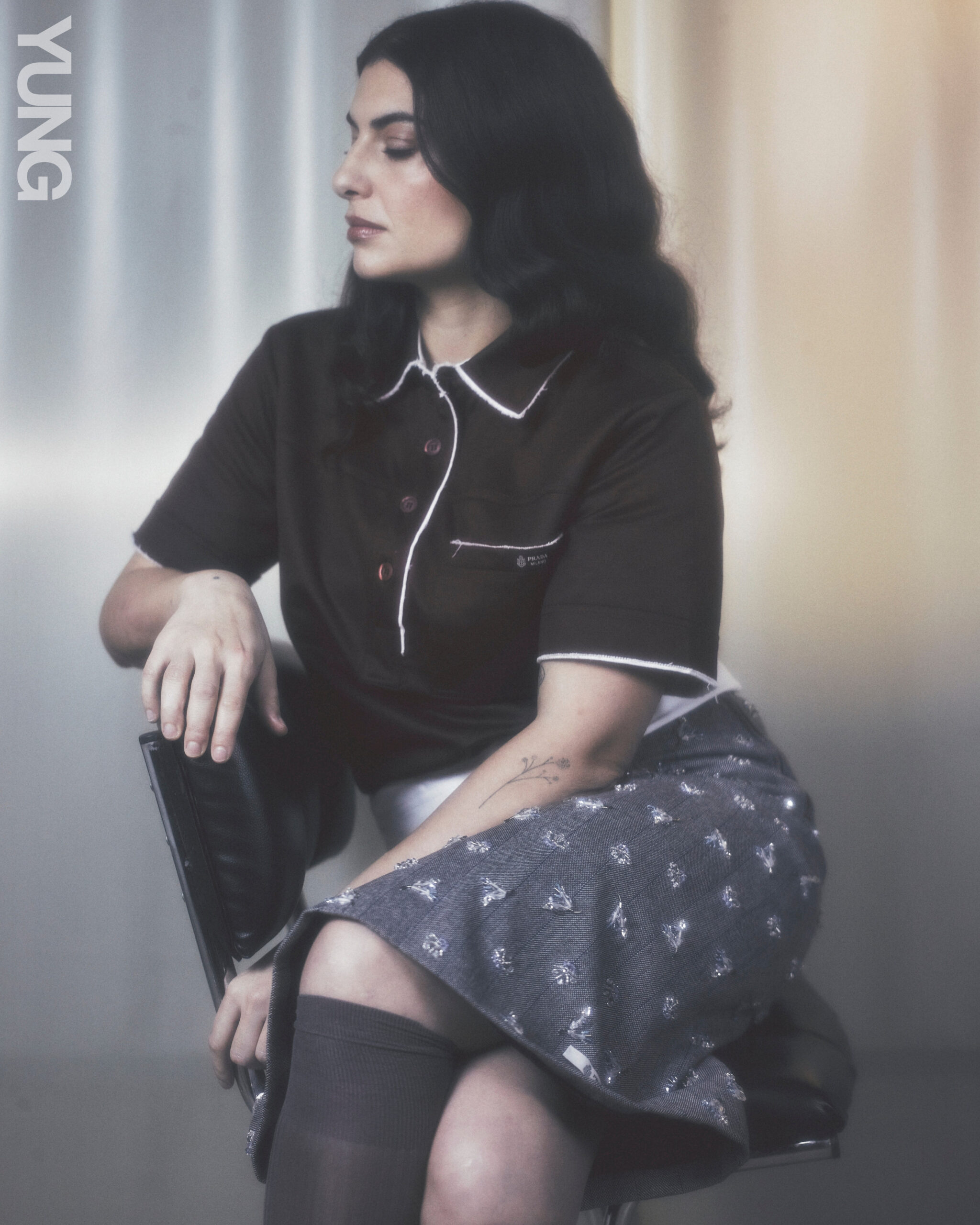
Directing the last three episodes of the eight-episode series, Akl faced a unique set of challenges. “When you’re telling the story of so many people and a world that is so large, everyone needs to be a real person with shades of grey,” she says. “I didn’t want heroes or villains. I wanted to create a world where every character has a reason for being who they are. It was about capturing subtext, when a character smiles, but underneath, they’re feeling something entirely different. That’s the challenge of intimacy in a large-scale drama.”
For Akl, this approach meant focusing on the “invisible” moments in the narrative, the subtle gestures, the unsaid thoughts, and the emotions that exist between characters. “If a woman smiles at the dinner table but scratches her fingers under it, the camera can tell the story that’s not spoken. That’s where the emotional depth lives,” she says. “And that’s what I find most exciting, the moments that aren’t grandiose but are infinitely complex.”
Her process on House of Guinness involved collaboration, research, and careful planning. She worked closely with the director of the first five episodes, Tom Shankland, to ensure that their work maintained continuity while allowing for individual directorial expression. “We created a set of rules to maintain the world of the series, and as long as we adhered to them, each of us could be specific in our approach,” Akl explains. “The production designer Richard Bullock and costume designer Edward Gibbon acted as a through line across all eight episodes. Respecting the world while finding our individual voices was key.”
Akl’s sensitivity to cultural and historical authenticity also guided her work. “Whenever you tell a story about a country, your responsibility as a director is to do the research,” she says. “I spoke extensively with Irish actors and read deeply about Ireland, its history, and the Guinness family. You can’t create a world authentically without understanding the context. And that’s a principle I carry into every project, whether it’s TV or film.”
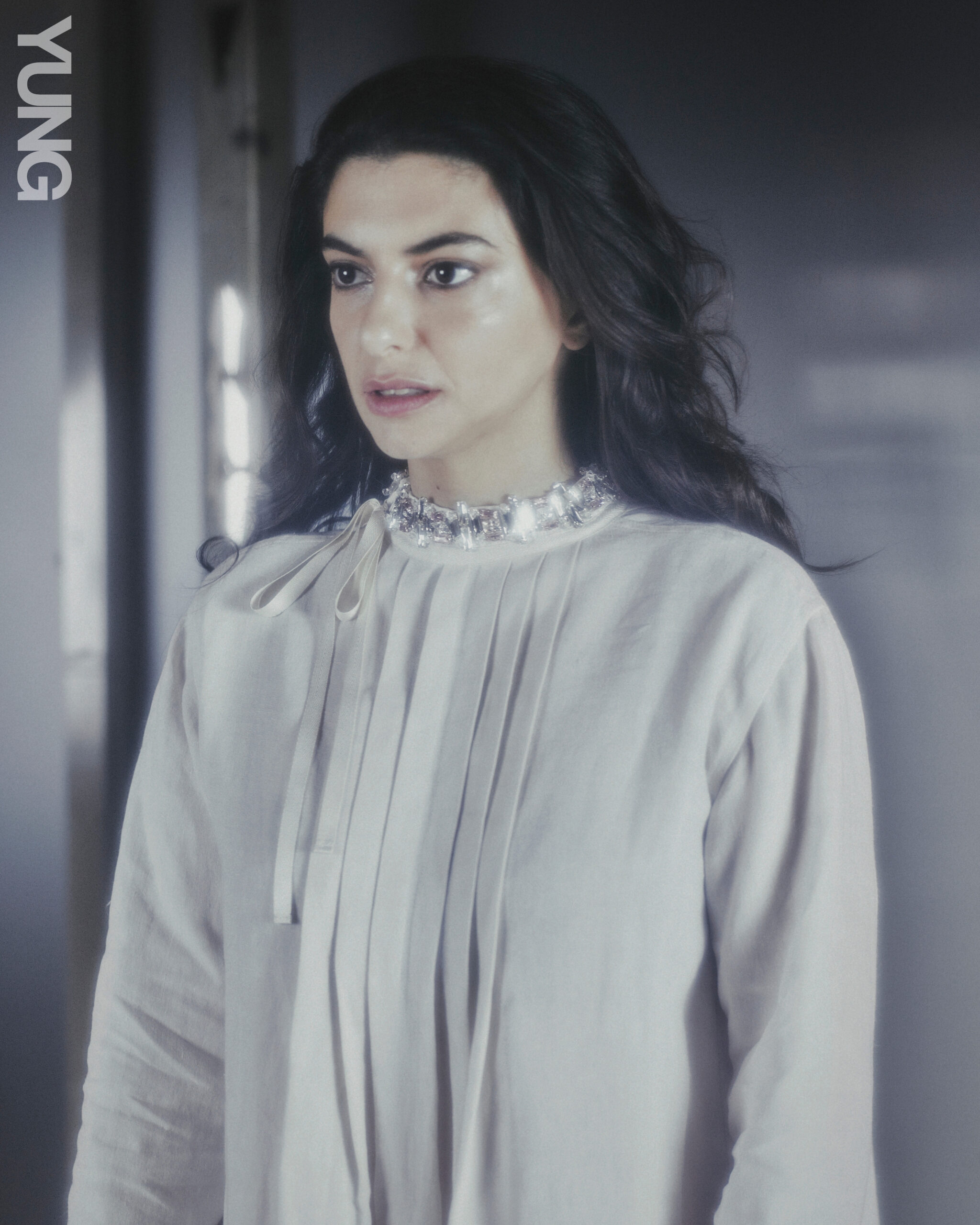
Her journey into international television was unexpected. While her first love has always been cinema, she stumbled into TV after being approached by the creators of Netflix’s Adolescence, Stephen Graham, Hannah Walters and Phil Barantini, who had seen her debut feature Costa Brava, Lebanon in London. “It opened doors I didn’t anticipate. I did Boiling Point, which was my first TV experience, then The Responder, and then House of Guinness. I never planned on TV, but my film became a calling card.”
This trajectory, from Lebanon to international sets, reflects Akl’s resilience and curiosity. Her foundation in architecture, a discipline she initially pursued before fully committing to film, plays a significant role in her filmmaking style. “Studying architecture taught me about space, form, and structure. Space is as important as a character’s face in my films. Architecture trained me to think about how space communicates emotion and narrative.”
Indeed, Akl’s early life in Lebanon provided both inspiration and grounding. Alongside architecture, she immersed herself in filmmaking, often taking part in weekend acting and directing projects. A short film with Cyril Aris, Beirut I Love You, I Love You Not, gained popularity and led to a web series on Lebanese TV. “I learned filmmaking in the streets,” she says. “Then I went to Columbia University in New York to study it formally. Architecture gave me perspective, but film became my true calling.”
Her personal experiences inform not only her stories, but also her approach to directing actors. Akl describes herself as “generous, tender and direct” in her relationships with actors, emphasizing trust and safety to elicit authentic performances. “If you create an environment of trust, people can be their best selves. That’s central to everything I do.”
Akl’s connection to Lebanon continues to shape her storytelling. Her second feature film, currently in development, will focus on a woman experiencing a psychotic break, exploring trauma, love, and the challenges of maintaining a ‘hyper-normal’ life in Lebanon’s turbulent social and political context. “Cinema is my first love,” she says. “Even as I work in television, film allows me to strip myself bare, to be raw and vulnerable. It’s terrifying, but it’s the only way I know to make sense of the world.”
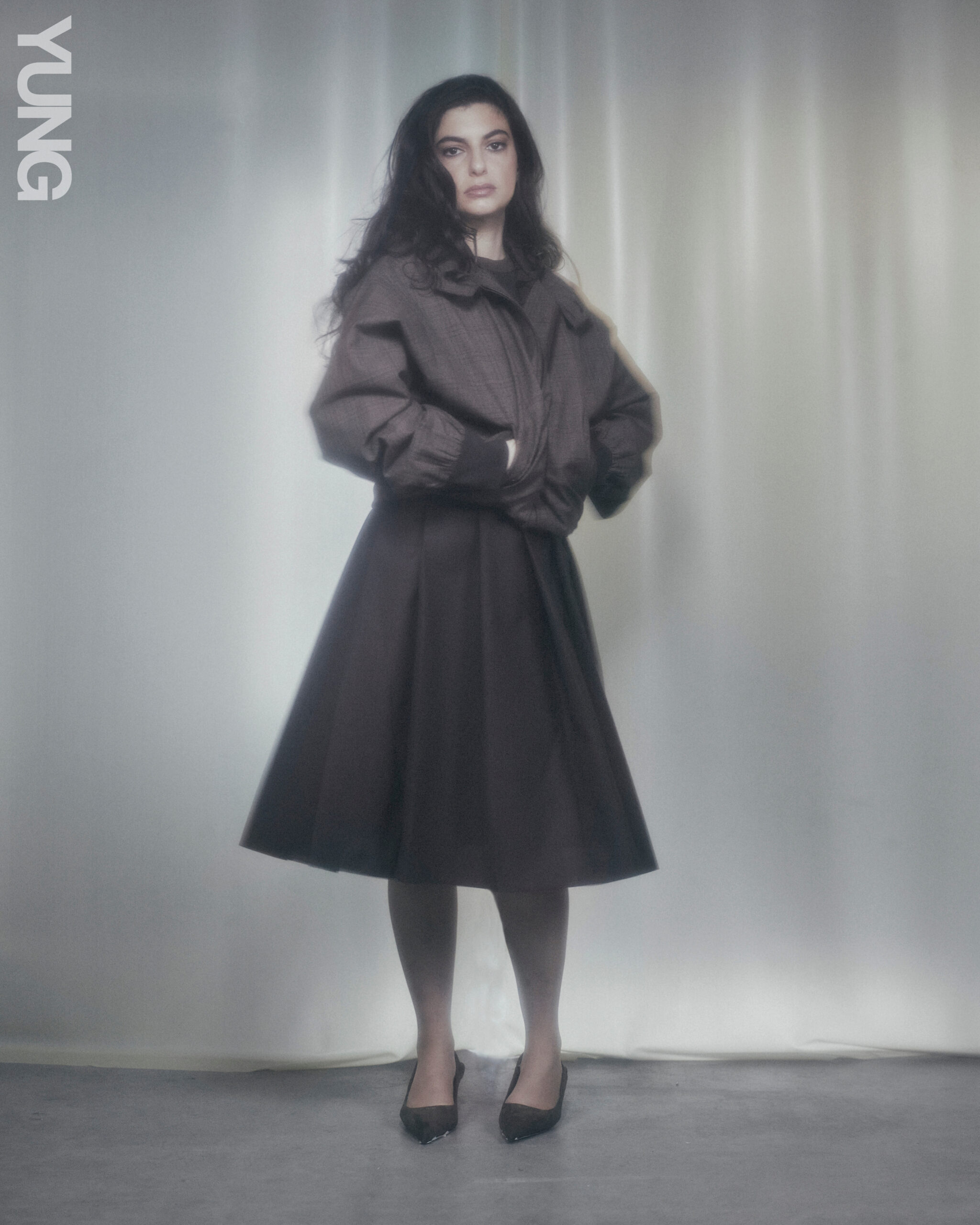
This dedication to authenticity extends to her creative process. She carefully selects projects that resonate with her personally, seeking links between her experience and the narratives she directs. “Even when I work on a period drama like House of Guinness, I find threads I can relate to: intimacy, family dynamics, resistance to oppression. It’s always about bringing a piece of myself into the work, even if the story is far removed from my own life.”
Comedy, she notes, has also entered her repertoire. Her upcoming series with A24 involves elements of humour, providing new challenges in balancing dramatic and comedic tones. “Growing up in Lebanon, tragedy was always paired with comedy,” she explains. “Humour comes from the darkest places and becomes a survival tool. That duality is something I carry into my work.”
Akl’s cinematic influences further reflect her global sensibilities and personal tastes. Films like Wim Wenders’ Paris, Texas, and Abbas Kiarostami’s Close-Up have shaped her approach to storytelling, particularly in the way they balance vulnerability with cinematic craft. “Paris, Texas taught me courage, to be vulnerable and brave as a filmmaker,” she says. “It’s about fatherhood, love, family, and being a fish out of water, something I know well as a Lebanese living abroad.”
Despite her achievements abroad, Lebanon remains central to Akl’s identity. “Lebanon is where my roots are, where I’ve lived fear and joy simultaneously. It has shaped my creativity, my resilience, and my view of life. Our scars make us who we are, and they inform how we create, how we survive, and how we love.”
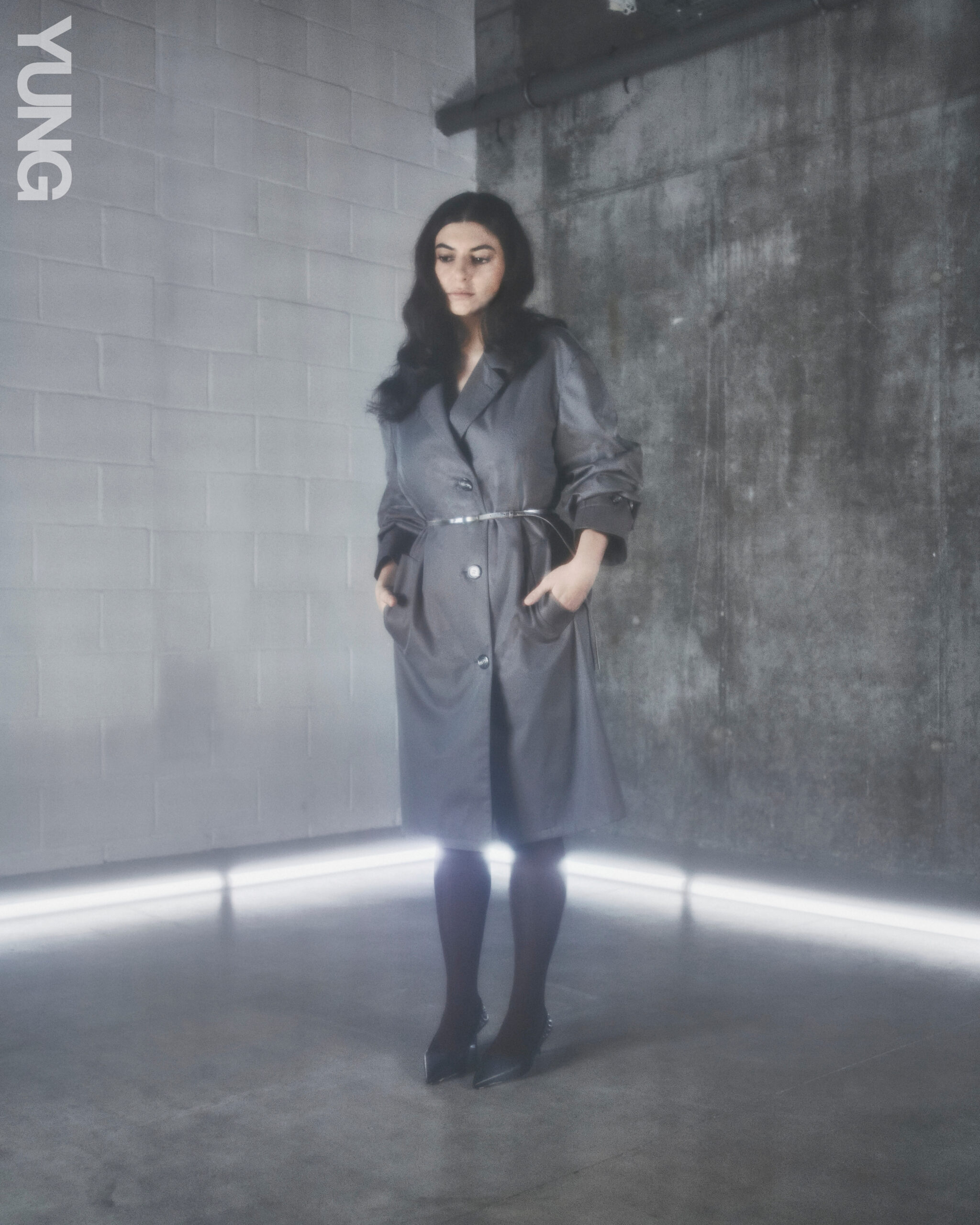
In reflecting on her work, Akl emphasizes the interplay between challenge and growth. Directing large-scale productions, navigating complex historical narratives, and stepping into acting have all required letting go, trusting others, and embracing vulnerability. “Every project teaches me something new, about people, about process, about myself. You can’t make something great every time, but every time you try, you learn. That’s what matters.”
Looking forward, Akl continues to navigate the line between television and cinema, global and local storytelling, comedy and drama. Yet her approach remains rooted in authenticity, empathy, and a profound understanding of human complexity. She seeks not just to entertain, but to illuminate and highlight emotional nuance, as well as to create worlds that are at once large in scope and deeply intimate.
“Merging personal experience with universal themes is what drives me,” she reflects. “I want my work to explore the things that make life messy and beautiful. Even if I work in London, Paris, or New York, the place I come from is always with me, like a perspective that colours some of the things I make.”
As she continues to build her career, Akl’s trajectory is both inspiring and emblematic of a new generation of Arab filmmakers making waves globally. Her voice is distinct, her vision precise, and her work uncompromisingly human. Mounia Akl is redefining storytelling, bridging cultures, and proving that cinema, in all its forms, is a way to understand the world, ourselves, and the spaces in between.
For more stories of art and culture, visit our dedicated archives and follow us on Instagram.