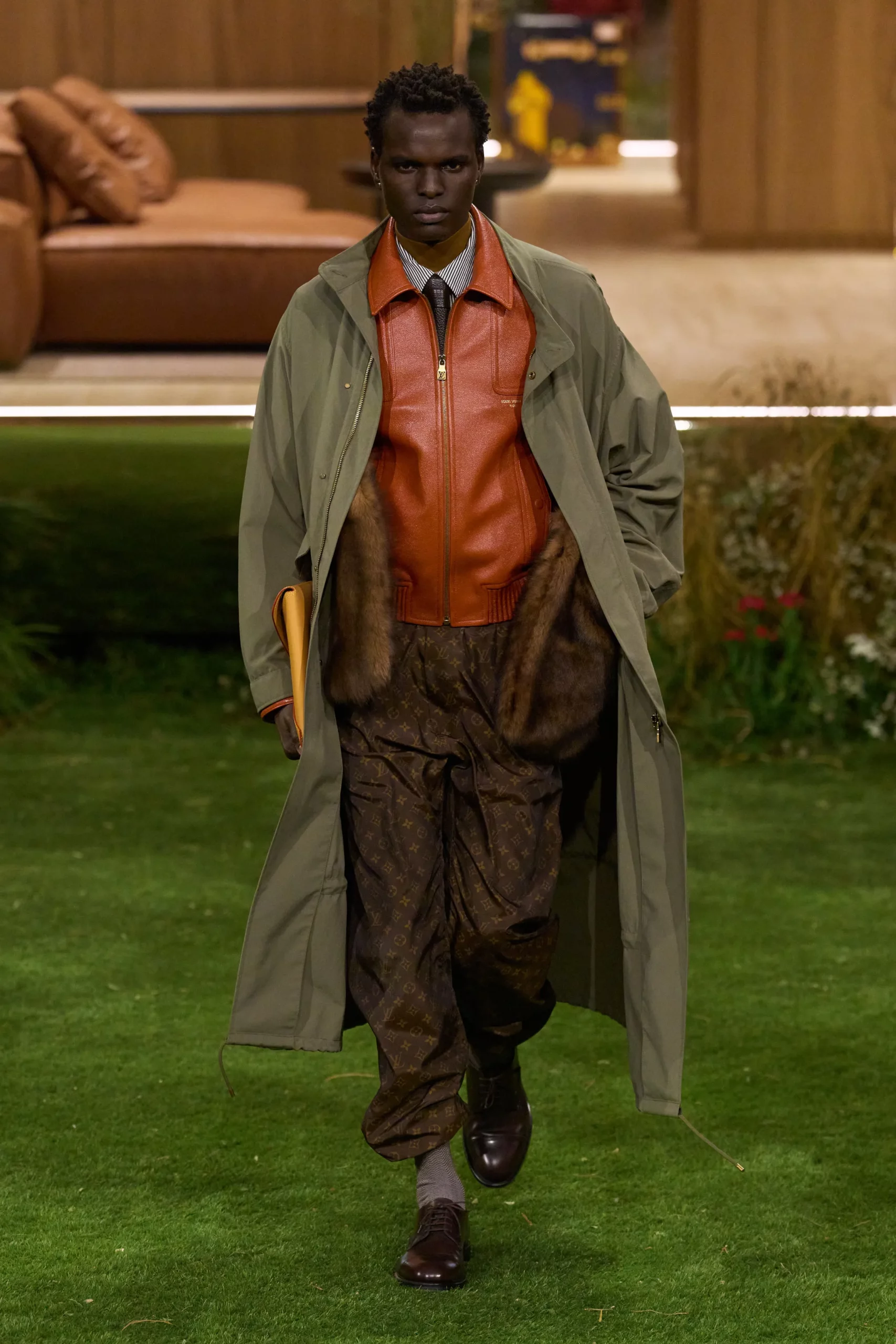
For a house historically defined by motion, the Men’s Fall/Winter 2026 collection from Louis Vuitton, presented in Paris, felt strikingly self-assured in its return to first principles. With Pharrell Williams at the helm, the collection was a tale of mobility, material heft, and the kind of luxury that shows it’s alive.
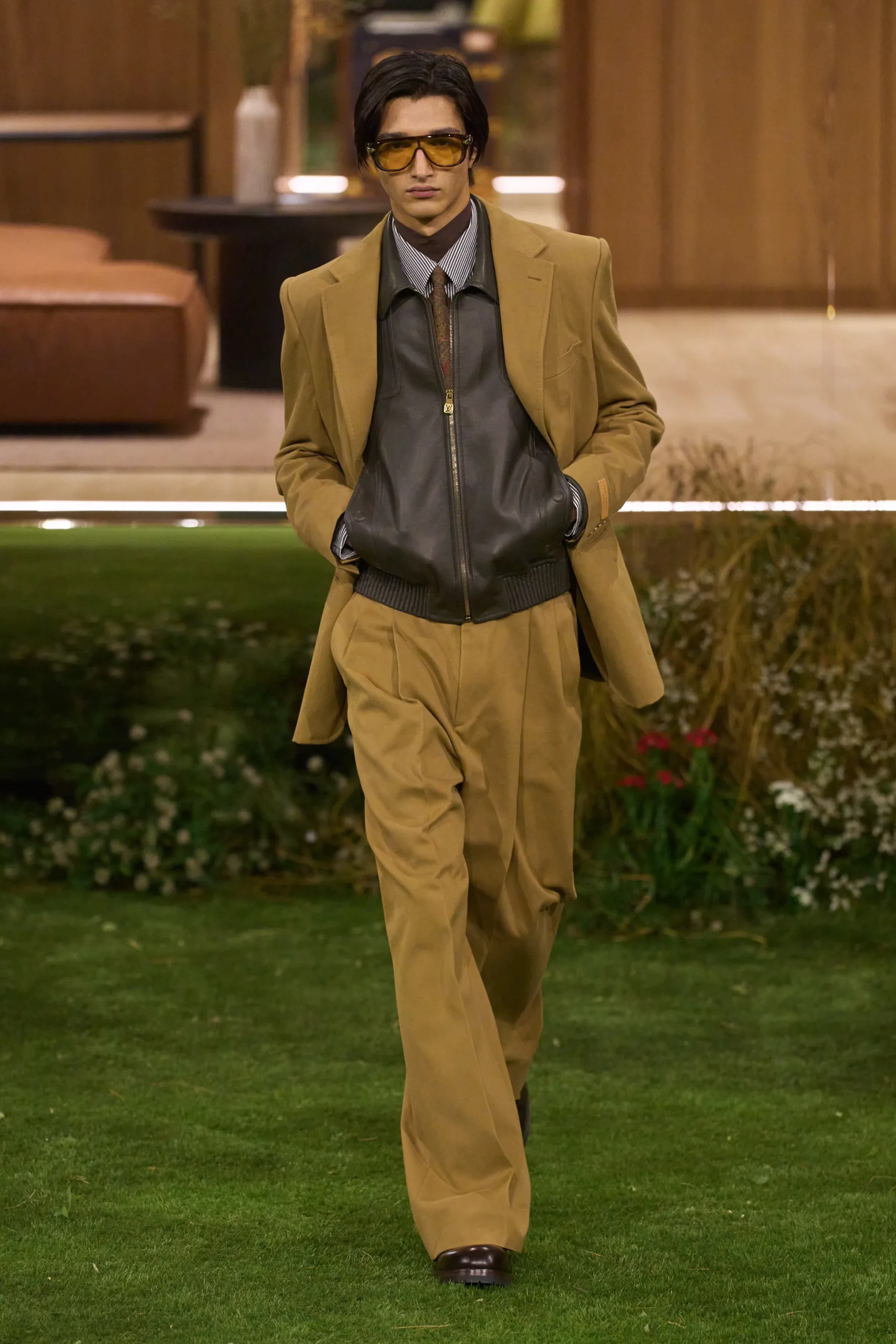
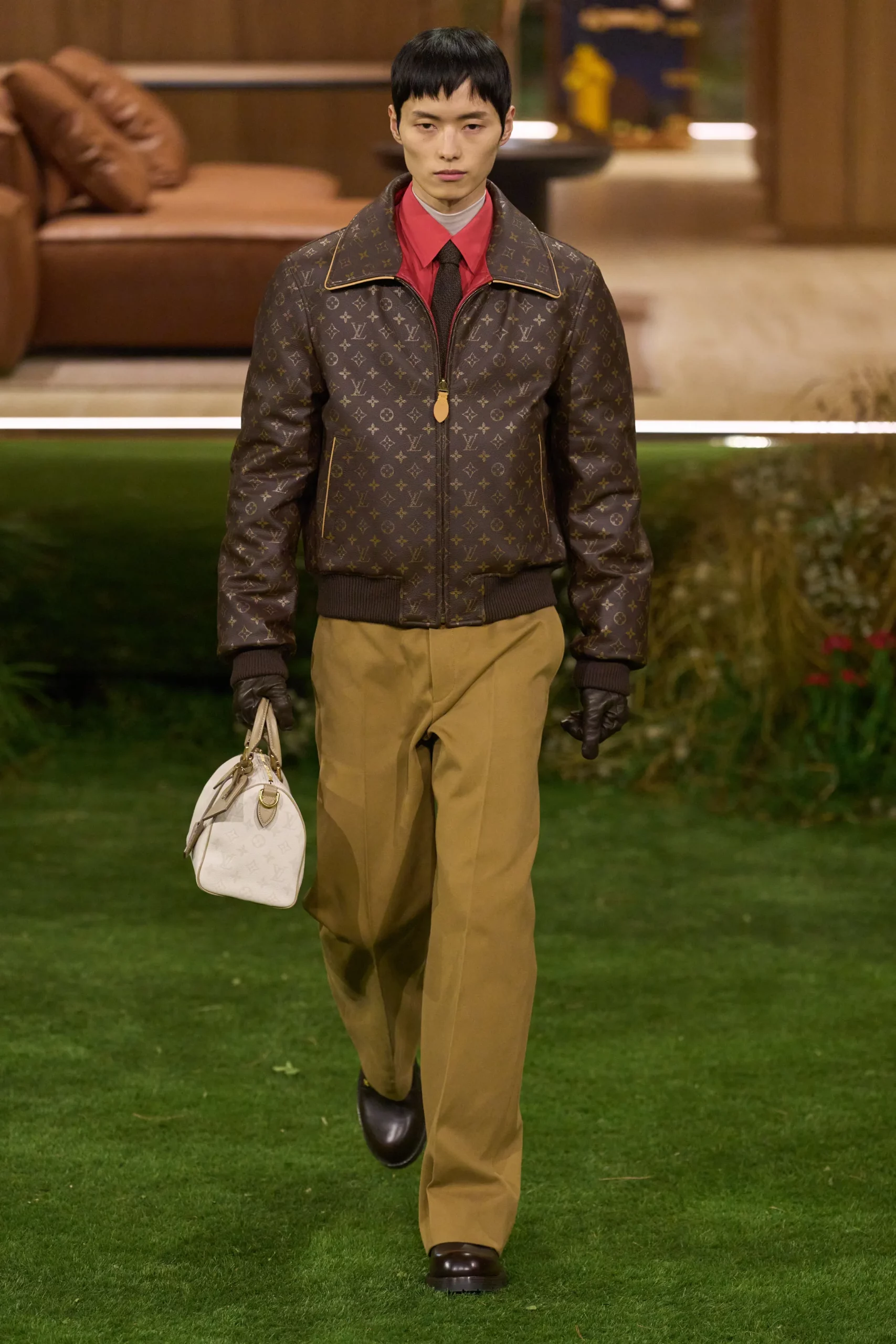
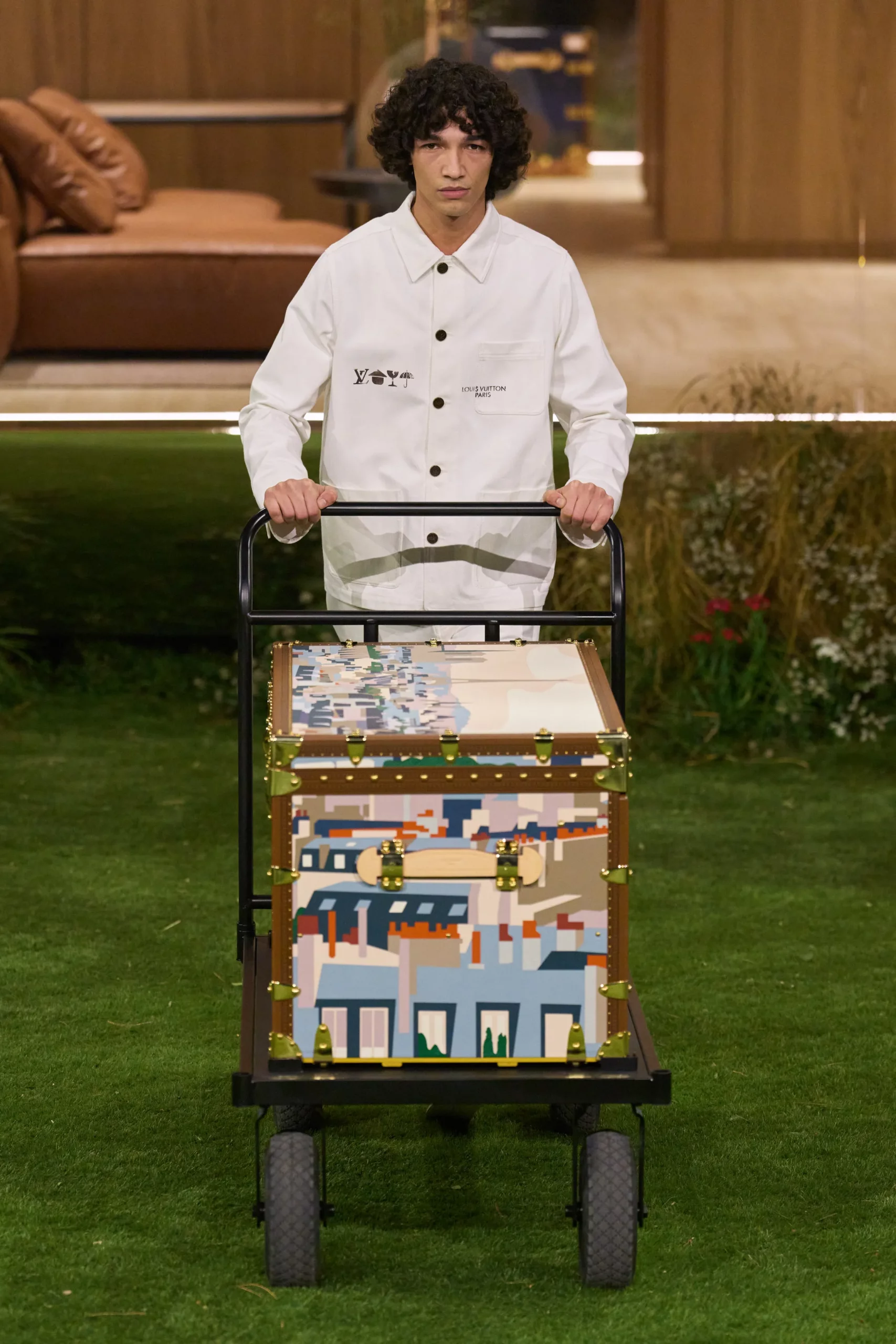
Staged within a glass-walled domestic space set directly onto grass, the show framed menswear as something worn, carried, and used. The setting, complete with leather seating, dining room furniture, and landscaped borders, anchored the clothes in a world that felt settled inside its world. Models didn’t emerge to conquer a runway; they passed through it, as if mid-journey.
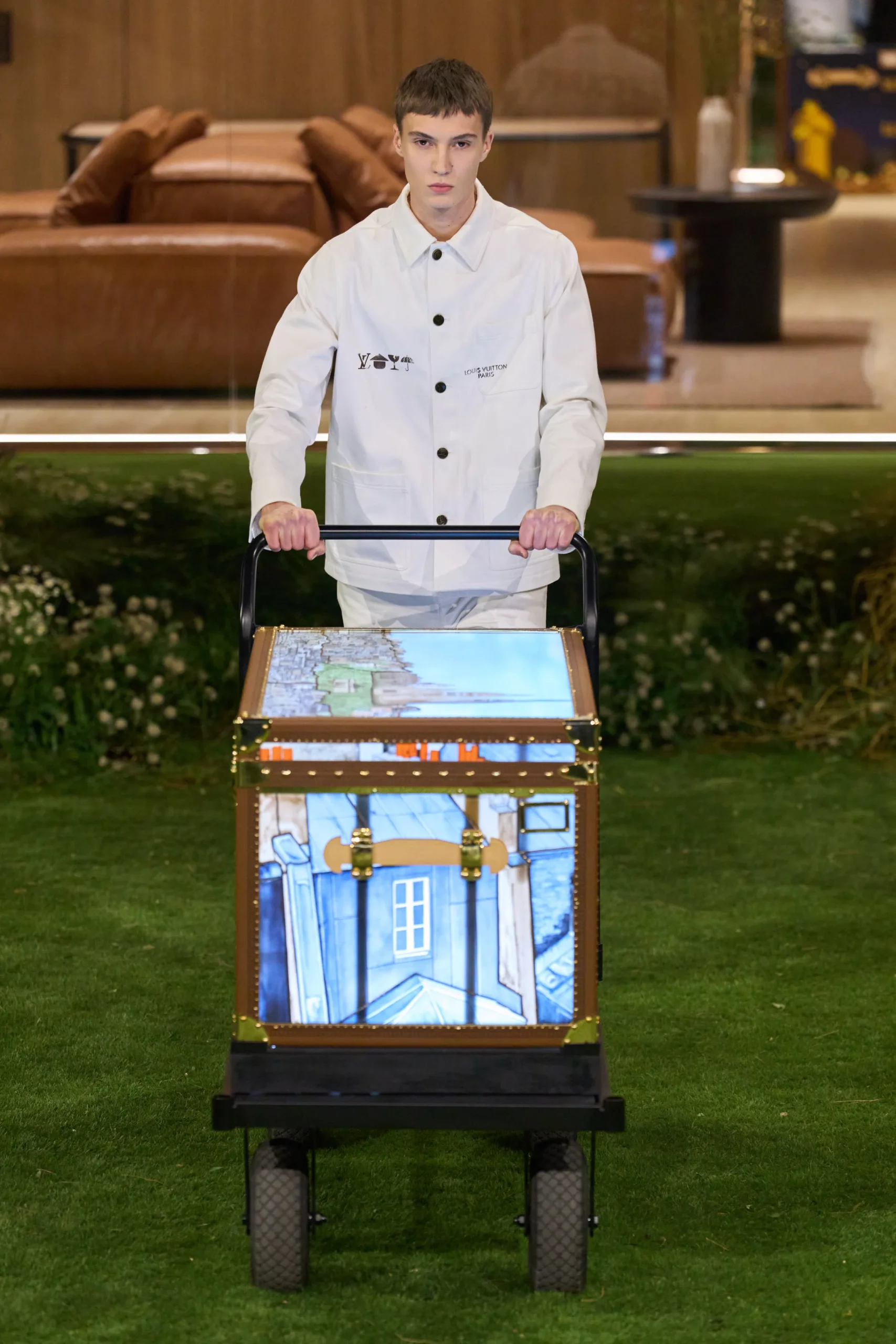
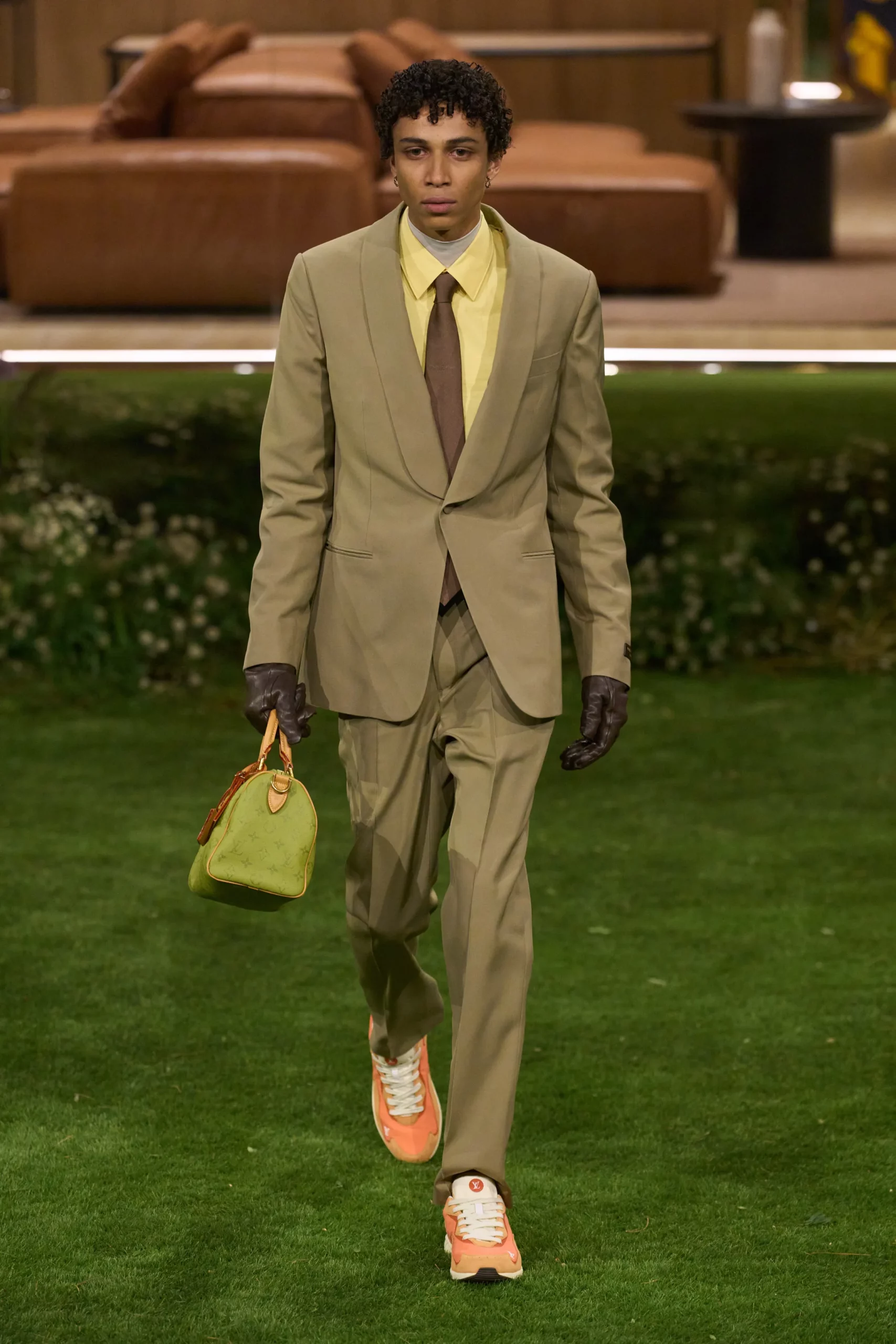
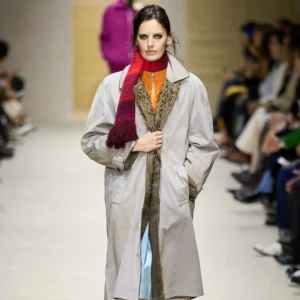
Outerwear drove the collection. Long coats, padded jackets, parkas, and shearling-trimmed layers formed its backbone, rendered in a grounded palette of camel, moss, olive, khaki, and tobacco. The silhouettes favoured breadth and ease; coats that draped, trousers that fell generously, proportions that allowed for movement without appearing casual or careless.
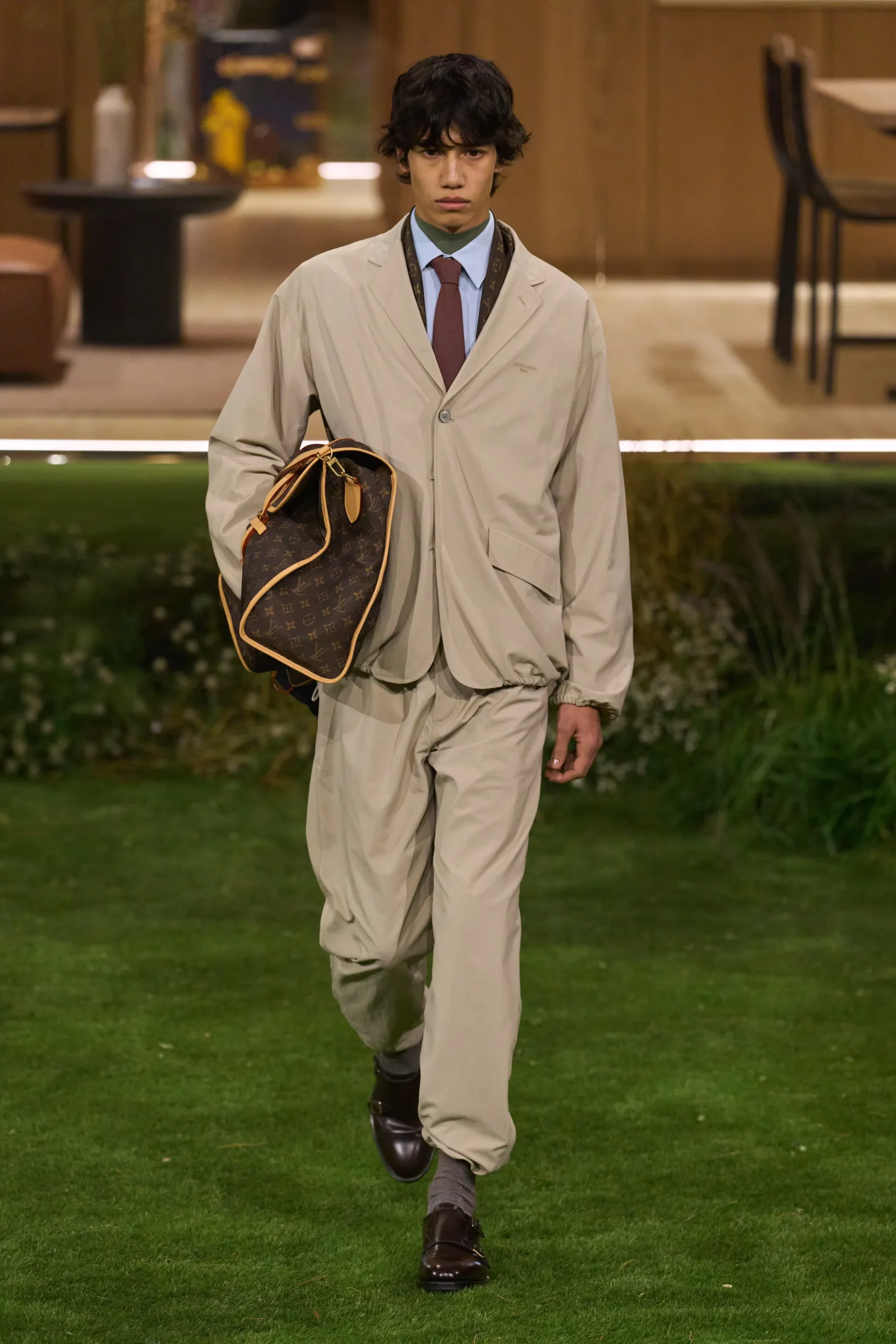
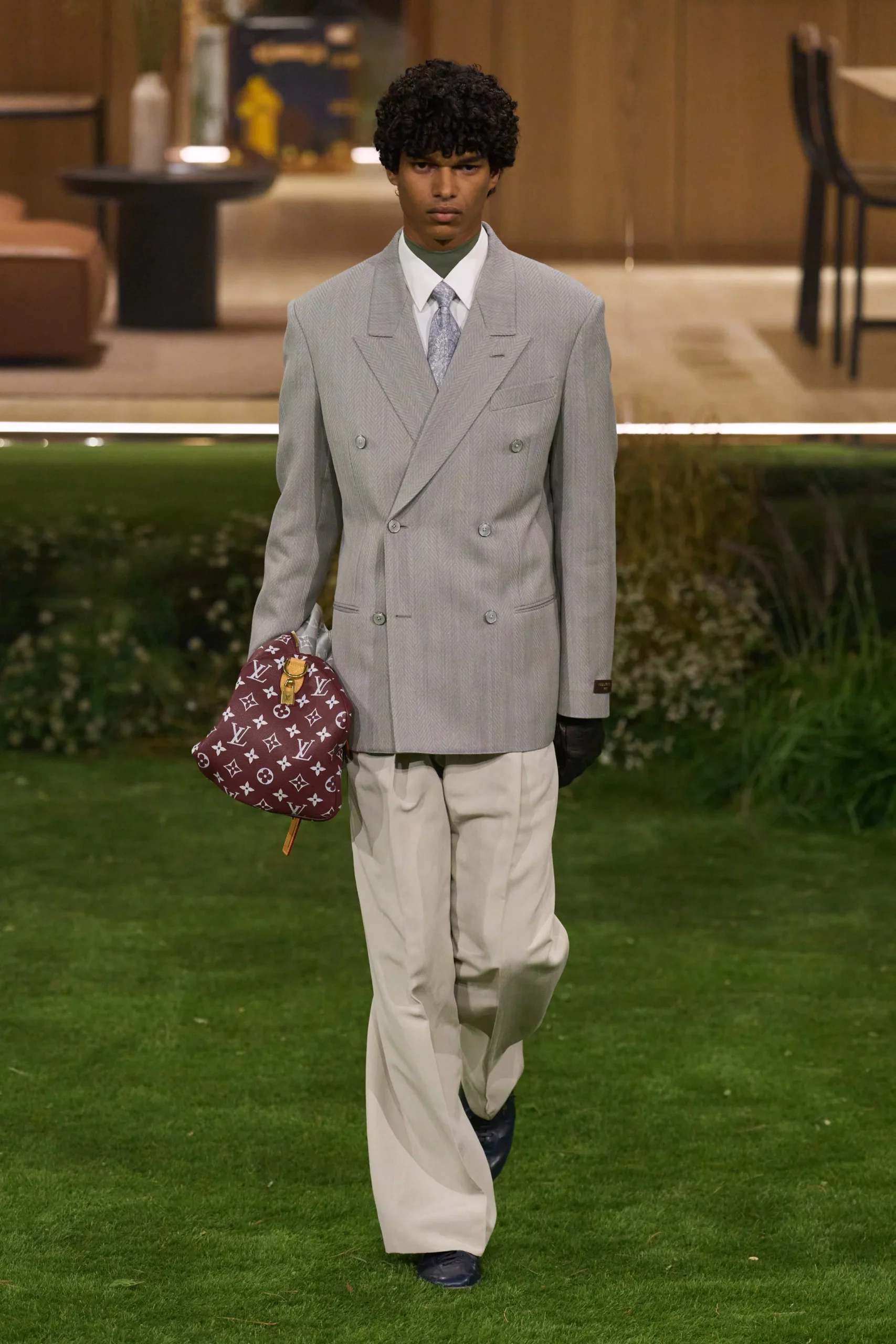
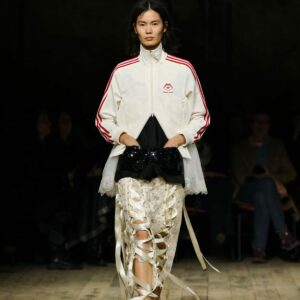
Texture also did much of the talking. Brushed wools, padded leathers, dense knits, and fur-lined elements replaced tailoring centred around strict, stifling perfection with something more tactile and reassuring. Even moments of shine were handled with temperance, a subtle wash of glitter worked into select pieces rather than declared outright. When tailoring appeared, it arrived relaxed and expansive, resisting rigidity in favour of flow. Full-legged trousers skimmed over footwear, often pooling deliberately, confirming the sense of continuity rather than interruption.
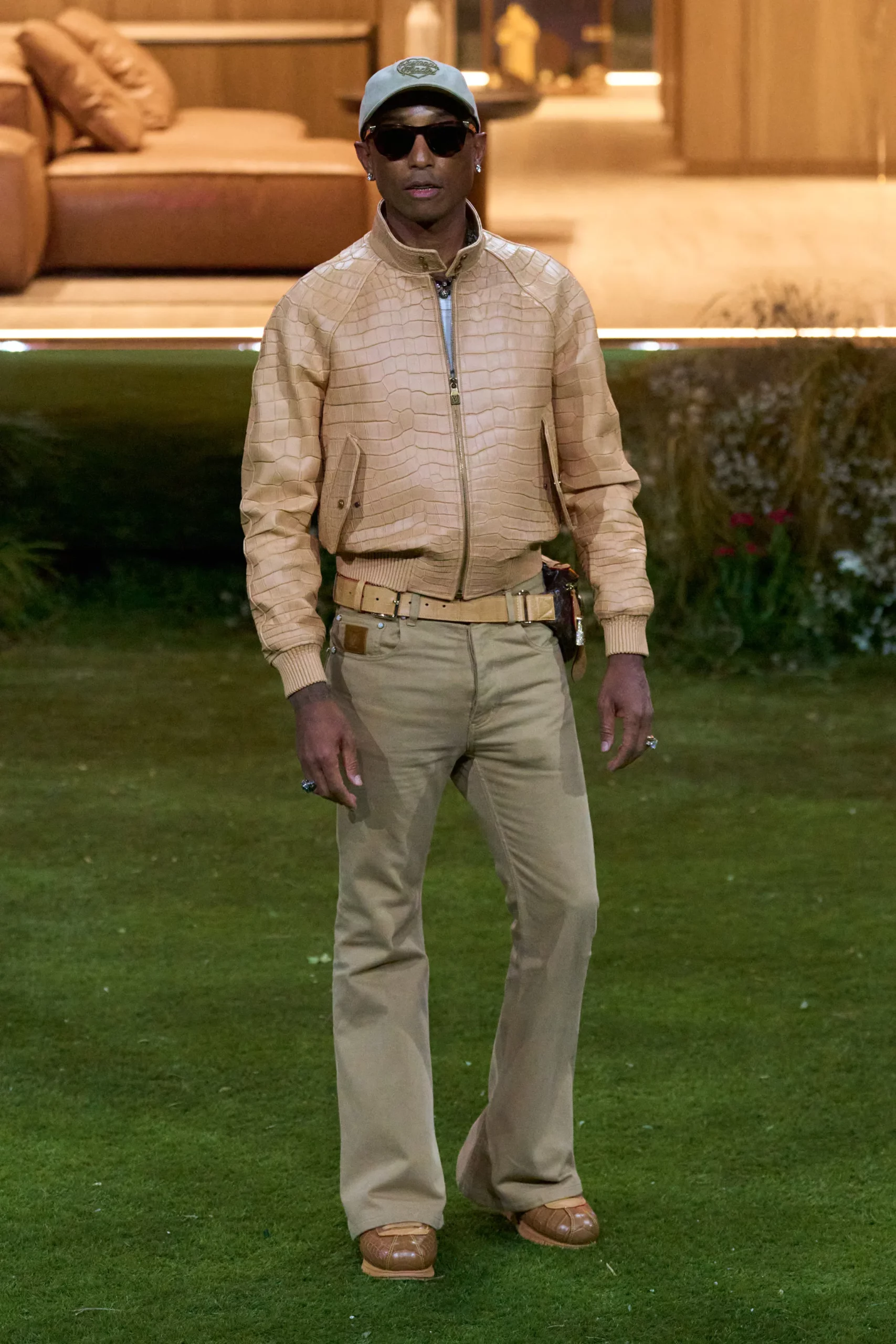
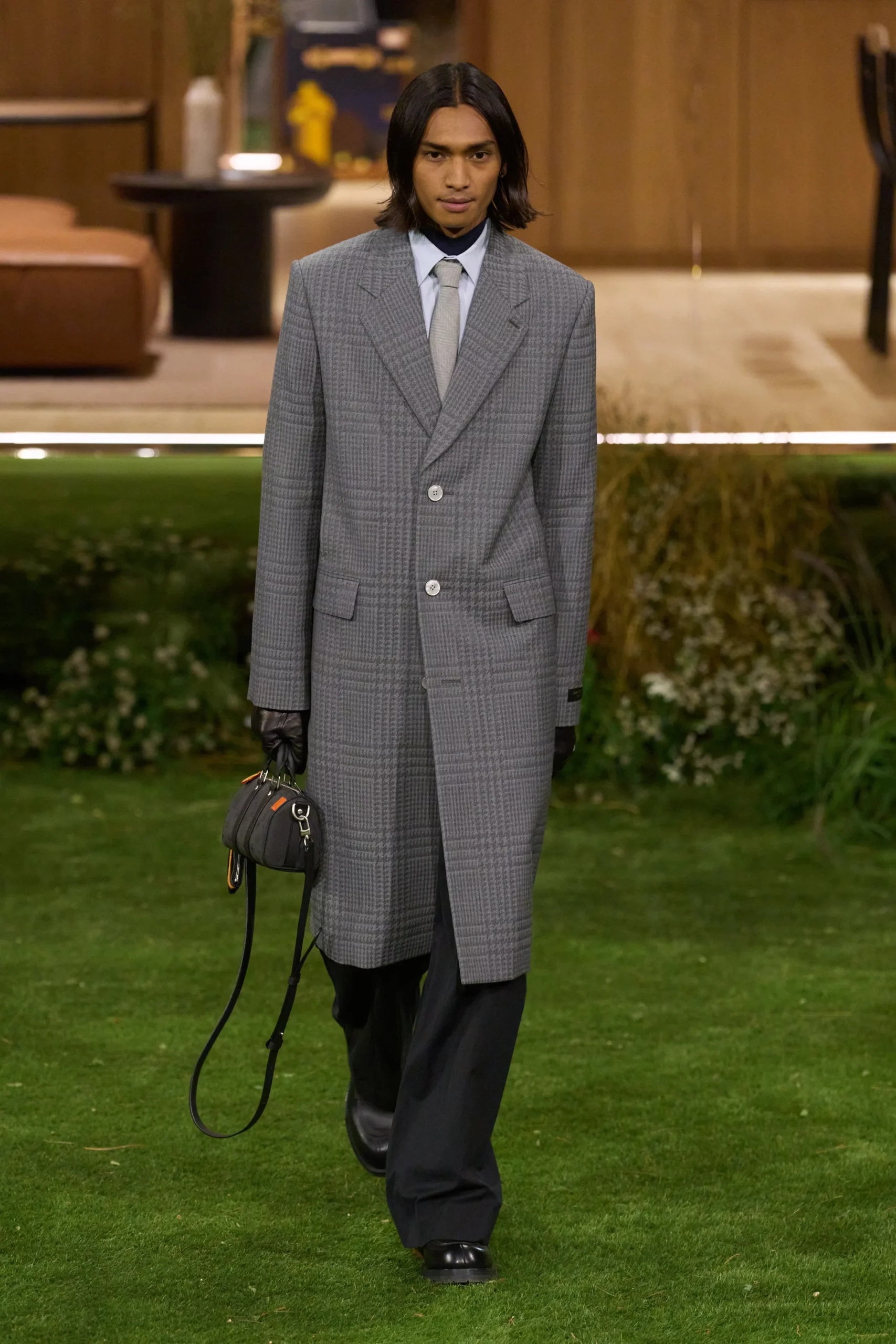
Louis Vuitton’s signature trunks appeared again and again, this time fitted with wheels. These were not ornamental callbacks to heritage, but working elements within the show’s narrative. Rolled across the grass by models in utilitarian white or layered neutrals, the trunks became extensions of the garments themselves, symbols of a luxury designed to accompany. Their recurrence gave the collection a steady rhythm, reinforcing the idea of movement as a constant rather than a climax.
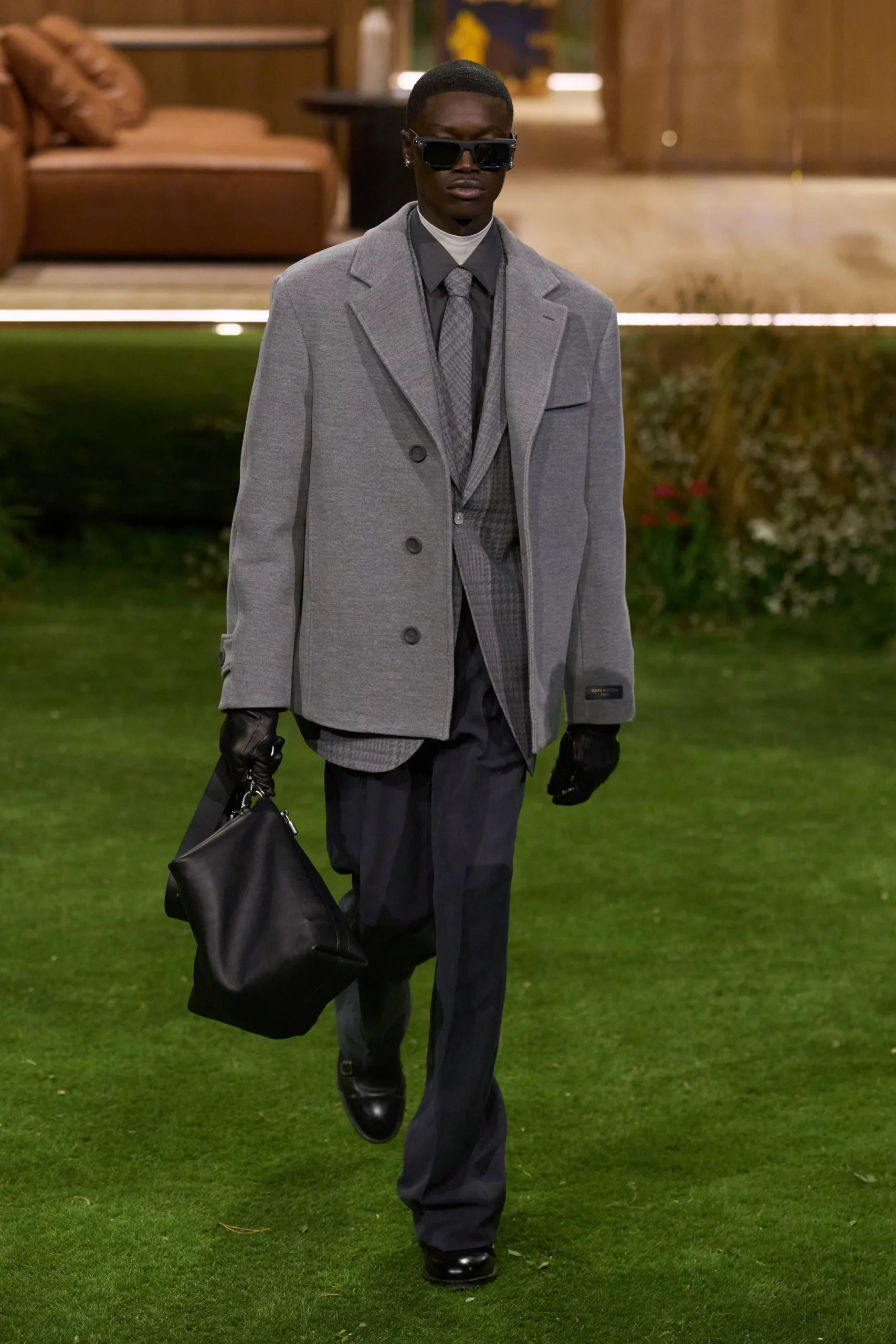
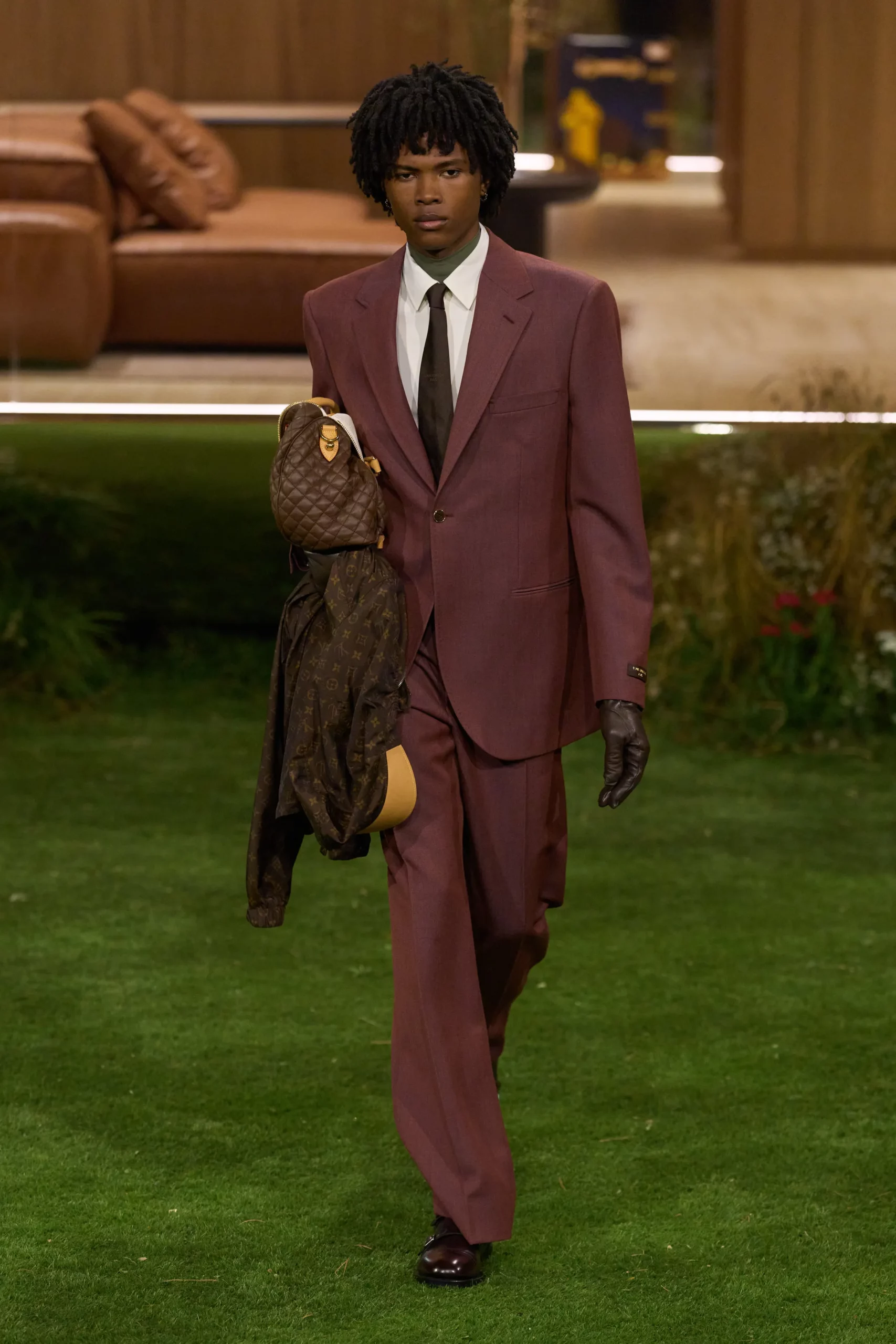
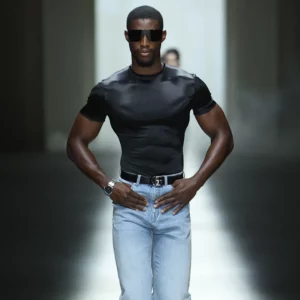
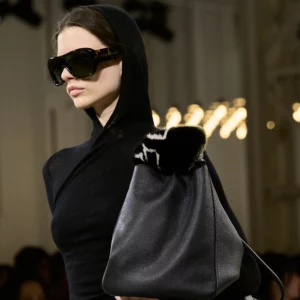
Accessories echoed this ethos. Bags were carried low, worn close, and treated as tools rather than trophies. Scarves were wrapped loosely, gloves worn with purpose, and sunglasses added a cool edge to otherwise organic looks. Even the footwear leaned toward soft soles and weight, prioritizing contact with the ground over shine.
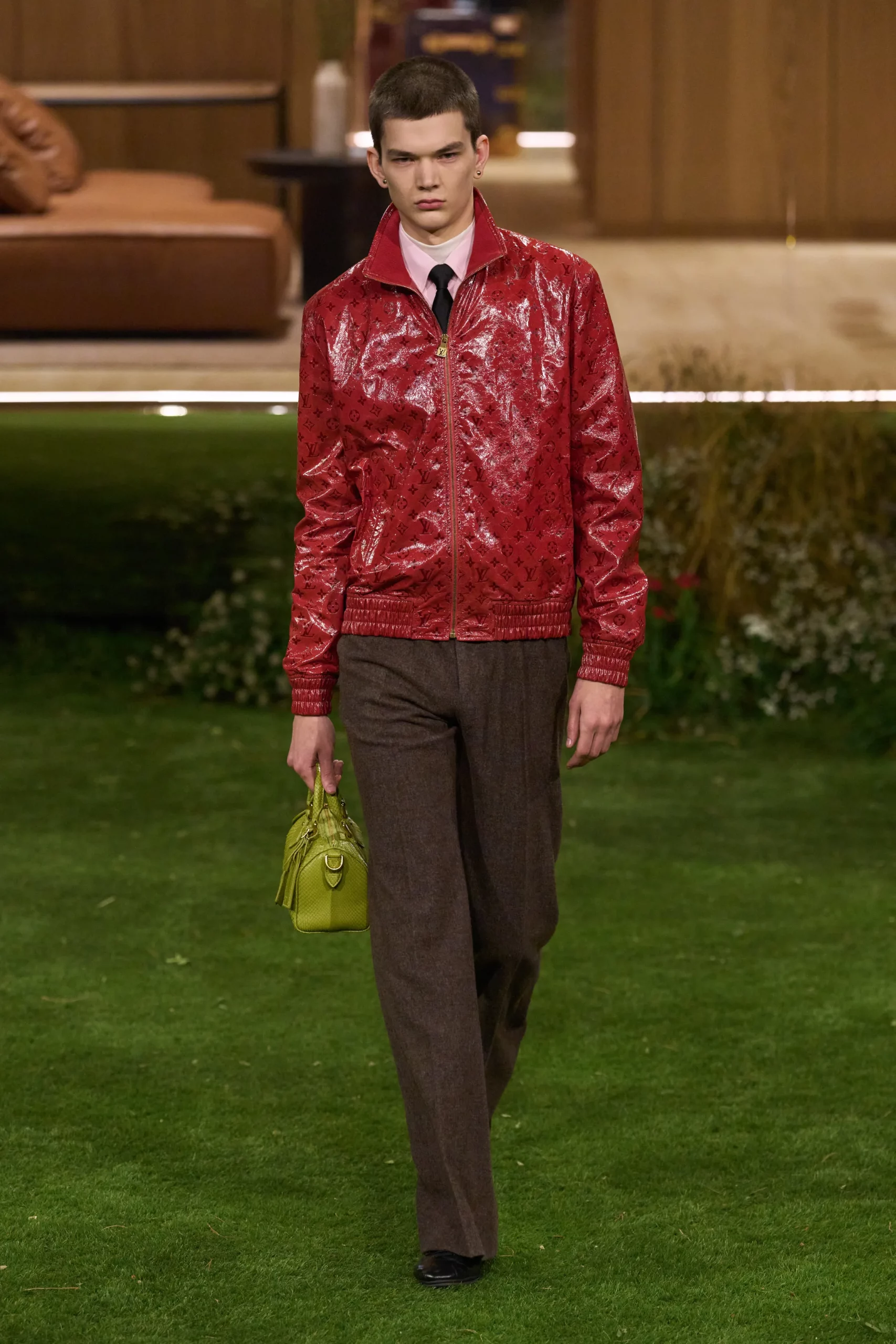
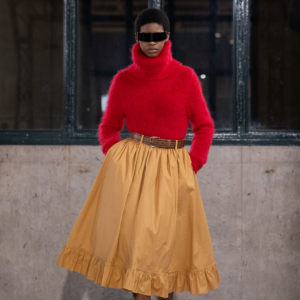
As the show progressed, the palette deepened and the layering grew heavier, culminating in a final sequence dominated by long coats, earth-darkened textures, deep reds, greens and blues, and silhouettes built for cold, weight, and distance. There was no theatrical finale. Instead, the collection tapered off with conviction as the models re-entered the glass house, sealing its internal logic.
The collection landed with a sense of resolution, wrapped in Louis Vuitton’s lineage, yet clearly oriented toward the present. Pharrell Williams positions the house in step with modern rhythms rather than distant ideals. The show’s sense of rhythm reached past the runway. Hip-hop and rap played live through a choir and orchestra, collapsing the distance between classical form and contemporary sound. Pharrell Williams continues to position the house in step with how culture actually moves.
For more stories of fashion from around the world, visit our dedicated archives and follow us on Instagram.