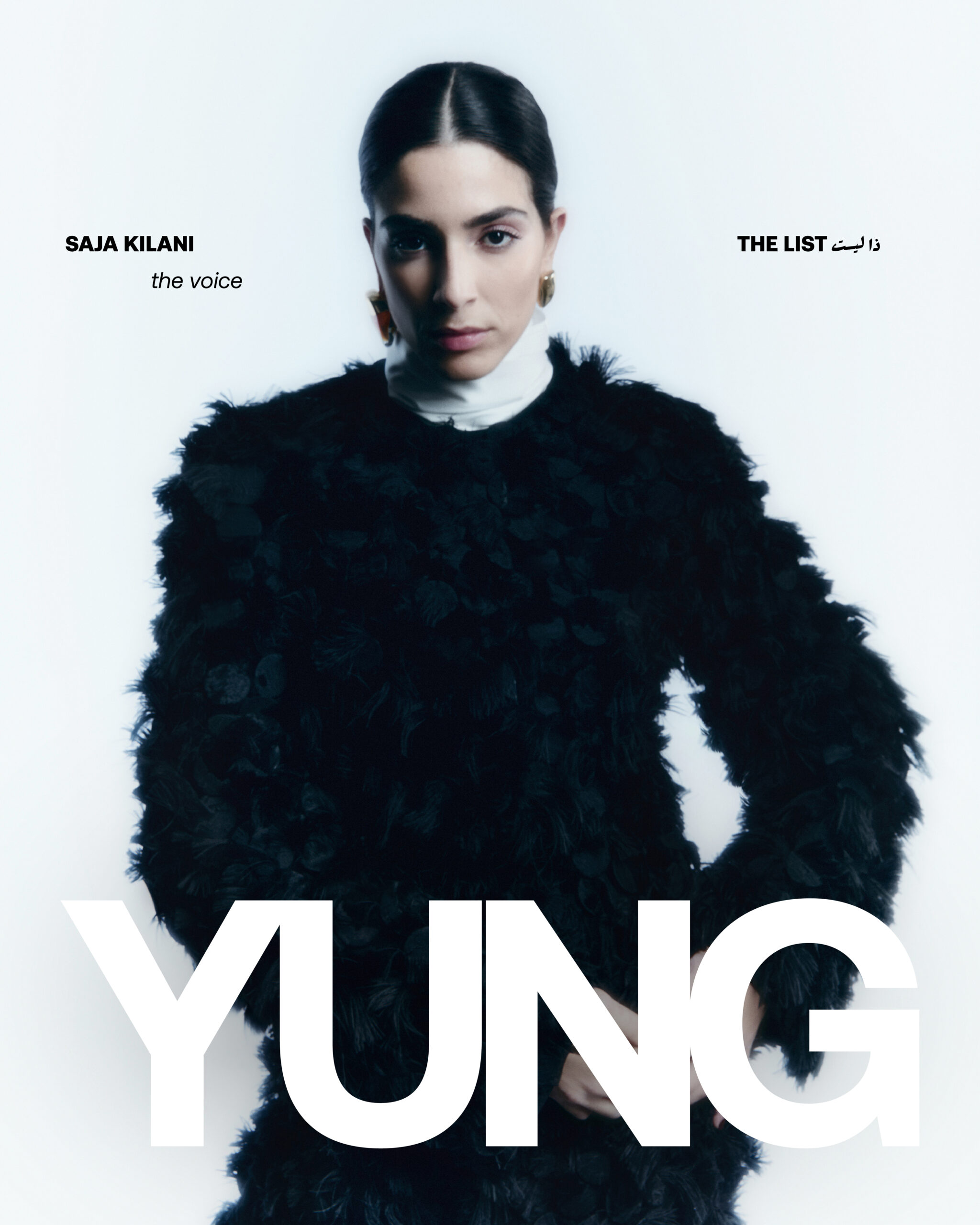
Saja Kilani speaks with the kind of calm that only comes from conviction. Her words are thoughtful, deliberate, and often punctuated by a quick, disarming smile. “No matter where I was placed,” she says early in our conversation, “I found bits of home everywhere I go.” Born to Jordanian-Palestinian parents and raised in different worlds, she grew up tracing her identity through shifting skies, first in Aqaba, then Amman, and later Toronto. She’s an artist who moves between languages and landscapes, her work grounded by empathy and belonging rather than borders.
“I spent my first eight years in Aqaba,” she remembers. “Then we moved to Amman for a few years before I went to Canada at fifteen… A lot of my poetry actually talks about not necessarily needing home to be in one place, there’s parts of it that remind you and trace it back to it. But it’s really the people that you’re surrounded with, certain things that you stay in touch with culturally, traditionally, that makes home.”
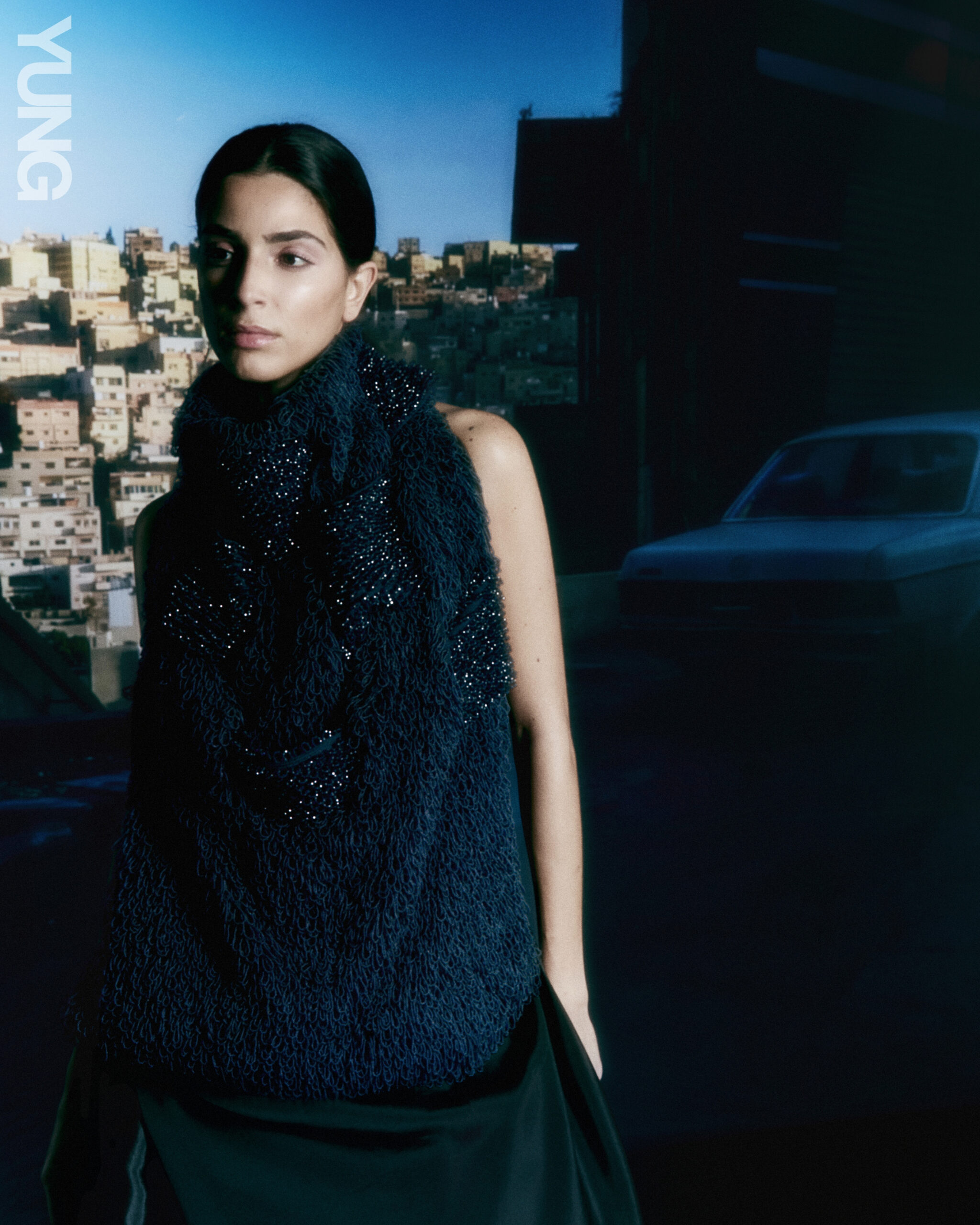
That sense of searching, for identity, for purpose, for a place that feels like home, threads through Kilani’s life and work. Whether she’s acting on a set, writing poetry, or performing on stage, her art is steeped in empathy. She’s one of those rare storytellers whose creative disciplines feed one another, a poet who acts and an actress who writes like she’s directing light onto a scene. “Film and cinema in general is not just entertainment, it’s educational. And I like to be part of that side of the world.” she says.
Her acclaimed role in The Voice of Hind Rajab brought that conviction into sharp focus. The film, which won the Silver Lion Grand Jury Prize at Venice, tells the true story of Hind Rajab, a young Palestinian girl killed in the Gaza war. Kilani plays Rana, the Red Crescent first responder who tried to guide Hind to safety over the phone, a part that required both restraint and vulnerability.
“I received an audition, a self-tape, from my agent,” says Kilani of the audition process. “I sent it in, when you first audition for a film like this, they don’t necessarily share the details, it was kind of like an improv scene,” she says. “But I knew the director [Kaouther Ben Hania] and I’ve been a huge fan of her work, I knew that if she was behind it, it had to be powerful.”
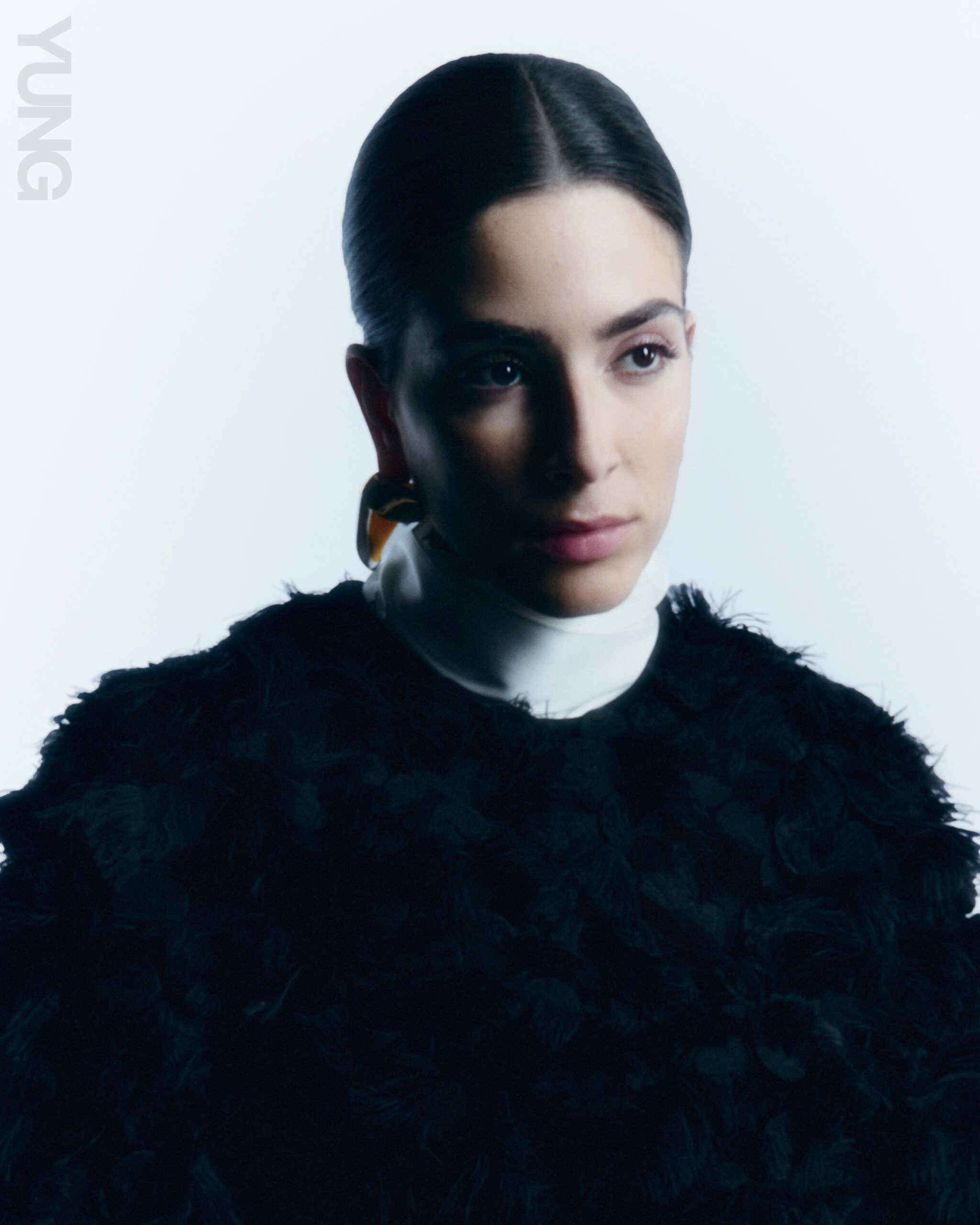
“And so I received a call back, that is when the story was revealed to me. And it was this immense responsibility. It made me want to do this even more because as an actor and as an artist myself, I’m always trying to find ways to tell stories that are based on true events,” Kilani says. Ben Hania, she says, “took a chance on me.” Before offering the role, the filmmaker confessed she couldn’t find any of Kilani’s work online. “I’d only done one feature and it was still in post-production,” Kilani recalls. “She said, ‘How can I trust that you’re good on camera?’ I sent her a small snippet of something I’d done, and she really took a chance.” It was a leap of faith that Kilani felt deeply: “That was also added pressure … I just wanted to make sure she didn’t regret that decision.”
Before shooting, Kilani spoke for hours with Rana, who she’d portray in the film. “We were on the phone for maybe three, four hours the first time. And she’s such a lovely person. I’m so lucky to call her my friend today. She was so generous, because it was hard at first, I didn’t want to open a wound that she spent a year trying to mend, but she was so generous with the whole story. She told me everything from her perspective,” says Kilani. “And then she said something that I really appreciated, ‘I don’t want you to copy me. I want you to just listen to her voice and that alone is enough’.”

Kilani did exactly that. On set, the director kept Hind’s actual voice recording hidden until the cameras rolled. They shot the film chronologically, she explains. So each scene was the first time they heard her. “I thought I was ready for her voice because I knew exactly what she was going to say. But it’s a whole different thing when you hear her. Also, that innocence behind that voice. You really don’t need to be Palestinian to relate to the story. It’s human. It’s a child’s story. A child that’s been failed,” she says.
She describes the atmosphere on set as one of collective care, “…everyone, from the director to the boom operator was there with so much love and respect for the story and everyone was so proud to be part of it. It felt like one community. Simultaneously, it was a very hard role, but at the same time, it was as smooth as it could be, trying to tell the story with so much love and understanding.”
Carrying that emotional weight was far from easy. “I don’t practice method acting,” she says. “But with this film, I think I did it unintentionally. My character deteriorates over time, and by the last few days of shooting, I think I did, physically. I got sick. I realised later it was my body reacting to everything. The director gave me the space to relax; but I had to remind myself that you’re serving this story for a reason, that’s why I was able to continue.”
When The Voice of Hind Rajab premiered in Venice, where it received a 23-minute ovation, the response stunned her. “You know, it’s a contradicting emotion, because you want to be proud of the work that you’ve done and for letting out the story. But at the same time, you think about the story that you are delivering and the actual message behind it. The fact that a stadium filled with people from all over stood up and clapped for that long just made me realise that, yeah, this film has been able to tap into people. If cinema can change something internally inside you, it is the biggest honour. It showed me that you don’t need to speak the same language. You don’t need to come from the same place.”

Kilani’s relationship with Rana, the real-life first responder, didn’t end with filming. Rana is still an active worker at the Red Crescent. It was an honour playing her,” she says. “When she watched the film, she told me, ‘You mirrored my emotions, you “physicalized” them.’ You know, such a beautiful statement that I think will forever be engraved in my head.”
Her eyes soften when she speaks about it. “Every time I get a message from her, if a heart can smile, it was doing just that. I’m still in touch. I speak to her. I was just on the phone with her yesterday. She’s someone I really, really look up to.”
If Hind Rajab cemented Kilani’s voice as an artist of conscience, Simsim marked the beginning of her cinematic journey. The film, her first in Arabic, earned her the Best First Time Lead Actress award at the Amman International Film Festival. “I got the role four days before shooting,” she laughs. “And it was in a dialect I wasn’t used to. It was a very big challenge, but it pushed me in the most positive way. It was more like a volunteer type of thing, everyone who was there chose to be there because of their love for cinema. So the environment was so motivating.”
This sense of determination is personal as well as professional. Kilani is the first in her family to pursue an artistic career, a path that came with uncertainty as much as excitement. Coming from a background where traditional professions were the norm, she had no blueprint to follow, no relative to turn to for advice or reassurance. The decision was a risk, but one she felt compelled to take. With her family’s support and her own conviction, she stepped into uncharted territory and the rest is an evolving story.
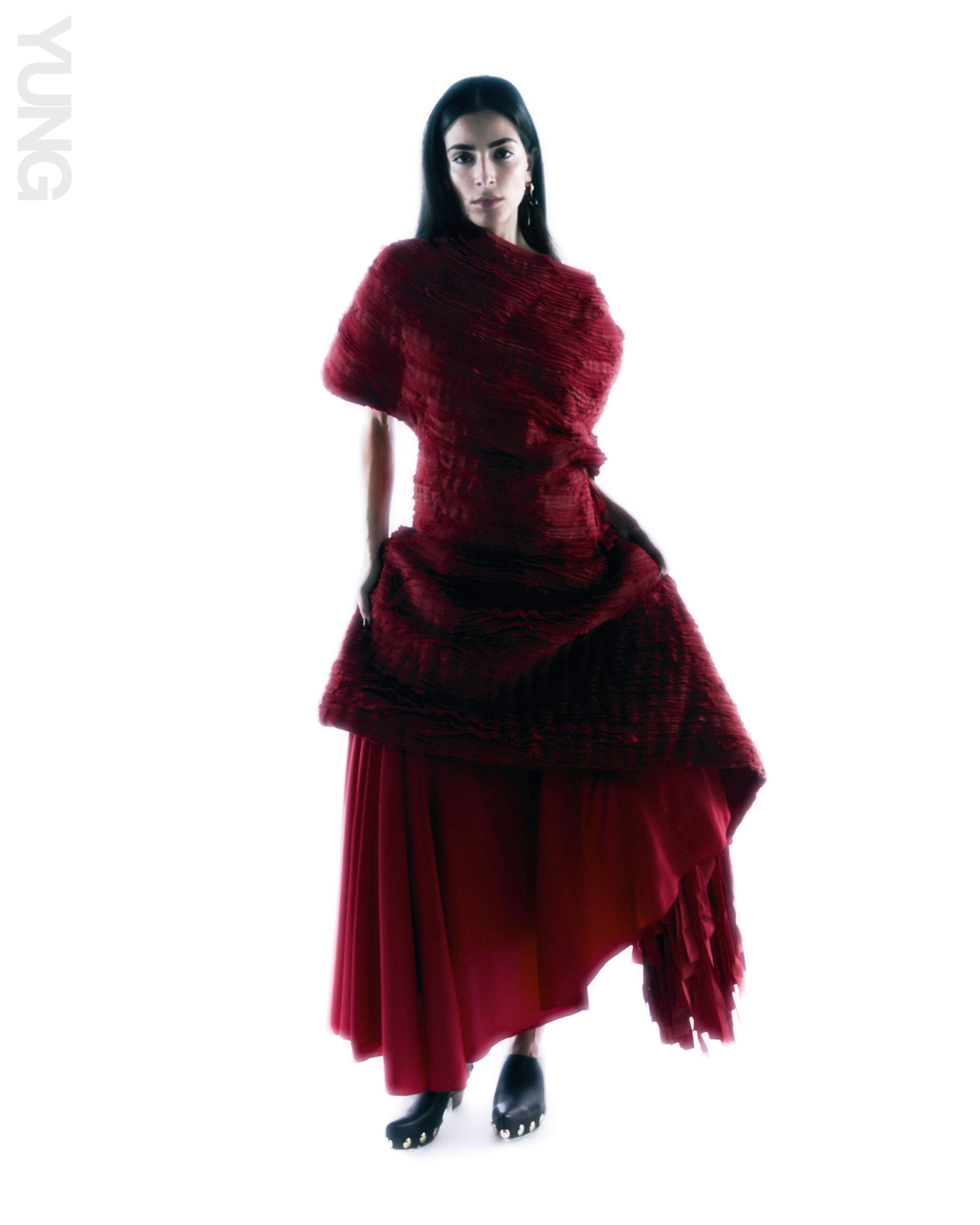
Outside of film, Kilani has built a following through her poetry, a medium she first treated as a private refuge. “With poetry, it’s always been like a private form of expression of mine that I would just go on my notes app on my phone and write anything that interests me. It started off with liking quotes said by public figures. And then I would watch a lot of spoken word poetry, live poetry,” she says. She recorded herself performing one of her poems, posted it online, and watched people respond. The reaction was positive, people connected, and she took it from there.
She did this through live performances, and then through music. Her debut single, TATA, combines poetry with traditional instrumentation composed by Lebanese qanun player Jihad Asaad. “We’ve been just friends on social media and he’s liked my poetry,” she says. Asaad composed the music, Kilani wrote a poem, an ode to her grandmother. “And that was the first thing I released on streaming platforms. And I liked this idea. So I posted another, I released another one called Dear Vitiligo about my skin condition. I think this is something that I would like to keep doing,” she says.
Dear Vitiligo confronts her skin condition with unfiltered honesty, “On stage was the only time I wasn’t conscious of my condition. Acting has saved me from my destructive self-image, I think, because it’s where I can freely express myself,” she says. “And so I thought to myself, I want to feel how I feel on stage every day, without needing to cover up. And that’s when I realized that it’s all in my head. If I’m confident with who I am, with my skin condition, and if I’m being true to myself, that is because I think my message as an artist as a whole is to be as honest as possible.”
When she talks about the Arab film scene, Kilani’s optimism is tempered by realism, “I think it’s been nice when we take ownership of our stories. And I would love to see more of that. I would also love to see more films that are creative, even fiction. We’re put in a position where we’re kind of raising awareness about issues that are happening, and we’re not able to really enjoy these types of stories. But I think it would be nice to see more of those.”
In terms of recognition for the wider scene, things are moving a little slowly, “I think the way the algorithm works is kind of crazy because it exposes me to my side of the region. But then I come to places like New York, and I’m talking to people from here that are not aware of the situation, it makes me take a step back and think, am I just exposed to my side because of the algorithm?”
Regardless of the wider scene, Kilani “… wants recognition to come from the work itself, not from filling a category.” She’s careful to clarify that she isn’t dismissing the importance of representation. “I would love to see more people getting appreciated for their work. Once you take on this role, you’re already representing your side, your country. I think this is how you bridge people from all over.”
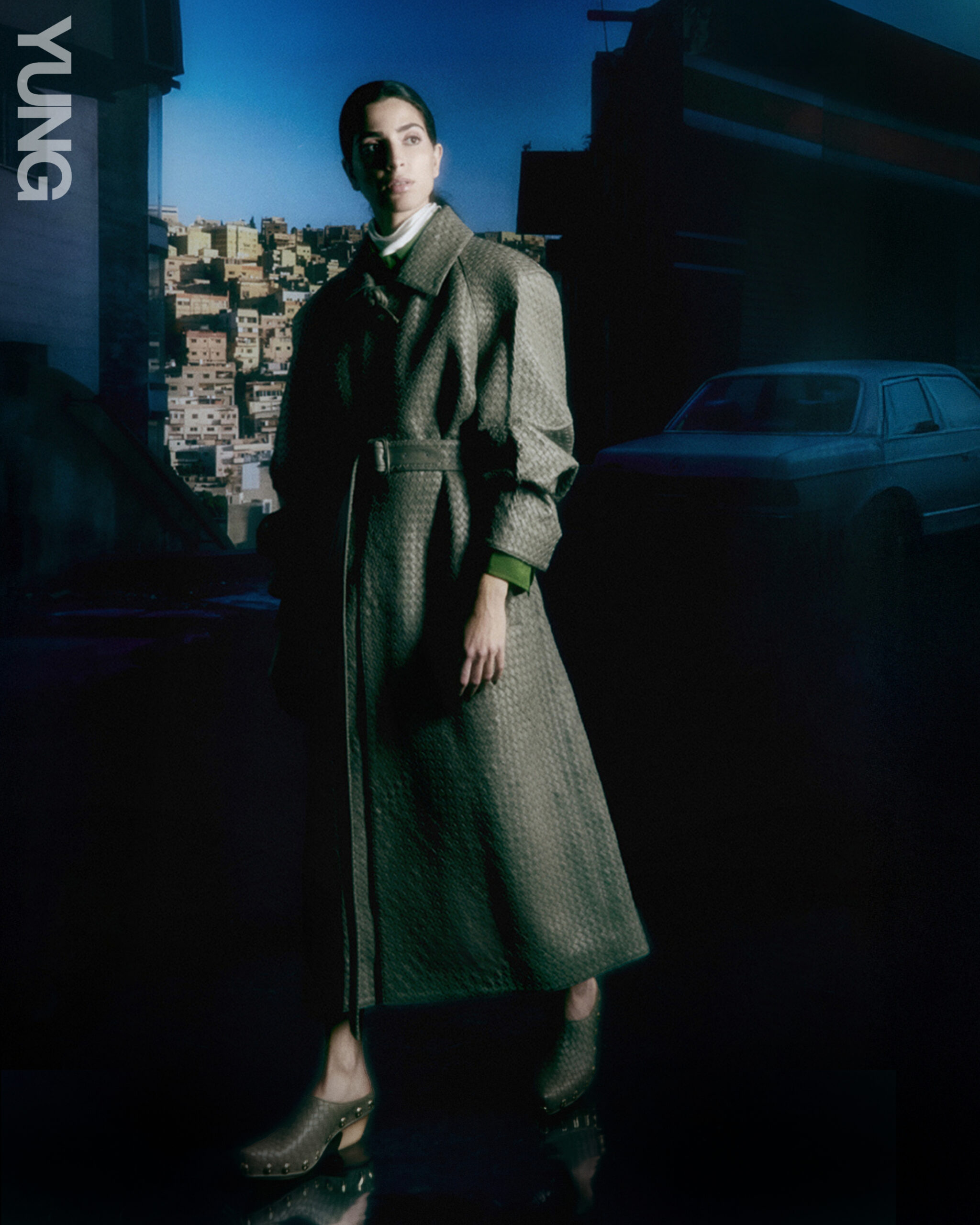
For Kilani, that focus on craft is inseparable from her empathy. When the camera starts rolling, all the outside noise fades. She’s alive in that moment, on stage, on set, wherever the story lives. Poetry, performance, and activism are all extensions of the same impulse: to connect. “I believe there’s so many stories yet to be told that can connect people. I would love to stay part of that world for as long as possible,” she says.
Whether in film, poetry, or conversation, Saja Kilani and the stories she helps tell are a lesson in bearing witness, to pain, to beauty, to the fragile in-between spaces of being human. She builds bridges not through grand gestures, but through words and performances that insist on finding the light. In a time defined by division, her storytelling feels like an act of hope, a reminder that empathy still speaks.
For more stories of art, culture and fashion, visit our dedicated archives and follow us on Instagram.