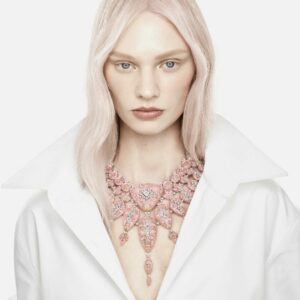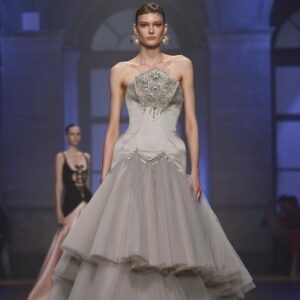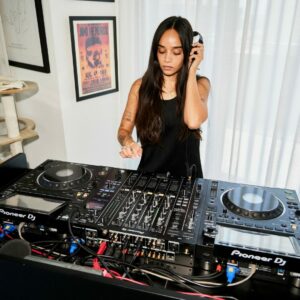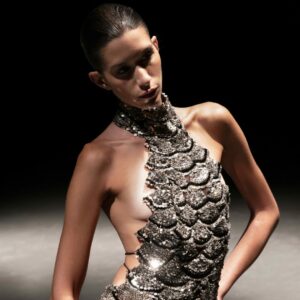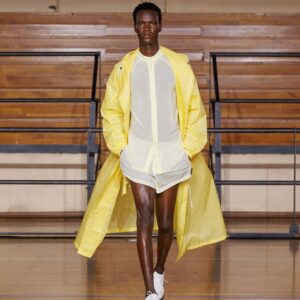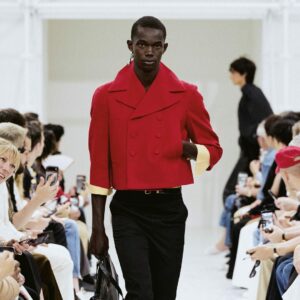
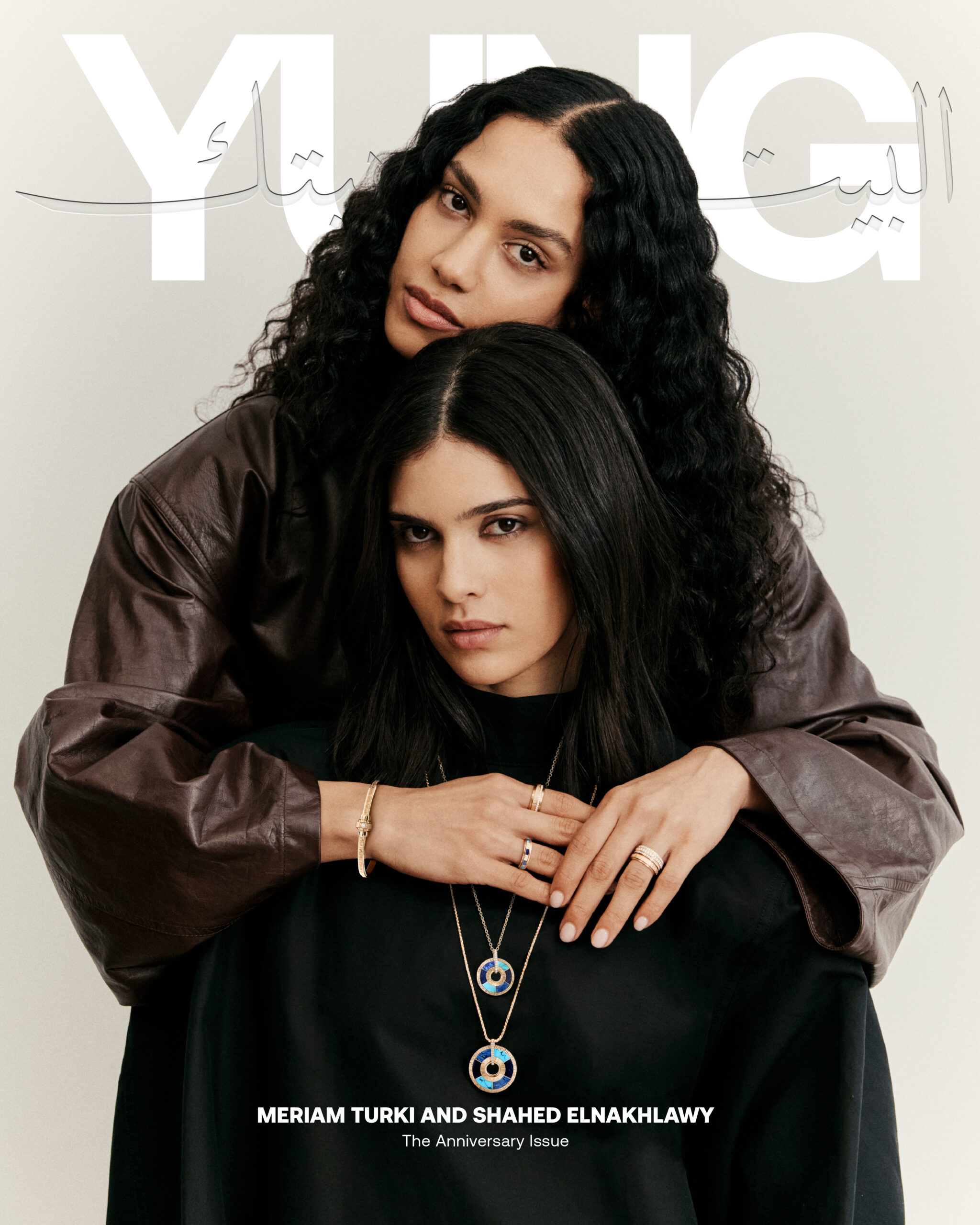
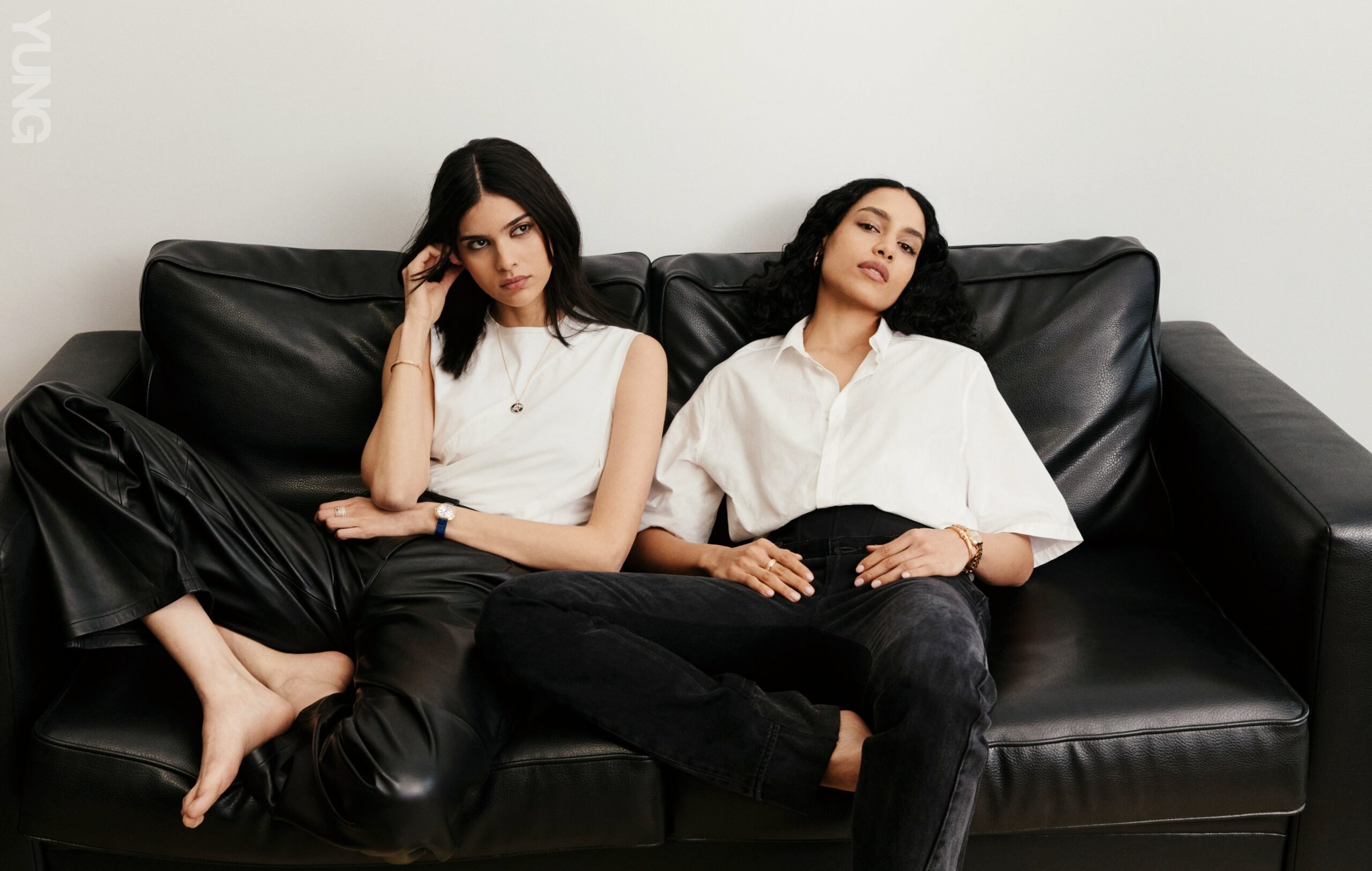
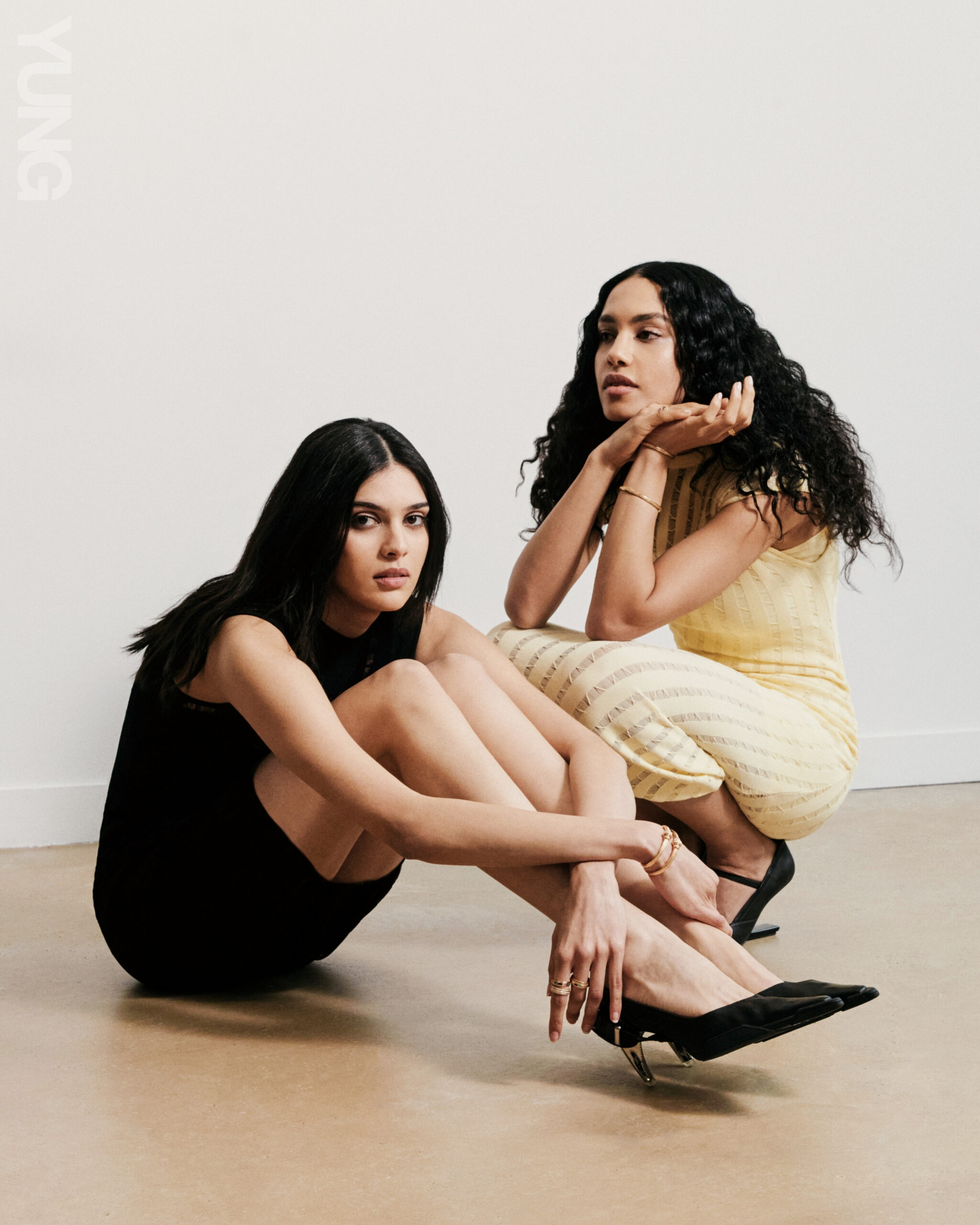
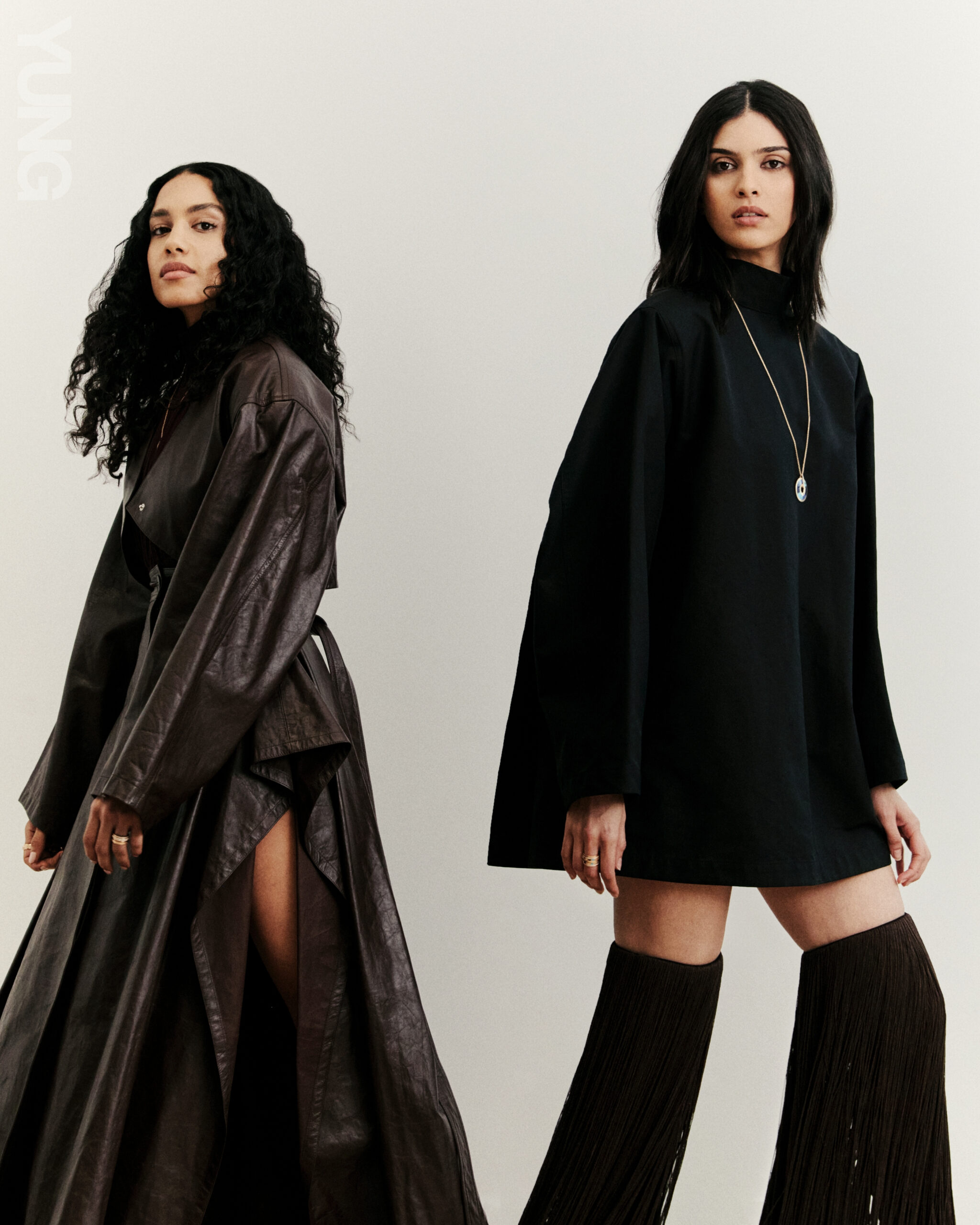
Meriam Turki and Shahed Elnakhlawy represent a generation of models moving beyond image into meaning. Their presence is not defined by trends, but by a deeper awareness of identity, culture, and the responsibility that comes with visibility.
For Turki, modelling is rooted in personal transformation, turning what once felt like difference into strength, and building a path shaped by honesty and self-definition.
Elnakhlawy approaches the industry with a clear sense of intention, using her platform to bridge cultures and challenge how Arab identity is perceived across global fashion spaces.
Together, they reflect a shift already in motion. One where Arab models are no longer just representing a place, but actively shaping how it is seen and understood. Here, YUNG talks to both women.
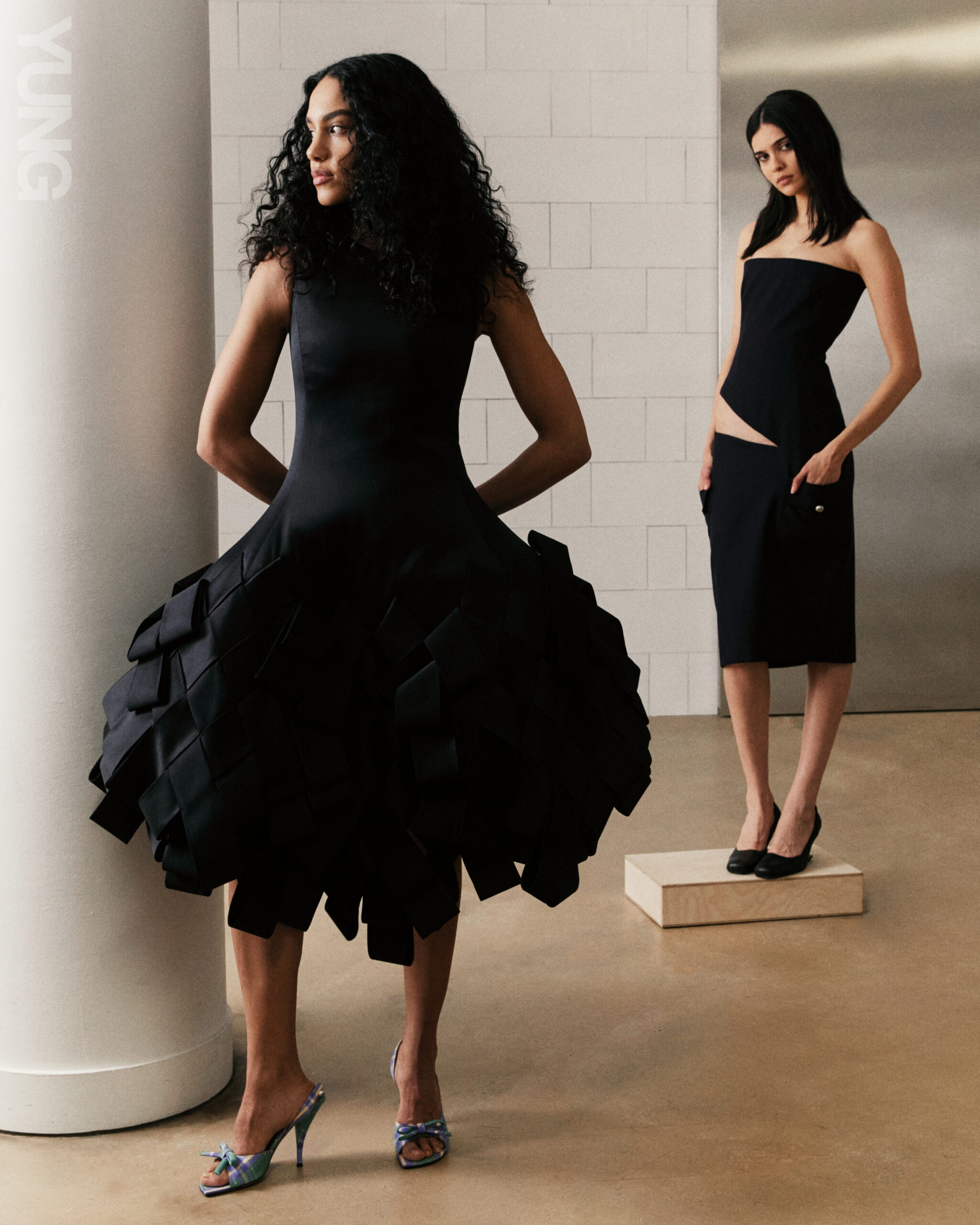
Meriam Turki on Becoming
There is a quiet clarity to Meriam Turki. The kind that does not demand attention but holds it anyway. As a new face stepping into the global fashion space, her presence feels both instinctive and deliberate, shaped not by the industry’s expectations, but by her own sense of self.
Like many models, she didn’t enter fashion full of immediate confidence, and what soon followed was a process of transformation. What once marked her as different became her point of power. That shift, from self-consciousness to ownership, now defines the way she moves through the industry: on her own terms, with intention.
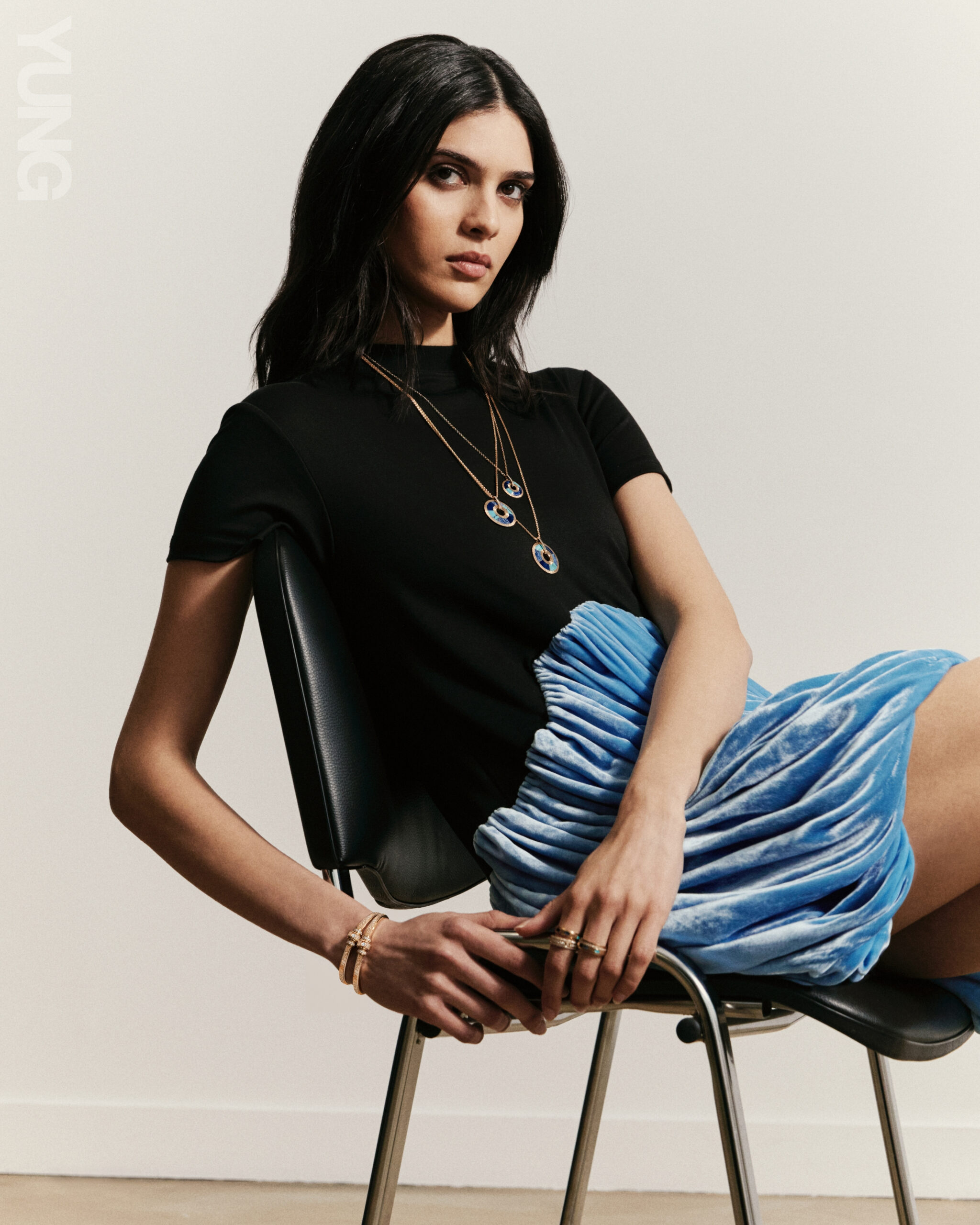
Turki belongs to a generation of Arab models redefining visibility. Not through noise, but through presence. In an industry that often frames identity before individuals have the chance to define it themselves, she resists easy categorization. Instead, she builds something more personal, grounded in honesty, memory, and a sense of responsibility to where she comes from.
Her story is still unfolding, but what’s clear is her direction. She is not here simply to fit into fashion, but to reshape the space she occupies within it.
Your presence feels both instinctive and intentional. How do you approach building an identity in an industry that often tries to define you first?
I don’t try to fit into a definition. The industry can suggest an image, but I choose what feels true and build from there.
As a model emerging on a global stage, what parts of your background or personal story do you feel most responsible for carrying into your work?
I was always tall growing up, and I used to get bullied for it. Modelling came from turning something I was insecure about into something I could feel proud of.
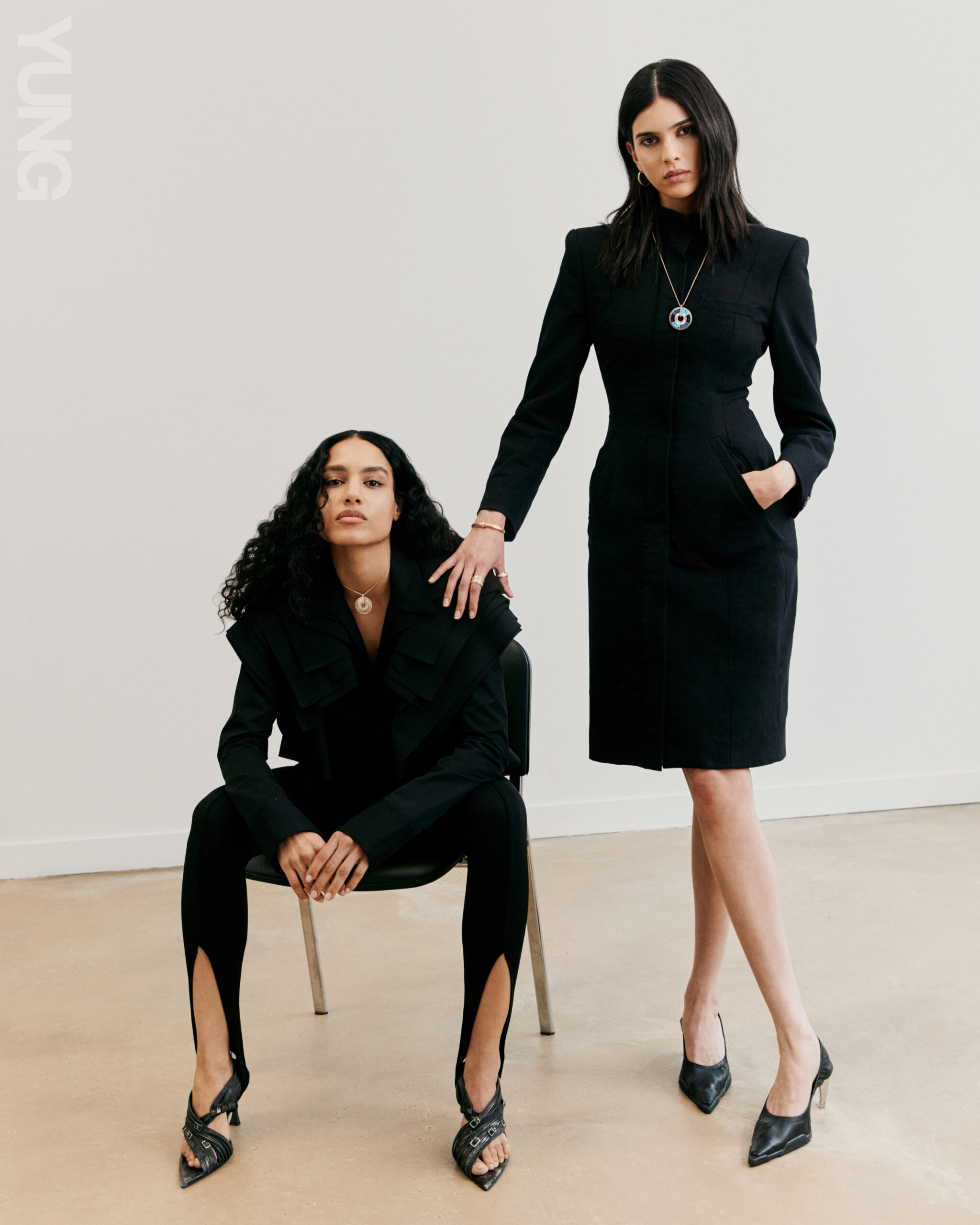
Fashion often shifts between authenticity and performance. Where do you personally draw the line between the two?
I think the line is honesty. I perform for the camera, but it has to come from a real place. I don’t disconnect from myself. I try to keep something real in it.
What has been a defining moment so far that made you see modelling not just as work, but as a platform?
A defining moment was seeing how proud my family was and how they pushed me to go further.
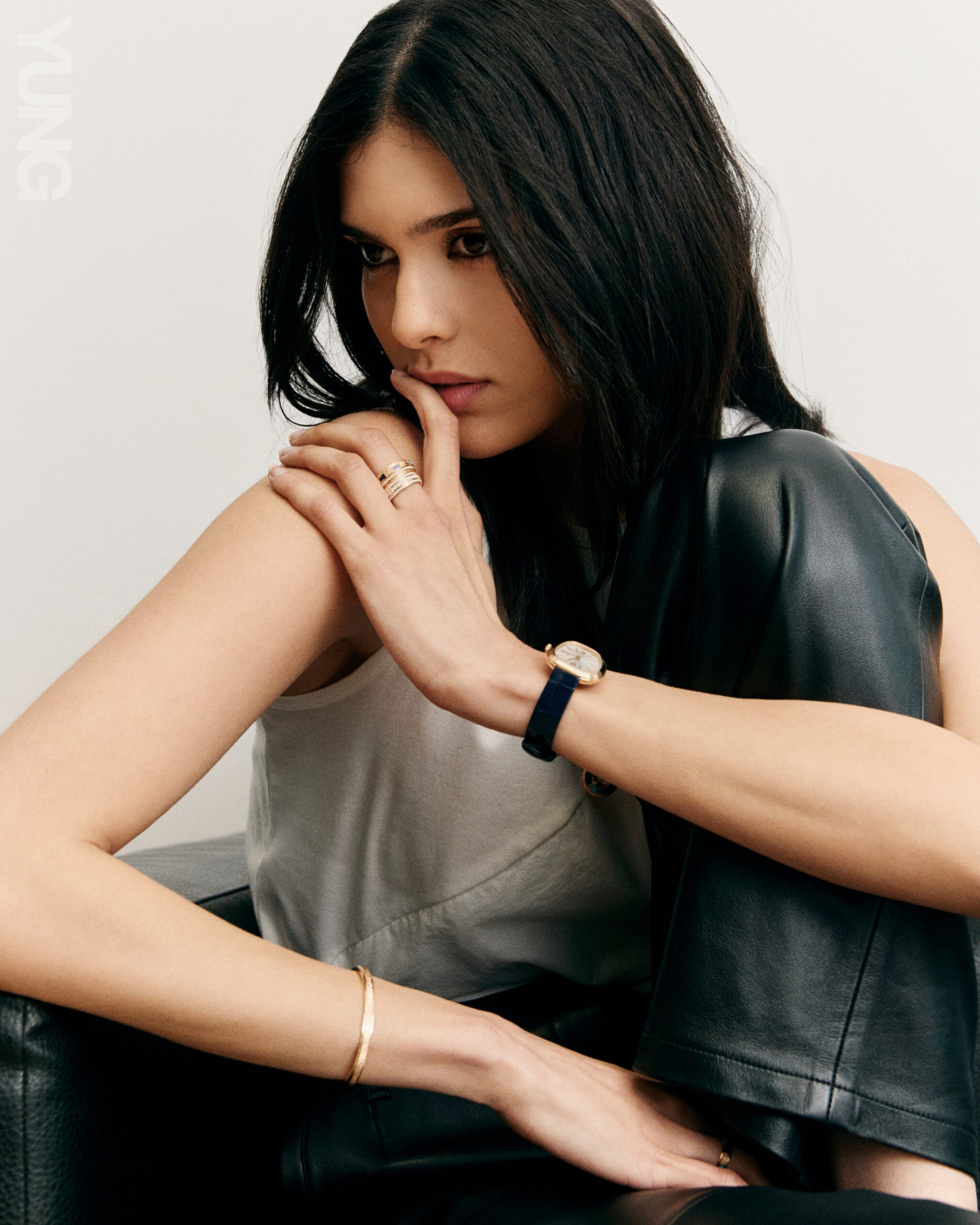
Looking ahead, what kind of narratives or images do you want to be part of shaping within the fashion landscape?
I want to help create more presence and visibility for Arab women in fashion on a global level.
With everything happening in the region, what does ‘home’ mean to you? Where is home for you?
I know it sounds overused, but I always say home is where the heart is. My country is where I feel the most safe and thriving, near my family.
Shahed Elnakhlawy: A Voice in Motion
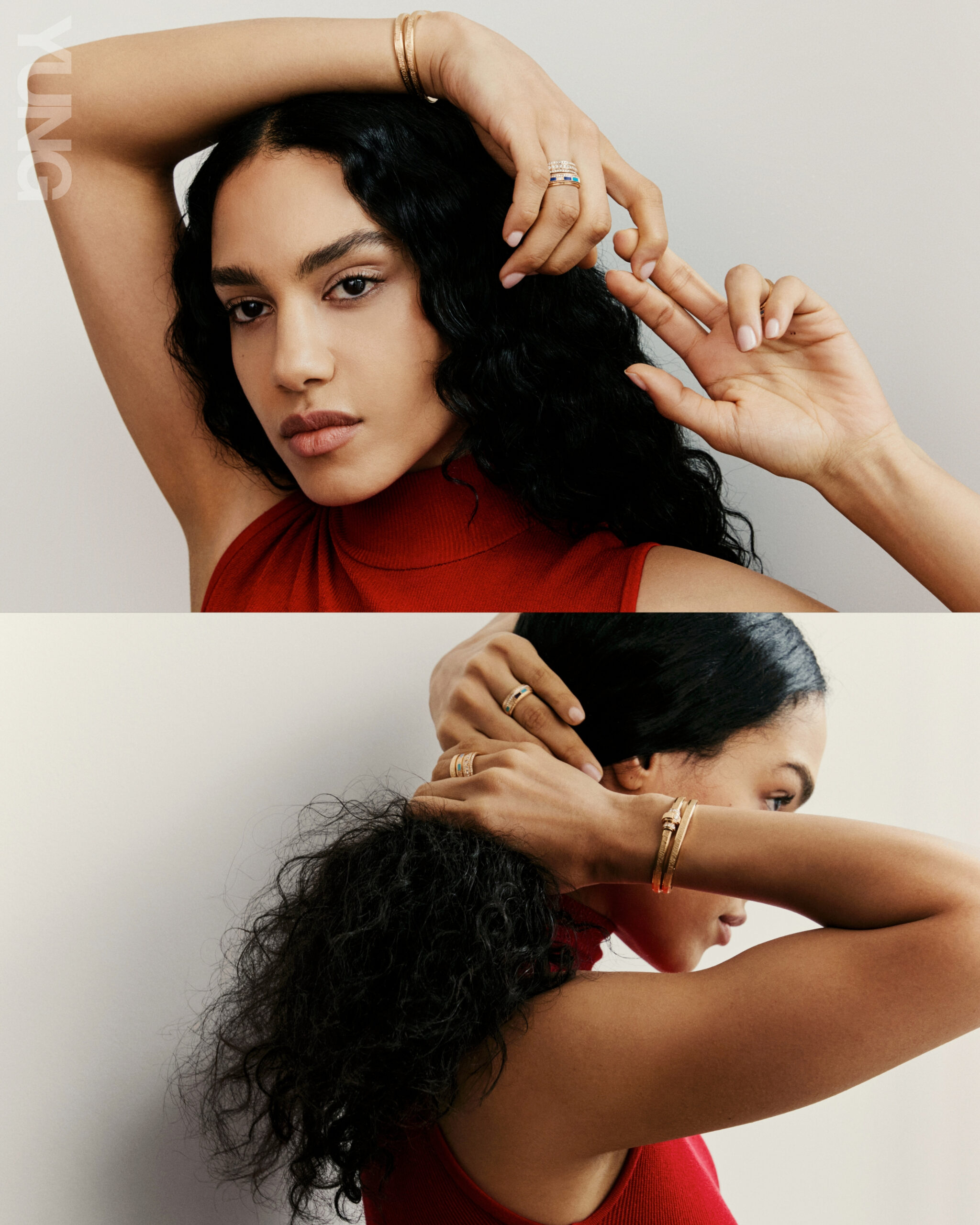
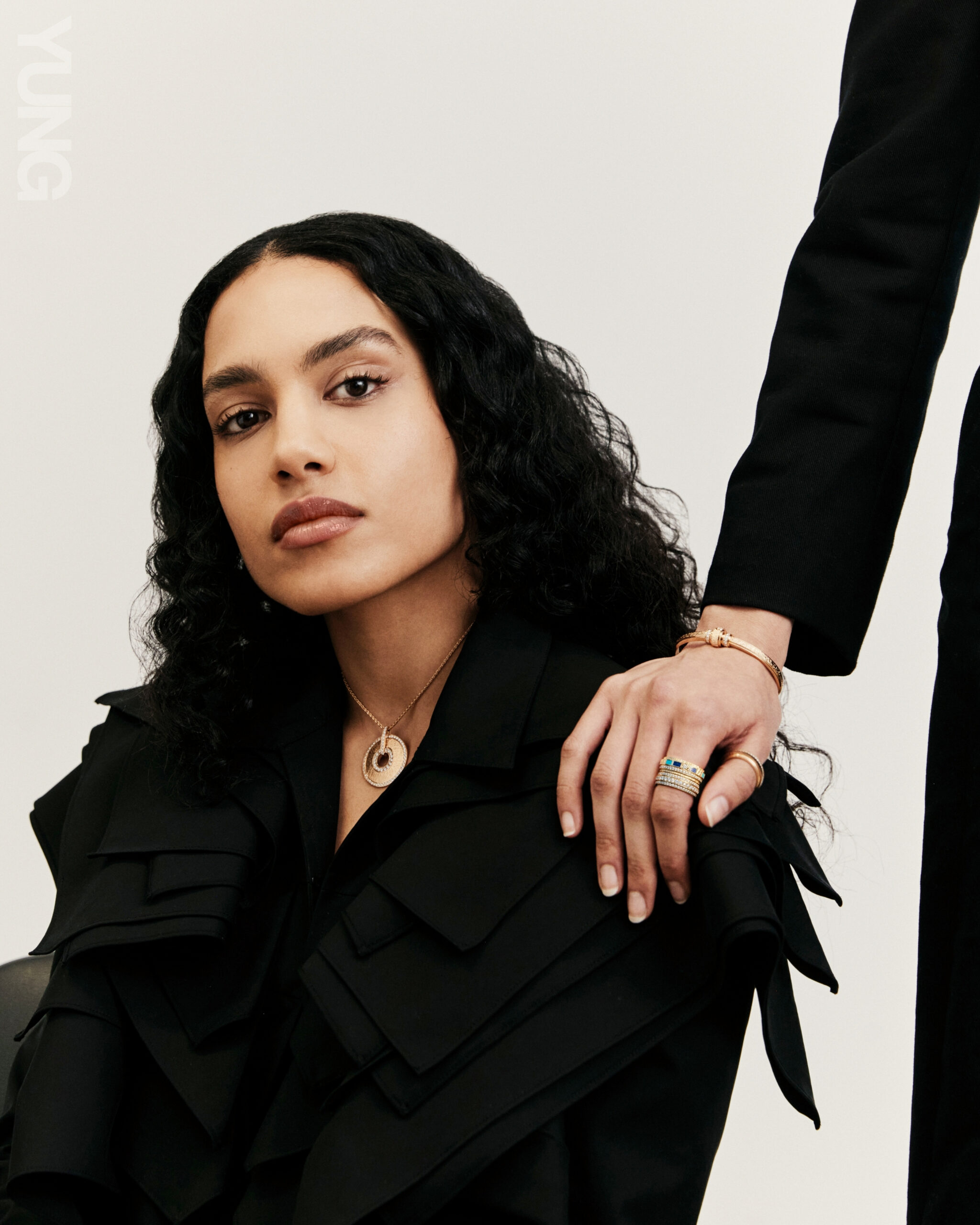
Shahed Elnakhlawy moves through fashion with a quiet certainty, one that resists simplification. Of Jordanian, Palestinian, and Egyptian heritage, her presence extends beyond the visual, shaped by a deep awareness of identity, culture, and the spaces she occupies. Discovered in the aftermath of the pandemic, at a moment when the industry began turning its gaze more intentionally toward the Arab world, Elnakhlawy emerged not only as a model, but as a voice navigating that shift from within.
Her work reflects a balance between global exposure and personal grounding. Whether on set or through her Arabic micro-learning platform, she approaches fashion as a dialogue, one that allows her to challenge assumptions, protect authenticity, and build connections across cultures. In an industry often driven by image, Elnakhlawy is part of a new generation redefining what representation can hold, and what it can say.
Your work carries a clear sense of cultural identity. How do you consciously bring your Jordanian, Palestinian, and Egyptian heritage into your modelling, beyond aesthetics?
I bring my heritage to set mostly when I work with clients looking to expand in the Arab world. There are moments where I become a kind of cultural sounding board, and they turn to me to ask if a concept feels aligned or respectful. For example, when I shot a Louboutin capsule for Ramadan, it was a very collaborative process where I was regularly asked if certain creative choices truly resonated with our cultural identity. It’s rewarding to be valued for my perspective, not just my looks.
You’ve moved across different fashion capitals and agencies. How has navigating these spaces shaped your understanding of representation in the industry today?
I was scouted just after the pandemic, at a time when the industry started looking more closely at the Arab world, as the region’s profile was growing in fashion, art, and tourism. In castings and on set, it became clear that models were often booked to represent a specific region so audiences could relate. That’s when I truly understood how fashion intersects with identity.
However, I wanted to take that representation further than just an image. That’s why I started my Arabic micro-learning series on my platforms (@shahedelnakhlawy). It allows me to actively keep that link alive between Europe and the Arab world, challenge clichés, and build a space where I can share my heritage directly with my community.
From high jewellery to beauty campaigns, your portfolio is diverse. What draws you to a project, and how do you adapt your presence across such different visual worlds?
What draws me to a project is the story behind it: its heritage, its savoir-faire, and the depth it carries beyond the product itself. I’m drawn to houses that have a legacy to pass on rather than those that just want to push a product. Working with a house like Hermès, for example, feels entirely different; there is a real sense of continuity and intention that you feel on set.
In terms of adapting, I look at the mood board to get the narrative and adjust my energy accordingly. What I’ve learned is that keeping it effortless is key. That authentic energy is always what makes the best pictures and works the best with clients.
As someone building a global career, have you ever felt the pressure to dilute or redefine your identity to fit certain markets?
I’ve experienced moments — luckily, only a few — where my image was altered to fit certain market expectations. I’ve seen my features retouched to narrow my nose, my natural curls straightened, or makeup artists using foundation that didn’t match my skin tone to make me look either darker or lighter.
This taught me early on the importance of setting boundaries. I made it a rule to protect my authenticity and step away from jobs that require me to erase parts of who I am. Today, I only work with brands that book and work with me for who I really am.
You’re often described as “one to watch.” How do you define success for yourself at this stage, and what kind of impact do you hope to leave on the industry?
I define success as the moment I am no longer just a face, but a voice. It’s when my work creates enough presence that people become curious about the story behind the image, and I actually have the platform to share it.
At this stage, success to me is about challenging the narrow idea of how an Arab woman is ‘supposed’ to be. Whether on set or through teaching my language and culture online, I want to expand that image and build a meaningful bridge across both regions.
With everything happening in the region, what does ‘home’ mean to you? Where is home for you?
Home, for me, is not a single place but the intersection of different lives. I was born in Kuwait, grew up between Jordan and Egypt, and now live in France—each of these places has deeply shaped who I am.
Home is the continuity between them. It’s the space where I can hold all these parts of my identity together, without having to choose or simplify for anyone’s convenience. Today, France feels like home because it’s where I’ve been able to become independent, build the life I chose, and live fully as myself.
For stories of fashion from across the region, visit our dedicated archives and follow us on Instagram.