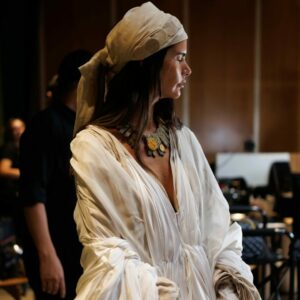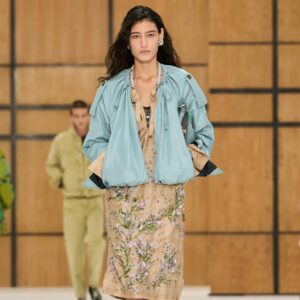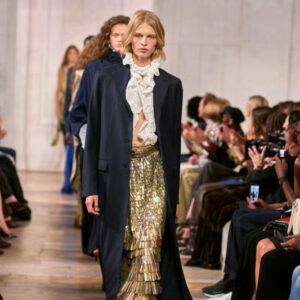
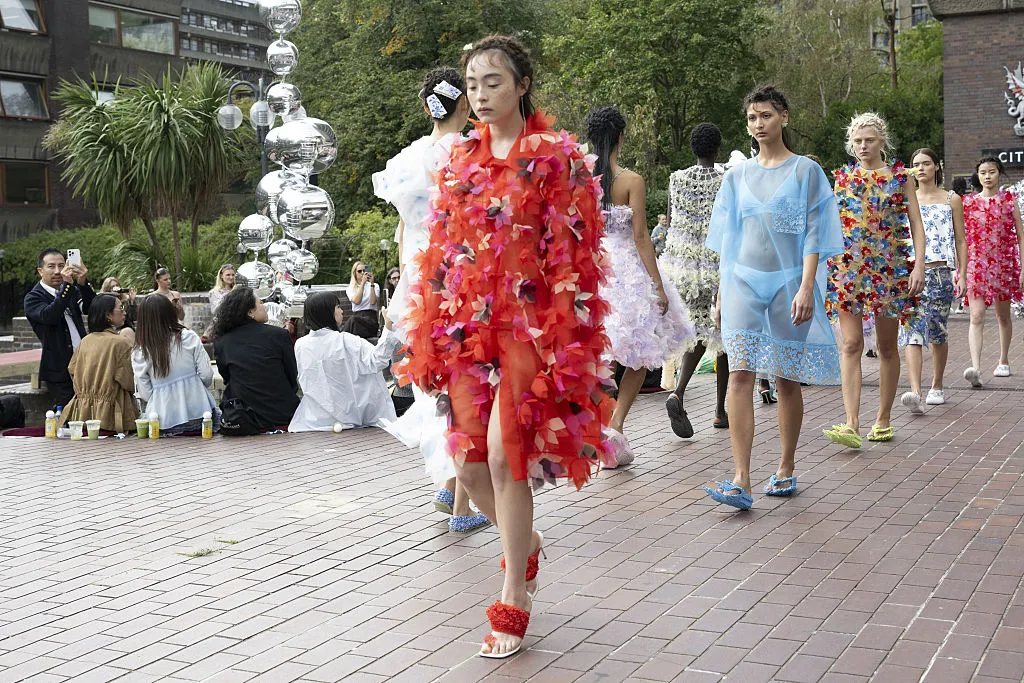
London Fashion Week SS27 unfolded across five days, with 47 catwalk shows, 23 presentations, 10 digital activations and 53 evening events. British fashion’s institutions were in motion: established houses welcomed new leadership, major names returned to the schedule and independent labels confronted the realities of building a business in London. Christopher Kane’s debut for Mulberry brought many of those questions together.
Mulberry
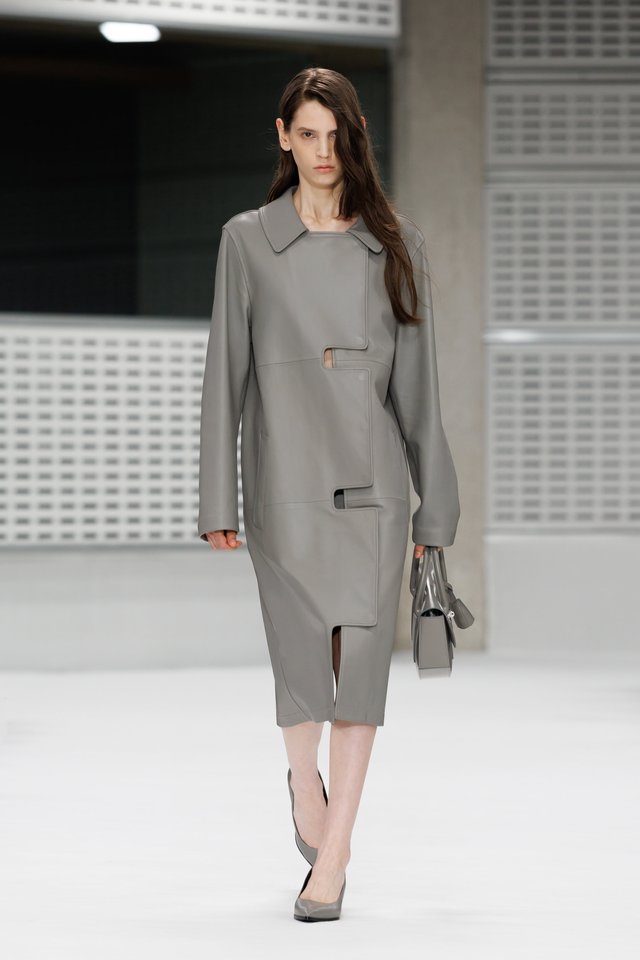
Christopher Kane returned to London Fashion Week with a pair of pruning shears. His first collection as Mulberry’s creative director used the image of a tree surgeon cutting back branches to encourage new growth, referencing the tree in the house’s emblem and his own task within the brand. At the Queen Elizabeth II Centre, Kane reduced Mulberry to leather, hardware and familiar construction: axe-shaped bags carried the Postman’s Lock, the Bayswater’s notched flap became a recurring motif and the archival Piccadilly returned in enlarged mock-croc.
Those cuts moved into iridescent organza dresses and split-hem knitwear, while harness-like backpacks, vinyl checks, oversized polo shirts and long parkas brought together Kane’s interest in coded desire and his memories of football casuals near Glasgow. The collection kept Mulberry’s recognisable elements visible while shifting their scale and context. For a designer returning after the closure of his own label, and a house re-entering the LFW schedule, it offered a disciplined first step.
Alexander McQueen
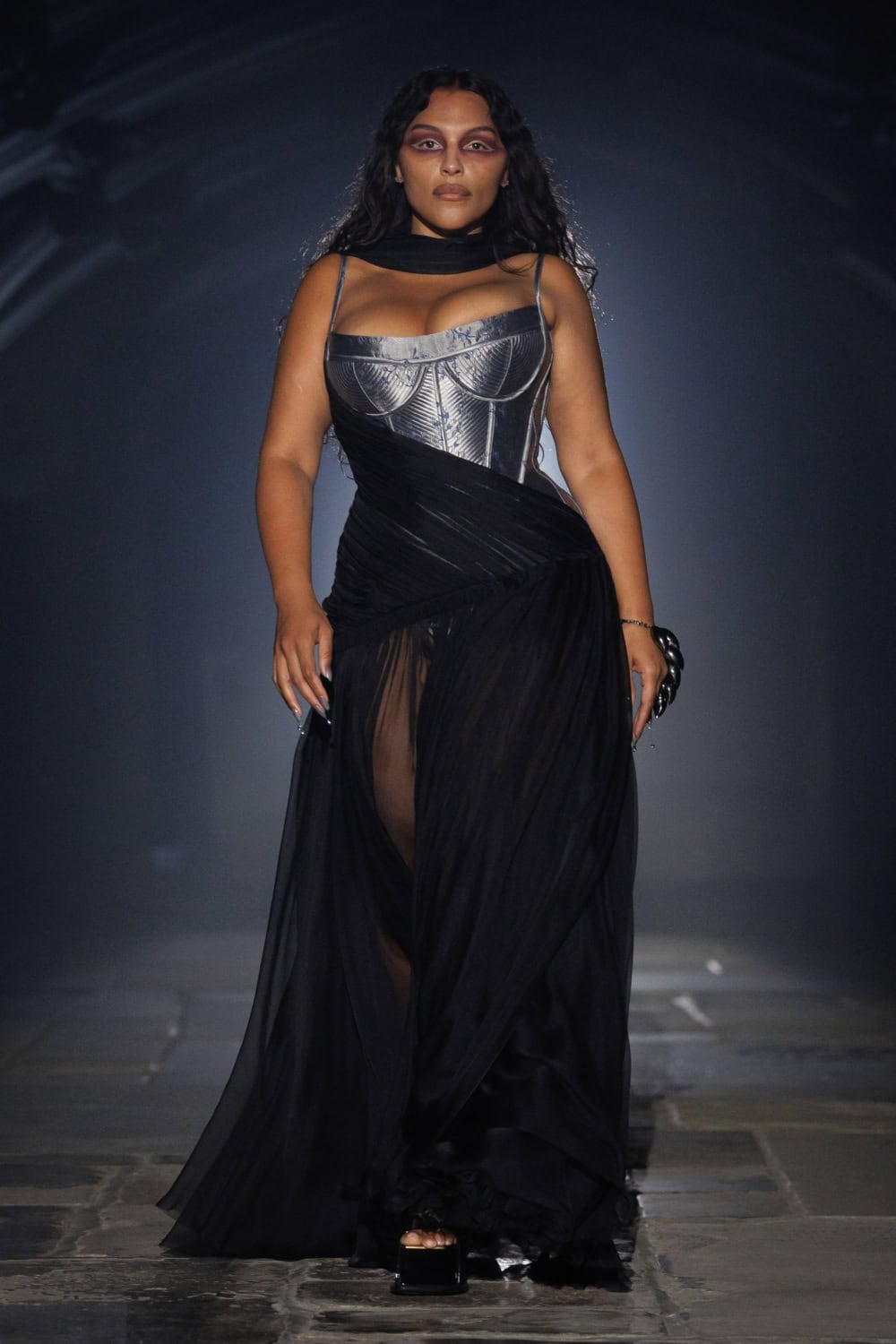
Seán McGirr staged Alexander McQueen in the Undercroft of Lincoln’s Inn Chapel, connecting religious imagery with London rave culture. Huntsman tailoring opened into wing-like cuts, skull lace met Shaun Leane harnesses and neon interrupted the darker palette. McGirr used the house’s archive alongside the clubs, tailoring and architecture of the city around it.
Simone Rocha
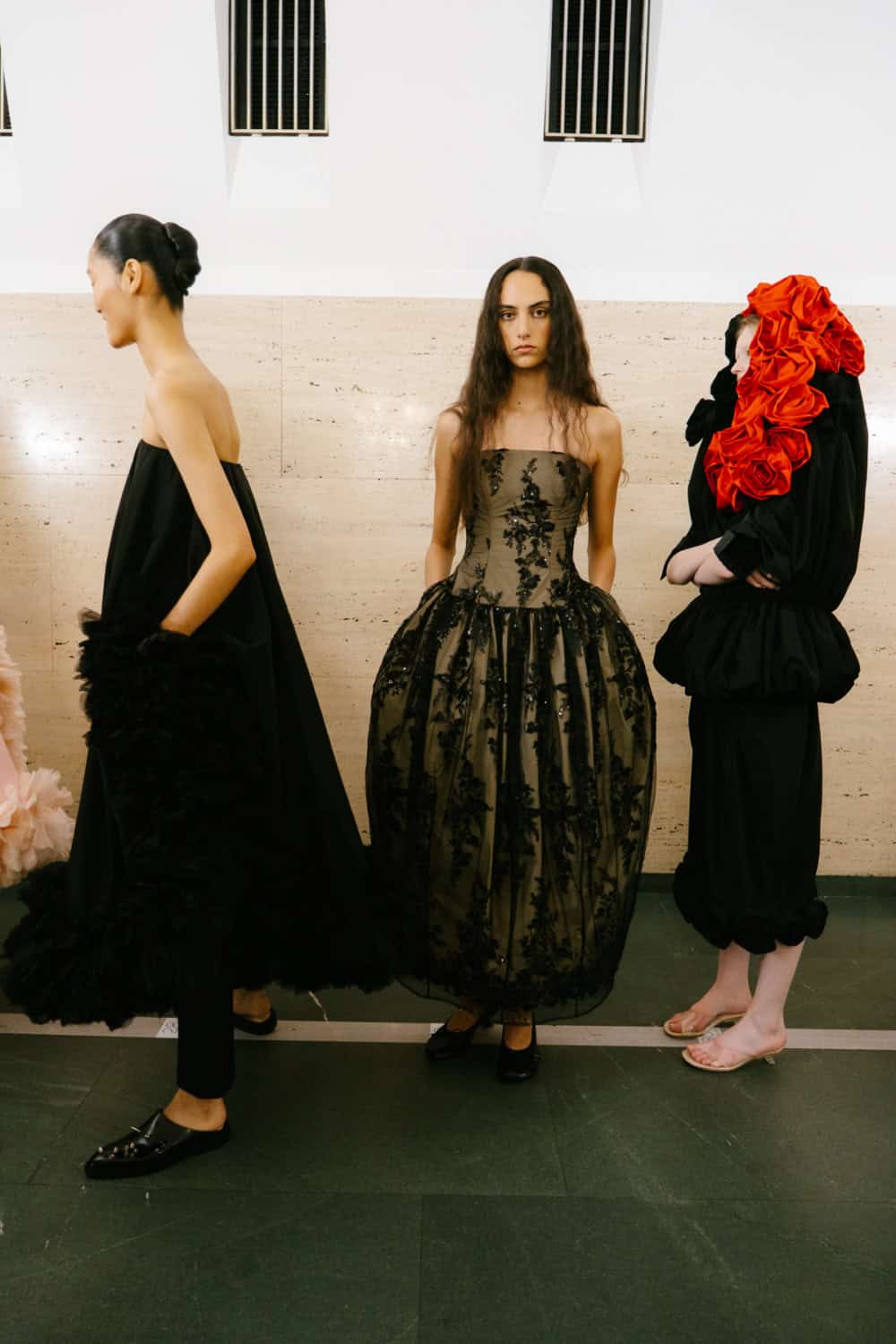
At the Old Bailey, Simone Rocha showed hooded bubble dresses, ruffled trapezes, embroidered tulle and sequins layered over lingerie. Floral hoods replaced feathers, while workwear jackets expanded into rounded, decorated forms. Sheer construction and exposed underlayers brought greater ease to Rocha’s ceremonial language, with a blue velvet mini trapeze dress capturing the season’s balance between occasionwear and everyday possibility.
Erdem
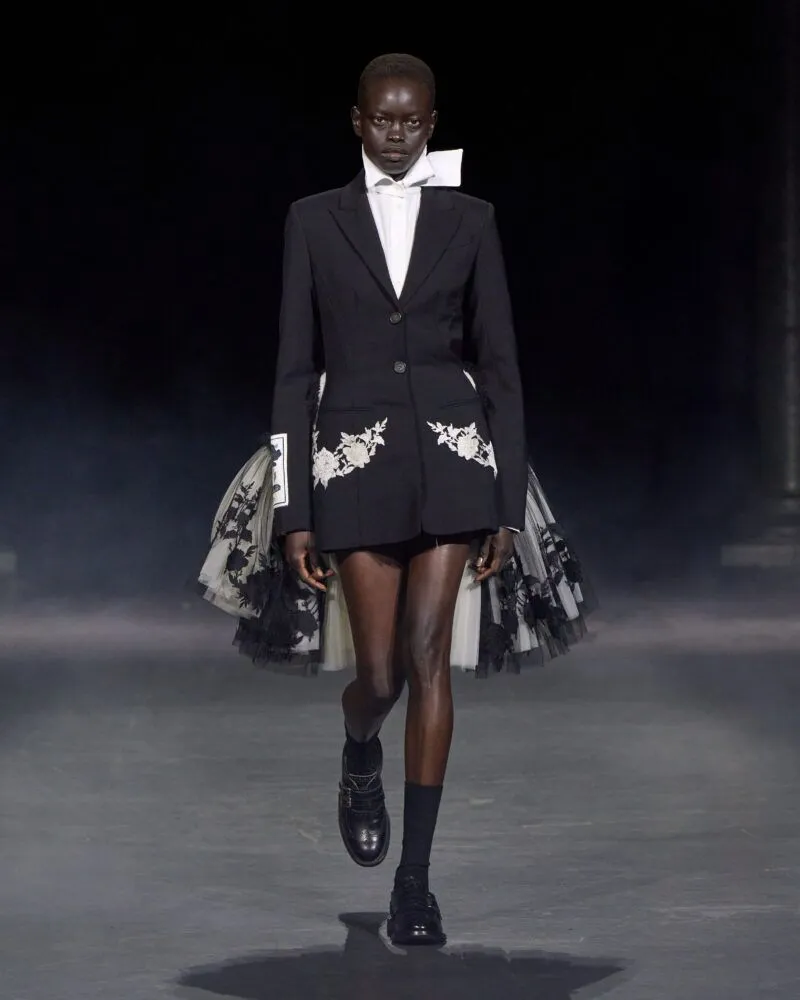
Erdem Moralioglu drew on Barbette, the American trapeze and drag artist who performed across Europe during the early 20th century, for inspiration. Ostrich feathers, pannier dresses, beaded bodices and hip-to-floor fringing appeared beside androgynous tailoring and raw-edged silk minis. The collection embraced dressing as transformation, using movement and scale to create its drama.
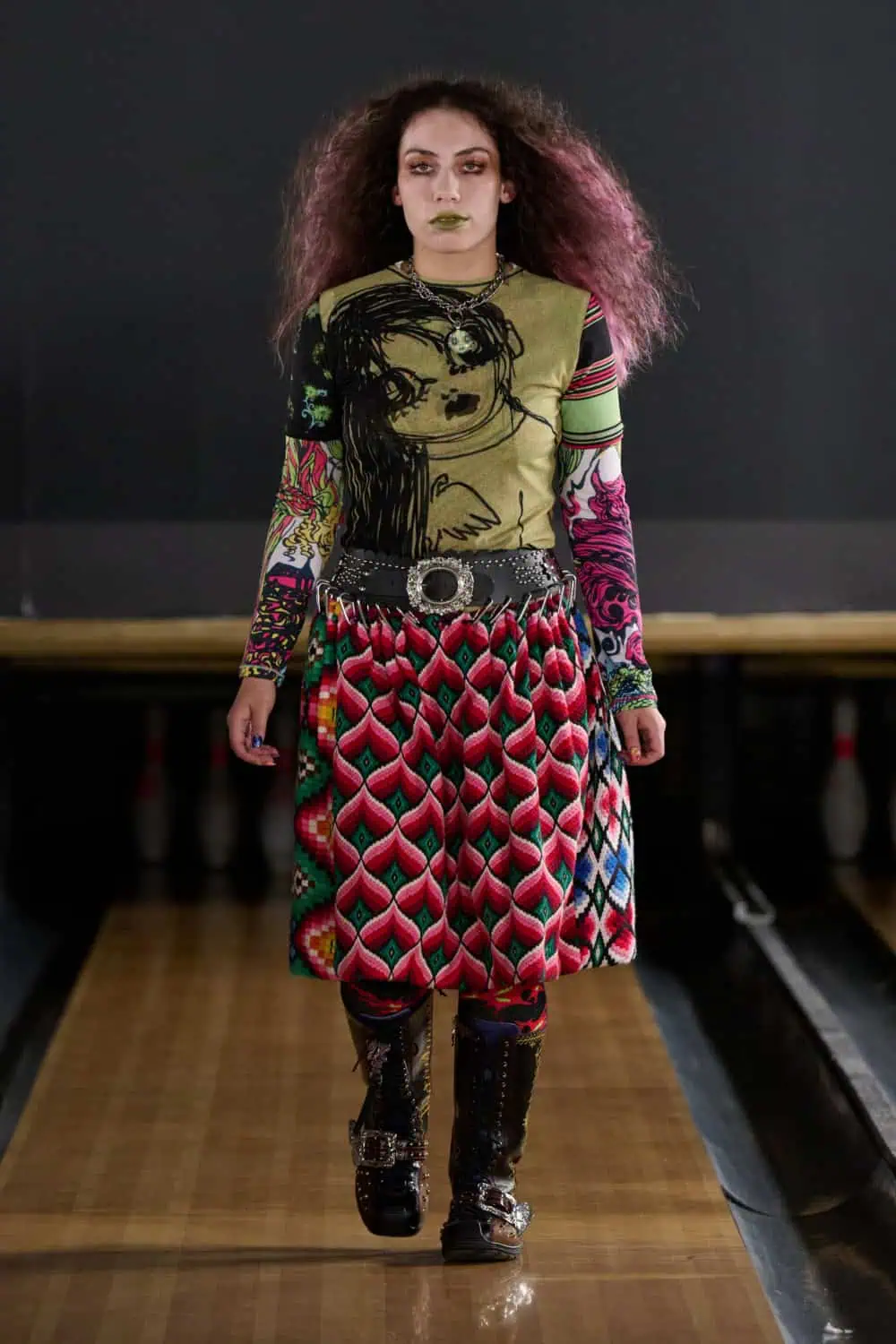
Chopova Lowena
Chopova Lowena moved into a bowling alley, crossing Slavic folklore with the story of 1950s champion bowler Marion Ladewig. Supernatural figures emerged through pointed silhouettes, capes, hoods, lace and faux fur, while bowling shirts and striped sportswear supplied the American setting. An expanded Dr. Martens collaboration and the opening of the label’s first London store suggested a business growing beyond its signature carabiner skirt.
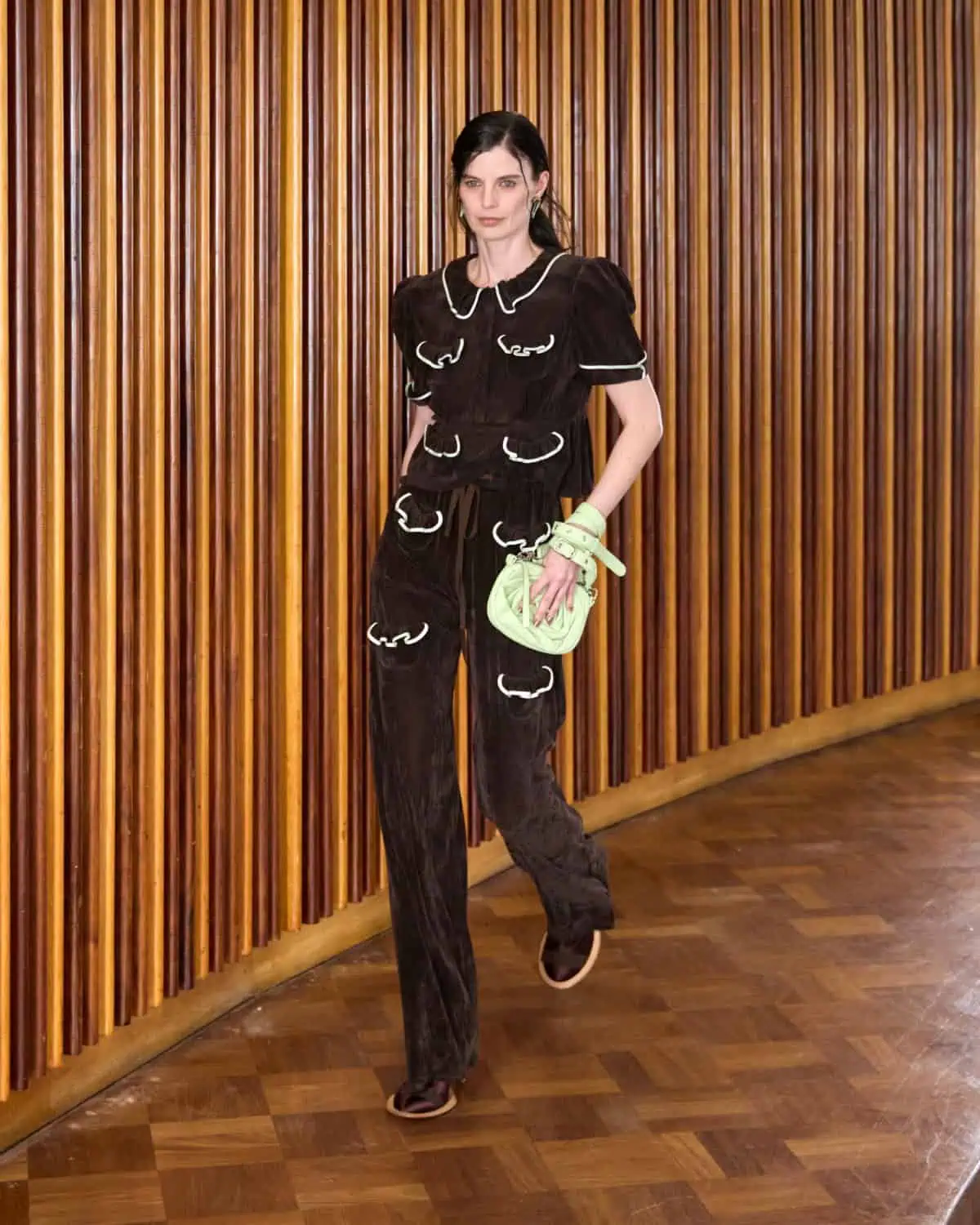
KNWLS
Returning to the London schedule, KNWLS explored dressing and undressing through twisted jersey, liquid satin, exposed lingerie and denim. Charlotte Knowles and Alexandre Arsenault revealed and concealed the body through precise draping and layered construction, proving that the label’s sensuality rests as much on technical control as attitude.
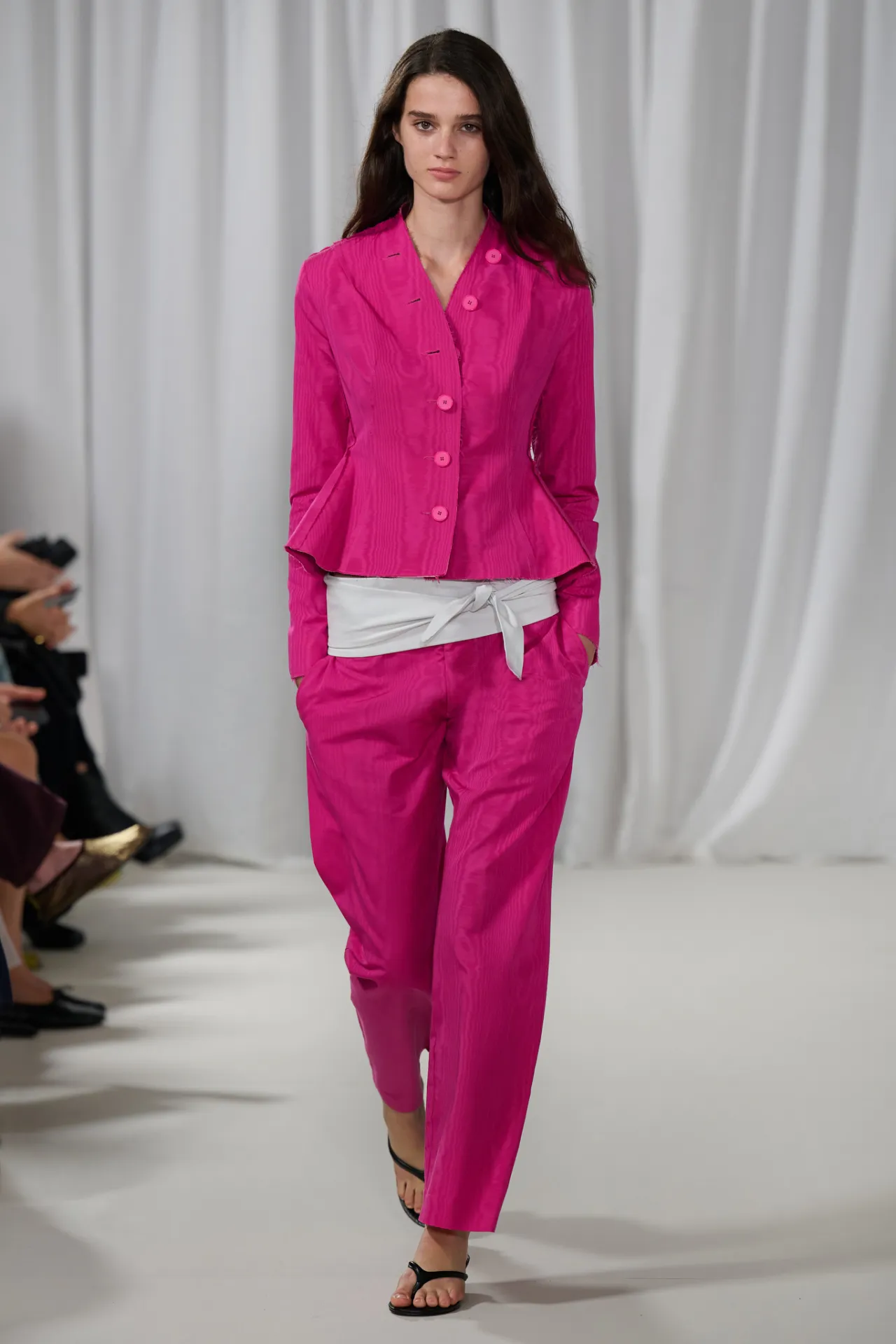
Talia Byre
Talia Byre offered one of the week’s clearest examples of a young London label settling into its identity. Inspired by British artist Dillwyn Smith, the collection moved from the designer’s familiar striped knits towards knotted skirts, cargo pieces and easy summer dresses. The clothes retained Byre’s off-centre femininity while presenting a wardrobe with greater range.
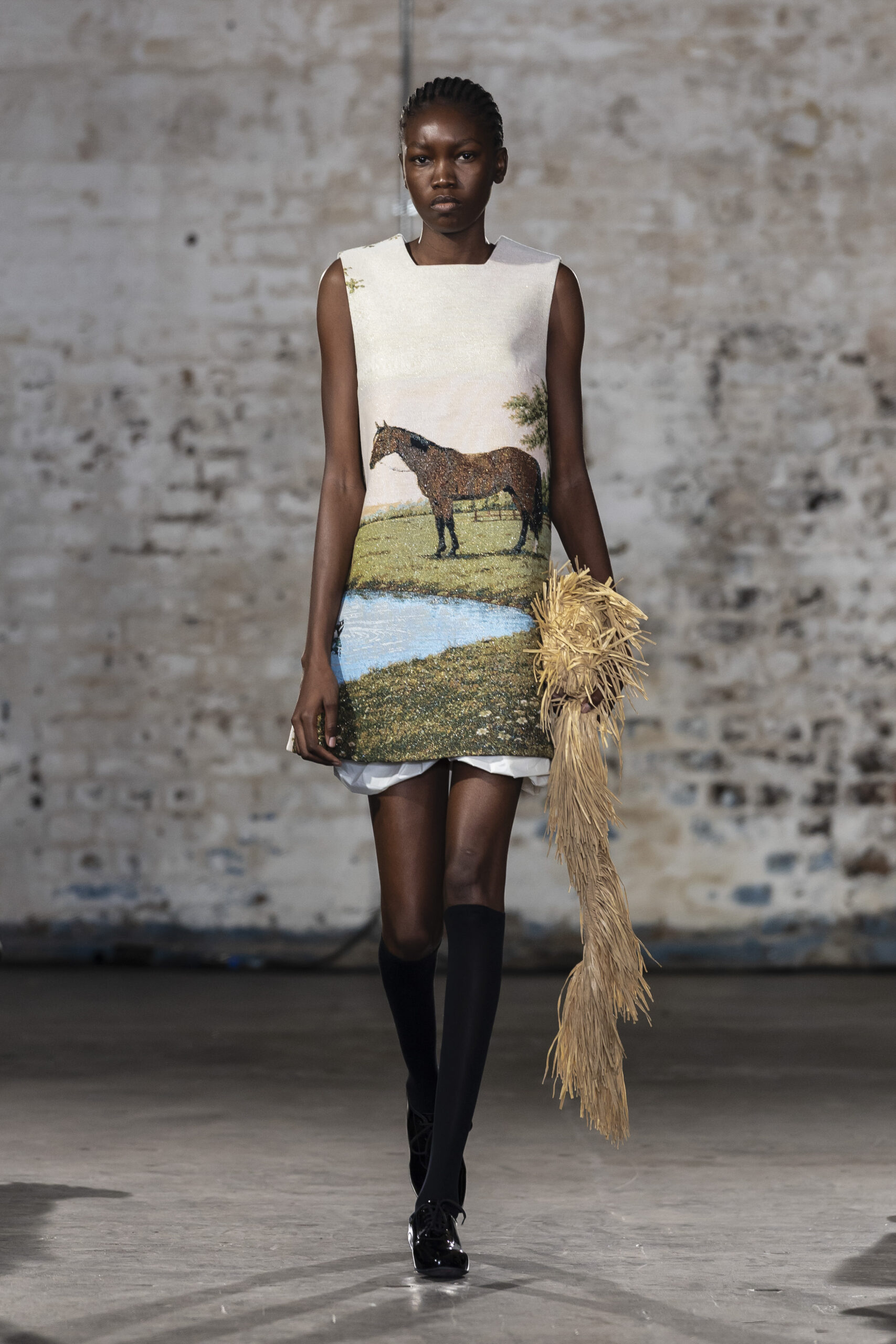
Keburia
Georgian designer George Keburia opened London Fashion Week on 17 September with his first menswear collection, shown alongside womenswear. British countryside references – equestrian tailoring, prep-school stripes, Western fringing – were folded into Keburia’s usual maximalism: structured shoulders, oversized pockets, washed canvas, metallic tweed and custom jacquard printed with horses and mallards. Rhinestone musical-instrument motifs and pig insignias on belts kept the mood playful, while one look carried a guitar reportedly painted with an anti-Putin message, a rare political gesture inside an otherwise tongue-in-cheek show.
AGRO Studio
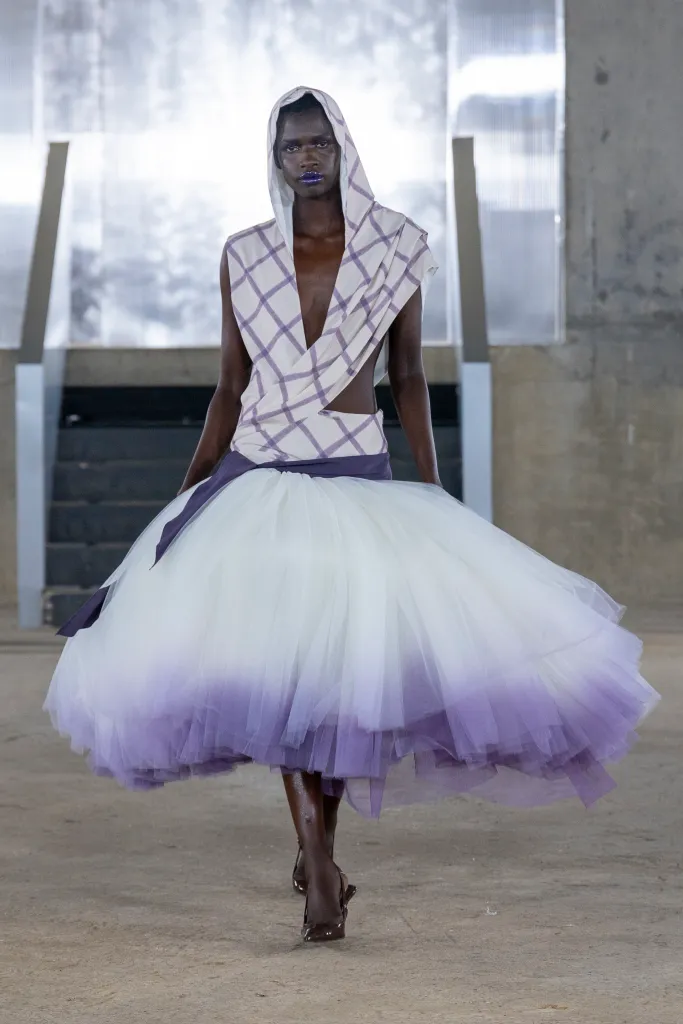
AGRO Studio, founded by George Oxby and Angus Cockram, built its SS27 collection, titled “Glass Body”, from roughly 30,000 hand-stitched antique glass buttons, with some corsets using up to 10,000 alone. Historical dress, ballet, equestrian sport and Y2K clubwear blurred into drop-waist, skin-tight silhouettes that opened into tulle volume. 2026 marked the brand’s first season offering ready-to-wear for public purchase, made largely from end-of-roll fabric. “We’re maturing into our design, stripping it back, but also highlighting the craftsmanship,” said Oxby, whose past clients include Madonna, Lady Gaga and JADE.
Natasha Zinko
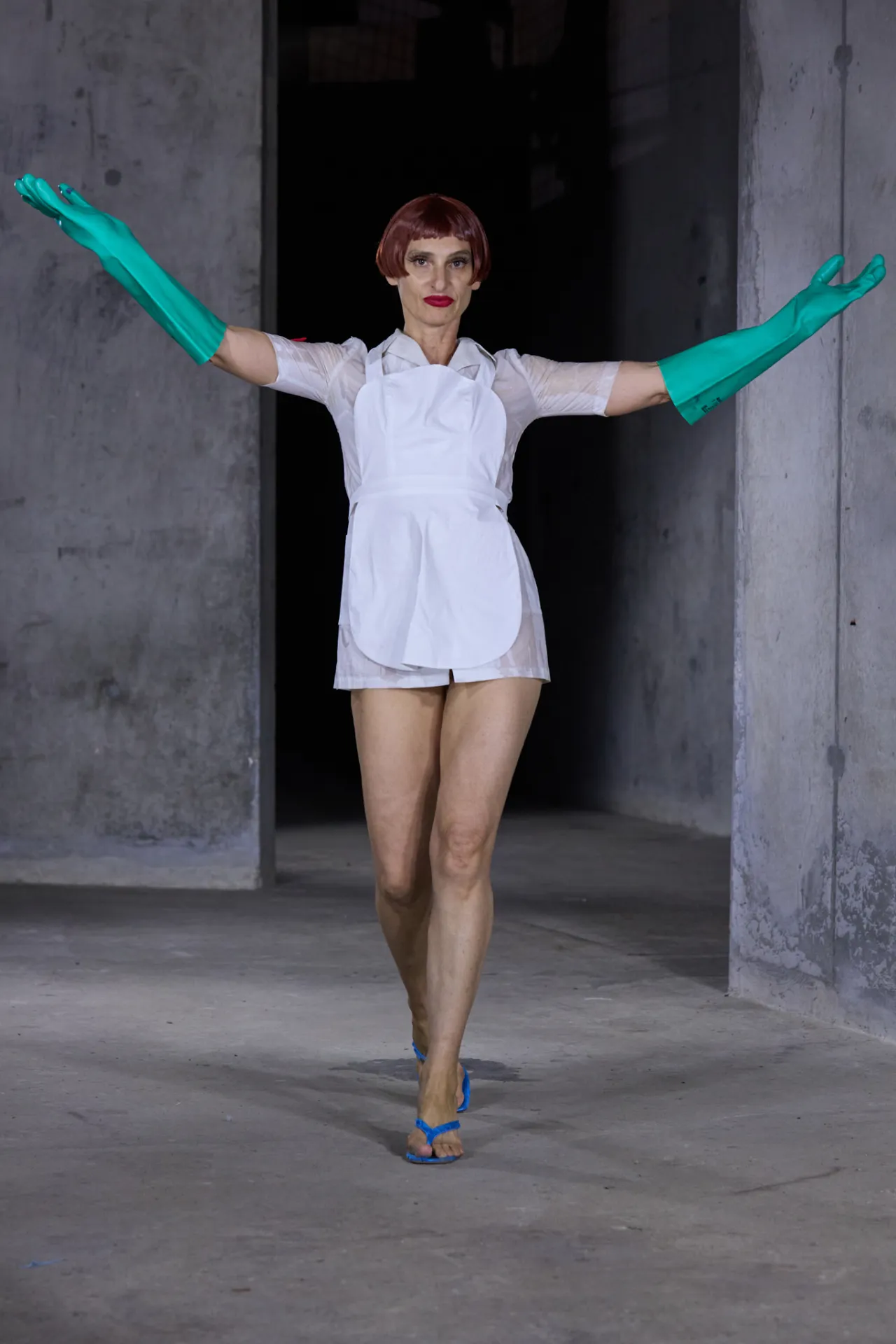
Natasha Zinko staged “Pay Per View” at Collins Music Hall in collaboration with OnlyFans, seating the audience in a central pit while models appeared in illuminated cell-like openings across the venue’s mezzanines – a literal panopticon. Lingerie-as-outerwear, X-ray graphics and shrunken tailoring mixed with cowboy hats and pieces branded “Only Fanz” and “Pay for View” across roughly 42 looks. “We the Modern Humans walk out of our homes into a world where any one of us may be under numerous kinds of surveillance anytime,” Zinko said. Katie Price, Kelly Osbourne and Drea de Matteo attended, and singer Tamta made her runway debut.
Mowalola
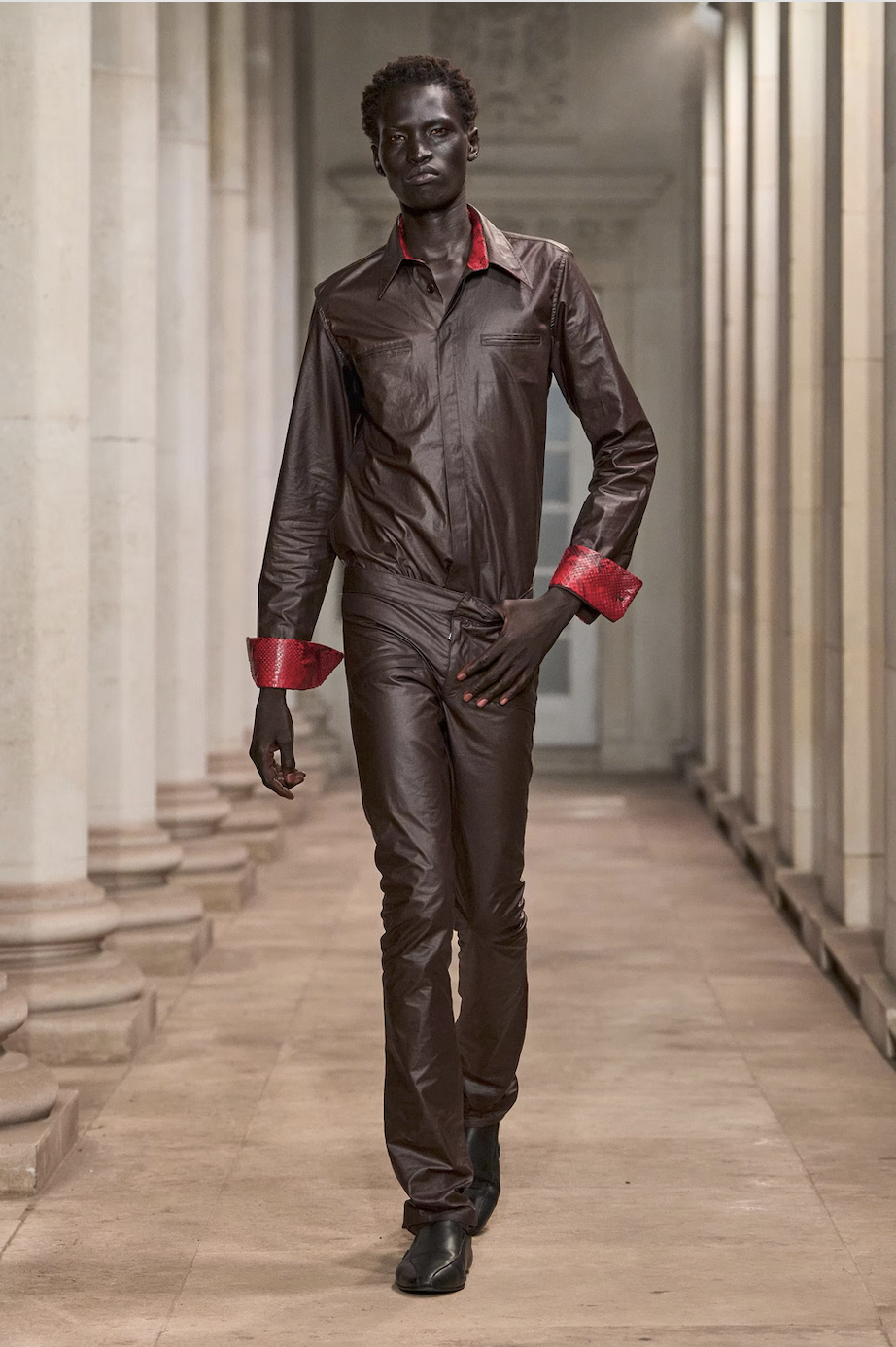
Mowalola Ogunlesi presented “The Hunger” on the evening schedule, pairing her signature body-conscious sensuality with a debut Air Jordan 14 collaboration – three new patent-leather and croc-embossed colourways shown on the runway. Second-skin chiffon, eelskin dresses, suede underwear and hand-beaded gowns made in Nigeria ran through a skin-toned palette, closing on a gown built from tiles of smashed plastic plates, made with the upcycling label Tô Genesis. The show framed desire as autonomy rather than performance, narrowing the gap between Mowalola’s hyper-sexualised codes and a mainstream sportswear crossover.
Ahluwalia
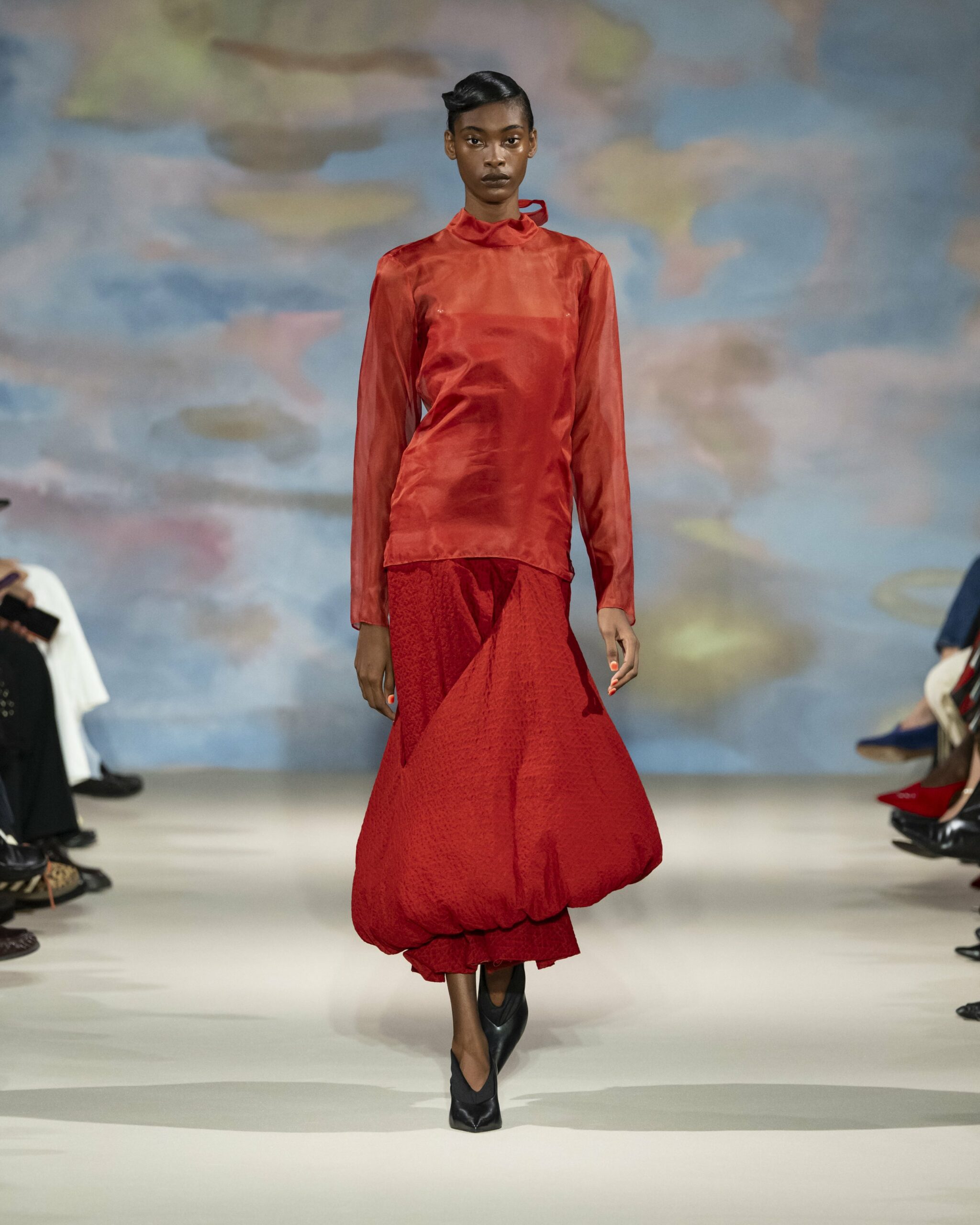
Priya Ahluwalia showed “Revel” at the Rosewood hotel on 19 September, drawing on archival photographs of off-duty Black Panther Party members and FESTAC ’77, Lagos’s 1977 festival of pan-African arts and culture. “When I drape, I think about pulling and constriction. Whereas I think that some of the pieces in this collection are about pushing,” Ahluwalia said of the expanded silhouettes – puffball tops and skirts, fringed tailoring and 1970s-leaning leather jackets in a cream-and-brown palette lifted by red, blue and green. The show also carried Ahluwalia’s third Puma collaboration, extending into ready-to-wear track jackets and two new trainers.
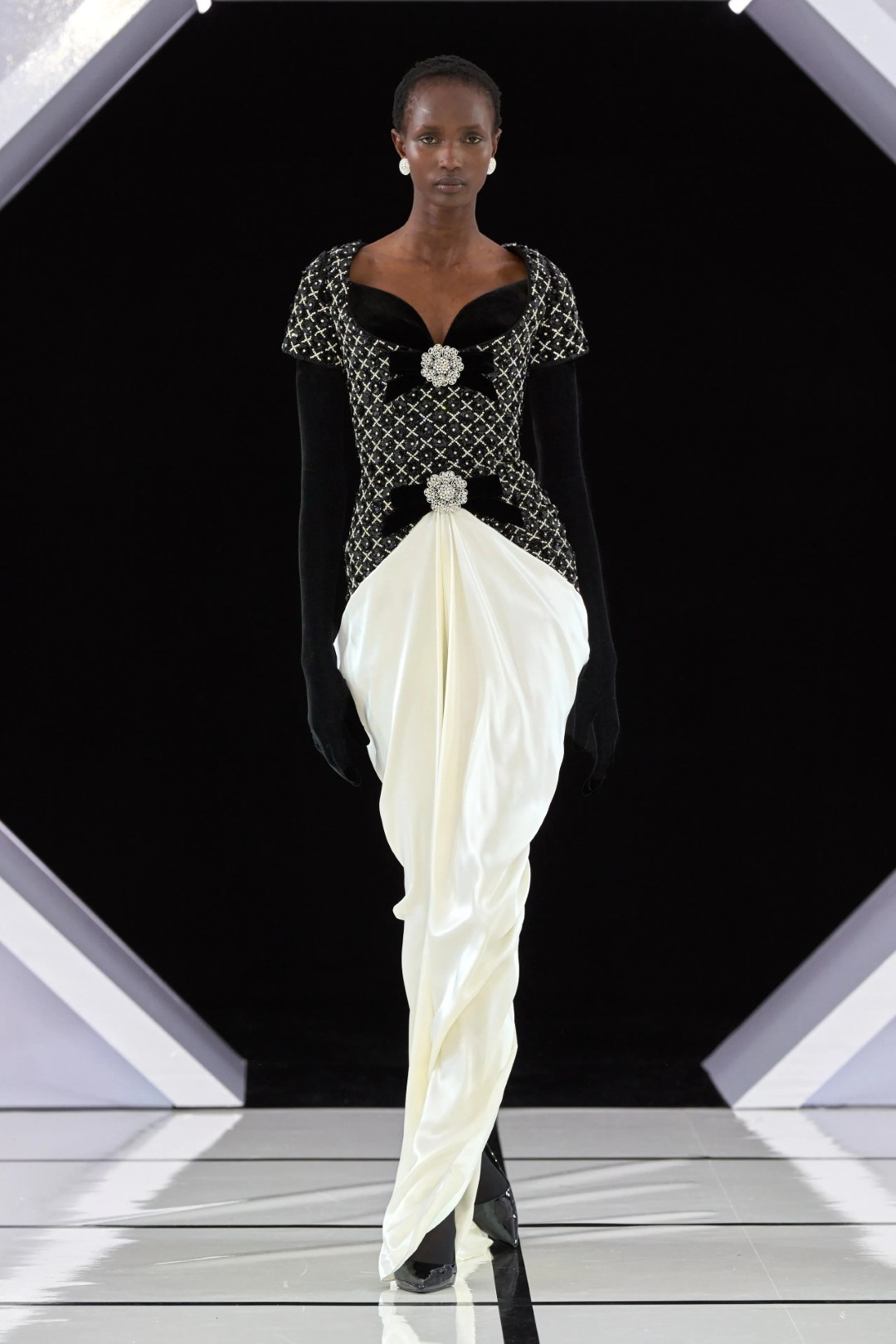
Richard Quinn
Richard Quinn showed beneath mirrored walls and chandeliers, staging his eveningwear like a walk-in wardrobe. Black velvet corseted gowns with exaggerated sleeves and dramatic trains carried ostrich feathers, embroidered florals and oversized silk roses, punctuated by powder blue and crimson. Helena Christensen closed the show in a plunging black lace gown with sheer panels and a white embroidered bird motif – a rare moment of restraint inside a collection built on maximalist glamour.
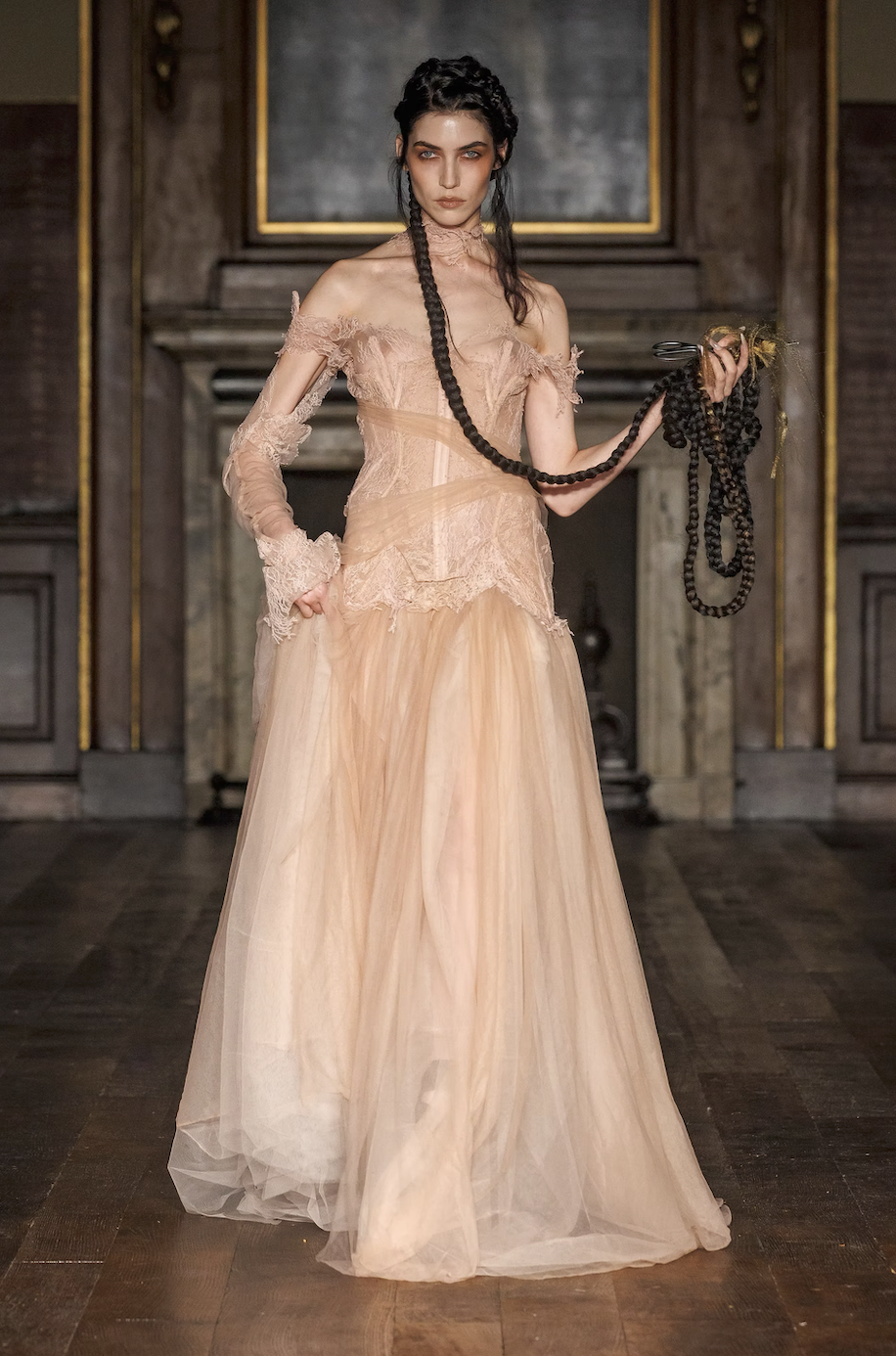
Dreaming Eli
Dreaming Eli’s Dreamers in Exile moved between designer Elisa Trombatore’s childhood in Sicily and her adult life in London. Presented at St Bartholomew’s Hospital, old photographs, domestic objects and inherited traditions became distressed silk, gauze, hand-painted surfaces and screen prints drawn from Sicilian baroque churches and tattoo imagery. Hand-cut lace exposed layers of denim and vinyl beneath, while jackets and lingerie expanded the label’s wardrobe. Memory appeared as something carried, altered and reconstructed across distance.
Beyond the runway, the Newgen roster included Petra Fagerström, Francesca Lake, Gui Rosa, Charlie Constantinou, Liza Keane and The Ouze. Lebanese-British designer Nadine Merabi also joined the official schedule with a fashion-in-conversation event centred on her Manchester-based occasionwear label.
London’s strongest SS27 collections gave history a specific function. Kane cut Mulberry back to its working codes, McGirr returned McQueen to the city and Rocha, Erdem, Chopova Lowena, KNWLS and Byre developed distinct propositions from ceremony, subculture and dress.
For more stories of fashion from across the region and the diaspora, visit our dedicated archives and follow us on Instagram.