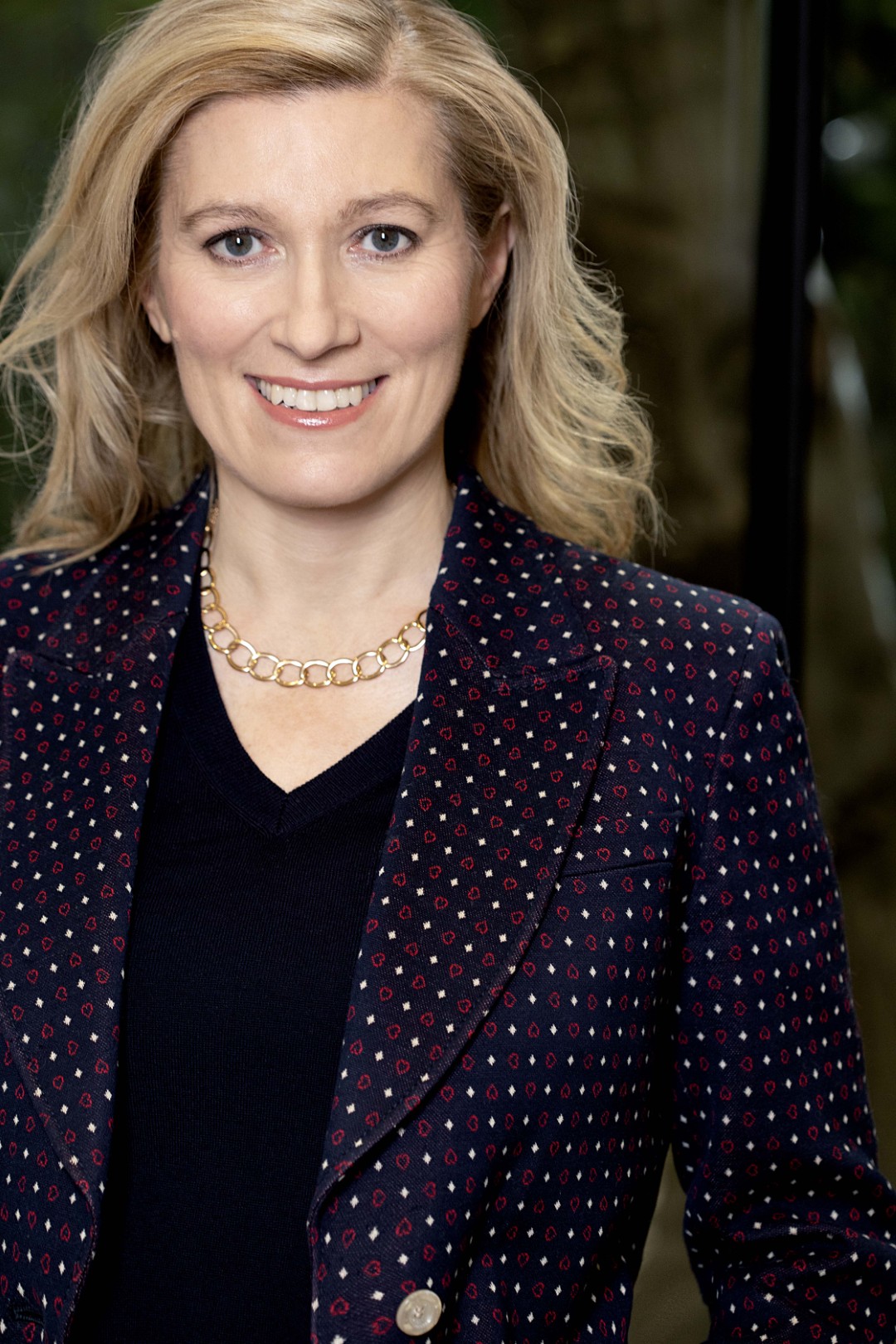
Luxury has always been good at making us want things. The next iconic bag. The next collection. The next object we didn’t know we needed. But what happens when the conversation shifts from what we want to what we actually need?
I found myself thinking about this during a whirlwind 48 hours in New Delhi, where I joined Kering for the first Indian edition of the Kering Generation Award. An initiative dedicated to identifying start-ups with ideas that could change the way the industry operates, particularly when it comes to circularity and protecting natural resources.
Behind some of fashion’s most influential names, from Gucci and Saint Laurent to Bottega Veneta, Balenciaga and McQueen, stands Kering, the French luxury group whose portfolio also includes Brioni, Boucheron, Pomellato, DoDo, Qeelin, Ginori 1735 and Kering Eyewear. In 2025, the group employed 44,000 people and generated €14.7 billion in revenue. Yet beyond the collections, campaigns and creative directors, Kering has been pursuing another ambition: making sustainability part of the creative process itself.
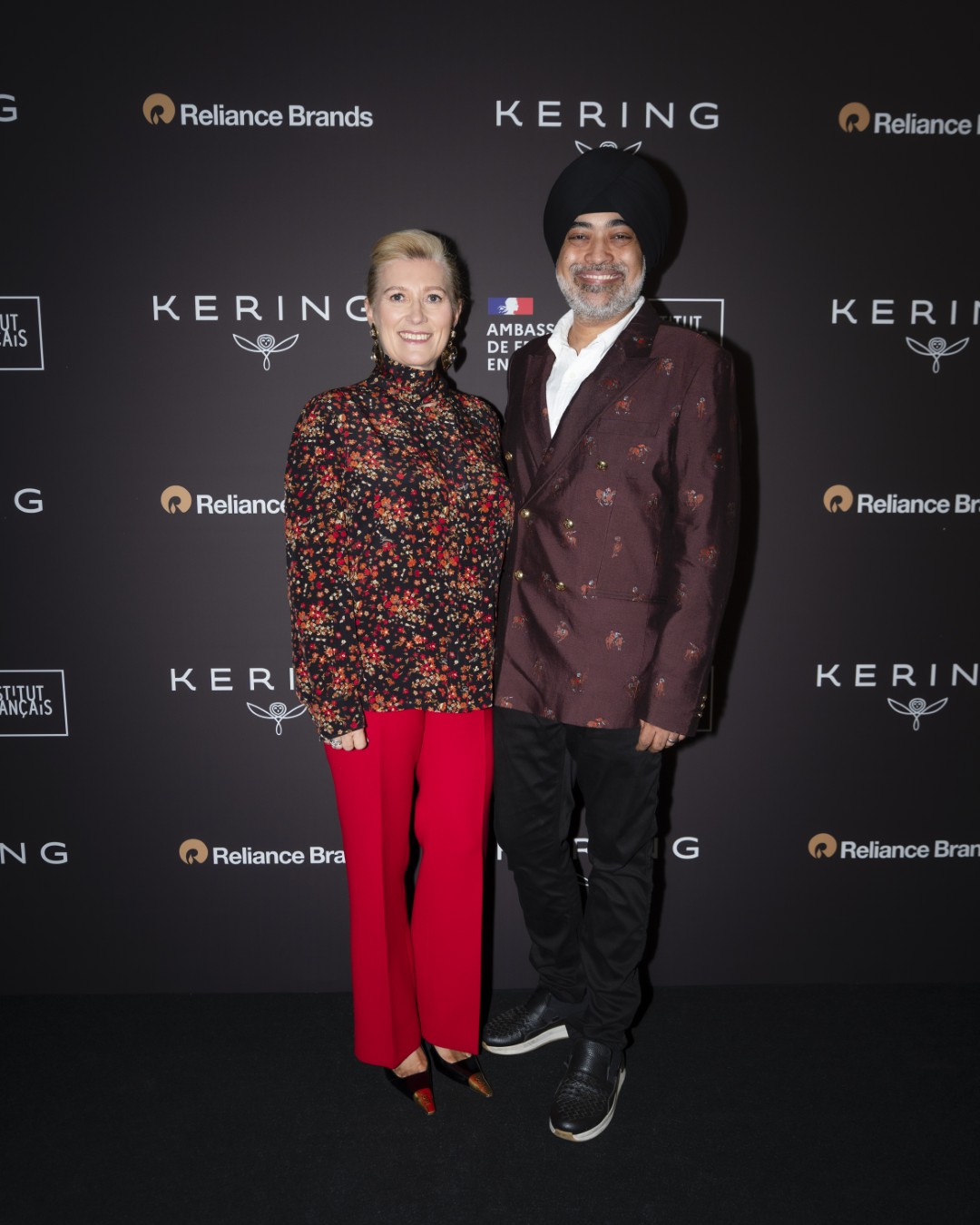
It wasn’t my first conversation with Marie-Claire Daveu, Kering’s Chief Sustainability & Institutional Affairs Officer. We had previously met in Riyadh, and reconnecting in India felt like picking up a conversation that has become increasingly relevant. Only this time, the setting brought a different perspective.
Also present in Delhi was Miral Youssef, President of Kering Middle East & Africa. Her presence carried particular significance, as India has now become part of the region she oversees, creating a new connection between two markets with rich cultural identities and longstanding traditions of craftsmanship.
“The first edition of Kering Generation Award x India marks a defining moment for us, as India becomes part of Kering’s Middle East & Africa region. It is a market of extraordinary heritage, craftsmanship and creative talent, and bringing it into our region opens new possibilities for collaboration. I look forward to working closely with our partners, deepening our connection with Indian luxury consumers and championing the next generation of innovators,” said Youssef.
Beyond the organisational shift, what interested me was the opportunity it represents. India has long been celebrated for its craftsmanship, but its emerging entrepreneurs deserve just as much attention. The question is no longer simply how luxury brands can grow in India, but how Indian creativity and innovation can influence luxury globally.
Why India? Why Now?
India is already an important market for luxury, but Kering is now looking beyond Indian consumers to the country’s creative and entrepreneurial potential.
When I asked Daveu what made India the right destination for the Kering Generation Award, her answer went beyond the obvious appeal of a growing market.
“It’s also one of the most dynamic ecosystems in the world, because you have innovation, know-how, craftsmanship, and at the same time a very entrepreneurial spirit,” she explained.
For decades, luxury has looked towards India for its extraordinary textile heritage, embroidery and artisanal expertise. Today, the opportunity is also to recognise Indian entrepreneurs as innovators capable of shaping the industry’s future.
First launched in China in 2018, the Kering Generation Award subsequently expanded to Japan and Saudi Arabia. Its arrival in India marks an important new chapter, not only for the programme but also for the country’s growing circular innovation ecosystem.
Held at the Embassy of France in New Delhi as part of the Franco-Indian Year of Innovation 2026, the inaugural edition was organised by Kering in partnership with Reliance Brands Limited, with the R|Elan Circular Design Challenge, itself partnered with the United Nations in India, serving as the exclusive nomination partner.
Under the theme Circularity for Fashion and Luxury, the initiative focuses on innovations that can directly protect natural resources and reduce fashion’s environmental and social footprint, from the sourcing of raw materials and manufacturing processes to what happens at the end of a product’s life.
It is a significant shift in perspective. Rather than focusing solely on what consumers should buy differently, the programme looks at how the industry itself can produce differently.
“Often, these are start-ups serving their local market that also want to develop their business internationally,” Daveu told me.
And that is where Kering’s global network becomes important. Beyond financial support, the award offers access to expertise, investors, international exposure and potential partnerships.
An innovation born in India might one day find its way into a collection in Paris, a boutique in Milan or a luxury supply chain elsewhere in the world.
Three Winners, Three Ways of Thinking Differently
At the Embassy of France in New Delhi, three Indian start-ups were recognised for approaching the same challenge from different directions: how do we create value without constantly consuming new resources?
Selected from ten shortlisted innovators and six finalists, the winners represented different approaches to circular fashion.
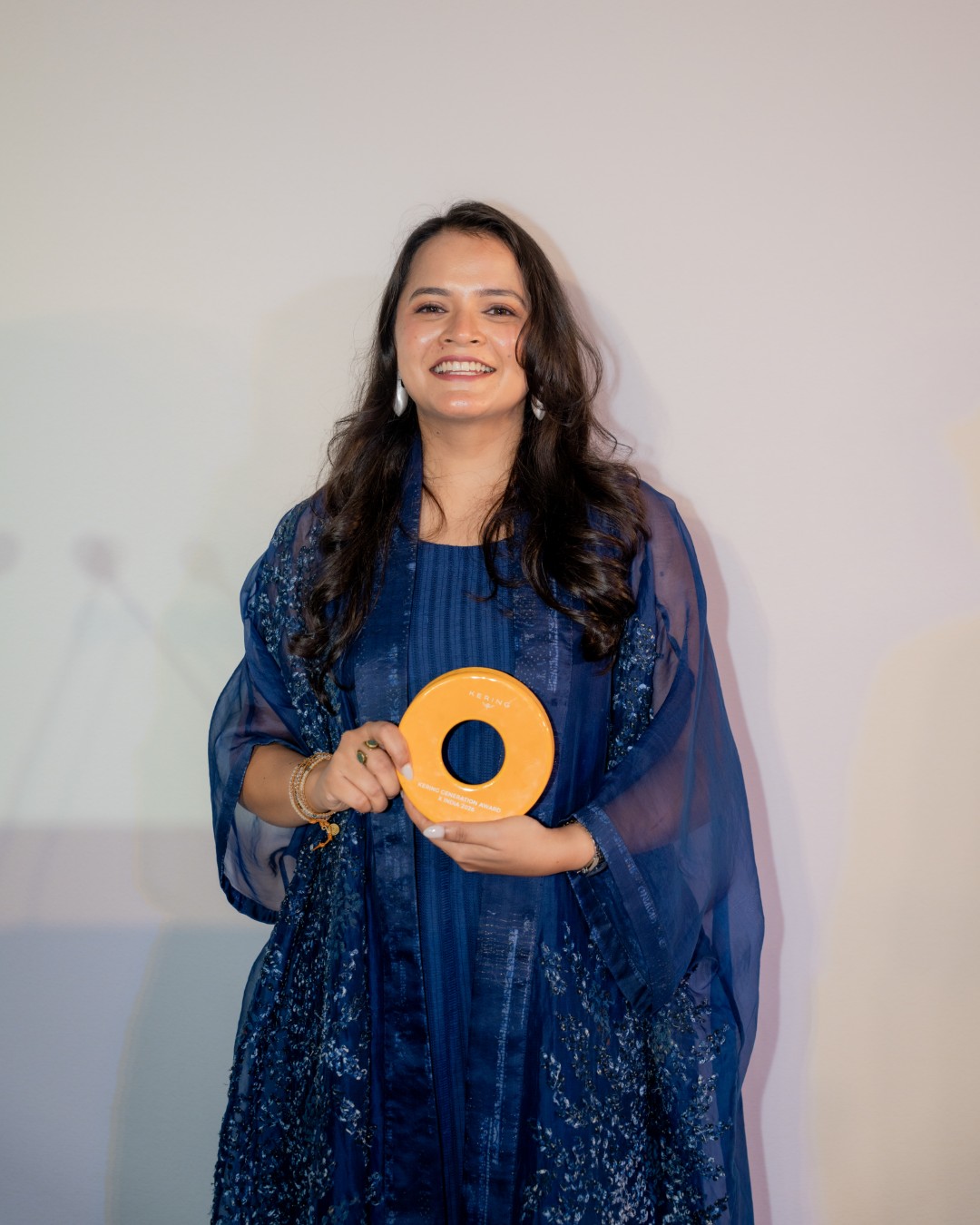
First prize went to Paiwand Studio, founded by Ashita Singhal. The studio transforms pre-consumer garment waste into new handloom fabrics and embroidery, bringing traditional Indian craftsmanship into contemporary circular design.
What makes the project particularly interesting is that it doesn’t treat craftsmanship as something belonging to the past. Instead, it positions traditional weaving techniques as part of a possible solution to fashion’s waste problem.
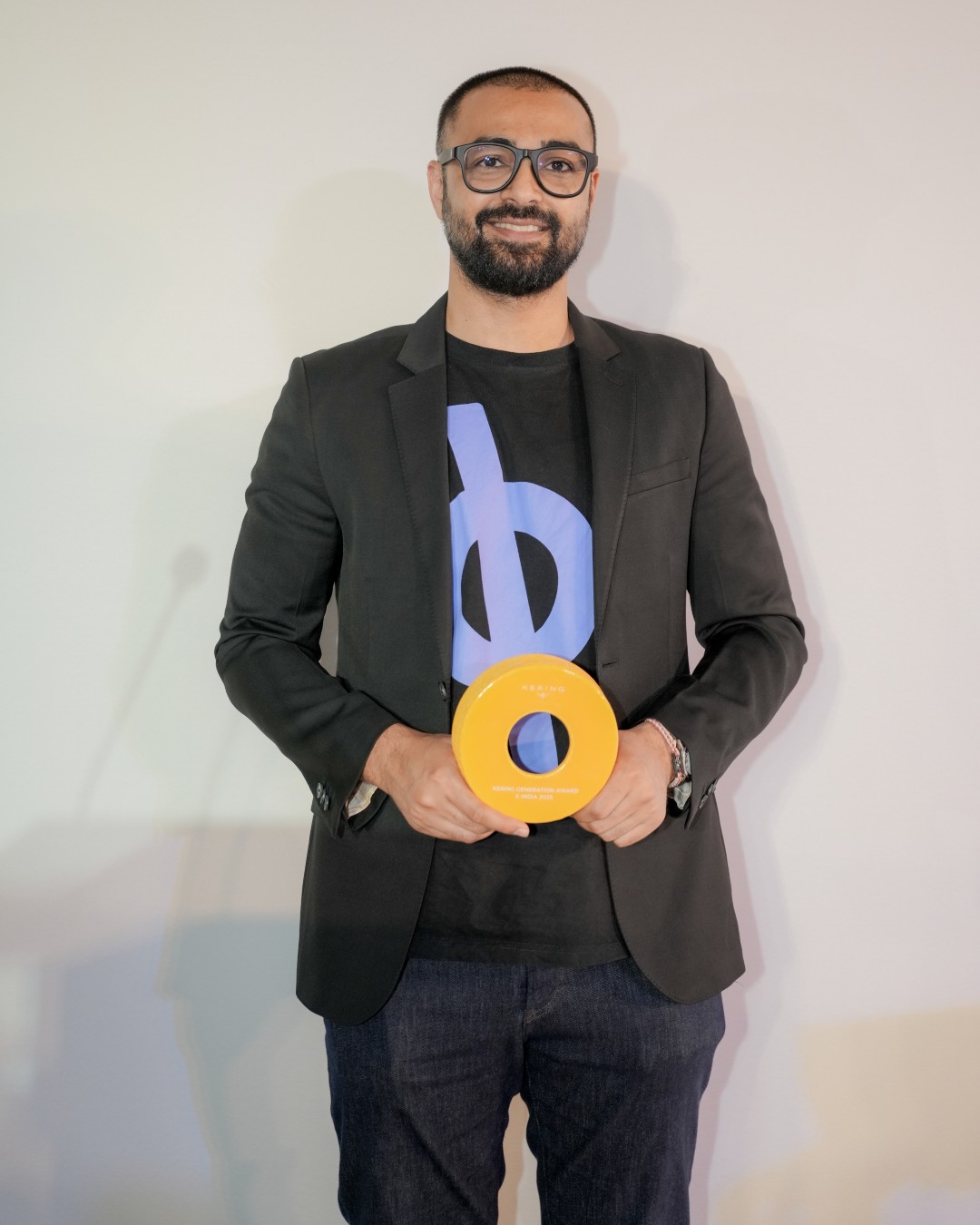
Second place went to Without, founded by Anish Malpani, a deep-tech recycling venture transforming difficult-to-use waste into high-performance textiles and materials, opening up new possibilities for resource recovery.
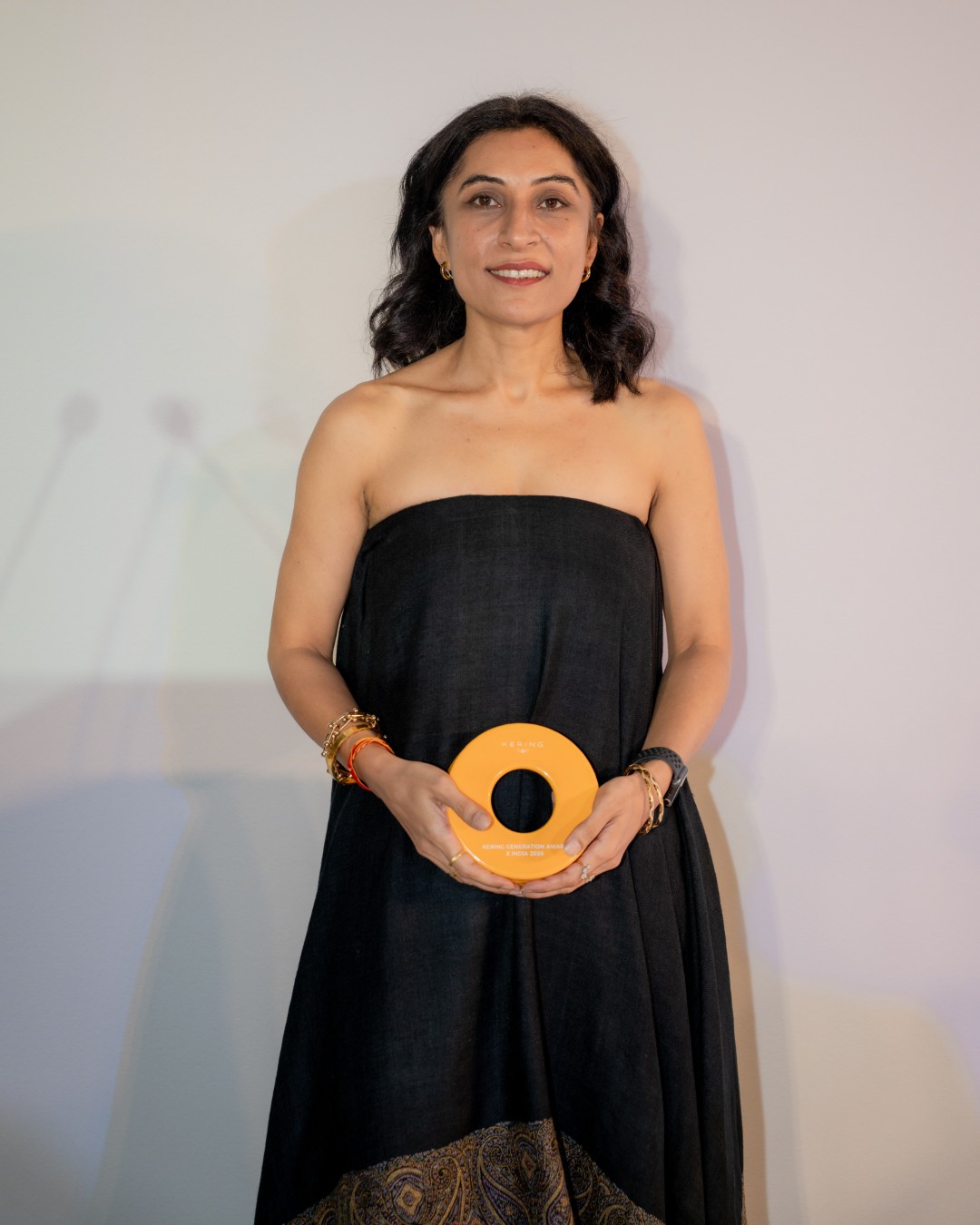
Third place was awarded to A Blunt Story, founded by Chandni Batra, for its work transforming waste into next-generation footwear components and exploring alternatives to conventional footwear production.
Different materials, different approaches, but one common ambition: to rethink what we consider waste.
Paiwand Studio received €50,000, while all three winners will benefit from a fully funded ten-day visit to Europe, offering opportunities to engage with Kering’s global luxury and sustainability ecosystem.
And perhaps that is the most interesting part of the award. The prize is not simply recognition. It is an opportunity to move an idea closer to becoming something the industry can actually use.
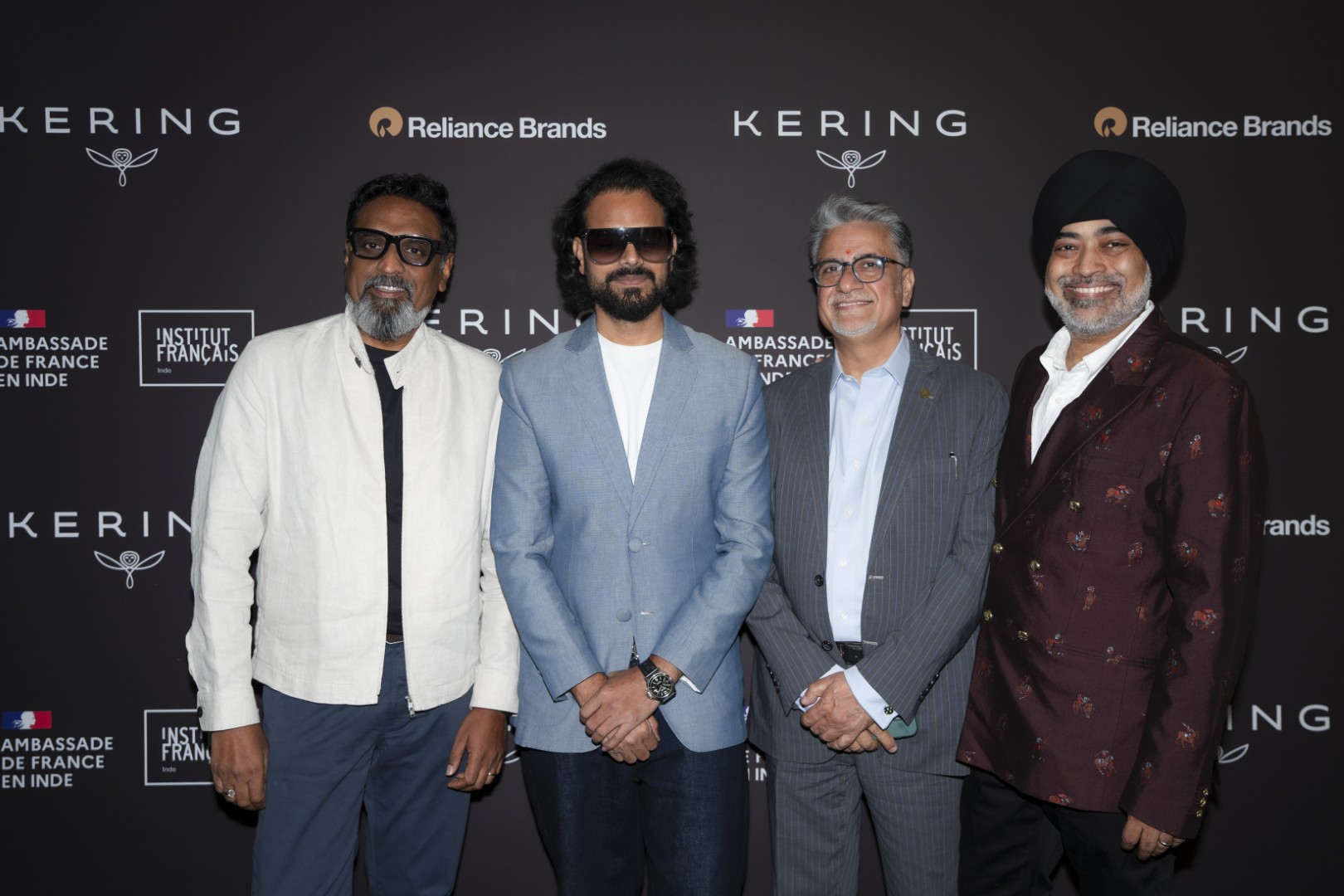
The jury reflected the different worlds that sustainability now needs to bring together. Alongside Daveu were Indian designers Manish Malhotra and Rahul Mishra, Reliance Brands’ Sumeet Yadav, journalist and author Sujata Assomull, United Nations Resident Coordinator in India Stefan Priesner, and Kulsum Shadab Wahab, founder of ARA LUMIERE. Pascal Morand, Executive President of the Fédération de la Haute Couture et de la Mode, and Radhika Raje Gaekwad, Maharani of Baroda, joined virtually.
It was an interesting mix of perspectives, bringing together fashion, business, cultural heritage and sustainable development.
Because the future of luxury cannot be decided by designers alone. It requires scientists, entrepreneurs, artisans, investors and people who understand the environmental and social consequences of how things are made.
Less Talk, More Innovation
Sustainability is one of those words we hear everywhere. In fashion campaigns, corporate presentations, product descriptions and conversations about the future. But the more frequently a word is used, the easier it becomes to forget what it is supposed to mean.
Daveu is particularly clear about what she expects from the start-ups Kering supports, saying, “It’s not innovation for innovation’s sake. It’s innovation that makes it possible to reduce the environmental footprint.”
That distinction stayed with me.
Because the challenge isn’t simply to invent something new. It’s to invent something that makes a difference. And sometimes, the most meaningful change doesn’t involve inventing anything at all.
Daveu also spoke about the importance of giving a second life to elements created for fashion shows, rather than allowing them to disappear once the runway lights go out. She tries, wherever possible, to encourage their reuse. One example she shared was a chandelier originally created for a fashion show that has since found a permanent home in the Saint Laurent boutique on Avenue Montaigne in Paris.
I particularly liked that example.
Fashion shows are designed to create a moment, often an extraordinary one, but what if the creativity behind them could live beyond those few minutes? A spectacular set piece doesn’t necessarily have to become waste once the guests have left.
It’s a different way of thinking about circularity, one that doesn’t compromise the dream but simply extends its life.
And sometimes innovation takes a more experimental form.
Daveu mentioned Kering’s work with a start-up developing mycelium, a material derived from fungi. After years of research and exchanges with designers, the material has found its way into Bottega Veneta accessories.
A mushroom-derived material in a luxury wallet? It might sound unexpected, but that’s precisely the point.
“We’re not here to impose constraints,” she explained. “We’re here to propose and stimulate innovation, stimulate creativity.”
After all, luxury has always been about creating objects that last. Shouldn’t the same philosophy apply to everything surrounding them?
The Next Generation Isn’t Buying the Same Story
At one point, our conversation turned to younger consumers and their relationship with luxury.
Daveu believes younger generations are more conscious of environmental and social issues, including animal welfare.
But awareness doesn’t necessarily translate into understanding.
Explain too little, and sustainability risks becoming another marketing exercise. Explain too much, and the conversation becomes so technical that nobody wants to listen.
The challenge is to make complicated subjects accessible without losing their substance.
It made me think about how brilliantly luxury has always told stories.
We know the history of a handbag, the inspiration behind a collection, the hours of craftsmanship involved in creating a watch. We are invited into the designer’s imagination, the atelier, the heritage.
But how much do we really know about the materials?
Where they come from? Who produces them? What happens when a product is no longer used?
Perhaps the next great luxury story isn’t about a new silhouette or an archival reference. Perhaps it’s about the journey of a material, or the people who found a completely different way to make something.
And perhaps the challenge is to make that story just as desirable.
The Future Isn’t Waiting
What stayed with me after those 48 hours in Delhi wasn’t simply the ambition of the winning entrepreneurs or the growing importance of India in the global luxury conversation.
It was the idea that the next big change in fashion might come from somewhere the industry hasn’t been looking closely enough.
From a start-up turning discarded textiles into something desirable. From a scientist experimenting with an unfamiliar material. From an artisan whose centuries-old technique suddenly becomes relevant to a very contemporary problem.
For decades, luxury has celebrated heritage and craftsmanship, often through a distinctly European lens. But perhaps the next chapter will be written through a more global exchange of ideas.
And there is something refreshing about that.
Because luxury has always been about imagination, craftsmanship and the ability to make us desire something extraordinary.
The question now is whether it can apply that same imagination to the way it operates.
Perhaps the future of luxury isn’t about making more.
It’s about making things matter more.
For more stories of fashion from around the world, visit our dedicated archives and follow us on Instagram.