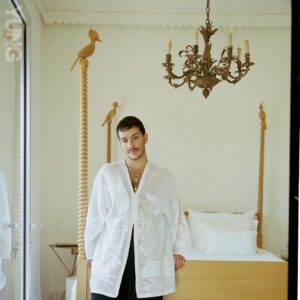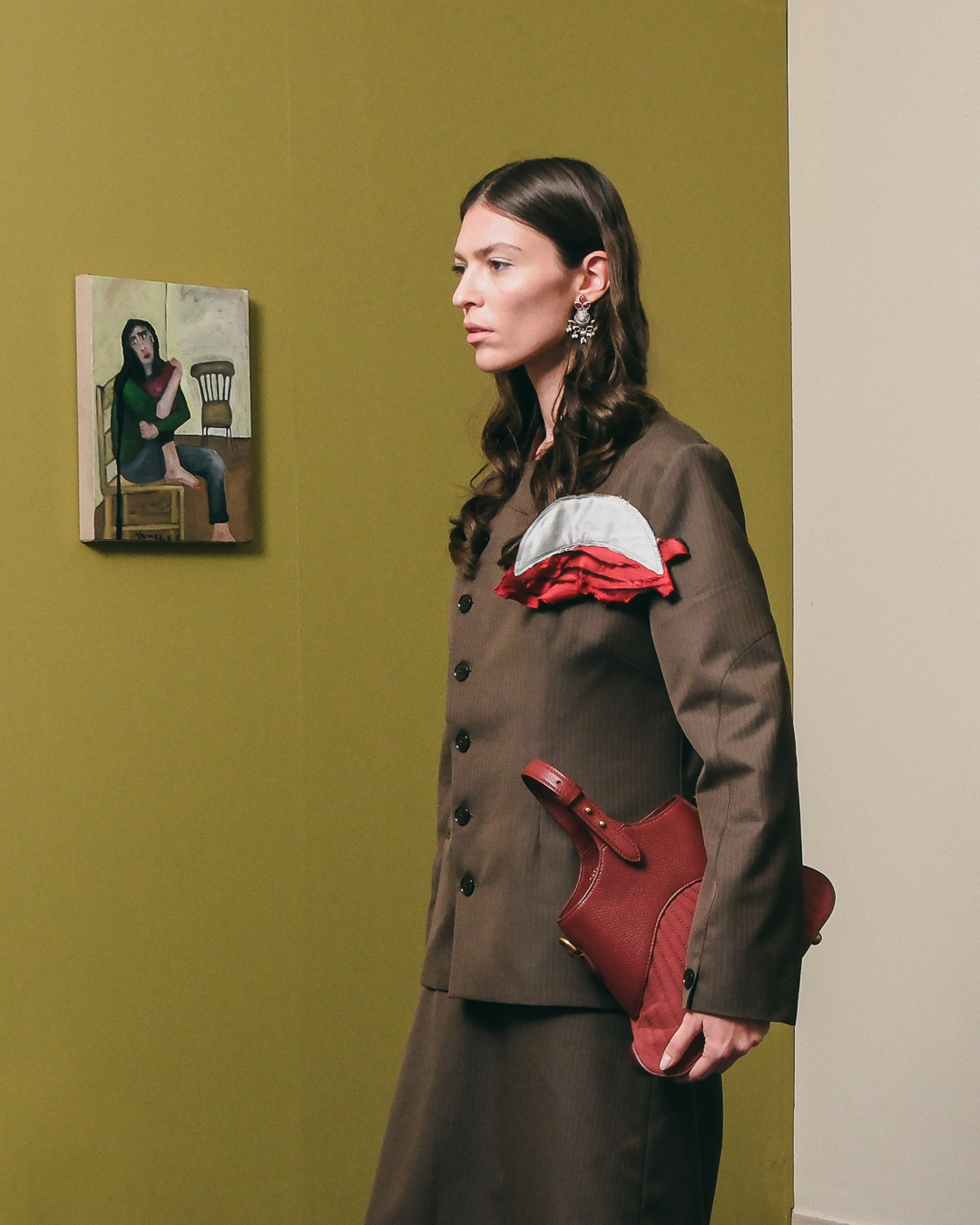
Founded in 2024, Absent Findings is a Dubai-based fashion house rooted in Florence and shaped by a distinctly South Asian sensibility. For creative director Shivin Singh, fashion began with an early fascination with his mother’s leather handbags, before designers such as Raf Simons, Ann Demeulemeester and Yohji Yamamoto expanded his visual vocabulary. Today, Singh explores the tension between minimalism and surrealism, heritage and modernity, drawing on memory, architecture and the sari to create a language distinctly his own.
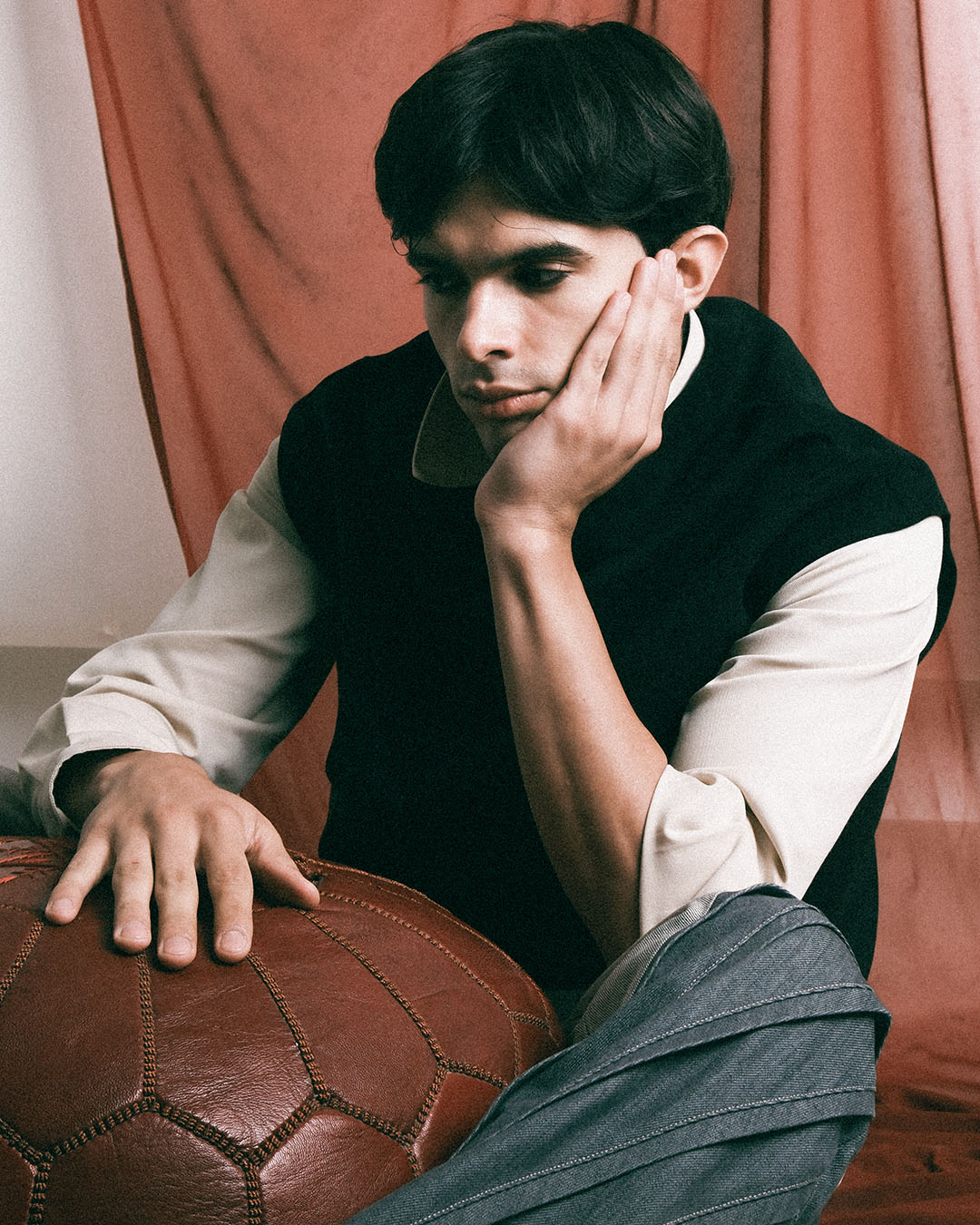
What first pulled you into fashion design, and what was the moment you knew Absent Findings needed to exist as its own brand?
My first pull into fashion was through leather craftsmanship, noticing my mother’s handbags when I was nine or ten. I became fascinated by why these objects were so desirable beyond their utility, which gave me an early appreciation for craft. Later, around 2018–19, discovering Raf Simons, Ann Demeulemeester, Yohji Yamamoto and Ghesquière’s Balenciaga changed everything. Music was equally formative—Nirvana made me want to dress like Kurt Cobain; The Strokes put me in skinny jeans as a teenager growing up in Dubai.
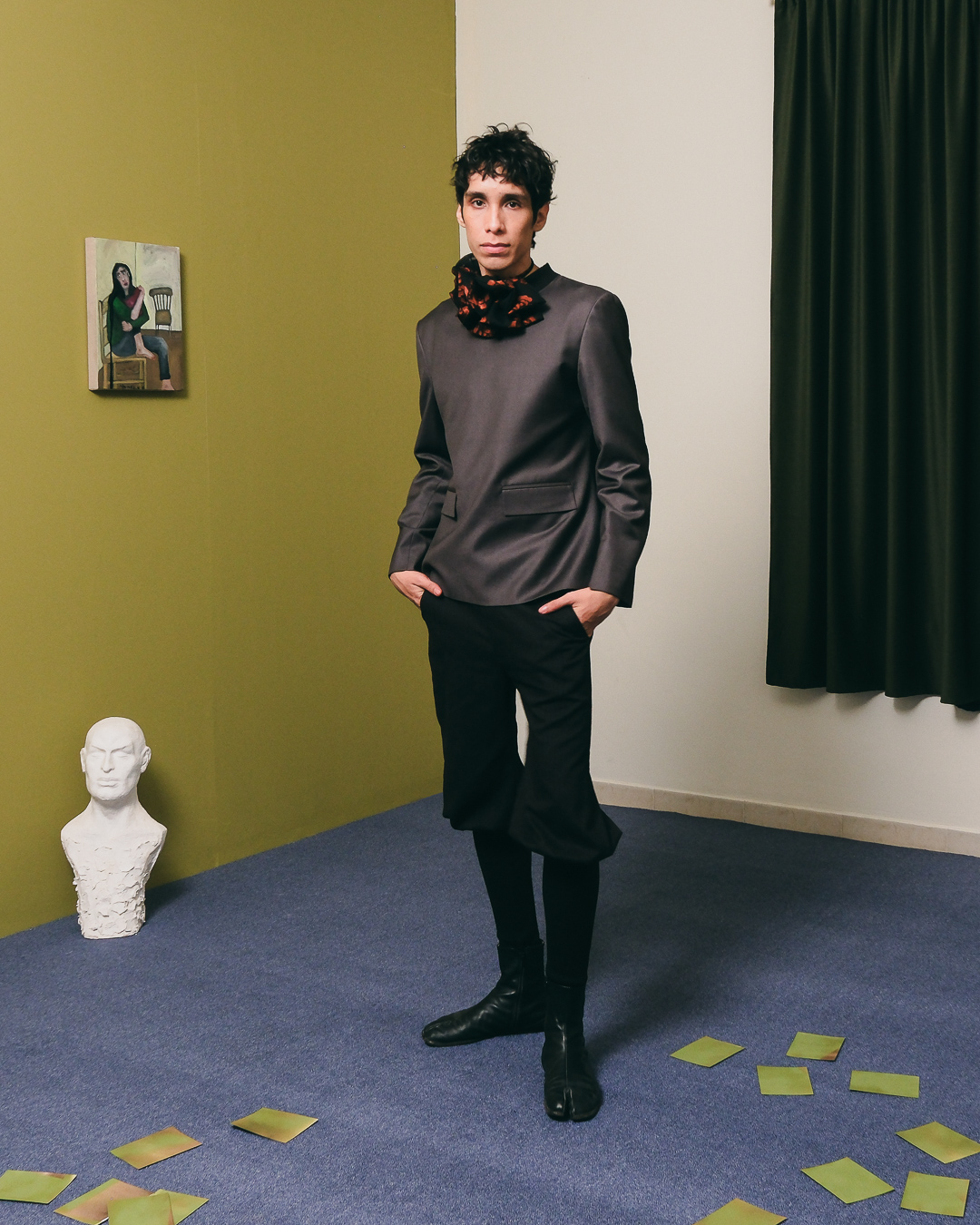
Your pieces blend memory and architecture into clothing. How this come to you?
Memory was almost a shadow for me, in the Jungian sense. Growing up in Dubai, I struggled with my heritage and often felt disconnected from my culture; at times I was even embarrassed by it. Over time, that became a huge source of identity and inspiration. Memory gives the work its emotional core, while architecture is more of a foundation for how I think about form, proportion and structure.
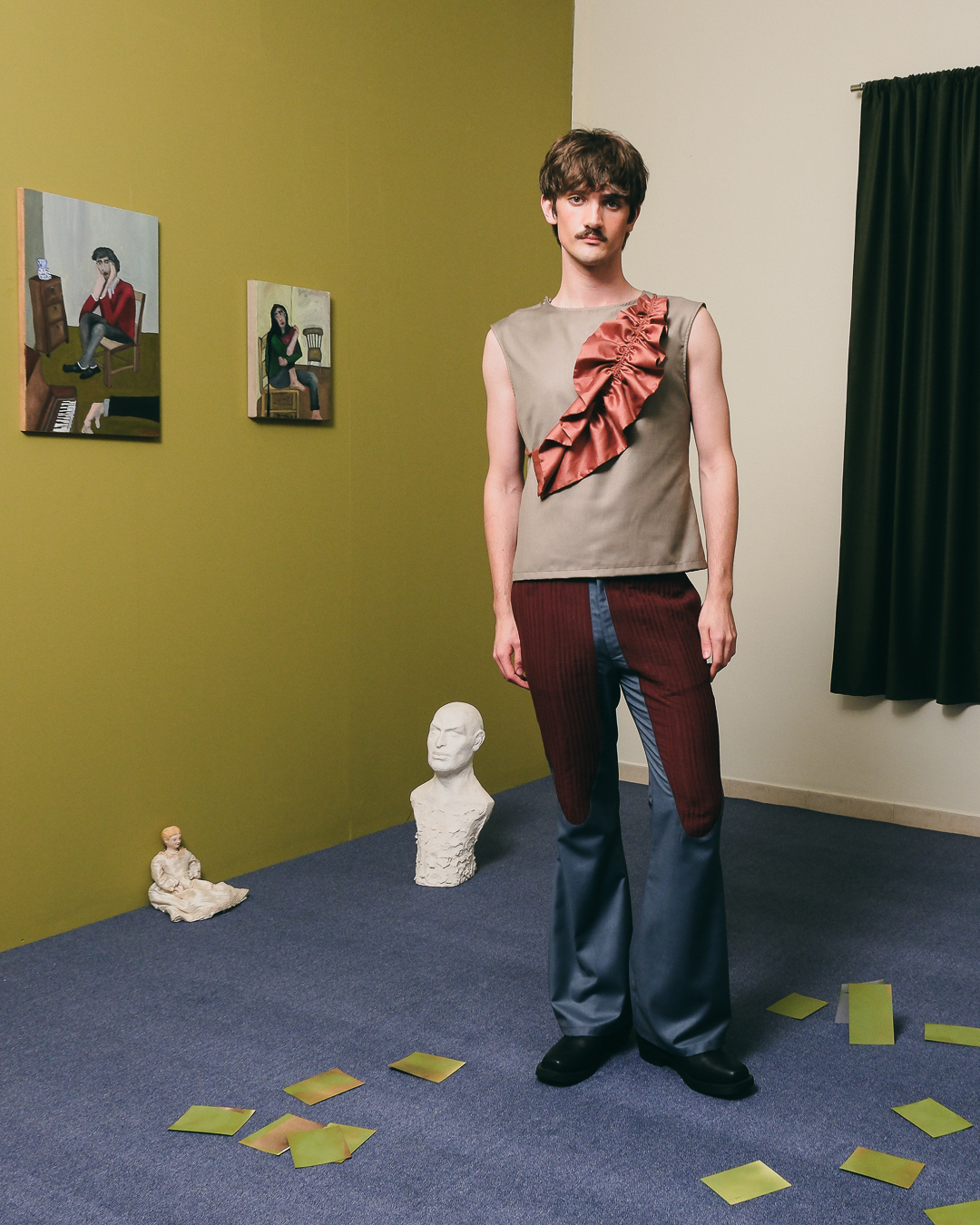
Your silhouettes borrow from the drape of the sari yet feel entirely re-imagined. How do you walk that line between honouring heritage and breaking from it?
The drape of the sari is, for me, one of the purest and most graceful forms of dressing. I’m always trying to dissect and reinterpret it in a way that someone like me can wear. It’s important to study it deeply, but never become too nostalgic. I’m always trying to recontextualise it—looking toward the future while staying grounded in the past.
You work with heirloom saris, deadstock textiles, and forgotten fabrics. What does it mean to you to give a “forgotten” fabric a second life?
Whether deadstock or heirloom saris, these fabrics were often just gathering dust in closets or warehouses before we began working with them. They’re already beautiful, already carrying stories and memories within them. For me, there’s more weight in creating something new from something that already exists. It feels less like starting from nothing and more like continuing a story that was already there.
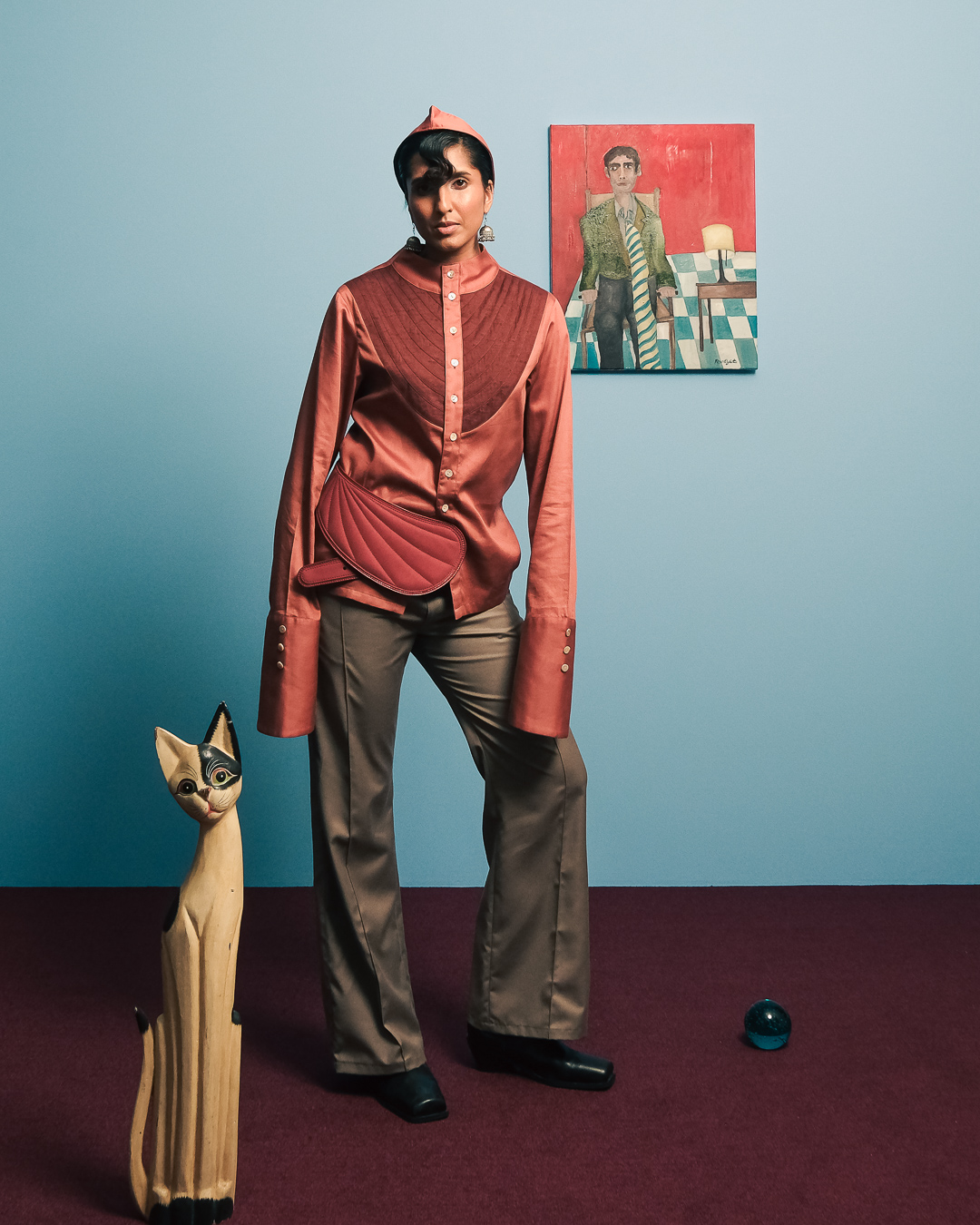
Minimalism and surrealism don’t often share the same rack. How do you make that tension work on the body?
I see minimalism as every element having a reason to exist, rather than simply being visually sparse. From that perspective, surrealism can actually be extremely minimal. In a Leonora Carrington painting, every strange element feels necessary. That’s the line Absent Findings tries to balance, both in the clothes and in the visual vocabulary we build around them through art direction, casting and beauty.
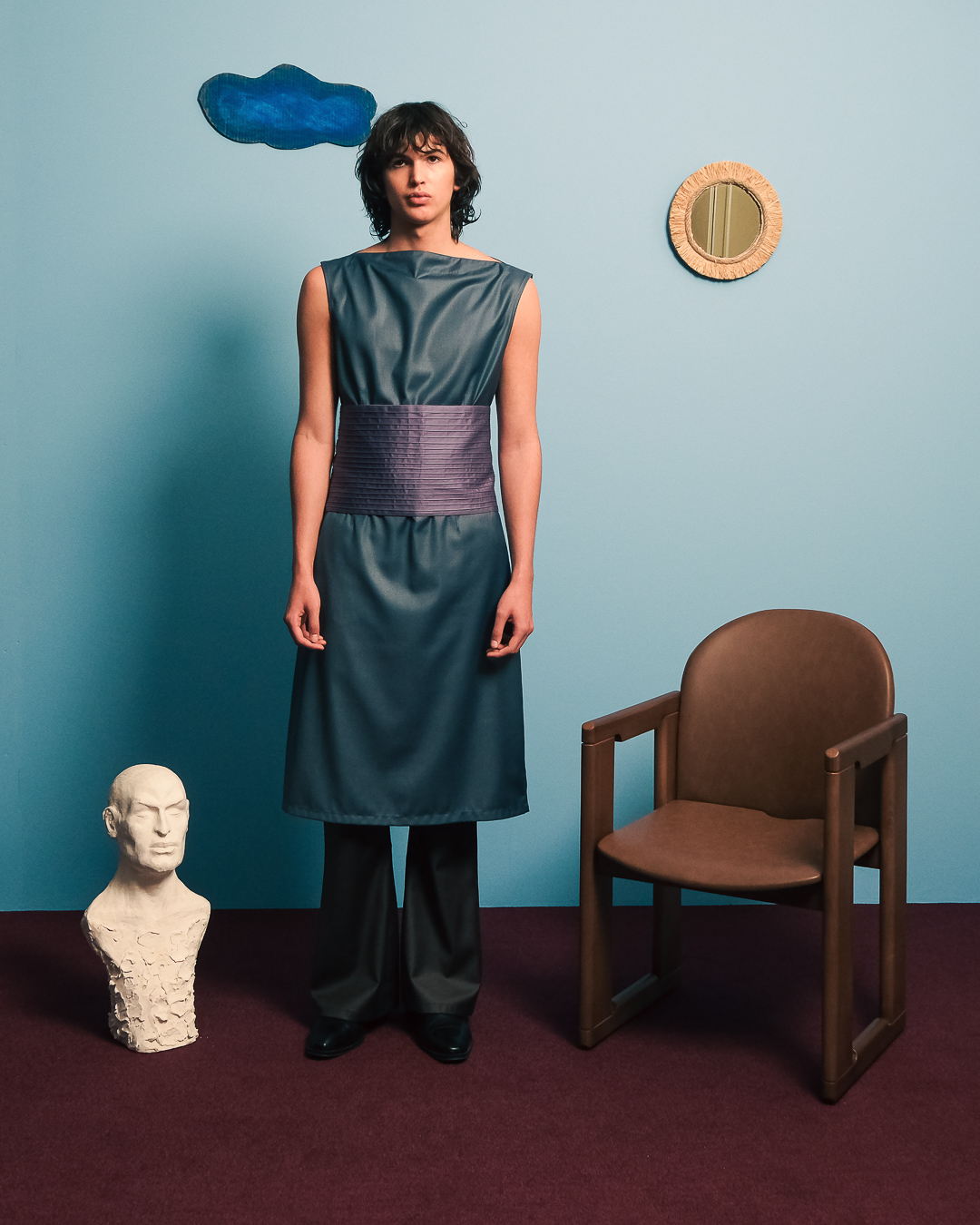
You’ve said meaning reveals itself over time. What’s something about your own work that you didn’t understand until much later?
The older I get, the more I understand that everything happens in its own time, and somehow makes sense in retrospect. I see each collection as another piece of a larger jigsaw puzzle, with the completed puzzle hopefully being my entire body of work. Maybe, over time, it reveals something about me to myself that I didn’t fully understand while making it.
For more stories of fashion from across the region, visit our dedicated fashion archives and follow us on Instagram.