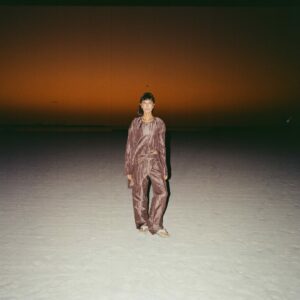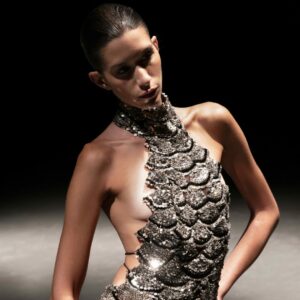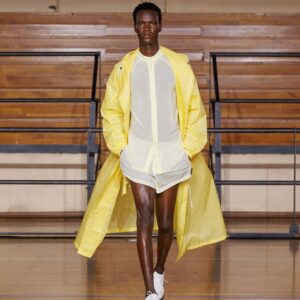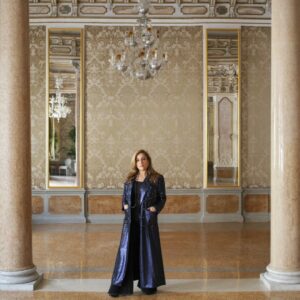
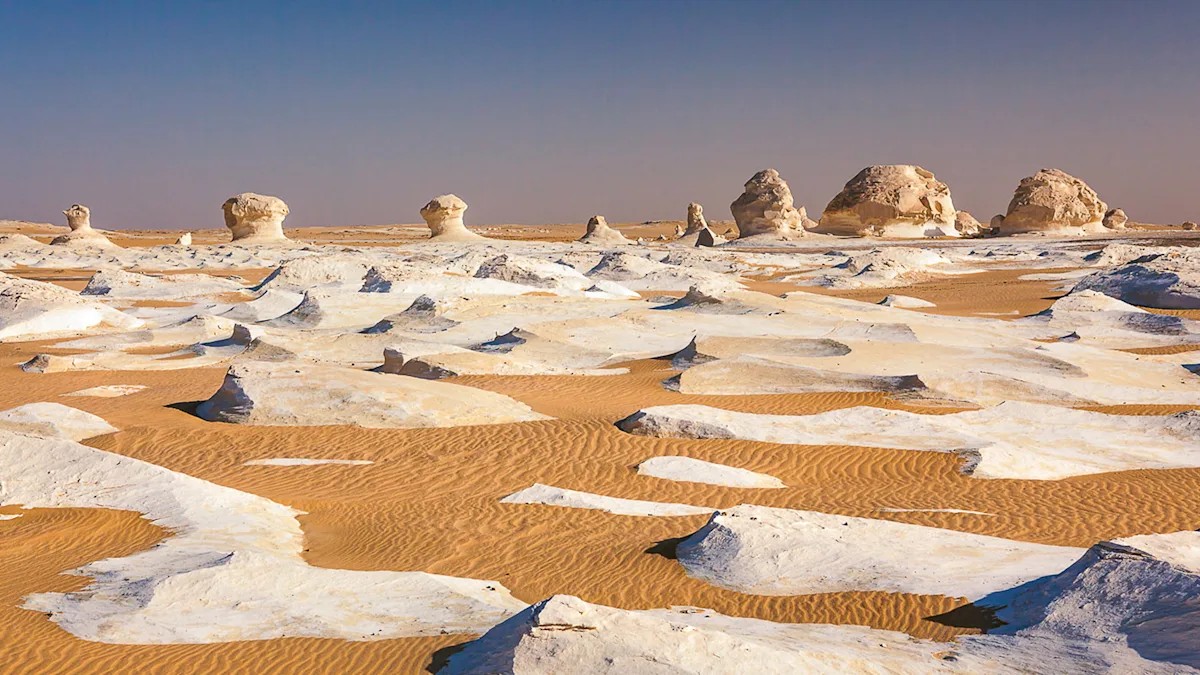
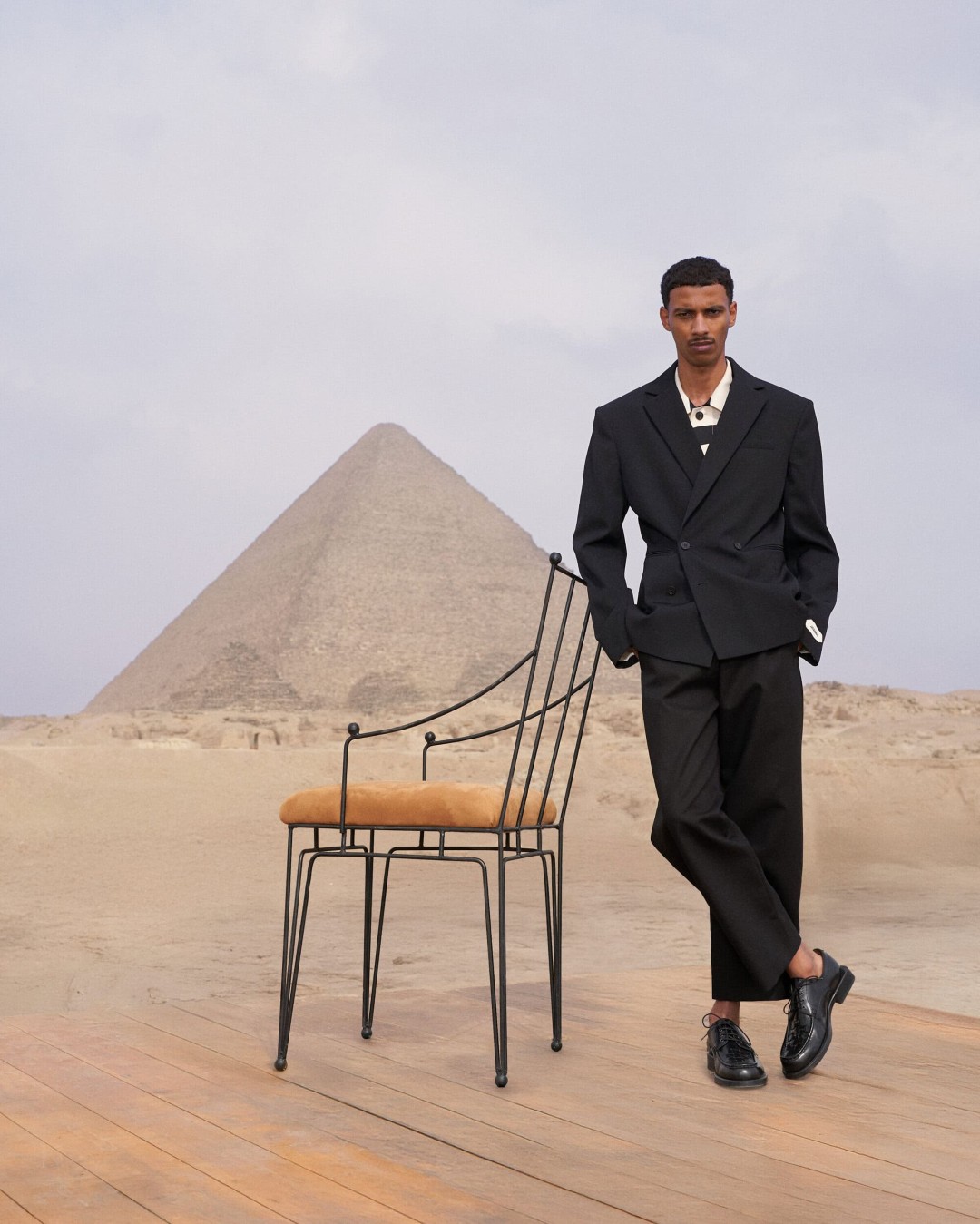
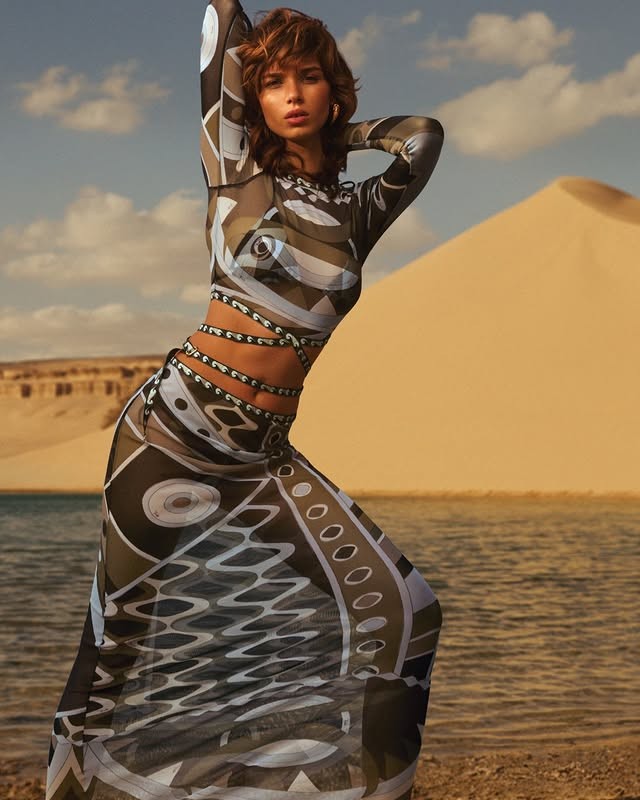
For decades, Egypt in the global fashion imagination was a static postcard: a gold-drenched model standing before the Great Pyramids of Giza. However, brands are now chasing a contemporary, tactile Egypt. We’ve officially moved past the Sphinx clichés. Emilio Pucci’s SS26 L’Abla validated that: they skipped the landmarks to let the desert’s actual curves and hollows speak for themselves.
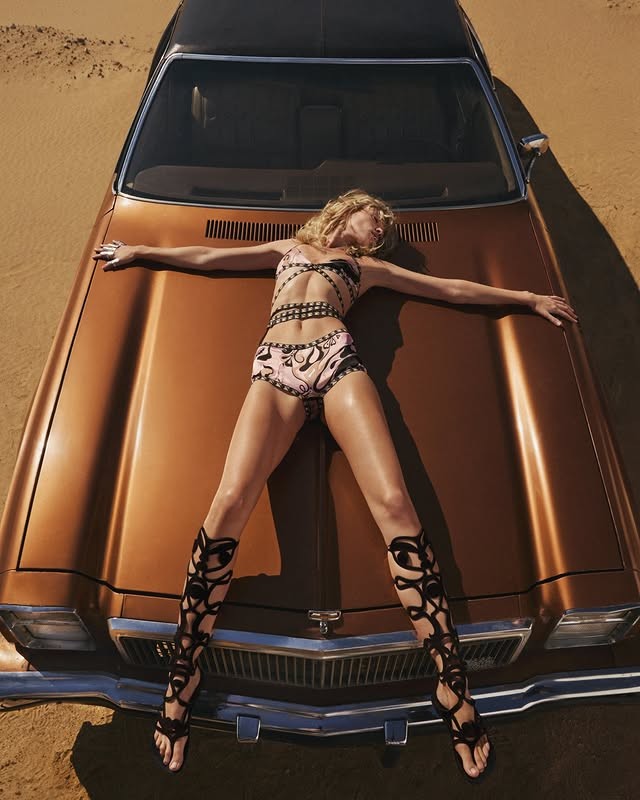
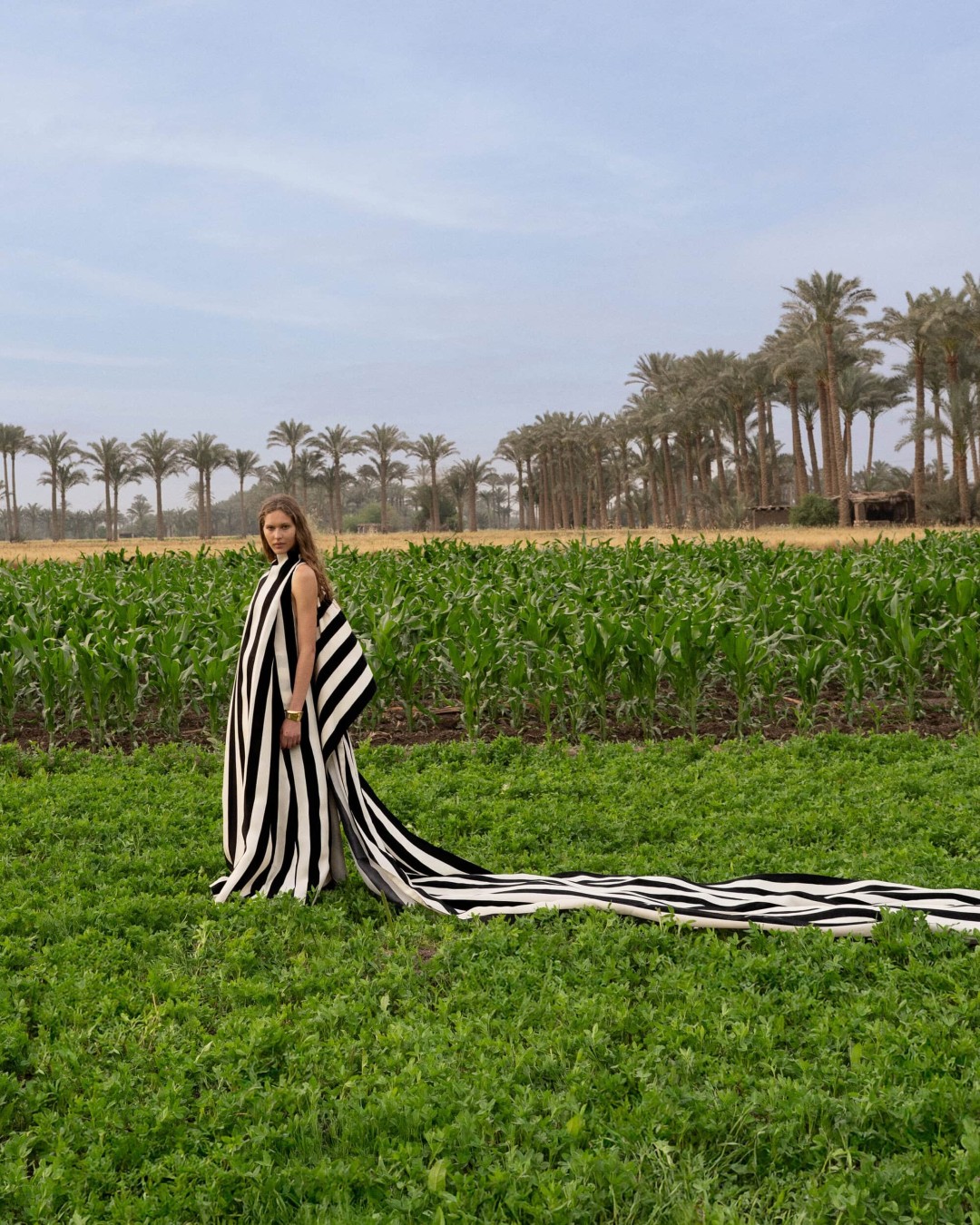
Photographed in the desert landscape of Fayoum, the shoot (produced locally by Snap14) was under the direction of Camille Miceli and the lens of Carlijn Jacobs. The campaign used the lunar-like textures of the Fayoum desert to anchor Pucci’s iconic psychedelic prints in something earthy.
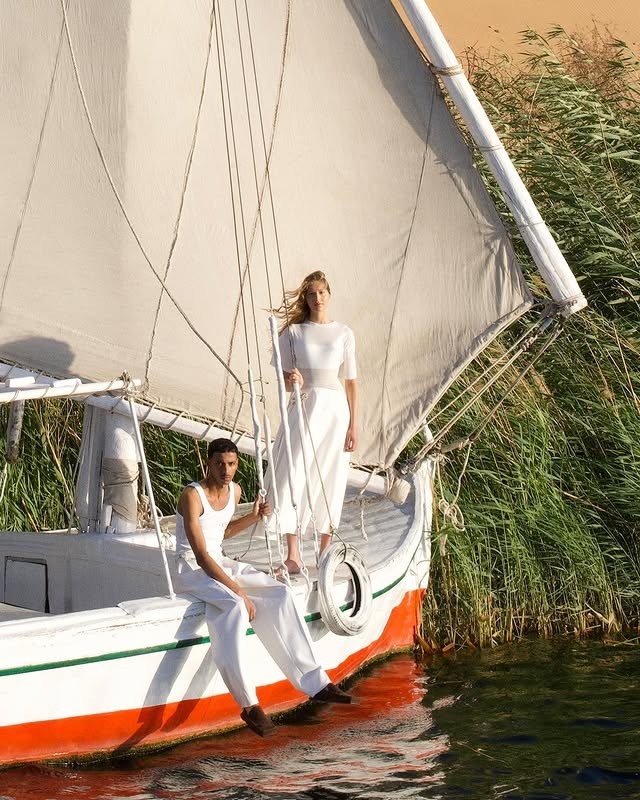
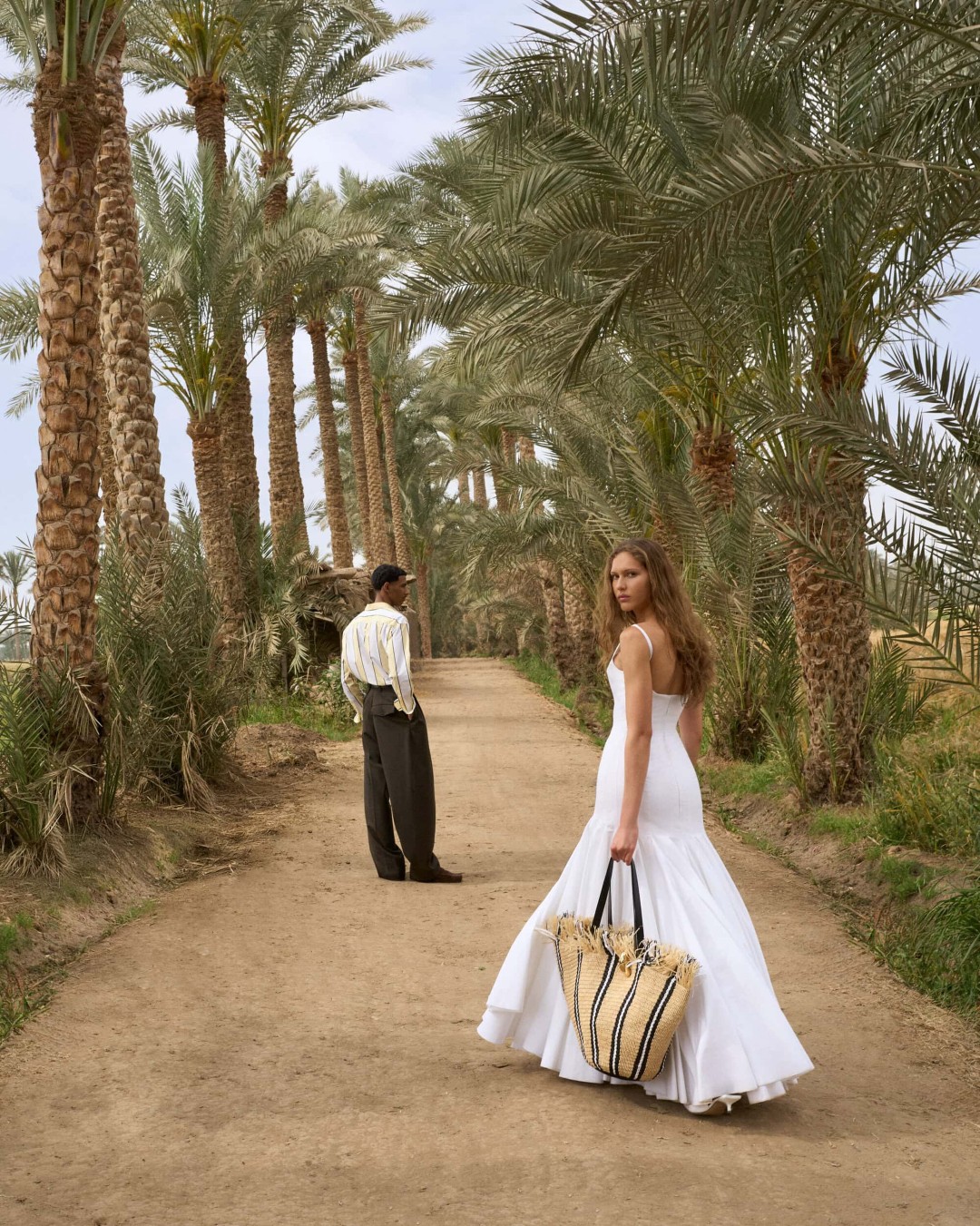
Similarly, last year for their SS25 campaign, La Croisière, Jacquemus moved to the Nile, going for something softer. It felt different because it was handled by an insider. Under Egyptian photographer Mohammed Sherif’s lens, the river became a vibrant, living backdrop for structured silhouettes.
With two consecutive spring seasons placing Egypt at the centre of luxury’s visual language, the question swings from coincidence to pattern. Why now?
As AI and CGI-generated perfection takes over, fashion is hunting for the real thing. Egypt’s organic patina —that honeyed warmth of the south and the cracked earth of the riverbanks—offers a tactual authenticity no studio can fake. There’s a craving for something real—a visual weight that no digital render can simulate.
It’s no accident that both houses chose Egypt for their summer edits. Egypt leads with heat and solar intensity. The warmth of the sand and the saturated palette amplify the collection’s summery energy. By binding these collections in such an intense, natural environment, the colours feel vivid, breathing. It turns a seasonal fantasy into something that feels electrically and mystically alive.
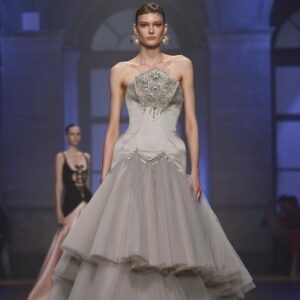
Now more than ever, we are witnessing the de-cliché-ing of the Egyptian landscape. Brands are moving away from the Pyramids (though Dior’s 2023 show proved they still have gravity) toward niche topographies, like Fayoum for its modernist desert feel, Aswan for a green-meets-blue palette, and the White Desert for a fantastical element. By choosing these locations, creative directors are signalling that they understand the energy of the country, not just its history books.
Perhaps the most significant shift in this isn’t where the photos are being taken, but who is behind them. For decades, global brands flew in entirely European or American crews, treating Egypt as a passive stage, its landscapes captured through an external, unfamiliar gaze. Today, global brands are increasingly handing the keys to local talent who offer an insider gaze that feels embedded, not imposed.
When Simon Porte Jacquemus decided to shoot La Croisière in Egypt, he didn’t hire a typical high-fashion name from Paris. He tapped Cairo-born photographer Mohammed Sherif. Instead of the usual high-contrast, “National Geographic” style often used for Middle Eastern shoots, Sherif delivered a dreamy, whimsical 24-hour diary.
By featuring Egyptian model Mohamed Hassan alongside Angelina Kendall, the campaign felt like a collaborative homecoming, not an exotic excursion. Sherif’s work captured local rhythms, the way the light hits the water in Aswan or the elegance of a small felucca, making the pieces feel like they belonged to the land.
This new logic is all over Pucci’s shoot. Egyptian production house Snap14 served as the shoot’s anchor despite having an international creative lead. Here, the brand transcended the “tourist” gaze. The way the desert was framed and experienced was determined by local producers and crew, demonstrating that the best way to comprehend the landscape is from within.
This trend is a calculated result of Egypt’s new “open door” policy for foreign productions. According to recent industry data from the Egypt Film Commission (EFC), a subsidiary of the Egyptian Media Production City (EMPC), they are now implementing production incentives and a one-stop-shop model.
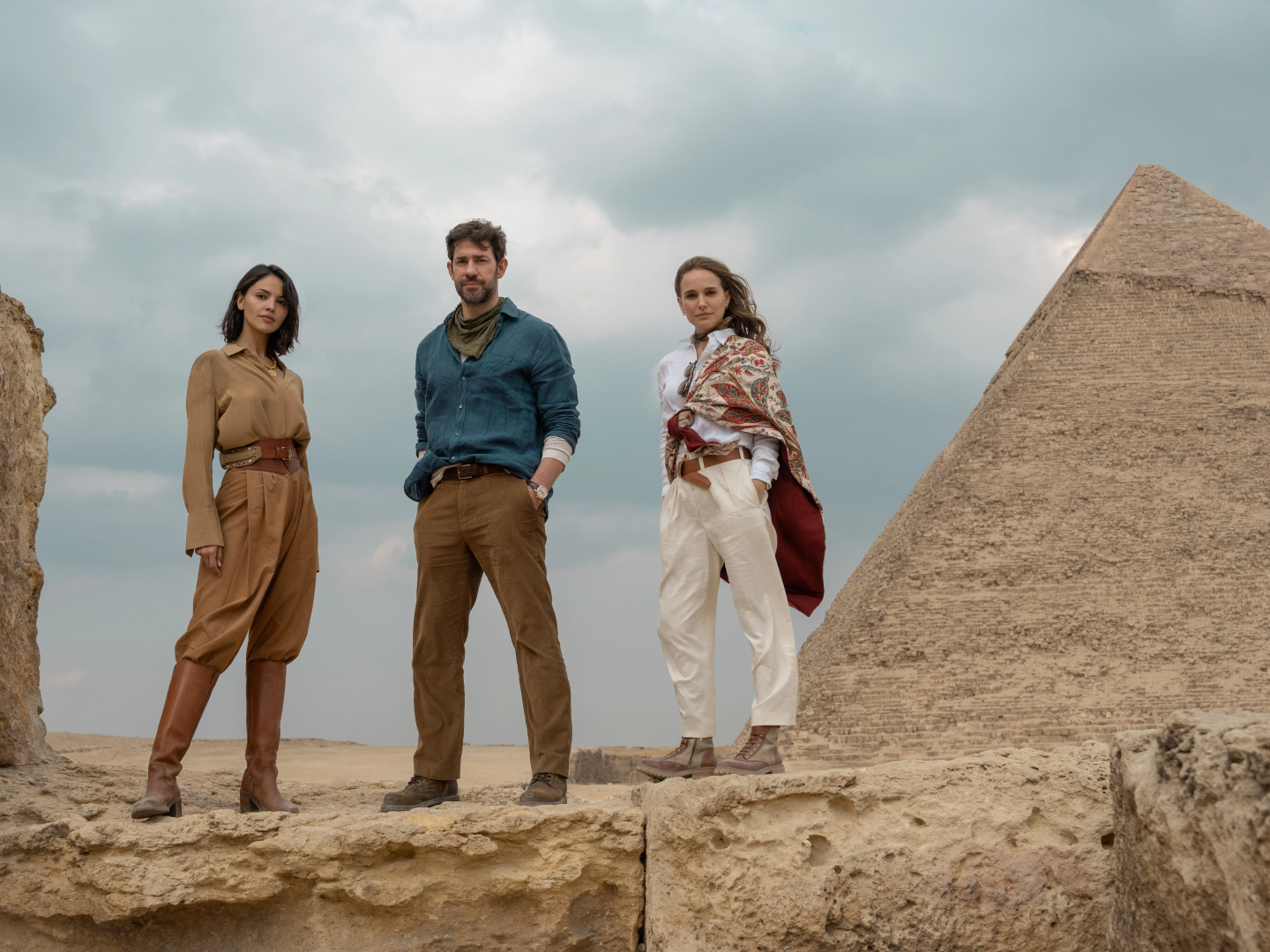
Fashion has always followed film, both aesthetically and logistically. The same infrastructures that support large-scale productions, from permitting systems to on-site crews and equipment access, directly shape where fashion can shoot. Egypt’s ability to host major Hollywood productions, such as Jon M. Chu’s Wicked: For Good and Guy Ritchie’s Fountain of Youth, shows luxury houses that the country is now a resource rather than a risk. It’s signalled to luxury houses that Egypt is now logistically capable of handling the highest tier of global creative demands.
By offering a 30% cashback incentive for productions that use their services, they’ve made Egypt the most financially attractive location in the MENA region for high-budget campaigns. The EFC is now positioning itself as a streamlined agency that handles everything from military permits for the Pyramids to specialized desert logistics. This red tape reduction has turned what used to be a nightmare location into a seamless creative playground, from logistics and customs to security escorts.
This is a part of a wider push to turn Egypt from a place people visit into a place the world produces from. Now, the industry is beginning to view Egypt as a “hub” rather than just a “hotspot.”
For more stories of fashion, visit our dedicated archives and follow us on Instagram.