There was a version of this letter I imagined writing months ago.
It was lighter. Celebratory. A reflection on four years of building YUNG – on what we have created, and the people we’ve created it with.
But this issue came together in a moment that feels anything but light.
To speak about home right now – about belonging, identity, memory – feels heavier than we expected. More complicated. More urgent. And, in many ways, more necessary.
“Four Names for Home” was never meant to arrive at a single definition.
Bayt. Dar. Watan. Manzil.
Each word carries a different weight. A different intimacy. A different kind of truth.
Together, they reflect something we’ve always understood at YUNG: home is not fixed. It shifts. It fragments. It rebuilds itself through people, through memory, through what we create.
And sometimes, it exists in absence.
YUNG itself is a home-grown brand, built in Dubai – a city I’ve called home for over two decades. A place that exists in its own in-between. Not always where we’re from, but very much where we’ve become. Shaped by movement, by layered identities, by constant reinvention.
This issue became a response to that tension.
Between what home is, what it was, and what it might become.
Between where we are, and where we wish we could be.
Across these pages, you’ll find people living inside that question. Musicians, actors, models and artists – each carrying their own version of home. Not as something stable, but as something they build, protect, and redefine through what they make.
The covers reflect this in different ways.
Nemahsis writes with a clarity that holds identity, displacement, and resistance without losing softness.
Rilès moves between music, performance, and image, creating work that feels controlled and exposed at the same time.
Rosaline Elbay approaches performance as something layered – shaped by language, heritage, culture, and memory.
Manal Benchlikha builds a world through sound and visuals that moves between the regional and the global without asking permission.
Lella Fadda works through space and atmosphere, creating something intimate and grounded.
Models Meriam Turki and Shahed Elnakhlawy represent a generation redefining visibility, not just being seen, but being understood. Meriam, Tunisian, and Shahed, of Jordanian, Palestinian, and Egyptian heritage, are shaping how culture is carried across borders.
Together, they point to a generation that is not interested in fitting into existing narratives, but in reshaping them.
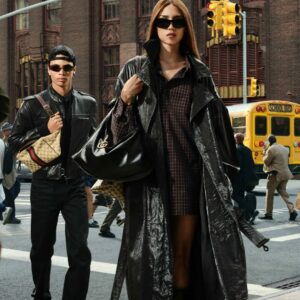
Fashion, across it all, becomes more than aesthetics. It becomes language. A way of holding onto identity when place feels uncertain. A way of building something that cannot be easily taken away.
Four years into YUNG, what remains constant is this: we exist to document this moment honestly. Without smoothing it out. Without pretending things are simpler than they are.
This issue is not the celebratory one we first imagined.
But it feels more honest.
And maybe that, in itself, is something worth marking.