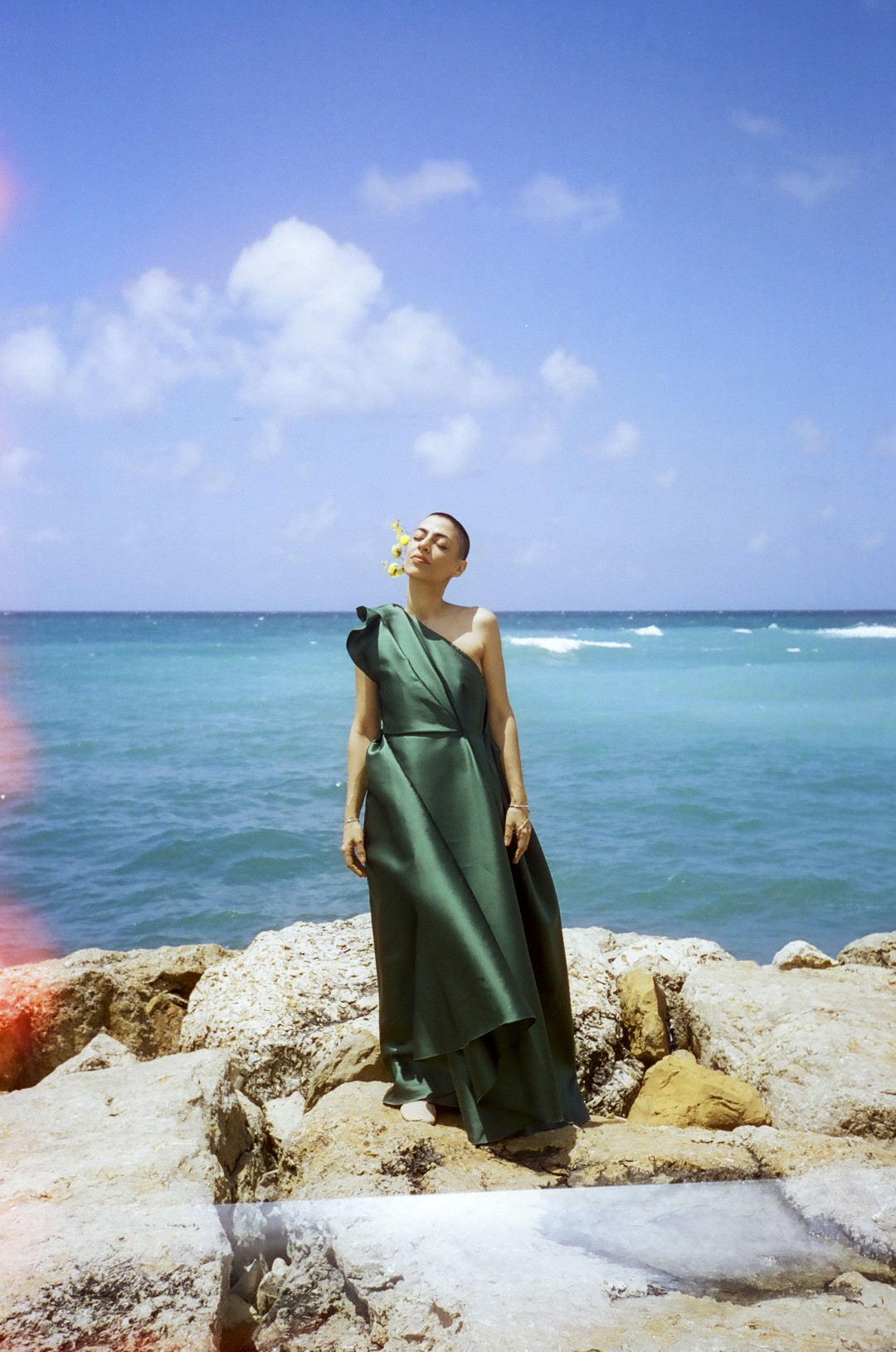
Recently, the northern coastline of Lebanon transformed into more than simply the backdrop of Lara Khoury’s latest collection. Batroun, with its endless Mediterranean horizon and quiet intimacy, became part of the emotional language of “Aala Daw el Baher” itself — a place where memory, healing, movement, and nature merged together. To further translate that feeling into motion, Khoury collaborated with filmmaker Elie Fahed, whose accompanying visual piece approached the collection not through fashion imagery alone, but through emotional honesty.
Fahed’s film, and Khoury’s collection, were also inspired by the memory of Aimee Daou, a young woman from Batroun who passed away from cancer several years ago. Though the two women never met, Khoury – a cancer survivor herself – describes feeling an immediate and almost spiritual connection to her while visiting the Daou family home overlooking the Mediterranean.
“The inspiration for the whole video started when Lara spoke to me,” Fahed explains. “She began telling me that there was something connecting her to Aimee, even without knowing her.” That connection, he says, revolved around cancer, the sea, and the profound relationship both women shared with the Mediterranean. But it was only after visiting the Daou family home overlooking the water that the vision fully revealed itself. “The moment I stepped into the house, I felt like I understood why Lara wanted to do this, and that’s when I started dreaming,” he says.
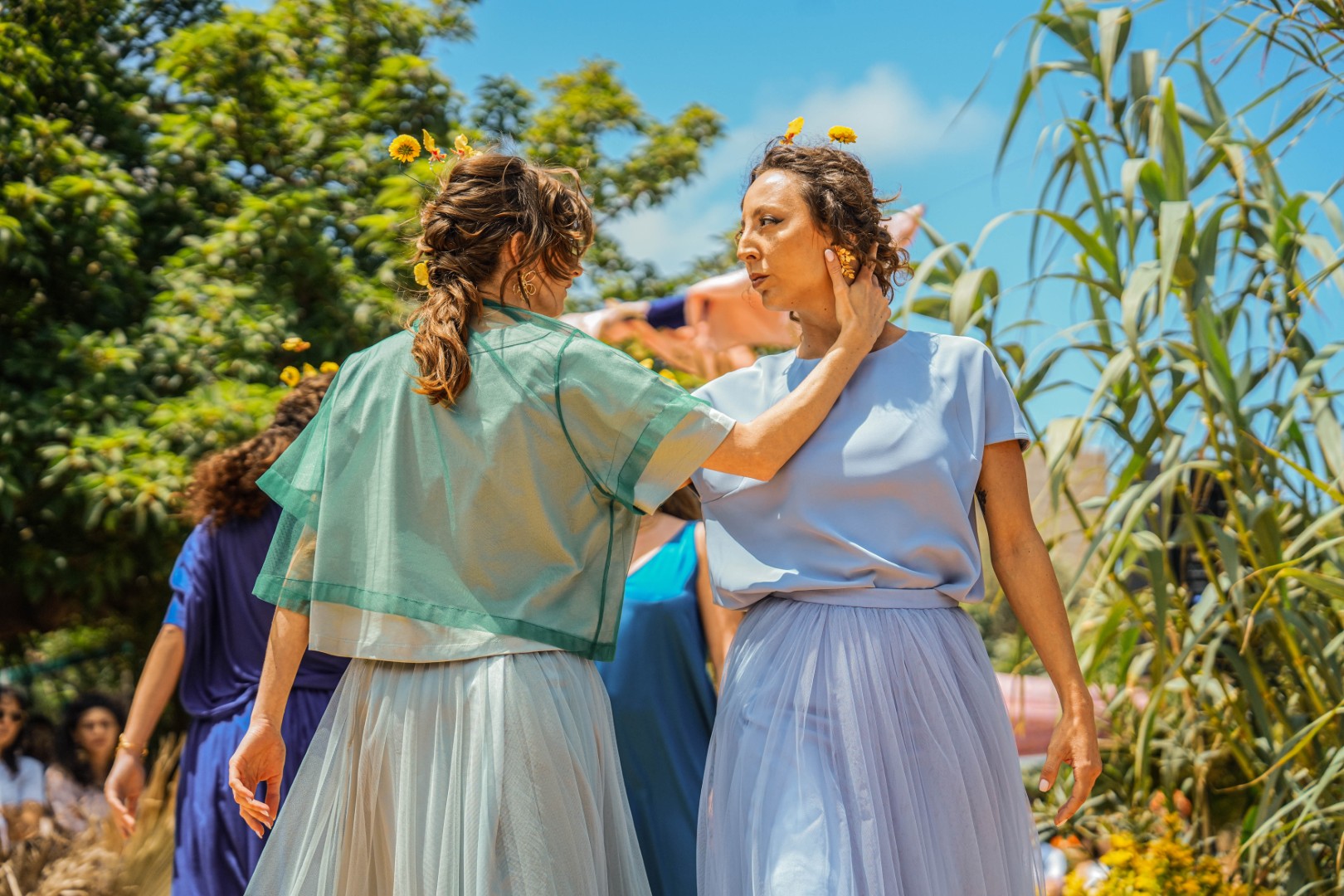
For Fahed, the sea became the emotional thread tying together fashion, memory, and film. The visual narrative was built around authenticity rather than spectacle, allowing movement, water, and silence to carry the emotional weight of the story. “Everything was about honesty,” he says. “The honesty of the story, the honesty of the sea, the honesty of the movement.”
The film ultimately reflects the same emotional questions explored throughout Lara Khoury’s collection: how nature can hold grief, healing, survival, and remembrance all at once. “Maybe nature is what closes our cycle,” Fahed reflects. “I felt that through nature, and here nature is the sea, some kind of healing can happen.”
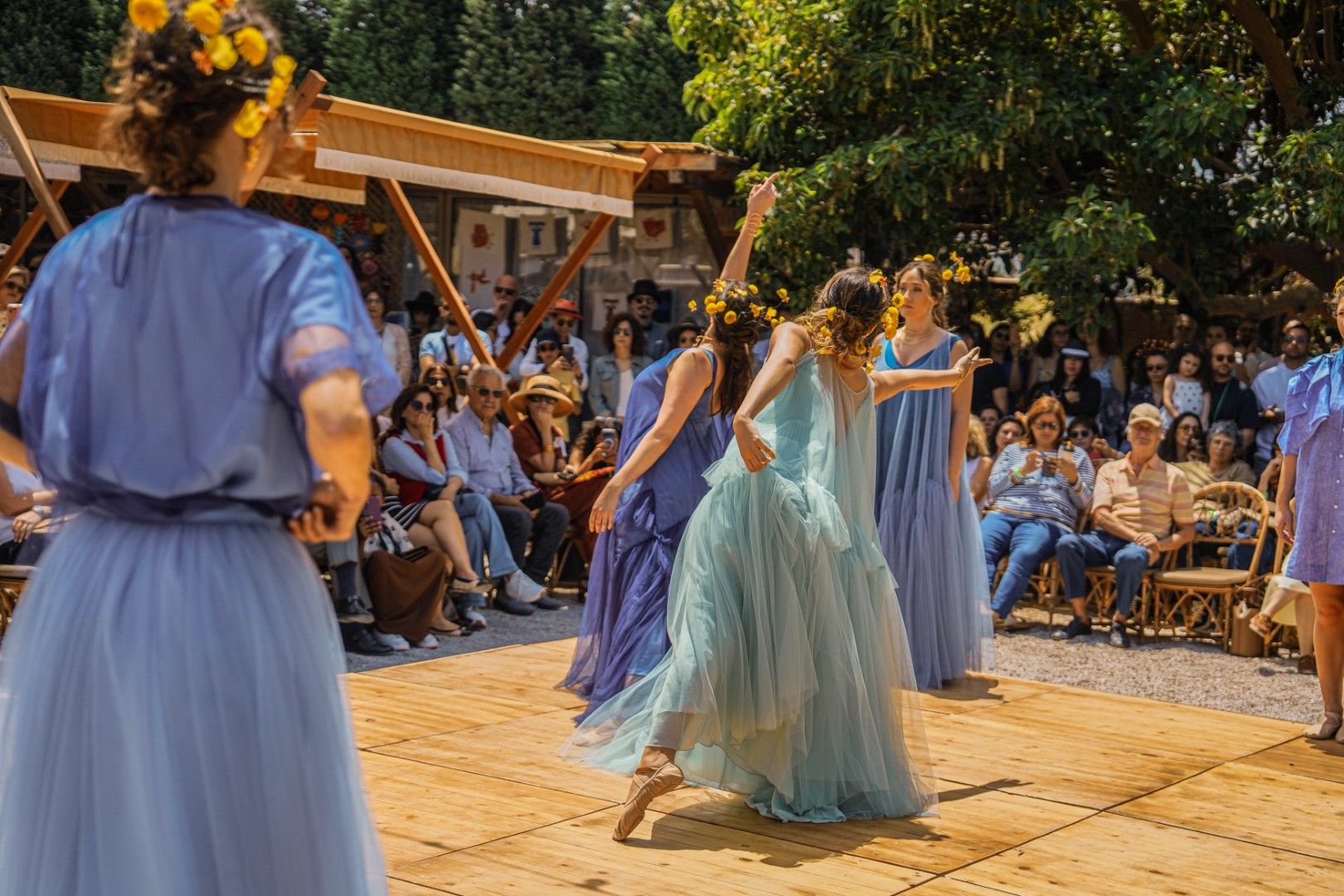
That same emotional honesty defines “Aala Daw el Baher” itself. Presented during Boléro Bloom 2026 in Batroun, the collection unfolds less like a traditional runway and more like a living meditation on vulnerability, survival, and femininity. Across Khoury’s work, fashion has never existed purely as clothing. Instead, garments become emotional vessels carrying memory, fragility, and personal transformation stitched into every silhouette. But with this collection, the Lebanese designer unveils perhaps her most intimate body of work yet — one shaped directly by her own experience with cancer and the healing relationship she formed with the Mediterranean during treatment.
“When I was diagnosed with cancer, the sea quietly became my place of strength,” Khoury shares. “Throughout this journey, one thing remained constant: the presence of the sea in my healing process. It became my refuge.”
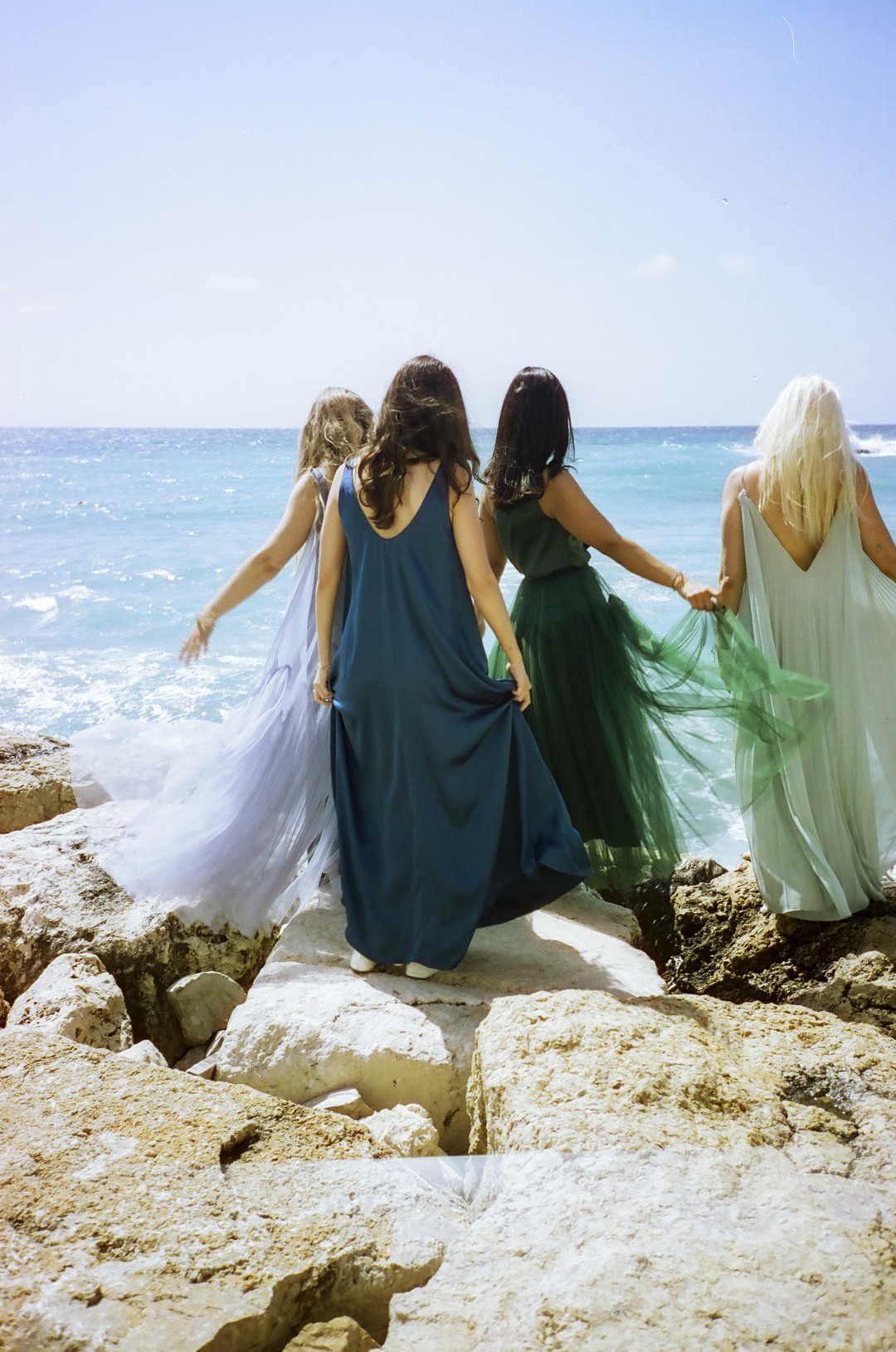
During treatment, Khoury describes leaving the hospital and driving directly toward the shoreline. The sea became ritual, witness, and escape all at once — a place where fear temporarily dissolved into silence.
“I would pour my sorrow into its waves, finding immense comfort, as if I were making a promise to the sea that I would never give up,” she says.
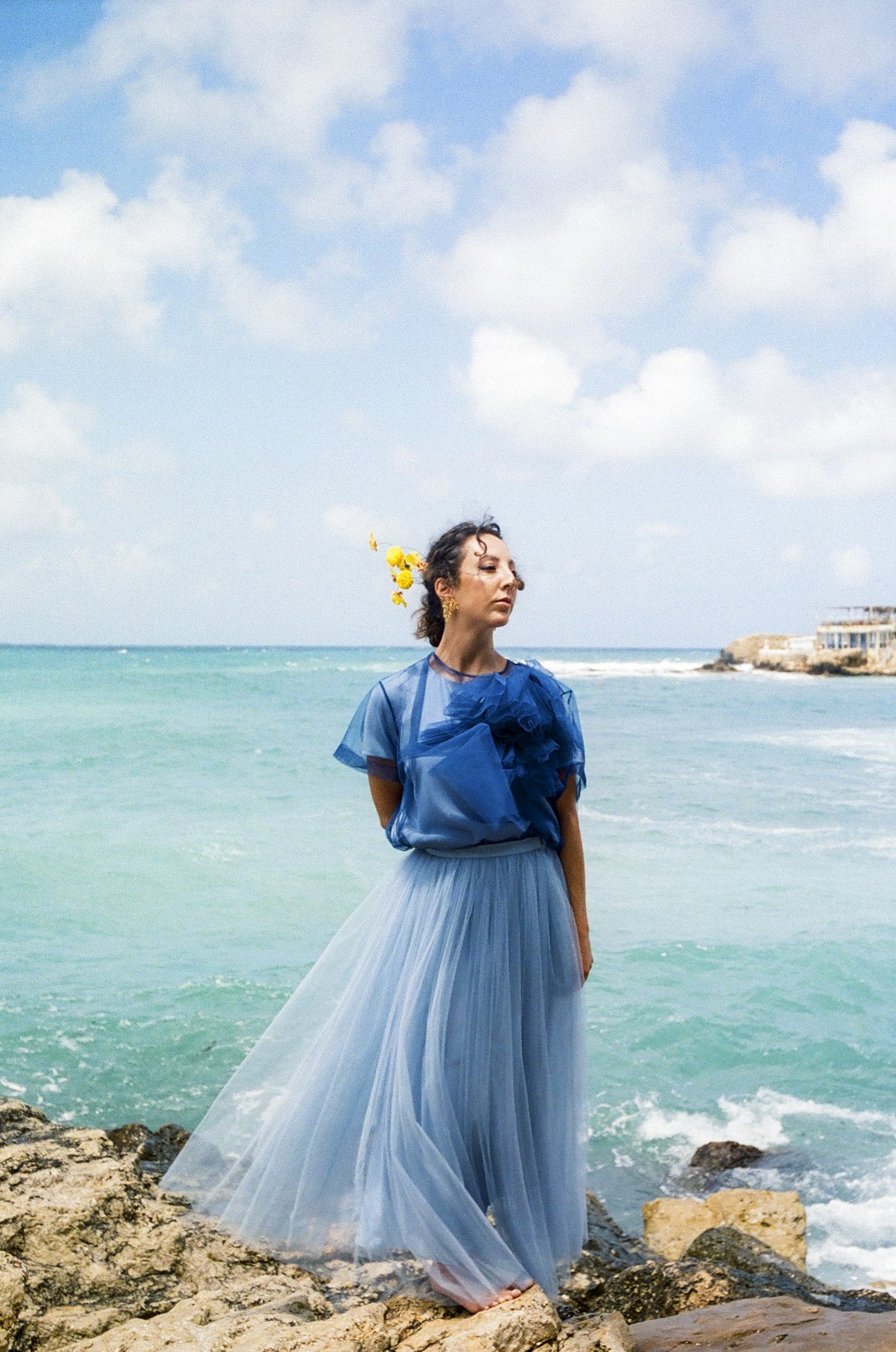
But “Aala Daw el Baher” is not only Khoury’s story it is also Aimee’s. Though the two women never met, Khoury describes feeling an immediate and almost spiritual connection to her while visiting the Daou family home.
“And from those same corners, I began to notice the presence of someone smiling back at me through photographs placed throughout their home,” Lara recalls. “It was Aimee Daou, their daughter who passed away from cancer a few years ago.”
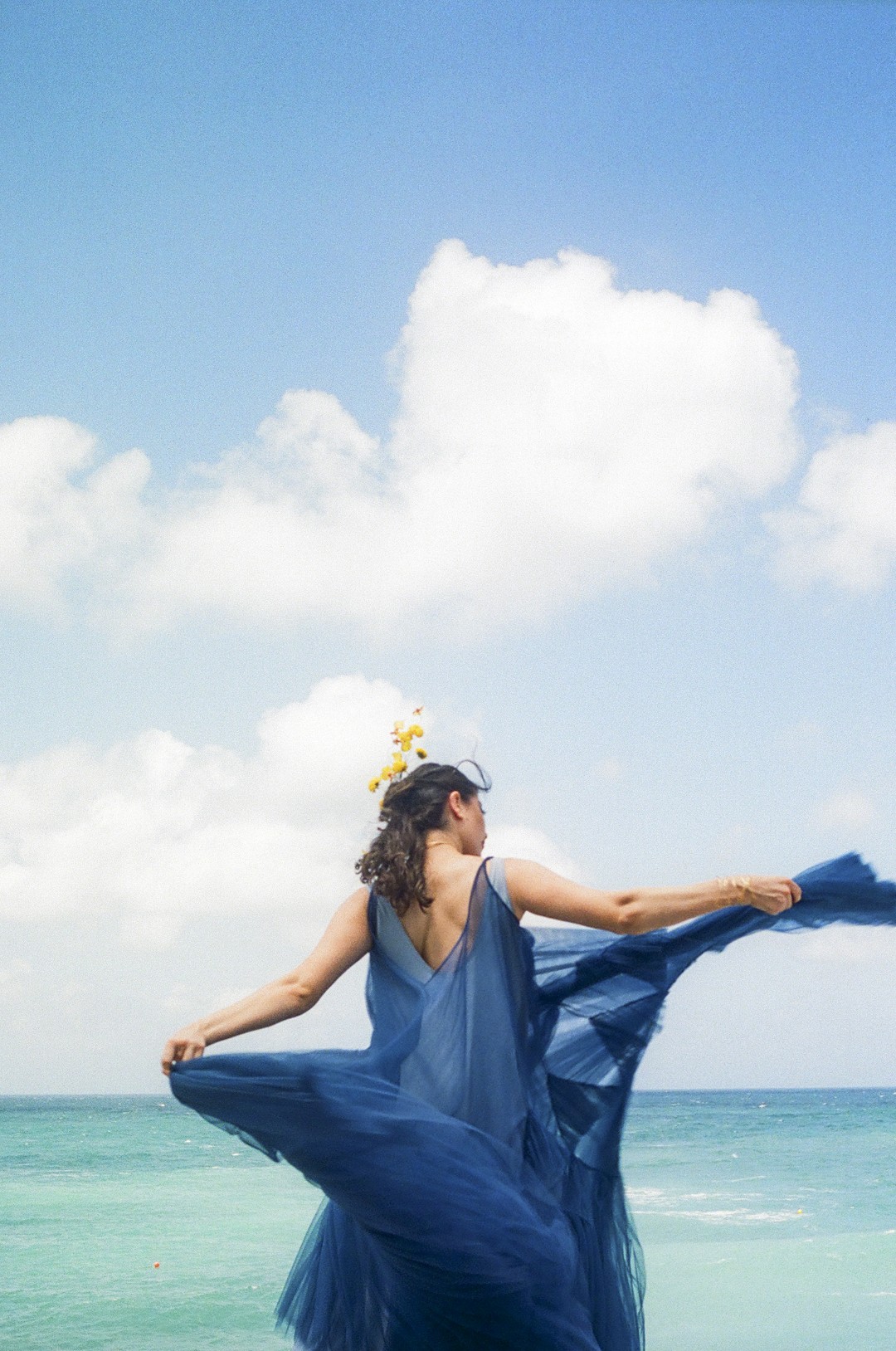
The encounter transformed the emotional direction of the project entirely. Standing inside the home, surrounded by photographs, light, and the endless horizon outside the windows, Khoury began imagining how Aimee too must have turned toward the sea during her own moments of fear and healing.
“I imagine her standing before these same waters, finding refuge in their vastness, just as I did,” Khoury says.
That realization pushed the collection beyond fashion and into something far more intimate: a dialogue between two women connected through vulnerability, resilience, and the same horizon.
“And in that moment, something deeply comforting became clear to me,” Khoury says. “The sea had held her, the same way it held me. We may not have shared time, but we definitely shared this horizon.”
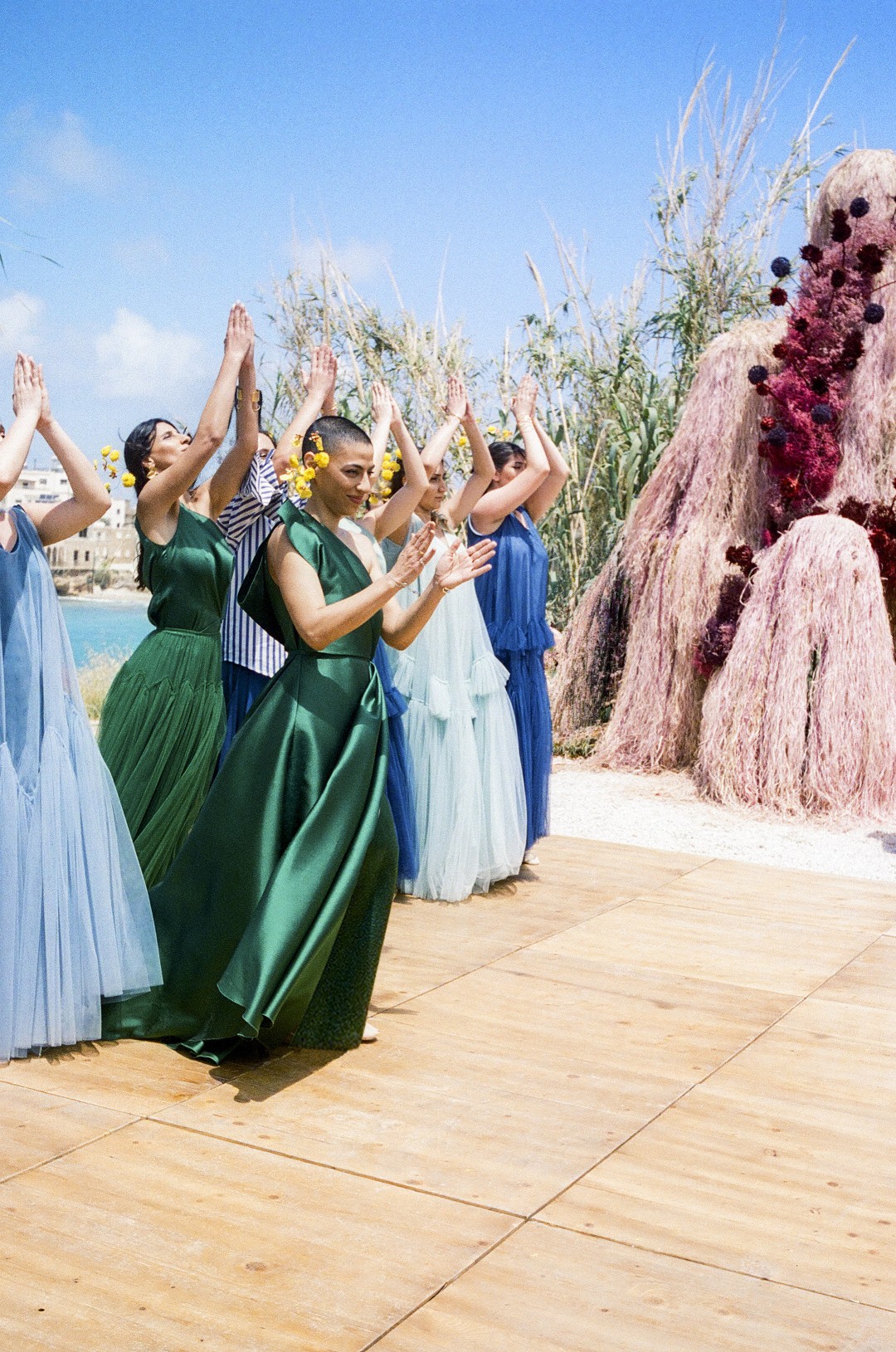
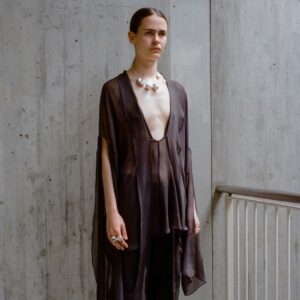
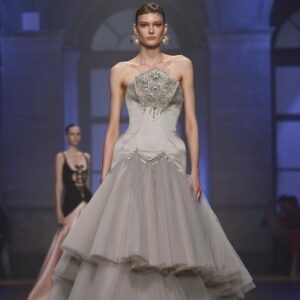
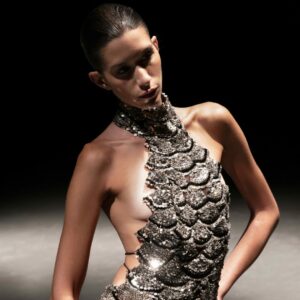
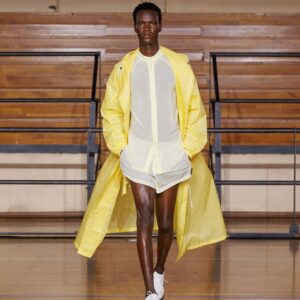
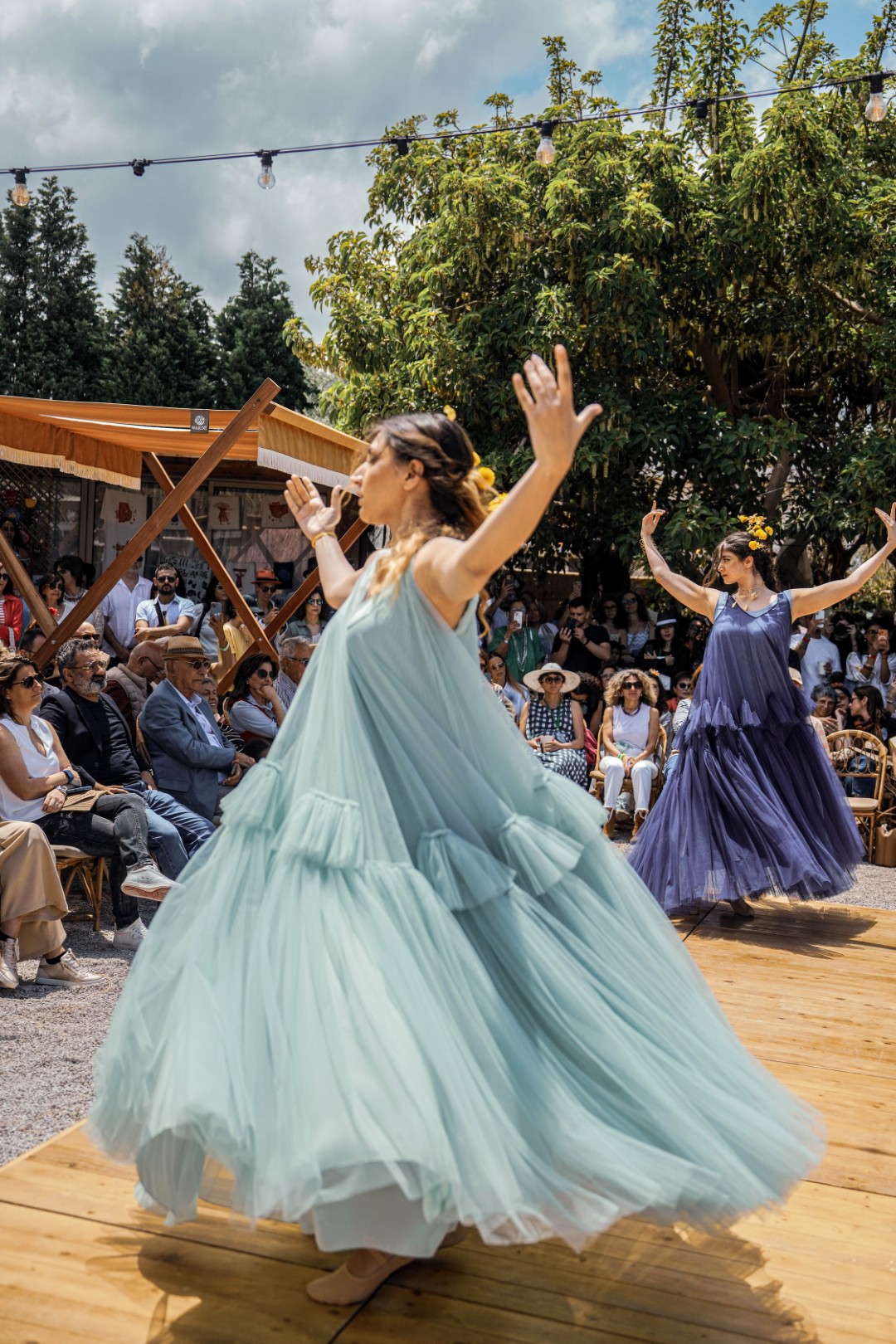
Throughout the collection, Aimee’s presence quietly reappears through symbolic details woven into the garments themselves. Miniature wings delicately embroidered into dresses reference her as an angelic figure guiding the emotional landscape of the collection. Elsewhere, flowing silhouettes in seafoam blue, teal, pale green, and yellow mirror the colours of water dissolving into spring light.
The garments embrace fluidity rather than rigid structure. Chiffon, tulle, satin, organza, and crepe move weightlessly across the body, allowing transparency and movement to carry emotion naturally. Nothing feels restrictive. Instead, the collection breathes — as though the garments themselves are surrendering to the movement of wind and tide.
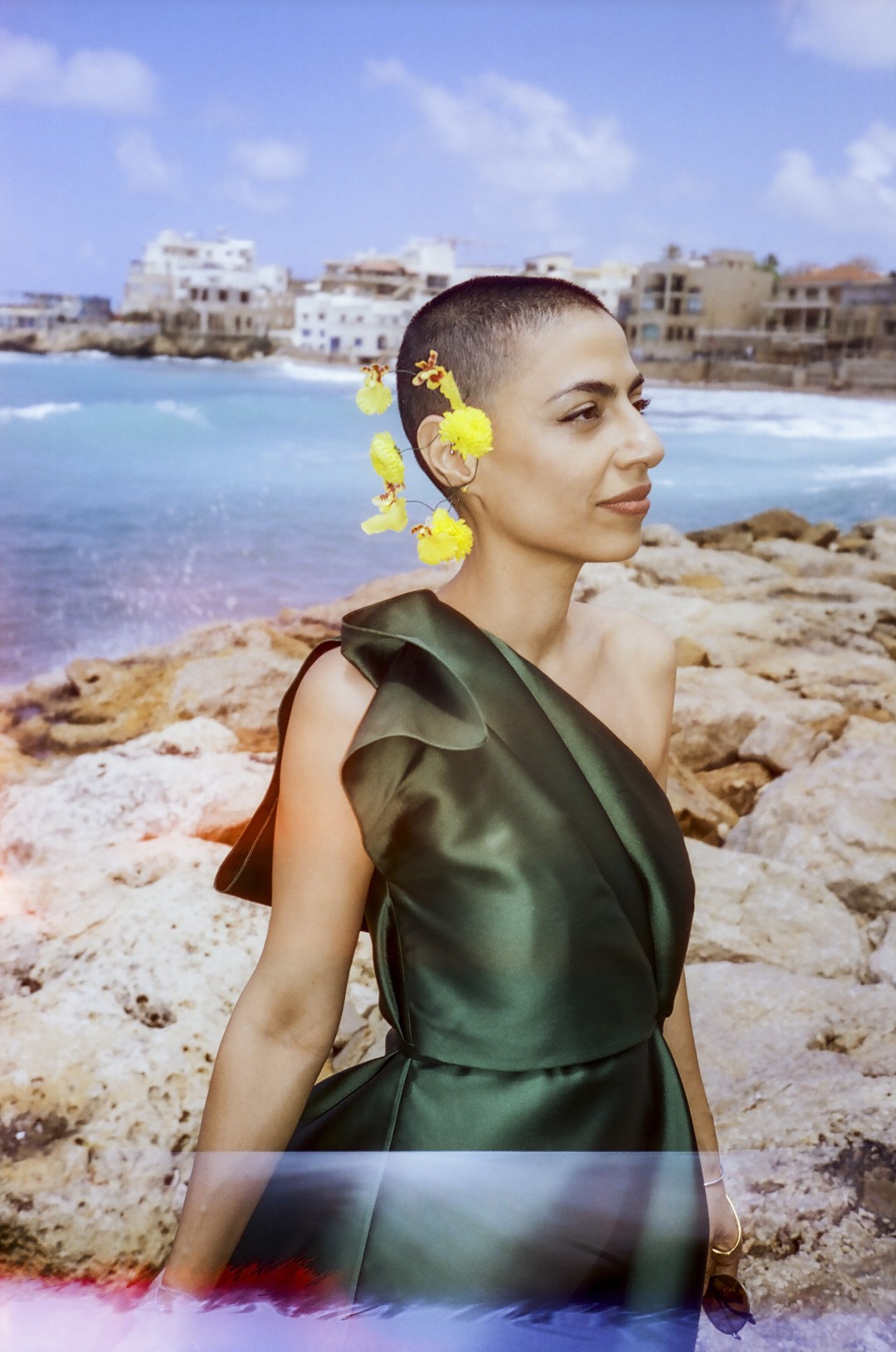
“Blooming colours for her radiance. Dancing bodies for her spirit. And freedom for both of us,” Khoury says while describing the emotional foundation behind the collection.
Presented through a live performance featuring contemporary dancers moving like tides across the landscape of Boléro Bloom, the collection transforms into something between fashion, cinema, and emotional testimony. Fabrics floated against the wind, bodies dissolved into the scenery, and the sea remained constantly present — not as scenery, but as a character within the story itself.
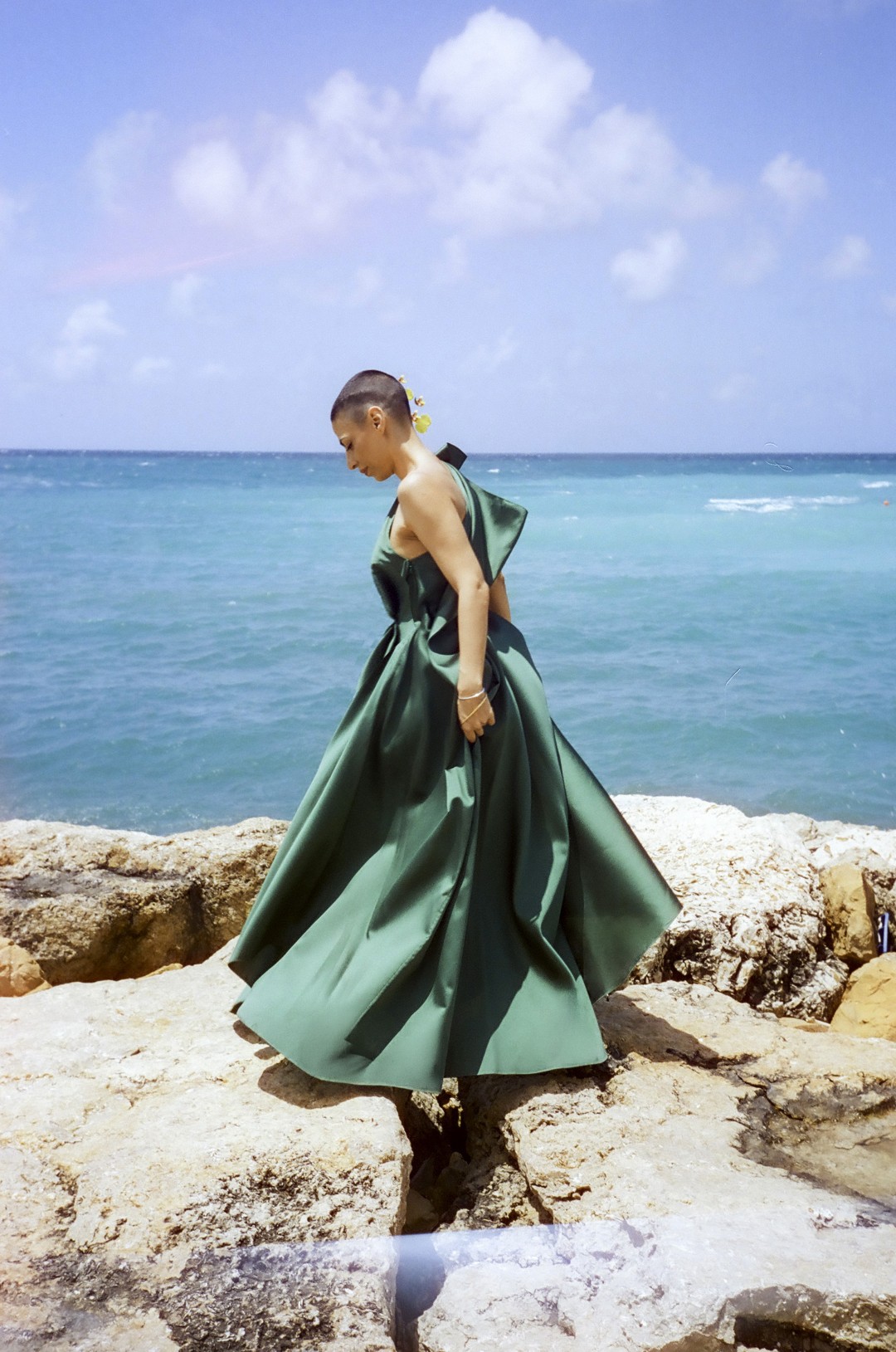
In many ways, “Aala Daw el Baher” arrives at a moment where Lebanese fashion itself feels increasingly rooted in emotional storytelling rather than spectacle alone. And perhaps that is what makes Lara Khoury’s work resonate so deeply. The collection does not attempt to romanticize pain or transform illness into aesthetic performance. Instead, it allows vulnerability to exist openly through movement, softness, and honesty.
“Today, I am cancer-free,” Khoury says. “And I remain deeply grateful for the strength that carried me through, and for the way this journey awakened me to the beauty of life.”
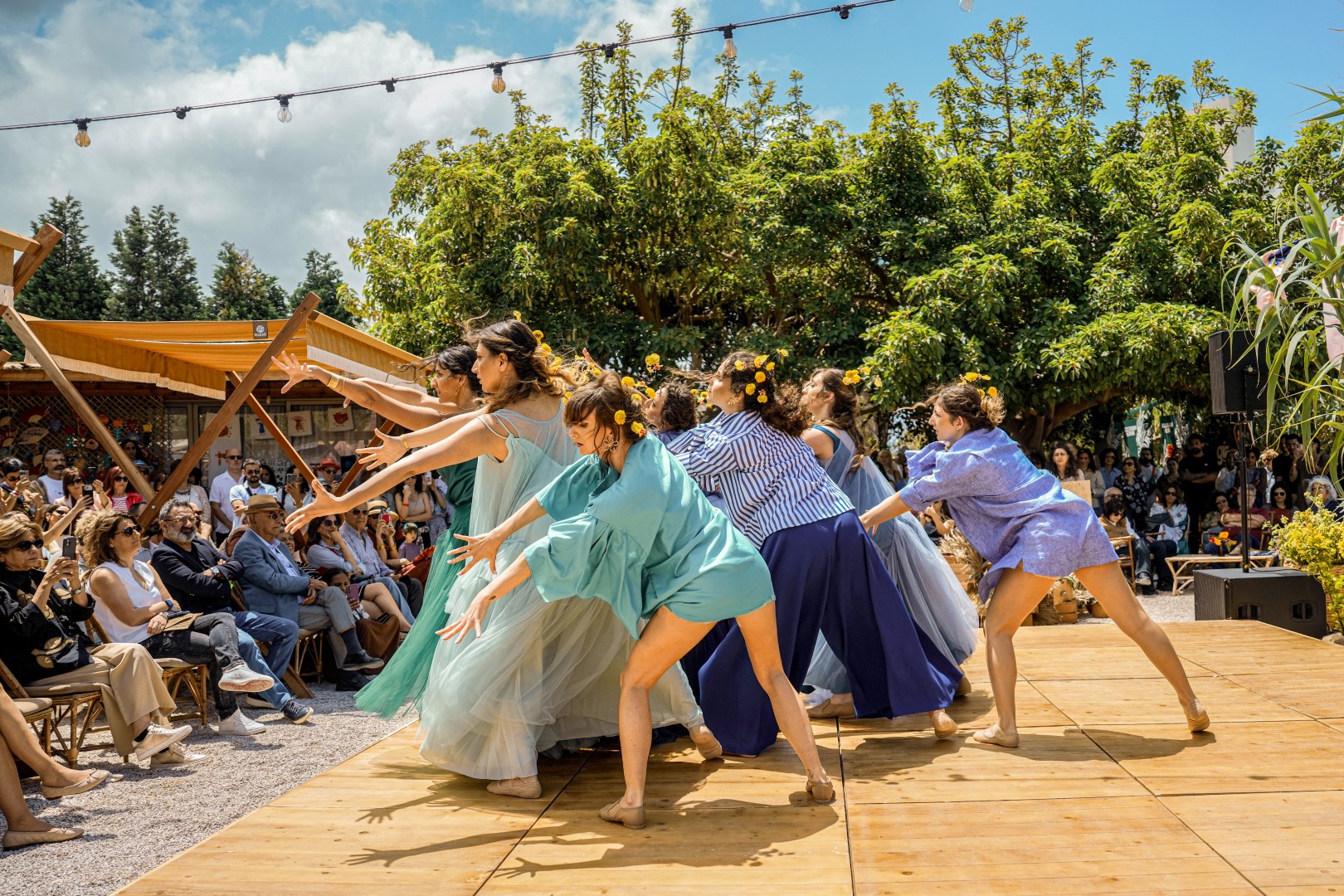
With “Aala Daw el Baher”, Lara Khoury transforms that gratitude into something tangible. Not simply a fashion collection, but a love letter to survival, remembrance, femininity, and the sea that carried both women through moments of fear, fragility, and hope.
For more stories of fashion from across the region, visit our dedicated archives and follow us on Instagram.