Ali was dressed for work from the waist up: crisp white shirt, solemn expression, boxers safely out of frame. On one screen was a consulting deck about operational efficiency. On the other was Saudi Arabia v Argentina in the group stage of the 2022 World Cup. His boss was somewhere in the middle of a sentence when Ali stopped listening. Six people were on the call, which made screaming professionally inadvisable.
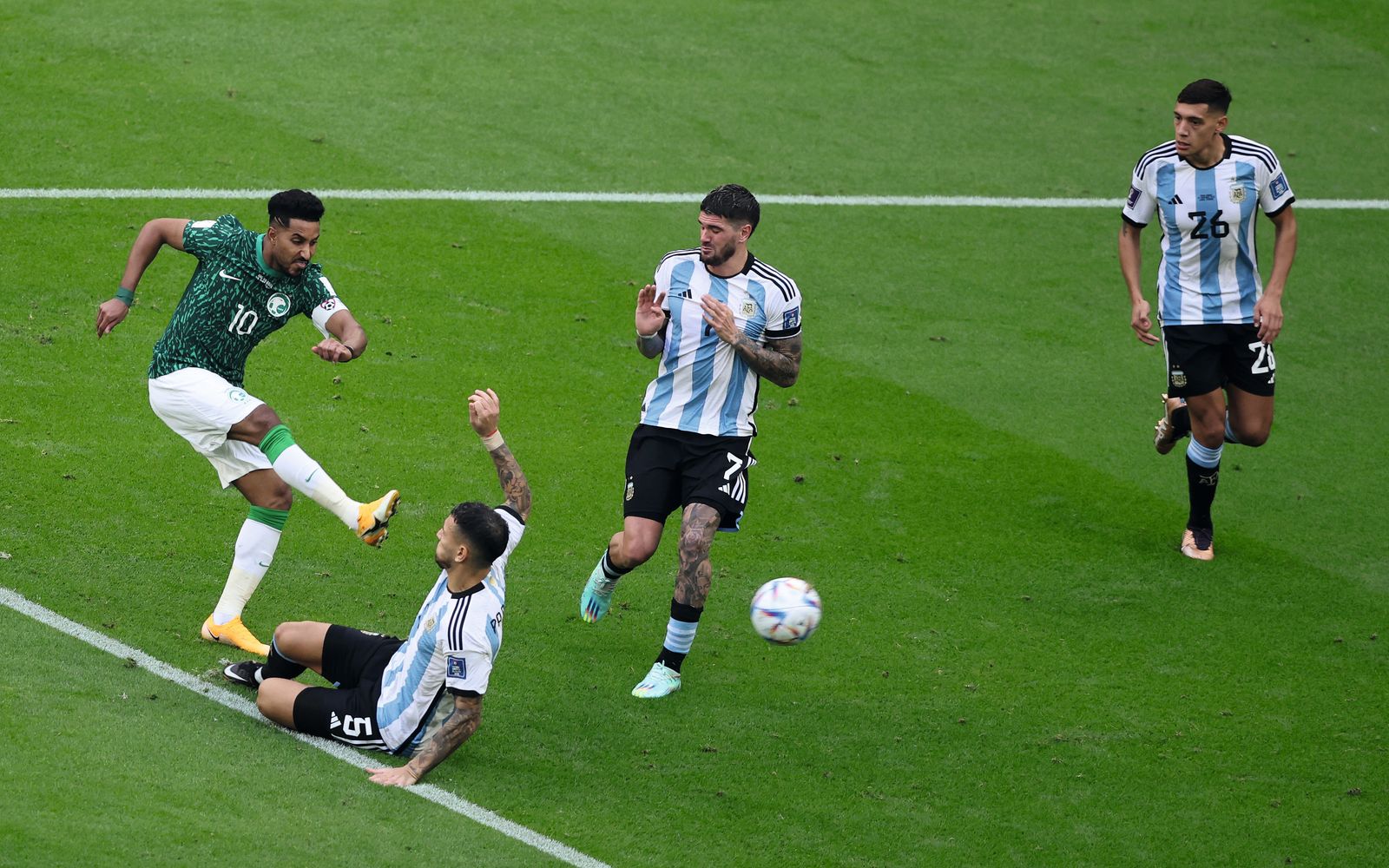
Ali’s hand closed into a fist. Saudi pushed into the final third. For a second, he went completely still. Then Saudi scored. Ali was out of his chair.
“I started shouting,” he says. “Everyone was shocked. I was like, ‘Sorry, we scored. But we’re probably not going to score again, so it’s fine.’”
He sat back down, fixed his shirt, and the meeting resumed. Then Saudi scored again. This time, Ali was not the only one shouting. The meeting gave up. Six people who had gathered to discuss work were now watching one of the great World Cup upsets unfold in real time.
“Everyone understands the World Cup,” Ali says. “When the worst team beats the best team, everyone’s happy.”
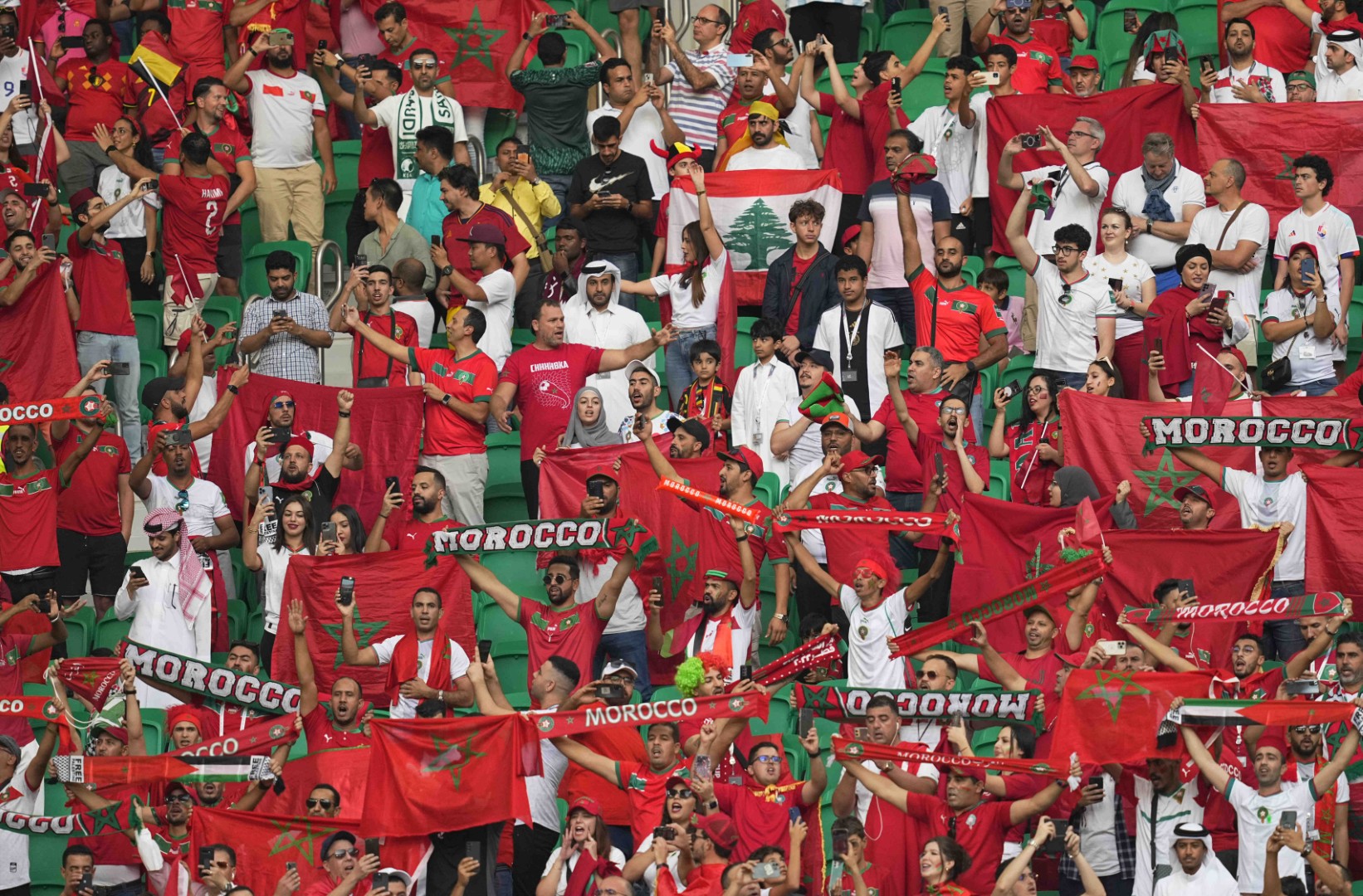
That was 2022. In 2026, the tournament began interfering with normal life again. For a few weeks, kick-off times dictated evenings. Work calls loosened into watch parties, and the family group chat—usually a wasteland of forwarded Eid greetings—became a tactical department staffed by uncles, cousins and one aunt with suddenly grave thoughts about Morocco’s back line.
The final whistle in Egypt’s 3–2 defeat to Argentina had barely gone before the chat lit up. “We were robbed.” Then, with greater certainty: “The referee is racist.” Someone posted a replay of the disallowed goal and slowed it down until the foul disappeared. The decisive evidence arrived as a meme of Messi holding Infantino from behind on the bow of the Titanic, the two of them gazing tenderly towards a final FIFA had apparently already booked.
My own contribution was an “I ♥ Egypt” T-shirt and a willingness to endure accusations of performative fanhood from men genuinely offended that I could enjoy the tournament without submitting to year-round tactical suffering. Can I explain the offside rule? Not in a way anyone should have to sit through. Did Egypt’s elimination still ruin my evening? Deeply.
Somewhere in the aftermath, Mostafa Shobeir—Egypt’s goalkeeper and the man who saved Messi’s penalty in Atlanta—became our collective son, or crush, depending on your age and your algorithm. A separate group chat now follows his left knee as closely as his career, circulating the penalty save alongside videos of him rehabbing with a resistance band. After enough viewings, we reached the only reasonable conclusion: Al Ahly could no longer contain him, and Europe would announce him by Friday.
At a club match, fandom can feel like a qualification you must defend. The World Cup overwhelms that instinct. It puts the lifelong supporter and the person who bought the shirt that afternoon in the same room. In London, those rooms also made Arabness unusually public.
Amina—Egyptian, born and raised in London, a Liverpool season-ticket holder—watched Egypt play in a Notting Hill pub with her brother. Both wore Salah shirts; most of the room was Australian.
Across the pub was another Egyptian family: a young girl in the same jersey, her brother and their parents, shouting in Arabic with enough force to unsettle the Australians beside them. By the second half, without introductions or ceremony, they had folded Amina and her brother into their orbit. The girl’s name was Laila. “The cutest girl, maybe seven or eight,” Amina says. When Egypt scored, Laila clung to her, and Amina lifted her as though they had known each other for years.
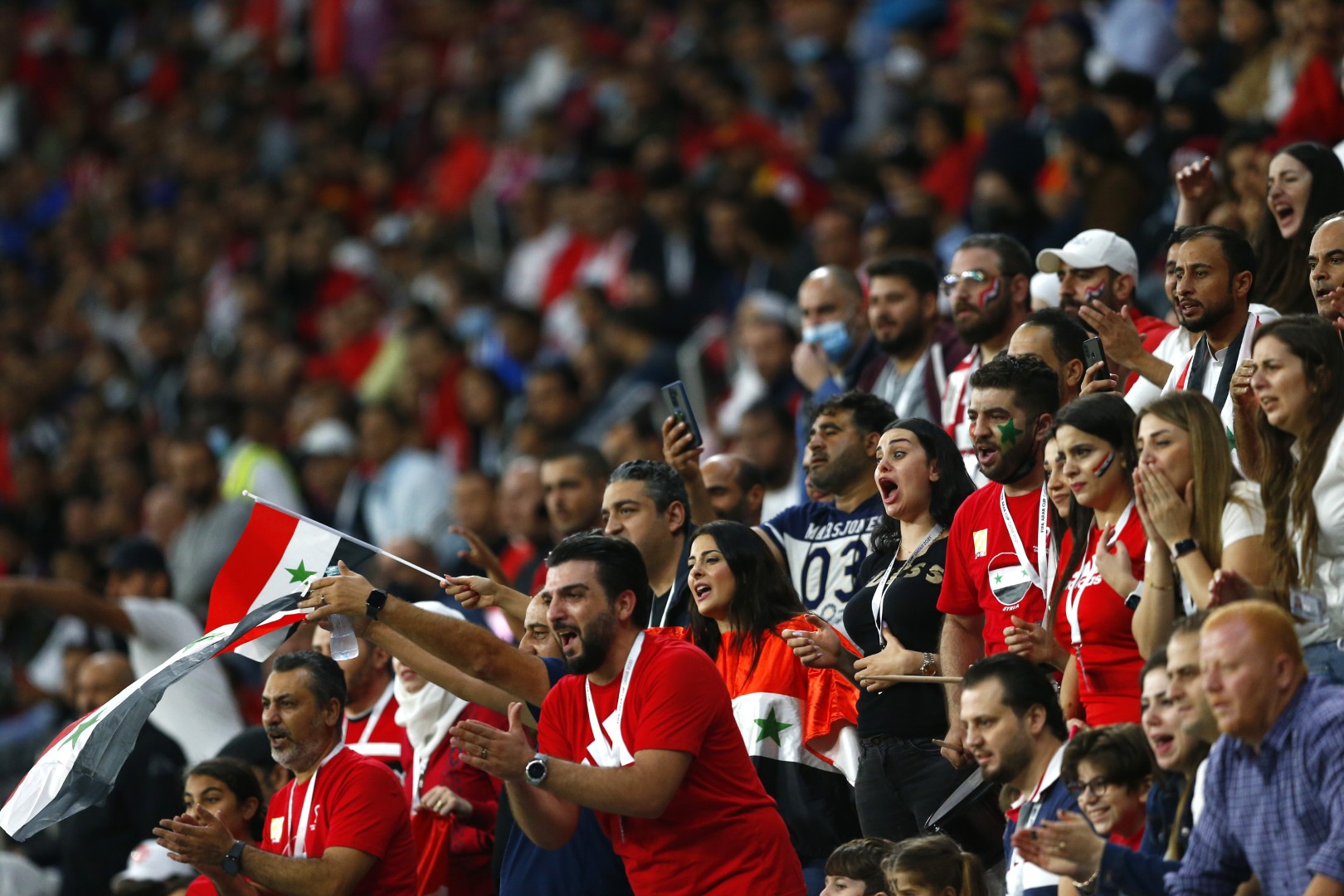
When Egypt won the shootout, Amina and her brother left with the family—a small procession of strangers, still shouting, trailing into the street. “They basically adopted us for the match,” she says.
That instant sense of belonging does not stop men from asking whether Amina has earned it.
“I was in my Salah shirt, halfway through telling my brother they needed to push higher, when a man I’d never met leaned over and started explaining offside to me,” she says. “I told him I’d been watching Liverpool since I was three. He nodded, then carried on.”
Maya takes the opposite route: she refuses the test altogether. She came for the cute jerseys and the need for company on a Tuesday evening. She watched Egypt at a friend’s house in Kensington before descending on “Little Arabia,” or Edgware Road, to celebrate the win. Fans spilled into the street until it stopped behaving like one: cars jammed nose to bumper, flags out of every window, horns dissolving into something closer to song.
“By the end I was screaming ‘Masr’ like I had an Egyptian passport in my bag,” she says. She’s Lebanese-French. For one night, Edgware Road became Cairo with a congestion charge.
Maya has no patience for being asked to audition for the shirt.
“Men act like they’re the ones on the pitch,” she says. “If he hadn’t torn his ACL or whatever, he thinks it would be him instead of Salah. Some delusion. They’re so protective over the football.”
Asked what she would say to men who ask women to name five players, she does not hesitate. “I’d say, yeah, I can name the cute ones. Then I’d ask him to name five female players.”
Hassan, a professional player, used to sympathise with the gatekeepers. World Cup-only fans posting as though they had watched football all year irritated him.
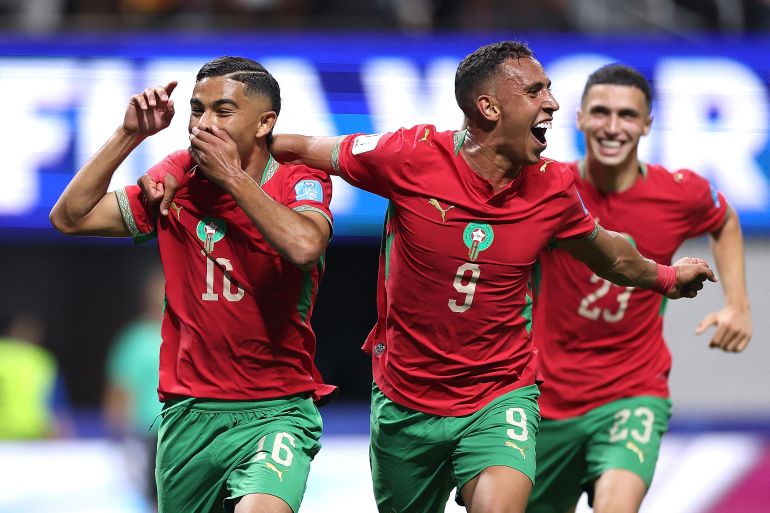
“It got under my skin,” he says. “Like, where were you the last two years? Suddenly you’re posting all over Instagram.”
He laughs at himself now. “I kind of just embrace the fact that everyone’s watching football and enjoying it.” My ignorance, he assures me, does not disqualify me from suffering. “When Egypt loses,” he says, “you are still upset.”
Even Hassan admits that expertise is not the only thing drawing people in. He usually listens to matches in English, but the Arabic commentary is better. “They just have so much more passion,” he says. English commentary tells you what happened. Arabic commentary makes it sound like something has happened to all of us.
The togetherness is real, but the allegiances producing it are not always straightforward. Ali has followed football all his life, though his loyalties are not tidy. He supports Saudi, England and Portugal: “the country I’m from, the country I grew up in, and Ronaldo.”
Egypt is usually a no. Argentina changes the calculation. Ali reads Messi as supportive of Israel, which makes cheering for him feel like a political betrayal. “It feels spiritually colonial,” he says. For one match, the opponent matters more than the rivalry.
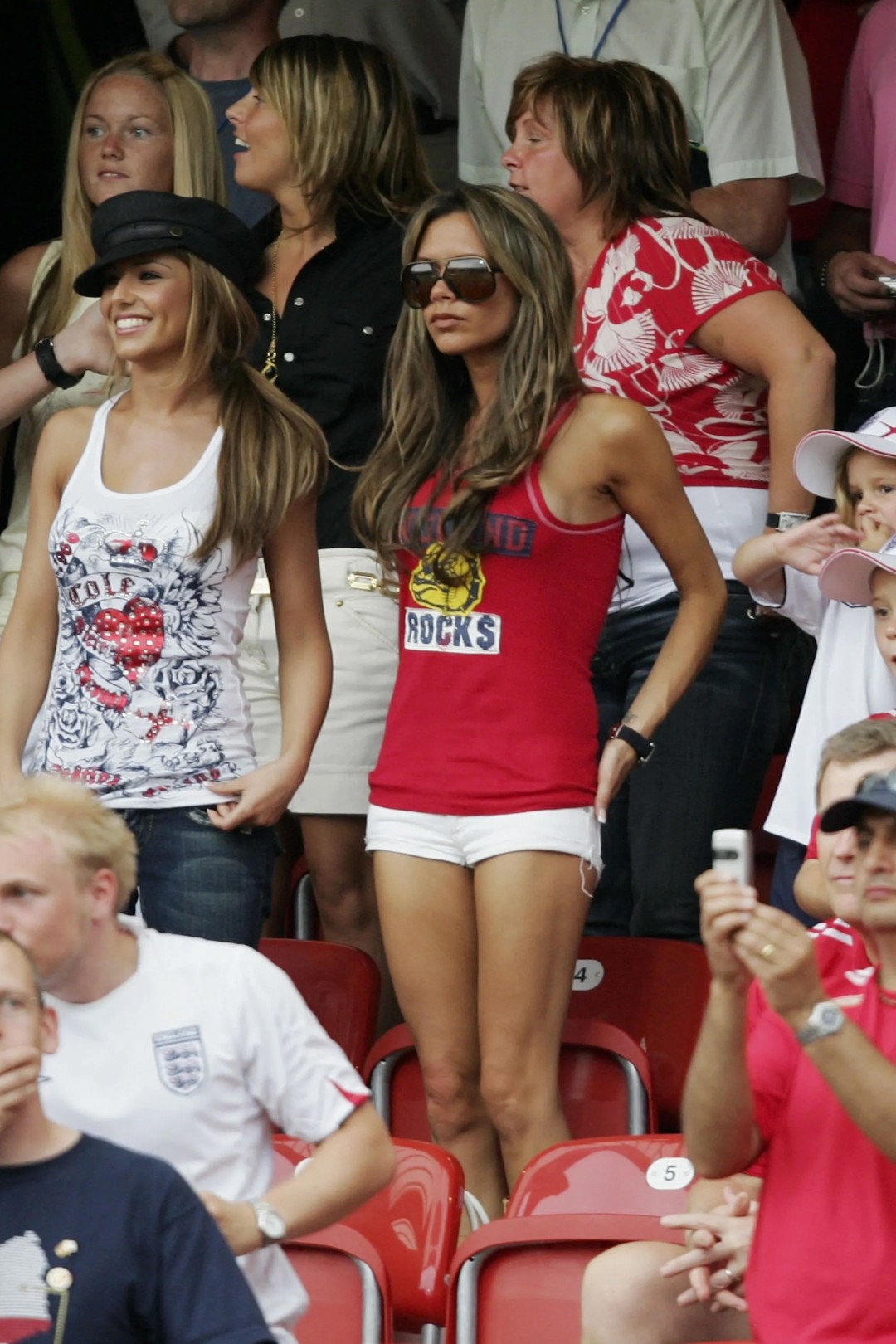
After Morocco lost to France in the quarter-final, no Arab team remained. The group chat treated this as a change in programming rather than an ending. Live commentary gave way to Shobeir reels, updates on his knee and transfer news invented with total confidence. By the final, according to us, he would be playing in the Premier League.
I still wear my Egypt shirt to get coffee in London. During the matches, it was uniform and superstition at once. Now it carries the residue of those weeks: Shobeir’s save, the flags on Edgware Road, Laila in Amina’s arms, the group chat certain Europe was calling. The teams are out, but the shirt has not gone back in the drawer.
For more stories of culture from across the MENA region and the diaspora, visit our dedicated archives and follow us on Instagram.