

Fall rolls around and everyone suddenly decided to fix their life. The year starts to feel finite by September and October. The things we’ve been postponing since January become harder to ignore, and three or four months suddenly feels like both very little time and just enough to turn things around. Online, that anxiety has found a more optimistic name: the Fall Reset, the Winter Arc or, increasingly, the Great Fall Lock-In.
For years, the beginning of autumn has carried the residual feeling of going back to school. For much of our childhood and adolescence, September really did mean beginning again. There were new classes and new routines, different schedules and sometimes entirely different versions of ourselves. You could return from summer taller, tanner, with a different haircut or a newly constructed personality and reasonably expect everyone to accept that something had changed. Adulthood takes away the semester, but apparently not our desire for one.
It is completely arbitrary. September is just another month, and most adults don’t have a school bell or a fresh box of sharpened pencils waiting for them. Even so, the month carries this weird, magnetic pull of a fresh start—social media just gave an old instinct a trendy name. The “fall reset,” the “winter arc,” the ubiquitous instruction to “lock in”: each offers essentially the same proposition. Draw a line underneath whatever happened before. Decide that the next version starts here.

The general rule of the internet’s seasonal sprint is simple: you ghost your old habits, grind at work, hit the gym, read, hoard your cash, stay home, and repair whatever summer let slide, hoping to pop out on December 31st completely reinvented.
Turns out, this mass makeover isn’t just a TikTok invention. Psychologists have a name for at least part of this impulse: the fresh start effect. Research by behavioural scientists Hengchen Dai, Katherine Milkman and Jason Riis found that temporal landmarks — birthdays, Mondays, the beginning of a month or year, even the start of a new semester — can surge behaviours associated with pursuing goals.
These moments create psychological boundaries between one period of our lives and another, allowing us to distance ourselves from an imperfect past self and imagine that the person stepping across the boundary might behave differently. It explains the peculiar logic that makes I’ll start Monday feel fundamentally different from I’ll start Thursday, despite there being no meaningful difference between the two.
September and October might be particularly good for the illusion. Before we knew what a productivity routine was, many of us were trained to recognise it as a reset. The association is almost sensory: new stationery, new clothes, earlier mornings, the first page of an untouched notebook. Years after the timetable disappears, its rhythm remains.
That does not necessarily make them useless. The fresh start effect suggests there can be genuine motivational value in treating time as though it comes with chapters. If yesterday’s version of you failed to go to the gym for six consecutive weeks, psychologically separating yourself from her might make trying again feel possible. August me did that. September/October me is different. Social media has taken that very human desire for a clean slate and turned it into something more aesthetic and more demanding.

The fall reset has a visual style. It is early alarms and immaculate desks, matcha and Pilates, books with annotations in the margins, meal prep, running shoes, freshly changed bedsheets and calendars filled with tiny colour-coded promises. Autumn happens to be particularly easy to romanticise. Productivity looks better when there is coffee beside it. There is a strange promise embedded in it: give me four months and I will give you somebody new.
Perhaps that is why the September-to-December lock-in feels different from the endless carousel of online wellness challenges. Four months is close enough to imagine and long enough to fantasise about transformation. There is an endpoint. A before and an after. Better still, there is another culturally sanctioned reinvention waiting immediately afterwards. If fall doesn’t fix you, January gets another go.
There is another idea buried inside lock-in culture that is perhaps more revealing than the schedules, gym routines or reading lists: the fantasy of withdrawal. Again and again, the language of locking in involves removing yourself. Stop going out. Stop dating. Cut distractions. Say no. Delete social media. Become inaccessible. Work silently. Let people wonder where you went. Return when the results speak for themselves. The imagined improved self is apparently somewhere underneath all the noise, waiting to be uncovered once everyone else has been switched off.
For a generation accustomed to documenting almost every stage of becoming, there is something compelling about that fantasy. We live extraordinarily public lives. Careers happen online, friendships happen online, flirting happens online, taste happens online and self-improvement happens online too. Even disappearing can become content: a TikTok announcing that you are deleting TikTok so you can finally focus.
There is an almost perfect contradiction in publicly announcing your mysterious offline era. Beneath the supplements, planners, gym memberships and aggressively optimised morning routines, the desire is surprisingly simple. We want to believe there is still time.
September looks at the year we imagined in January and the year we actually had, and leaves four months sitting between them. Enough time to salvage something. Enough time to finish the book, start the project, return to the gym, apply for the thing, save some money, sleep properly, call people back. Enough time, perhaps, to prove that the year is not finished with us yet. And there is something comforting about that. The problem begins when we become better at starting over than continuing.
Humans have always organised existence into seasons, rituals, birthdays, semesters and years. There is nothing particularly foolish about needing a line in the calendar that says: try again from here. However, it’s important to note that transformation rarely happens at the line itself.
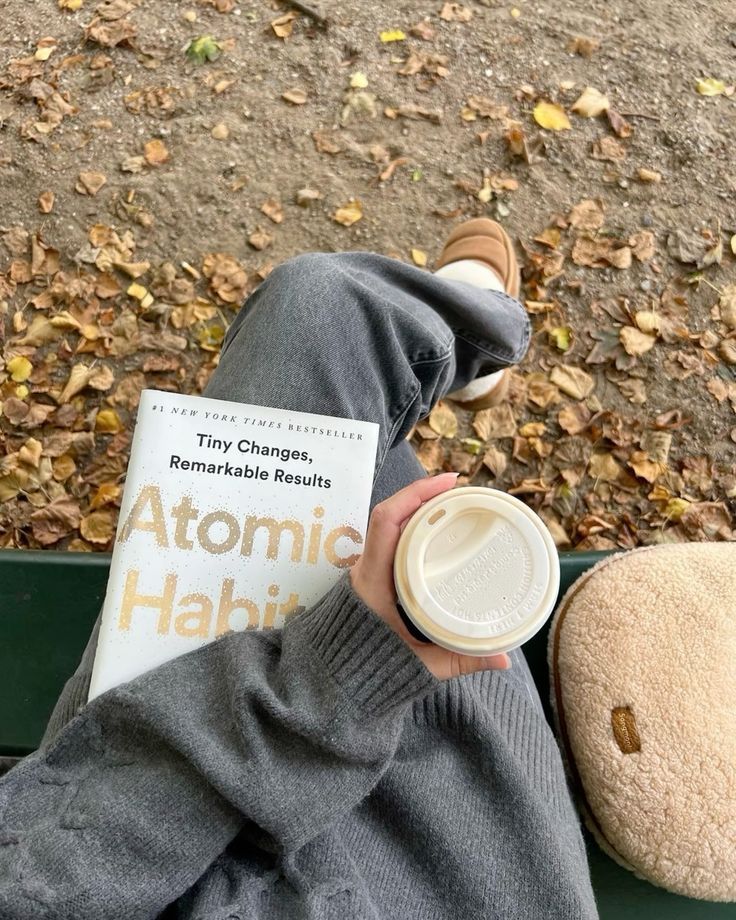
Fall can make us buy the notebook. It can get us through the gym door. It can convince us that summer’s habits belong to some former version of ourselves. The fresh start might even be exactly the psychological nudge we need. Eventually, though, the novelty of becoming wears off and the less glamorous work of being begins.
September’s gone and now, as we roll into October … What have you got planned for your Fall Reset?
For more stories of culture from around the region, visit our dedicated archives and follow us on Instagram.