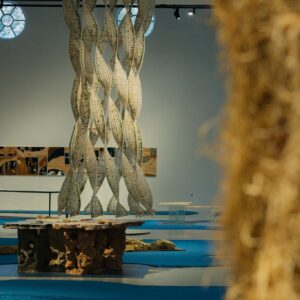
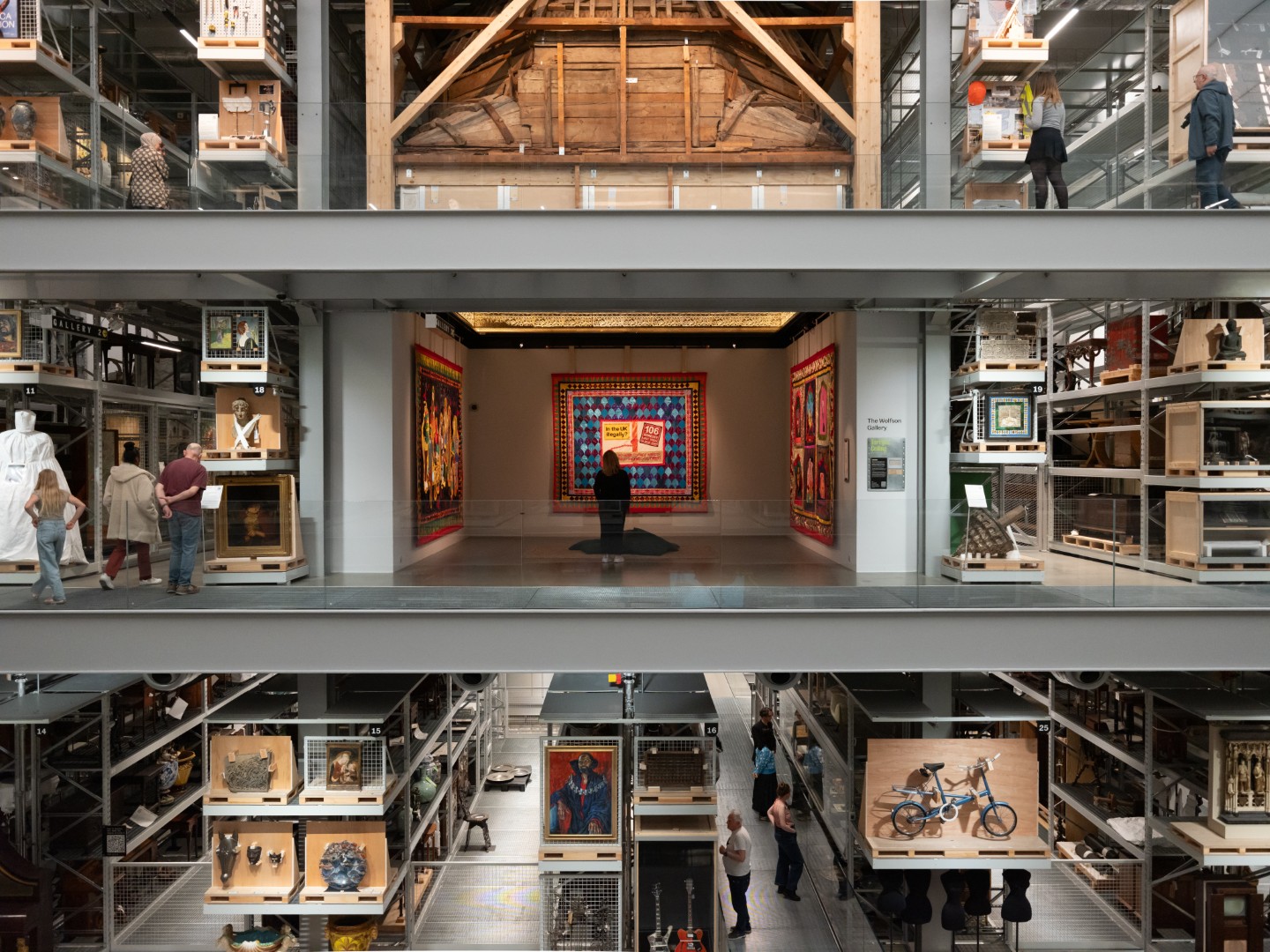
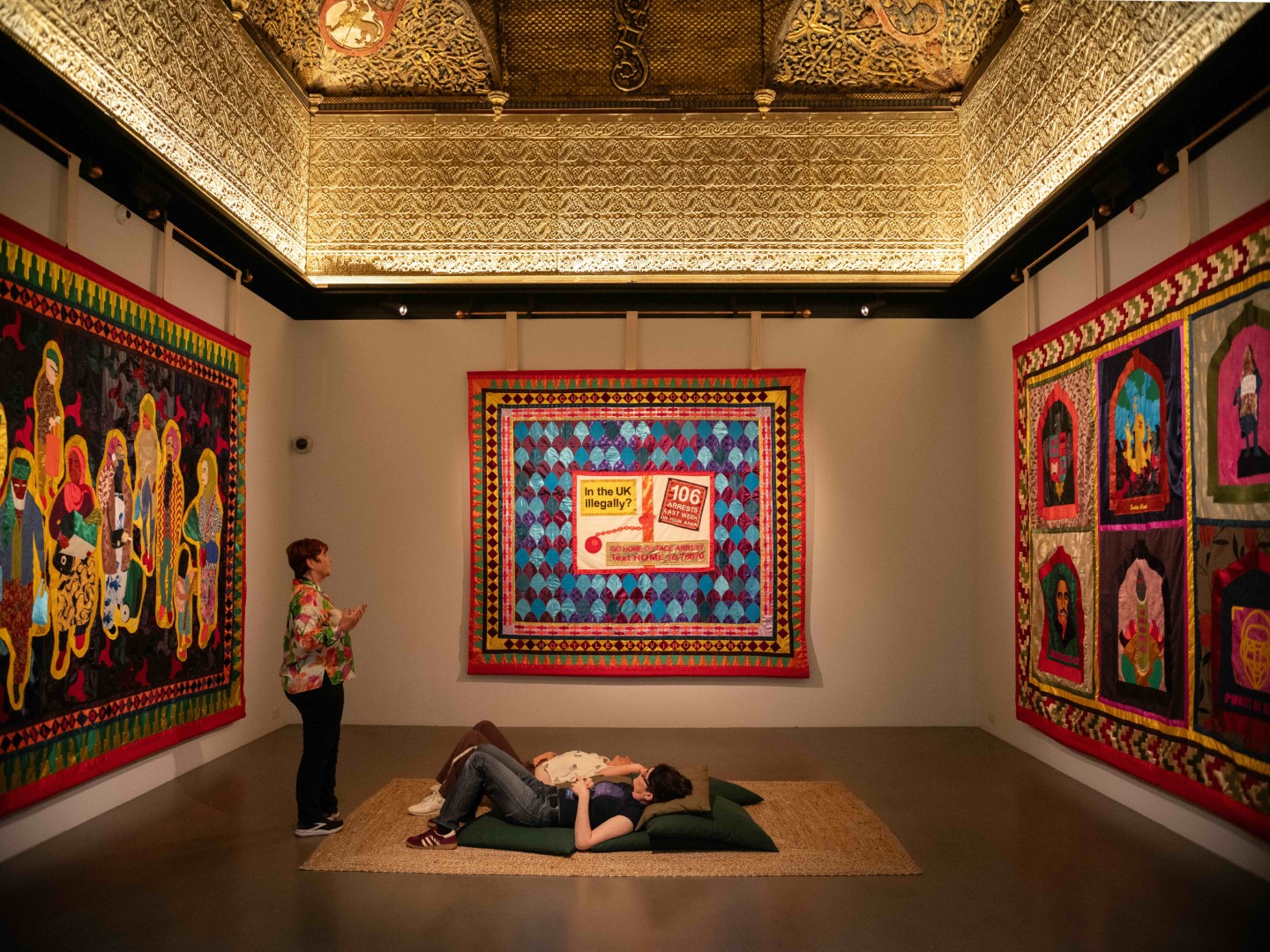
At first glance, I Was Born Here is a celebration of colour, pattern and material. Three large appliqué fabric works hang beneath the historic Torrijos Ceiling at V&A East Storehouse in London, their surfaces rich with detail and references to South Asian visual culture. But behind the vibrancy lies a more complex story about migration, identity, borders and the way communities carry culture with them.
Created by architect and interdisciplinary artist Shahed Saleem for New Work: Making East London, the commission is on display in Gallery 3 at V&A East Storehouse until 18 October.
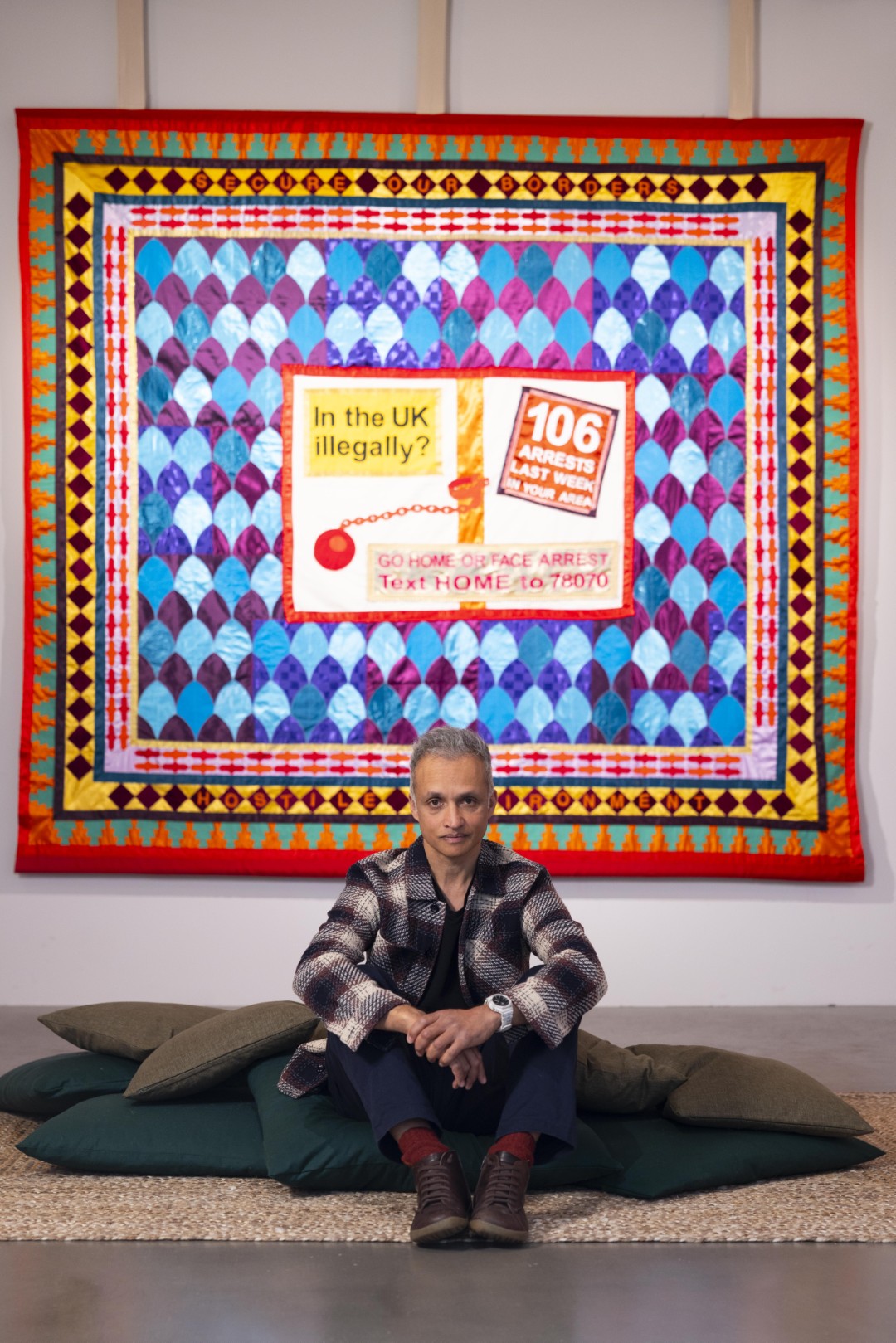
Saleem’s practice moves across architecture, installation, drawing, writing and collaborative work, but movement itself remains central to how he thinks. “I am interested in how histories, cultures, and ideas move with people across time and geography,” he says. He sees culture not as something fixed, but as something constantly reshaped by migration, memory and experience.
That perspective comes directly from his own upbringing. Growing up in an immigrant household meant learning to navigate between different cultural and intellectual worlds. Later, while studying architecture, Saleem became conscious of the gap between the design values taught in institutions and the visual languages emerging organically within immigrant communities.
“I began to see their grassroots aesthetic practice not just as a folk or vernacular design language, but as a vital form of cultural resilience and resistance against the erasure of their histories and lived experiences,” he explains.
That thinking runs through I Was Born Here. The three large fabric works are constructed from materials sourced largely from Queen’s Market on Green Street in East London, including textiles and trimmings from a haberdashery stall run by a family of Indian origin that has traded there for around 50 years.
The choice of fabric is deliberate. East London has a long textile history shaped by successive waves of migration, from French Huguenot silk weavers to Jewish garment workers and later South Asian and Bangladeshi communities. For Saleem, the materials themselves become evidence of that history.
“By using this retail infrastructure to create my artwork, the pieces are tied to the lineage of manufacturing in the area,” he says.
Yet the work is not simply about local history. Its wider narrative considers immigration control and the way borders and legislation are experienced in everyday life. Saleem describes the appliqué pieces as intentionally bold and decorative, their South Asian visual language operating as a form of resistance to the erasure of migrant histories.
Above them hangs the Torrijos Ceiling, an architectural object whose history became central to the commission. Saleem’s research took him back to Spain in the 1490s, particularly 1492 and the fall of Granada, when centuries of religious and cultural pluralism gave way to forced expulsions and an imposed Catholic identity.
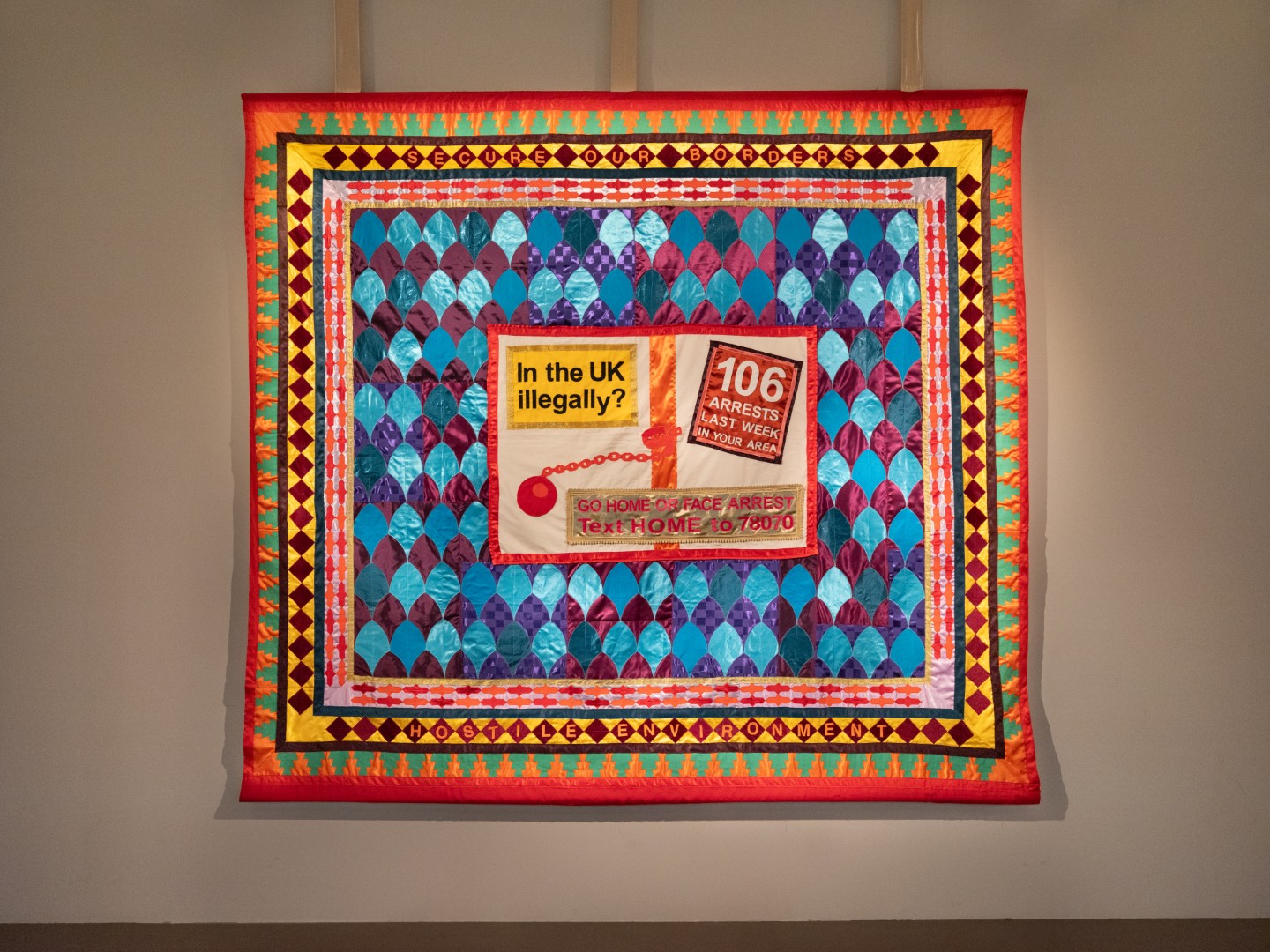
For Saleem, the parallels with the contemporary moment were difficult to ignore. He speaks of “a terrifying resonance” between those historical events and the rise of nationalist and exclusionary politics today.
Seeing the ceiling in person also changed the physical scale of his response. “I realised that my responding work could not be small or timid,” he says. “It needed a powerful physical and emotional presence to balance out the space.”
The commission also marks a shift in Saleem’s practice. Although drawing has always been central to his work, he had never before created large-scale textile pieces. Fabric offered him a way to translate the intimacy of drawing into something architectural.
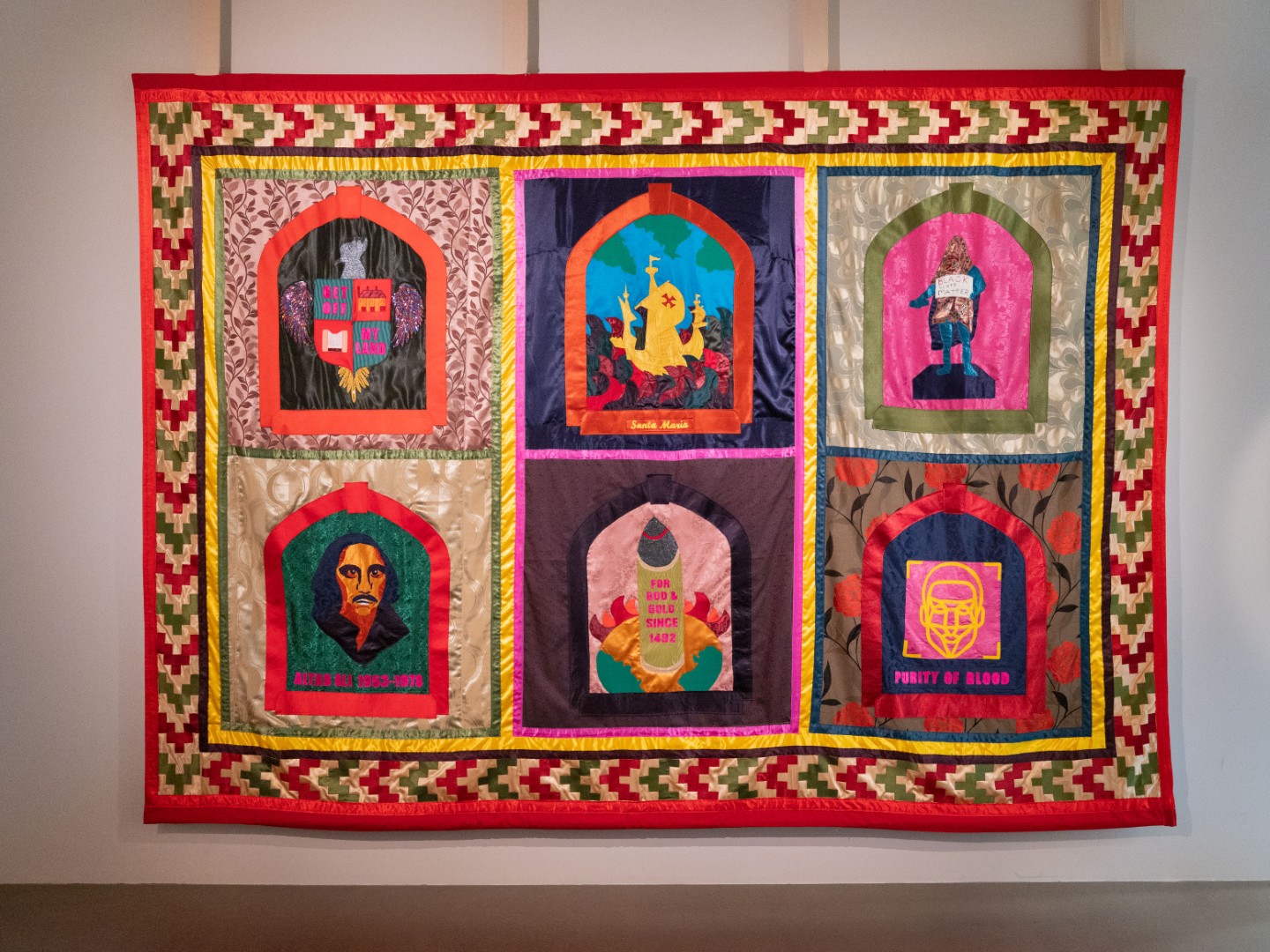
“Working with textiles has provided that translation method,” he says. “While the fabric panels can be read as two-dimensional imagery, they are three-dimensional physical objects.”
That materiality matters. The works are stitched, layered and physically assembled, with each thread contributing to the larger political and historical narrative. For Saleem, craft is not separate from meaning. It is part of how the meaning is carried.
“I occasionally worry that I am getting bogged down in far too much detail,” he says. “But then I remember that every thread is doing the heavy lifting of carrying that broader political idea.”
Despite the political weight of the work, Saleem wants the first encounter to remain instinctive.
“I want the pieces to trigger an immediate, instinctive emotional impact,” he explains, adding that the work should be accessible whether the visitor is a child, speaks another language, or comes from a completely different cultural background.
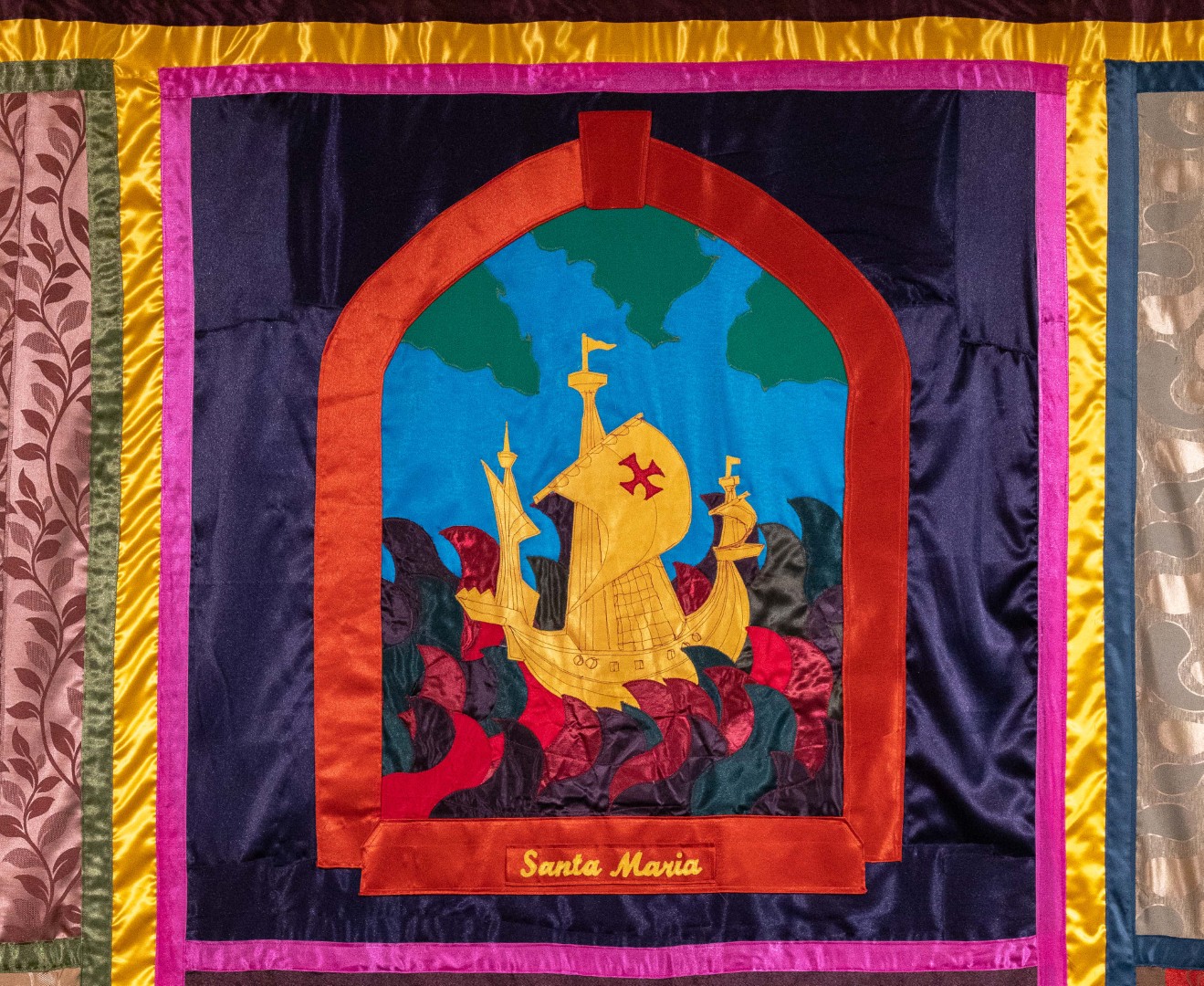
Beyond that visual pleasure lies what Saleem calls a sense of “historical precarity”, a reminder that social and political structures can shift quickly and that stability should never be assumed. At the same time, he wants East London audiences to experience recognition and belonging through the materials, people and histories represented in the work.
The title I Was Born Here therefore carries a wider question: who is allowed to belong to a place, whose histories are recorded, and whose contributions are made visible?
For Saleem, the answer lies partly in the making itself. Every fabric, stitch and pattern becomes a way of writing migrant histories back into the cultural landscape.
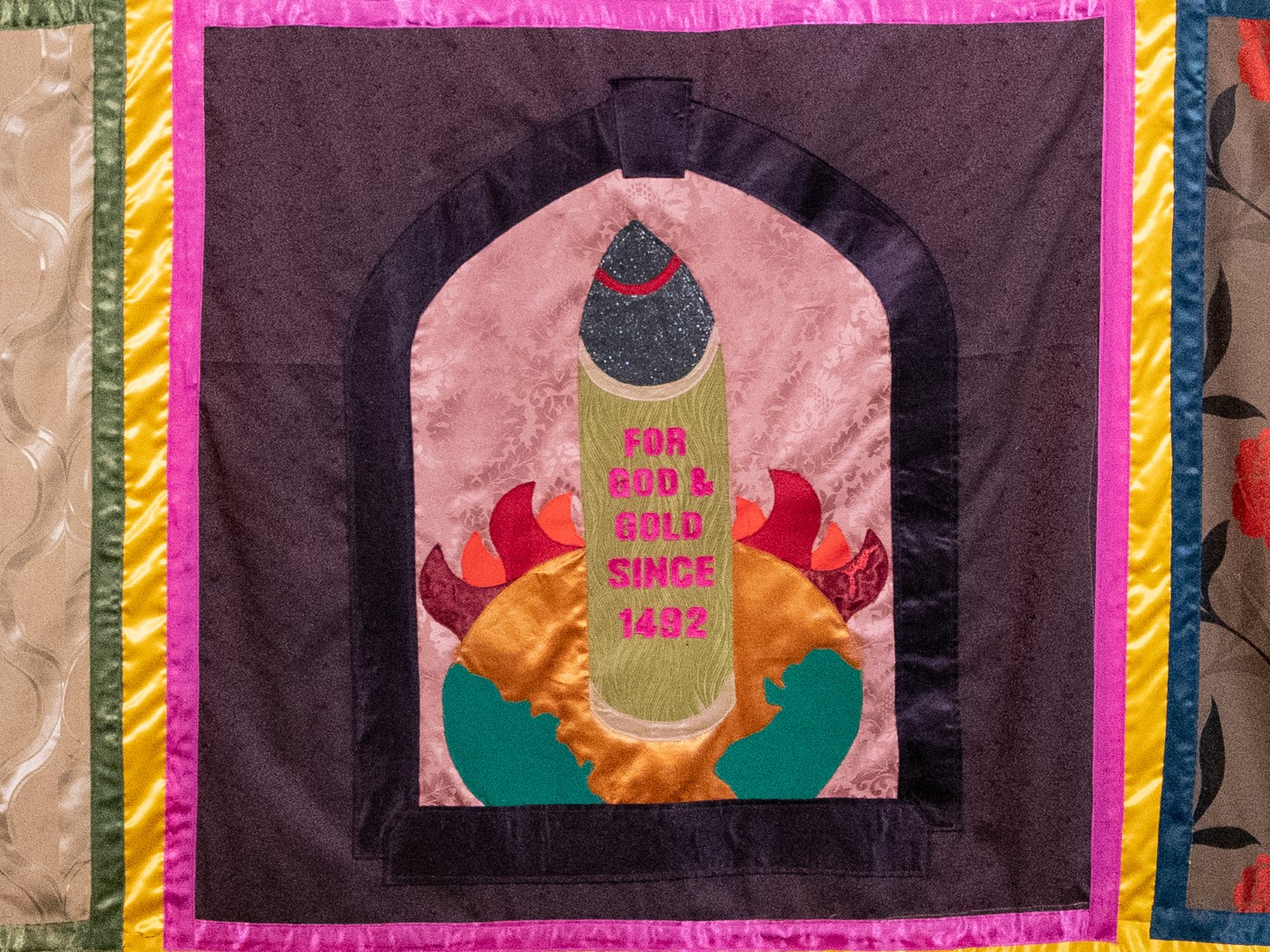
Shahed Saleem’s I Was Born Here, part of New Work: Making East London, is on display at V&A East Storehouse, Gallery 3, until 18 October 2026. Admission is free.
For more stories of art and culture, visit our dedicated archives and follow us on Instagram.