Design has an appetite for the next thing. At Amman Design Week, the more interesting question is what happens to the things already here. Returning until 17 October for its first edition since 2019, the event takes “Accumulations” as its theme. Across exhibitions curated by Faysal Tabbarah, inherited knowledge becomes material for new work. Salt, stone, textiles and tiles offer ways to examine how people live, what they remember and whose contributions receive credit. These six practices give that discussion a human scale.
Nadine Zaza
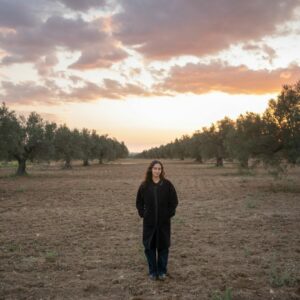
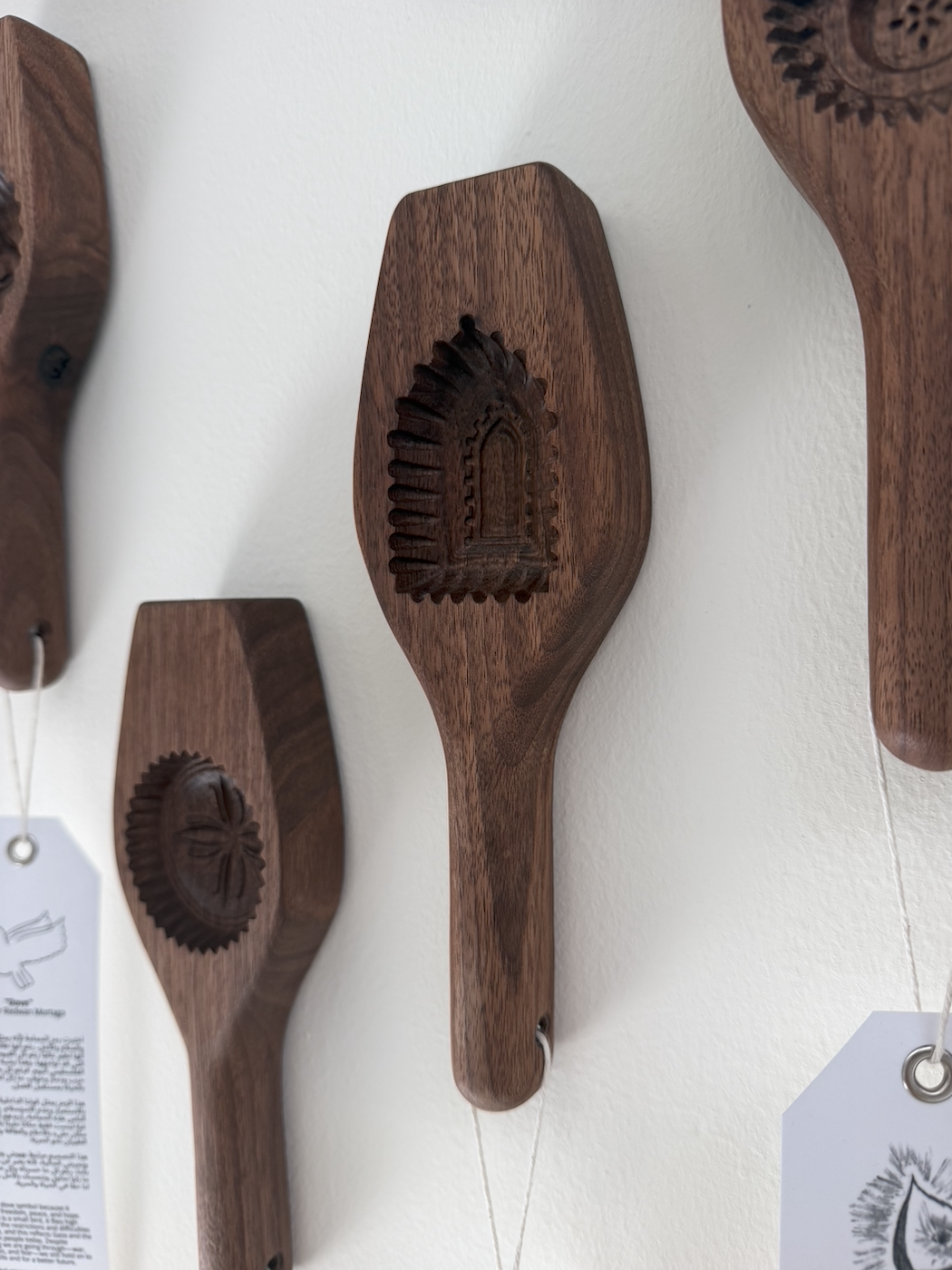
Who gets to tell a place’s story? Jordanian-American designer and educator Nadine Zaza approaches that question through collaboration. Her project Gaza Molds, developed with Palestinian students and presented at this year’s Amman Design Week, extends a practice concerned with cultural preservation and participation. Through Culture Crate, the educational initiative she founded, making and storytelling become tools for passing on cultural knowledge. Read within that wider practice, the collaboration asks us to consider authorship as part of preservation: who makes, who speaks and who is named alongside the finished work.
Farah Tajeddin
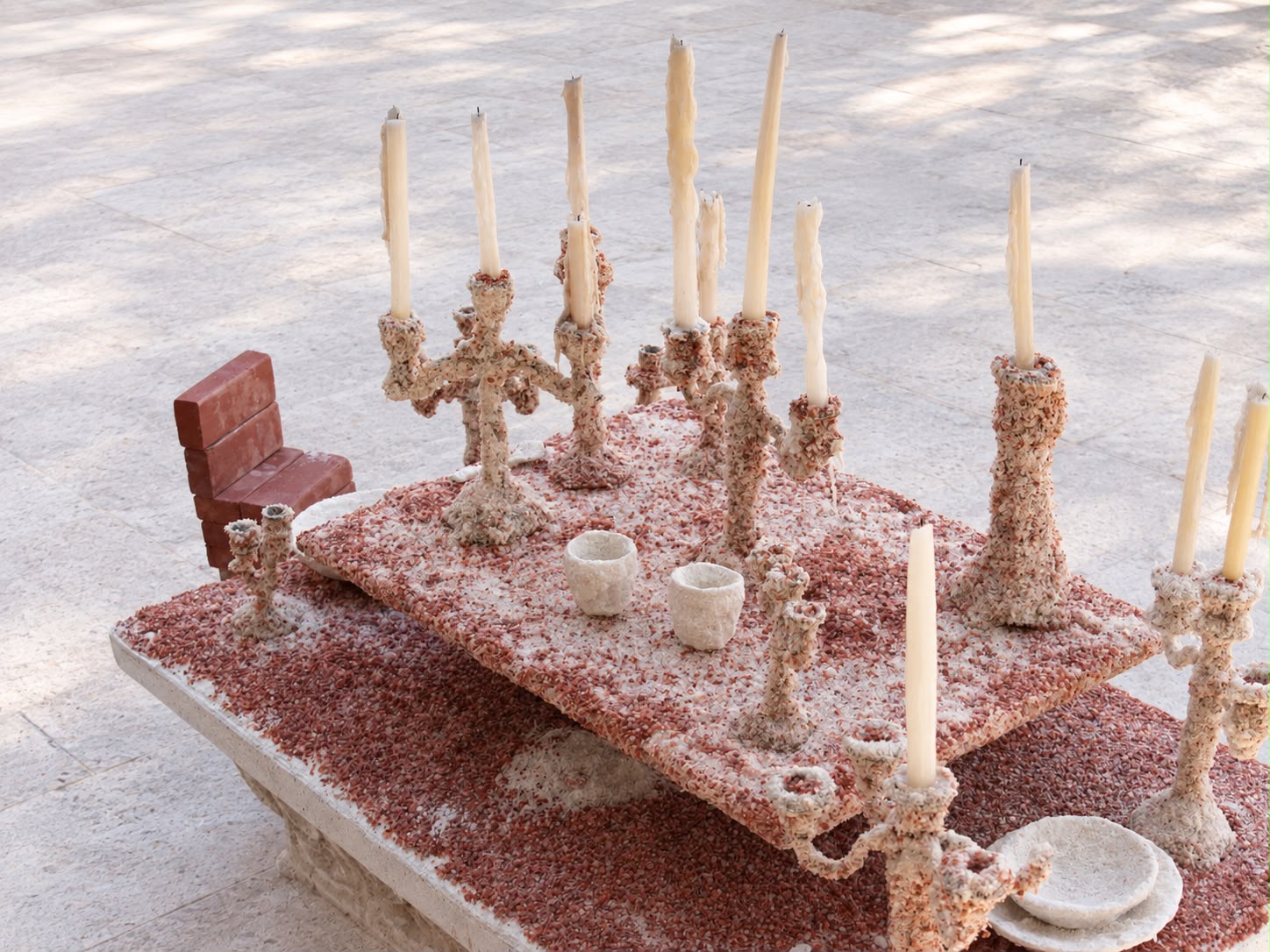
Farah Tajeddin’s The Return begins with a table laid for dessert. In the garden of Darat Abu Adnan, a stone architectural feature becomes a dining surface furnished with salt-crusted objects. The candleholders are built from Dead Sea salt, layered with a plant-based binder, and recall the designer’s childhood visits to the water. Their crystalline surfaces give the familiar rituals of entertaining an unfamiliar texture. For Tajeddin, the setting also opens a reflection on mortality and returning home. Dessert is a pointed choice: pleasure has a place in that conversation.
Zaid Kashef Alghata / House of ZKA
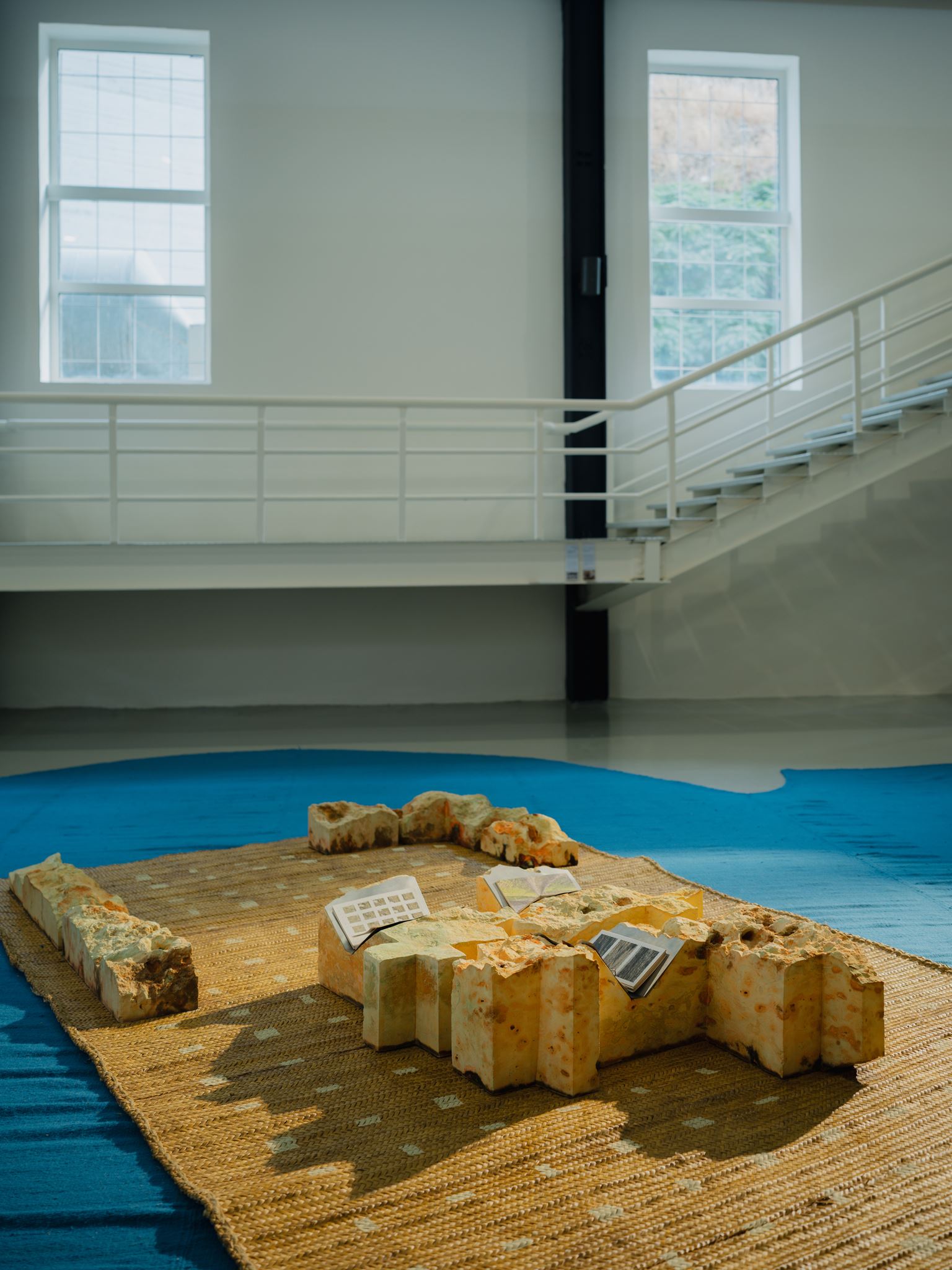
At the Hangar, House of ZKA’s Ground as Forum: Holding Ecological Knowledge brings reclaimed Bahraini stone together with a locally woven rush mat. Founded by Zaid Kashef Alghata, the practice takes the kuttab, where Quranic teaching took place on the ground, as a spatial reference. Visitors can walk across the installation, sit and gather around it. The arrangement makes learning a physical relationship between people, materials and the ground beneath them. Reclaimed stone acquires another use, while an inherited way of assembling a classroom offers a proposal for meeting today.
Abeer Seikaly
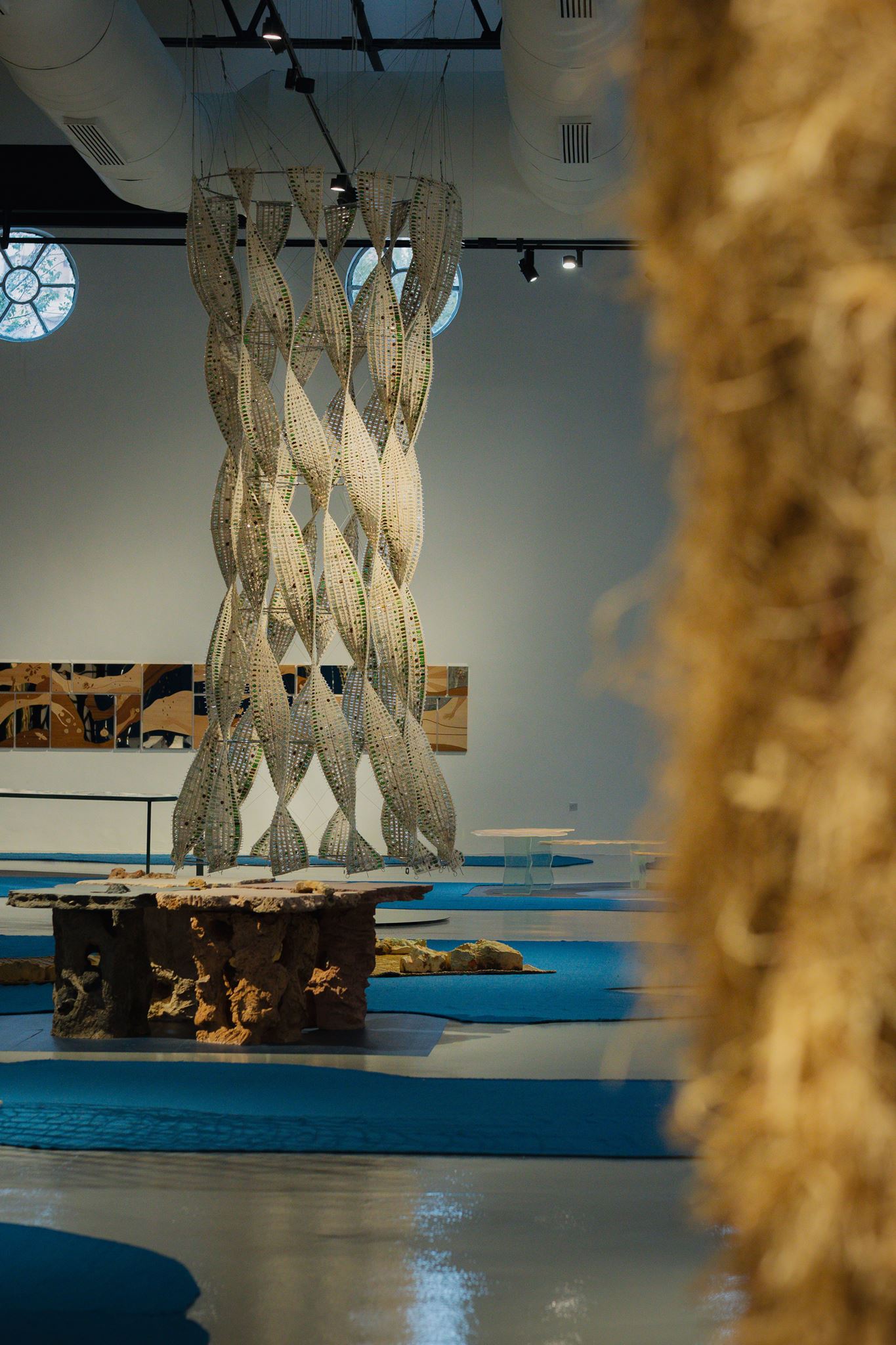
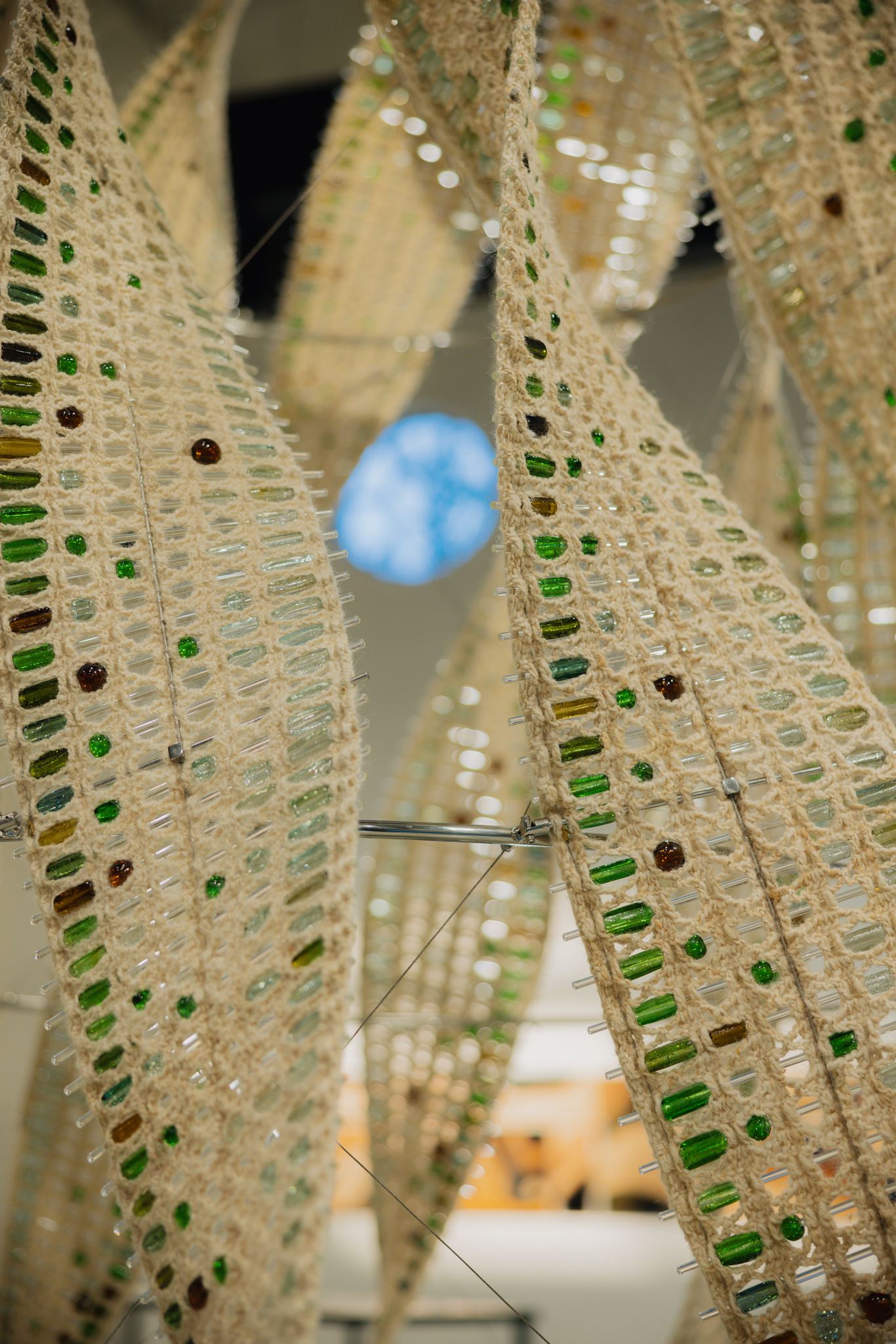
Abeer Seikaly’s work makes a compelling case for recognising weaving as architectural expertise. The Jordanian-Palestinian artist and architect, also a co-founder of Amman Design Week, works with Bedouin women’s knowledge of textiles and tent-making. Her earlier Meeting Points translated goat-hair yarn into a structural textile, developed through the labour and skills of women artisans. That history fits perfectly with the overall discussion of accumulation. It brings the people behind a technique into view and asks architecture to account for the knowledge carried through their hands.
Lena Kassicieh
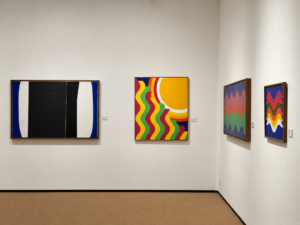
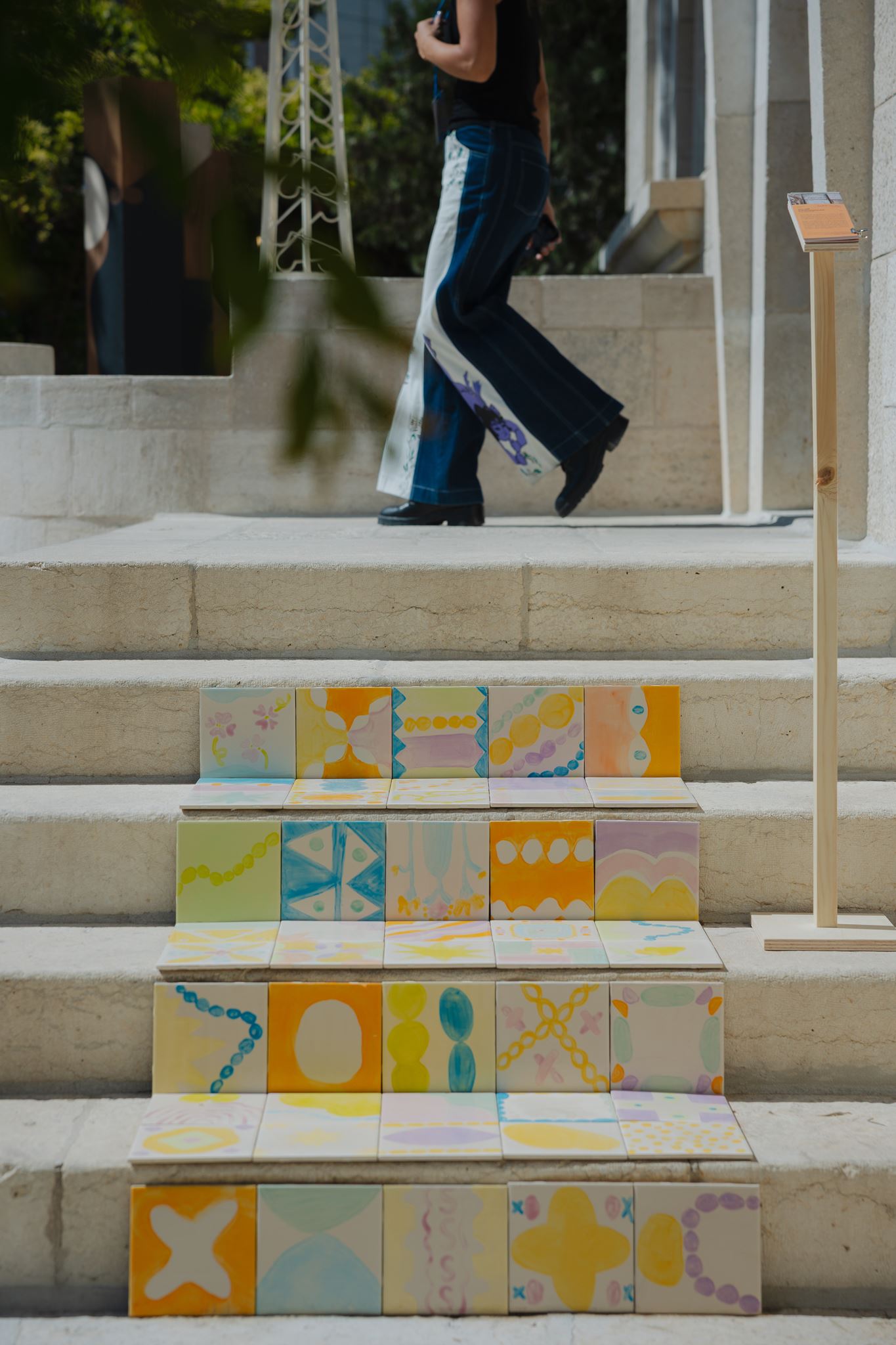
An entire family history can begin underfoot. In Small Inheritances, Palestinian-American artist Lena Kassicieh presents 50 handmade tiles at Darat Abu Adnan, revisiting Palestinian carpet-tile motifs and her family’s tile-making history between Jerusalem and Amman. Her practice spans ceramics, collage and installation, often examining how objects and aesthetics travel through diaspora. Here, a surface associated with the home becomes a way to follow that movement across generations. Reworking the patterns gives inheritance a practical form: something learned, made again and changed by another pair of hands.
Studio Bader Sinuqrot
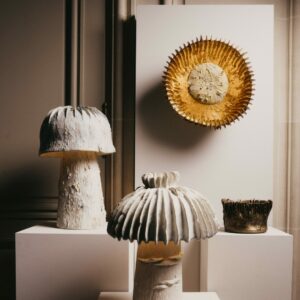
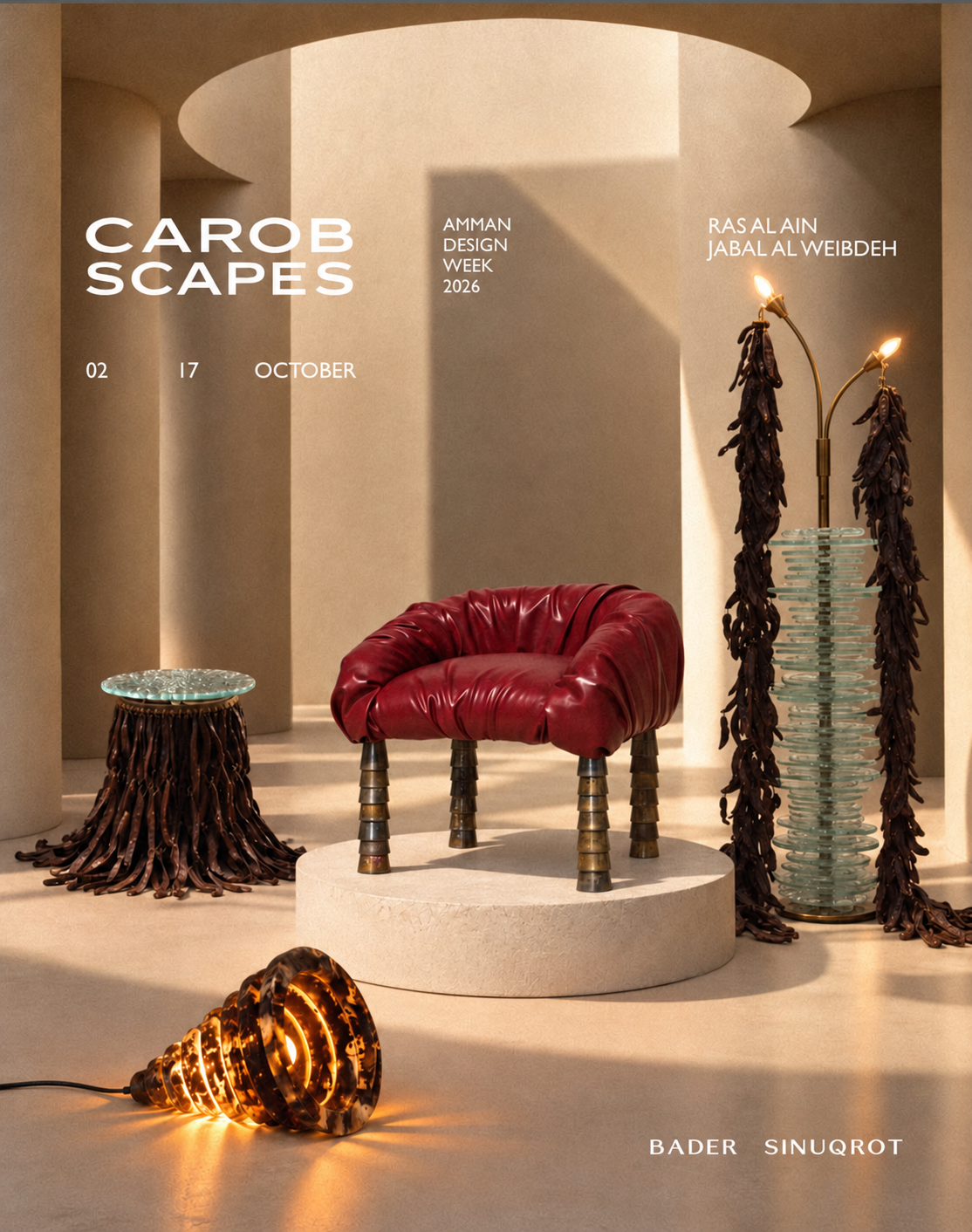
A carob pod is an unlikely starting point for a furniture collection. That is part of the appeal of Studio Bader Sinuqrot’s Carobscapes, which develops the botanical form into furniture, lighting and spatial objects through repetition and assembly. Rooted in Jordan’s natural landscape, the collection gives “Accumulations” a tangible expression: a single pod becomes the basis for a larger sculptural vocabulary. The interest lies in that change of scale, and in how something so familiar can acquire a different presence once brought into a room.
Taken together, these practices suggest that inheritance involves decisions. A pattern can be repainted, a material reused, a skill taught and an object given another purpose. The appeal of Amman Design Week lies in following those decisions back to their makers. What we keep, and how we change it, says a great deal about the future we expect to inhabit.
For more stories of art and culture, visit our dedicated archives and follow us on Instagram.