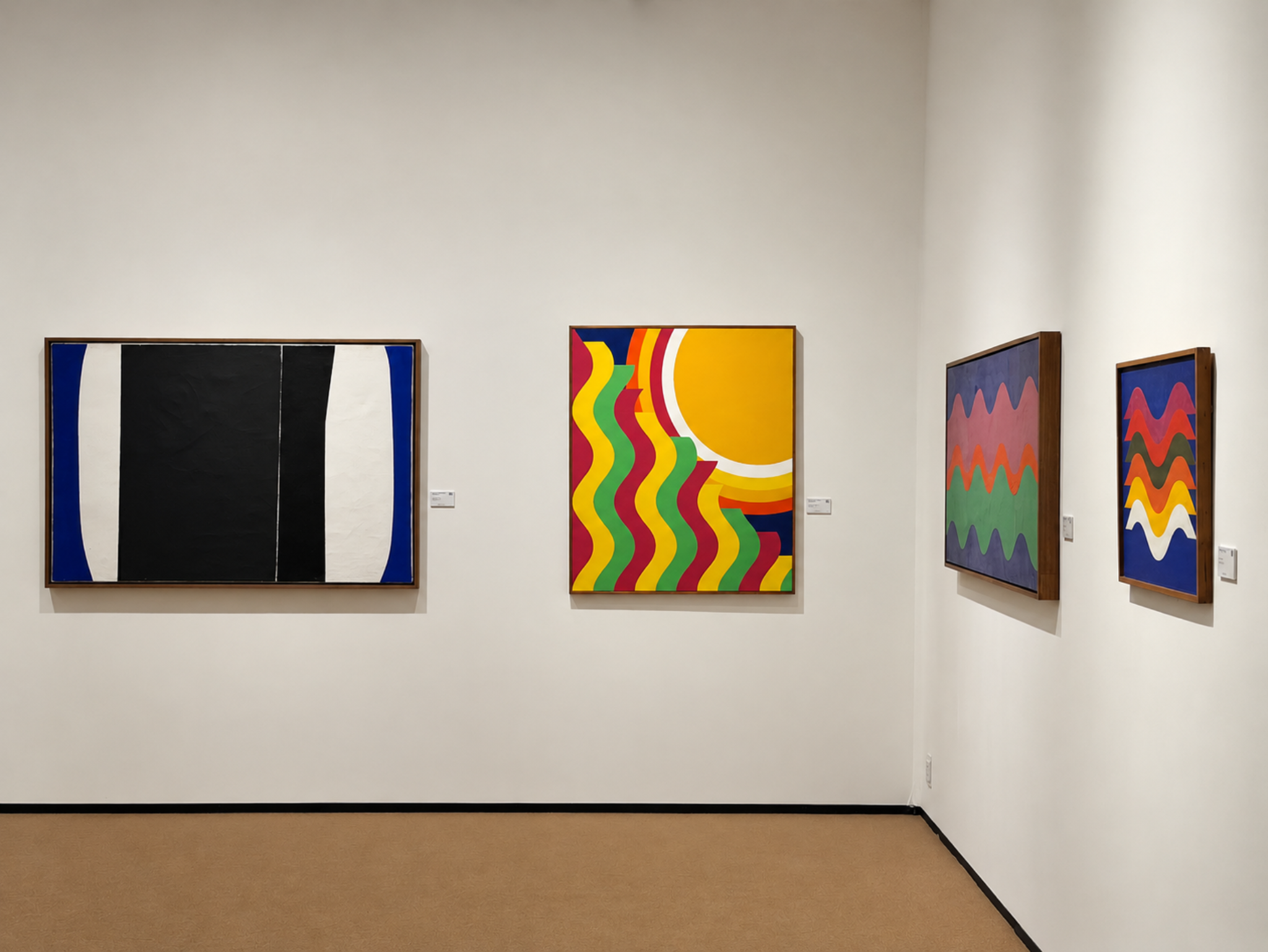
This year the Middle East and North Africa claimed a larger share of London’s Frieze Week. Across Frieze London, Frieze Masters, 1-54 and the shows around them, Moroccan modernism drew a six-figure sale, Saudi pioneers made their Frieze debuts, and galleries from Cairo, Tunis, Beirut and Dubai brought new work. VIP bookings from the region rose 24 per cent year on year.
Frieze Masters
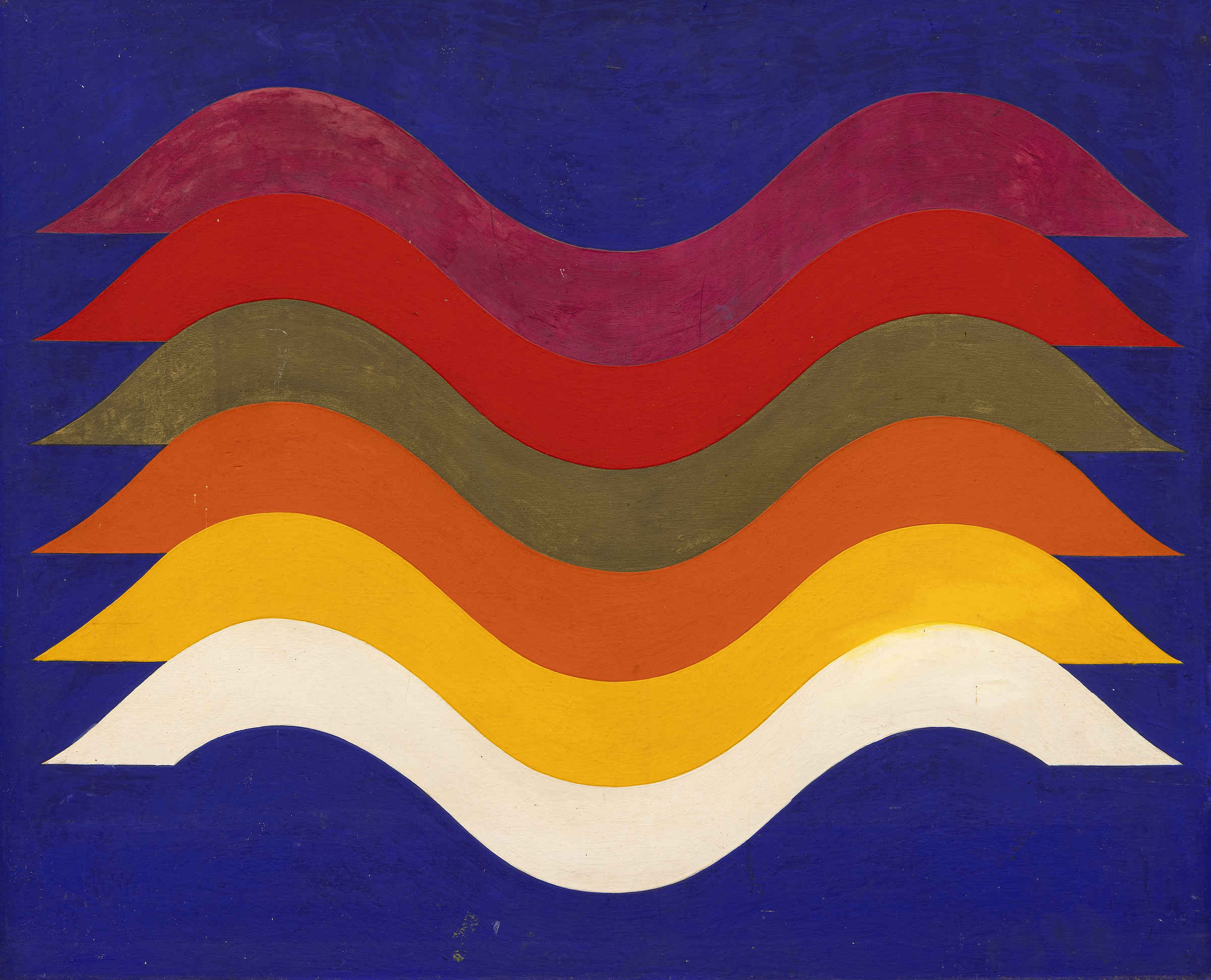
Loft Art Gallery, from Casablanca and Marrakech, made its Frieze Masters debut with Wave Forms, a solo presentation of Mohamed Melehi (1936–2020), a leading figure of the Casablanca Art School. Untitled (1967), an early example of his wave motif, sold for €180,000, with two more on reserve. Co-founder Yasmine Berrada says international recognition of Moroccan modernism is growing.
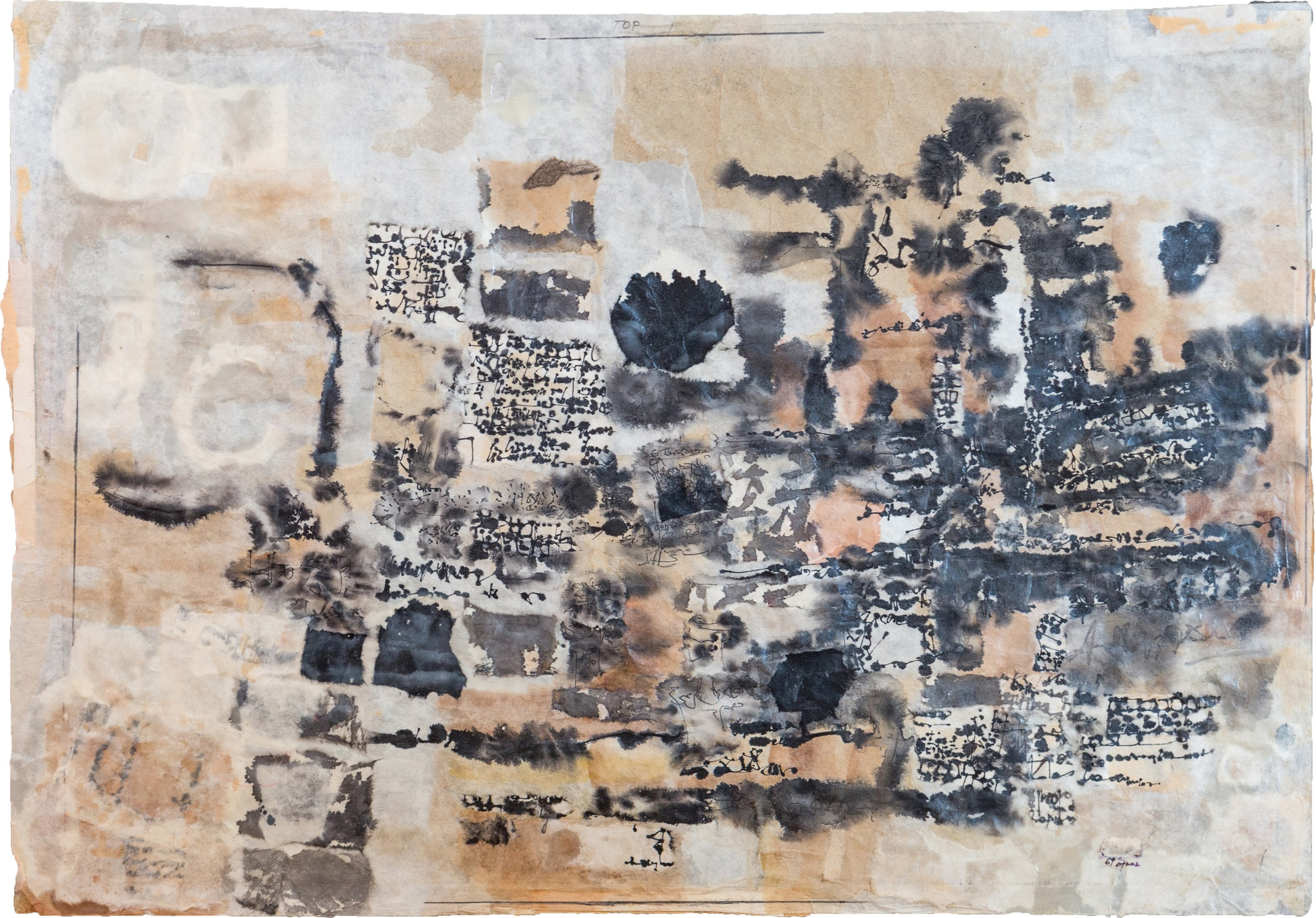
Dubai’s Lawrie Shabibi brought delicate works on paper by Maliheh Afnan, the Palestinian artist who died in 2016 and whose work has rarely been shown since. Two pieces sold for between £30,000 and £40,000, and Moonshine (1988) went on reserve at £70,000 for a museum in Munich. Tate Modern recently acquired a close relative, Nocturnal City (1987).
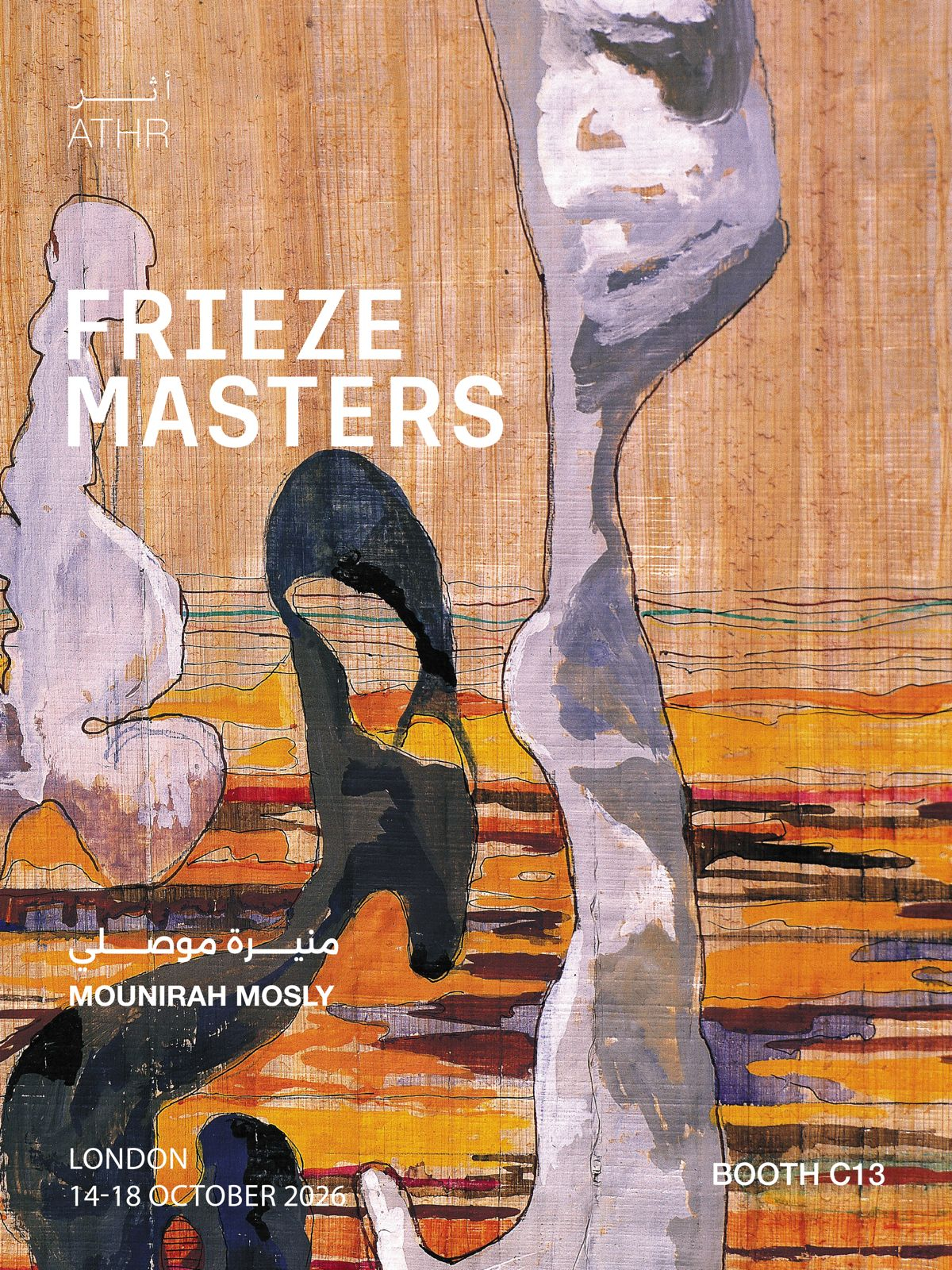
Jeddah’s Athr also debuted, pairing Mounirah Mosly (died 2019) with Abdulrahman AlSoliman, 72. In 1973 Mosly became the first Saudi woman to mount solo exhibitions in Jeddah and Riyadh. Her collages use dyes, snakeskin and rope to address war and Palestine, and her works carried prices above £100,000.
At Ab-Anbar, which moved from Tehran to London in 2020, a 1973 version of Bahman Mohassess’s Faun Musician returned to London for the first time since 1980. Queen Farah Pahlavi commissioned the original in 1971 for Tehran’s City Theatre, and after the 1979 revolution its whereabouts were unknown for about 20 years. This version, from a private Italian collection, was not for sale, though the gallery sold other Mohassess works, including a painting for about $170,000.
Vigo Gallery in London showed rarely seen Slade-period paintings by Sudanese modernist Ibrahim El-Salahi (1955–1957), priced from £145,000 to £400,000.
Frieze London
Jeddah’s Hafez Gallery made its debut with Dialogue of Forms, pairing Egyptian artist Ahmed Nawar, 81, and Bahraini-born Saudi artist Faisal Samra, 71. Nawar’s felt-tip drawings combine geometric patterns and human forms to explore memory, endurance and conflict, while Samra’s wire-mesh and fabric sculptures shift with light and movement. Both are in the British Museum and Mathaf.
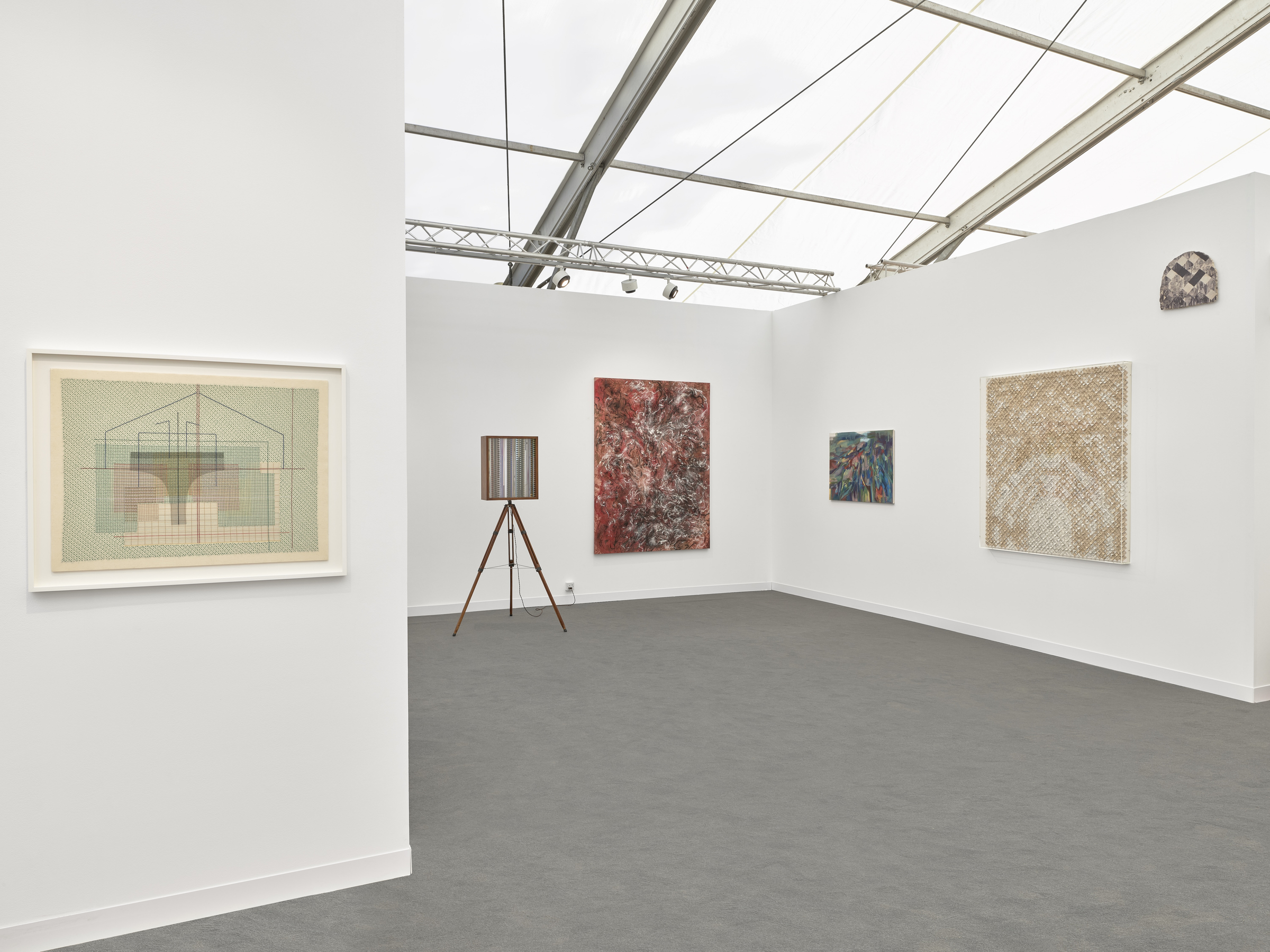
Tunis-based Selma Feriani Gallery returned to booth D33 with new work by five artists: Zineb Sedira, Maha Malluh, Monia Ben Hamouda, Filwa Nazer and Catalina Swinburn. Saudi artist Malluh showed two works on memory and the material traces of everyday life.
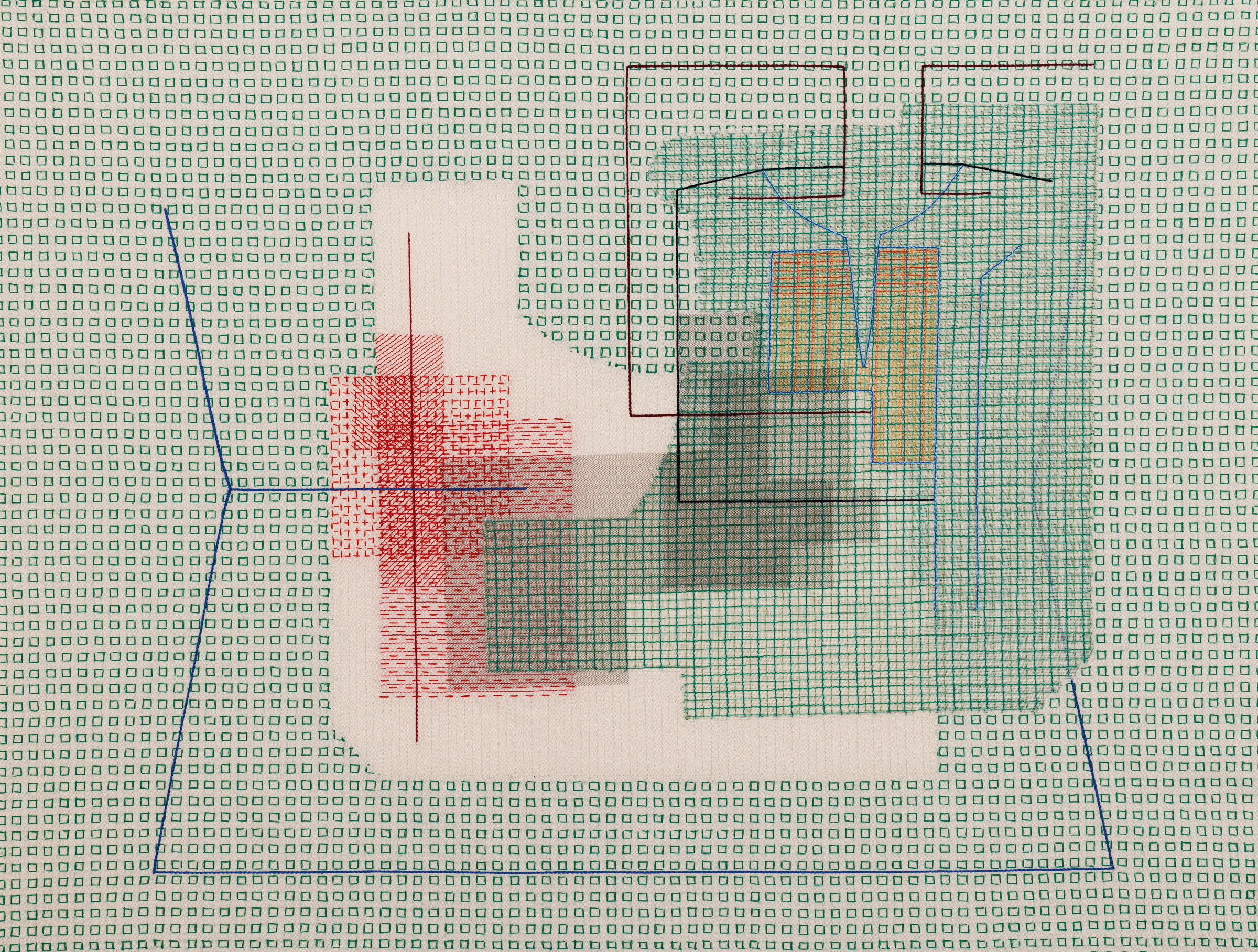
Nazer’s new textiles treat the body as a site of memory, intimacy and transformation.
Cairo’s Gypsum Gallery brought Yasmine El Meleegy and Marianne Fahmy to Focus, both addressing Alexandria through porcelain fragments and hand-stitched textiles. Qatari-American artist Sophia Al-Maria presented her Frieze commission as a live stand-up set, and Athr sold Ahmed Mater’s Gun Gas (2026) for around £40,000.
1-54
At Somerset House, 1-54 welcomed first-time exhibitors including Riyadh’s Errm Art Gallery and Beirut’s Maya Art Space, alongside Cairo’s Gallery Misr and Loft Art Gallery. The West Wind spotlight, curated by Dr Nancy Dantas, centred on mid-century modernists.
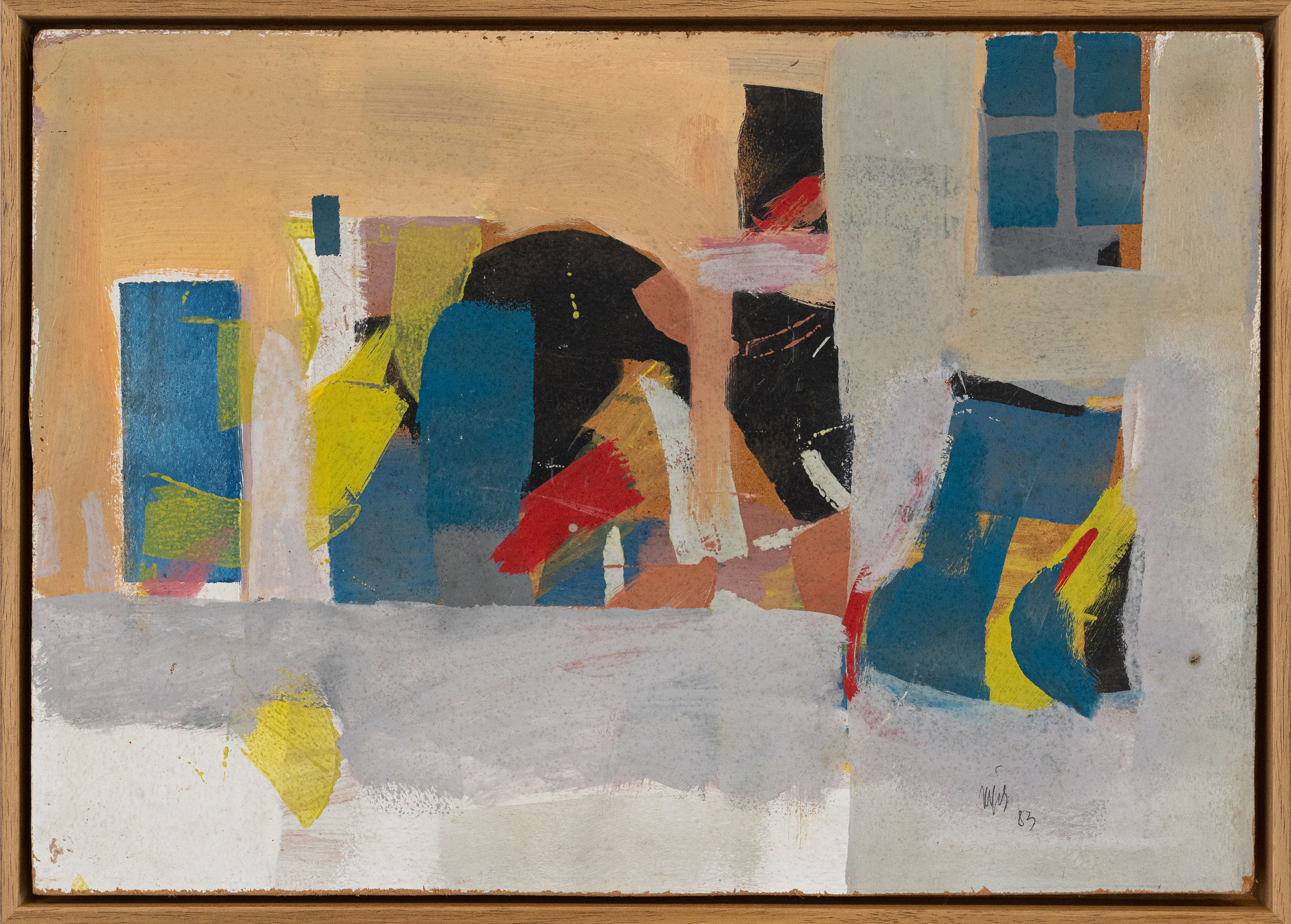
Selma Feriani Gallery paired two of them. Rafik El Kamel (1944–2021), a Tunisian painter, turned to collage in the 1980s, and his Untitled (1983) suggests windows and doors in layered Tunisian blue.
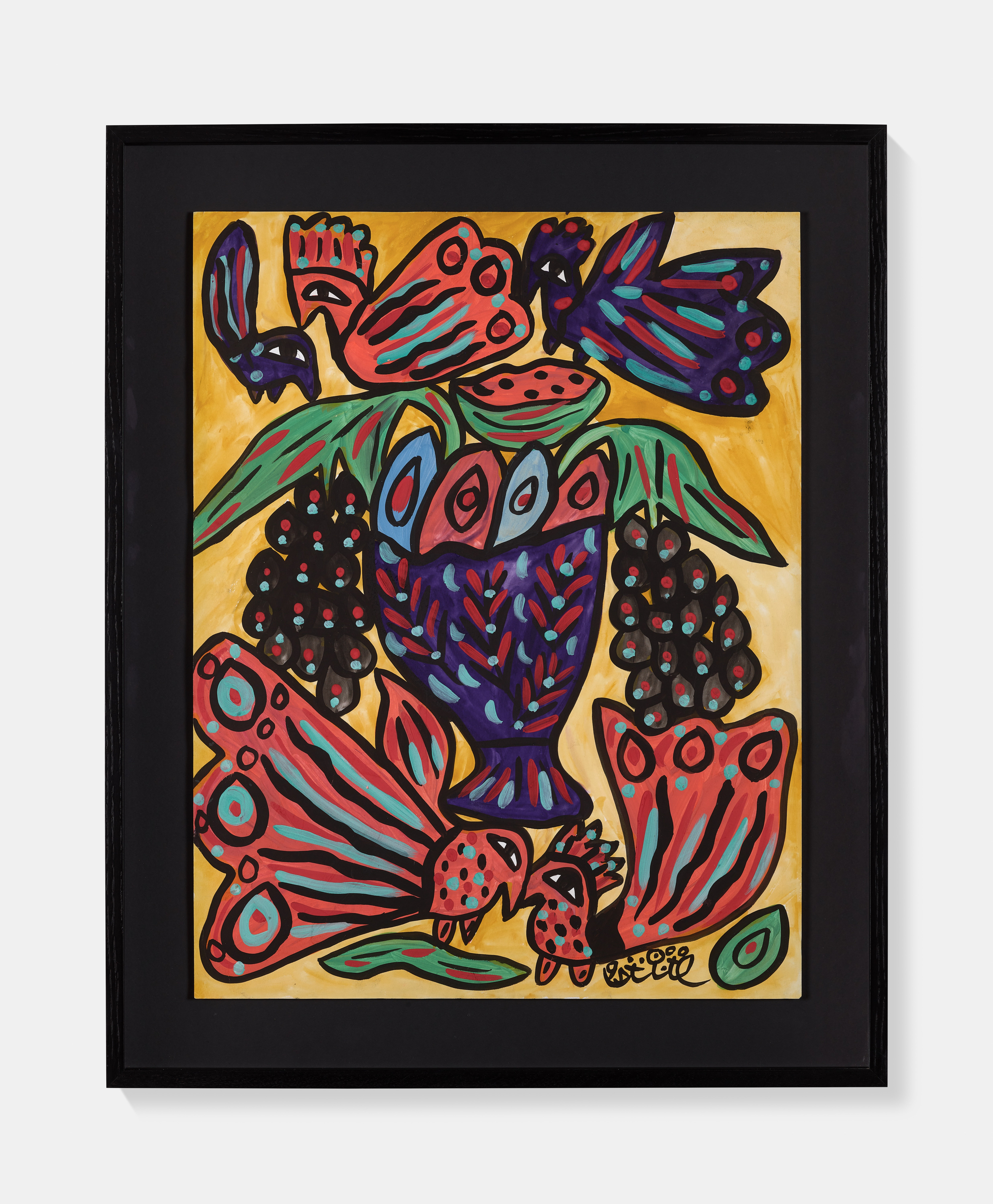
Baya (1931–1989), from Algeria, painted joyful women, flora and fauna in fantastical gouaches that draw on her Arab and Kabyle heritage. Vigo’s West Wind contribution was El-Salahi’s Meditation Tree (2018).
Around Town
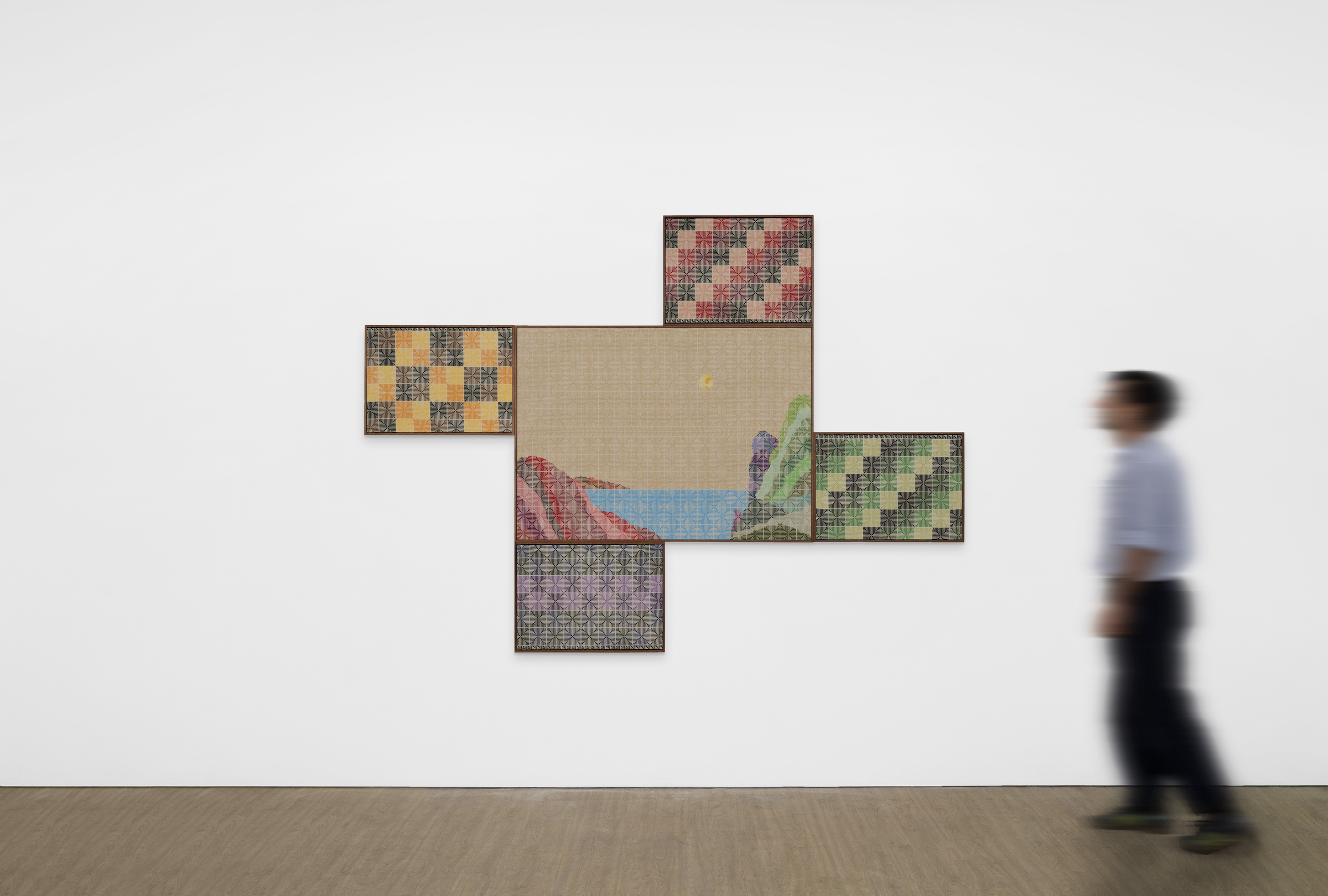
Dubai’s The Third Line presents Jordan Nassar’s No History of Shapes at No.9 Cork Street, his first UK show in a decade, until 24 October. They Build Homes with Clouds (2026) is an embroidered canvas of mountains and sea surrounded by four smaller tatreez panels, and Nassar’s scenes picture Palestine as the diaspora imagines it. At Tate Modern, Beirut-born Tarek Atoui has the Hyundai Commission in the Turbine Hall until 11 April 2027.
Next Stop
Art Basel Paris and Menart Fair both run from 23 to 25 October. Art Basel Paris includes The Pill (Istanbul and Paris), Sfeir-Semler Gallery (Beirut and Hamburg), Green Art Gallery (Dubai) and Le Violon Bleu (Tunis). The inaugural Frieze Abu Dhabi follows from 19 to 22 November.
For more art and culture stories from across the region and the diaspora, visit our dedicated art & culture archives and follow us on Instagram.