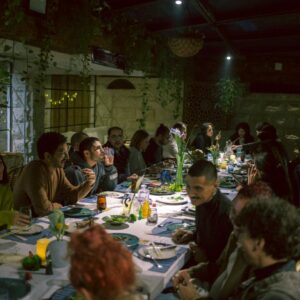
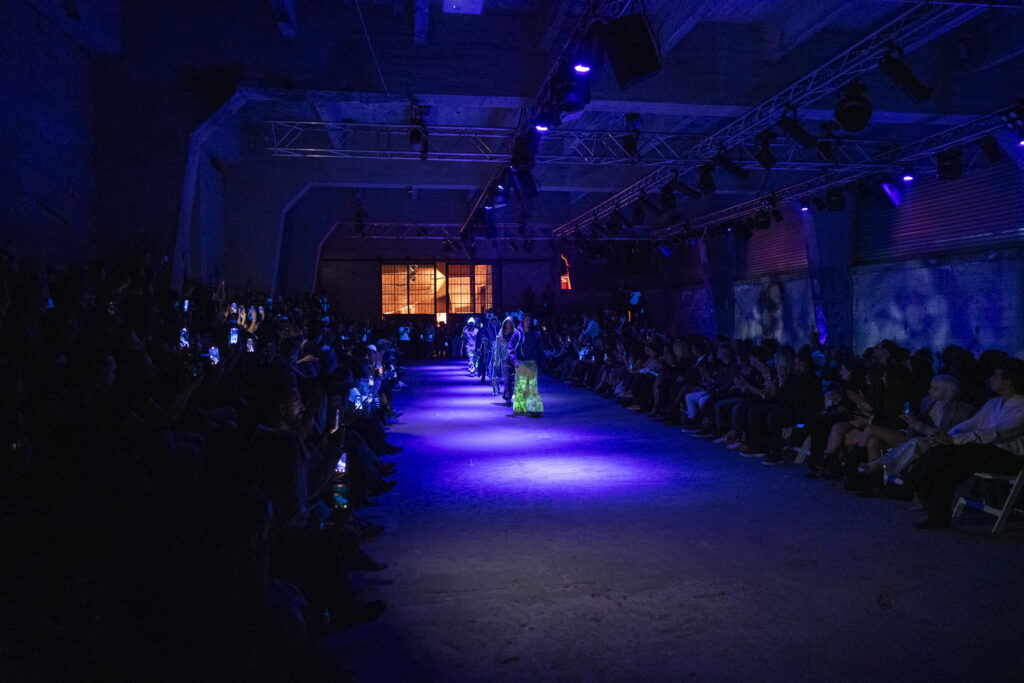
What does it mean to unlearn something after spending three years learning how to make it? At The Shelter in Hazmieh on 19 November, seven graduates of Creative Space Beirut put that question into clothes. Their 2026 graduate fashion show, Unlearning: Making Space for Becoming, marked the school’s 15th anniversary. Nearly 500 people gathered, among them family, friends, alumni and members of Lebanon’s fashion and creative communities. The room held the particular tension of a graduation: years of work arriving in front of the people who had watched it take shape.
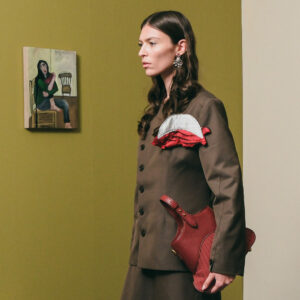
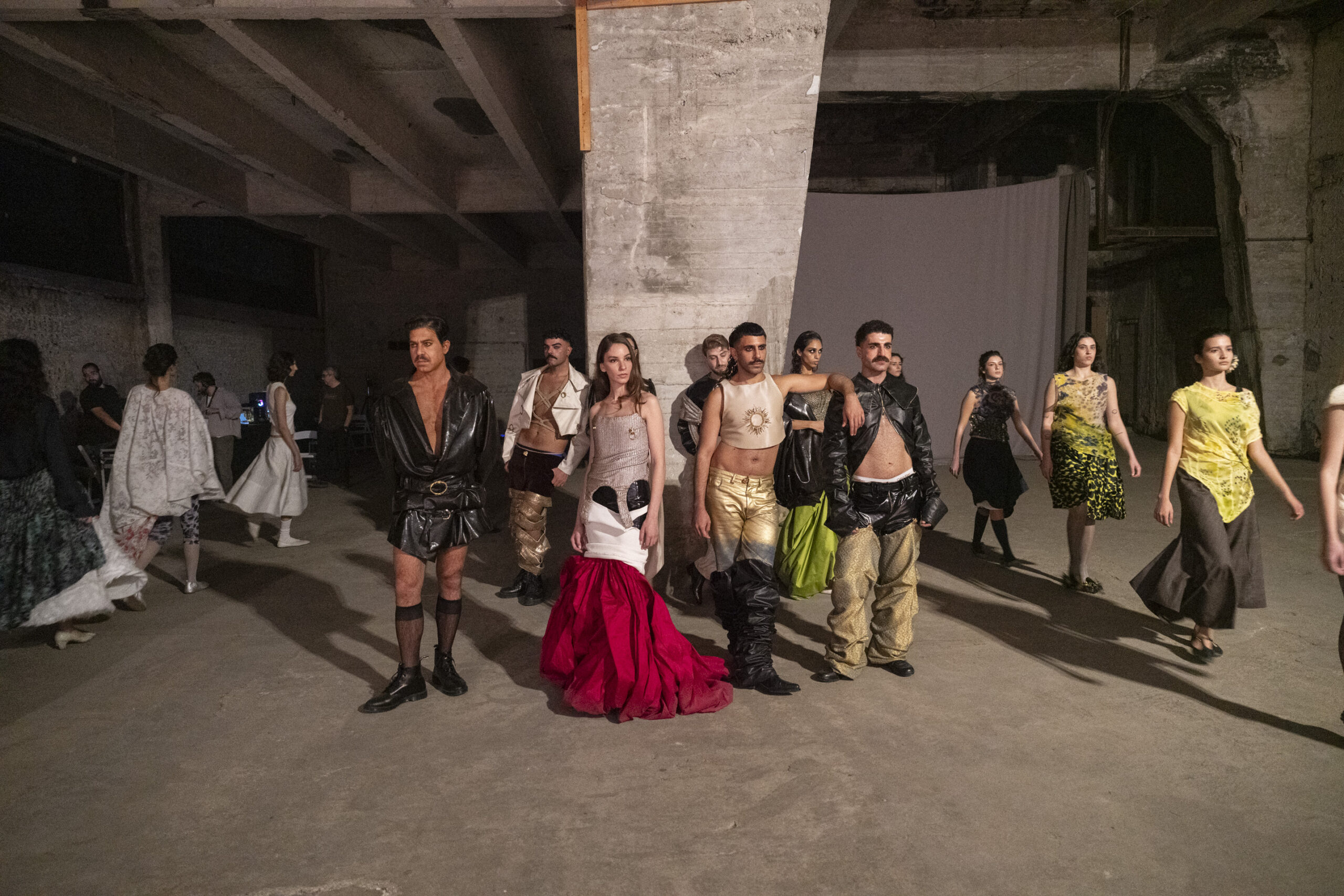
Unlearning can sound like an instruction to erase. On this runway, it looked closer to taking something familiar apart and deciding which pieces deserved another life. Fifty-nine models carried the Class of 2026’s thesis collections, the result of three years of study. Each designer had a distinct pocket of the evening through sound, lighting, movement and visuals. A change in collection meant a change in the way the audience encountered the clothes. The seven designers shared a stage, though none had to share a vocabulary. For Joe Al Daccache, the starting point sat in his father’s fishing shop. That childhood memory found its way into Joe’s Whale through phosphorescent details. It is a striking material choice: a reference to light that suggests a memory might announce itself through a surface before anyone knows the story behind it. The fishing shop supplied the origin; the garment carried the interpretation. Childhood became something a body could wear, with the past appearing as a detail that catches attention.
Sonia Melkisetian turned to a different set of movements. In Is She Me?, she drew on her grandmother’s gestures as a hairdresser, translating them into ribbons that folded, looped and stitched their way into the collection. There is a pleasing precision to that translation. Hairdressing involves the hands, repetition and the shaping of material; ribbons give those actions another surface. The title asks a question about resemblance. The clothes explore how a gesture passes between generations, even when the material and the person making it have changed.
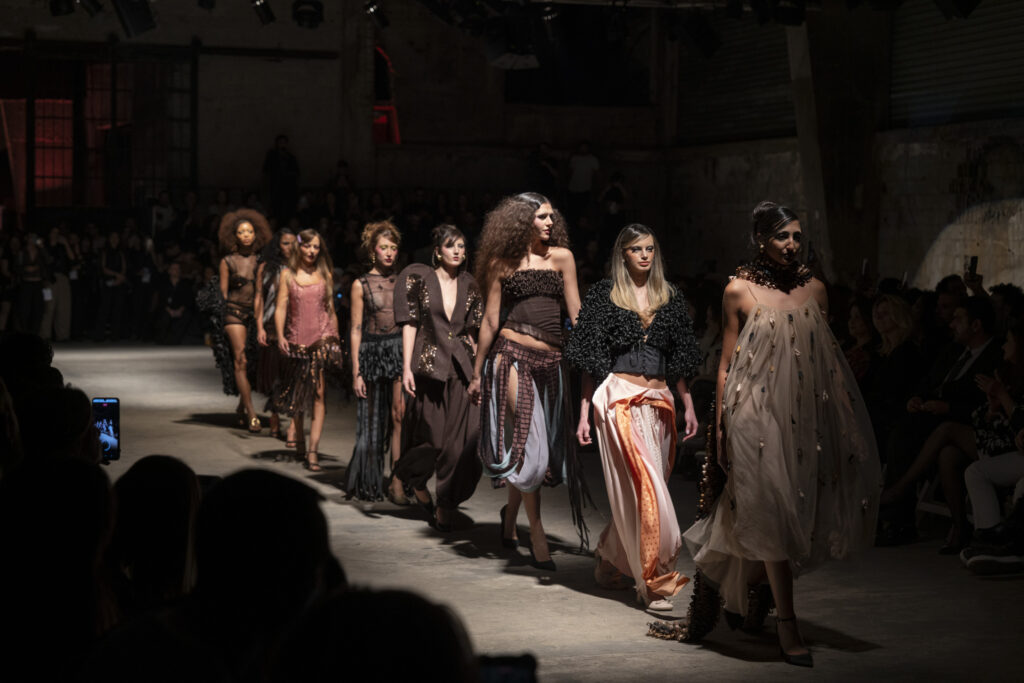
Then there was Mahdi Fakih’s Memento Vivere, where corsetry, lacing and veils gave grief and devotion physical form. These are elements with their own ways of holding, fastening and covering a body. A lace can draw two edges together; a veil changes what the eye can see. Here, the design vocabulary made emotion tangible without requiring the garments to explain it. What someone carries forward can be difficult to name. Sometimes its outline is easier to recognise in the way cloth meets skin.
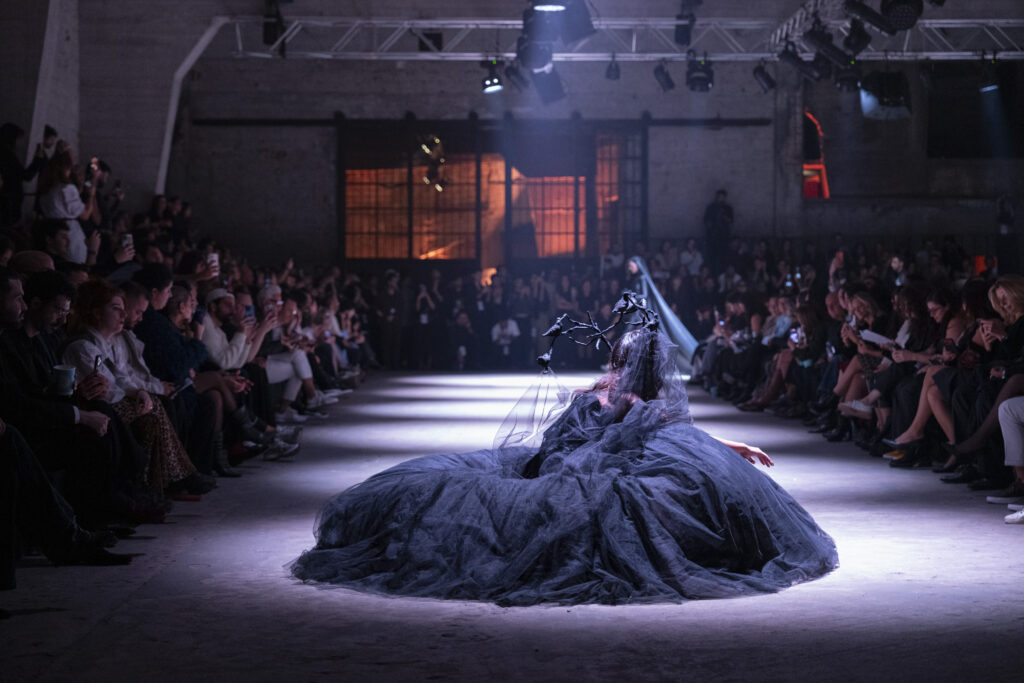
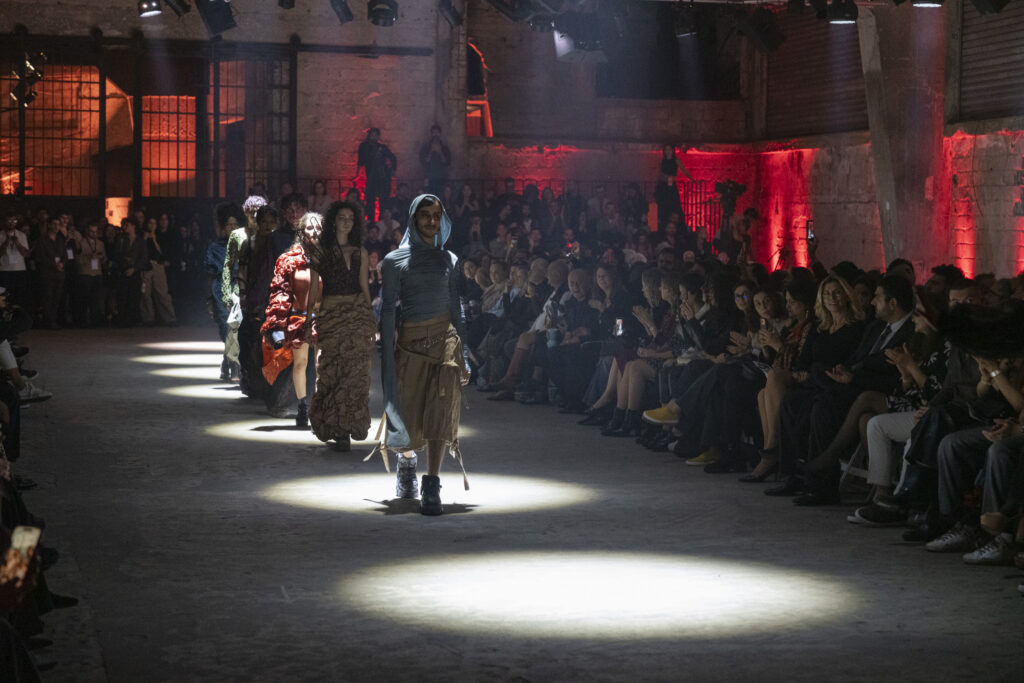
The other four graduates brought their own titles and territories to the same evening: Reeta El Khoury’s In-Between, Sally Zouia’s Mutation11, Miled Chahla’s Mother Tongue and Karim Karam’s Mise à Nu. The titles alone open different questions about change, language, exposure and belonging. The show gave each collection its own sonic and visual setting, allowing seven separate propositions to unfold before the finale gathered all seven designers together. That shared appearance mattered after so much individual expression: a class standing together at the point when school gives way to whatever comes next.
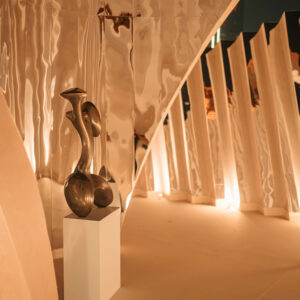
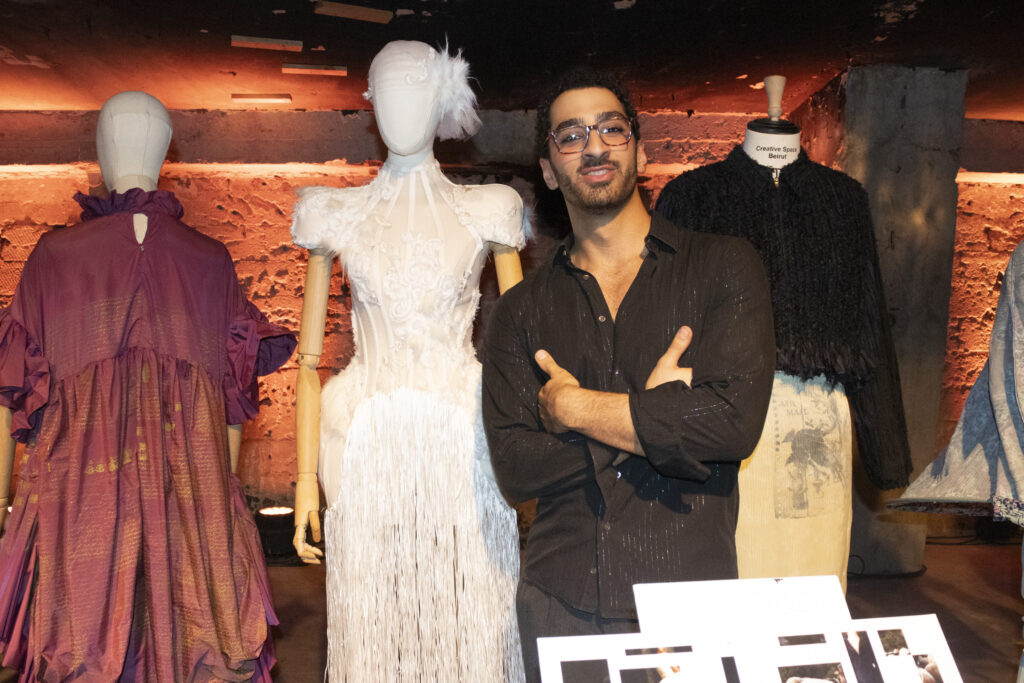
And then the audience could get closer. After the runway, The Shelter became a living exhibition, with the graduate collections available for visitors to encounter at close range. Alongside them, 20 selected looks by first- and second-year students mapped the earlier stages of the school’s three-year programme. The transition changed the relationship between viewer and garment. From a runway seat, a piece passes in time with a model; in an exhibition, the viewer can stay with its construction and look again. The earlier student work also made a useful point: finding a design language takes experiments, discarded decisions and repeated attempts.
Creative Space Beirut has made room for that process since Sarah Hermez and the late Caroline Shlala-Simonelli founded the independent school in 2011. Its three-year Fashion Design programme is tuition-free, with materials provided and bursaries available for housing and transport. Alumni return to teach and collaborate, while graduates can access mentorship and job placement support. Those structures sit behind the anniversary campaign Breaking Patterns, which examines who gets access to creative education. They also give the evening’s central idea another dimension. Unlearning requires the freedom to try something, question it and begin again. At The Shelter, seven designers showed what they had chosen to carry with them. The future began with what they were willing to remake.
For more stories of fashion from across the region, visit our dedicated fashion pages and follow us on Instagram.