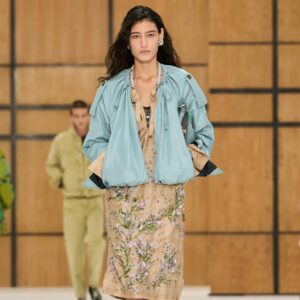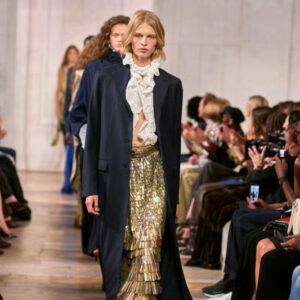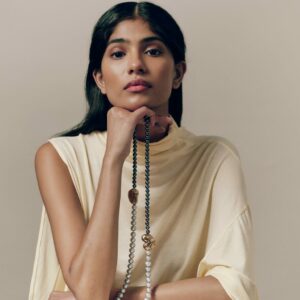
What happens when you put ten young designers on one runway and ask them to talk about the world they are inheriting?
At Istituto Marangoni Dubai’s inaugural IN COMMON: Design in Dialogue fashion show at GOODER, Alserkal Avenue, the answers were anything but uniform. There were clothes talking of doing the laundry, garments inspired by lost Nubian architecture, Victorian repression, Greek mythology, straitjackets, villains, circus performers and fictional civilisations buried beneath ash.
Different stories. Different worlds. One runway.
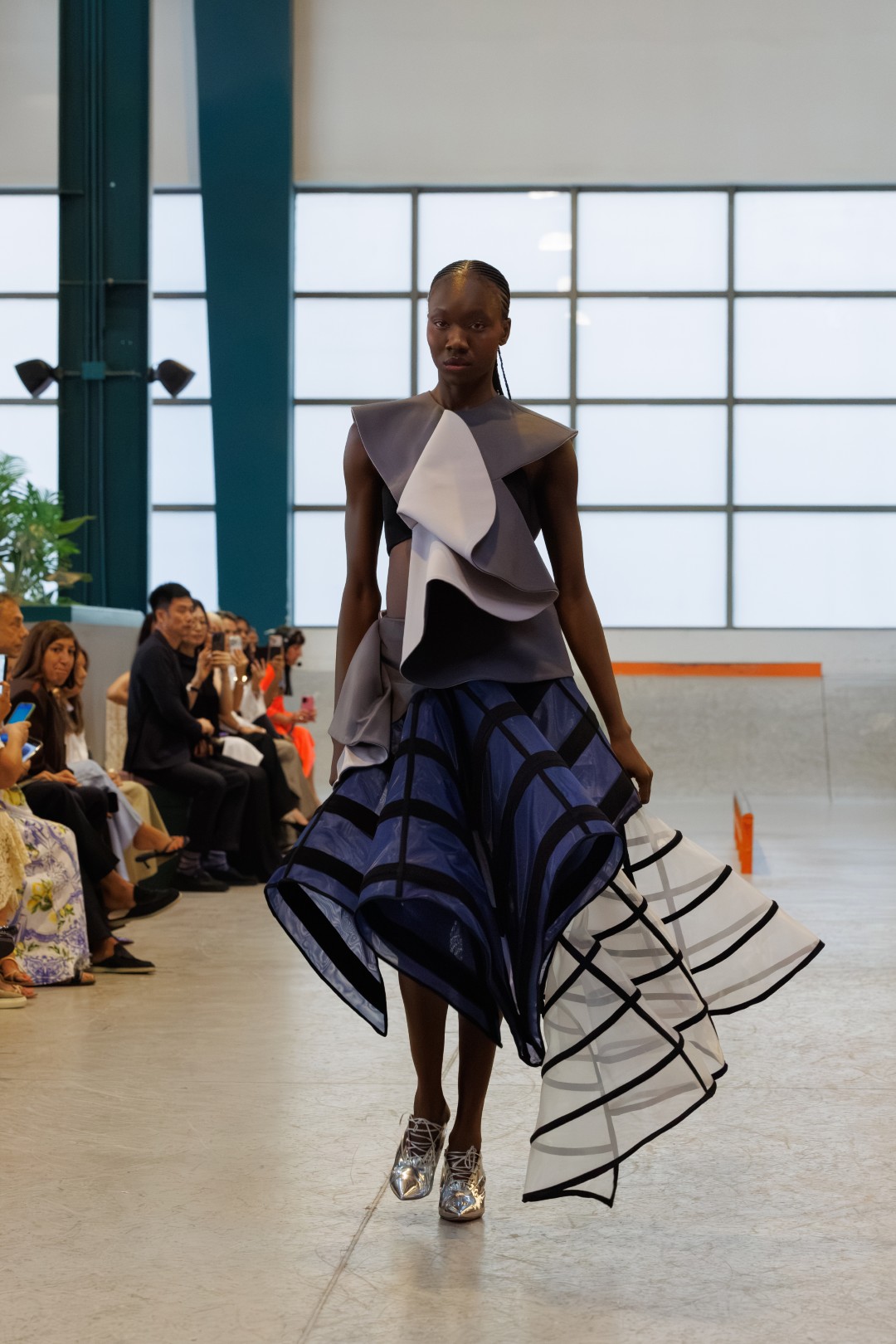
“IN COMMON is a celebration, a milestone for Istituto Marangoni Dubai and a special moment for our community,” said Roberto La Iacona, Dubai School Director. “For the first time, we are celebrating our graduates through both a fashion show and an exhibition.”
But beyond the graduation milestone, the show offered something more interesting: a glimpse into what preoccupies a new generation of designers. Identity is no longer treated as a fixed idea. Heritage is not simply preserved. Memory can be distorted, rebuilt and worn. Vulnerability can look like armour. Even laundry can become political.
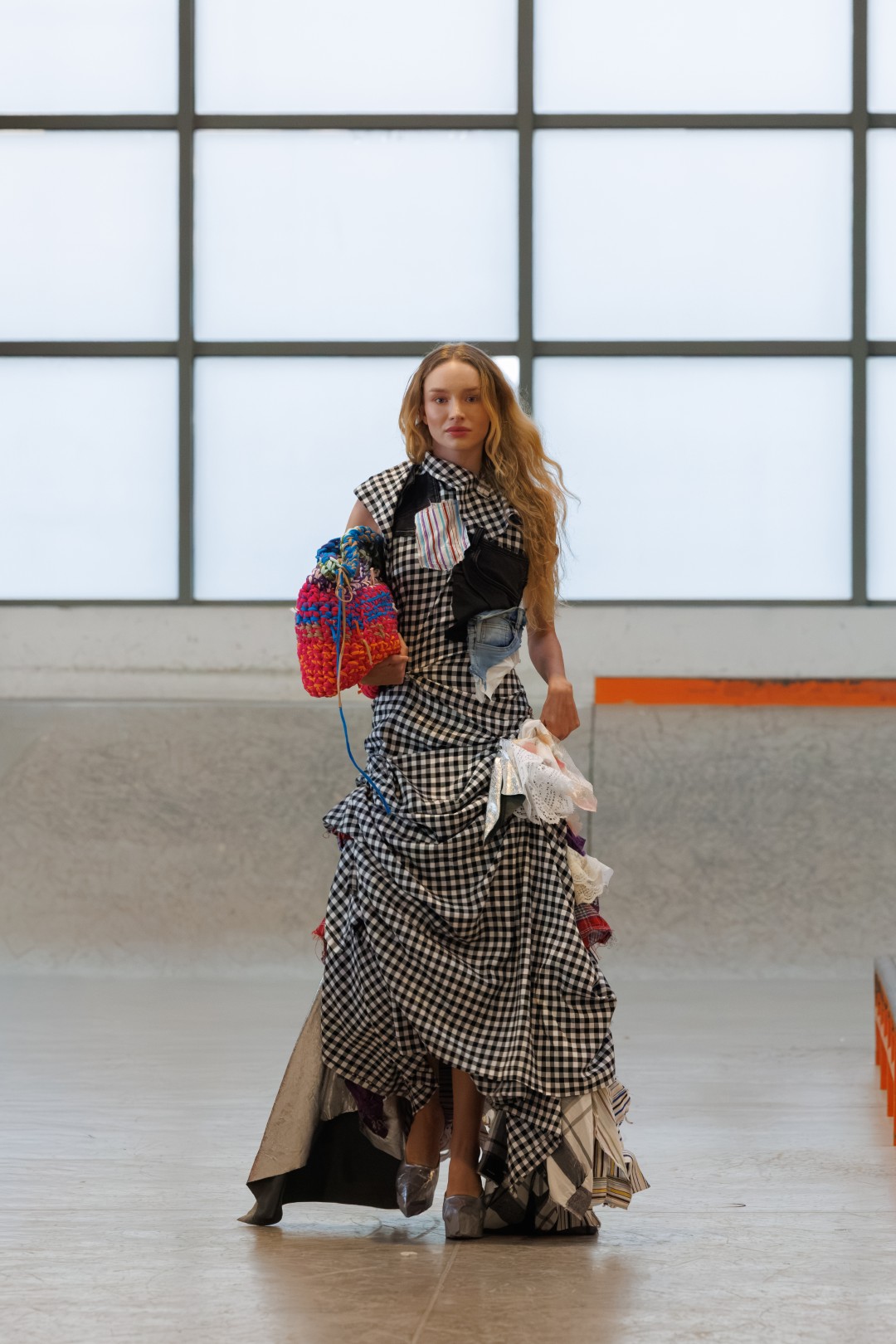
For Alaa Naser Asker, the starting point was almost aggressively ordinary. DO YOUR LAUNDRY was inspired by the line, “Everybody wants to save the world, but nobody wants to help Mom do the laundry.” From there, Asker turned a domestic ritual into a meditation on care, connection and a culture moving faster than the people living inside it. The collection asks a deceptively simple question: in our obsession with bigger change, what small human gestures are we forgetting?
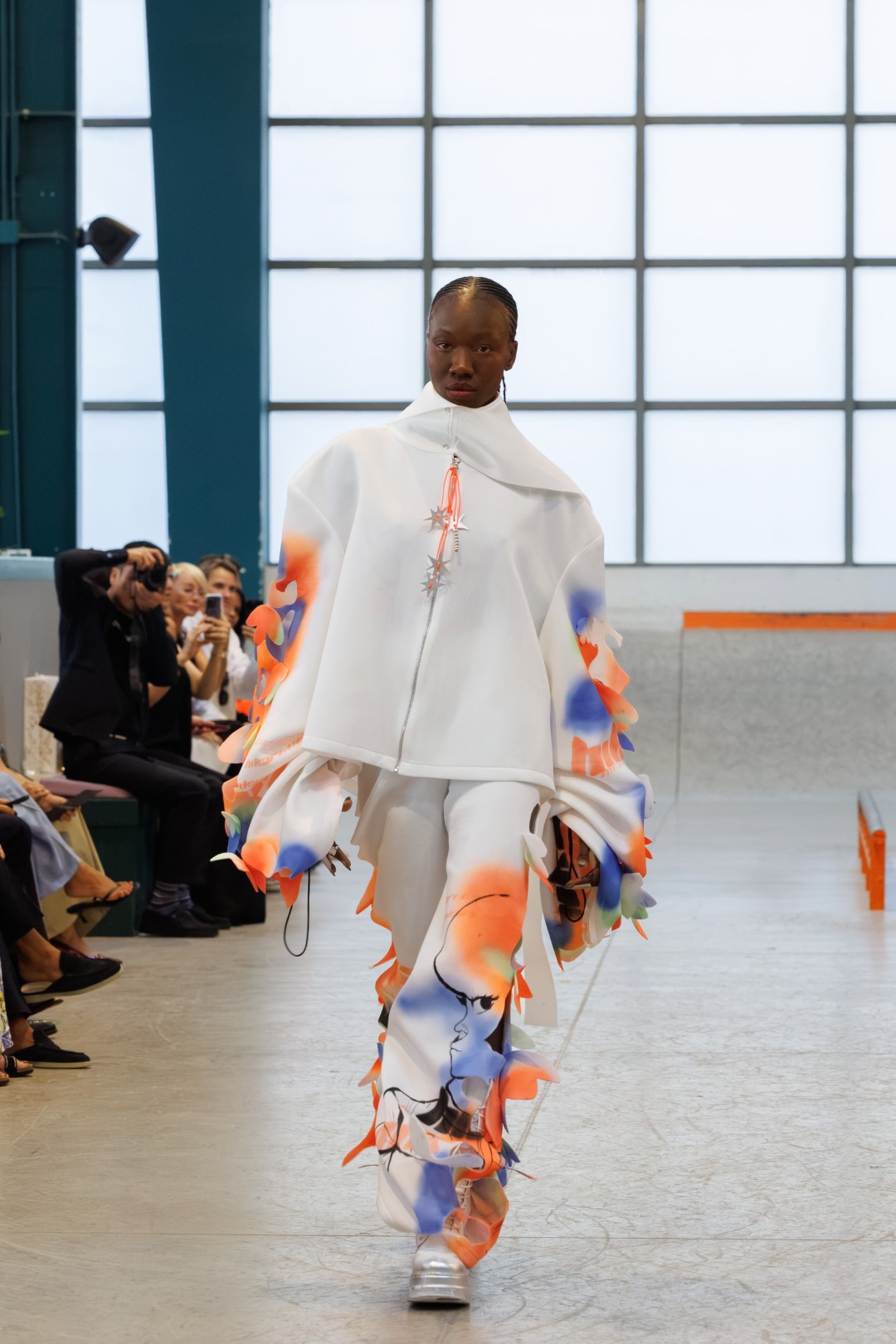
Elsewhere, Jana Mneimneh’s HIKARI-UCHI, meaning “light within”, looked at rebuilding after destruction. Drawing on Akira, Japanese streetwear, protective motorcycle gear and futuristic architecture, Mneimneh created garments that behave almost like armour, shielding the body while exposing the person beneath. A lotus motif becomes a symbol of rebirth, suggesting that strength is not the absence of fragility but something built through it.
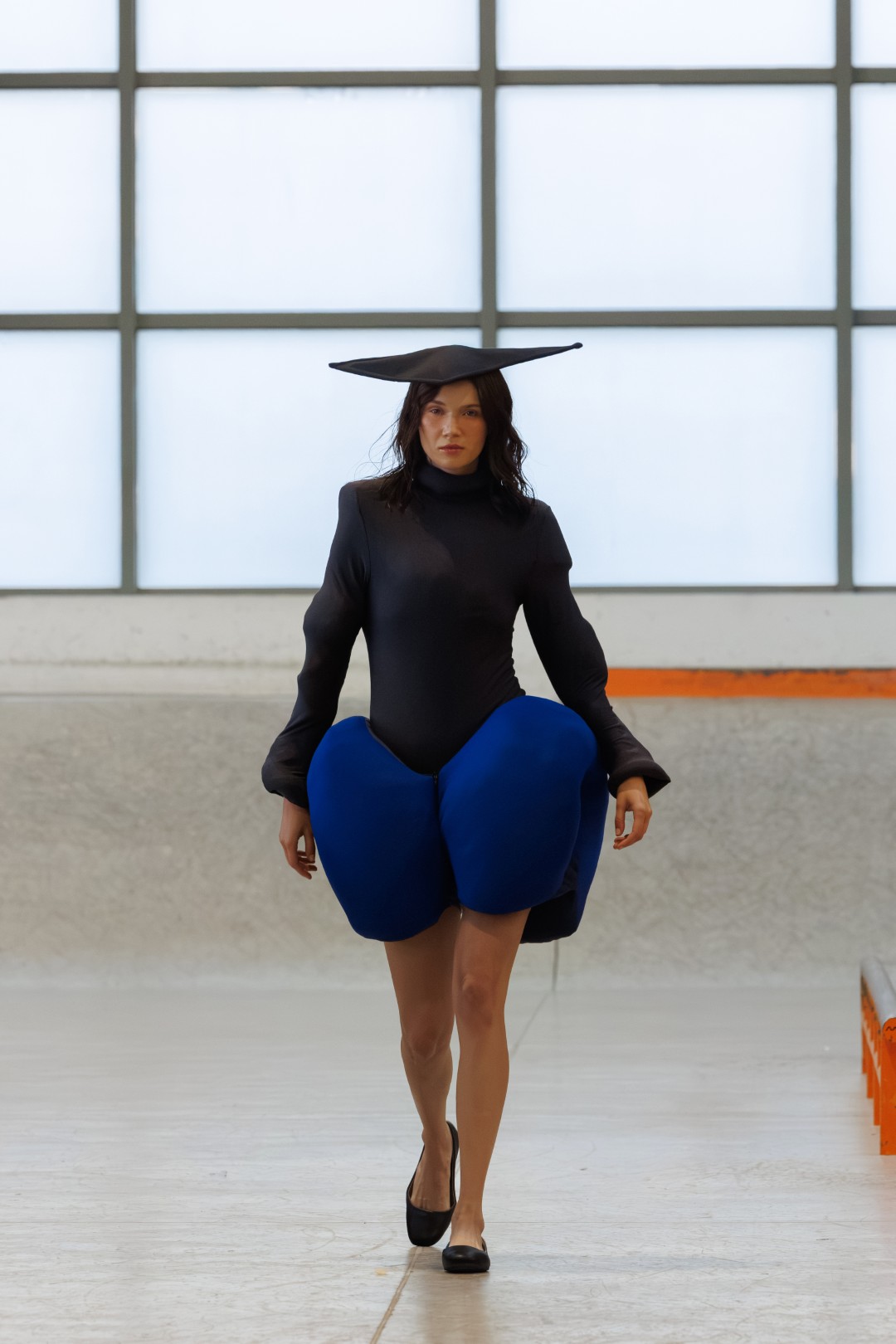
Then there is Karim Fakhrutdinov’s LOLA, perhaps the runway’s most unsettling proposition. It begins with two questions: What clothes will we die in? What do we leave behind when we die? Fakhrutdinov constructed an eighteenth-century gothic narrative around a bride subjected to experiments by her physician husband and eventually confined inside a restraining garment. The resulting collection examines clothing as protection, imprisonment and evidence of a life lived.
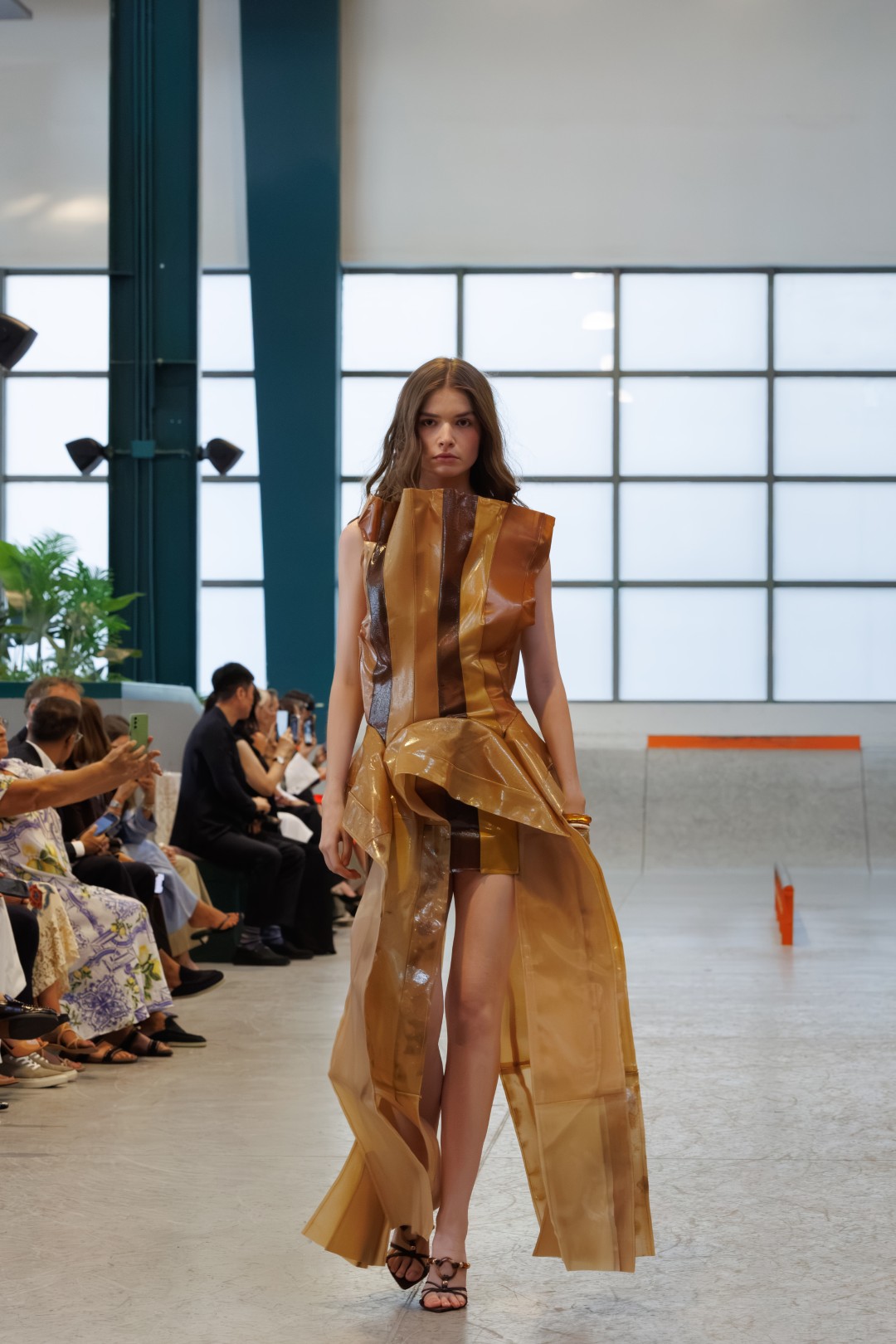
Nadine Suliman looked backwards to move forward. Her collection takes the lost Nubian region of Wadi Halfa and its vernacular architecture as its point of departure. Inspired by ancestors who built with earth and locally available materials, Suliman developed biodegradable fabrics from natural ingredients, translating architectural resourcefulness into contemporary clothing.
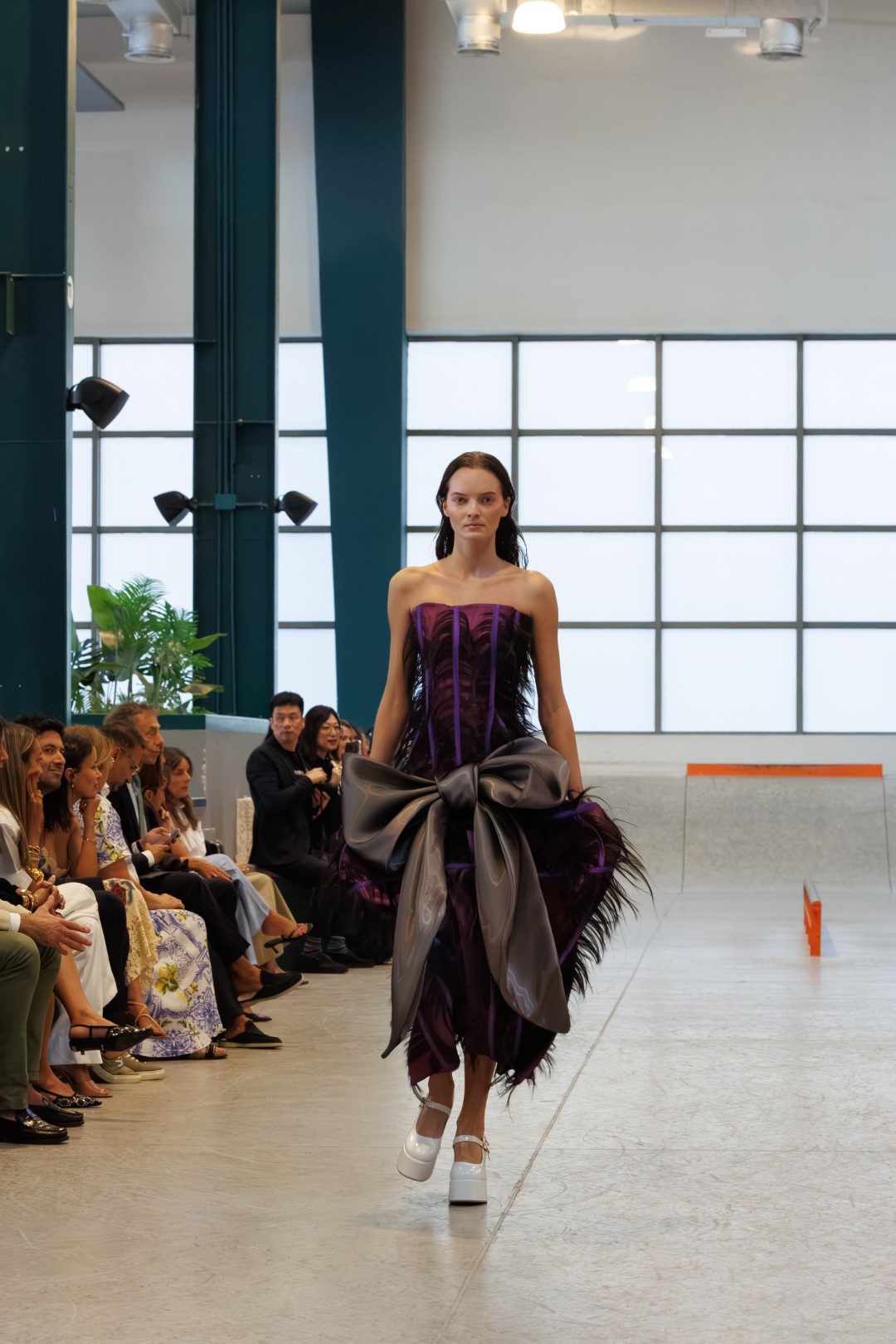
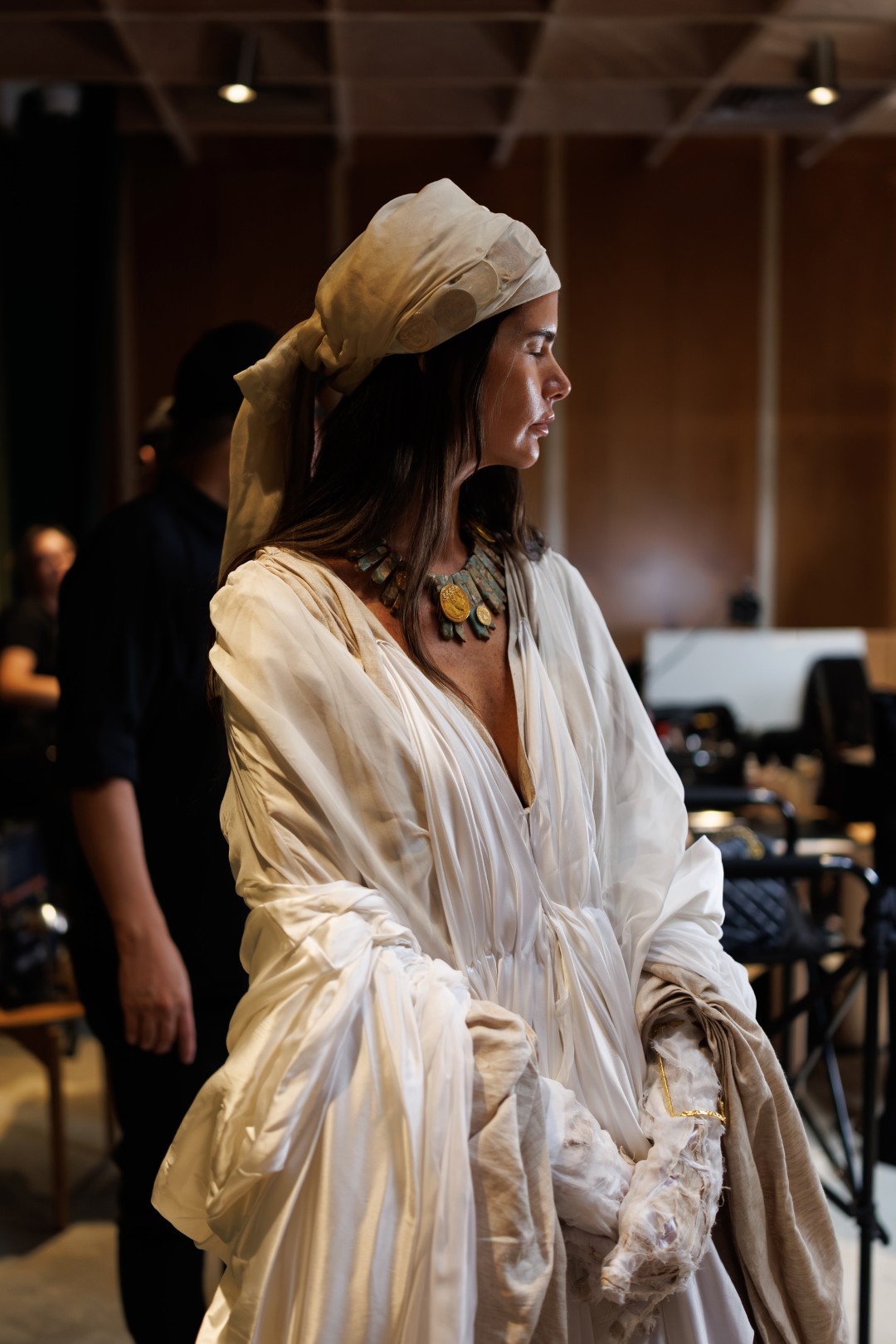
Other collections pushed at perception. Aya Kaddour’s The Hidden Beauty of Villainy questioned the easy division between good and bad, dark and beautiful. Maria Arnaout’s DARLING, YOUR HAIR used Victorian corsetry, hair and exaggerated proportions to examine the uneasy relationship between modesty, desire and the control of the female body. Pin Xi Bao’s The Burial Grounds invented an entire vanished civilisation, piecing it back together through archaeological references, Byzantine and Middle Eastern ornament and garments that appear to have survived their original wearers.
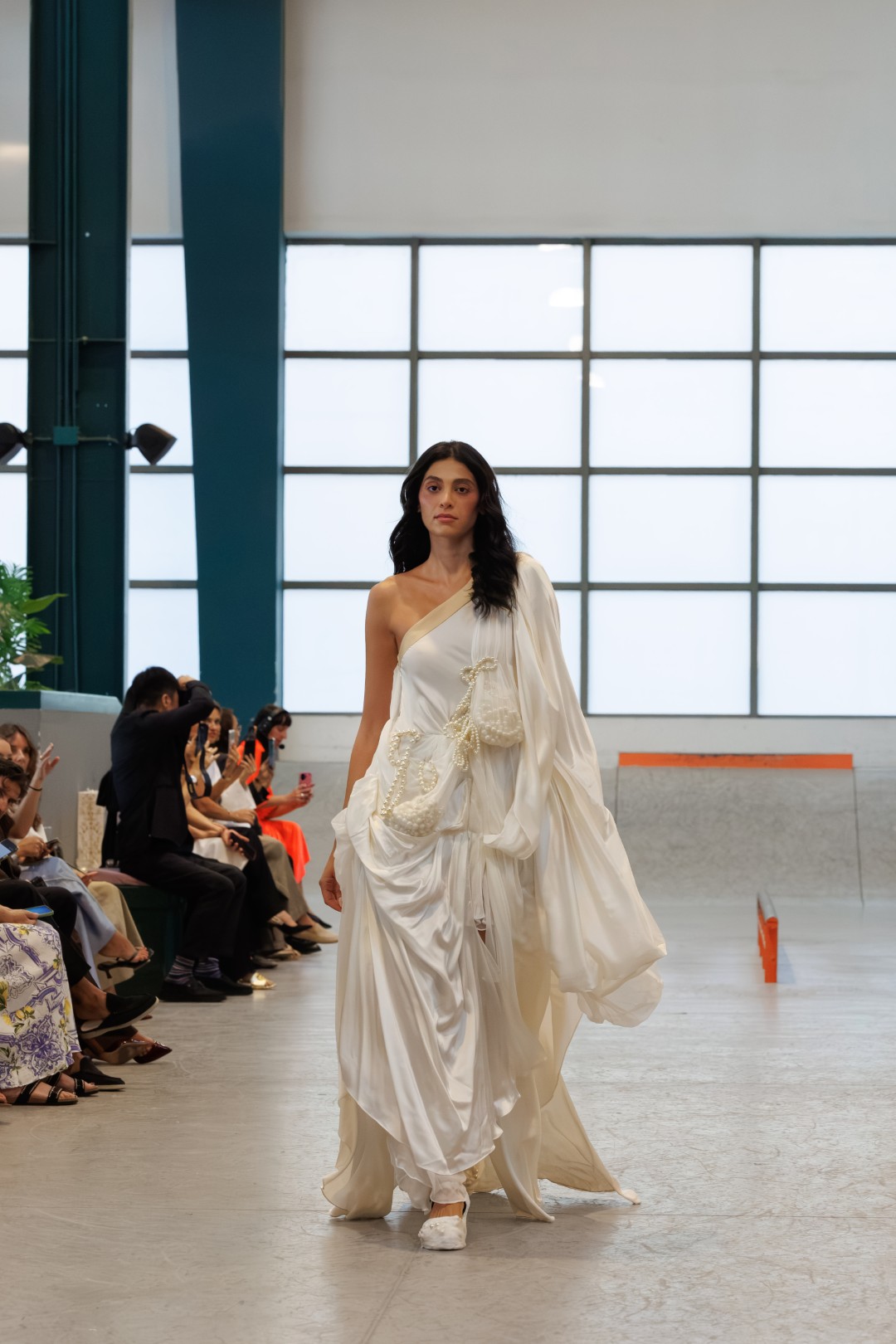
Taken together, the collections were less interested in providing answers than in making contradictions visible.
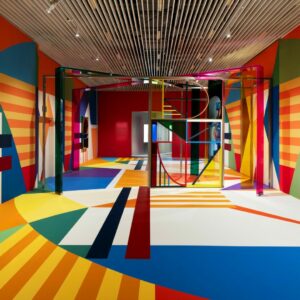
That thinking continued beyond the runway. The Degree Show brought together work from Fashion Business, Interior Design, Visual Design, Fashion Communication & Image, Fashion Design and Fragrance & Cosmetics, turning the exhibition into a broader conversation between image, object, space and strategy.
Marie Genevieve Cyr, Dubai School Director of Education, described the project as “the transformation of individual experience into shared cultural meaning.”
“Fashion, image, space, communication, and strategy come into dialogue,” she said, “revealing design not as a series of isolated outcomes, but as a collective practice capable of questioning, connecting, and proposing new ways of seeing.”
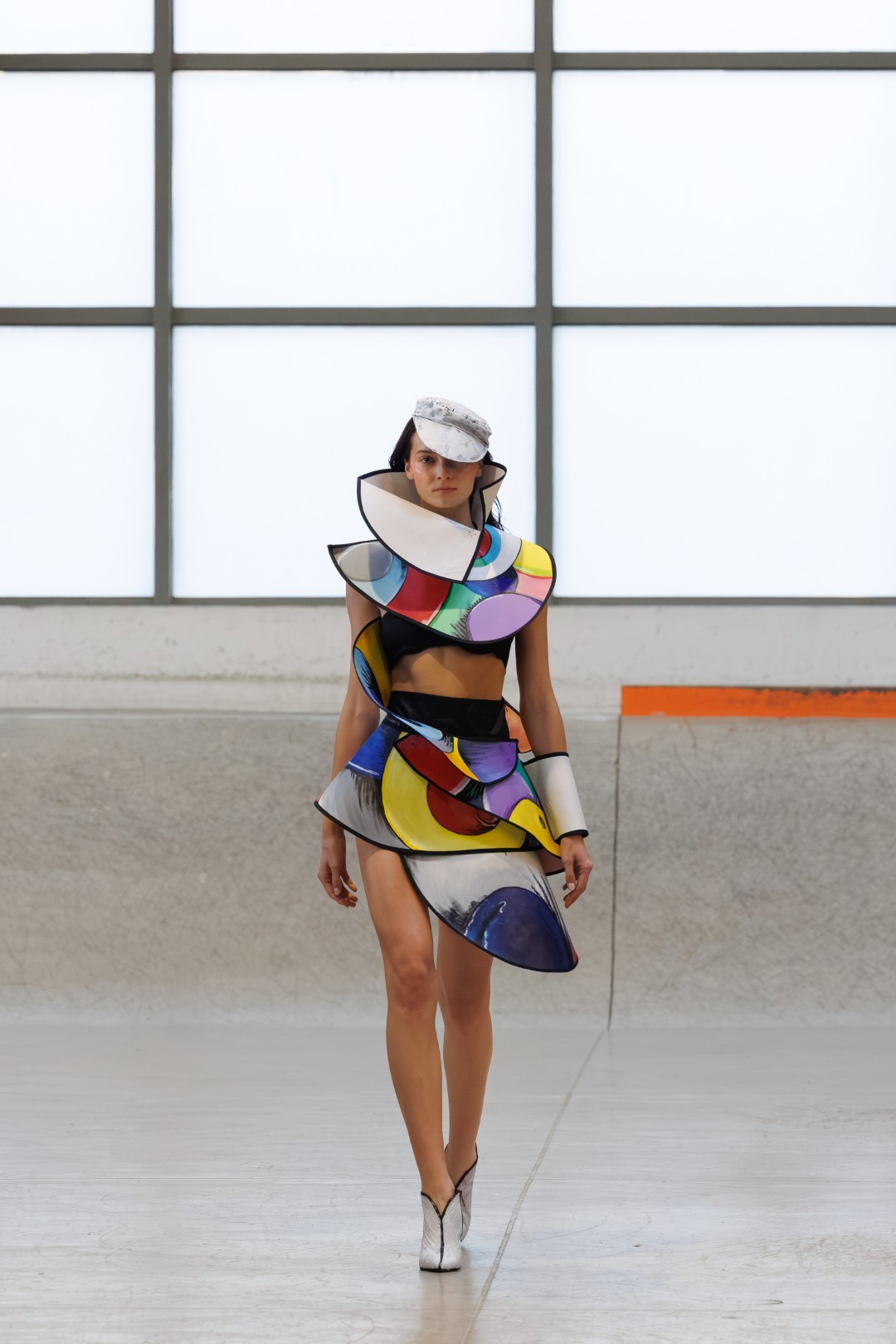
And perhaps that is where the title IN COMMON lands most effectively.
These designers do not necessarily share the same references, aesthetics or even definitions of fashion. What they share is an instinct to interrogate what they have inherited and decide what deserves to be preserved, dismantled, exaggerated or rebuilt.
For a graduating class stepping out of education and into an industry that often demands an instantly recognisable identity, that refusal to speak with one voice might be their strongest statement yet.
For more stories of fashion from MENA and beyond, visit our dedicated archives and follow us on Instagram.