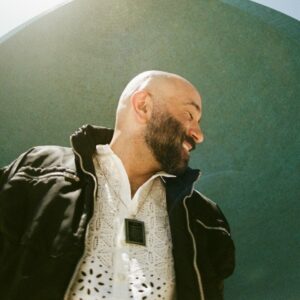
When I interviewed Wassim Bou Malham three years ago, Gharam Electric had just released Kolou Banat. I remember hearing it for the first time and being struck by how unusual it felt. Not unusual for the sake of it, but because it seemed to operate according to its own internal logic. The track arrived with a kind of productive disorientation. It felt like something entirely out of the ordinary. It managed to be weird and brilliant at the same time. There is something particularly exciting about encountering music that genuinely surprises you. And even today, whenever the song appears on my shuffle, I rarely skip it and it always gets played in full.
When we eventually sat down for a Zoom conversation, what was meant to be a simple interview ended up stretching well beyond an hour. We ended up launching a second meeting because there was simply too much to discuss, too many tangents to indulge in. What stayed with me most wasn’t just the music itself, but Bou Malham’s relationship to Arabic music as a living form. There was a sense of curiosity that felt endless. A desire to explore rather than preserve – an expansion of what is already there. Gharam Electric honours tradition by allowing it to evolve.
That spirit has always sat at the heart of Gharam Electric, the Futuro-Arabe project of Lebanese musician, vocalist and producer Wassim Bou Malham. The project’s work is rooted in a reverence for Arabic musical traditions as well as an equally strong desire to imagine new futures for them.
The project’s relationship with maqamat, rhythm and traditional Arabic song forms comes from study and immersion. There is research behind the work, certainly, but there is also play. A willingness to follow an idea somewhere unexpected and see what emerges.
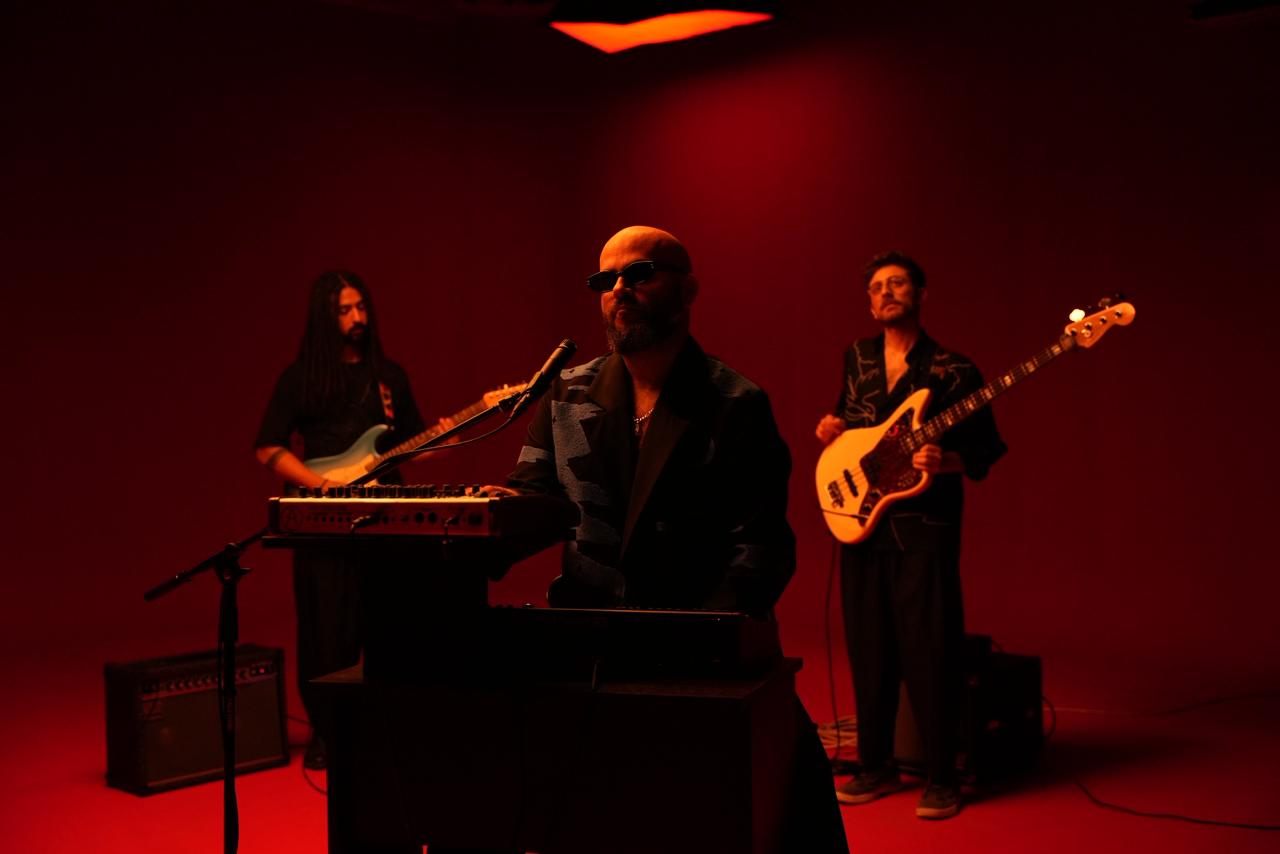
Across releases like Kolou Banat, Khalas and the wider body of Gharam Electric’s work, that philosophy has remained consistent. Arabic melodies, synthesizers, electronic textures. Bou Malham approaches the Arabic musical traditions as a living language that can express modern anxieties, desires and contradictions.
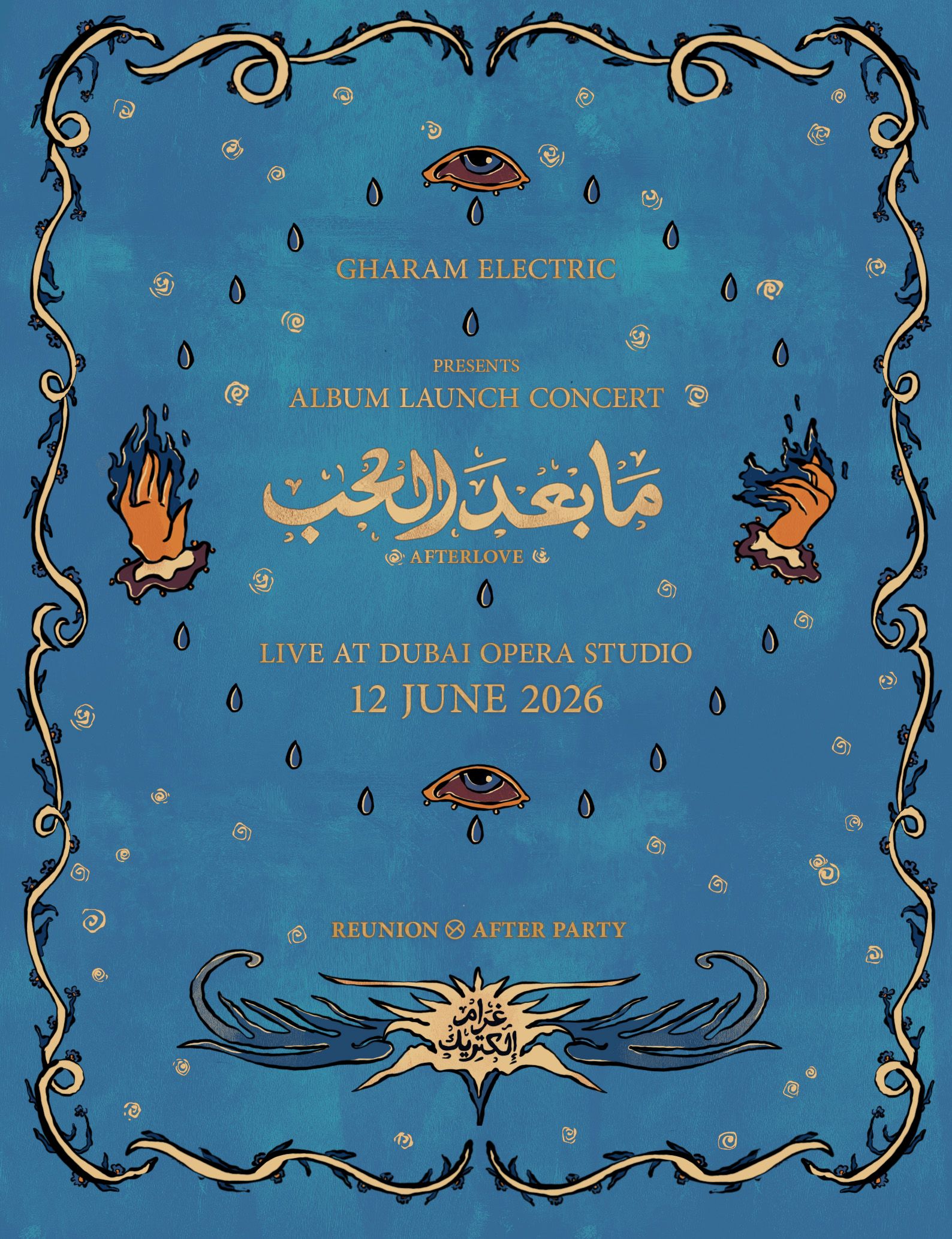
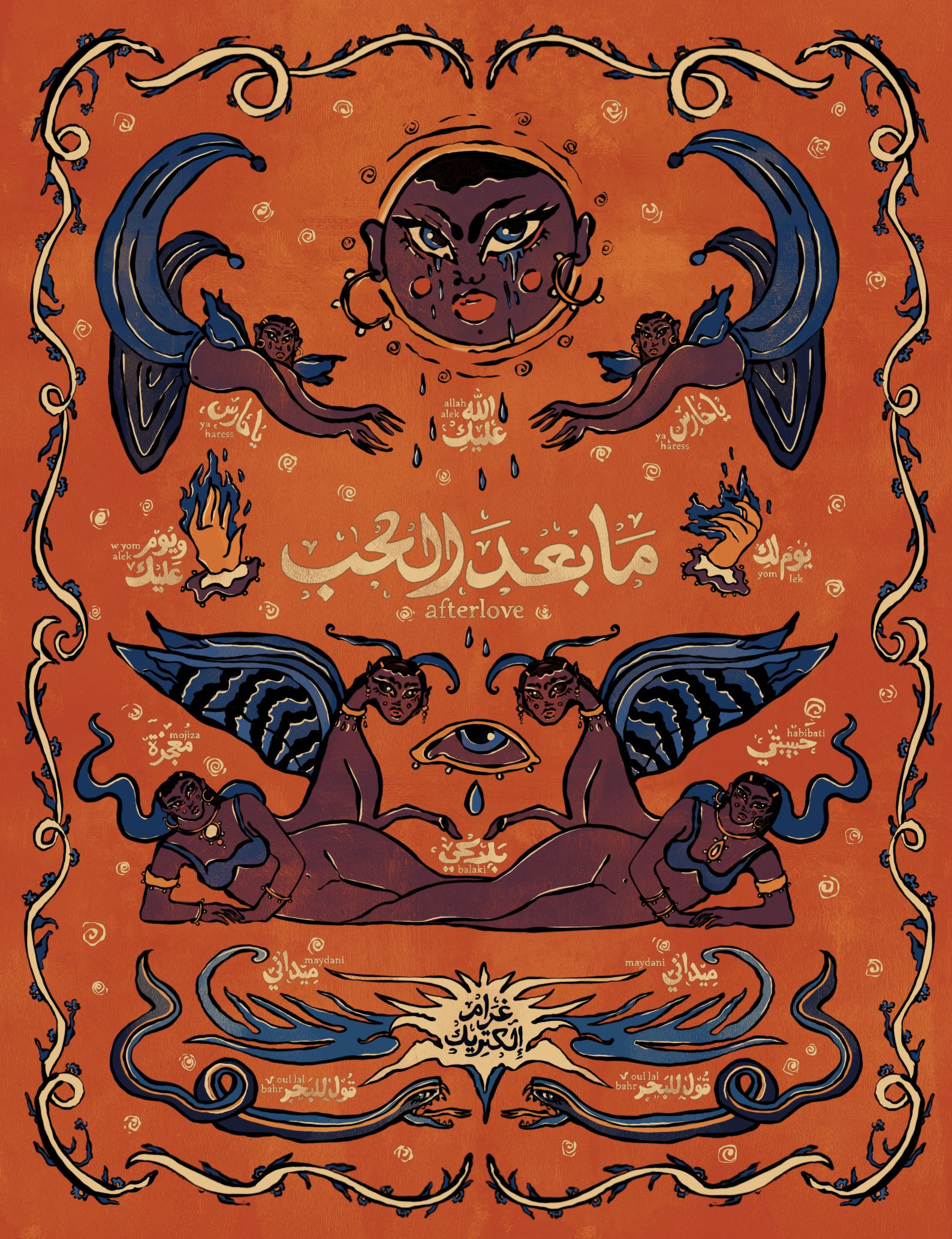
Now, that vision is expanding into its newest form: an eight-track album titled Afterlove (مابعدالحب).
The core ethos remains unchanged. The same musical dialogue is present. These elements have become Bou Malham’s tools of expression, his means of experimentation, discovery and storytelling. Yet Afterlove feels poised to take that exploration even further, bringing together years of artistic inquiry into a more complete and cohesive statement.
As its title suggests, the album inhabits the emotional terrain that exists after love has ended. It is about the residue, the reflection, the reconstruction. It explores the period where love is no longer present, yet continues to shape the way we move through the world. The marks that are left. The lessons that needed to be learned. The alchemy. The versions of ourselves that emerge in the aftermath.
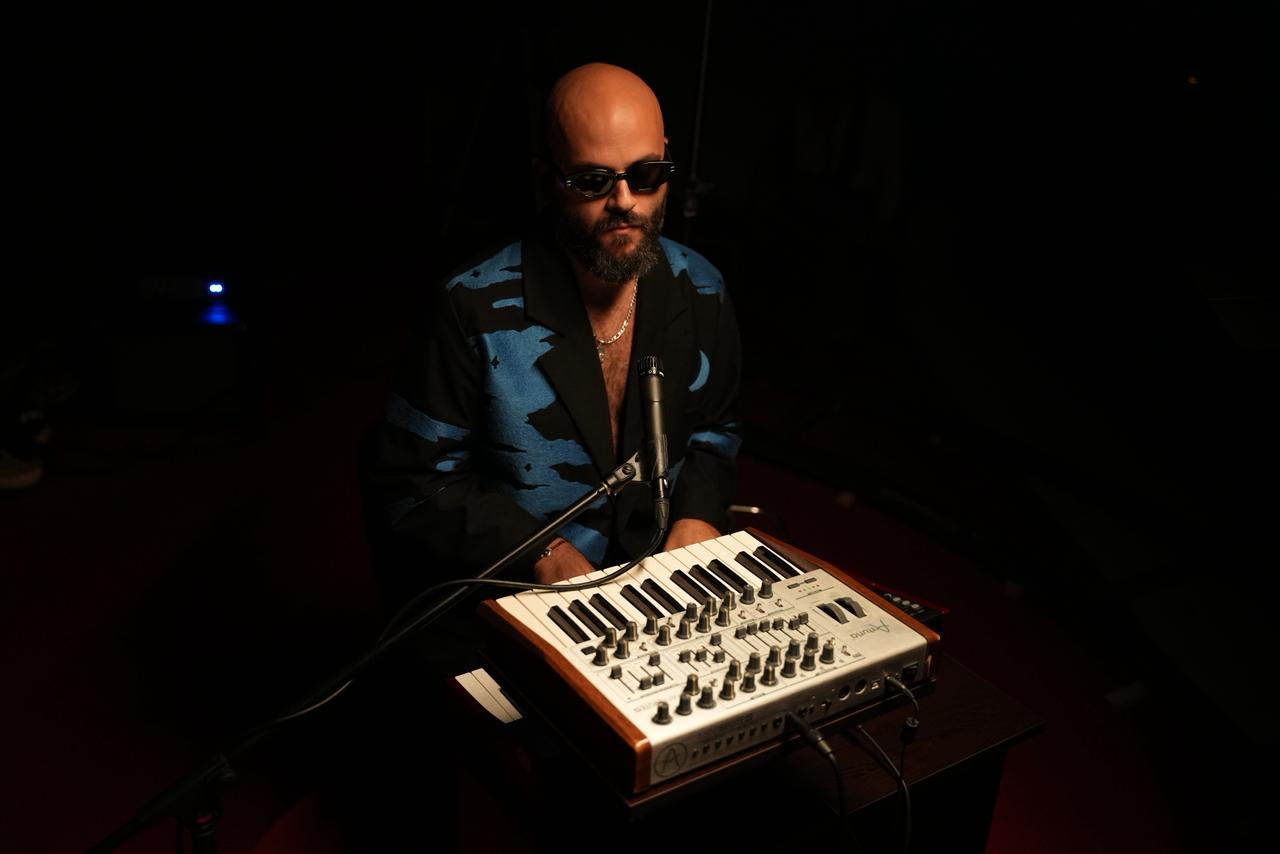
Rather than framing love as a singular event, Afterlove appears interested in the transformation it leaves behind. The grief, acceptance, and unexpected beauty that can coexist within the same emotional landscape. It is an album concerned with process. It gives voice to what lingers, what changes and what does not seem to want to disappear.
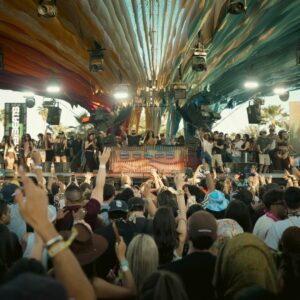
And to introduce audiences to that world, Bou Malham is bringing Afterlove to the stage for a special one-night performance at Dubai Opera, accompanied by a full live Gharam Electric band.
For those who have followed Gharam Electric’s journey over the years, Afterlove represents a natural continuation of a long-standing artistic mission. For newcomers, it offers an entry point into one of the most distinctive and forward-thinking projects emerging from the contemporary Arabic music scene today.
It’s another chapter in an ongoing exploration of how Arabic musical traditions can be studied, inhabited, challenged and reimagined without ever losing sight of where they came from.
For more stories of music from across the region, visit our dedicated archives and follow us on Instagram.