
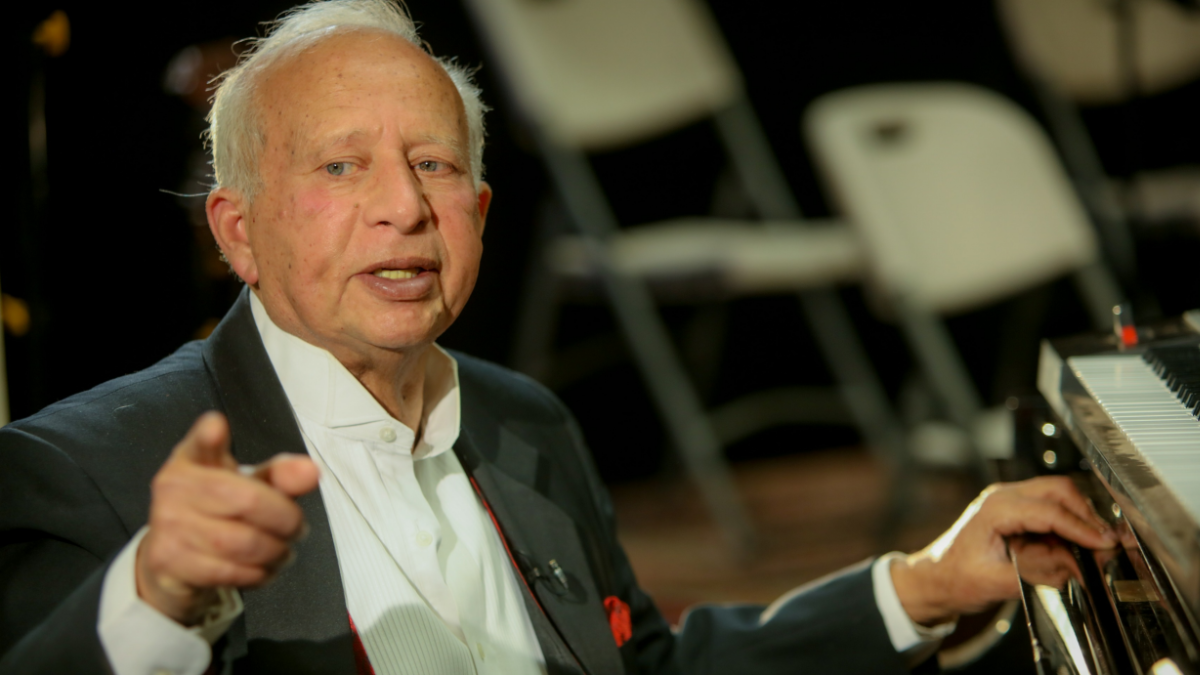
When director Samir Seif handed Egyptian composer Hany Shenouda the script for Al Mashbouh back in 1981, he laid it out straight: Adel Emam was ditching comedy for his first real action flick, and the movie needed a totally fresh sound. “If you’re not up for it, don’t do it,” Seif told him.
It rattled Shenouda a bit, but it proved how seriously he took the craft. He accepted the challenge. Instead of just cranking out a standard title track and slapping it over random scenes, he took the screenplay home, read it through, and watched the cut before writing a single note. He needed to get inside the characters’ heads, feel the tension, and catch the exact rhythm of the scenes.
That was his whole blueprint for everything he touched. Whether he was spinning up Al Masreyeen to completely flip Egyptian pop on its head or championing icons like Mohamed Mounir and Amr Diab, Shenouda always came at a project from the exact same angle: what does this story actually need to sound like?
Al Mashbouh’s soundtrack ended up being way more than just background noise for the action shots. His score swung between suspense and genuine unease, which made it easier for audiences to buy into Adel Emam’s dramatic turn and turned the chemistry between him and Soad Hosny up a notch. The music was basically doing some of the heavy lifting for the narrative, often tipping off the tension before the characters even made a move.
That became Shenouda’s signature across Egyptian cinema. In projects like El Hareef and Shams El Zanaty, he completely shifted his sound to match the universe of the specific film instead of recycling the same formula. That’s why his film work mattered so much. He treated scoring like a form of acting. The music wasn’t just there to look pretty or fill dead air; it was baked right into the story.
That exact same instinct—this obsessive need to listen to what a project actually required—was carried over into the wider musical landscape. When Hany Shenouda founded Al Masreyeen in 1977, Egyptian popular music was entering a period of transition. Traditional orchestral arrangements still dominated the mainstream, but a younger generation was beginning to search for something that reflected the rhythm of modern urban life. Shenouda answered that call.
At a time when lush orchestral arrangements dominated Egyptian music, Shenouda embraced electronic keyboards and synthesizers—not as novelties, but as instruments capable of expanding Arabic music’s emotional palette. His productions introduced new textures and rhythms that felt contemporary without abandoning the essence of Arabic melody. In doing so, he helped bridge tradition and modernity, opening the door for a new generation of artists to experiment with sound and proving that Egyptian music could evolve while remaining very much its own.
At the centre of Al Massrieen’s sound was a willingness to experiment. Synthesizers, electric keyboards, funk-inspired basslines, disco grooves and touches of jazz found their way into Arabic pop without overshadowing its melodic identity.
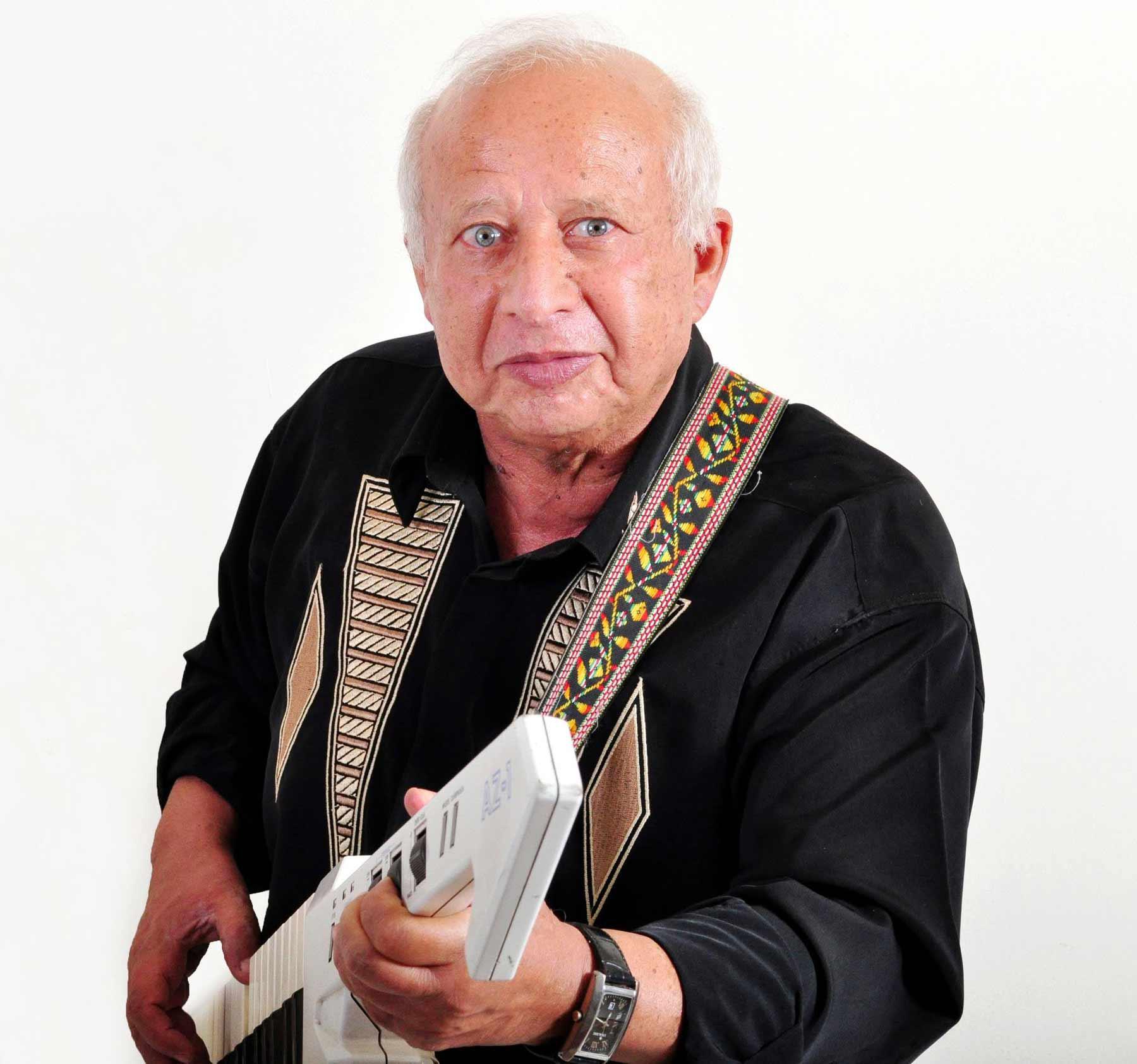
Just as innovative was the band’s approach to storytelling. Songs like “Banat Ketir,” “Mafatsh Leh,” and “El Shawarea Hawadeet” captured everyday moments, relationships and city life with an honesty rarely heard in mainstream music at the time. Their lyrics spoke to ordinary Egyptians, while the band’s use of multiple vocalists gave each song the feeling of a conversation rather than a solo performance.
There was an optimism to Al Masreyeen’s music. It sounded youthful, energetic and full of possibility—a reflection of a changing Egypt. It was pop music made for modern life. Nearly five decades later, that sound remains remarkably fresh. Al Masreyeen’s songs continue to be rediscovered by younger audiences, sampled by contemporary musicians and celebrated as milestones in Egyptian music—not simply because they were hits, but because they expanded the possibilities of what Arabic pop could be.
Hany Shenouda’s willingness to challenge convention translated into a rebellious streak when it came to the artists he chose to back. In the 1970s, Ahmed Adaweya had become the new voice of shaabi music, a genre rooted in Cairo’s working-class neighbourhoods that many critics dismissed as unsophisticated or lacking artistic value. While much of Egypt’s cultural establishment kept its distance, Shenouda saw something different.
Rather than judging shaabi through the lens of class or reputation, he recognized its authenticity, energy and ability to connect with audiences in a way few genres could. His decision to collaborate with Adaweya surprised many within the industry, raising questions about why a musician celebrated for pushing the boundaries of modern Egyptian pop would choose to work with an artist so looked down upon.
For Shenouda, however, innovation was about possibility. He understood that great music could come from anywhere, and that popular culture deserved the same creative curiosity as the mainstream. In backing Adaweya, he wasn’t lowering artistic standards; he was rejecting the idea that they should be dictated by social status in the first place.
Perhaps Hany Shenouda’s greatest composition wasn’t a song at all—it was the careers he helped shape. What would Egyptian music sound like today if Hany Shenouda hadn’t recognized a young Amr Diab? It’s impossible to know. But it’s impossible to tell the story of Egyptian pop without telling theirs together.
Before Amr Diab became the Arab world’s biggest pop star, he was just a kid from Port Said with a powerhouse of a voice and nowhere to put it yet. Shenouda spotted the raw material everyone else was walking right past, brought him to Cairo, and kickstarted the run that completely rewired Arabic pop.
He had that exact same radar when he crossed paths with Mohamed Mounir. Before Mounir became a living legend with a sound entirely his own, Shenouda produced his 1978 debut album, Alemony Eneeki, and composed four of the album’s ten songs, including the title track. Shenouda arranged the entire album, giving it the cohesive sonic identity that introduced Mounir to the public. Instead of squeezing him into a standard pop box, he structured an instrumental world that actually fit Mounir’s eccentricities, setting the bedrock for an iconic career.
And it wasn’t just about finding fresh faces. Shenouda knew how to breathe new life into legends, giving voices like Nagat El Saghira a sleek, modern update without stripping away an ounce of what made her timeless. Whether he was gambling on an unknown or reshaping an icon, his superpower was hearing what someone could be long before it was obvious to anyone else.
His legacy lives in songs many of us know by heart without ever realizing he was the mind behind them—from Ana Baasha El Bahr and Banat Ketir to El Shawarea Hawadeet, Aalemoony Eneiky, and the scores of films like Al Mashbouh and El Hareef. Perhaps that’s the greatest testament to Hany Shenouda: his music became so deeply woven into Egyptian culture that it eventually outgrew its own credits.
For more stories of music from around the region, visit our dedicated archives and follow us on Instagram.