For Alia Ali, the question of where we come from has never had a simple answer. Her practice is deeply informed by Yemeni cultural heritage, while her own life has been shaped by movement between Yemen, Bosnia and other geographies. Home, in her work, is less a fixed point on a map than something carried through language, cloth, memory and the body.
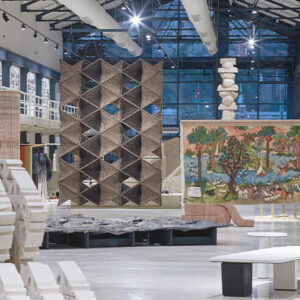
That idea sits at the heart of “In Light Of…”, Ali’s new multimedia exhibition at Kunsthalle Helsinki, running until November 1. Co-curated by Nina Toppila and Eeva Halkeri, it is her first major solo exhibition in the Nordic region and unfolds across seven spaces of the historic building.
Rather than treating each room as an isolated gallery, Ali conceived the entire building as a single body.
“Each space has its own language and atmosphere, but together they form a journey,” she says.
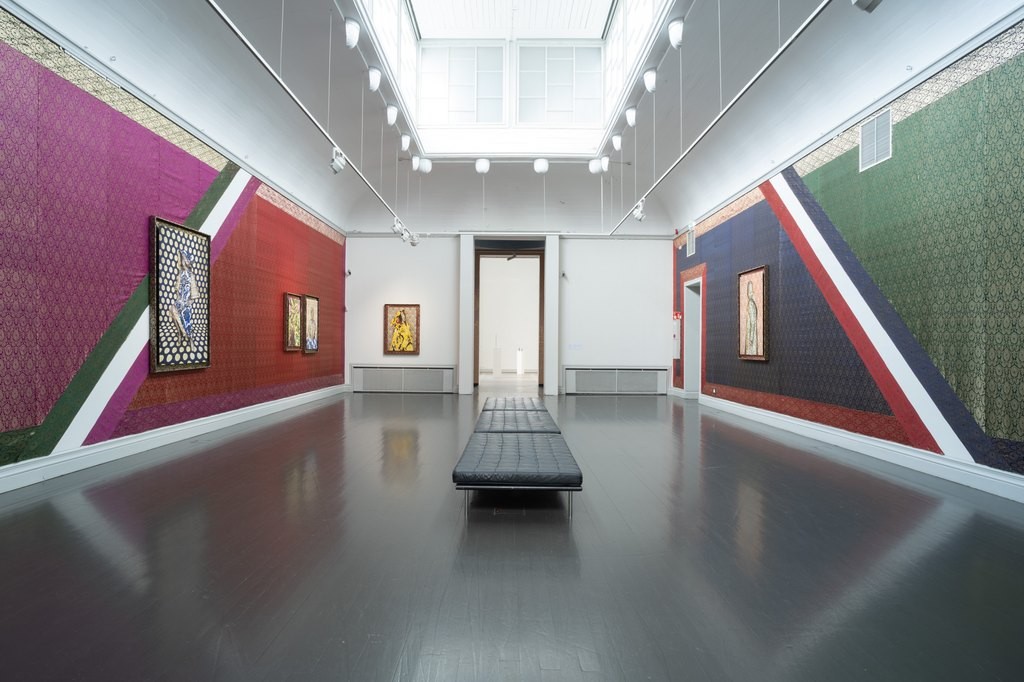
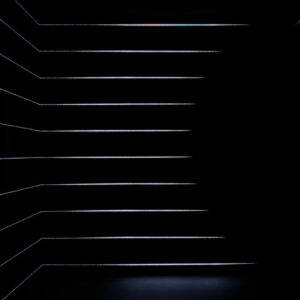
That journey moves between darkness and illumination, past and future, geography and imagination. The title itself operates on two levels. There is the physical light that changes across the exhibition through reflection, refraction and shadow, but there is also the idea of reconsidering something “in light of” what has happened since. As Helsinki shifts from the long brightness of summer towards autumn and winter, the exhibition changes with it.
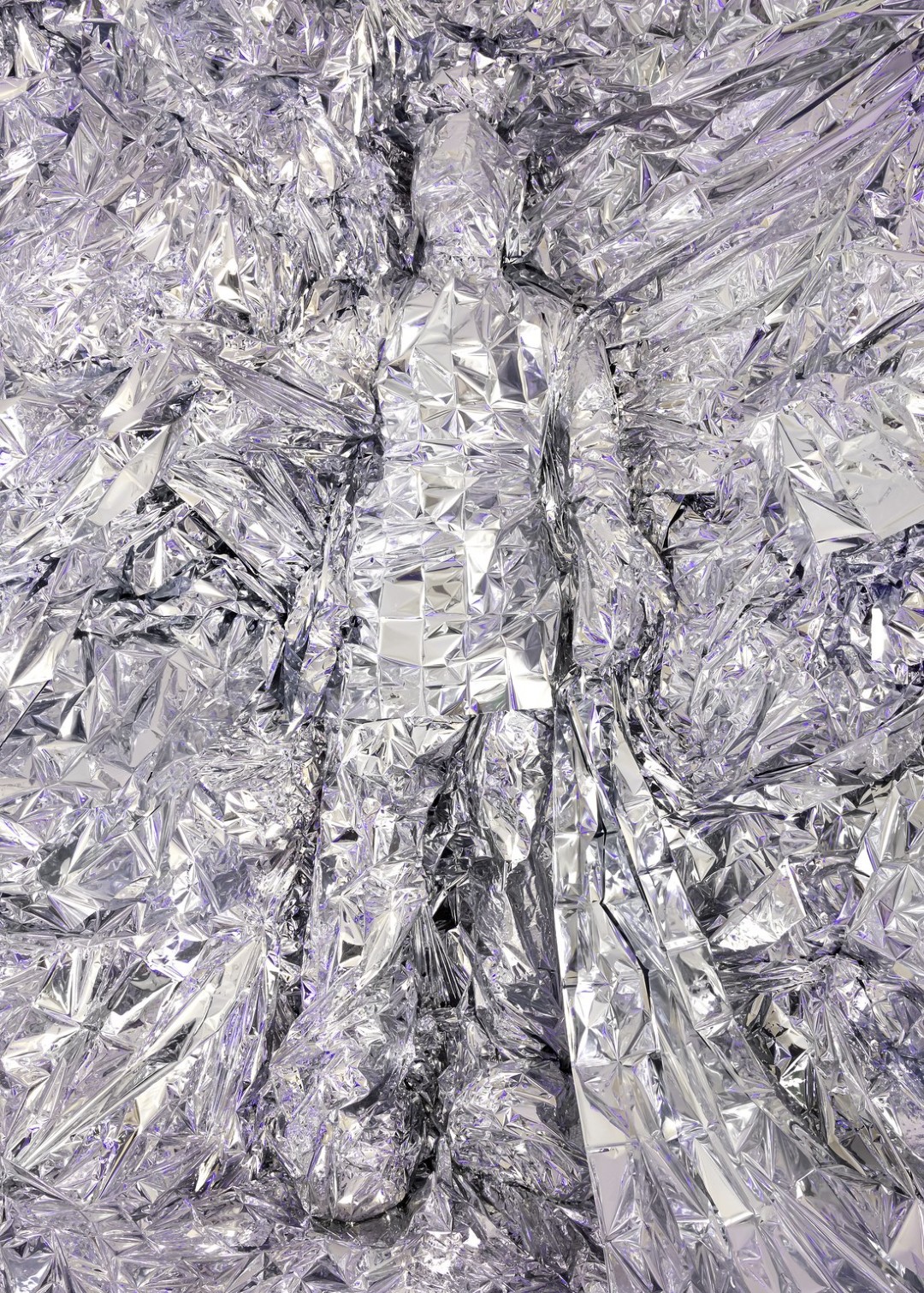
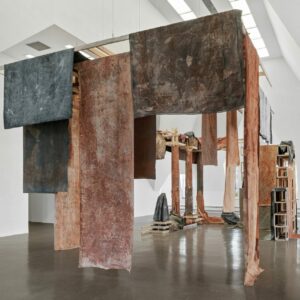
Ali’s exploration begins with “Ascent”, where visitors climb from shadow towards light while encountering golden forms from Sabiani, a visual language she has developed using references ranging from ancient writing associated with Bilqis, the Queen of Sheba, to Amharic, Arabic, Hebrew and Hindi, numerical systems, astrological symbols and motifs carried across cultures through trade and textiles.
“I don’t want Sabiani to function as a language that can simply be translated,” she explains. “It sits somewhere between writing, drawing, symbol, pattern and gesture.”
Elsewhere, time begins to collapse. In “Refracted Futures”, carved lapis sculptures recalling the ancient Kingdom of Saba are positioned alongside photographic figures imagined in the year 5025. Past and future meet in the same room, challenging the idea that cultural heritage belongs only to history.
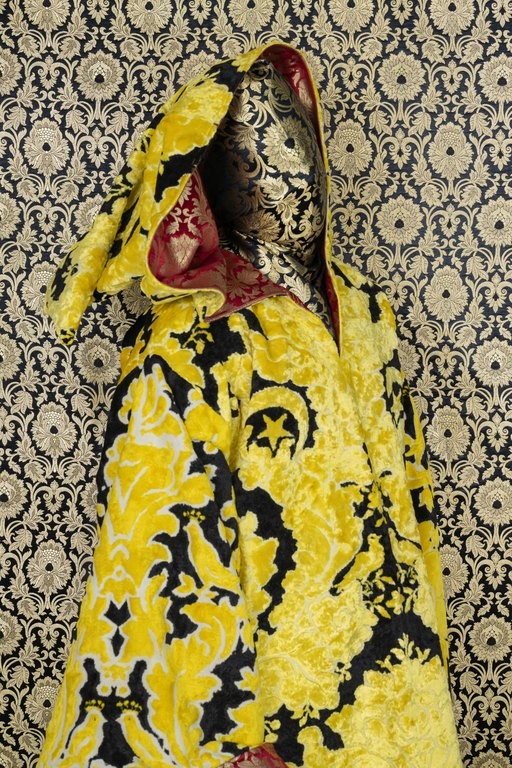
The figures are wrapped in Mylar, a material Ali is drawn to precisely because of its contradictions. Associated with space travel, Mylar is also instantly recognisable from emergency blankets used by displaced people and refugees. For Ali, it embodies two forms of movement, one travelling vertically into space, the other horizontally across borders. Her imagined figures become Yemeni travellers moving not only through geography, but through time.
“Yemen today is so frequently represented through war, poverty and catastrophe,” she says. “But what happens if we refuse to accept the present as the conclusion of the story?”
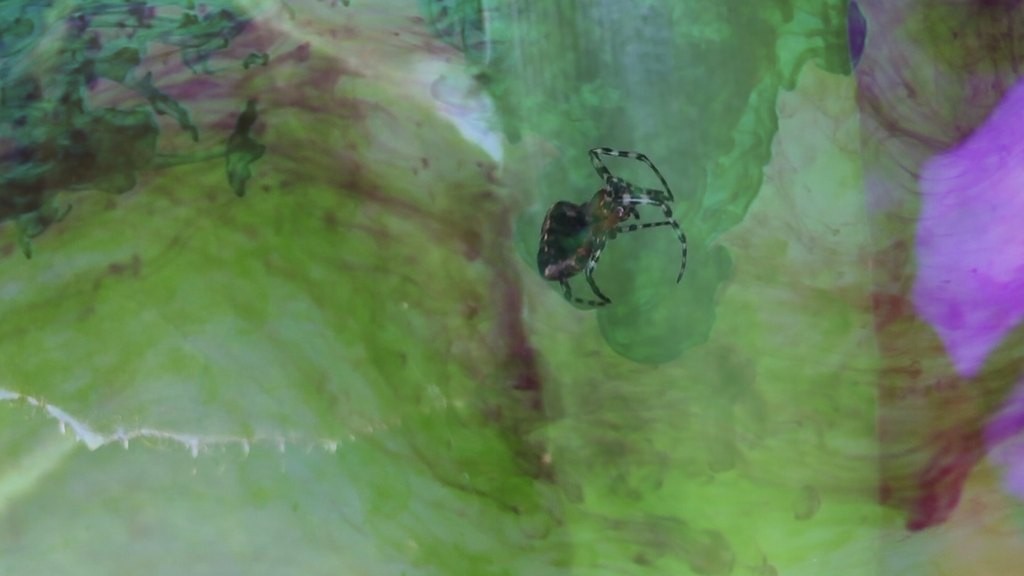
It is a question that extends throughout the exhibition. In “Mahjar”, Ali begins with displacement before turning her gaze upwards. When home becomes difficult or impossible to physically access, she asks whether belonging can be imagined beyond territory itself, through memory, ancestry and even the celestial.
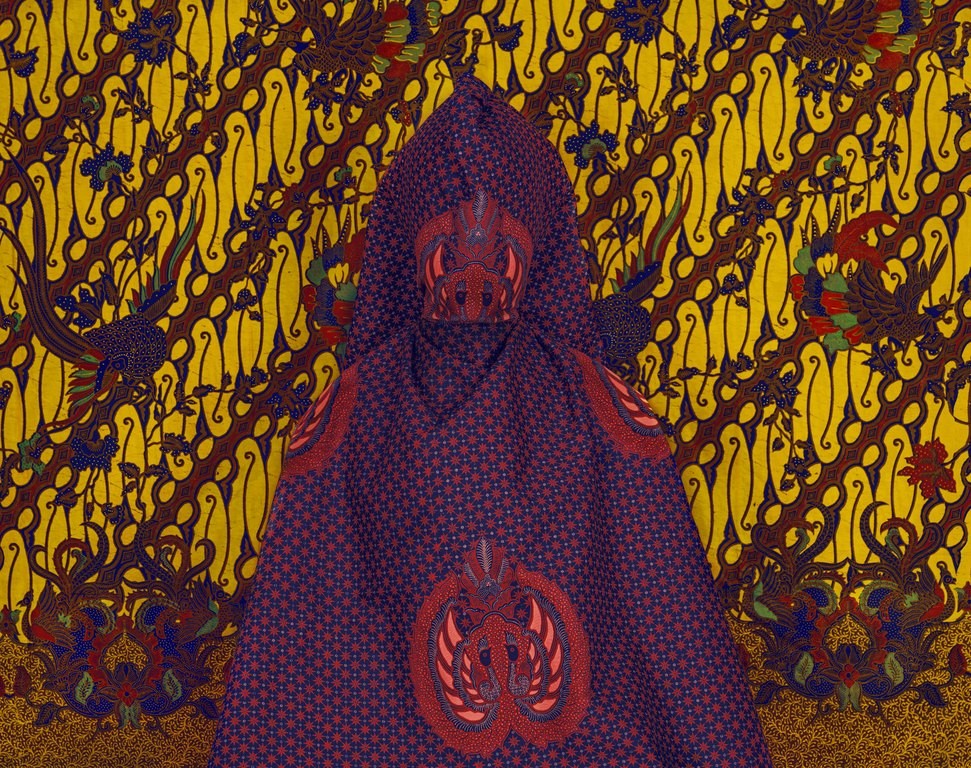
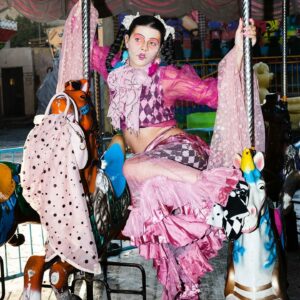
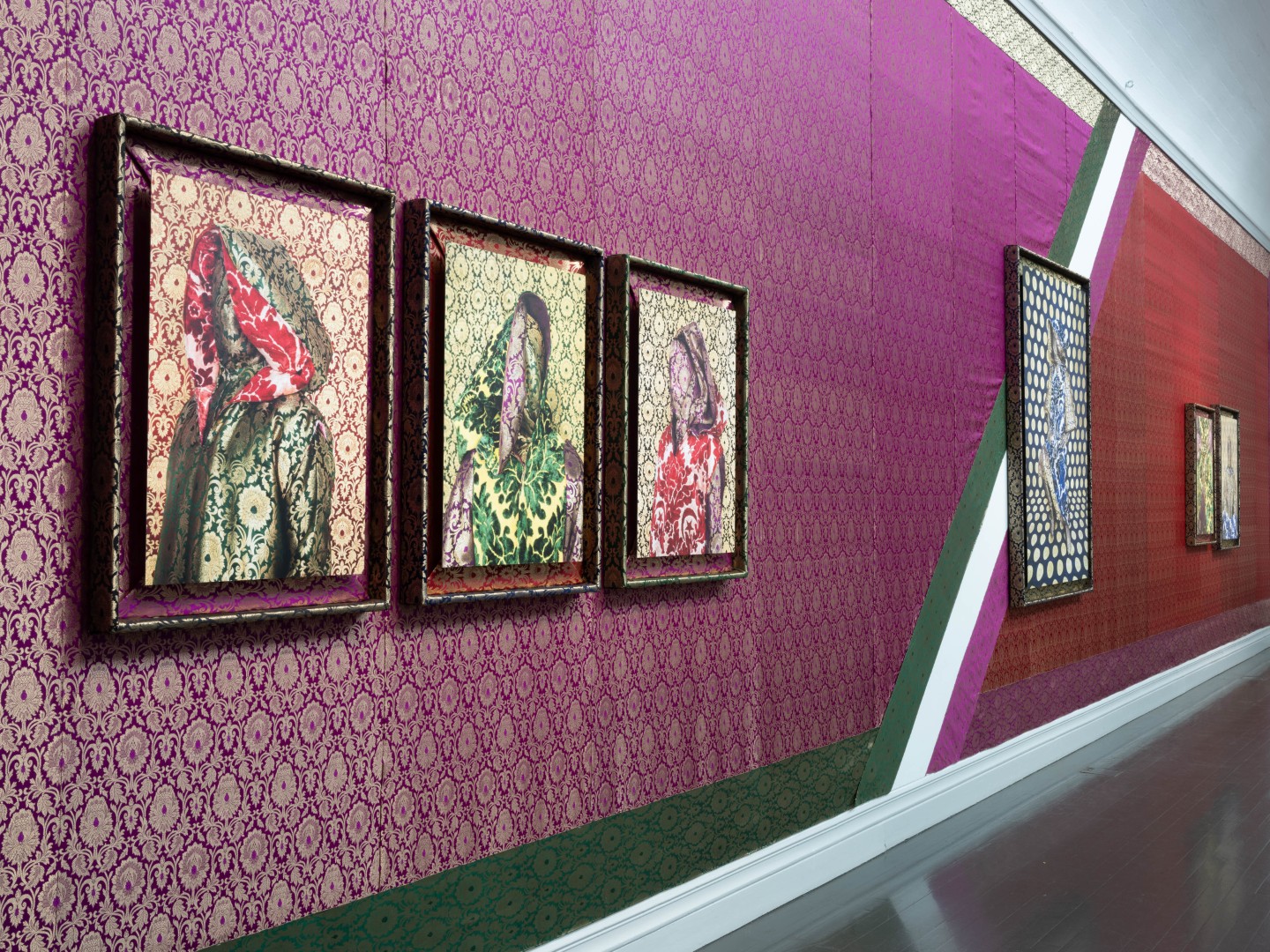
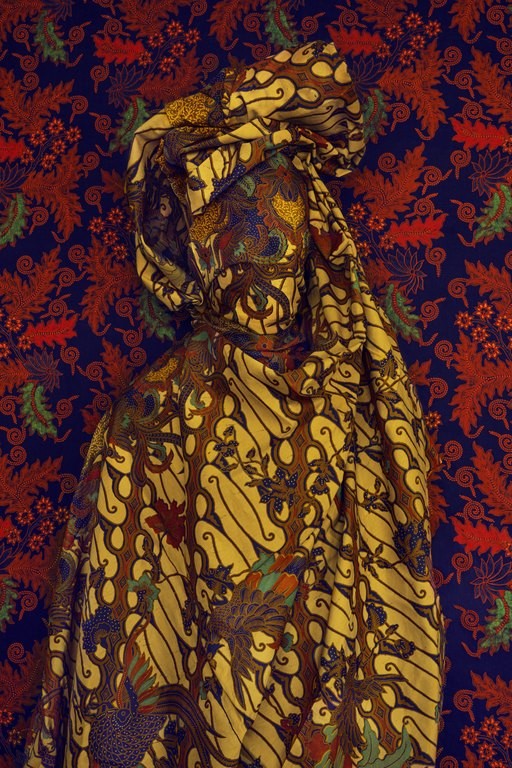
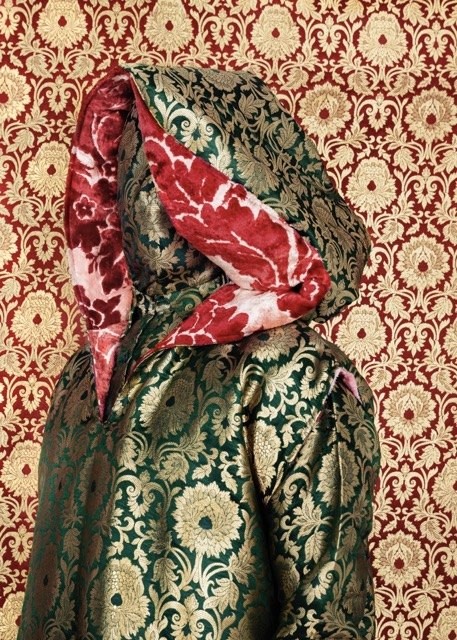
Textiles offer another form of movement. Across photography, sculpture, installation and architecture, cloth becomes both material and archive. Ali works with master artisans and with fabrics carrying their own histories of trade, migration and craftsmanship. In “Homage”, French velvets originally produced for Moroccan royal interiors are combined with Indian brocades and zari, then shaped through garments informed by Yemeni dress and Ali’s family histories.
“Cloth is extraordinarily intimate, but it is also an archive,” she says. “We wrap our bodies in it. We sleep beneath it. We inherit it. We give it away. We travel with it.”
For Ali, textiles can contain multiple identities without demanding that one replaces another. A single fabric might contain fibres, dyes, techniques and patterns originating in entirely different places, becoming a record of exchange rather than of borders.
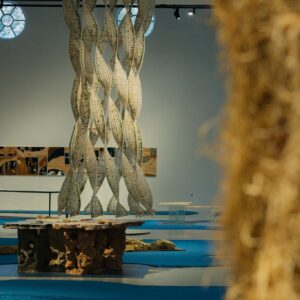
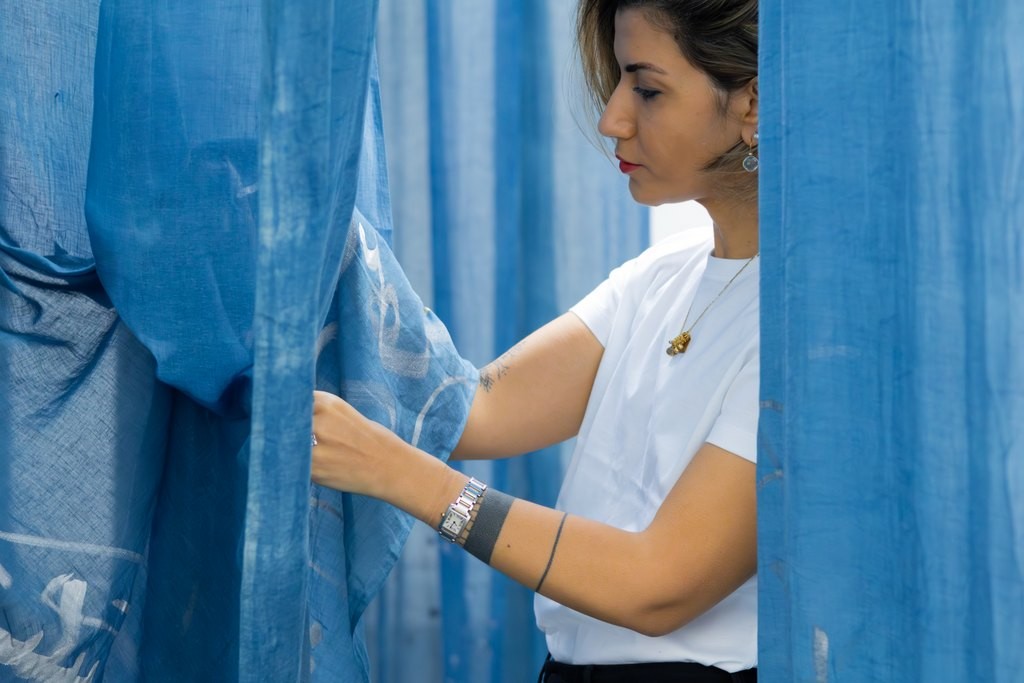
That fluidity reaches monumental scale in “Woven Air”, where 50 lengths of translucent Malmal move through 25 gradations of indigo. Visitors do not simply look at the work, but physically enter it as fabric, air, light and bodies interact.
“What seems fragile becomes monumental,” Ali says. “The walls become permeable. The boundaries move.”
Ultimately, “In Light Of…” is as much about what a visitor carries into the exhibition as what Ali places within it. Ancient histories coexist with imagined futures. Familiar symbols become unreadable. Photography expands into textiles and architecture. Borders soften, and identity is allowed to remain complex.
Ali describes her relationship with home in similarly fluid terms. Yemen remains within her, as do Bosnia, Marrakech and the other places that have held her throughout her life.
“Perhaps that is why I am less interested now in asking someone where they are from than in asking what they carry,” she says.
And perhaps that is the clearest way into Alia Ali’s world. Not through where something begins, but through everything it gathers as it moves.
For more stories of fashion, visit our dedicated archives and follow us on Instagram.