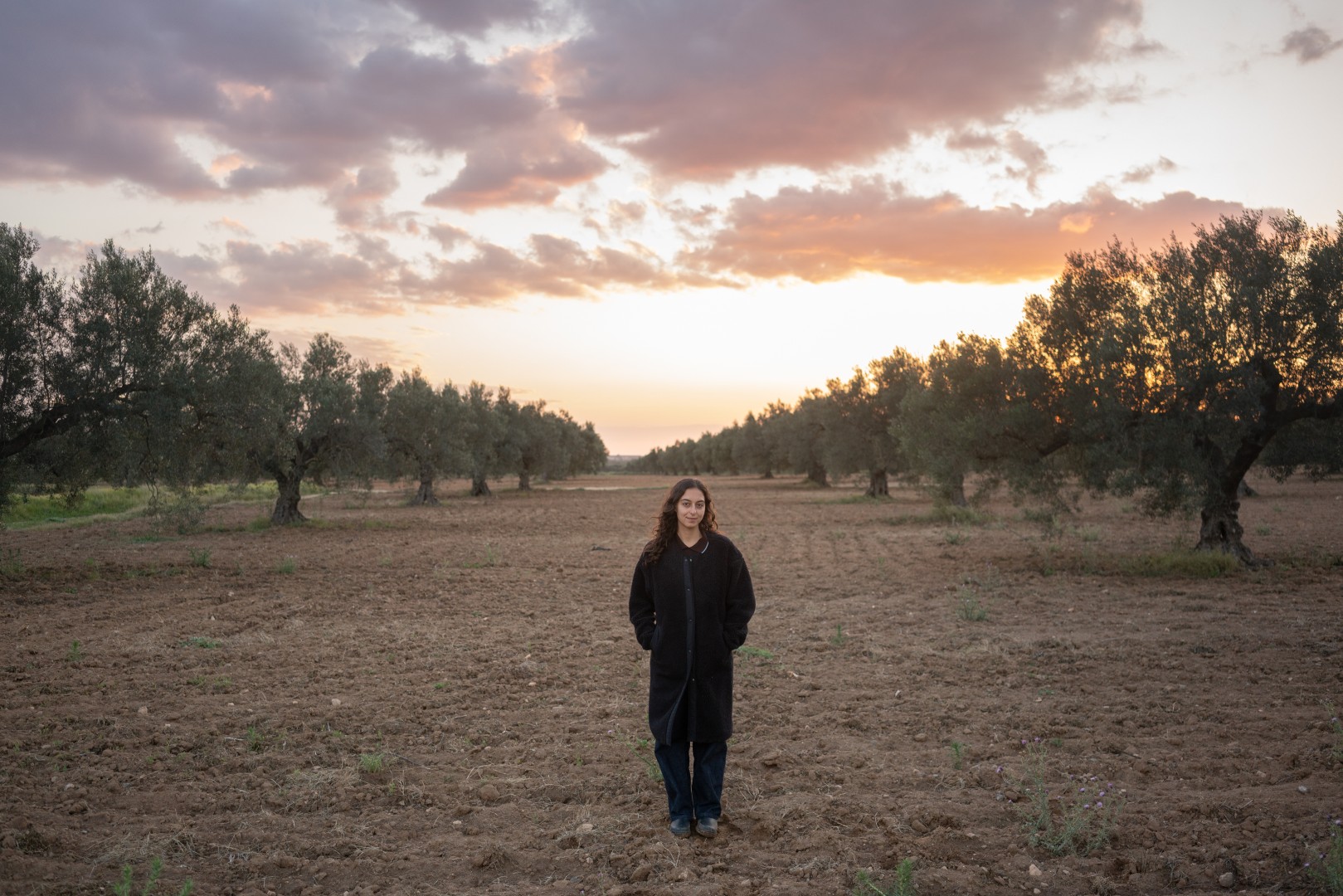
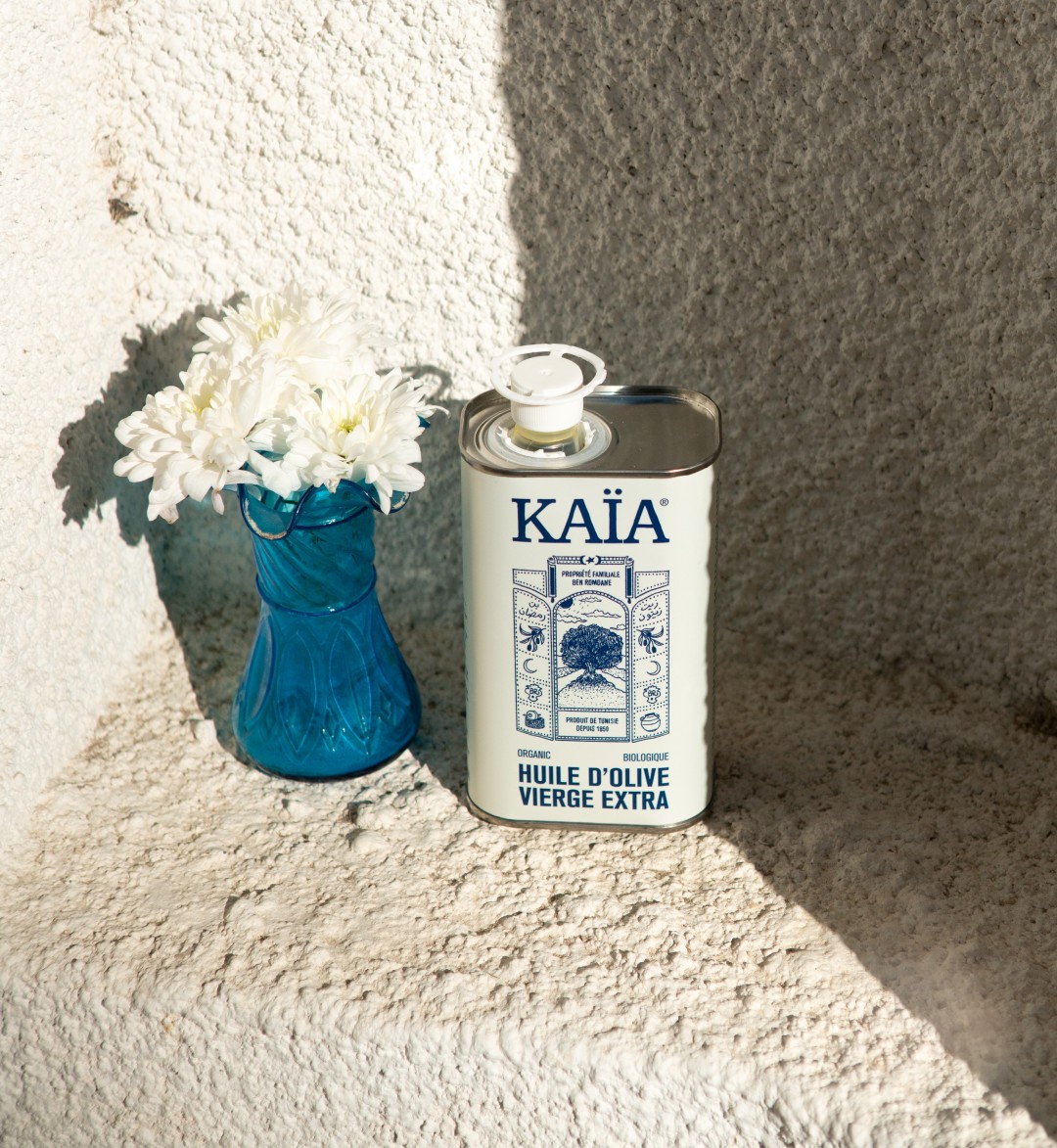
Sarah Ben Romdane isn’t just building an olive oil brand, she’s rebuilding a relationship to land, memory, and identity. Born in Paris to a Tunisian father and Syrian mother, and raised between France and London, the founder of KAÏA returned to her family’s fifth-generation olive estate in Mahdia during the pandemic; a decision that completely reshaped the course of her life. What began as a personal reconnection soon evolved into a larger mission: creating a new narrative around Tunisian olive oil, one rooted in visibility, heritage, and political intention.
You’ve described the summer of 2020 as a turning point in your relationship to Tunisia and to yourself. What shifted for you during that period?
I had spent months of lockdown alone in Paris feeling genuinely low, disoriented, disconnected. As soon as borders opened, I booked a ticket to Tunisia and what was meant to be three weeks turned into six months. Growing up in Europe, you’re conditioned to orient yourself outward: Europe, the USA, maybe the Gulf. Tunisia is the place you’re from, not the place you’re going. But being in Mahdia, where I’ve spent every summer since I was born, did something unexpected. I realised I’d been carrying a deep, almost spiritual connection to that place my whole life, that this is a place that heals me, brings me joy and creativity, and is the heart of my politics.
Before founding KAÏA, you worked in journalism. Did storytelling naturally evolve into building a brand, or did launching KAÏA feel like a complete leap into the unknown?
Both. The storytelling part felt completely natural. I’ve always been driven by a desire to tell stories about my people and our multiple identities, and KAÏA gave me a subject I was completely obsessed with. Coming from politics and journalism, I knew my real skills lived in communication and cultural translation, not finance. There’s such a hunger for this kind of representation. But I always wanted to make sure the storytelling was never divorced from the actual politics of the place. I’m very conscious of not wanting to exploit the very thing I’m trying to protect.
What does reviving your family’s legacy mean to you personally?
It gives me chills every time. My third great-grandfather was exporting olive oil from Mahdia to the United States in the 19th century, under a Tunisian family name, winning prizes. Then political shifts, emigration, life, the legacy went quiet. As the sixth generation, I’ve revived what they started, but with my own vision, my own tools, my own politics. It feels like both an act of love and an act of repair.
Do you think reconnecting with land and tradition has become a political act?
For me it always has been. We live in a world where everything is commodified, optimised, and we are all divorced from our roots and our authenticity. None of that inspires me, it’s brutal, extractive, and creates real oppression. Going back to the land is about imagining another world.
For more stories of art and culture from across the region, visit our dedicated archives and follow us on Instagram.