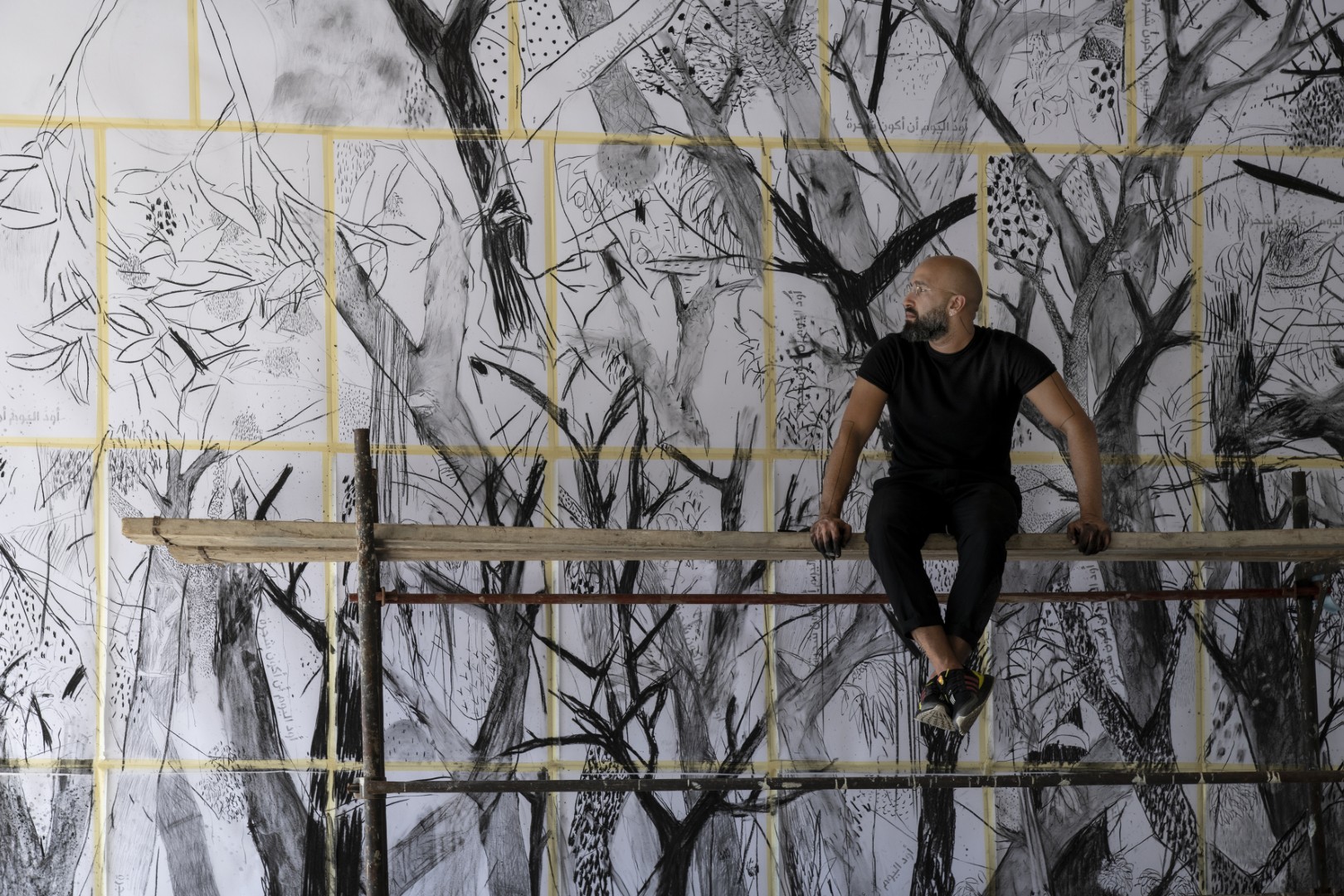
For Abed Al Kadiri, art has never been separate from survival. Long before it became a public practice, painting was a private refuge, a way to process the difficult realities that shaped his life and to enter a world where pain could be confronted, transformed, and briefly held at a distance. The canvas, for him, became more than a surface. It became a place of emotional repair.
That belief now sits at the heart of Today, I Would Like to Be a Tree, his ongoing project with children affected by war and displacement. What began as a simple gesture during Eid Al Fitr has grown into a deeply human initiative that brings art into shelters, classrooms, and community spaces, offering children not only materials, but a moment of joy, dignity, and connection.
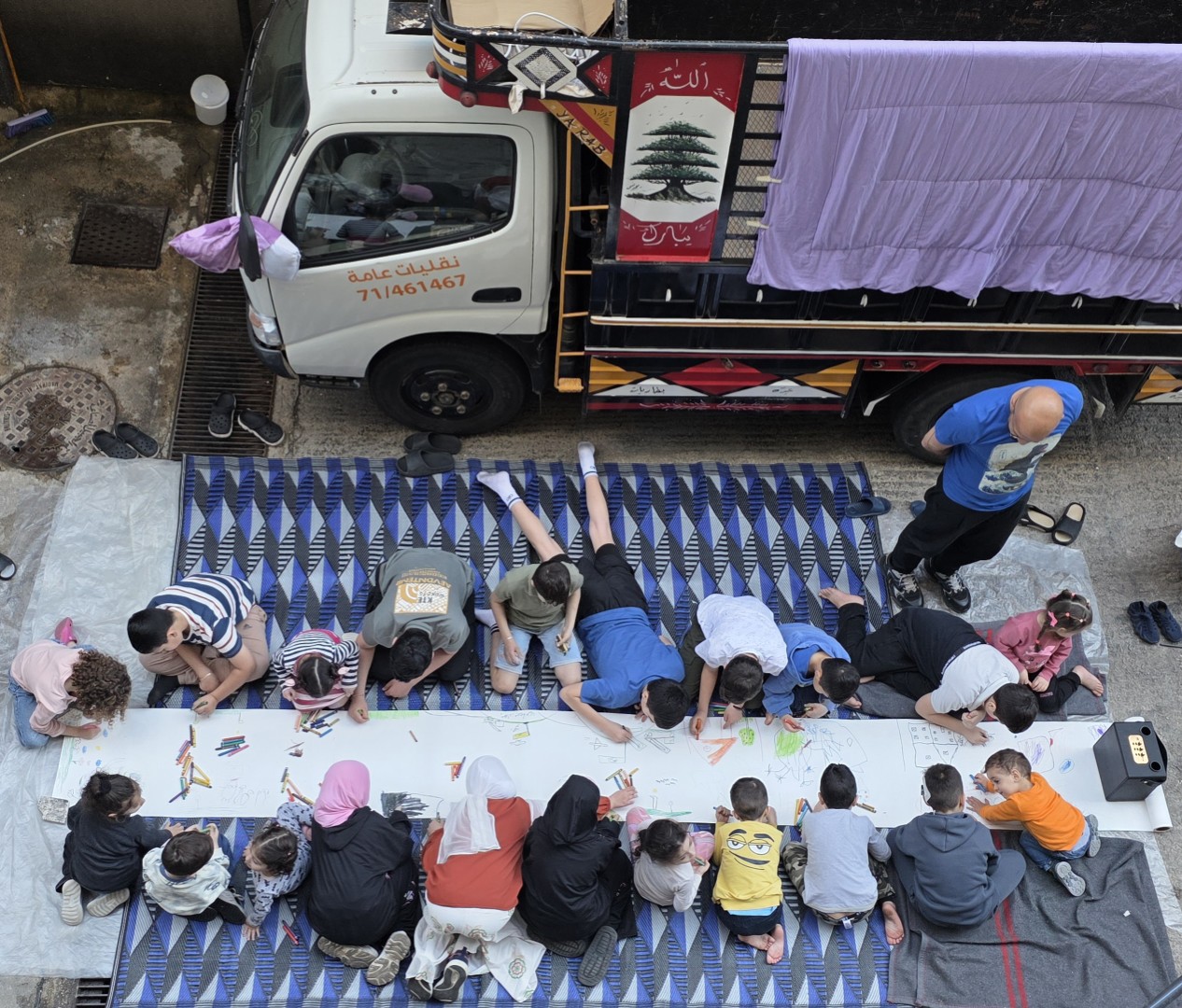
When thousands of families were displaced by the war, Al Kadiri was struck not only by the scale of the suffering, but by the way political and sectarian divisions seemed to erode empathy. As a father, it was the children who stayed with him most. Their faces in the streets of Beirut followed him for days. His first thought was to distribute drawing kits as gifts. But before handing them out, he decided to invite the children into a collective drawing ceremony, allowing them to imagine, dream, and express themselves together.
From that first encounter, the project took on a life of its own. The final artwork, Al Kadiri explains, is never the main objective. Every mark a child makes is valid. Every gesture has meaning. Through drawing, he introduces something larger than art itself: the idea that expression matters, that feelings can exist outside language, and that imagination remains possible even in moments of rupture.
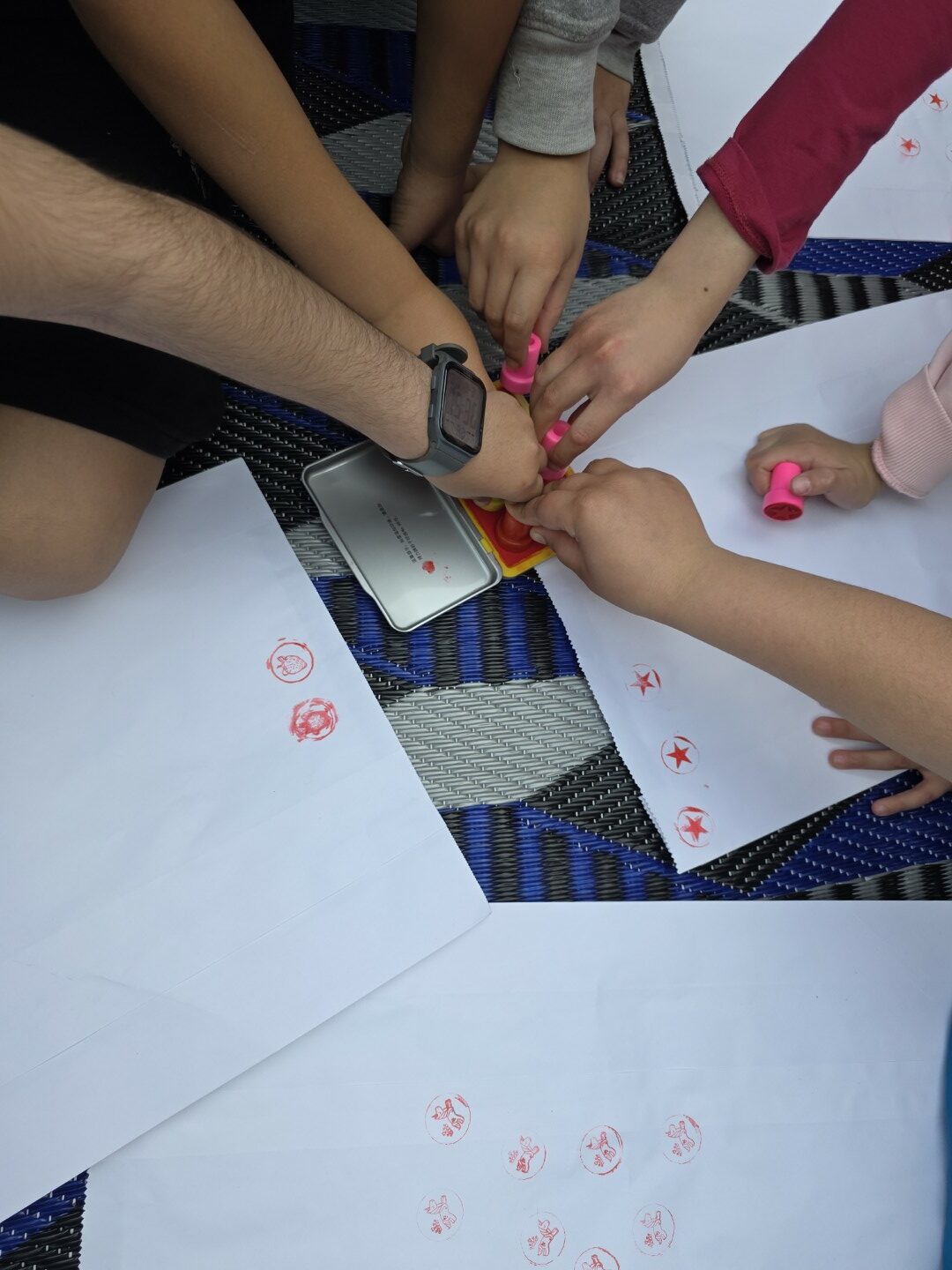
Many of the children arrive emotionally unsettled, often forming small, separated groups. Through the collective process, they begin to share materials, draw on the same surface, and slowly trust one another. What starts as an art workshop becomes an exercise in empathy, coexistence, and community.
Their drawings have also challenged Al Kadiri’s expectations. Despite displacement and destruction, few children draw war directly. Instead, they draw homes, trees, birds, flowers, families, and places they hope to return to. In their images, loss appears alongside longing. Fear sits beside hope. Resilience, he has learned, is not the absence of pain. It is the ability to keep dreaming through it.
One moment continues to stay with him. During a workshop, a young boy named Ali, who had lost much of his ability to speak after an airstrike hit his home, remained silent for most of the session. Slowly, he began to communicate through small gestures, facial expressions, and smiles. At the end, when the children were invited to share a word about their drawings, Ali leaned toward the microphone and said one word: “heart.” For Al Kadiri, that single word carried the entire purpose of the project.
In times of war, art is often dismissed as secondary. Al Kadiri sees it differently. Creativity, he believes, is not a luxury, but a fundamental part of being human. Art cannot stop a war, but it can resist the dehumanising effects of one. It reminds us that behind statistics, headlines, and political positions are children with stories, emotions, and futures.
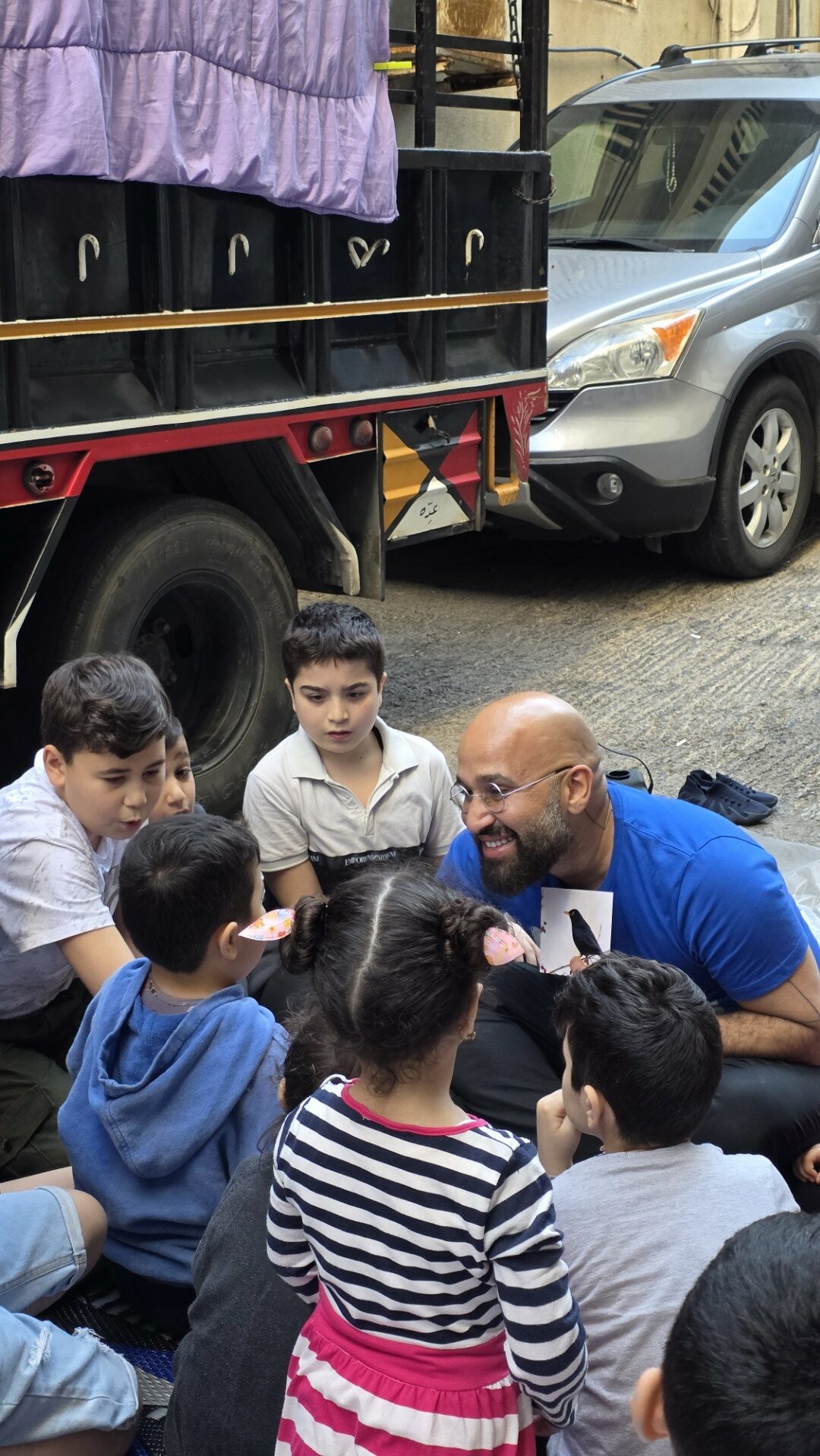
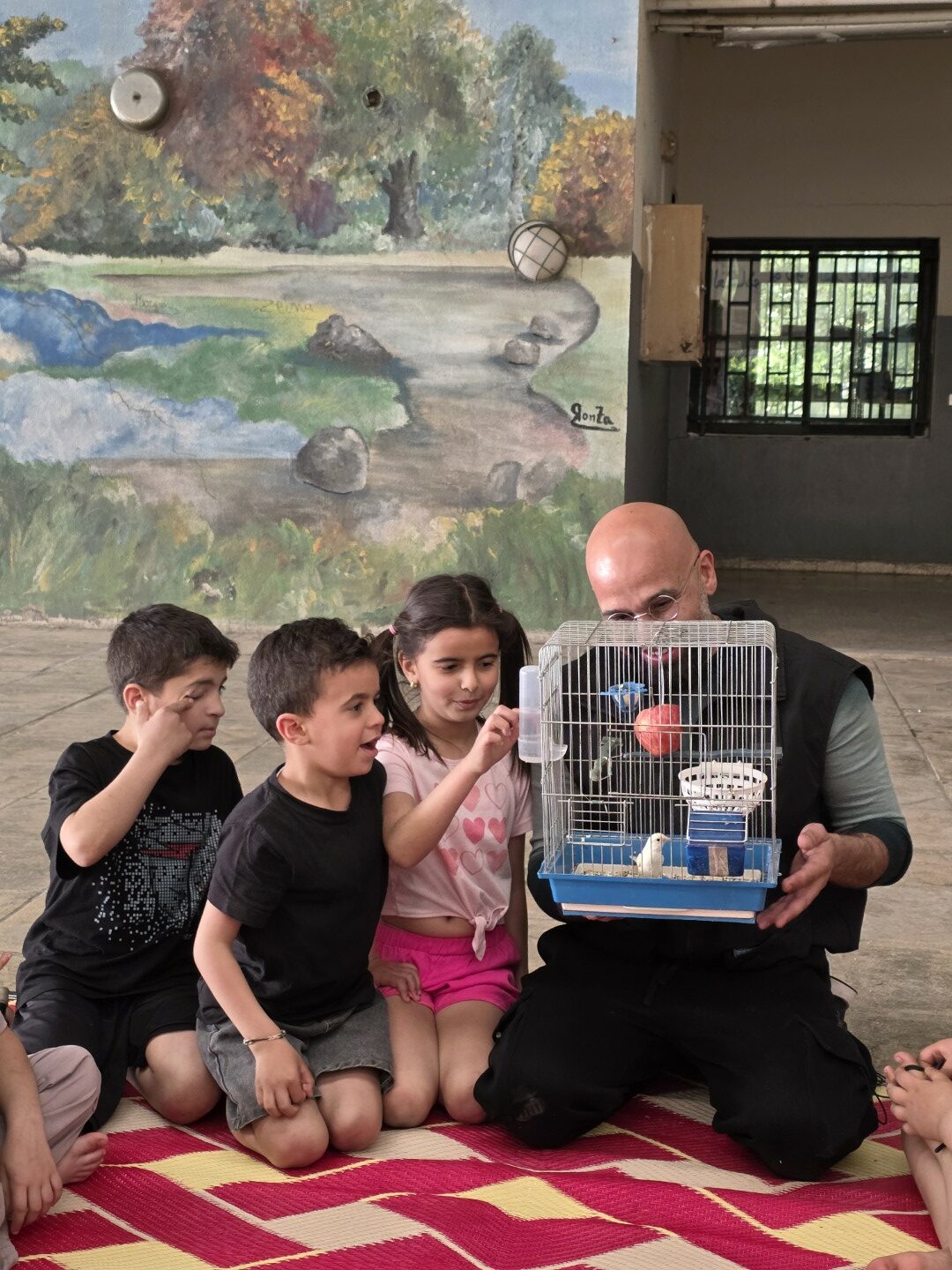
His approach is built slowly and carefully. He does not begin by asking children about trauma. Instead, he listens. He introduces himself not only as an artist, but as a father who experienced displacement in his own childhood. The children gather in a circle, listen to stories and music, look at images of migrating birds, and speak only if they wish. Later, each child decorates a gift bag and dedicates it to another child, shifting the act from receiving to giving.
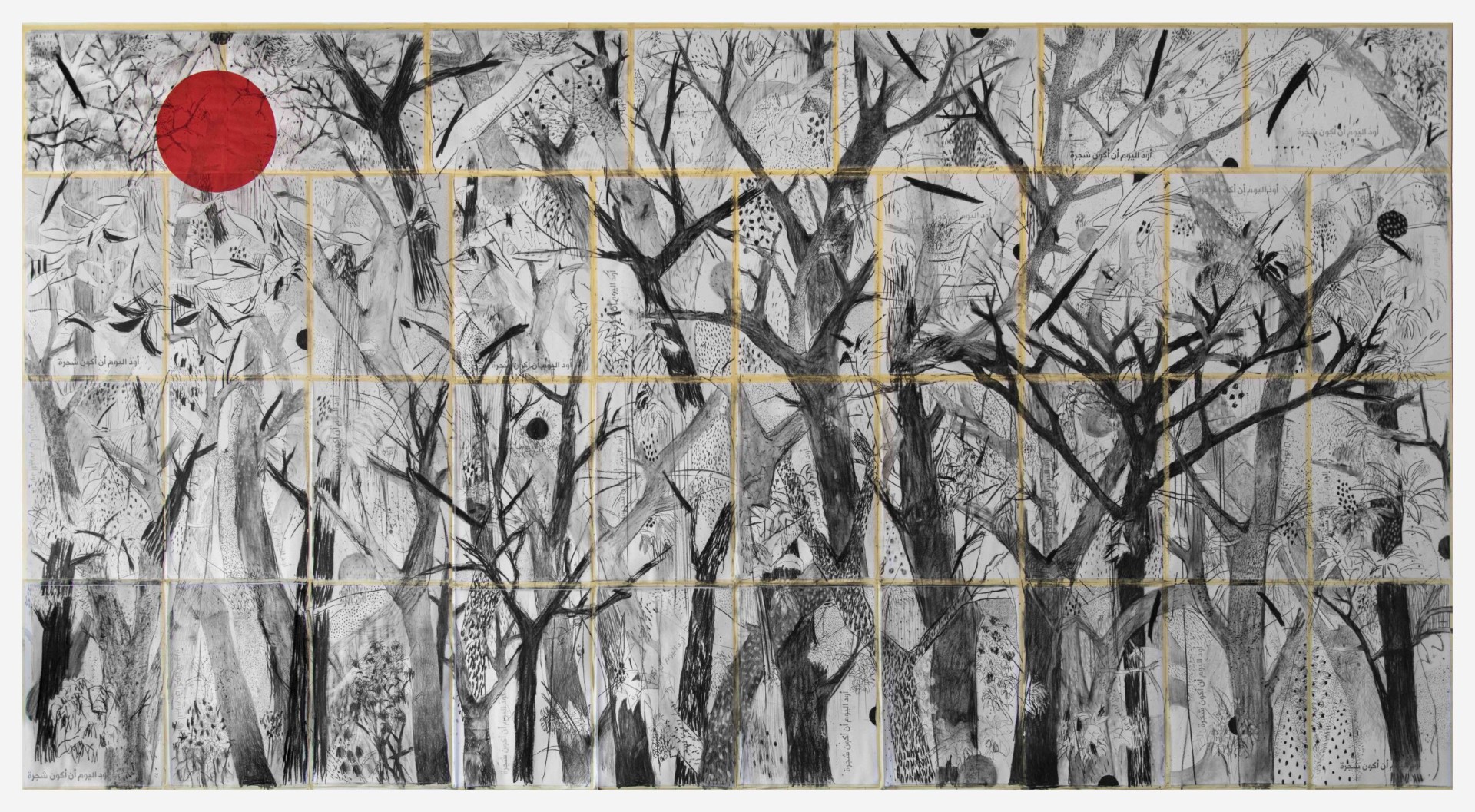
So far, more than 730 children have taken part in Today, I Would Like to Be a Tree. From their collective drawings, Al Kadiri is creating around 30 Leporello artist books, inviting internationally recognised artists to respond to the children’s work. The project will culminate in a fundraising exhibition, with the ambition of raising more than USD 250,000 to support displaced families and organisations working in education.
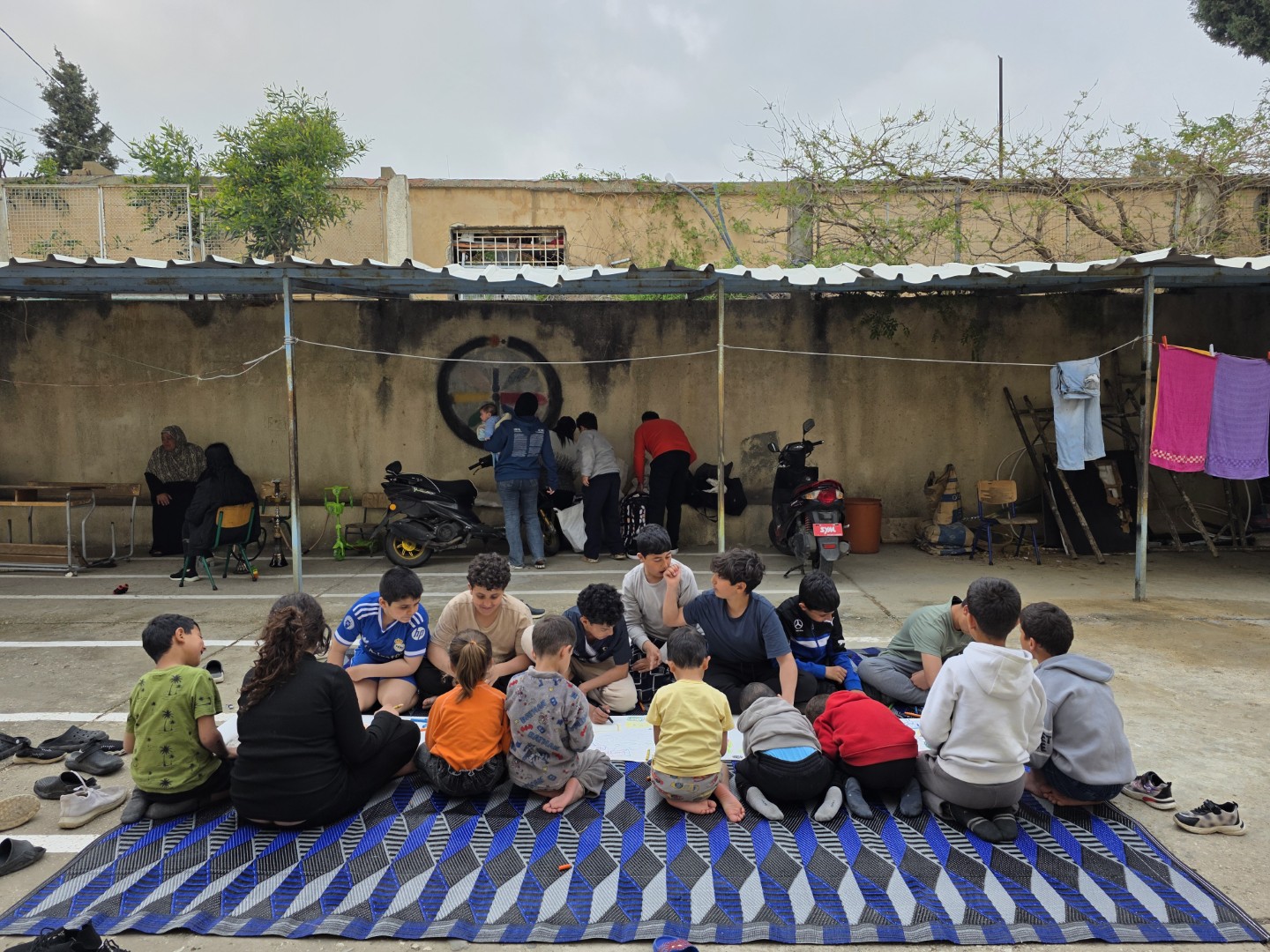
For Al Kadiri, the project is not only about art. It is an ecosystem of care, one that brings together artists, institutions, collectors, and communities in a shared act of repair.
His message to children growing up surrounded by war is simple but powerful: their circumstances do not define them. Their voices matter. Their dreams matter. And even in the most uncertain times, the future is still theirs to imagine.
For more stories of art and culture, visit our dedicated archives and follow us on Instagram.