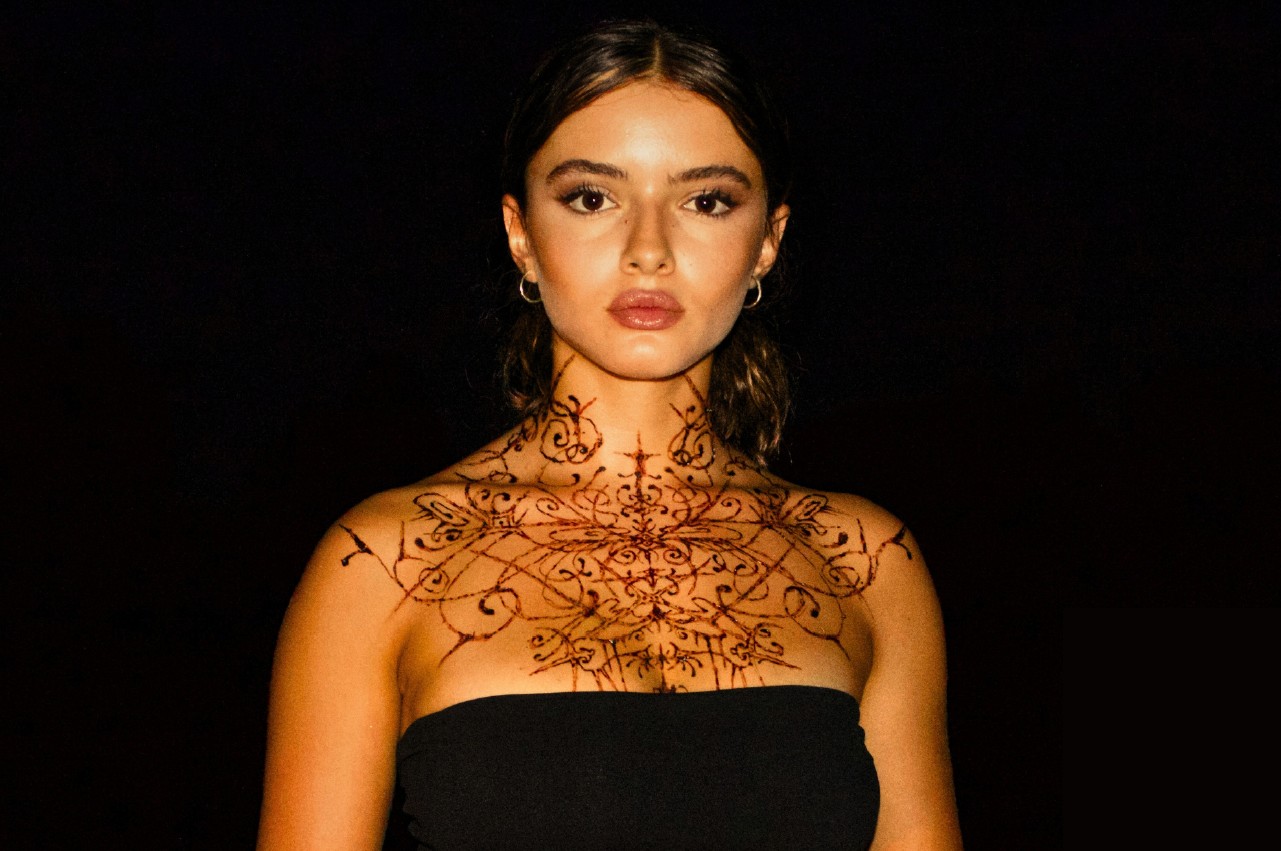
Henna is a material loaded with memory. For many across the Arab world, it belongs to celebration, ritual and family, its patterns passed between generations and immediately recognisable on the skin. For Janna Jasser, however, familiarity is not a reason to leave the tradition untouched.
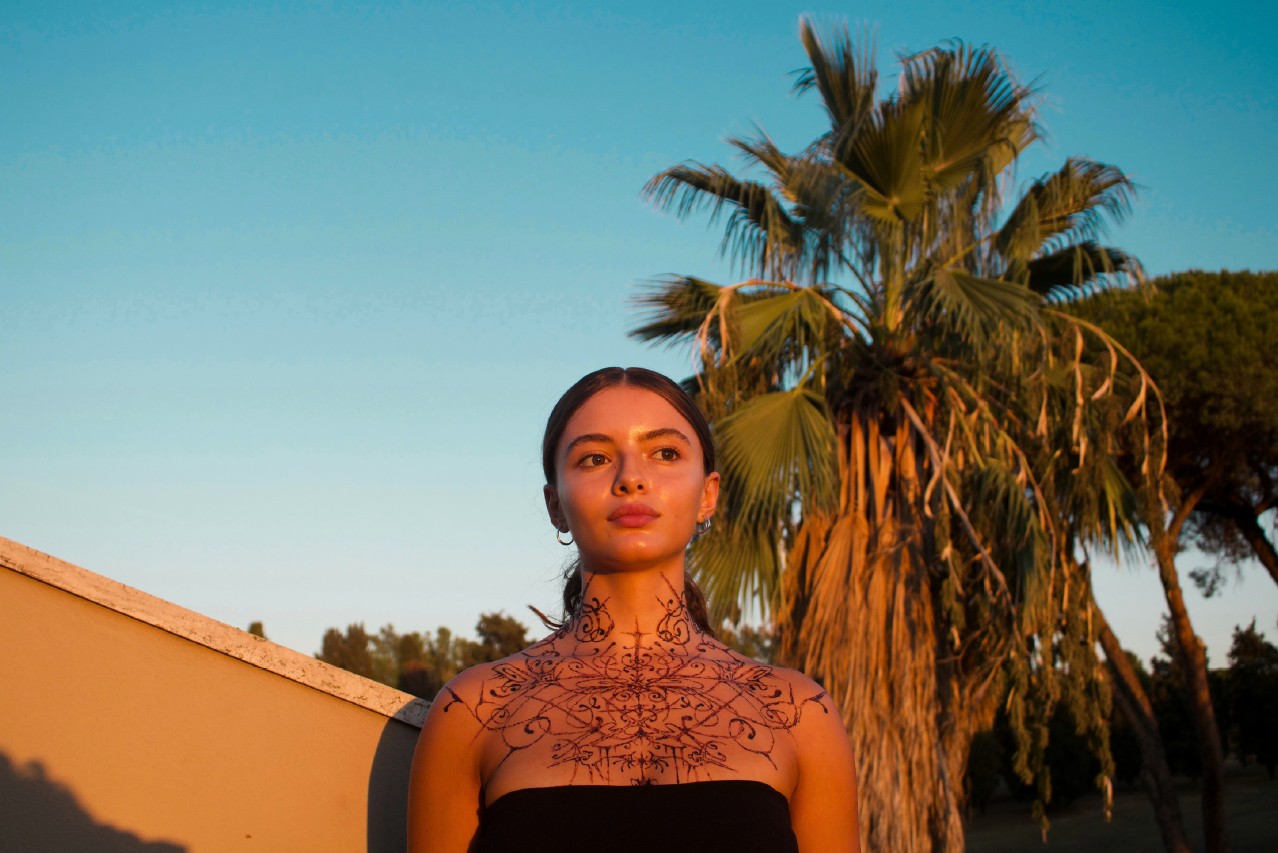
The Rome-based artist is interested in what happens when henna moves outside its expected visual language. Rather than repeating established motifs, she approaches the natural dye as an artistic medium, drawing directly onto the body in a way that is spontaneous, abstract and deeply personal.
“As an Arab artist, I’m interested in working with henna as both a traditional and deeply familiar medium, while pushing it outside of its expected visual language,” Jasser says. “I use it abstractly and intuitively across the body, treating skin as a temporary canvas.”
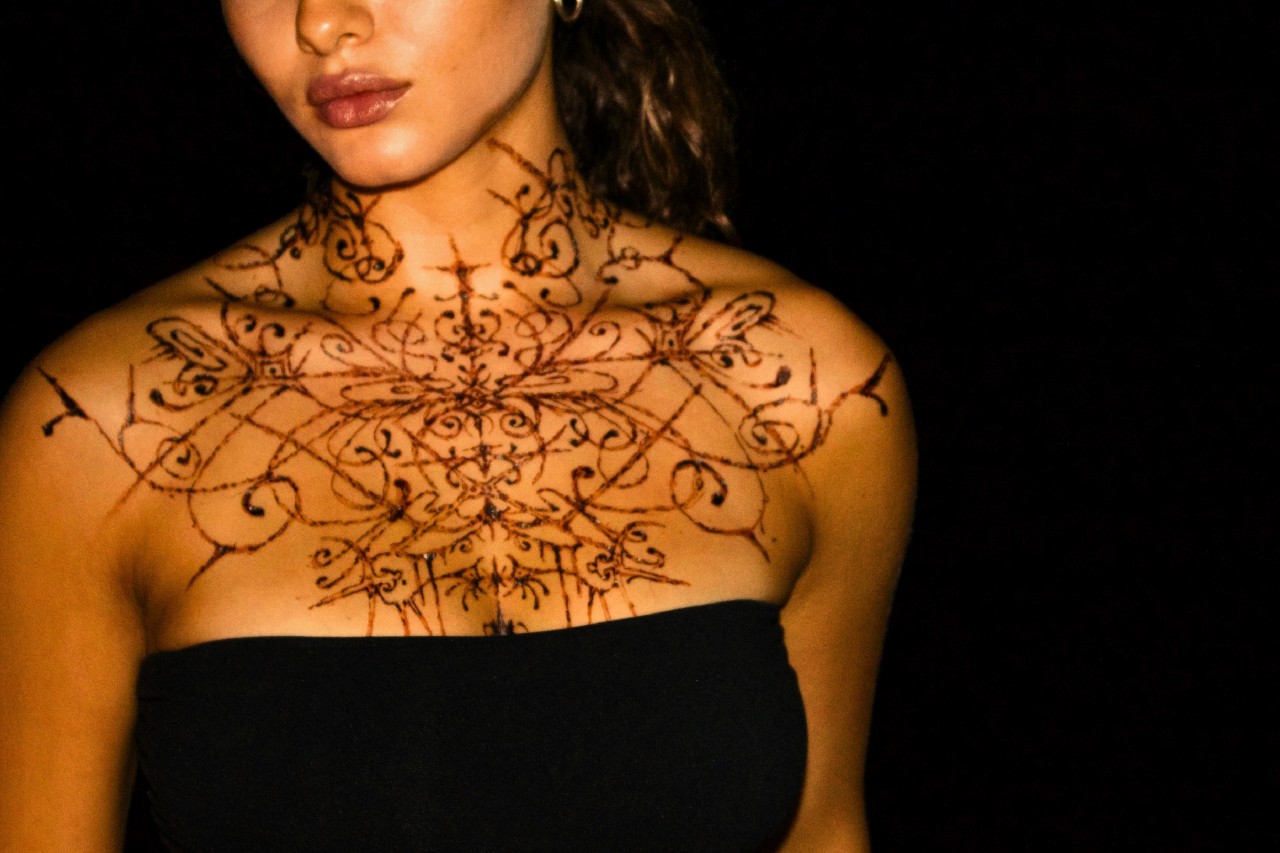
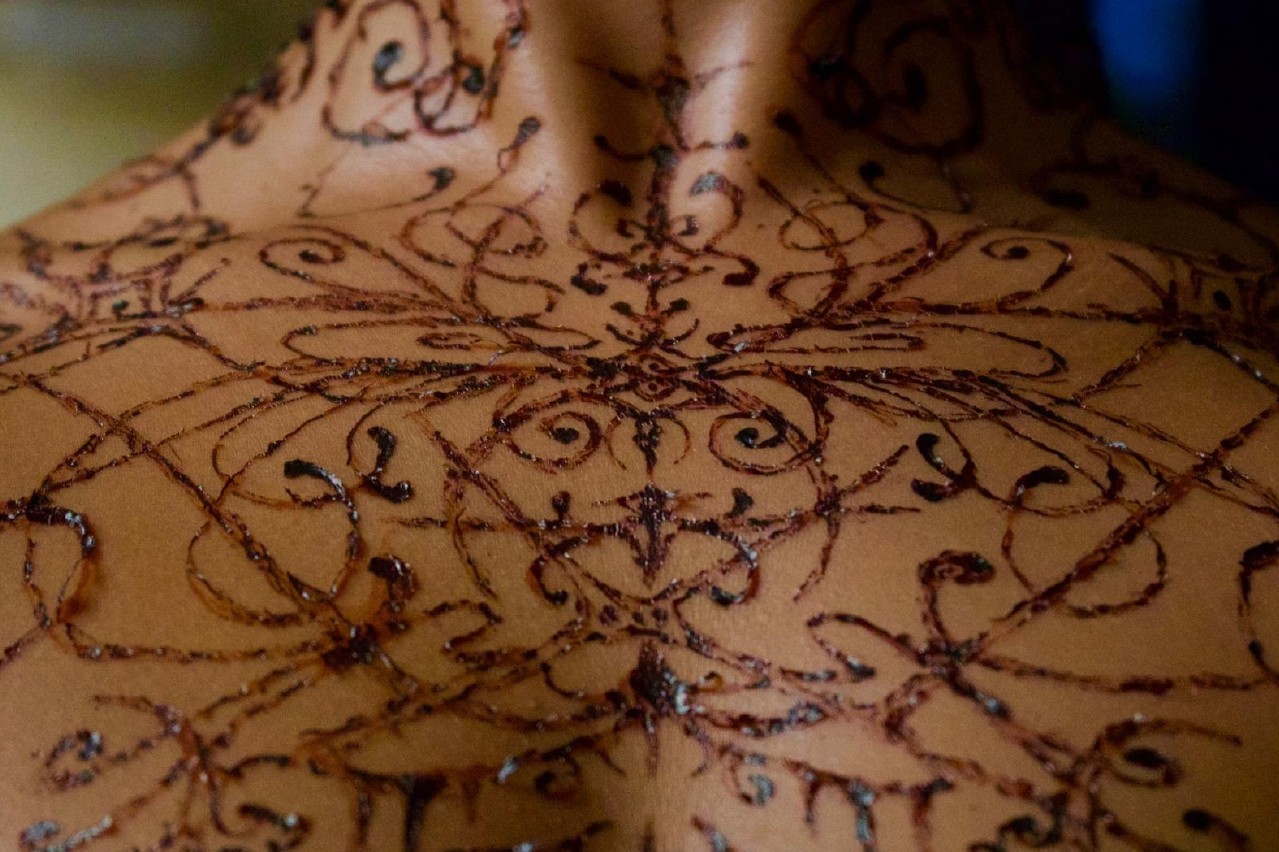
That temporary quality is essential. Unlike a tattoo, henna disappears. The artwork exists for a limited period, gradually fading as the body continues to move and change. It gives Jasser’s work an intimacy that is difficult to separate from the person carrying it. The skin is not simply a surface on which an image has been placed. It becomes part of the work itself.
Intricate marks spread across necks, chests, shoulders and backs. One composition forms an almost architectural pattern across the upper body, while another grows organically over the torso like a network of flowers and vines. Elsewhere, a large expressive face is drawn across the back, surrounded by dense floral forms.
The results move between ornamentation, drawing and body art without settling comfortably into any one category.
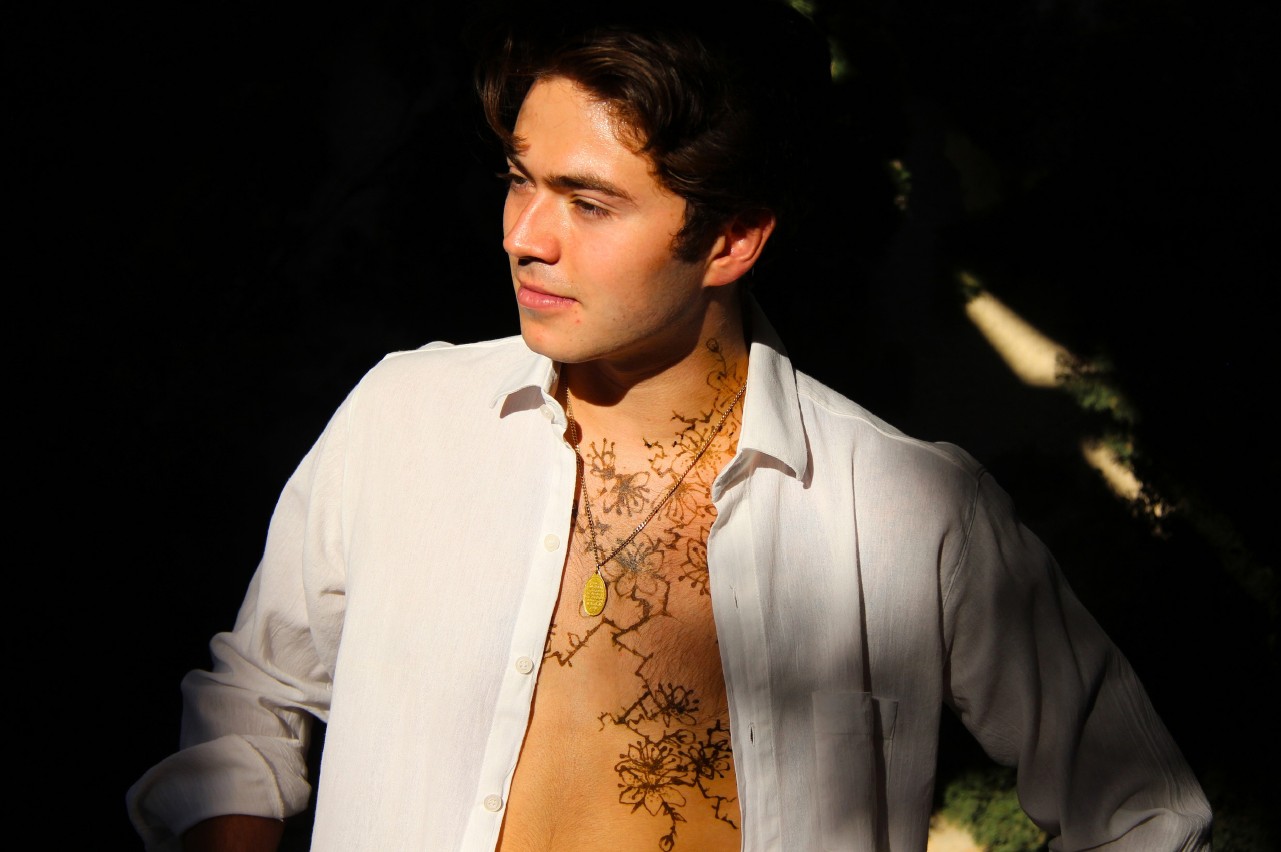
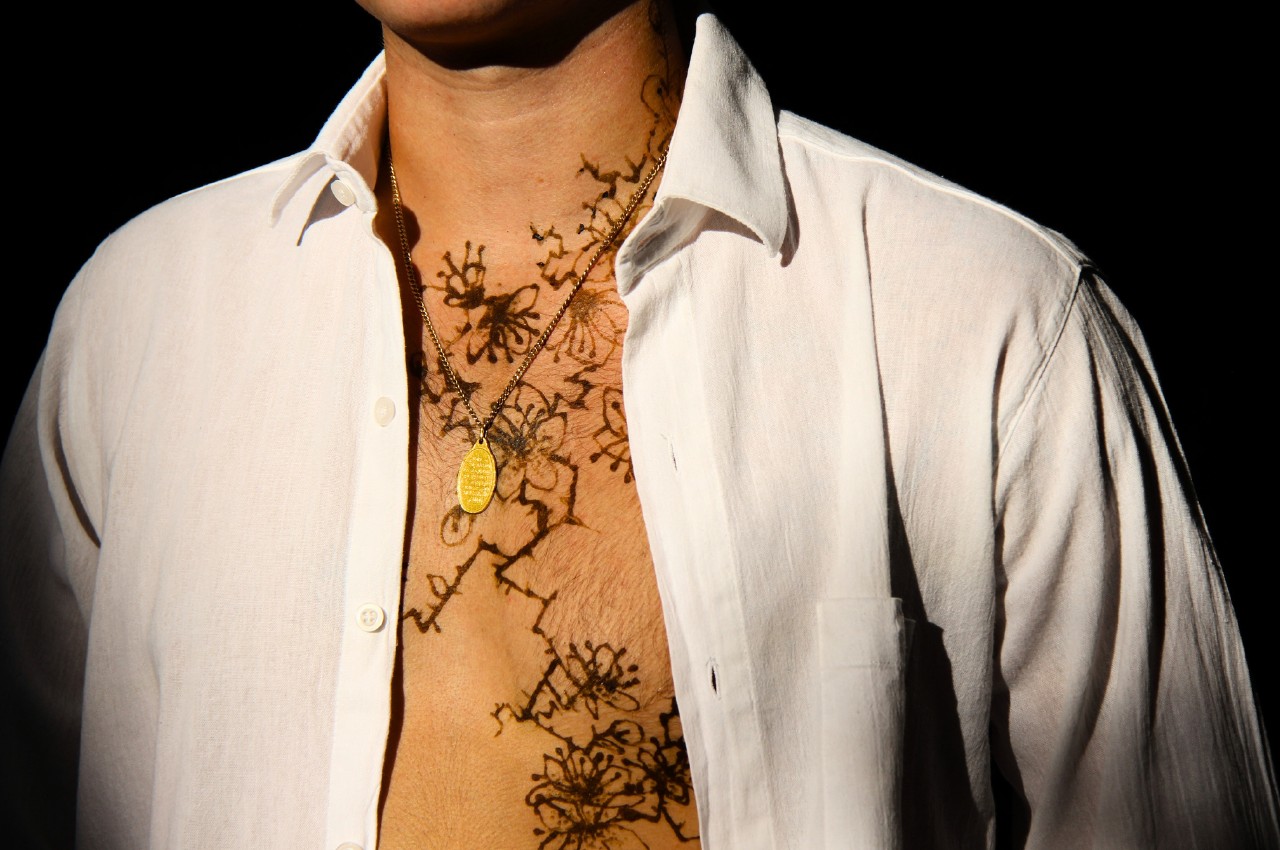
Jasser’s recent series, PERFECTIONIST, documents henna she applied directly onto her own body. Through it, she considers ritual, identity and self-expression, while questioning how inherited practices can be transformed without being disconnected from where they came from.
“The work explores the relationship between ritual, identity, the body and self-expression,” she says, “while questioning how a traditional practice can evolve visually without losing its cultural roots.”
It is an important distinction. Jasser is not interested in rejecting tradition for the sake of appearing contemporary. Instead, she looks at tradition as something alive, capable of being questioned, stretched and reimagined by the generations that inherit it.
For her, this reflects something larger happening among young Arab creatives.
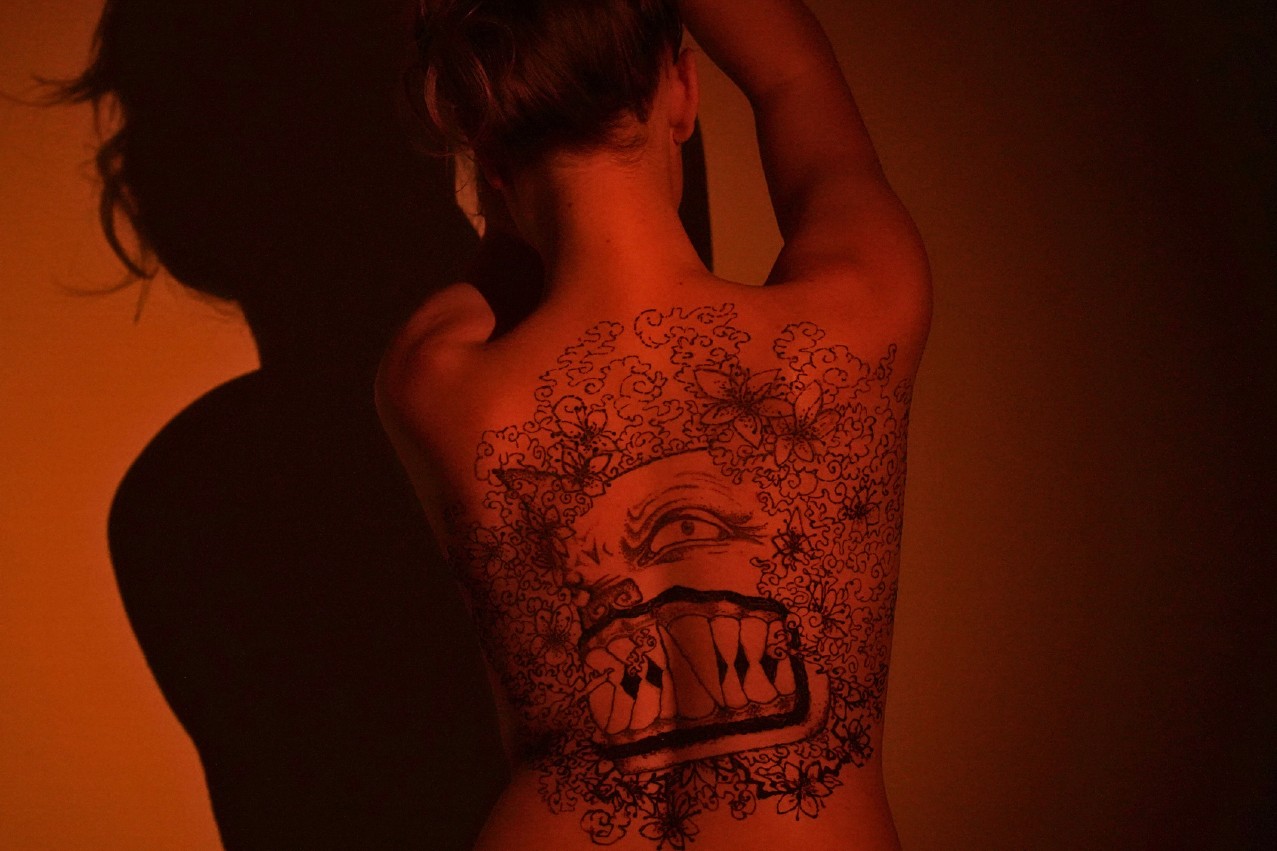
She describes a generation “not necessarily rejecting tradition, but reinterpreting it through contemporary aesthetics and personal experience.” Henna, despite its long history in the region, still offers room for experimentation across contemporary art, fashion imagery and photography.
There is also something deliberately imperfect about the process. Lines meet and separate. Patterns respond to the curves of the body rather than existing within a fixed frame. Because the medium is applied by hand, every movement remains visible.
That human presence matters.
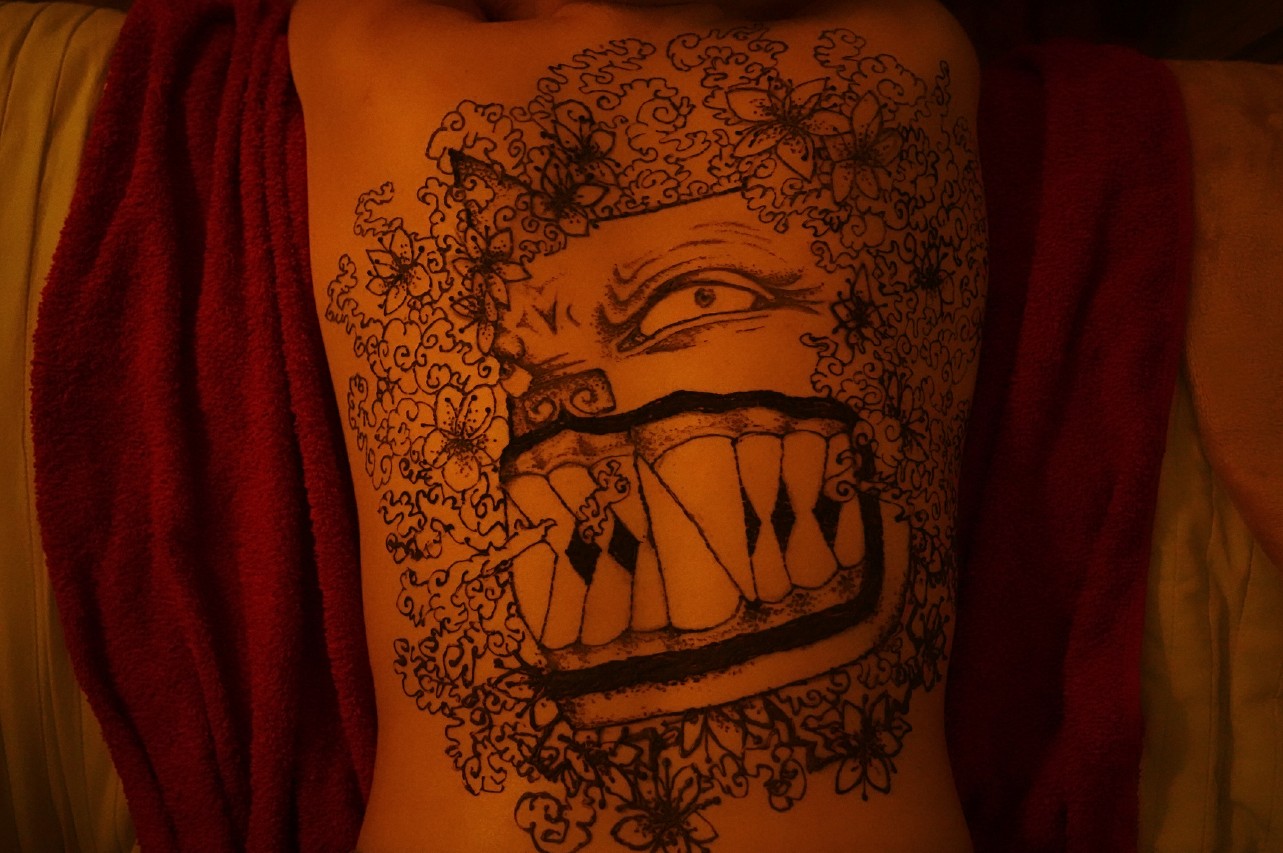
At a moment when images can be endlessly perfected, corrected and reproduced, Jasser’s work returns to touch. A hand draws on another body. The image lives briefly on skin. Eventually, it disappears.
What remains is the photograph, and with it the record of a moment in which an ancient material was allowed to speak a different visual language.
For Jasser, that may be precisely where tradition remains most alive: not when it is protected from change, but when a new generation feels close enough to it to make it their own.
For more stories of art and culture from across the region, visit our dedicated archives and follow us on Instagram.