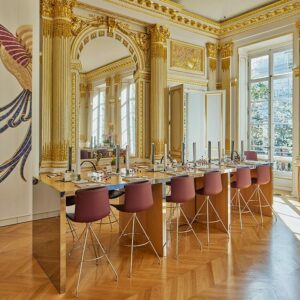
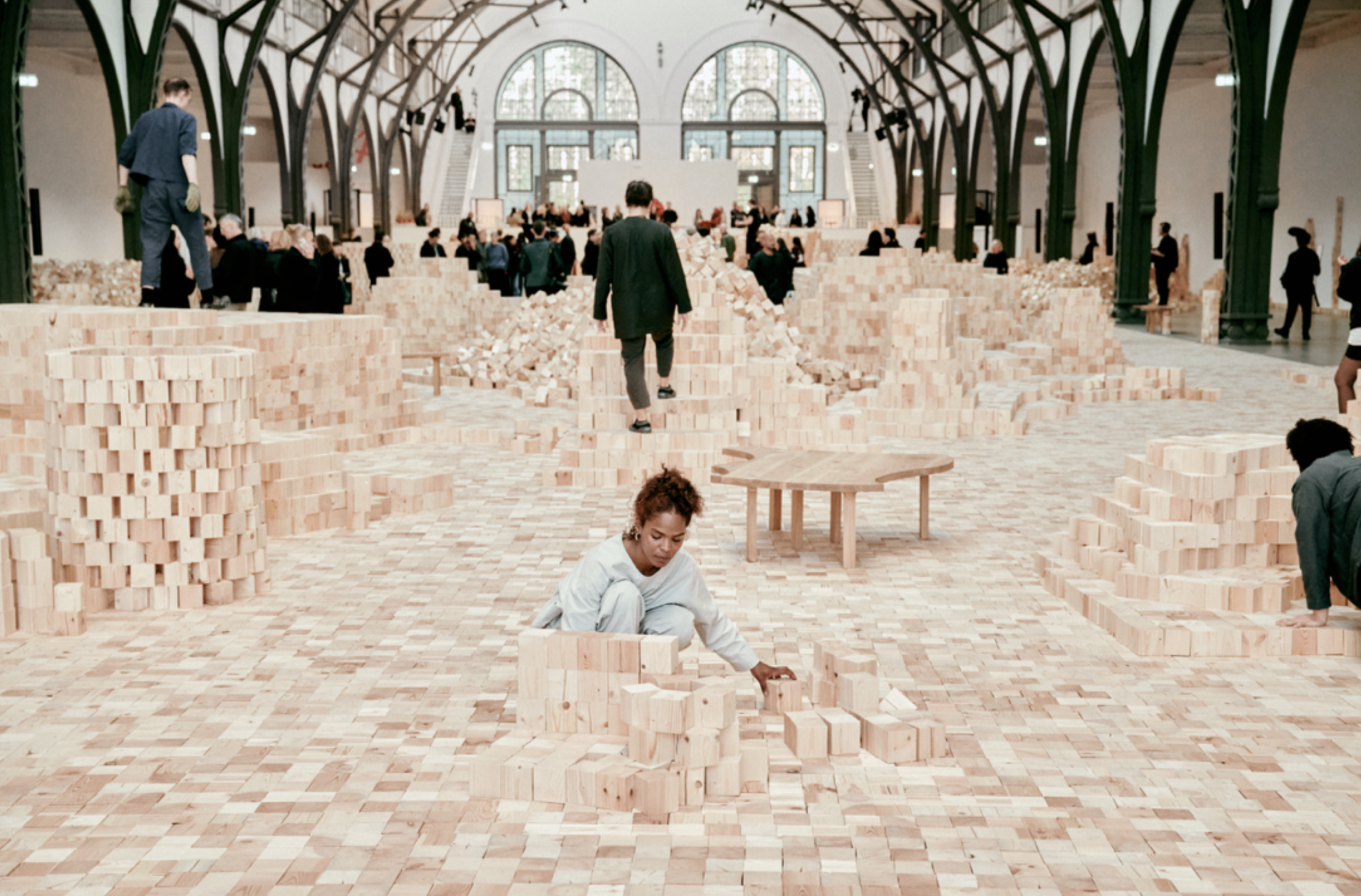
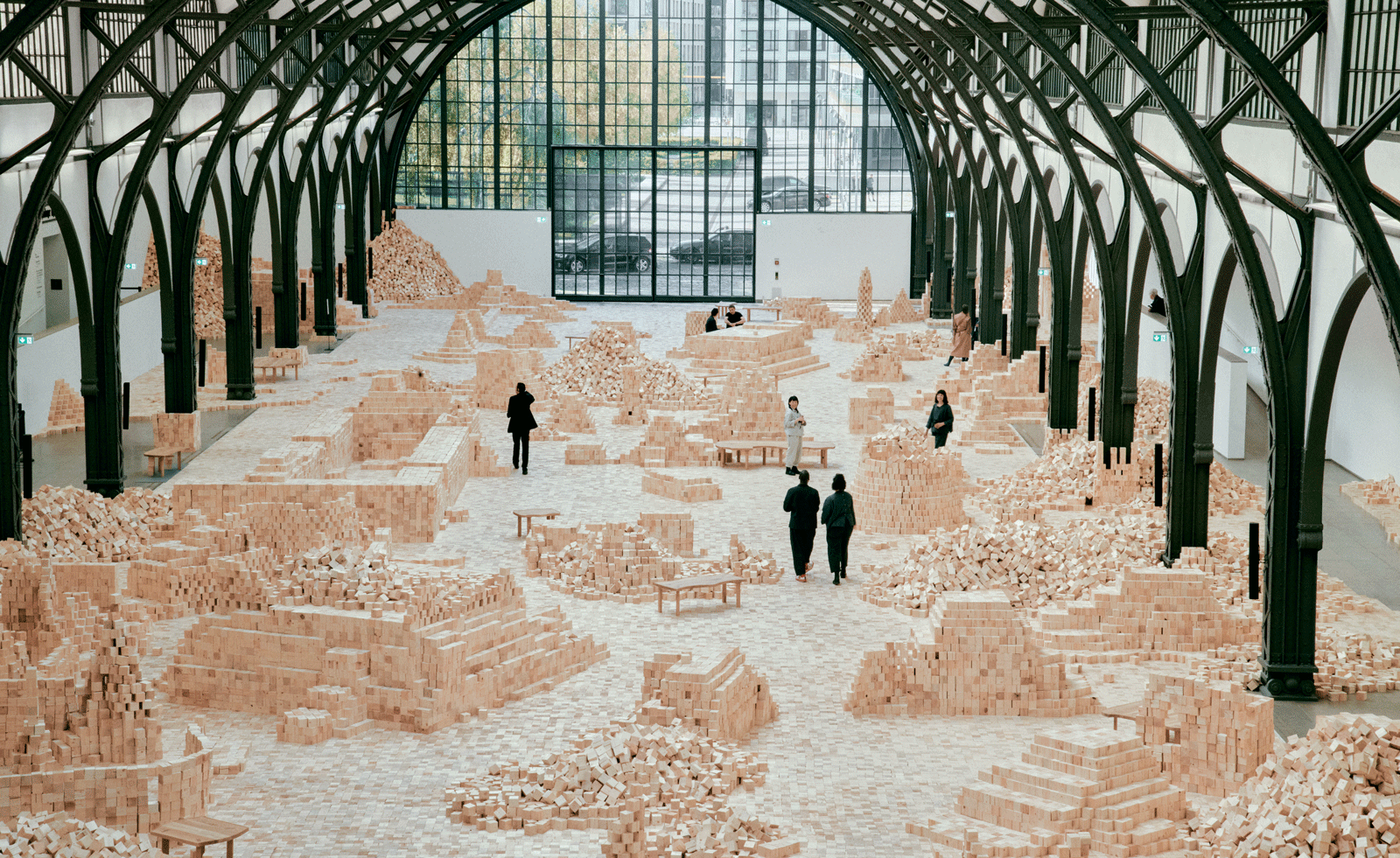
Berlin, February. Inside the Historic Hall of Hamburger Bahnhof – 2,500 square metres of raw, cathedral-scale space that once shuttled trains, not sculpture – 400,000 wooden cubes wait to be moved by hand. Performers and visitors will spend the next nine months stacking them, unstacking them, singing over them, until the piece stops being an object and becomes a process. The work is by the Lithuanian artist Lina Lapelytė. The name attached to it, quietly but unmissably, is Chanel.
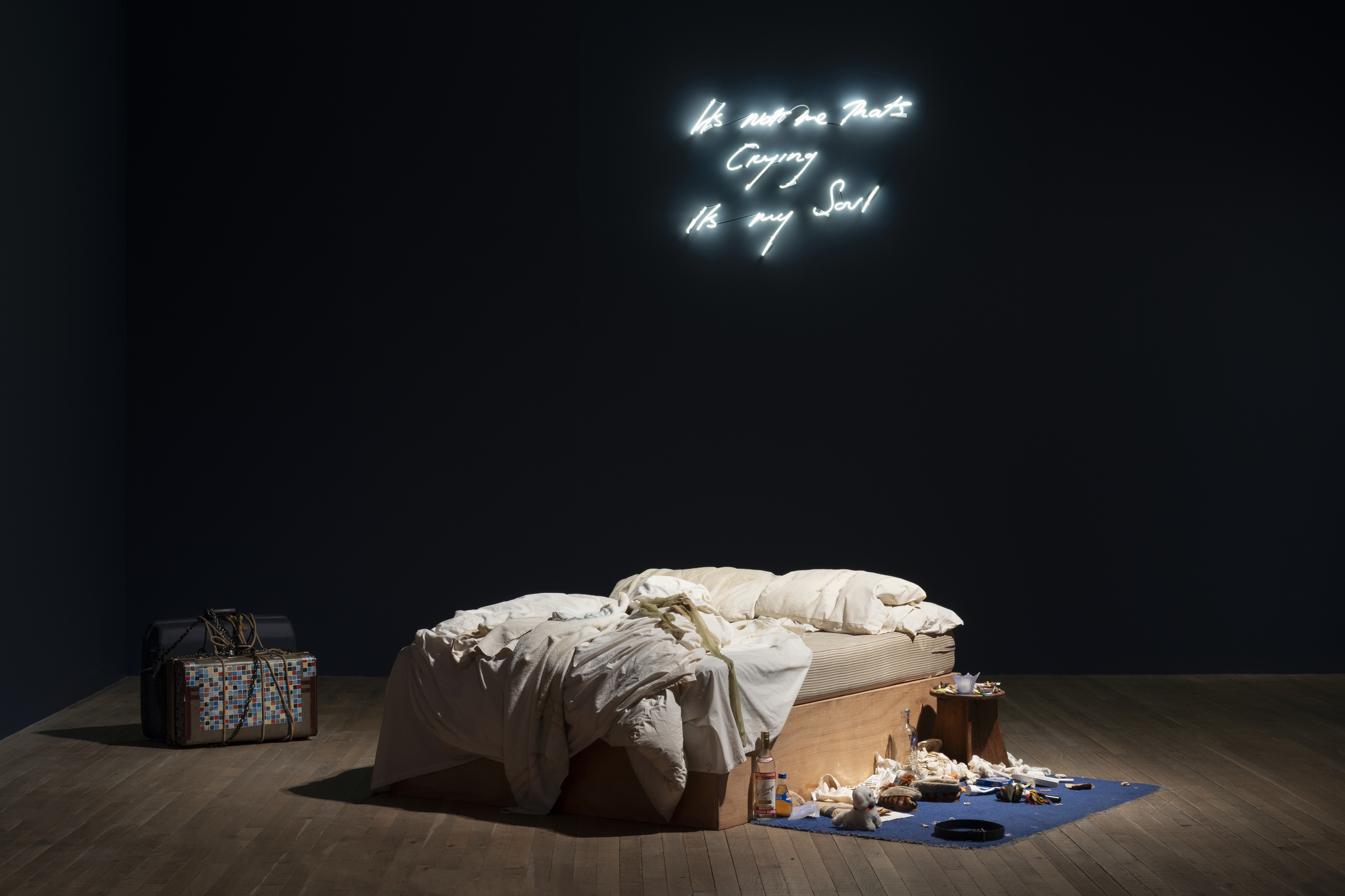
A few months later and a short flight away, London’s Tate Modern opens the largest retrospective Tracey Emin has ever had, ninety-plus works spanning forty years, her bed, her neons, her wounds, laid out across the Eyal Ofer Galleries. The exhibition is presented in partnership with Gucci.
Neither is a one-off. This is a pattern, and it is accelerating.
The New Patrons
Luxury has always flirted with art – Schiaparelli and Dalí, Saint Laurent and Mondrian, the surrealist lobster on a cocktail dress. What is happening now is not that, this is not flirtation, it is infrastructure. Chanel’s Culture Fund is three years into an annual commission at Hamburger Bahnhof, guaranteed programming. Gucci’s relationship with major institutions goes back years, the house staged a runway inside the Uffizi in 2020 and has kept building from there. Louis Vuitton attached itself to the Louvre’s Leonardo da Vinci blockbuster. Bvlgari sponsored an Italian fashion exhibition at the V&A. At this year’s Venice Biennale, Zegna became the main sponsor of the Italian Pavilion, continuing a run of fashion houses – Gucci, Valentino, Bottega Veneta, Tod’s, Chanel again – that have underwritten the national pavilion nearly every cycle since 2019.
Longchamp, smaller in scale but no less deliberate, is launching its own Art Festival in Paris this September — three days built around the theme of movement, “a value that has always been at the core of the Maison’s DNA,” bringing visual art, music, dance and performance into one multidisciplinary programme open to the public. This is a house effectively building a miniature biennale of its own, from scratch, on its own terms.
What the Brand Is Buying
But what are the brands getting? A museum sponsorship is one of the few remaining ways a luxury house can attach itself to a form of authority money cannot otherwise purchase: curatorial legitimacy. A runway show generates desire, a museum wall generates belief. When Gucci’s name sits beside “Tate,” or Chanel’s beside “Nationalgalerie,” the brand borrows something a marketing budget alone cannot manufacture: the imprimatur of an institution whose entire purpose is discernment, whose job is to say this matters, and will still matter in fifty years.
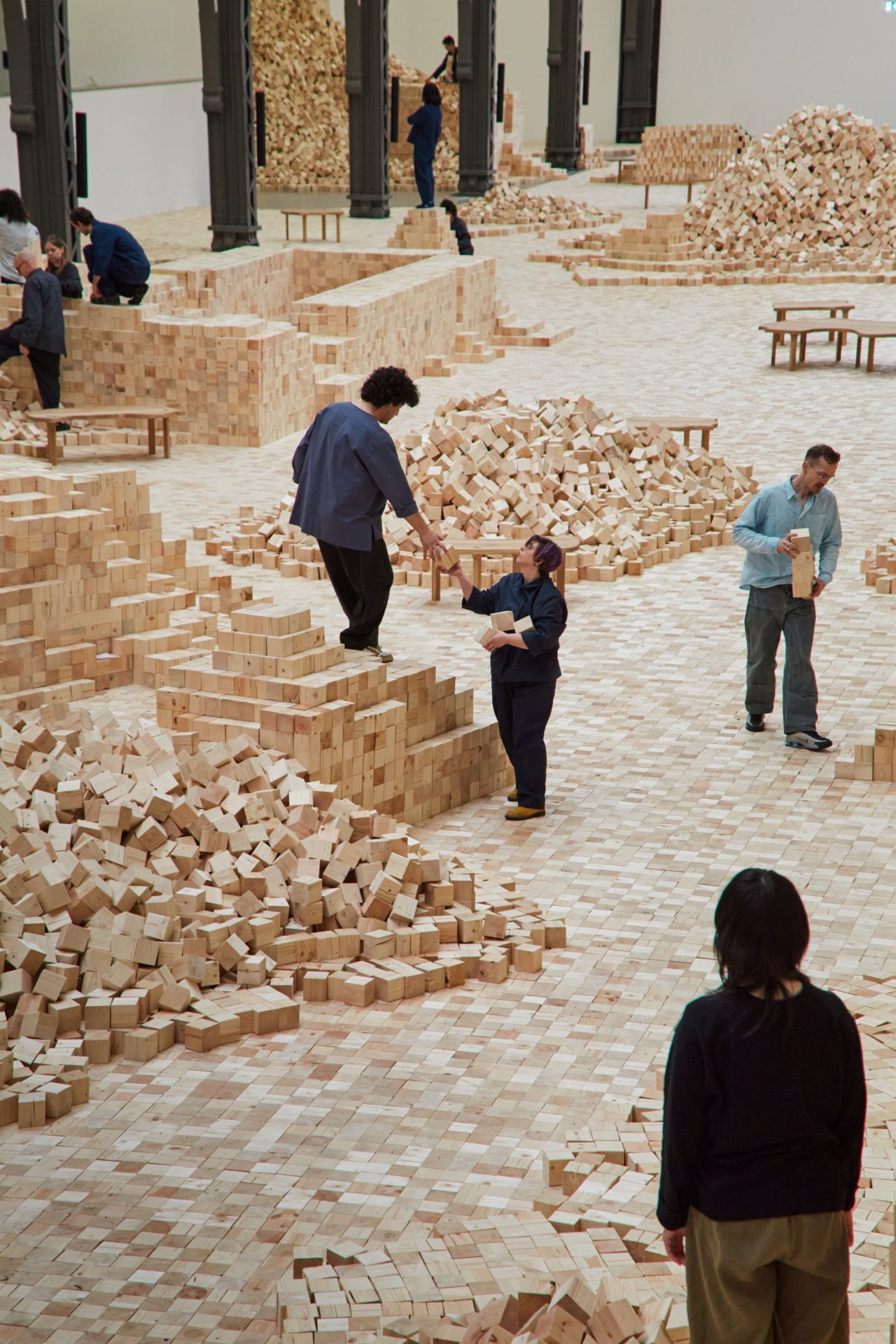
There is also the matter of who is walking through those doors. Museum audiences skew toward exactly the demographic luxury has spent the last decade chasing: culturally engaged, higher income, allergic to anything that reads as overt advertising. You cannot buy that audience’s attention with a billboard, but apparently, you can buy it with 400,000 wooden cubes and a project that asks nothing of them but participation.
And unlike the traditional cultural sponsors of the last century – the Guggenheims, the de Menils, the Broads – fashion houses are stepping into a genuine vacuum. State funding for the arts has thinned across most of Europe. Private philanthropists on that historic scale are rarer than they used to be. Increasingly, the point of contact between contemporary art and the general public is a fashion house with a marketing budget and a stake in looking serious.
What is shifting is not that fashion loves art, it always has, but that fashion has started to behave like a cultural institution in its own right. A brand that funds a museum commission, underwrites a national pavilion, and launches its own festival in the same calendar year is not sponsoring culture. It is producing it, at a scale that used to belong exclusively to governments and family foundations.
For more stories of art and culture, visit our dedicated archives and follow us on Instagram.