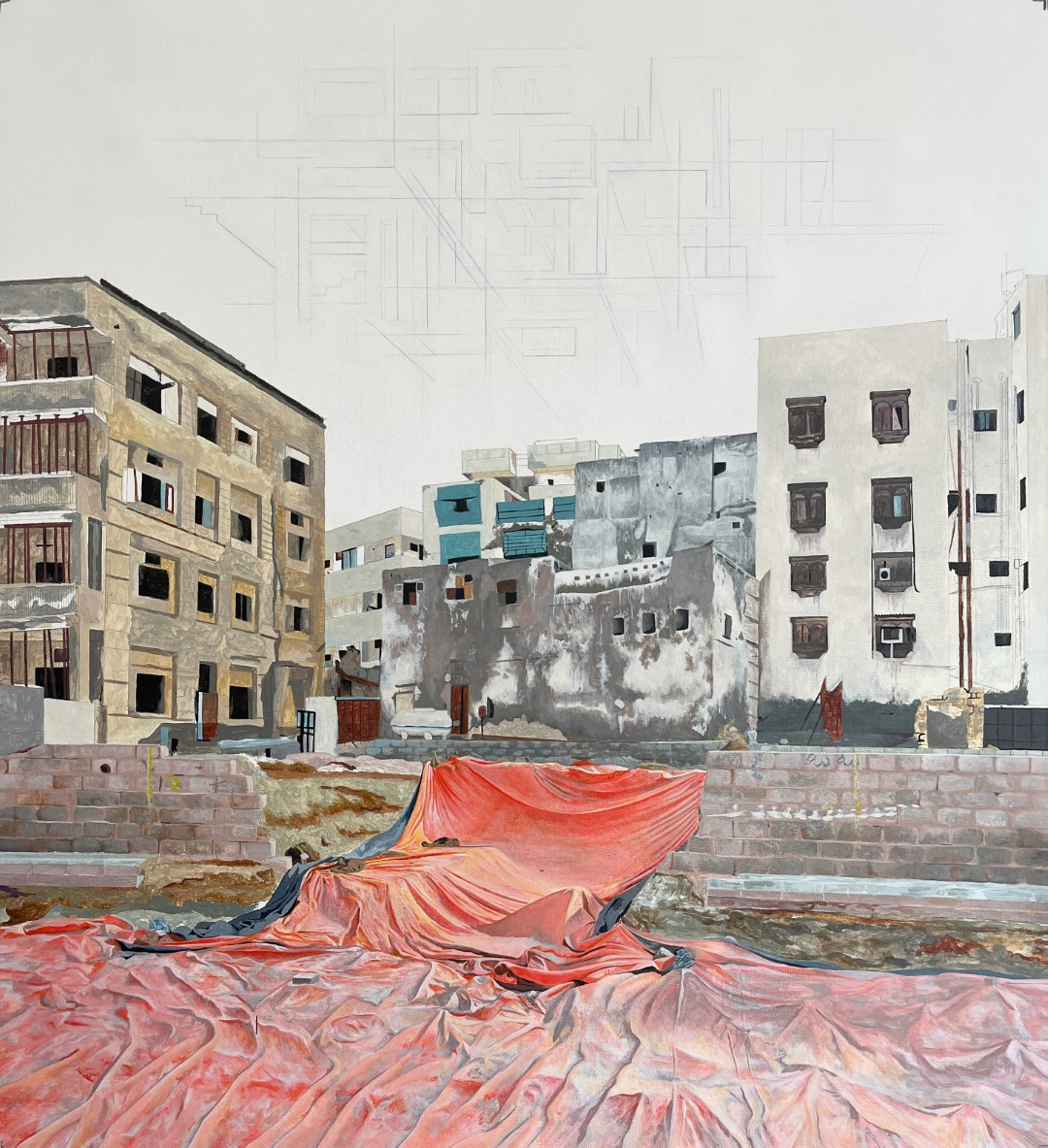
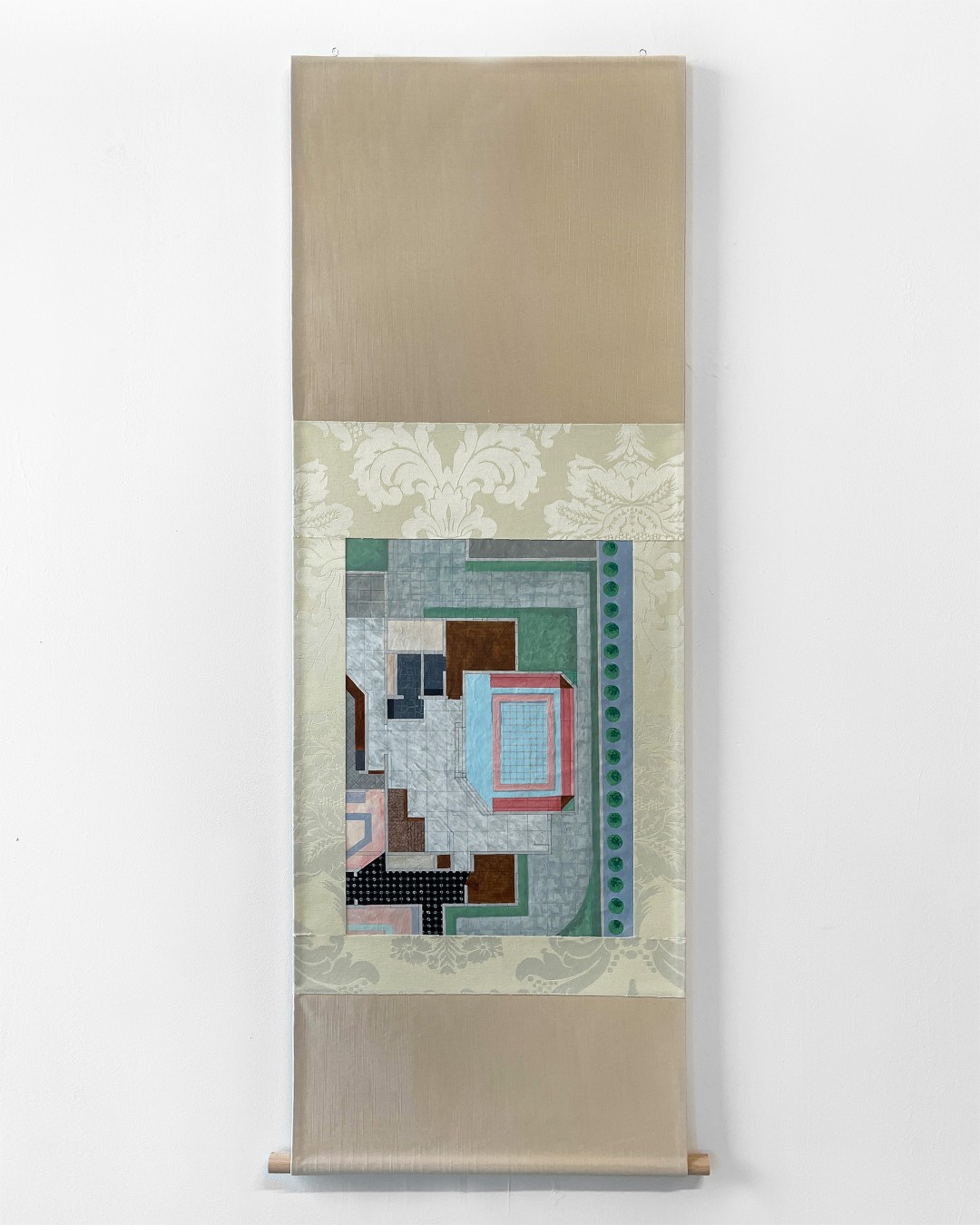
Saudi artist and architect Hayfa Algwaiz creates paintings that feel like suspended memories; intimate, atmospheric, and deeply rooted in the psychology of space. Based in Riyadh, her work blurs the line between architecture and painting, transforming domestic interiors, draped fabrics, and ornamental details into quiet studies of identity, womanhood, and belonging. Algwaiz captures moments that feel both deeply personal and universally familiar; paused conversations, empty rooms, traces of presence rather than direct portraits.
What first drew you toward painting, and when did you realize it was something you wanted to pursue seriously?
My entry point into architecture was drawing – the way it forces you to draft ideas in 2D and then translate them into 3D. I was always drawn to the render’s immediacy as a way to communicate complex forms and ideas through a flat image. After graduating and working at different architecture studios, I found myself feeling like an avatar for someone else’s thoughts and ideas. Naturally, I felt the need to render my own story with my own hands at a much slower pace.
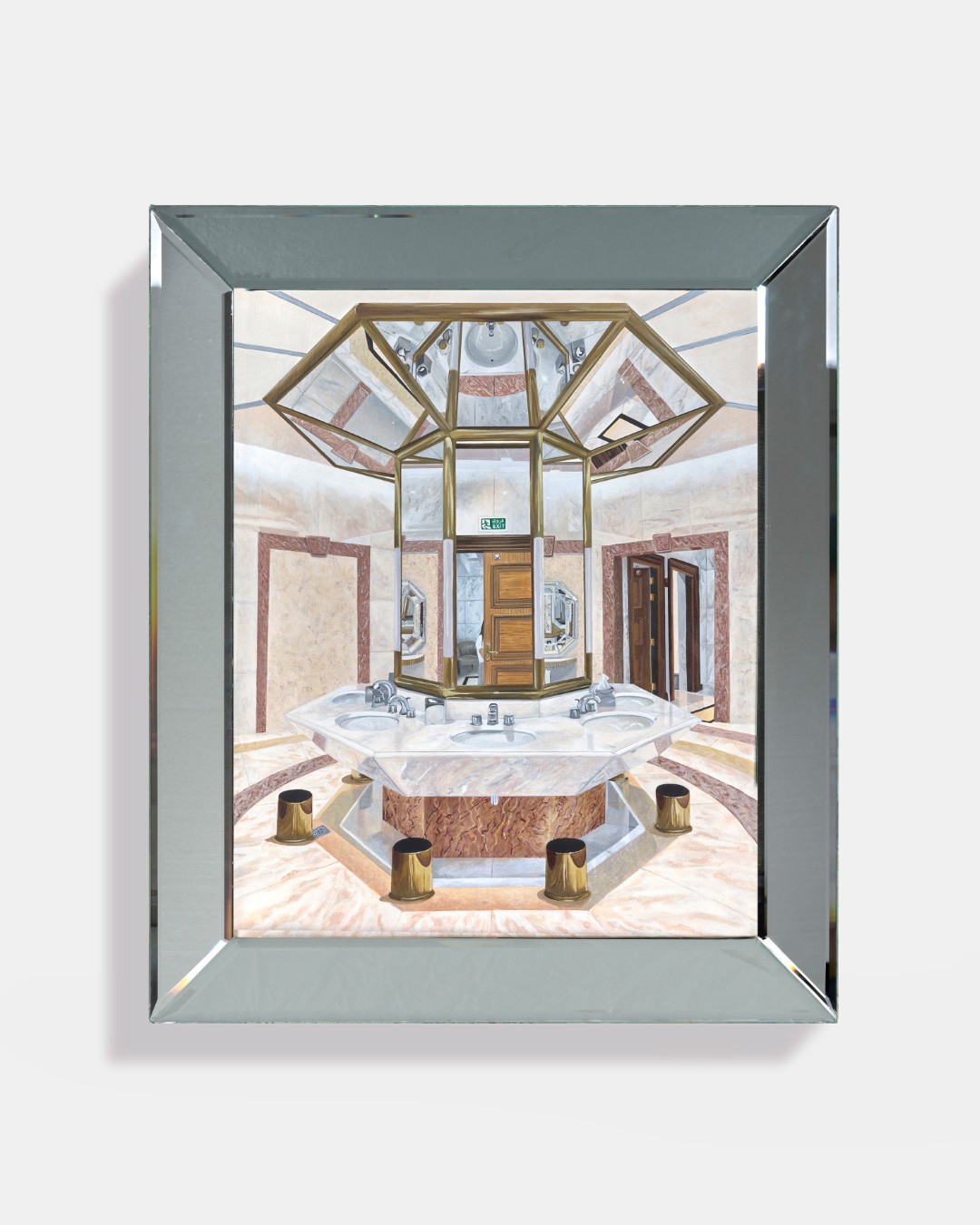
What usually sparks a painting for you; a place, an emotion, a visual moment, or something else entirely?
Time and place are everything in my practice. I have to be physically present and immersed in a space for a prolonged period of time for inspiration to hit. It’s an intuitive process that requires paying attention to things like repetition, patterns, colours and activities. There’s always an element of searching for what creates context.
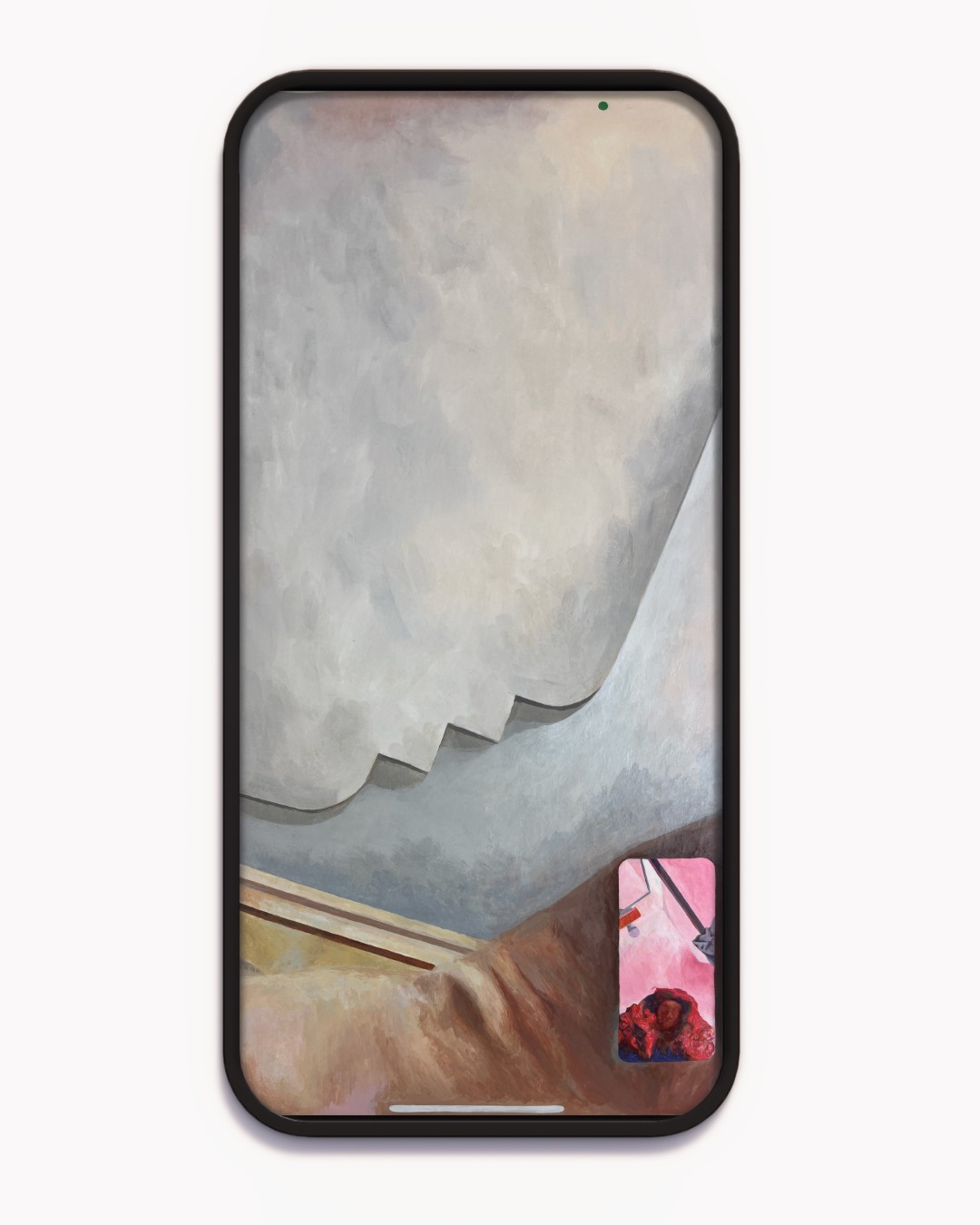
Much of your work focuses on interiors and domestic Saudi spaces. What fascinates you about the quiet psychology of the home?
I used to work at a couple of residential architectural firms in San Francisco. You learn so much about a person through their house. So every time I came home to visit my family in Riyadh, I started noticing the details that informed the differences in the way we lived – our relationship to one another, where we gather or create space for ourselves and how the space itself facilitates our interactions.
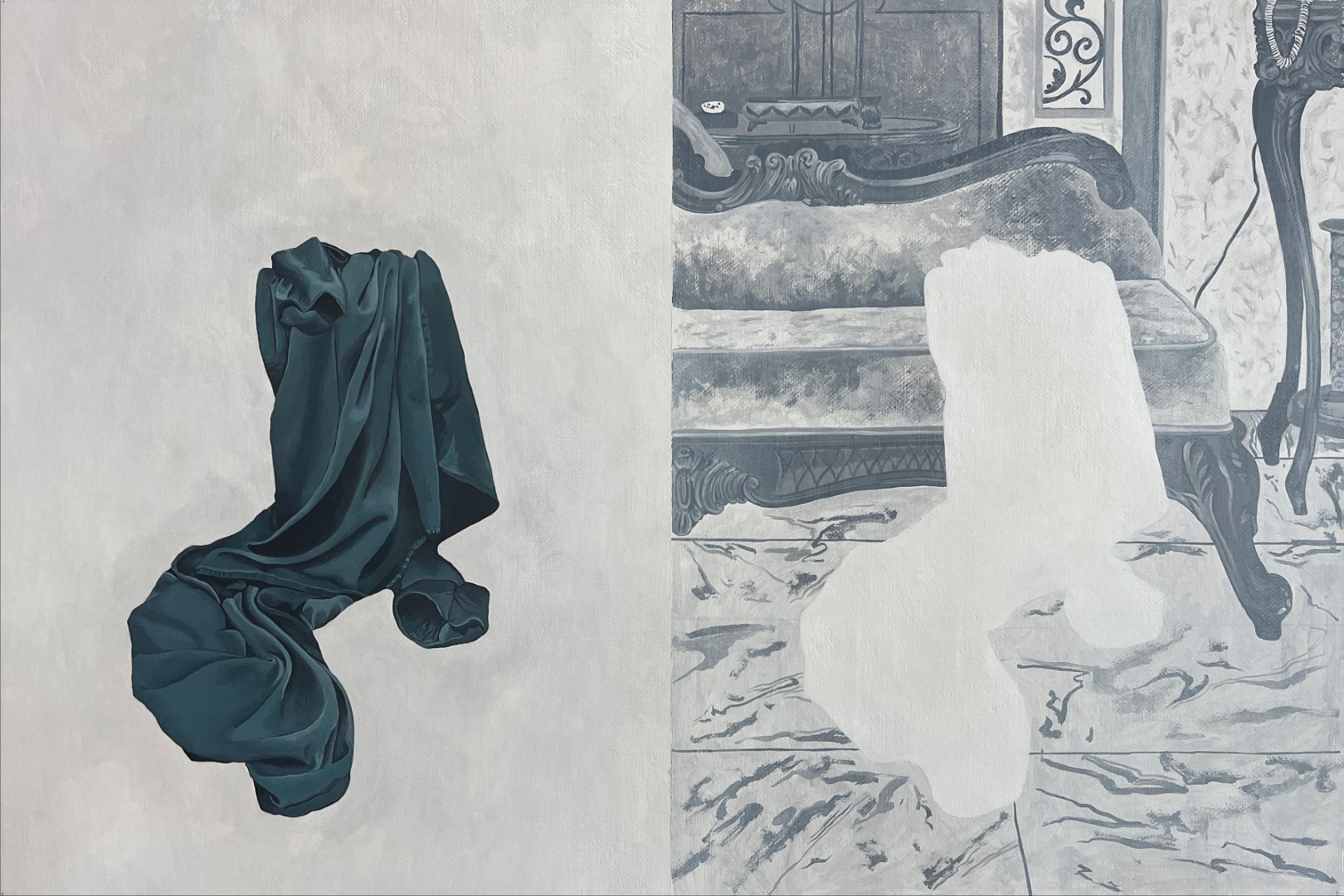
Your paintings often feel suspended between presence and absence — spaces without figures, draped fabrics without bodies, traces of people rather than people themselves. What draws you to that tension?
The absence of people in my work is a way of navigating privacy in the public eye. I’m often sharing very intimate moments and stories, and I would hate to strip my subjects of their right to privacy. So things like redaction, absence, scale, partial visibility and abstraction become tools for limiting access to my inner world. Here, access is granted and not always a given.
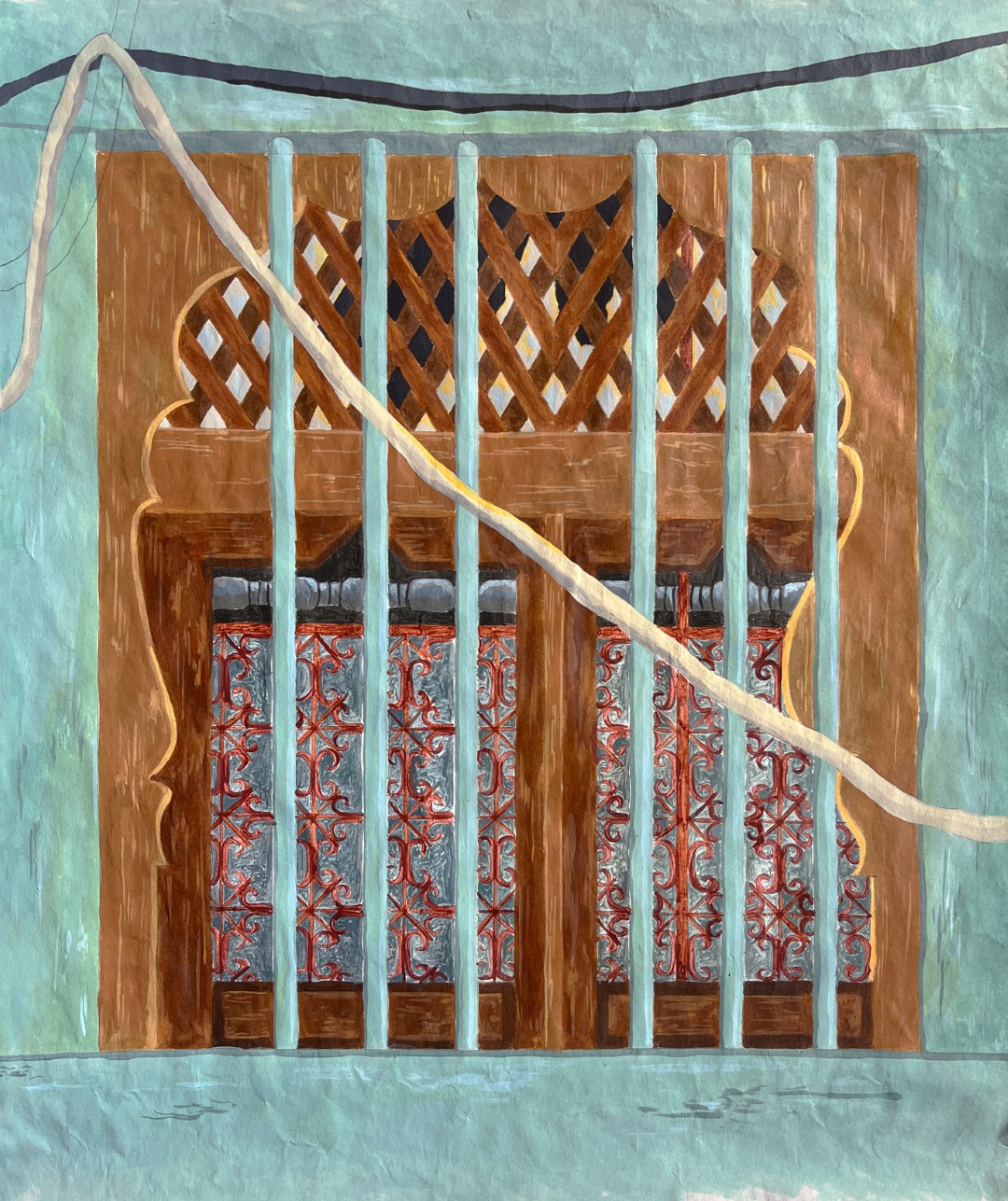
Your paintings capture Saudi in a way that feels both deeply personal and subtly transformative; documenting spaces that are changing culturally and architecturally. Do you see your work as a form of archiving?
I used to think of my work as archiving, but I recently came across a distinction between archiving, documenting and historicizing – and I’m not sure my work fits neatly into any of those. For now, it feels more like a practice of noticing and making connections. Whether it becomes an archive or something else entirely, time will tell.
For more stories of art and culture from across the region and the diaspora, visit our dedicated archives and follow us on Instagram.