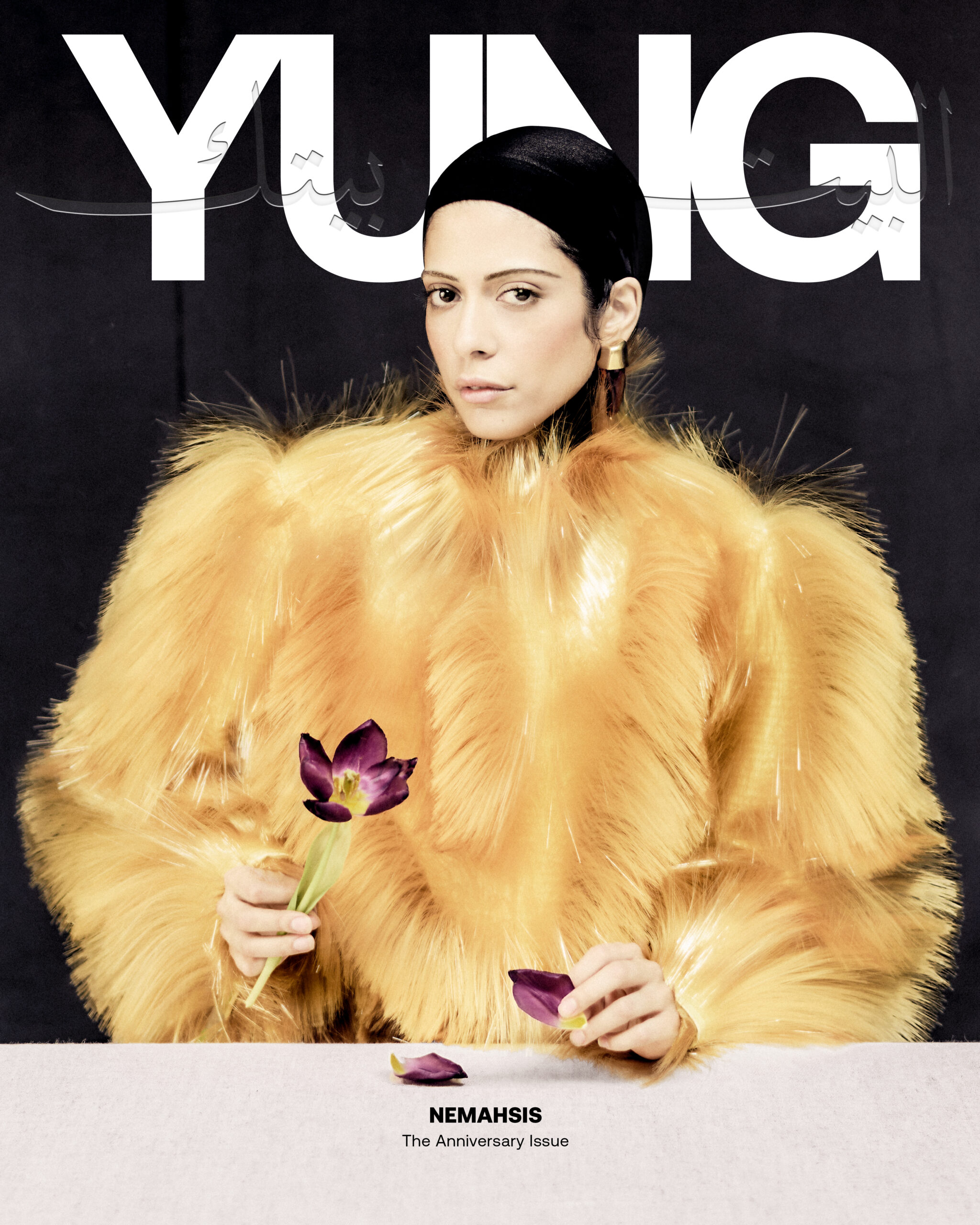
When the video call connects, Nemah Hasan—known to the world as Nemahsis—appears with the kind of composed and soft-spoken presence that usually only comes from surviving a major storm. There is no label entourage on the call, no publicist hovering in the background. Just a Palestinian-Canadian artist in her own space, navigating the same digital windows that helped build her career.
Operating as a fiercely independent artist after a high-profile split from her label, she has effectively redefined what ‘breaking through’ on your own terms looks like. Her sound drifts between alt-pop and indie, her vocals barely above a whisper, while her writing unfolds like something carefully held in, then let out all at once.
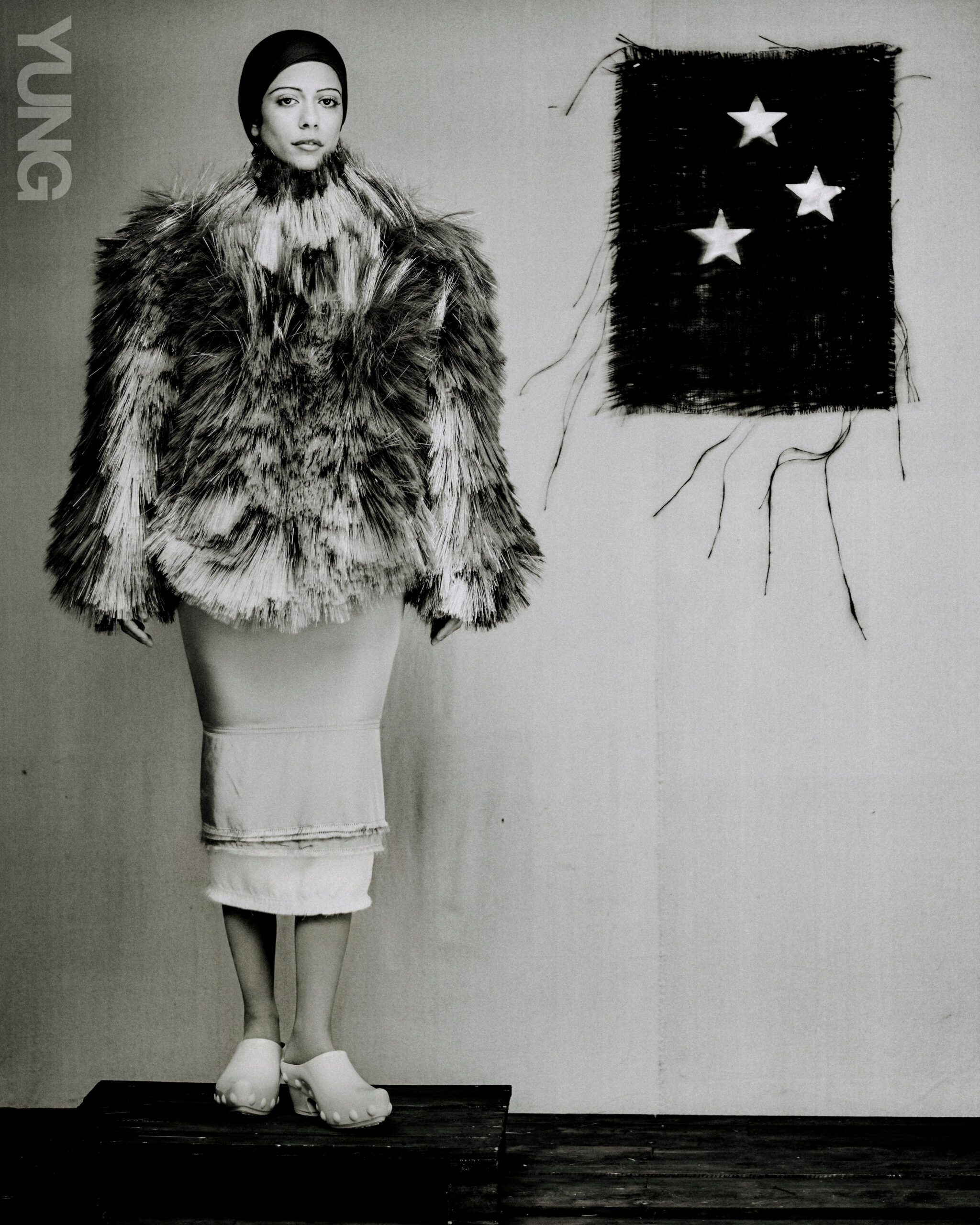
Nemahsis has steadily grown a dedicated audience, with a series of singles and projects that have positioned her as one of the more distinct voices emerging right now. After her 2022 EP eleven achers set the stage, she released her debut studio album, Verbathim in 2024. The title itself—a play on the word verbatim—serves as a metaphor for reclaiming her voice after being told to hold her tongue.
As we settled into our Zoom call, the conversation didn’t start with the trophies or the sold-out shows. Instead, we dived straight into the mechanics of the soul, and what it costs to protect it when you’re building everything on your own. Independence is romanticized as freedom, but for Nemahsis, it’s a high-stakes game that requires a lot of emotional and financial stamina. After a period of illness forced her to step away from the digital grind, she watched her metrics plummet, a cold reality of the internet era. “People don’t realise how stable you have to be—physically, mentally, but also financially,” she says.
Now, she describes her bond with her craft as a healthier relationship. “I had so much to prove, but I did it despite the pressure because it wasn’t about me. It was so much bigger than me.”
“I’ve proven all I needed to prove. Now I’m having more fun.”
Nemahsis is acutely aware of her standing; for her, that commitment carries more weight when you consider the risks attached to her name. “I’m such a liability,” she says with a wry laugh. When I push back on the word, she clarifies the reality of the landscape: “I don’t think I’m a liability, but in the industry, there is a risk. I’ve worked with people who have lost opportunities simply because they worked with me or because they spoke out.”
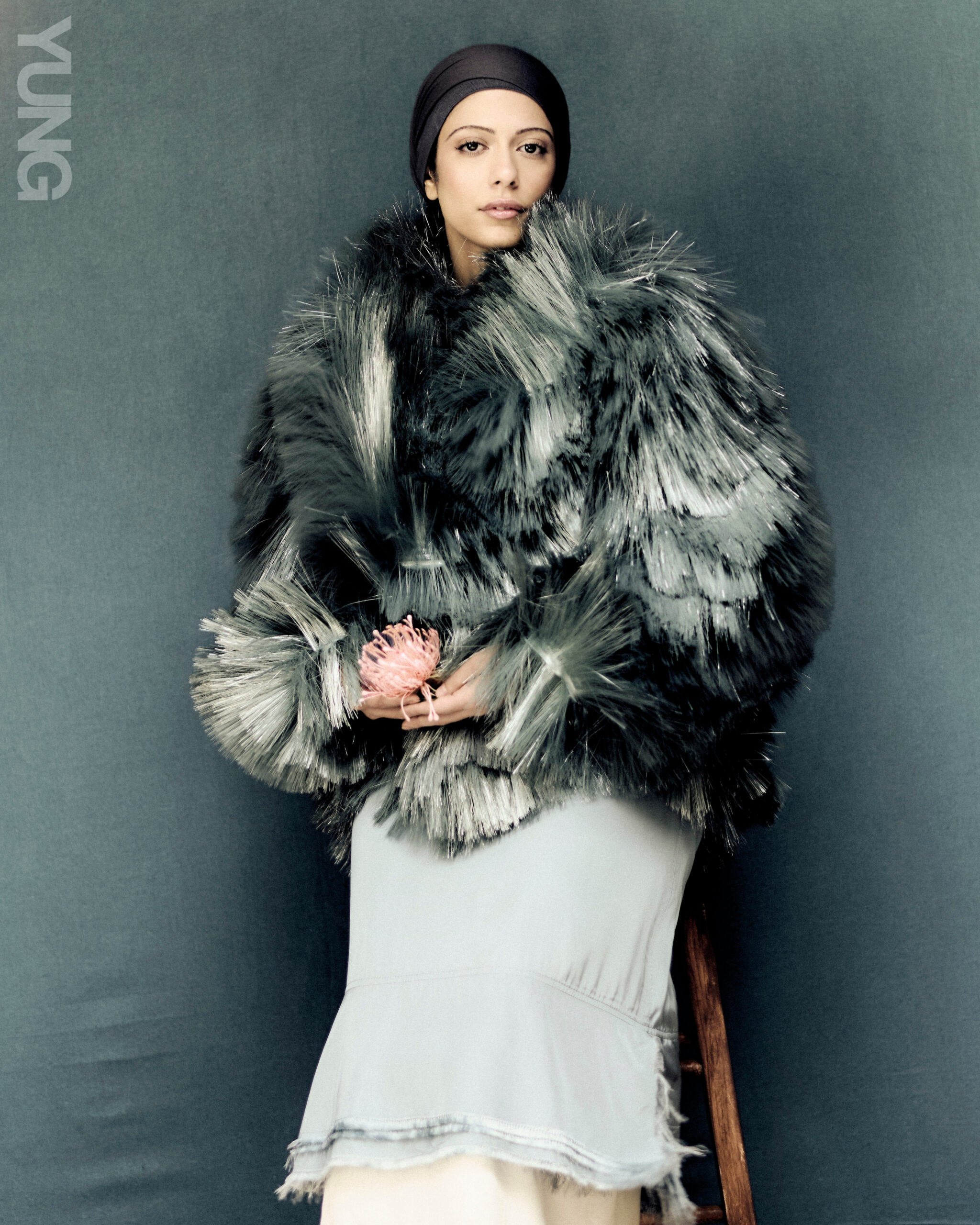
There is a specific kind of heartbreak in realizing the industry you love views you as a line item, replaced in a snap of a finger. It’s the kind of realization that usually breeds cynicism, but Nemahsis wears it differently. “To not see value in me from the start may have been such a blessing,” she reflects. “I was never special, but no one is ever special in this industry, because everyone is temporary.”
She isn’t saying she doesn’t have talent; she’s saying she’s opted out of the delusion. “It hurt my feelings at first, thinking I wasn’t worth it. But then I realized no one is really worth it to them. Everyone is ‘worth it’ for a fleeting moment, and then they’re not.”
Before October 7, Nemahsis was set to sign a multimillion-dollar deal—one that would have fundamentally changed the scale of what she could create. Instead, she rebuilt everything herself. “I was gonna be set,” she says simply. “And then I did it all on my own.” So instead, she stays in it—fully, stubbornly, and at times, precariously. Funding her own projects, betting on her own instincts, and accepting the risk that comes with both.
But long before she learned how to hold her ground in the industry, she had to first decide to step into it at all. Nemahsis was effectively evicted from her old life by a dream. It’s a story she still tells with a sense of lingering disbelief. “I don’t dream often—maybe once or twice a year,” she says. “But in 2017, I had this vivid one: Adele was on stage, she handed me the mic, and suddenly it was my show. It was the most at home I’ve ever felt.”
She quit her job the next day.
What followed wasn’t a clean, cinematic rise, but a messy, year-long flip-flop between instinct and insecurity. She tried to go back to a regular job, haunted by the impracticality of her own ambition. Underneath the career anxiety was a more existential strife: the internal negotiation of being a hijabi woman unfit for the music industry. “I’m still trying to find that answer,” she reveals. “How does someone in a hijab become a singer? It’s not black and white.”
The tension she feels is literally audible in her discography. Nemahsis possesses a powerhouse voice, yet she chooses to use it like a whisper. It is a premeditated, theological restraint. “I think I still correlate oversinging—and the attention that comes with it—with my own relationship to faith,” she explains. “So I found a way to sing without taking up too much space. I dim my own light a little. I’m a little quiet—fewer runs, fewer belts.”
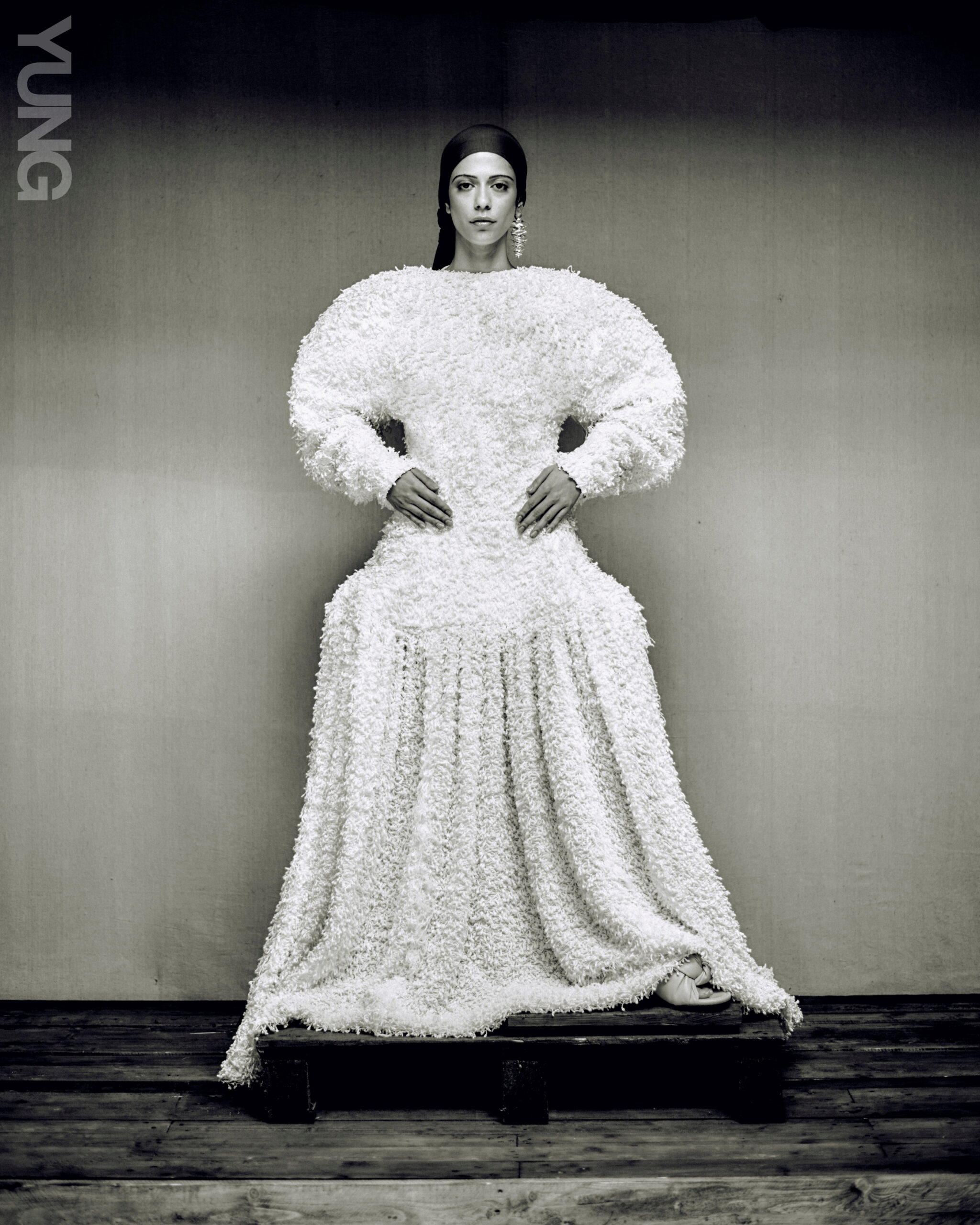
It is a striking admission: an artist intentionally simplifying her melodies so the listener doesn’t get ‘distracted’ by the beauty of her tone. “If I sing too much and my voice sounds too good, no one would listen to what I have to say. The message is more important than how I sound.”
This message-first philosophy is what makes her debut, What If I Took It Off for You?, so piercing. “It was the first time I wrote about the penalization of wearing a hijab in a job or a dating life. Something that had never been written about before.”
Navigating identity as a hijabi woman in the West means living in a permanent state of “in-between.” Nemahsis famously described herself as “too haram for Muslims and too halal for everyone else”, a tale that began in her childhood in Ontario. She was caught in a classic, exhausting pincer move: too “Westernized” for the mosque on weekends, and too “religious” for the kids at school who thought she was in a cult. “The Muslim community in Mississauga, they’re very practicing… I was always the person who showed up in a baggy top and baggy pants. It was like, ‘That girl Nemah is so haram.’ Then I’d go to my predominantly-white school and it was, ‘Oh, she’s so religious, she’s in a cult.’.”
The industry craves a diluted aesthetic—a version of a Muslim woman that is easy to categorize and even easier to market. The margin for actual nuance is razor-thin. It’s a dynamic that forces a perpetual calibration of how much of herself she actually shows. “You can’t take up too much space,” she explains, “because then people start saying, ‘That’s haram.'”
It’s a double-edged sword: the Western gaze demands she be “modern” enough to consume, the masculine or trendy hijabi, while the conservative gaze demands she be “modest” enough to disappear. Navigating the line between the two requires a level of mental chess that most artists never have to play, but Nemahsis isn’t interested in a head-on collision with these structures. Instead, she’s found a more subversive way to exist. “You kind of seep through the cracks,” she says. She is moving through a system that wasn’t designed to hold her, finding the gaps and the shadows where she can still be entirely, unapologetically herself.
Returning to Palestine brings a nomadic kind of grief—a constant mourning for whichever version of yourself isn’t currently present. “It’s so crazy,” she says, leaning into the paradox. “I feel at home in Palestine, and then I miss home in Canada. And when I’m in Canada, I’m missing home. I feel like I belong, but I can’t have both belongings at the same time.”
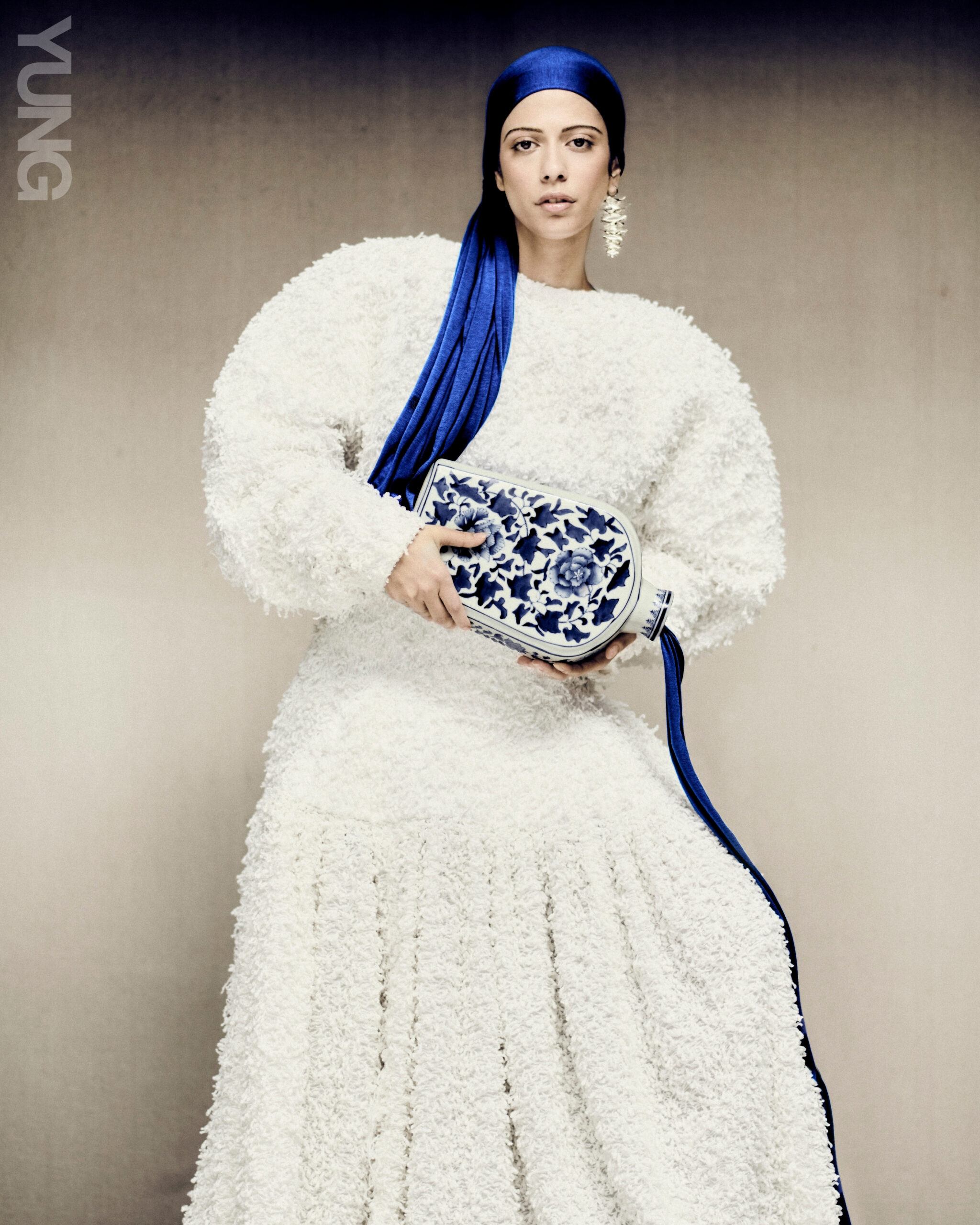
In this constant transit, “home” has ceased to be a coordinate on a map. Instead, it’s a phantom limb—something she can feel vividly, even when it isn’t there.
For Nemahsis, who has been visiting since the second grade, the Palestinian border is a mundane, albeit heavy, routine. There is a common, almost predatory expectation that artists should ‘mine’ their trauma in real-time. In her eyes, that kind of immediate translation feels impossible—even dangerous. When she is in Palestine, moving through the high-friction reality of checkpoints and controlled borders, the artist in her goes dormant so the human can survive. “When I land in Jordan, I think: ‘this is the hard part, we just have to get through this part.’ Don’t write, don’t romanticize, and don’t get scared. I’m relieved and out of autopilot in Jordan.” Some people write in the worst moments of their lives, she writes later.
It’s a necessary kind of emotional blackout. In those moments, she isn’t looking for a metaphor or a melody; she is simply trying to get to the other side of the gate. “I’ve been going since the second grade. It’s all I’ve ever known. I never needed a moment to ‘sum it up’ because I never thought it was something I wouldn’t have again.”
She isn’t writing from the middle of the fire; she’s writing from the clarity of the ash. By the time a feeling makes it into a Nemahsis song, it has been filtered through distance and safety. It’s a boundary that protects her integrity—a rejection of the pressure to aestheticize her pain for an audience while she’s still bleeding.
If her music video for Stick of Gum feels strikingly light, almost disarmingly so, it’s because that tone was a conscious choice. At a time when Palestinian narratives are so often framed through grief and devastation, Nemahsis initially considered leaning into something more overtly defiant. But on the ground, those closest to the reality pushed her in another direction.
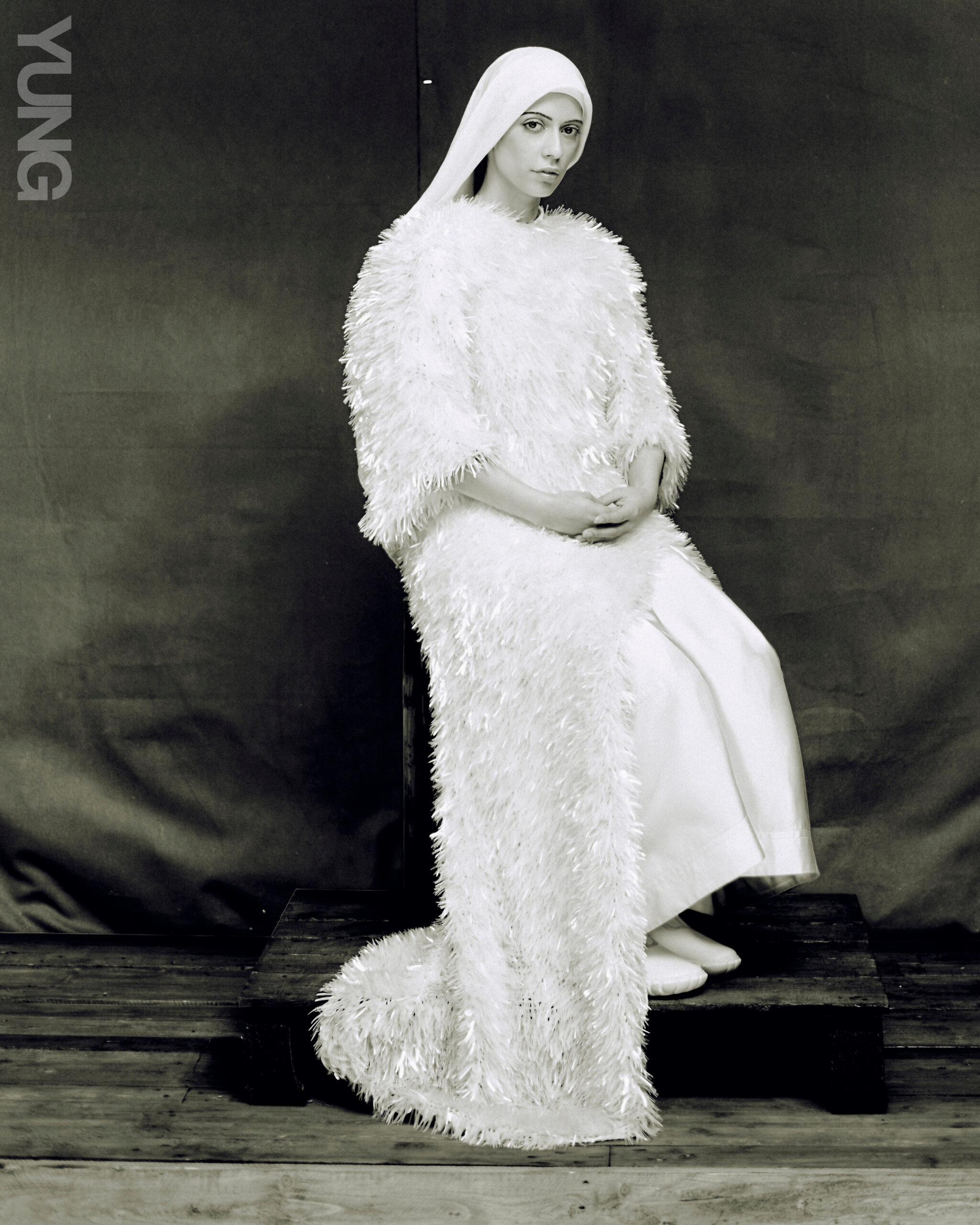
Instead, she listened. The video softened, opening itself up to something else: joy. “As much as sadness and war-torn imagery brings sympathy, I think it also separates us from humanity.” Not as denial, but as insistence, a rebuttal to be reduced to suffering alone. “When you see us with our hijab blowing in the wind, liberated… it humanises us,” she says. “It’s less of a pity thing.”
Nemahsis’s song writing draws from everything, scientific studies, stray words, and language, drawing from the clinical to explain the emotional. Like Chemical Mark, the song found its origins in an academic study on mice and cherry blossoms. She reads them not for the data, but for the mirror they hold up to her own psyche. “I like to read the study and see how it relates to me,” she explains. “To understand why I am the way that I am.”
Lately, however, she is finding inspiration in the boundaries of the English language. She’s become obsessed with the abrasion of single words—plucking them out of context and forcing them into pairings that shouldn’t work. “You would’ve never thought to put them together,” she says, a small spark of a chemist’s pride in her voice, “but then it makes sense when you hear it. You end up finding a beautiful sentence.”
In her new music, she is intentionally leaning into mispronunciations—the very “errors” she was once bullied for as a child in the West. “I think it’s so important to make errors, because the English language is quite pretentious,” she says. She remembers a childhood spent rehearsing her enunciation, a constant, anxious mental edit before she ever opened her mouth. Now, she’s looking to films like Arrival to justify a simpler truth: if you communicate the story, the grammar doesn’t actually matter.
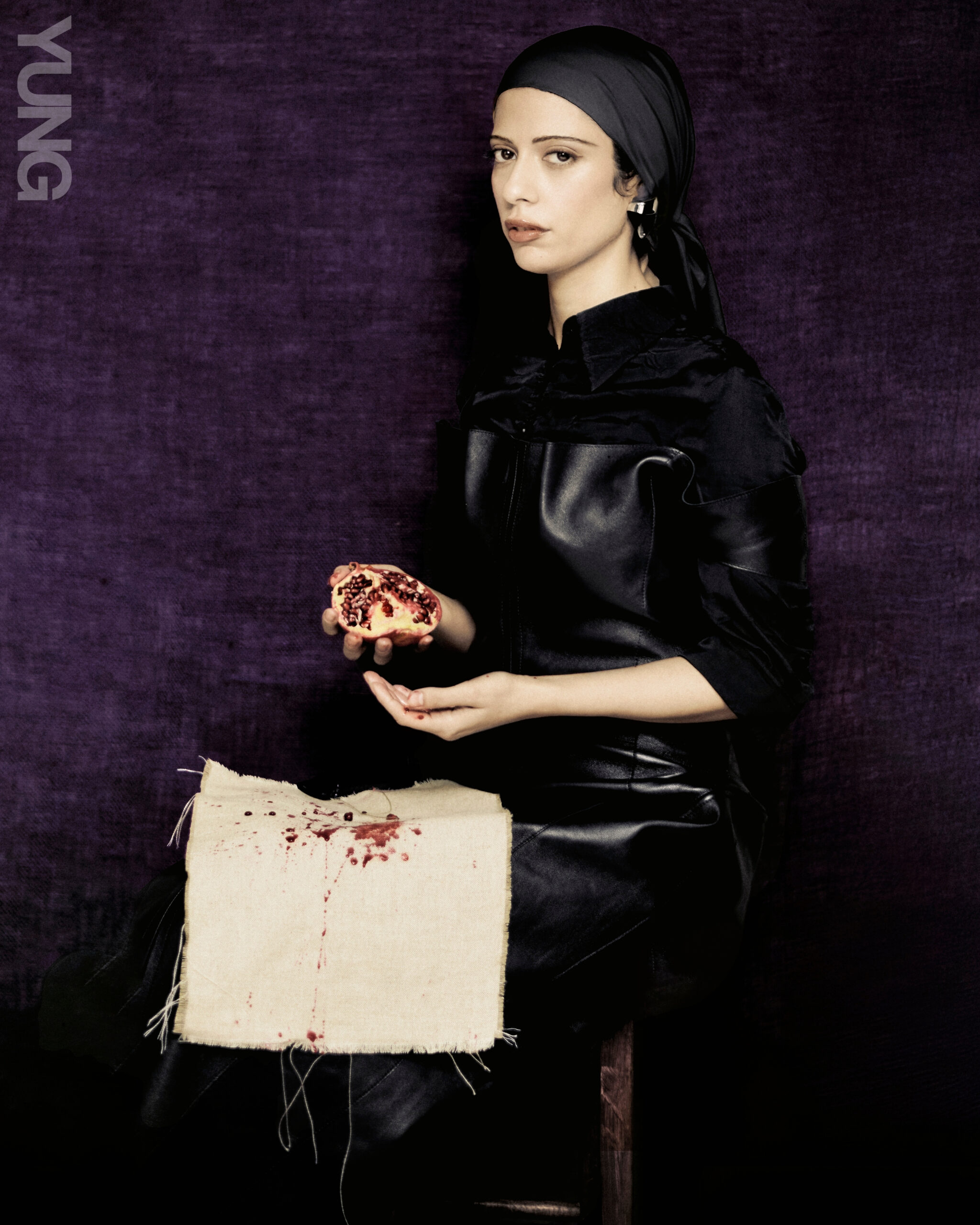
She explains it with a visual that feels perfectly tailored to her fashion background: grammar and “correct” pronunciation are like perfectly pressed clothes—stiff, neat, and expected. But perfection is rarely where the soul (or the fashion icon) lives. “If you can’t see past the wrinkles, you don’t see the beauty of what’s been curated,” she says. “I’m strategically adding those wrinkles and that realness to the storytelling. It takes away the stigma within the words.”
For a woman who grew up believing she was “stupid” because she couldn’t master the rigid structure of an essay, this is intentional. “I was never good at English and grammar, but I was really good at poetry,” she reflects. “Everything beautiful comes from accidents and mistakes. I’m exploring the error.”
Nemahsis’ upcoming single, Paper Soldiers, plays with the power of the repetitive. It’s built around a single, looping line that anchors the track until it feels less like a hook and more like a mantra. “I’ve always wanted a song that just keeps repeating,” she says. “Something catchy, but with a cultural implication that sticks.”
The metaphor at the heart of the track is devastatingly simple. “We have all these soldiers, but they’re made of paper,” she explains, the things we are told will keep us safe, built from the flimsiest materials imaginable. It’s exactly the kind of contradiction she’s drawn to: something that looks strong but folds under the slightest pressure.
But even as her artistic voice becomes yet more honed, she acknowledges that the traditional markers of success still feel like they’re happening to someone else. There is a lingering disconnect between the woman winning Junos and the kid who never felt exceptional. “I didn’t feel special as a kid,” she says plainly. It’s a raw admission that explains why her awards often stay in their boxes, unopened. The recognition doesn’t quite settle because it doesn’t match the internal map she grew up with.
There is an unambiguous, heavy kind of grief in becoming the representation you never had. For the young hijabi and Arab girls who see themselves in her, Nemahsis is a lighthouse. For Nemahsis herself, it’s a reminder of a void. “I get so sad that I’m what I needed growing up,” she tells YUNG. “I didn’t want to be that for someone else—I just wanted to have that for myself.”
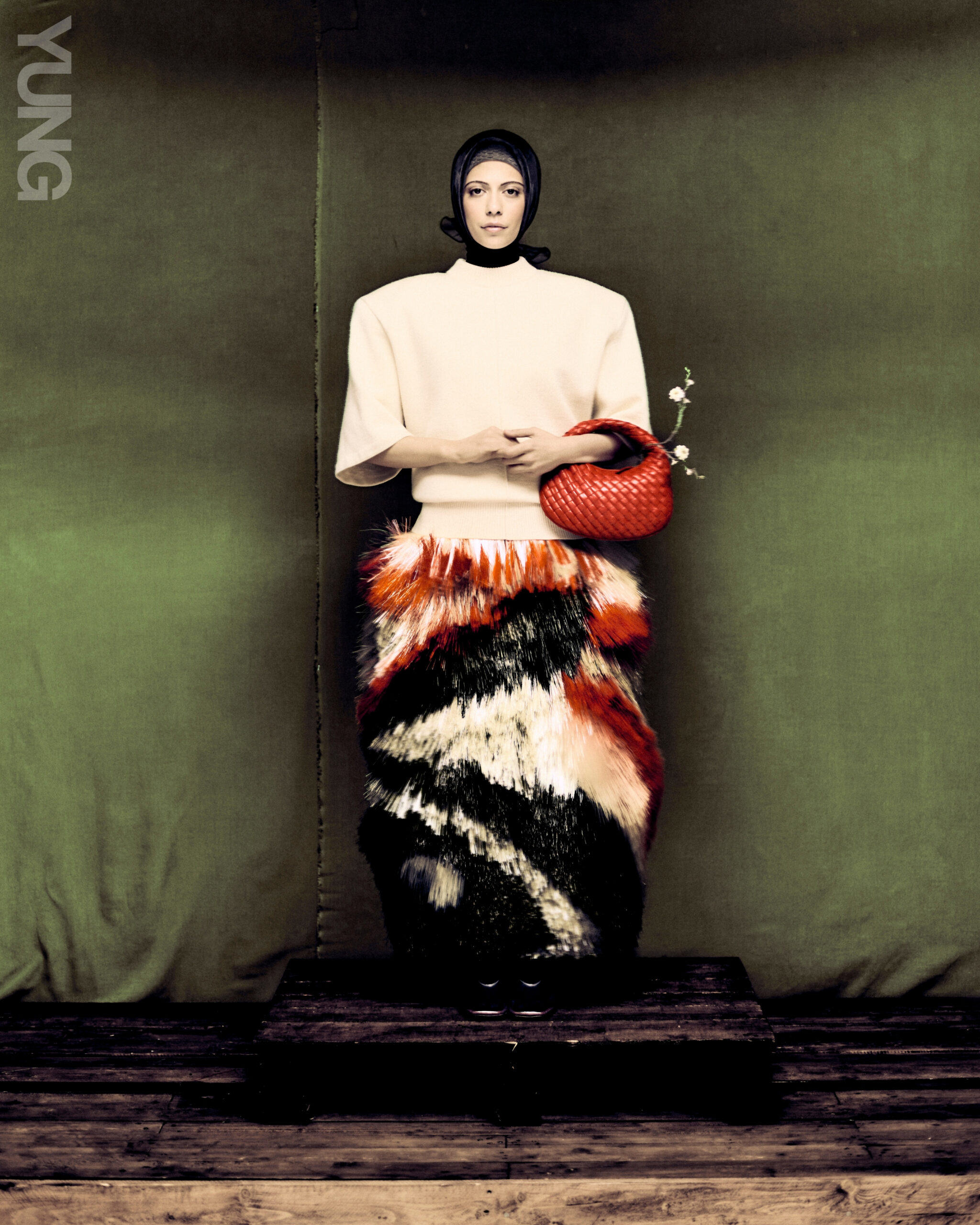
It’s a duality she carries into every session: the pride of impact mixed with the mourning of her own childhood absence. She is under no illusions about the industry side of her identity, either. She knows the math. “I truly believe my music is incredible,” she says with total clarity. “But I also think if someone else sang it, someone without my baggage or my look, it would stream more.”
Yet, she doesn’t say it with bitterness. She says it because she knows that the “weight” is the whole point. If someone else sang these songs, the context would evaporate. The ‘why’ would disappear. “It’s impactful because of me,” she concludes. “A good song is a good song. But a good song at the most important time? That’s a legendary song.”
For all her growing audience, Nemahsis still moves through the world with a kind of inherited invisibility. It’s not modesty so much as conditioning, the residue of growing up unseen, unheard, and unconsidered in spaces that never made room for her in the first place. Even now, as her work travels further than she sometimes realises, that internal narrative hasn’t quite caught up. “I’m so in a bubble,” she says. “I don’t know if people are even listening.”
And yet, they are. Perhaps that’s the paradox at the centre of it all: an artist who is becoming increasingly visible, while still carrying the feeling of being invisible—and making work that, in many ways, speaks directly from that space.
For more stories of music from around the region, visit our dedicated archives and follow us on Instagram.