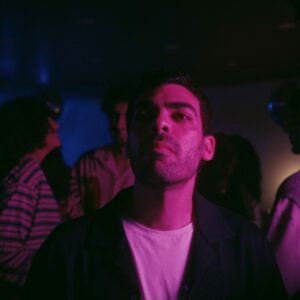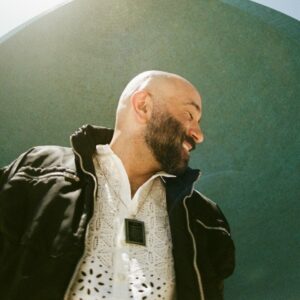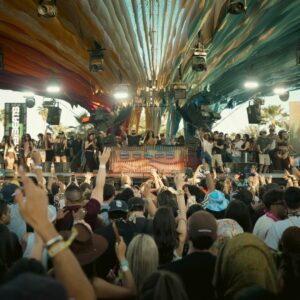
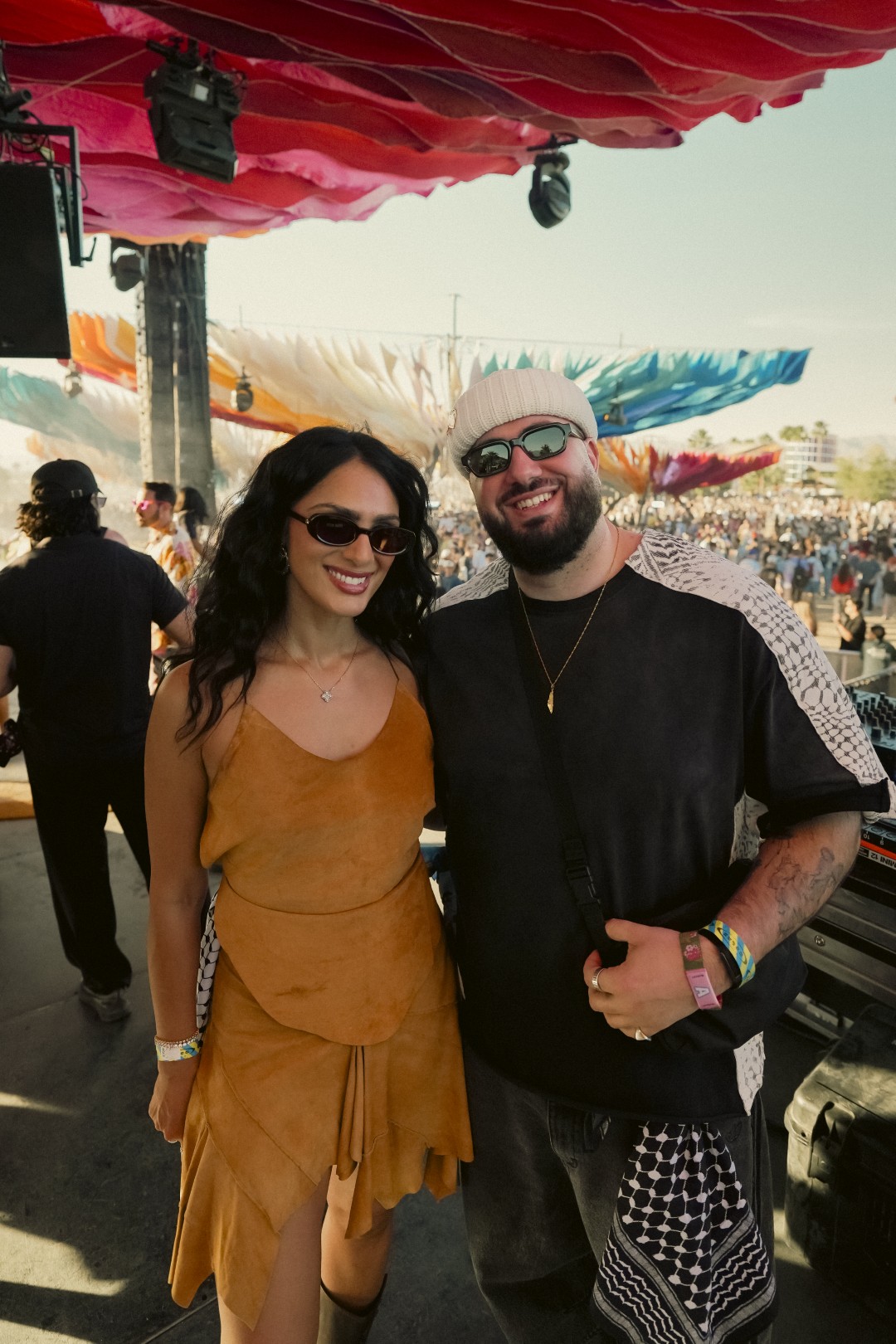
Coachella has always sold itself as a global festival, but every now and then, a set comes along that actually feels like it. This year, in the hazy heat of the festival’s second leg, somewhere between golden hour and full crowd lock-in, when Palestinian-American DJ Habibeats, Ibrahim Abu-Ali, and Pakistani-American DJ ZAINAB, also known as ZeeMuffin, stepped onto the Do LaB stage in during Weekend Two.
The booking itself made sense on paper: a back-to-back between two DJs known for weaving across genres, scenes, and diasporas. The offer was specifically for a B2B set, a format they had only tried once before in San Francisco. ZAINAB saw that invitation as instant proof that the wavelength they’d found in San Francisco wasn’t just a one-off.
That first experience, however, was defining. “It was purely off the dome; we went in with zero prep,” ZAINAB recalled. “I think the set lasted almost three hours, and we had such good chemistry and flow. There was barely any verbal communication… I just felt like we were in sync.”
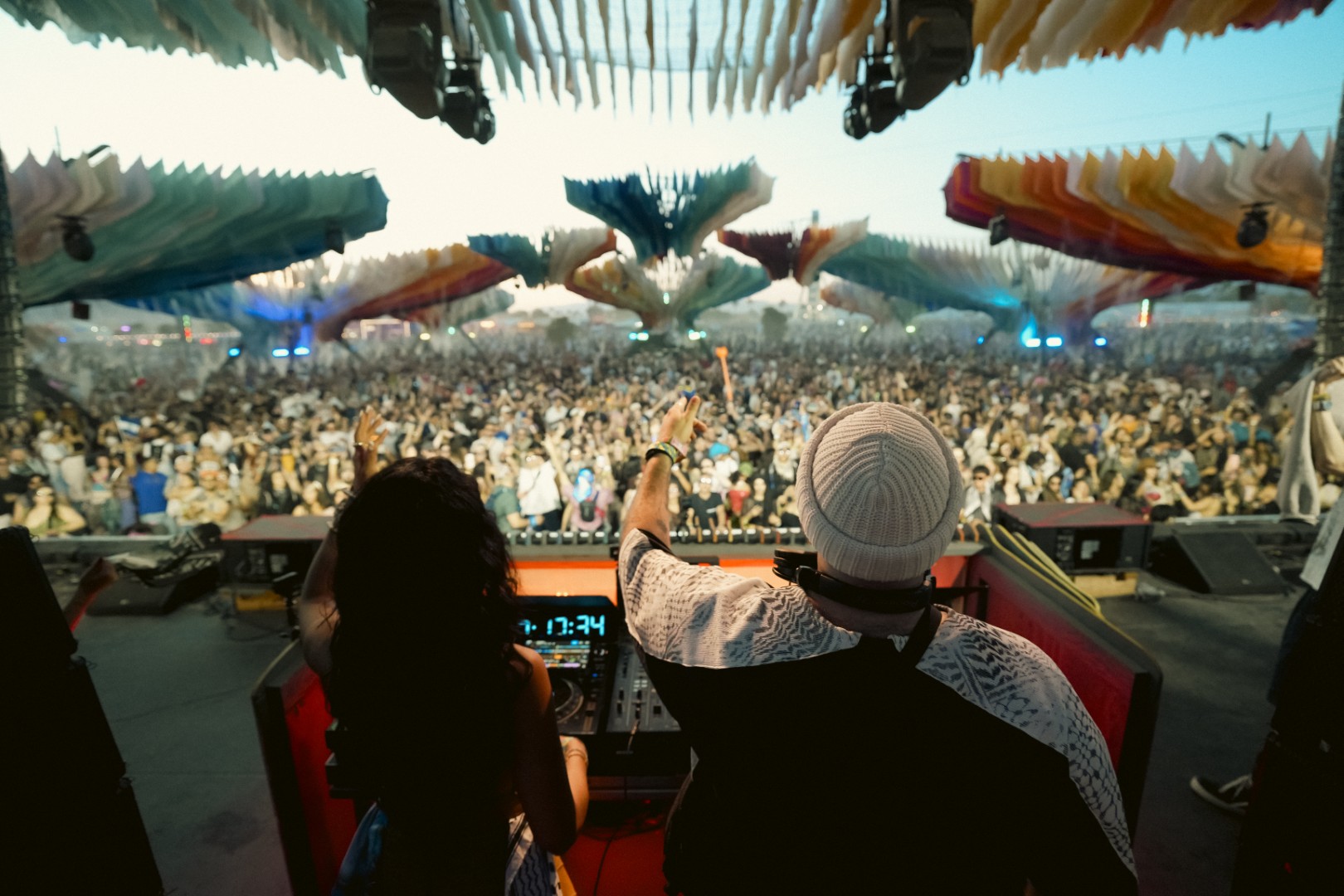
When the Coachella offer arrived, it felt like the pieces finally fell into place. “Do LaB has always felt like such a bucket list thing to do as a DJ,” she added. “I was like, ‘oh, this is going to be such a moment for the culture.’”
DJ Habibeats was just as stoked, noting that the B2B format also helped alleviate some of the pressure of a debut performance. “I wanted to play music that represented me… but also I wanted to represent more culture,” he explained. The shared stage allowed them to broaden the scope of the set. “It gave the both of us more room to mix different things… a little bit of South Asia and a little bit of Arab, a little bit of America and a little bit of Brazilian… just a nice rounded set that everyone could enjoy.”
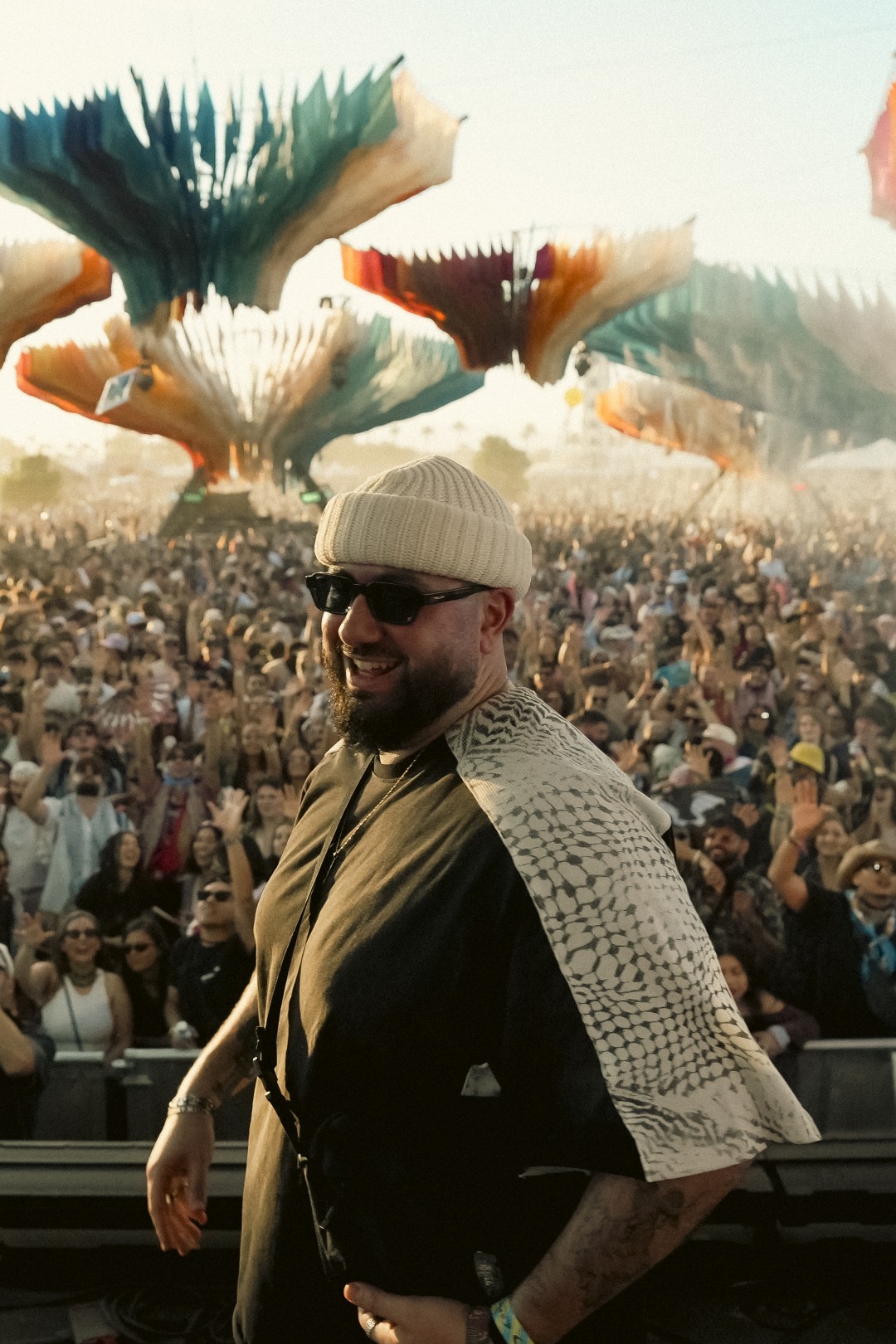
The excitement only intensified when they received their slot: 6:15 PM, right at sunset, the coveted ‘golden hour set’. “It felt like the best time, literally golden hour,” ZAINAB said. “And hindsight, knowing that weekend two is typically the better weekend.” Knowing that they had only 70 minutes, enough for roughly 30 songs, and that they were “one of the only acts from the entire two weekends at Do LaB that would bring any sort of flavour or energy that we were bringing,” they approached the set with extreme intentionality.
Rather than their usual open-format style, which might explore slower tempos like Afro House or Amapiano, they decided to “come out swinging.” “We intentionally chose a range of speed and genres that we wanted to hit,” Habibeats said. “We kept the energy high the whole time. We wanted to let them know like, ‘we’re here.'”
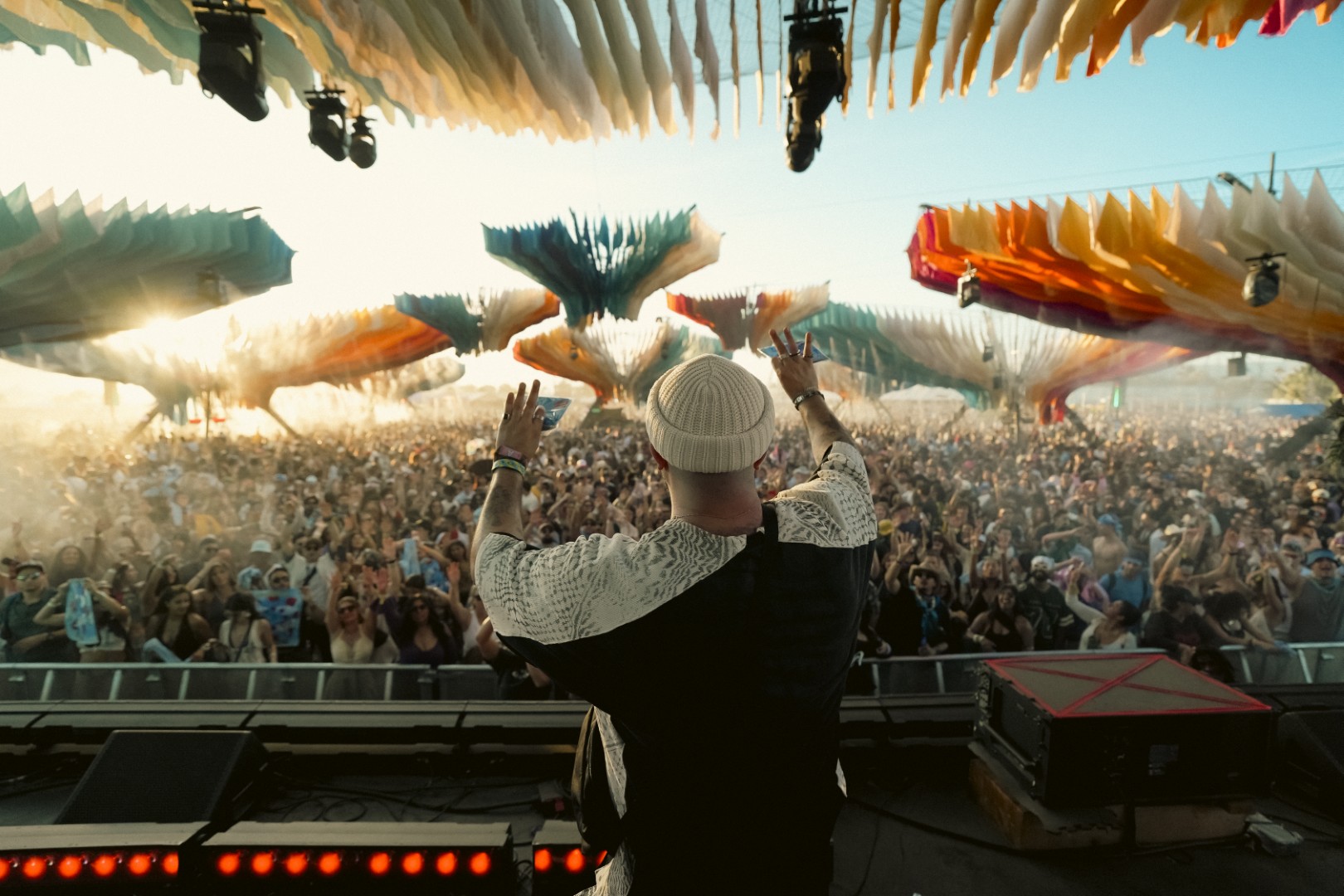
What transpired in those 70 minutes was more intentional than a casual crossover. With limited time and a sunset slot that left no room for a slow burn, the set didn’t build slowly or ease the crowd in, it literally couldn’t. There was no time for a slow progression or genre detours, the kind of gradual storytelling DJs usually rely on. “We don’t have the time to start at 120 BPM Afro house and work our way up to 175 BPM jungle,” Habibeats explains.
They had to lock into a tight BPM range early on, selecting tracks that lived within the same sonic zone, allowing for speed, cohesion, and impact. It meant sacrificing certain sounds they would normally play, but in return, it arrived fully formed—fast, high-energy, and deliberate from the first track. Without the cushion of a warm-up or a gradual climb, the duo barged right into the set. It sent a clear message: we’re here, and this is what we sound like.
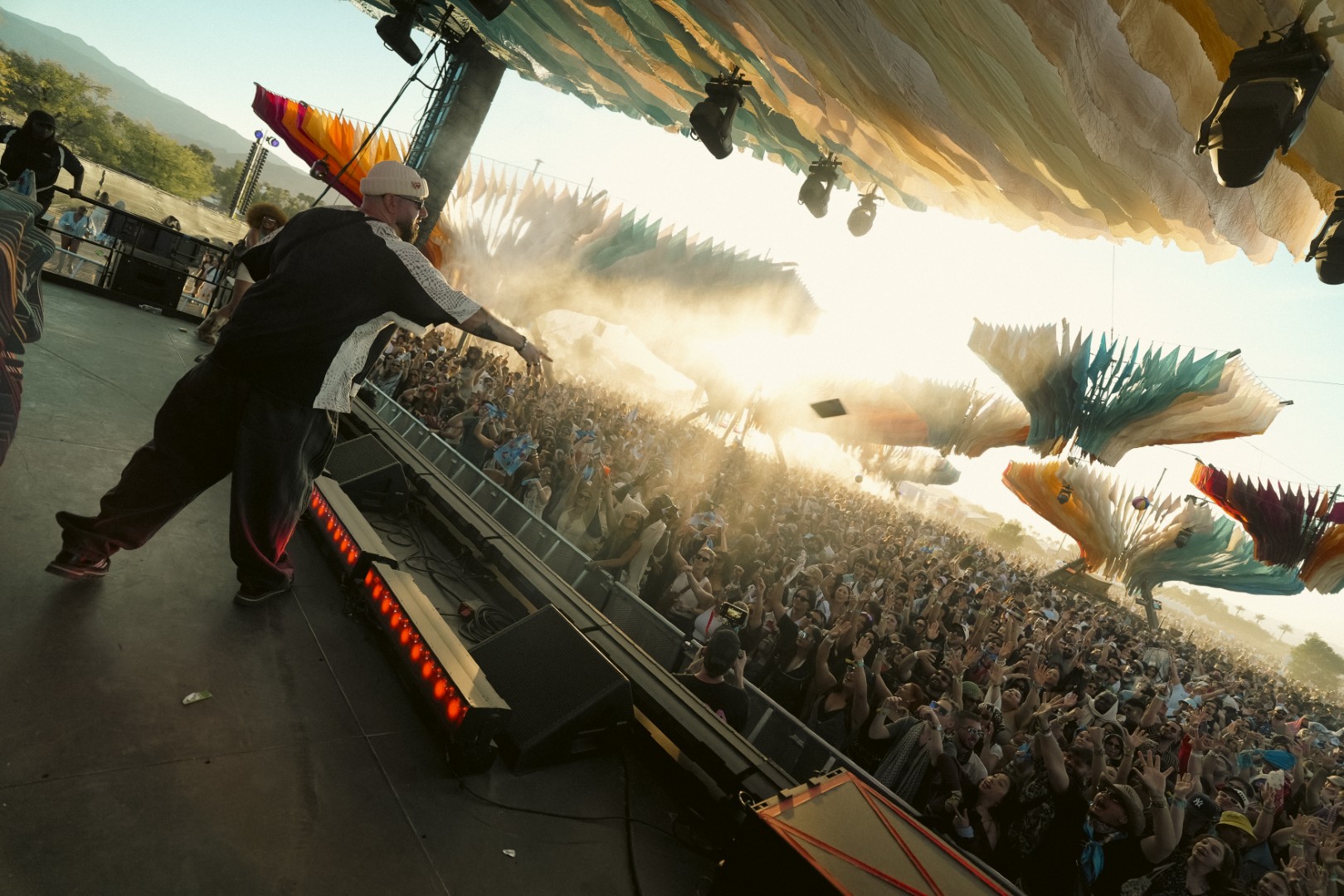
That sound wasn’t confined to one region, one tempo, or one expectation. It moved through Arab edits, South Asian samples, hip-hop, house, and everything in between, without stopping for a translation. ZAINAB saw the set as a heavy hit of nostalgia wrapped in cultural pride. “There was this one song, an Anish Kumar song called ‘Nazia,’ which samples Nazia Hassan’s ‘Disco Deewane.’ To me, it was a very [specific] homage to the Pakistanis in the crowd.” Other peak moments included a Santo and Nadim edit of “Ti Rash Rash,” and “Bass Dhol,” the high-energy collaboration between Skrillex and Pakistani artists Ahadadream, and RAF Saperra.
As for DJ Habibeats, his remix of Akbar Ghalta with Dave Nunes stood out as one of the set’s most surreal turns. “It was such a moment for me… I was like, I can’t believe this is happening,” he says, referring to the turned-up version they played during the set. The custom bandana they handed out was a curated clash of their two cultures, inspired by truck art aesthetics and auntie WhatsApp meme culture, which both found hilarious and fitting.
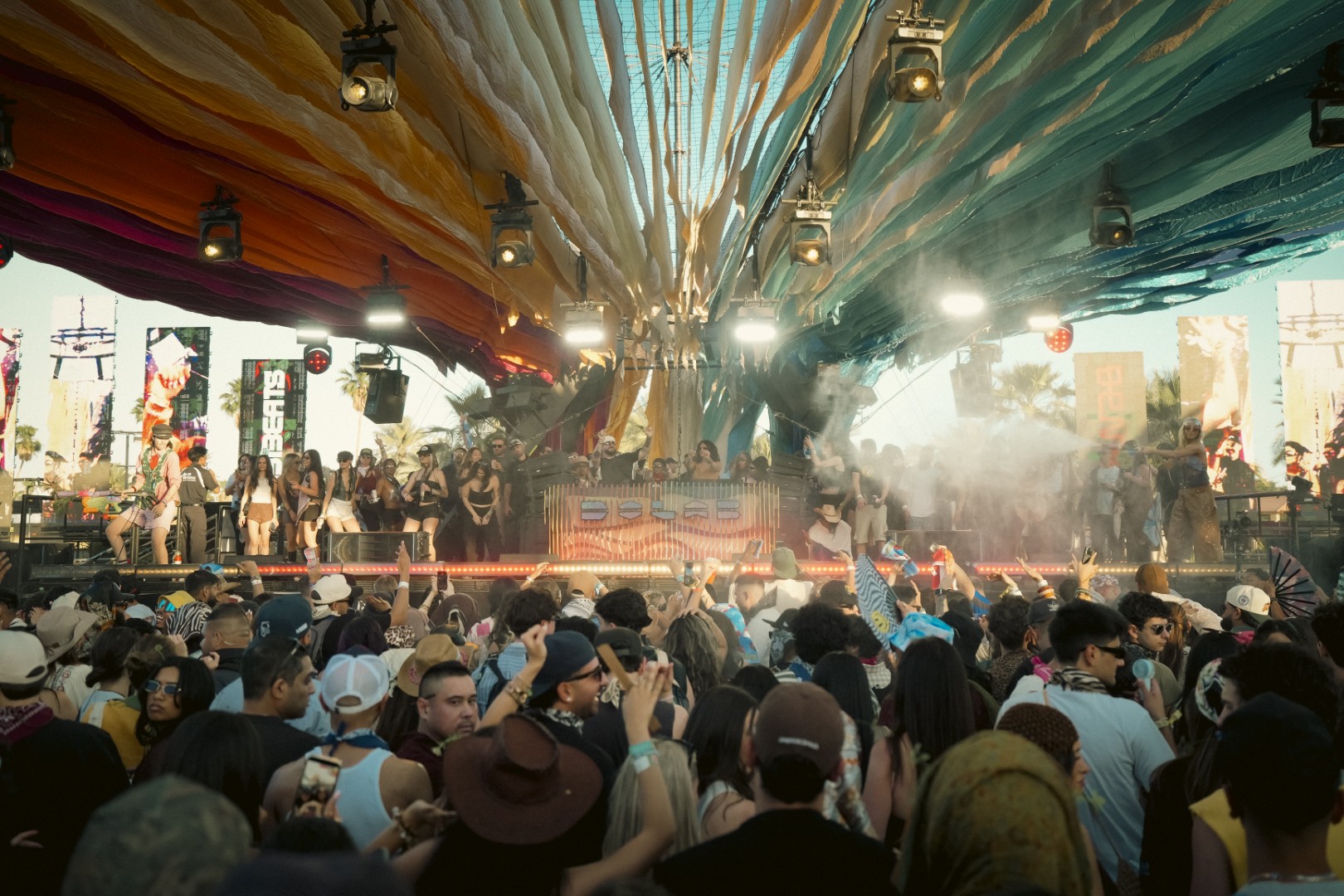
The Do LaB thrives on a certain loose, high-stakes energy, which only served to sharpen the impact of their set. Unlike Coachella’s more structured stages, it operates like a continuous ecosystem—DJs moving in and out, staying for each other’s sets, watching, supporting; friends gathering behind the booth, the crowd bleeding into the stage itself. Artists from New York, the UK, Latin scenes, Arab collectives, and South Asian spaces all overlapped in the same environment, each holding their own sound without needing to adjust for the next.
For DJ Habibeats and ZAINAB, it felt like an extension of the spaces they’ve already built in cities like New York, London, and Dubai. One big party. In the crowd were familiar faces, people who had followed their work for years—and people who had never heard anything like it before. “DJs are very much community builders,” ZAINAB reflected. “Not just for the music… but when you create spaces where people have the same value system or even outside of that… It’s the best place to not only find a future partner but to make friends.”
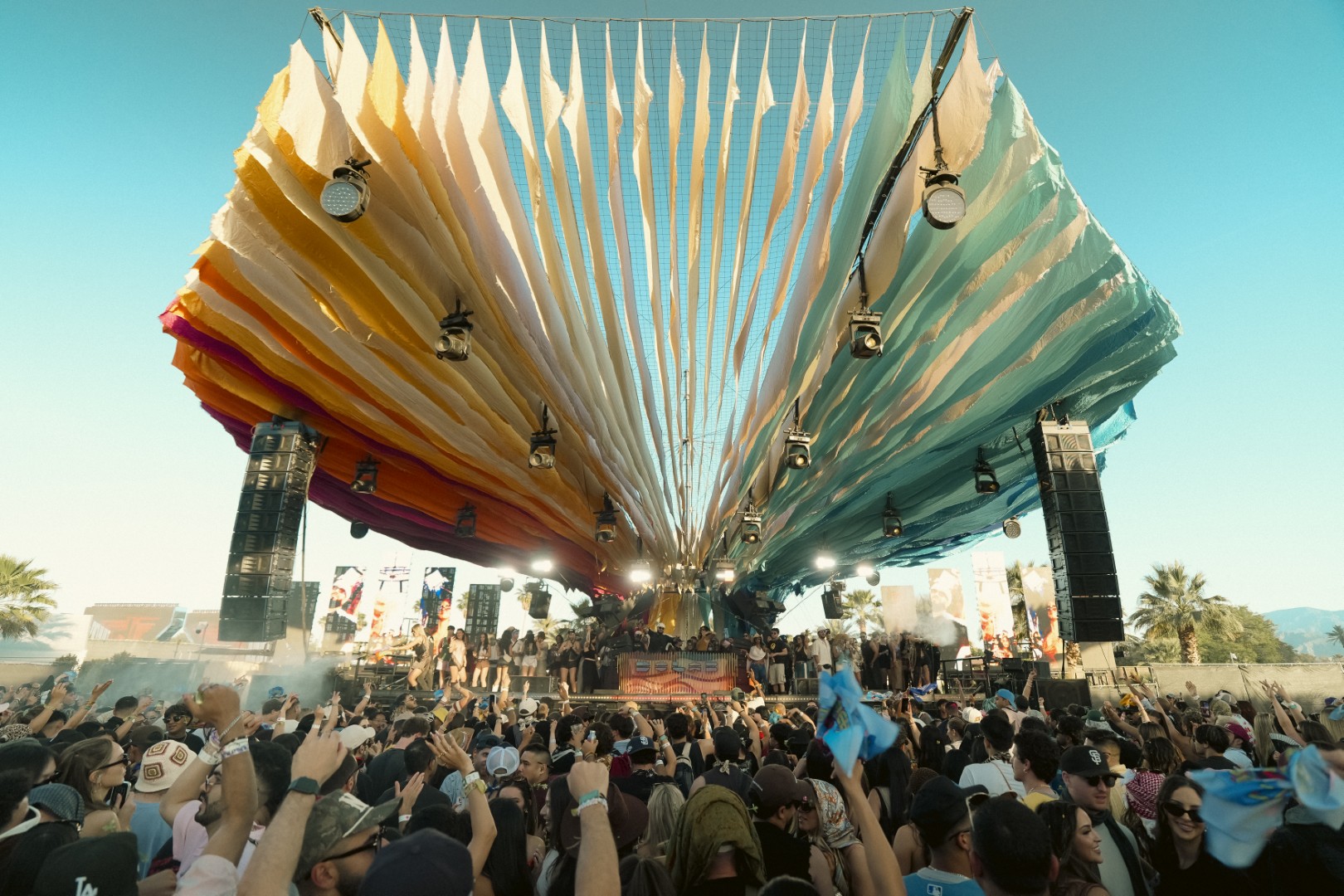
Tracks that might typically exist as inside jokes—wedding songs, regional staples, cultural references—were pulled into a Coachella context and played at full volume. For those who recognized them, it was electric. For those who didn’t, it didn’t matter. The energy translated anyway; as one sign in the crowd read, “My first Arab wedding!”—and she clearly knew exactly what she came for.
Performing as prominent members of their respective diasporas also brought unique interactions. While they loved seeing diverse flags (Lebanese, Armenian etc.) and connecting with couples who met at their shows, ZAINAB noticed a moment of targeted trolling. “Our third song in, Habibeats was gifted these ‘PaliRoots’ keffiyeh handkerchiefs, and we were waving them. I saw someone way in the back put an Israeli flag up on their phone and pointed it at us,” she recounted. She didn’t miss a beat—literally or otherwise. She just danced through it.
Her immediate reaction? Flipping them off. “I was looking at the videos… and then I found the video of me doing it. In the moment, it was through my head, it’s just a muscle reaction.” Both artists were visibly themselves—keffiyehs, references, sounds, and all—without framing it as a moment that required permission. “I’m just being me,” Habibeats said to YUNG. “What are you gonna do?” It’s a non-performative confidence that stops treating representation as a milestone and starts treating it as a given.
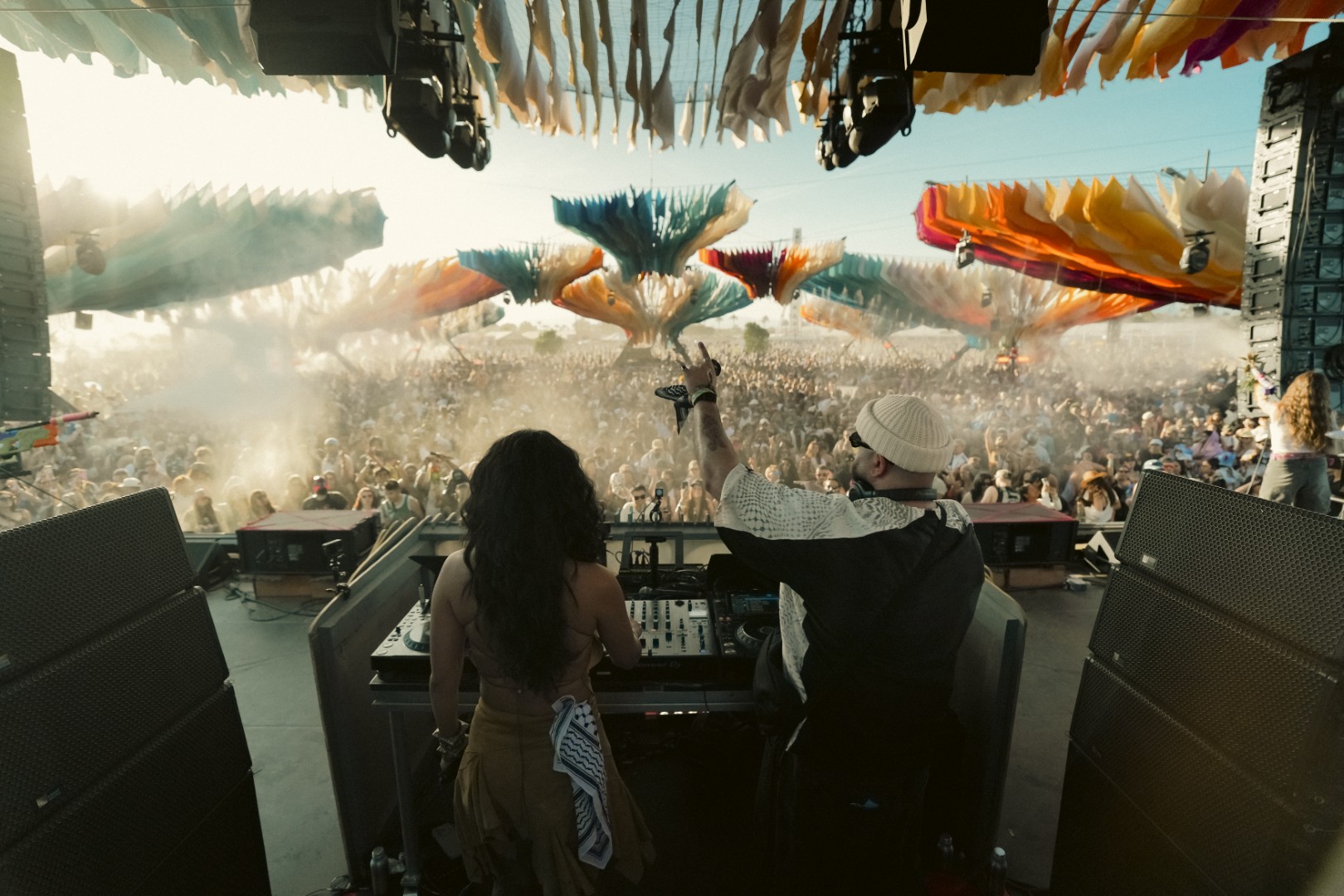
For DJ Habibeats, the significance of his visibility as a Palestinian-American artist on the Do Lab stage was something he carried naturally. When asked if he was conscious on stage, his response was swift and firm: “Not really. I mean, I had my shirt, had a keffiyeh on it. I was wearing a keffiyeh… We played a remix of ‘Falstini’ at the end of the set. I’ve just always been myself and continue to be myself.”
He emphasized that his artistic choices aren’t driven by fear of lost opportunities. “I’m past the point. I never really cared, but I’m definitely at this point even more so in that camp… I’m not here to make anyone happy in that way. All I can do is [this], I can’t be like a version of myself that is fake.”
What stood out wasn’t an attempt to make a statement—it was the absence of one. There was no visible effort to frame the set as political, symbolic, or “important.” They showed up as themselves, played what felt natural, and moved through the set without second-guessing how it might be received.
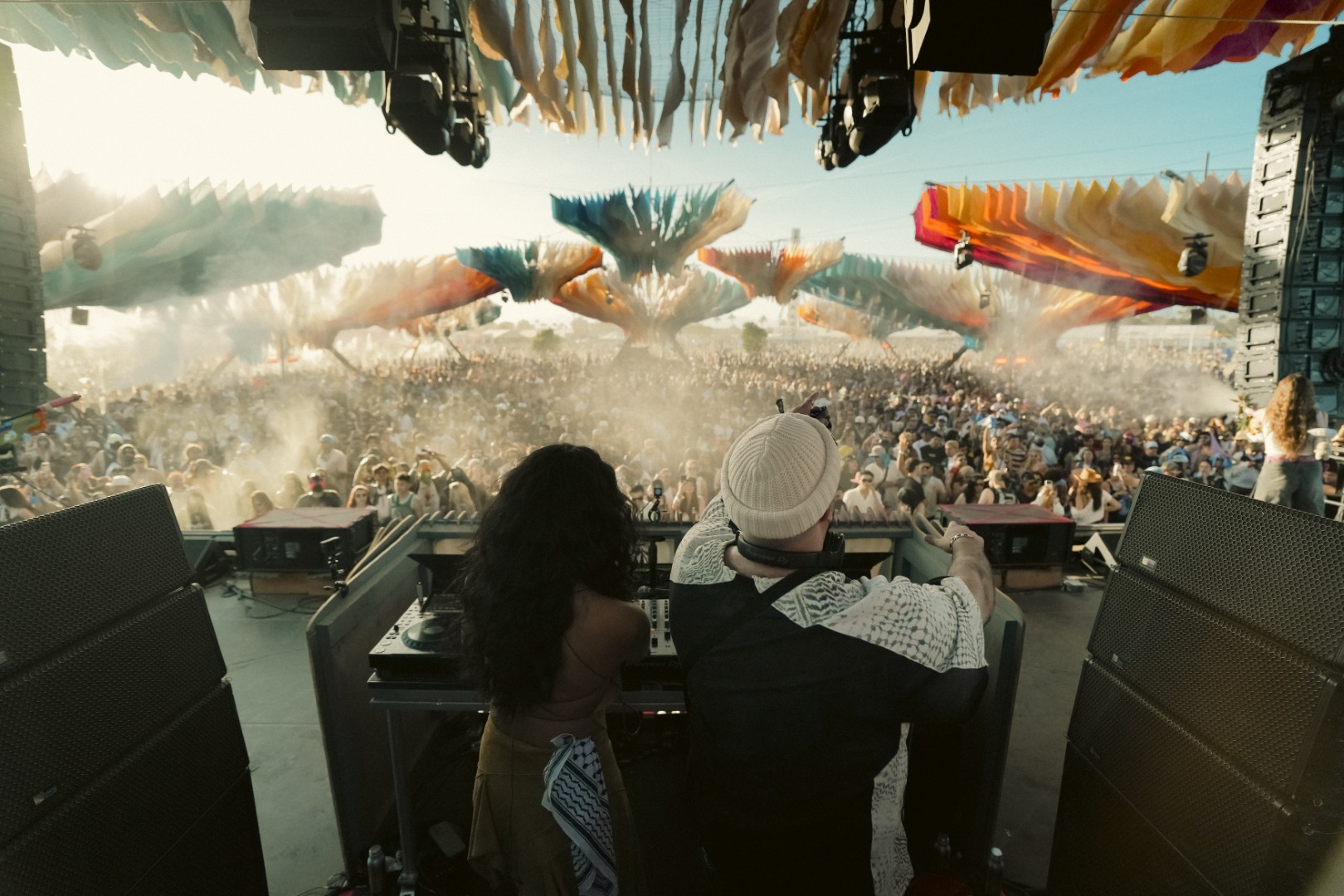
ZAINAB added that this level of visibility should be the norm, moving beyond performance and headlines. “We need to just normalize seeing Palestinians, seeing women, seeing Muslims, seeing all these types of folks and minorities on stages like this, without it, you know, making our heads spin.”
While the set carries all the markers of a “first”—a Palestinian DJ, a Pakistani woman, a culturally layered B2B on a stage like this—both resist that framing. Not out of dismissal, but out of intent. The goal isn’t to be treated as an exception, but as part of the landscape. To exist on that stage without the weight of being labelled as a one-off representation. If anything, the focus is forward-facing: this isn’t a standalone moment—it’s part of a shift that’s still unfolding.
And yet, for both of them, the aftermath wasn’t about pausing to reflect. Within hours, they were already onto the next show, the next city, the next release. Coachella wasn’t treated as a peak, but as part of a longer trajectory. “You normalize these experiences,” Habibeats explains. Not to diminish them, but to keep moving through them.
Still, something about this one feels different. Not because it was the first of its kind—though in many ways, it was close—but because it didn’t present itself that way. It didn’t ask to be historic. It just… was.
For more stories of music from around the region and the diaspora, visit our dedicated archives and follow us on Instagram.