There was a time when the sight of an oud at a family gathering intimidated Merna.
The instrument carried an invitation to participate in something she recognised as hers, but did not always know how to access. Growing up in the diaspora had created a strange proximity to culture: it could be present in the room, familiar enough to recognise, while still leaving her conscious of the distance between herself and it. “Living in the diaspora, even with a desperate need to relate or be accepted on either side of the world, moments like that would highlight the distance between my voice and the culture,” the Palestinian-Canadian artist remembers.
What Merna could not recognise then was how much of it she was already carrying. “Little did I know, it already flowed through my veins.” The R&B and neo-soul artist is a GRAMMY-nominated songwriter, with writing credits for Demi Lovato, JoJo, Rapsody, Syd, Baby Rose and Charlotte Day Wilson, and collaborations with names including Mac Miller and A Tribe Called Quest’s Ali Shaheed Muhammad.
Years later, that tension between distance and belonging sits quietly at the centre of For Seasons: Love in a Time of War, Merna’s new five-track EP. Self-produced and recorded at Toronto’s Revolution Recording, the project brings her neo-soul and alternative R&B sensibilities into conversation with organic instrumentation and elements of her ancestral roots. Ali Shaheed Muhammad of A Tribe Called Quest and Lucy Pearl contributes instrumentation, alongside drummer Larnell Lewis. But for all the names and musical reference points surrounding the record, Merna speaks about its making in distinctly internal terms.
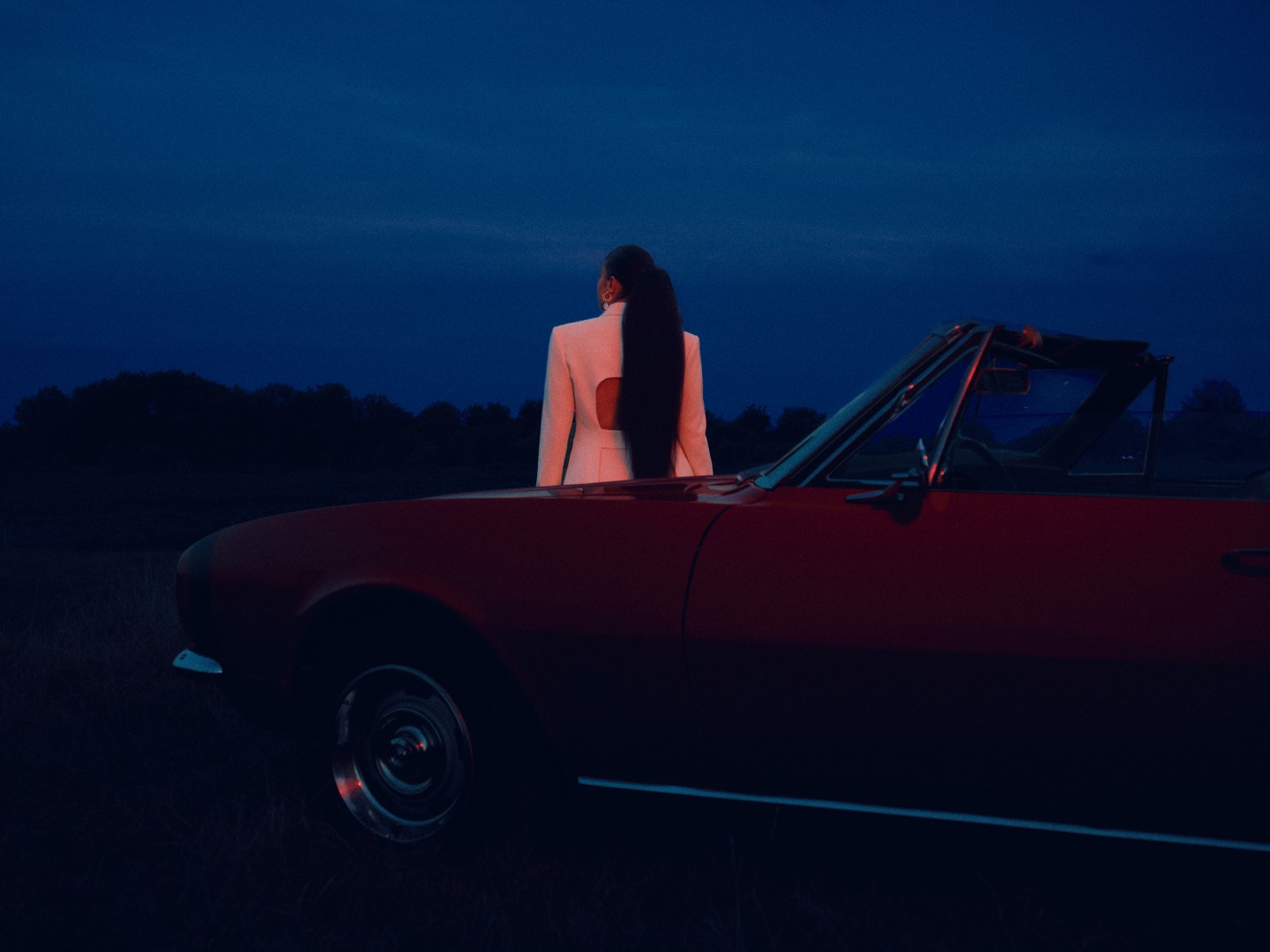
In many ways, For Seasons is a record about coming home. The meaning of home, however, has changed considerably for Merna over the years. Born in Jordan and raised between Saudi Arabia, Abu Dhabi, Delaware, Seattle and Toronto, she spent much of her early life locating it in other people and places. “For a long time, home could have only been felt in my family or in music,” Merna tells YUNG. Movement had made belonging something to search for; her place in the diaspora complicated the question further. It took adulthood, and a changing relationship with faith, for her to reconsider where she had been looking.
“As a young child and woman, I wouldn’t know home was actually within myself, found in complete acceptance and faith,” she says. “I didn’t have faith the way I practice it now. I didn’t realise I had always been home.” For Merna, that understanding exists alongside another, more complicated relationship with the body she inhabits. As a Palestinian woman living in the diaspora, identity is never entirely hers to experience privately. “I’ve had my experiences with the politicisation of my physical body, which carries its own weight.”
It is a striking choice of words because the body appears again and again when Merna speaks about For Seasons. It is politicised by others. It holds culture she once feared she was distant from. Later, it will carry grief so intensely that getting out of bed becomes difficult. Eventually, it becomes the instrument through which she understands what the record itself needed to be.
However, Merna’s relationship to Palestine is also grounded in what she witnesses beyond herself. She speaks of the “bravery, strength, faith and gratitude” of Palestinians experiencing violence, both in Palestine and across the world, and of the faith that sustains her own relationship to that identity. “Anytime Palestine can represent,” the musician asserts, “she absolutely will.”
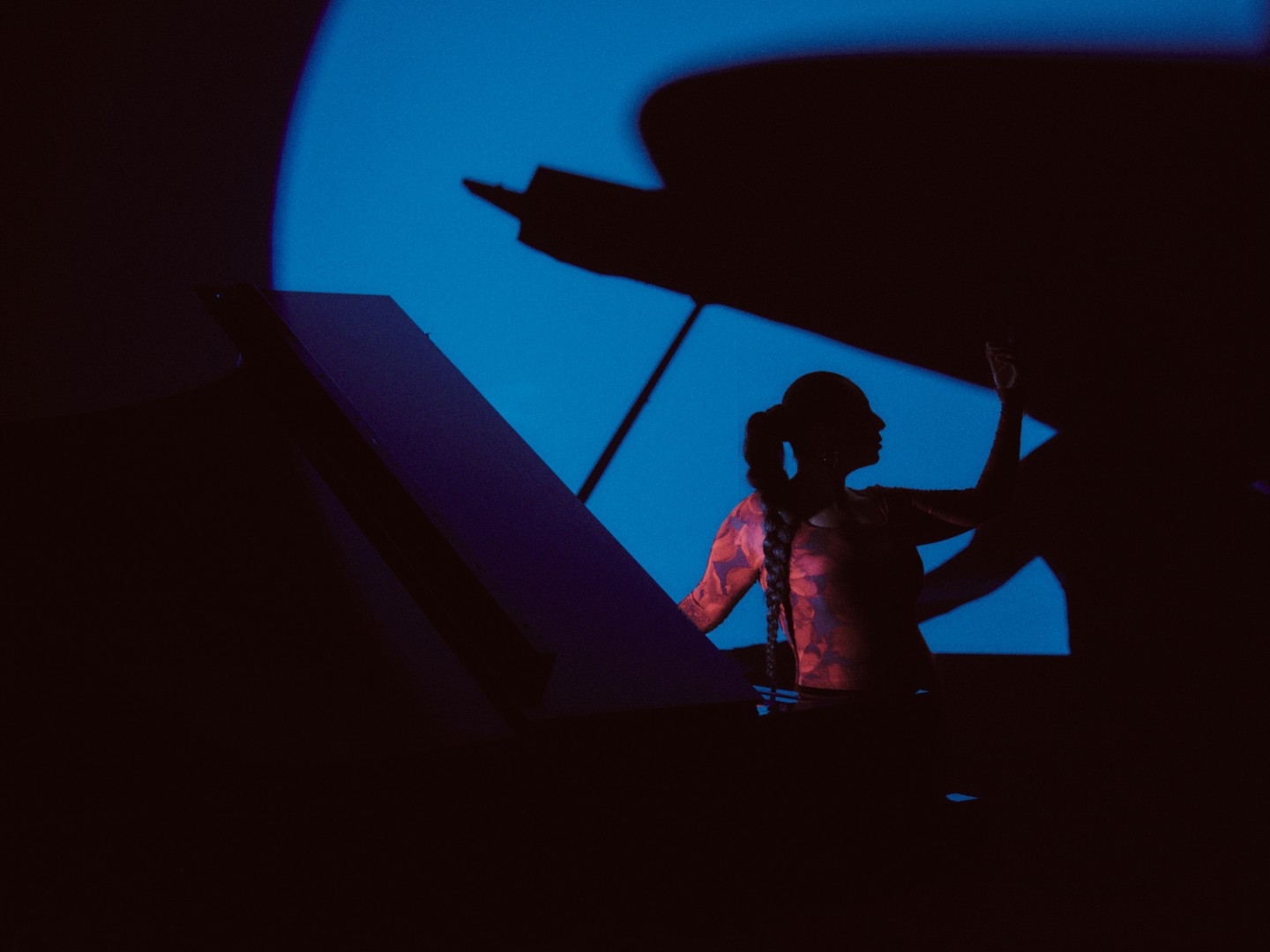
There is tension built into the title For Seasons: Love in a Time of War. Merna intended it that way. “The title For Seasons: Love in a Time of War, like all things and all of us, can be perceived to be in opposition with ourselves and each other,” she explains. Her response to that opposition is neither escapism nor an attempt to resolve it neatly. The record asks whether love can remain intact while contradiction exists around it; whether stillness can be found without pretending the storm has disappeared.
“Through learning to find ease amidst chaos, to hold still during the storm, and to understand and accept the whole as a fact of being human, we can keep love at the core and forefront of our perspective.” Then she reduces the idea to four words. “In conflict, see me.”
For an EP concerned with faith, surrender and healing, it might be its clearest statement. Merna is interested in what survives alongside violence, rather than in pretending love can cancel violence out. Humanity has never managed to rid itself of war. It has, somehow, continued to teach life and love alongside it. “There’s never been a time without war, and yet we continue to teach life and love,” Merna adds. “In the end, it’s all we have, and that means everything.”
Merna knows the difference between making music for someone else and recognising when a song belongs to her. As a GRAMMY-nominated songwriter, she has spent years writing and collaborating across other artists’ worlds, learning how to temporarily place her own instincts in service of somebody else’s voice. “When you’re working in service of someone else’s voice or message, your job is to do exactly what’s needed for the song and for their story,” Merna clarifies. “I’m usually scheduled to be in the room with the artist, and I give them my complete energy.”
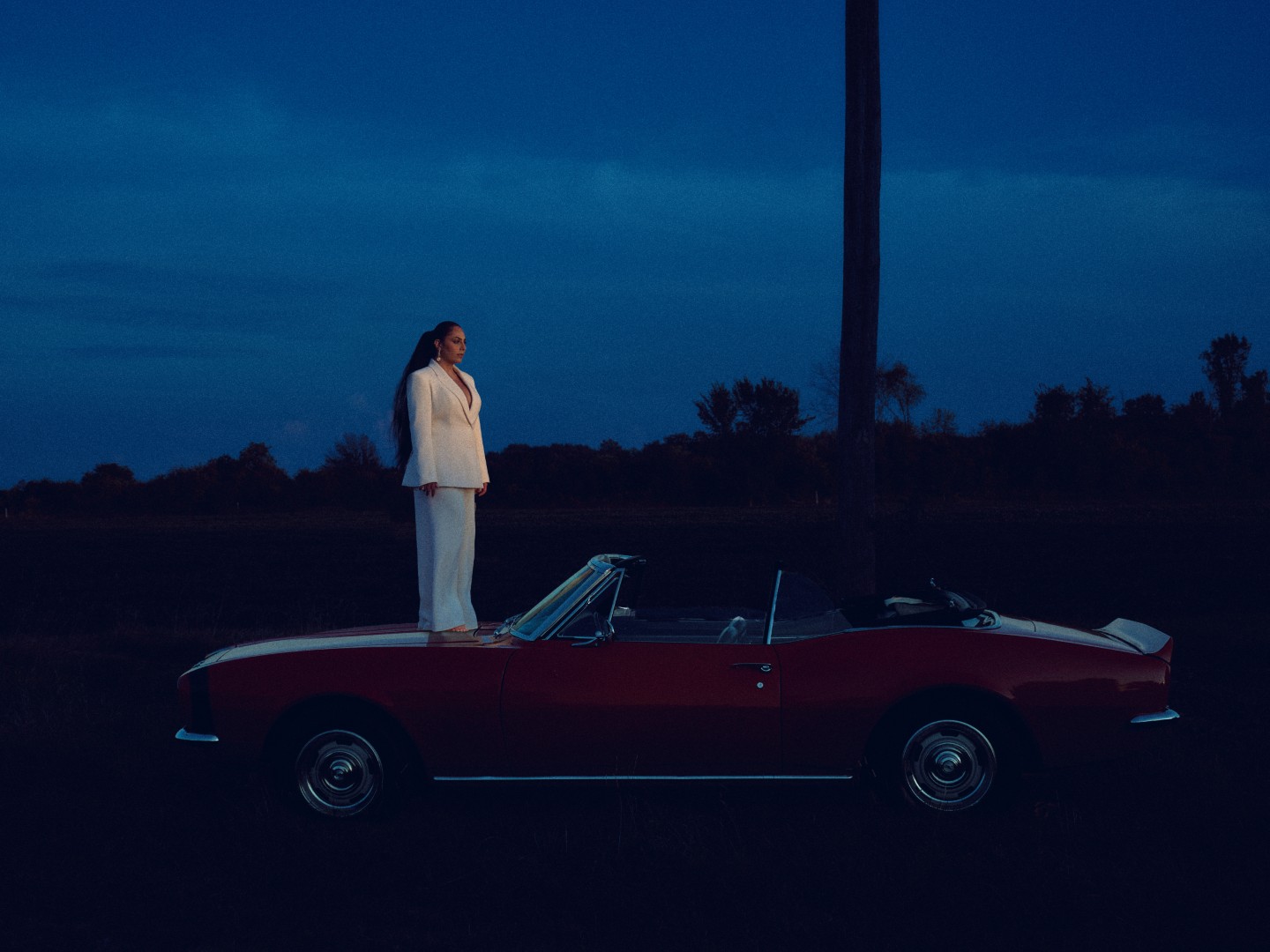
Her own music refuses that structure. “My own music is not scheduled. It asks me to sit at the piano only when it needs to. Then I know that a piece is truly meant for my voice.” In For Seasons, songs seem to announce themselves before she fully understands what they are trying to tell her. One piece began with what she remembers as a sudden “call to receive.” She went first to the piano, then into her studio, and lost herself in the process. It was only the following morning, listening back to what she had made, that she understood what had happened. “I could experience it clearly for my own healing,” she remembers. “I went to my knees and wept in gratitude. I thanked God.”
By the summer of 2023, that instinct was asking something larger of her. Merna could feel, as she puts it, an energy “swirling” around her, calling her to use her voice differently. Following it meant taking on a role she was not yet entirely convinced she was ready for: producing the project herself. “I don’t think I was very confident about my production skills at that point, nor was I sure I’d be able to pull it off,” she admits. “But I decided to take the leap anyway.”
Self-producing For Seasons gave Merna control over more than its sound. It allowed the project to emerge without translating its emotional language through somebody else first. Across five tracks, the distance between instinct and execution became smaller, leaving her to make decisions as songwriter, performer and producer simultaneously. Even now, she seems slightly removed from the fact that she managed it. “I can’t even believe I’ve made this music,” she says in disbelief.
Merna does not interpret that disbelief as an invitation to congratulate herself. Her instinct is to redirect the credit towards faith. “I give all credit to the Creator,” she says, “and I deeply understand my responsibility to the craft.”
That sense of responsibility also shapes the way she speaks about the musicians who entered the world she had built. Among them is Ali Shaheed Muhammad, whose decades of work across A Tribe Called Quest, Lucy Pearl and beyond might make collaboration intimidating. Merna speaks about his involvement less as a credential attached to the project and more as an education in how a long creative life is sustained. “He has been a beautiful teacher of the necessity of evolution, transformation, of continued learning, mastery, humility, and holding deep reverence for the art,” she gushes.
It is a revealing list. Merna is making a record concerned with surrender while simultaneously stepping into greater authorship over her own work. She is learning to trust her instincts while becoming more conscious of the responsibility that comes with following them. Faith and agency, for her, seem able to occupy the same space. “Producing this allowed me to express my body in five moments.”
By the end of 2023, Merna’s body had become impossible to ignore. “I was drowning in grief,” she reveals. “My body didn’t want to get out of bed. The only place it didn’t hurt was in water.” For an artist who had spent much of her life moving between places, cultures and creative roles, stopping was no longer a decision she could postpone. Her body made it for her. Merna describes being “forced to stop,” turning her attention towards the places within herself that had been asking for it and sitting with feelings she had previously kept at a distance.
“I faced a lot of shadows and feelings I had never allowed myself to feel before,” she discloses, wondering whether some of what surfaced belonged to something larger than her own immediate experience: “likely generations of pain, the world’s pain.”
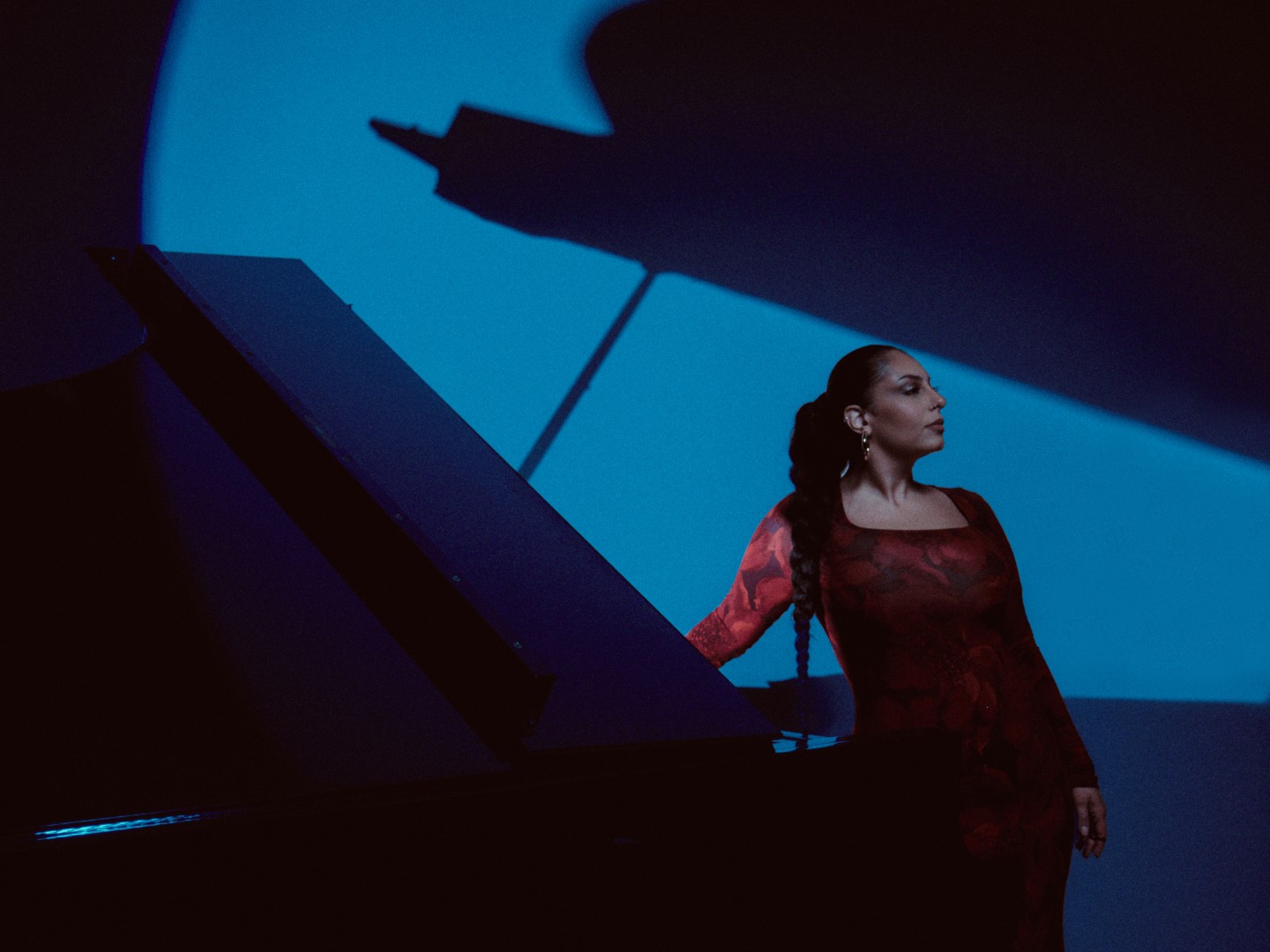
It is here that many of the ideas running through For Seasons begin to converge. Earlier, Merna speaks about her Palestinian body and the weight of its politicisation. She remembers believing that distance from certain cultural traditions meant distance from the culture itself, before realising it had always “flowed through” her. Now, the body becomes another kind of archive, carrying grief and inheritance alongside everything she had consciously learned to name.
For years, Merna says, dissociation had created distance between herself and what her body was communicating. Grief shortened that distance. “I notice how the body responds very quickly to us now, after years of disassociation,” she says. “It serves to remind us, it gives to us, and puts us in check.”
Listening to it required a different understanding of strength. There was no productive way through grief, no creative discipline capable of making the body move before it was ready. Instead, Merna turned towards the discomfort, meditating into the places asking for her attention and allowing herself to feel what she had previously avoided. “Through this, I’ve learned to appreciate it so much more.”
There is an interesting symmetry between that process and the way Merna describes making For Seasons. Her own songs arrive when they are ready. They ask her to sit at the piano rather than appearing on command. Her body, eventually, began demanding the same kind of attention. Both required her to become receptive to something she could not entirely control.
It also complicates what “return” means within the record. Merna’s return is not necessarily towards a single country, sound or earlier version of herself. Across For Seasons, she returns to faith, to culture, to her body and to a sense of home she once believed existed somewhere outside of her. When asked what season she finds herself in now, Merna needs only five words. “This is the season of return.”
For more stories of music from across the region, visit our dedicated archives and follow us on Instagram.