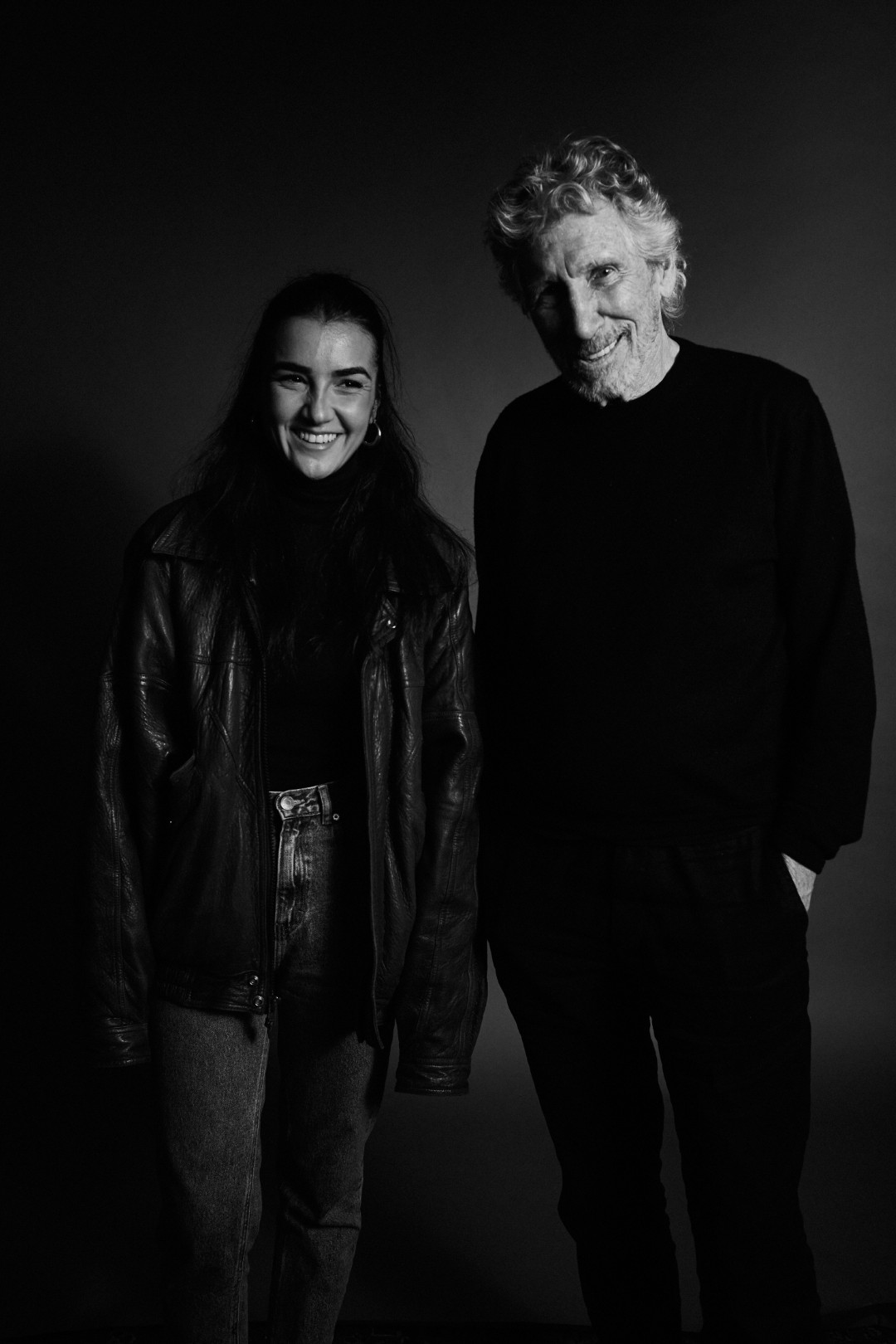
A butterfly flew into Roger Waters’ room before I got to ask him a single question. Before that, we had already spent several minutes joking and bantering about cameras, zoom links, the lighting, and hair. Mona Miari was laughing and Waters kept making jokes. At one point, getting impatient with the preamble, he asked if we were going to do an interview or “just sit around laughing.” Then the butterfly made an appearance.
“No, no, no. It’s not a Monarch,” he said as he was inspecting it through the screen. “It’s an Admiral. It’s something Admiral.” He then got up to open the window.
“Are you scared?” Mona asked him. “No, I want to let this butterfly out,” he responded.
“Oh, you set her free?”
“Yes.”
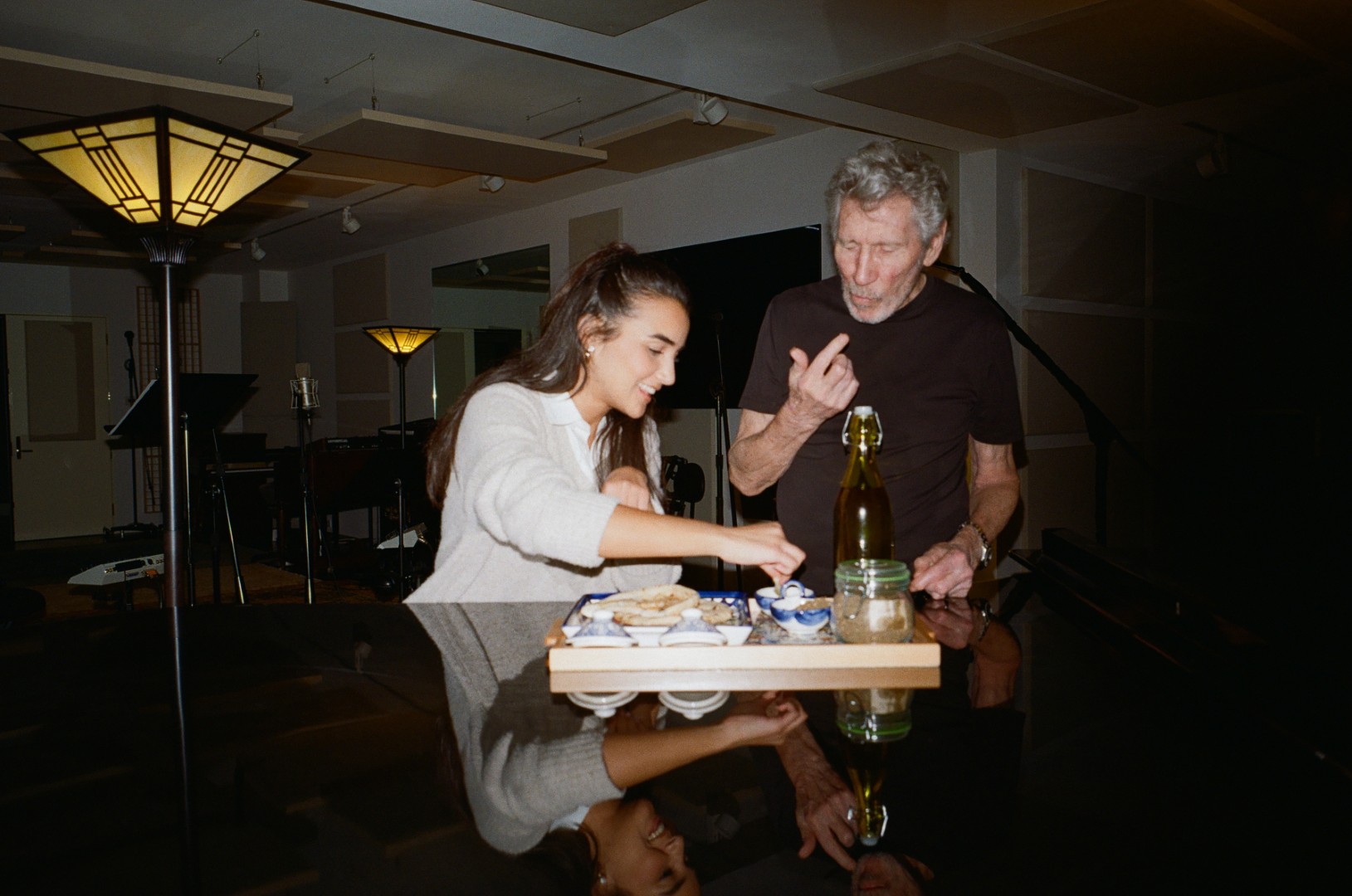
There was a pause as he coaxed the butterfly toward the opening. Then, characteristically, that tenderness gave way to his charming morbidity in about five seconds.
“If you can’t find that, you deserve to die.”
Mona wanted some reassurance. “Is she going to live now?”
“Yeah, of course.”
And that was basically more or less the temperature of the next hour. Freedom, dark humour, Palestine, cheap white wine, philosophy, rage, music, mangoes.
I took the butterfly as a good omen.
Some interviews resist the architecture that was prepared for them from the start. You arrive with a solid well-researched list of questions and then realize pretty quickly that asking them in that order would sabotage the extraordinary flow of energy. This was definitely one of those. I found that Roger and Mona would answer things that I had not yet asked. They would interrupt each other, correct and extend each other’s thoughts. A lot of the time I was just silently witnessing this unusual voltage between them.
Mona has her own special form of bluntness. It arrives through pattern recognition. She begins with a massive political abstraction, locates the psychic behaviour that underlies it and suddenly you are talking about avoidance.
Their humour is a big part of it. “Part of what joins Mona and I is that we both have a sense of humour,” Roger told me. “A dark one,” Mona corrected. “If you don’t let it out, you die,” he said.
They met roughly two years ago through a documentary project that neither particularly wants to memorialize. Mona had been brought in to score it and Roger was attached as an executive producer. The project fell apart but their conversation continued on.
“I made a demo that was for Comfortably Numb,” Mona explained. She took the opening verse and started to hear the questions through the lens of Gaza. She found herself answering them from a totally different place. She said what ended up emerging was an attempt to become “the voice of reason” against “a stark and devastating truth and saying it as is.”
Roger heard the demo but he could not understand any of the Arabic. “It sounded stunningly beautiful,” he said. “I realised that, here’s a woman with a fabulous voice, and I love the melodies, and I love the blah, blah, blah. What is she singing about?”
He asked her and she translated it for him.
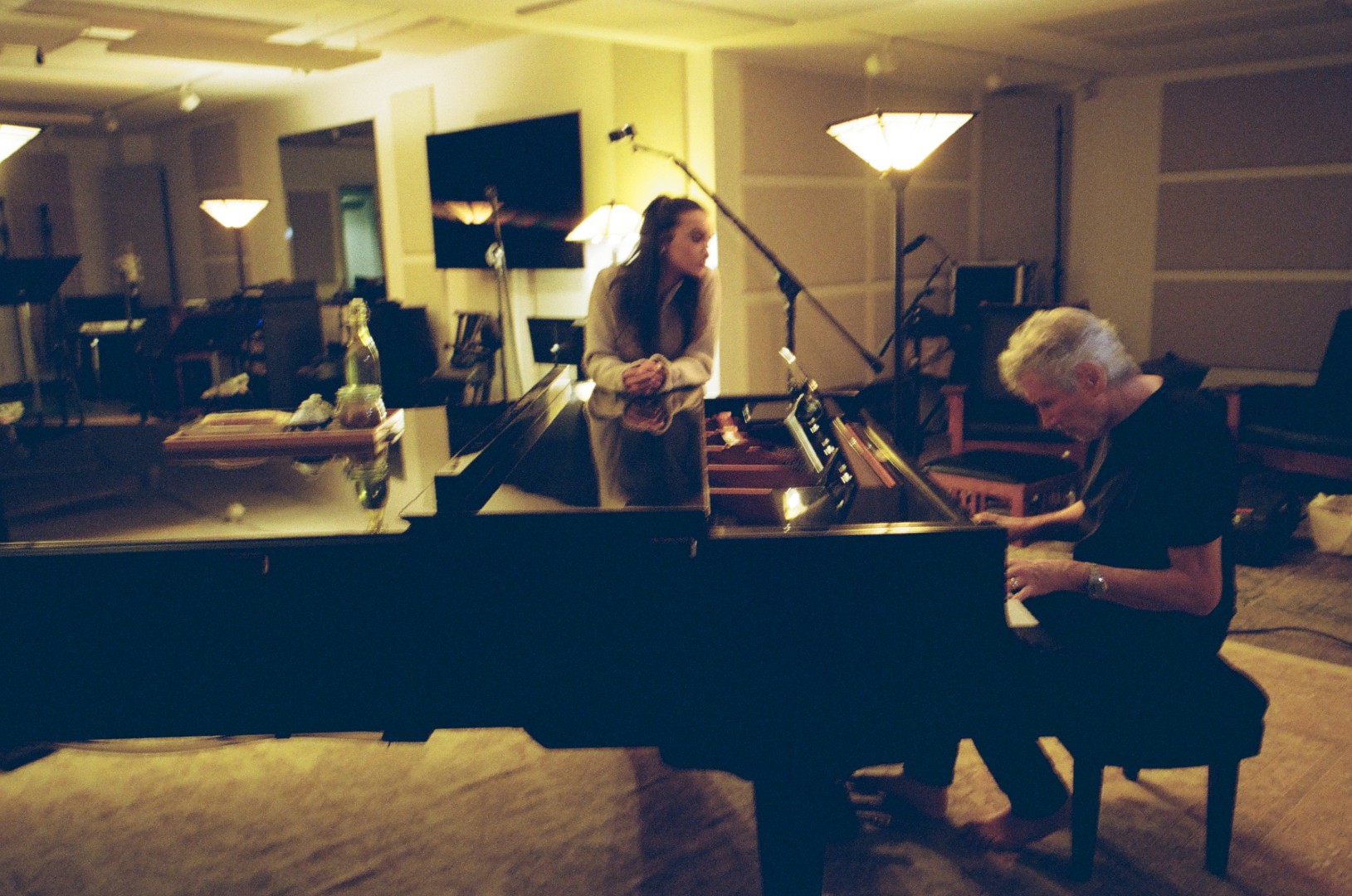
“And then we sort of turned into pen pals,” he said. “It became an exchange of feelings. Very, very direct.” Mona describes it slightly differently but not by much: “It turned into one big conversation of two voices coming together.”
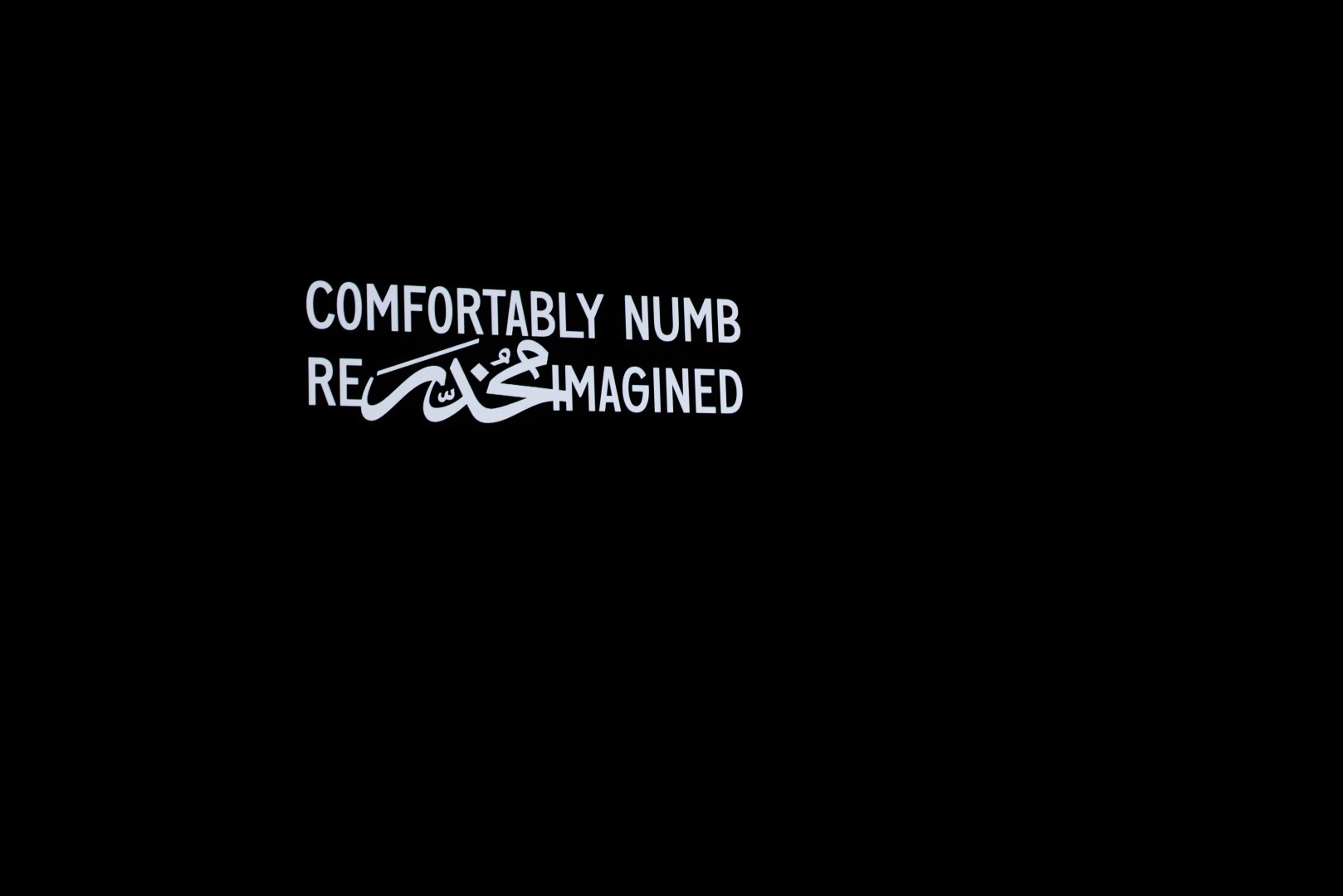
That conversation ended up turning into Comfortably Numb Re-Imagined, which was released in June of this year with newly written Arabic and English passages and a film incorporating footage shot inside Gaza. The project directs proceeds to the Palestine Children’s Relief Fund.
The language it uses is deliberately unequivocal about Gaza. By this point the word genocide is no longer confined to activist rhetoric. In September 2025, the UN Independent International Commission of Inquiry concluded that Israeli authorities and security forces had committed genocide against Palestinians in Gaza.
In the original it was “I have become comfortably numb.” Now in the new one. “I will never become comfortably numb.”
In terms of grammar, there is a tense change. However, Philosophically, almost everything has changed.
The original Comfortably Numb was released on The Wall in 1979. And it sits inside a narrative of progressive psychic enclosure. Waters described the scene to me in blunt and dramatic terms. Pink is in the hands of a doctor. He drugs him sufficiently to force him back onstage, immediately before the character’s descent into fascistic fantasy.
The old song records anaesthesia while it is happening. In the ‘re-imagined’ version the patient refuses the treatment.

When I pointed out the change to Roger, he initially called it “a slight of hand in terms of lyric writing.” But the more he spoke, the less slight it seemed to me. The original lyric belongs to the fictional and bodily logic of The Wall. However, this one, he said, belongs to a conversation between him and Mona about Palestine and, more broadly, about whether human beings can continue to live together at all.
Mona came in and made the change even more explicit. The refusal to be numbed out she says, is directed at the grotesque normality that comes from repeated exposure to the horror. People open their phones, scroll, see obliterated bodies, destroyed homes, starving children, and yet still remain unmoved.
“They feel really comfortable to scroll,” she said. “We’ve been seeing this for like three years, which is insane.” She said, the song is meant as “a slap in the face”.
Here, you start to understand that this reimagining is actually more interesting than its designation as a protest song. The function of art has shifted from describing alienation and narrating it to attempting to disrupt it. It is using the song as a tool to stop the numbing.
The mechanism matters because numbness is not actually absence but adaptation. We have become extraordinarily skilled at living with what would once have disturbed us. Roger’s explanation for resisting that adaptation was almost embarrassingly basic. Empathy.
Imagine somebody appearing at your door, he said. They announce that your home now belongs to them and you have to leave.
Everybody understands the obscenity when the story is stripped of its vocabulary, he argues. Property and family and fear. The possibility of losing everything familiar in a few minutes.
“I could have enough empathy in my heart to put myself into the position of that happening to me and my family, and how I would feel,” he said. “We will never become comfortably numb to that connection, those feelings.”
“So it’s all very, very, very simple and very, very, very obvious.”
That word – obvious – kept on resurfacing.
The political language that has coloured our way of understanding Palestine has become so saturated with all these qualifying clauses and disclaimers, euphemisms and compulsory demonstrations of nuance that hearing somebody insist repeatedly that something is obvious can feel almost intellectually illicit. I realized we have been conditioned to associate complexity with seriousness.
Sometimes a sentence becomes so carefully constructed that nobody can feel the thing underneath it anymore. Realizing this made me a bit uncomfortable because I recognized that very instinct in myself – the managed language and the reflex to anticipate every objection. How you naturally smooth an edge before anybody can complain that it is sharp.
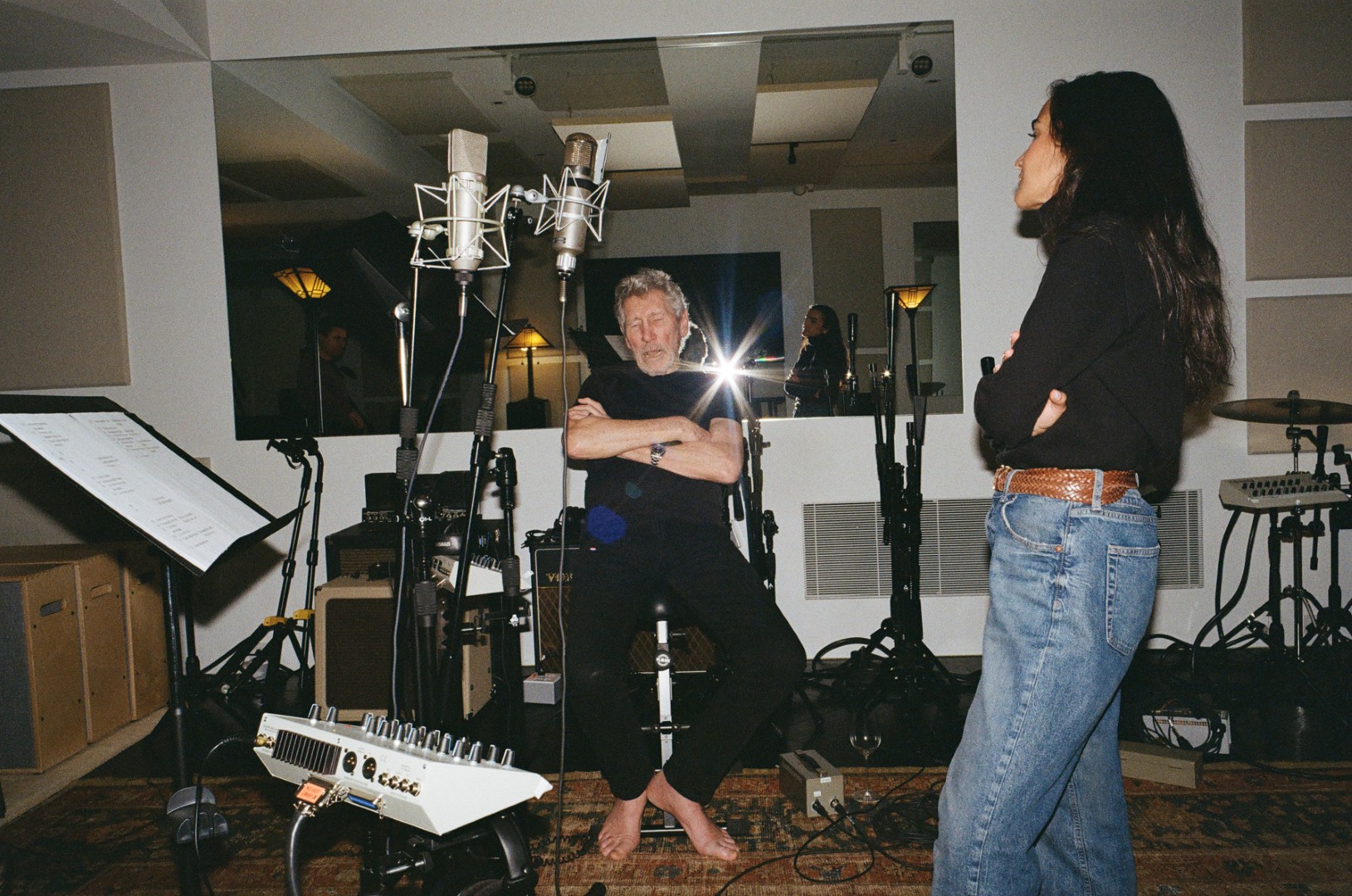
Mona understands this instinctively. “Nothing is complicated, because we say it as is,” she said. “It’s unfiltered. It’s very direct.”
That directness becomes a form of historical vocabulary in this composition. The Nakba. 1948. The olive tree. “From the river to the sea.” Waters even places his own age alongside the catastrophe, like he is standing witness. He was five years old in 1948, he sings, and completely unaware of what was happening.
The Nakba is not an abstract concept. The simple facts are that more than 750,000 Palestinians were uprooted from their homes in 1948. To say the word Nakba inside a song then is to insert a historical name where a listener might otherwise encounter atmospheric abstraction.
I said that the specificity felt almost archival. It was a form of documentation. The language that was used was tasked with making disappearance and erasure more difficult. It was fighting that rhetorical anaesthesia. Comfortably Numb Re-imagined is part of the resistance element of Sumud.
Until now, I keep thinking about Jean-Léon Gérôme’s 1896 painting La Vérité sortant du puits. Truth Coming Out of Her Well. I realized I had initially remembered it incorrectly. In my mind, Truth emerged naked from the well while a crowd recoiled from her.
There is no crowd. I find this correction is much better.
I prefer it without the crowd because it removes the easy moral arrangement. There are no villains conveniently painted into the frame for us. Just Truth arriving, indecently exposed, and whoever happens to be standing in front of her.
The demand is not merely that you look. It is that you allow the thing you see to implicate you. I tried to explain this to Roger and Mona in considerably messier terms. I said that the difficulty of truth is not only accepting what it tells you about the world but in accepting whatever reflection it returns of you.
“That’s why a lot of people don’t want to look at the truth,” I said. “They’re not willing. Their heart is not open to the truth.”
Mona answered instantly. “They cannot contain it.” Roger nodded. “Ain’t that the truth!”
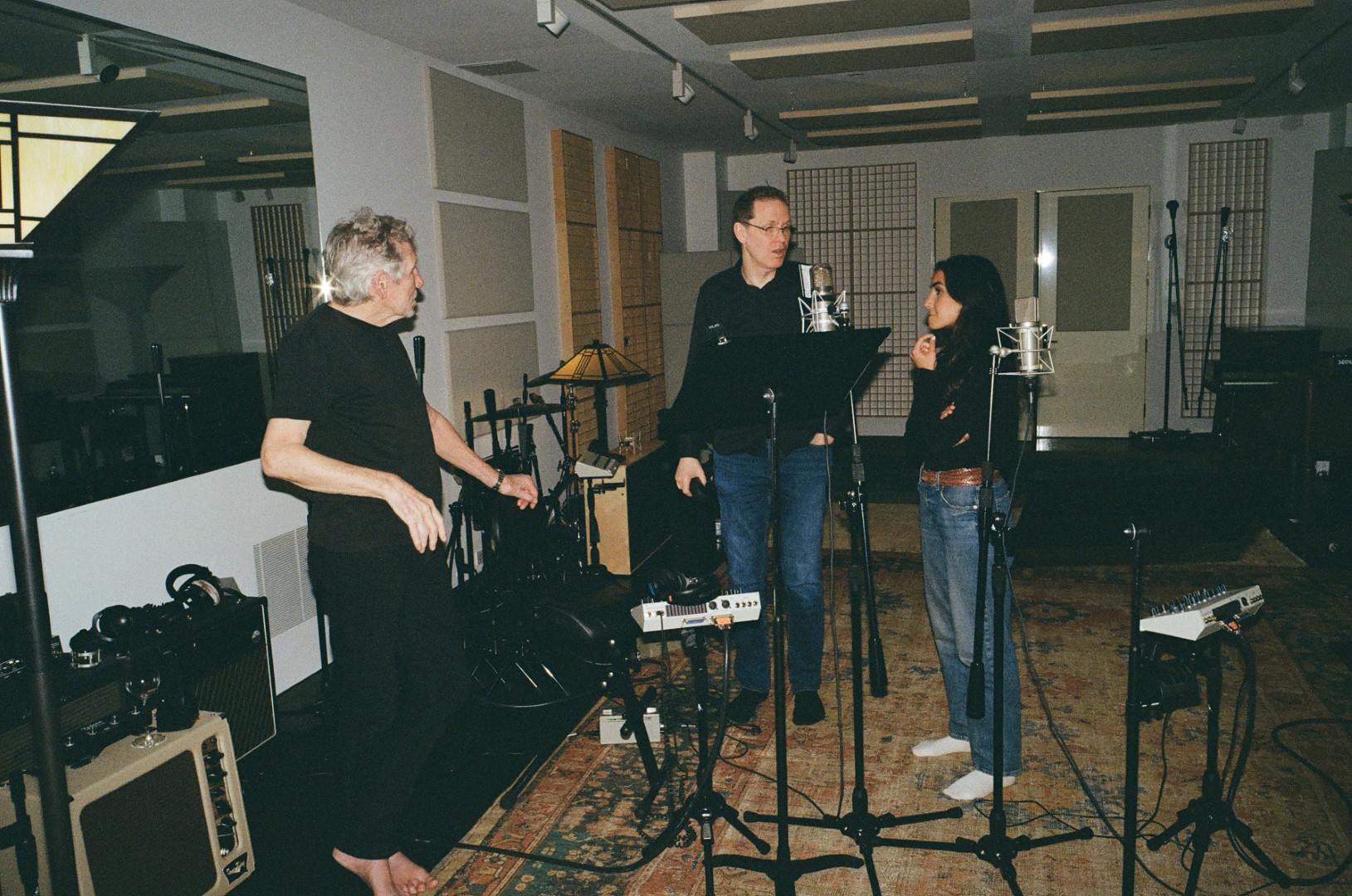
To contain something is different from knowing it. We are aware of enormous quantities of suffering. It reaches us with dates, usernames, and timestamps. The problem is not informational scarcity but emotional capacity. Can the fact enter you without immediately being converted into content, an argument, a performance of identity or even a position to defend?
When I asked for the antidote to numbness, Roger asked, “Numbness?” Then quickly answered, “Education, evidently.”
Then he reduced it down once more. “The answer is the voice of reason. We have to listen to the voice of reason,” he said with resolve.
Mona decided to take another route. “Numbness is also a sort of avoidance.” For her, the first movement out of that is confrontation. It is allowing the thing you are avoiding to remain in the room long enough that you can no longer evade its dimensions.
Her analogy was “the comfort zone”. “Nothing is comfortable about the comfort zone. You’re just being comfortable with the discomfort of the comfort zone.”
The video refuses that safe distance formally as well. Its Gaza unit, led by director of photography Suhail Nassar, filmed original material from inside Gaza rather than relying on images circulating through international news systems. Nassar contributed images of his grandmother’s key to the home lost during the Nakba alongside portraits of children, families and everyday life. The production says the Gaza crew was being bombed while working and repeatedly lost contact with the team outside.
The concept of the witness becomes uncomfortable again. What does it mean to look at somebody else’s catastrophe? At what point does documentation resist erasure? And at what point does another image simply enter the scroll? The project cannot completely solve that problem. I do not think any artwork can.
And after all of this – genocide, moral anaesthesia, political power, the limits of empathy – our conversation somehow arrived at cake.
“Come to the table,” he said. “Share, share, share the cake with everybody.”
I interrupted. “But some people think, why, when I can have the whole cake to myself?”
He kept going. “If you’ve never shared a cake, you’re dead. There was no point in you living if you’ve never shared a cake.”
Mona had an Arab variation. “There’s a saying that comes from Egypt about mangoes,” she said. “You cannot fully enjoy the taste of a ripe mango if you cannot share it with someone.”
What is the point, I asked, of being on Earth with other people if you are supposed to keep the cake to yourself? Why are there other people on Earth with you?
Human coexistence begins from a premise so primitive that sophisticated systems spend considerable intellectual energy teaching us to ignore it: Another person’s life possesses interiority equal to mine.
In other words: Mangoes are best when shared.
Why end the song on a lullaby? Mona told me this is not how it was supposed to end.
They had planned to end it after Roger’s final passage. Then, after a cold night in New York, she attended a private screening of Kaouther Ben Hania’s “The Voice of Hind Rajab”. Mona went home devastated. “I just found myself on my piano,” she told me.
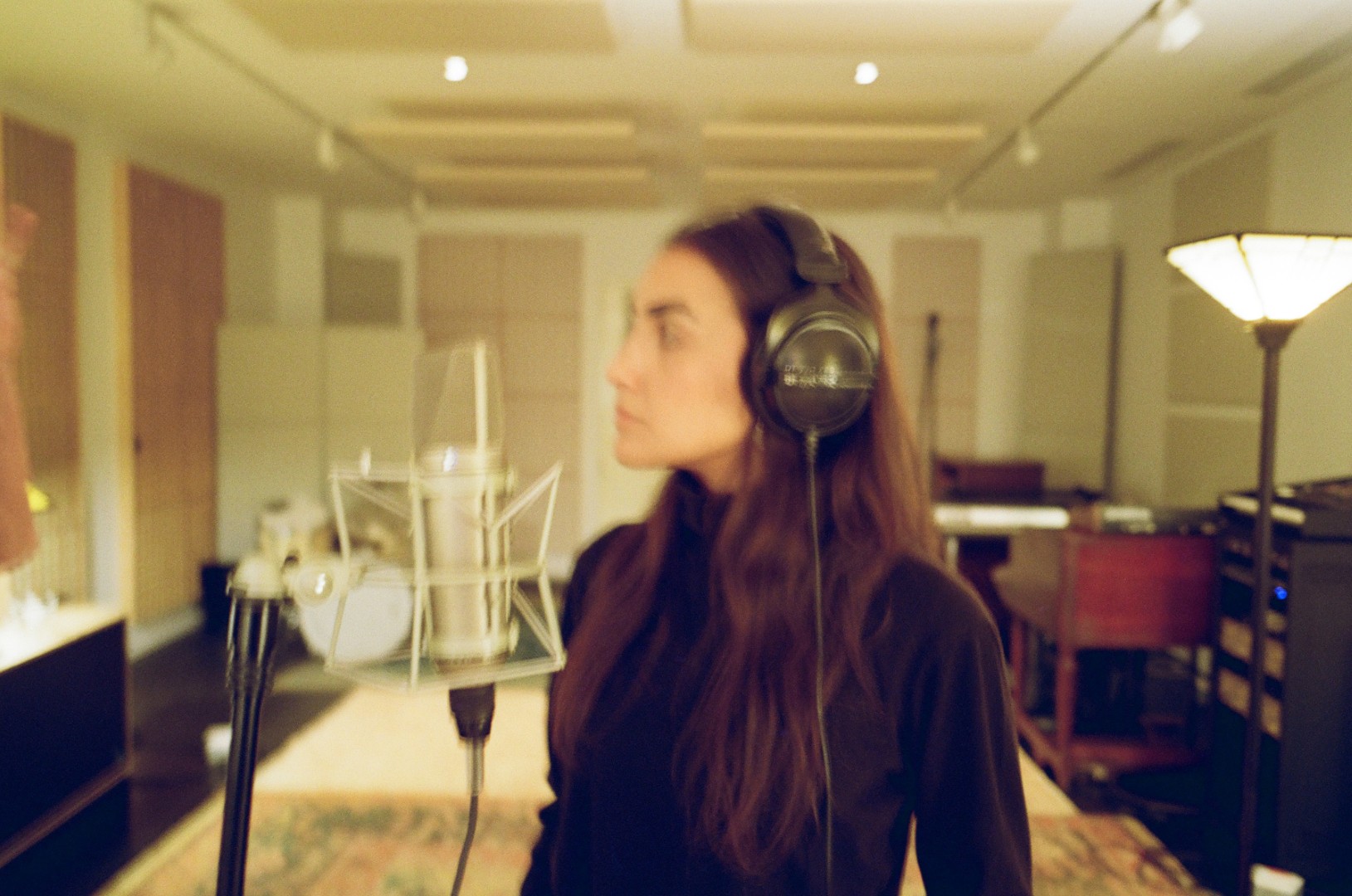
She began playing without a plan, allowing “the heaviness and the helplessness” she had been carrying out, along with rage she had been suppressing.
Then a phrase emerged. “Ma Ahla Hamam Ad-Dar.” An intro to a lullaby her grandmother used to sing to put her to sleep. “And I just lost myself to it.”
“I told him that I just feel that this is how we should end the song. With a lullaby.”
“And it beautifully merged,” he added.
“We’re not ending in a grieving energy,” she said. “It’s very empowering.” The song ends in a sense of strength, agency and forward movement. She thinks of the ending as honouring “the mothers, the martyrs, the children, Palestine, the land, the soil.”
Then she gives me the sentence the entire piece had perhaps been moving toward without knowing it. “We will remain the free, even if exiled from the land to the sky.”
In a way, the ending forces us to remember. A lullaby is one of the first technologies human beings develop for that purpose. Somebody sings something to a child and that child grows older and continues carrying the melody. Years later, shattered by another child’s death, she sits at a piano and discovers that her grandmother’s voice is still inside her.
Then she sings it forward. She passes it on. She documents it. Maybe that is the opposite of numbness. Not constant agony. Something more disciplined.
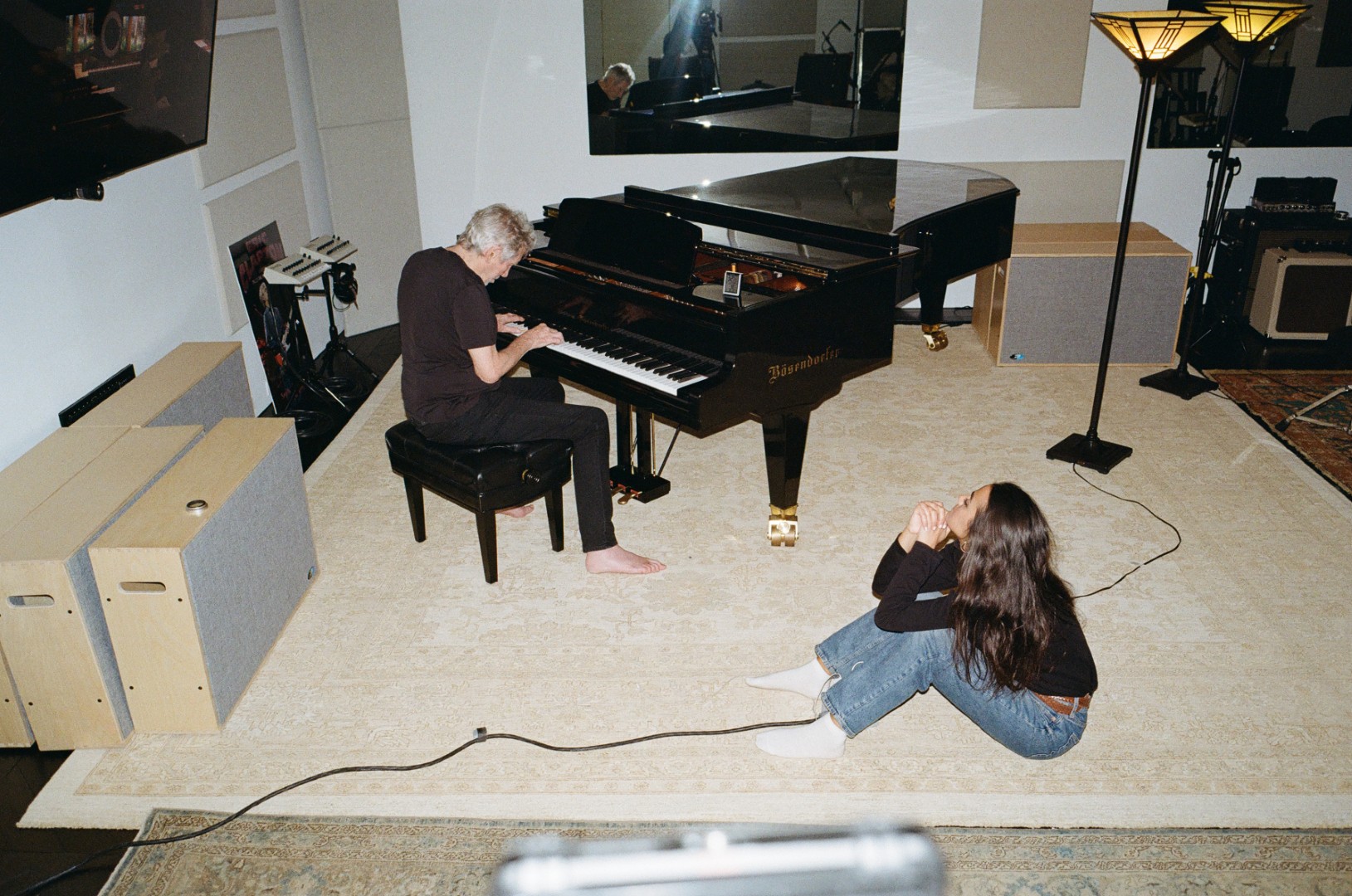
The refusal to sever the connection and to look when looking costs you something. To name what is being erased. To accept that truth may arrive without manners. To remain permeable.
For more stories about music from the region and beyond, visit our dedicated archives and follow us on Instagram.