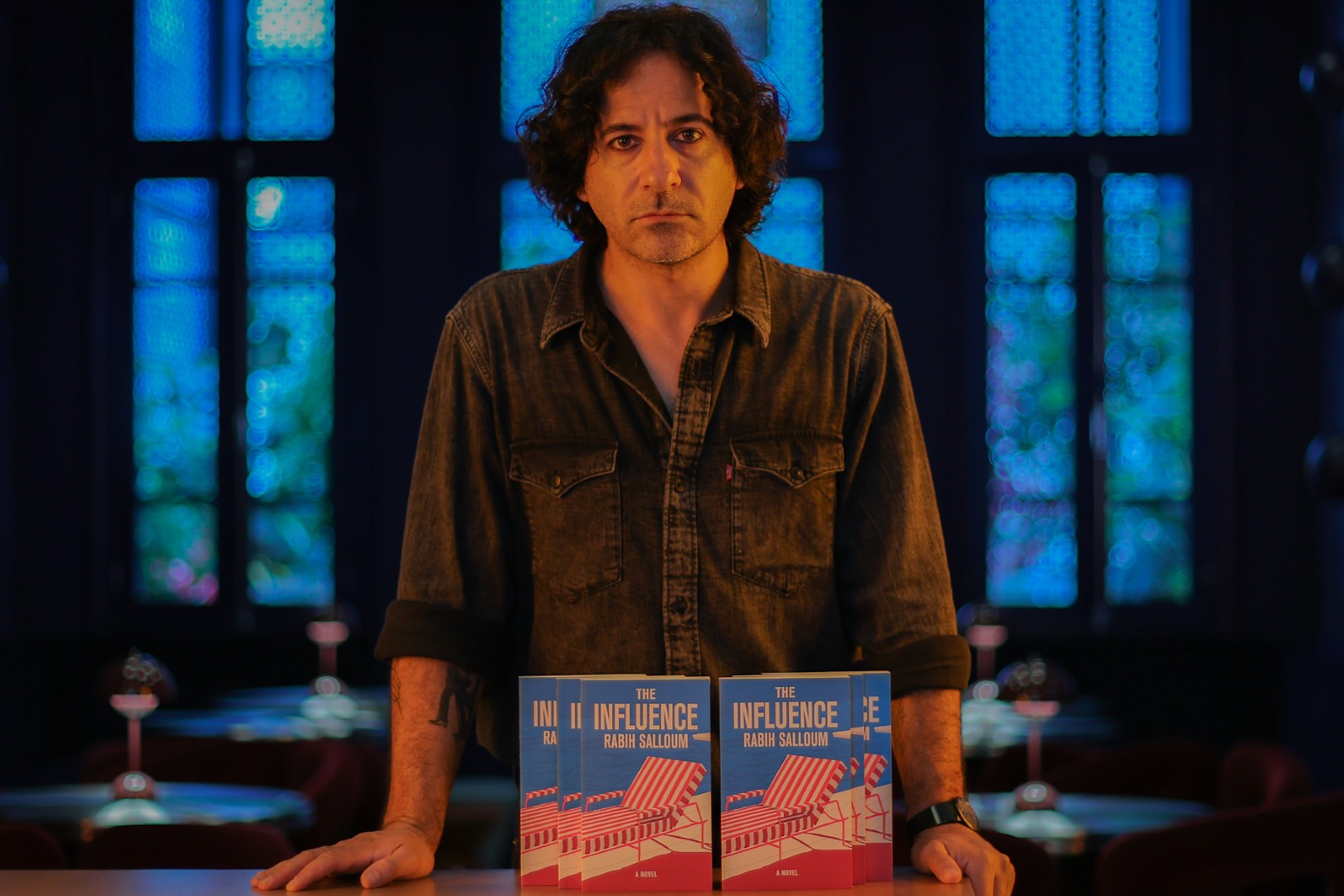
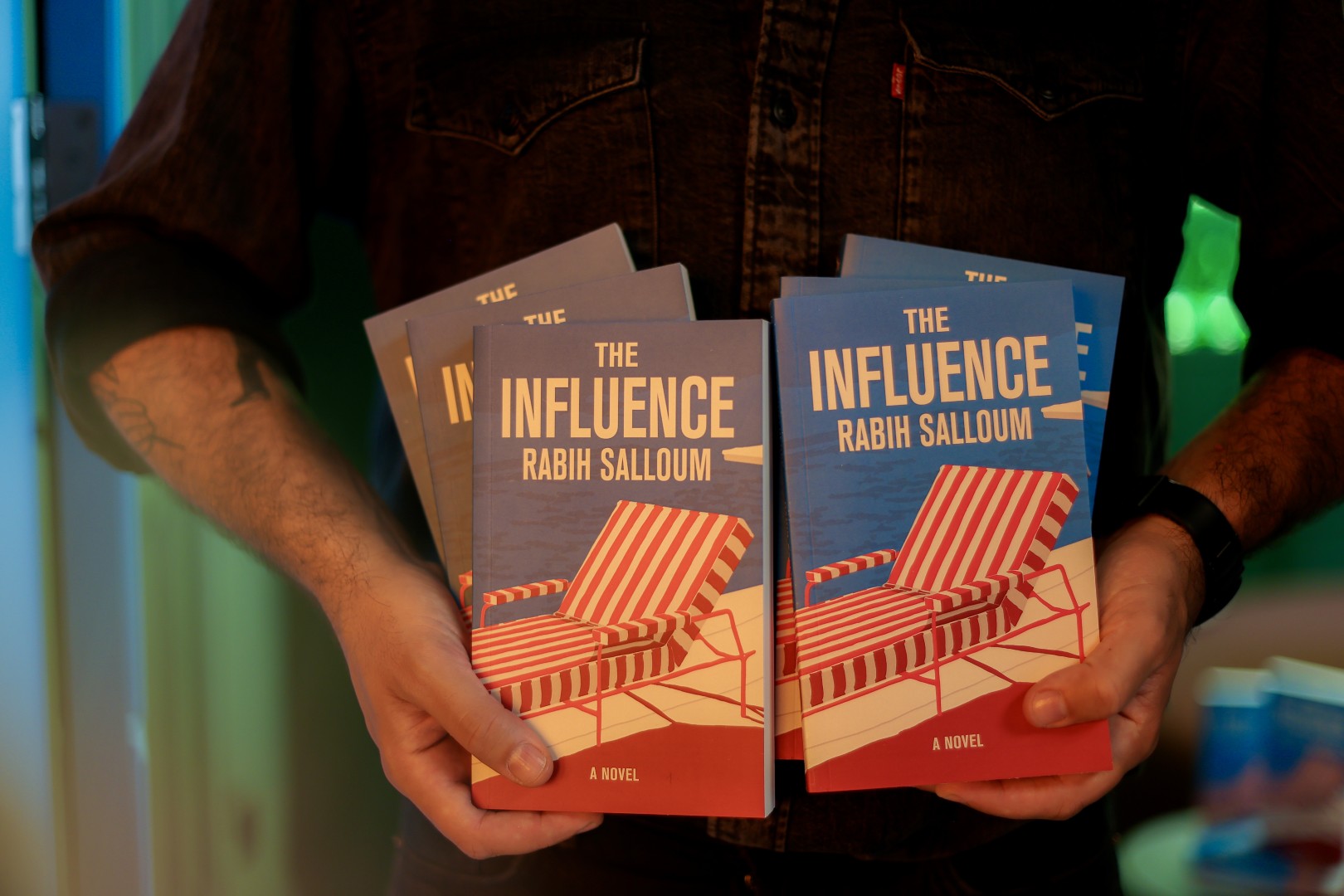
In Rabih Salloum’s The Influence, Beirut is a city where brunch tables, padel courts, Faqra chalets and carefully curated Instagram feeds form part of the same social ecosystem. Behind the polished images, however, lie frustration, insecurity and a relentless need to be seen.
Set across one punishing summer, Salloum’s second novel follows Fadi, a marketing executive who dreams of leaving his corporate job in Dubai to manage his wife Laura’s influencer career. Their ambitions repeatedly stall while the friends around them appear to achieve the recognition and success they crave. When tragedy strikes during a private party, Fadi’s memories begin to unravel, transforming what starts as a sharp comedy of manners into a psychological thriller driven by suspicion, paranoia and gossip.
For Salloum, writing about influencers was less about targeting a particular industry and more about documenting the world around him.
“My interest in the world of influencers and curated lifestyles is only a by-product of my interest in the contemporary world, and my natural inclination, as a writer, to bear witness to it,” he explains. “I wanted this novel to be a time capsule of what it is to live in this particular part of the world, in this particular society, in the mid-2020s.”
The story began with a conversation. A friend told Salloum about someone who felt frustrated because she had not managed to “make it” as an influencer, while others around her had already left their jobs to pursue the same career successfully.
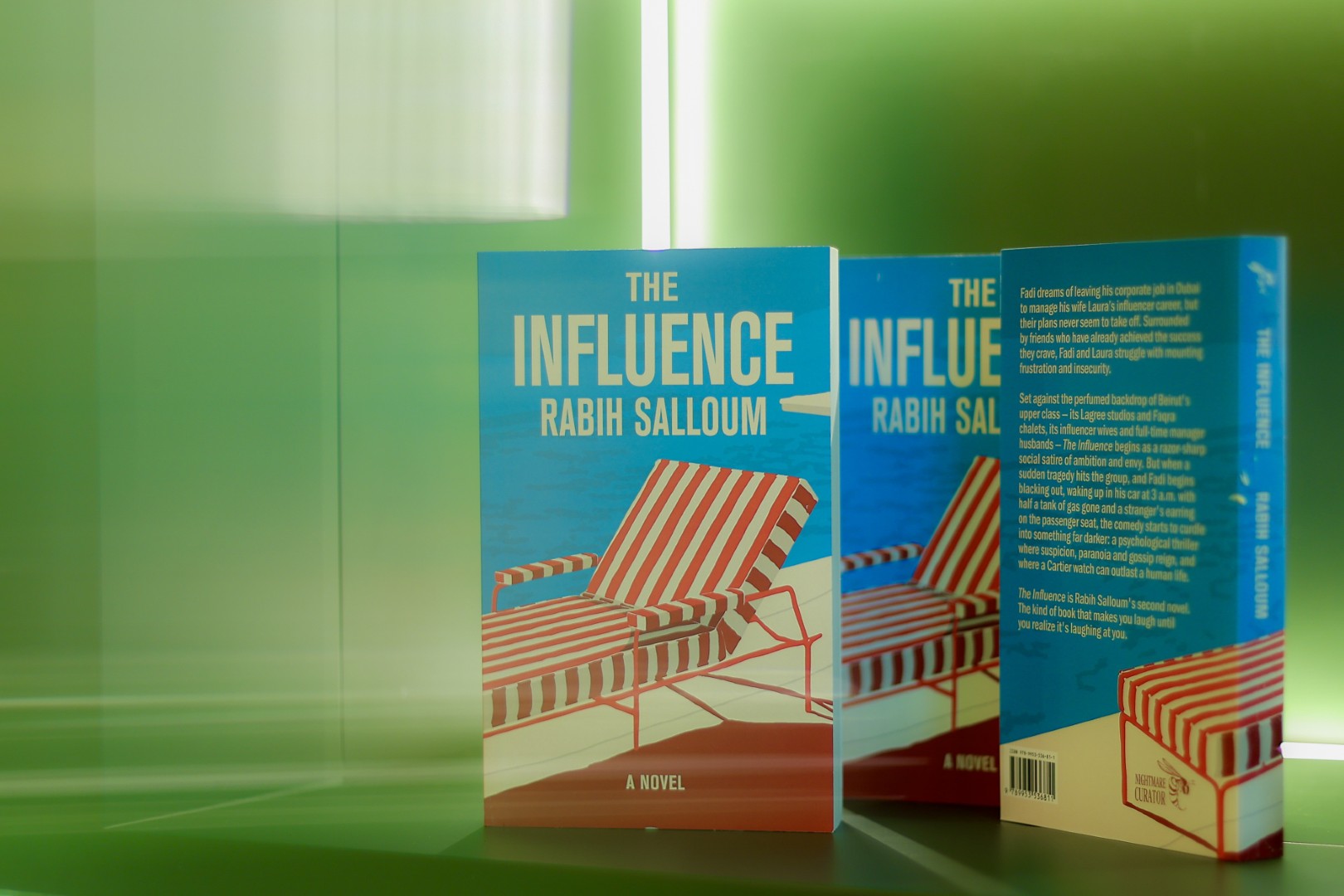
“At the time, I had no idea that ‘influencer’ was an actual career aspiration,” he says. “The realization was so intriguing to me on so many levels, sociologically, aesthetically, ethically, psychologically, that I couldn’t not write about it. The pull was too strong.”
Yet The Influence is not simply a satire of social media personalities. Salloum is equally interested in the system surrounding them, from the husbands who become managers to the friends who measure themselves against one another and the audiences who transform visibility into value. Ambition and envy are not presented as distant flaws belonging to a fictional elite. They are part of a culture in which success is increasingly judged through numbers, recognition and public attention.
Salloum sees this as a significant shift in the meaning of fame.
“Traditionally, fame and popularity used to be an offshoot, a consequence, of one’s talent and hard work,” he says. “People dreamed of being dancers, artists, scientists, actors, directors, whatever, and if they were skilled and lucky enough, recognition and fame were achieved as a by-product.”
Social media, he argues, has made fame itself the ambition, often without a clear achievement beneath it. “You now have children growing up with the ambition to be famous, to be popular, to have followers, as fast as possible, without any concern for anything of substance underneath.”
That tension gives the novel its discomfort. Readers may laugh at the characters’ obsessions, but Salloum refuses to treat them merely as caricatures. His decision to take Fadi seriously gradually pushed the character, and the story, into more psychologically complicated territory.
“Mockery is fun for a few pages, but it’s not a serious way to sustain a full novel,” he says. “It was almost a moral obligation for me, as a writer, to take seriously even those characters I appear to be satirizing the most.”
Fadi’s increasingly unreliable memory becomes central to this shift. As he begins to question what happened, where he has been and whether he can trust his own recollections, the novel moves beyond social commentary towards questions of identity.
“Memory is inseparable from the idea of identity itself,” Salloum says. “Without our memories, who are we? That’s the tragic question Fadi finds himself asking.”
The movement from satire to thriller was not initially planned. Salloum has traditionally been drawn to literary fiction in which voice, rather than plot, drives the narrative. While he believed Fadi’s perspective and the novel’s social setting were strong enough to build a world, he felt they needed something more to sustain the story.
“There was never a conscious decision to take the novel somewhere ‘darker,’” he says. “For me, the subject matter of influencers and curated lifestyles was already quite terrifying.”
Instead, he stepped beyond his usual literary comfort zone, borrowing elements from psychological thrillers and reshaping them to serve the novel’s broader concerns. The resulting tension allows The Influence to remain funny while gradually destabilising both its narrator and its reader.
Beirut plays an equally important role. Salloum’s version of the city is detailed and recognisable, filled with real places and rituals that will resonate differently with those who have lived there. For international readers, these references help construct a fictional world. For Lebanese readers, they carry the pleasure and the unease of recognition.
“I personally love reading novels that take place in cities I know well, like Paris, for example, and I wanted to create that same experience for Lebanese readers with our own Beirut,” he says. “The novel is readable and accessible to anyone in the world, even if they’ve never set foot in Lebanon, but it definitely carries a different weight, and oozes a different flavour, for readers who know Beirut intimately.”
Salloum’s own creative life moves between literature, music and philosophy. He studied philosophy in Paris, teaches the subject at the American University of Beirut and has performed with musical acts including Grave Jones, Slutterhouse and the Wanton Bishops. Each discipline finds its way into his writing.
“My background in philosophy has an inevitable influence on the way I see the world, and therefore on the way I write and on the stories I tell,” he says. “No matter how hard I try to stay away from what we would call ‘philosophical novels,’ I think it’s impossible not to have some theoretical critique underneath any book I write.”
Music shapes the work differently. Salloum writes by listening.
“I write with my ears, reading to myself each sentence and paragraph aloud, reworking each word and punctuation until the rhythm finally makes sense in my head,” he explains. “I don’t know how it works, but I know when it does.”
Above all, he approaches writing as a lifelong reader. His aim is not to predict a market or manufacture a response, but to create the kind of novel he would want to discover himself.
“If I succeed at writing a book I would enjoy reading myself, then there’s no doubt in my mind that it will find another person out there who will relate to it just as much as I do.”
With The Influence, Salloum holds a mirror up to a society consumed by visibility, asking what remains when the followers disappear, the image falters and the person behind the performance can no longer trust even his own mind.
For more stories of art and culture, visit our dedicated archives and follow us on Instagram.