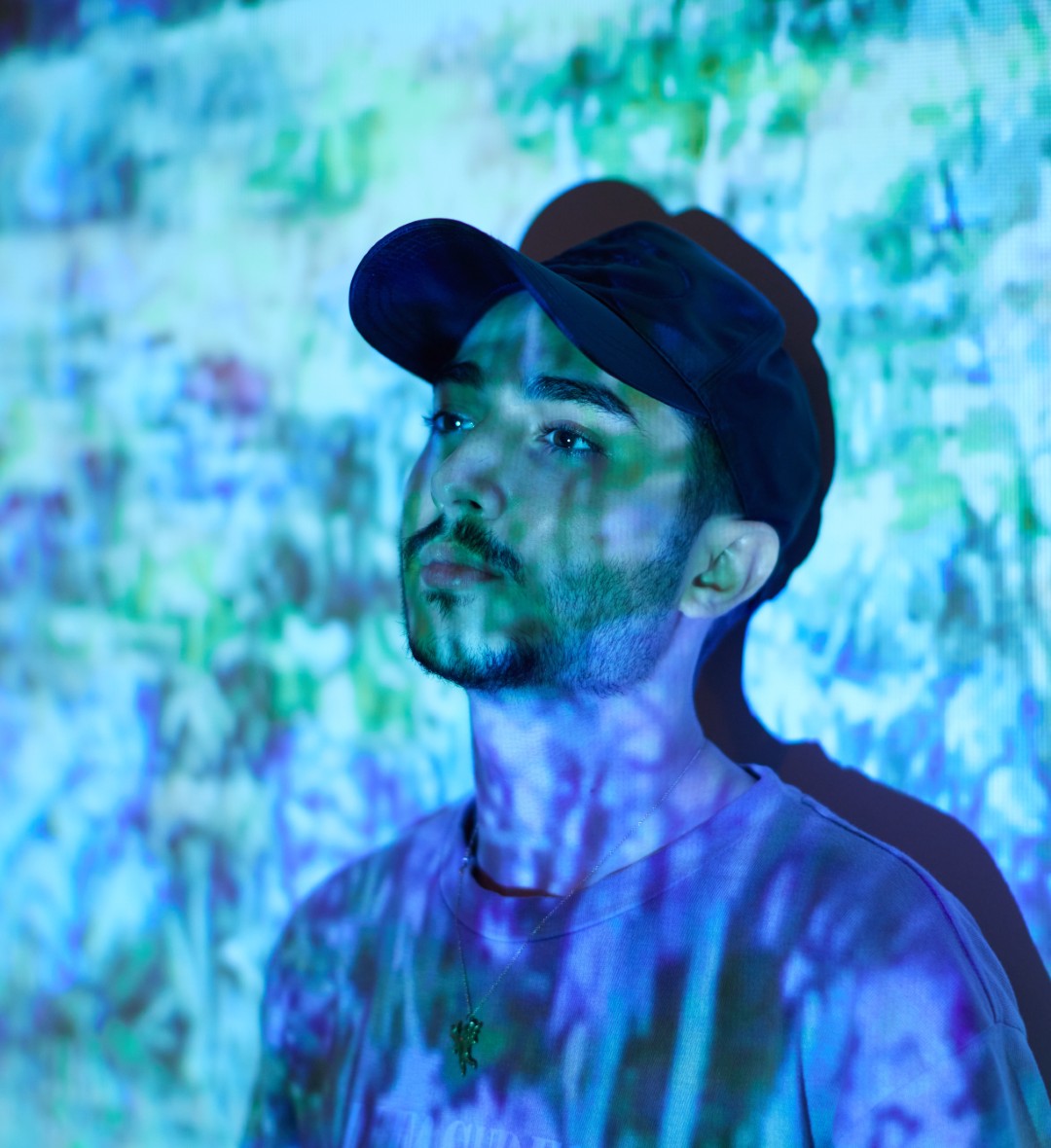
Talal Al Najjar works in the gaps between artefact and glitch. The Emirati artist, based between Los Angeles and Dubai, builds interdisciplinary worlds shaped by research, archiving, and distortion. His practice moves fluidly across sculpture, video, sound, CGI, painting, and installation, assembling fragments of ancient history, internet debris, speculative futures, and everyday visual culture into unstable constellations. Rather than treating medium as a fixed category, Talal Al Najjar works through behaviour; allowing objects to loop, misbehave, or contradict themselves. The familiar becomes strange, the digital turns bodily, and humour sits alongside unease.
How did you first start as an artist? Was there a moment or experience that set you on this path?
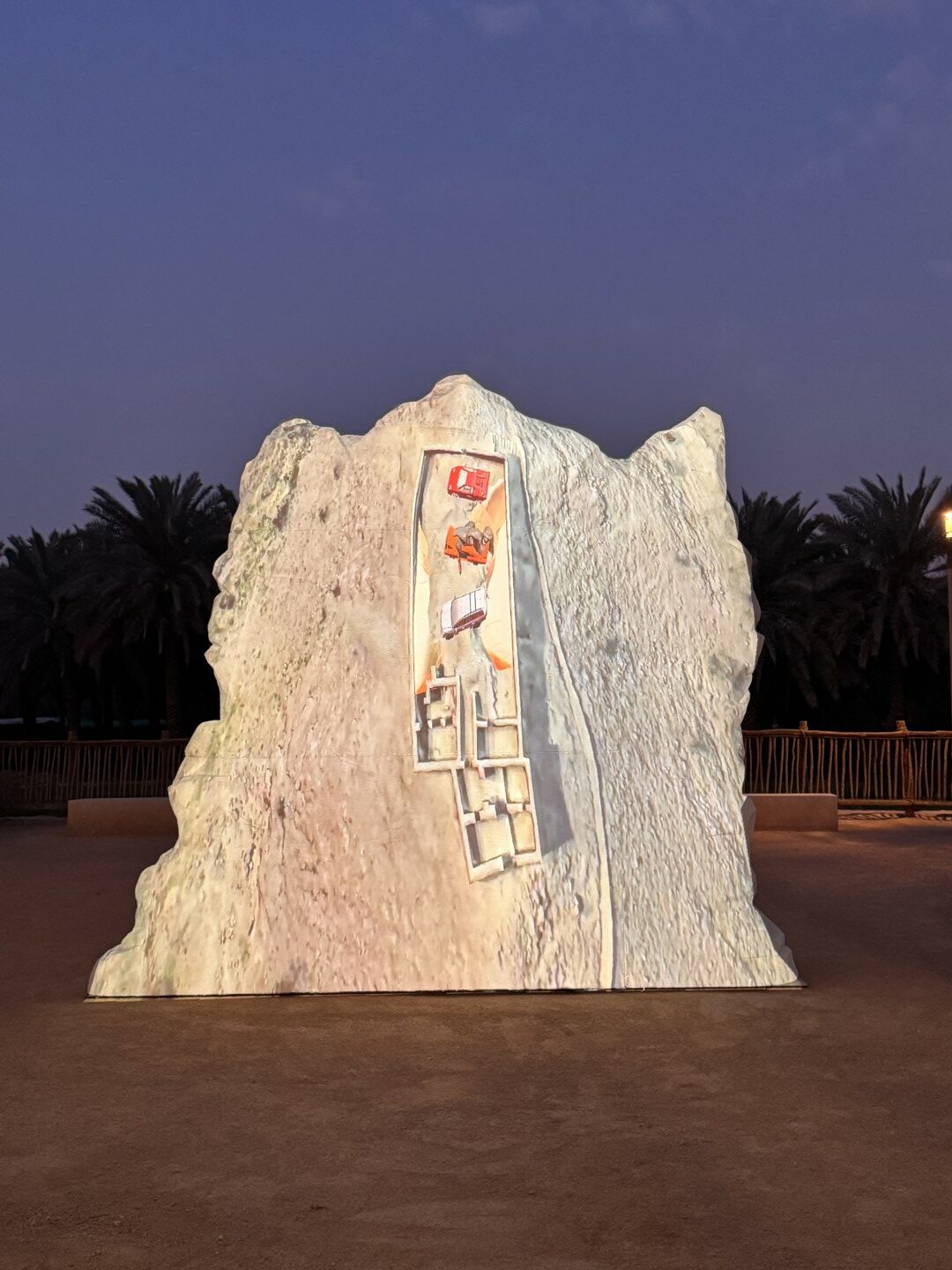
I grew up with an artist mother and architect father, who always encouraged art-making and placed a real importance on it. I was always drawn to making, and sort of accepted that I would pursue being an artist very early on. I first exhibited at 16, and that reassured me in what I wanted to do. Soon after, I pursued my undergraduate and graduate studies both in Fine Art, in Chicago and later Los Angeles.
Your practice spans sculpture, video, sound, CGI, painting, and installation. Howdo you choose the medium best suited for a particular idea?
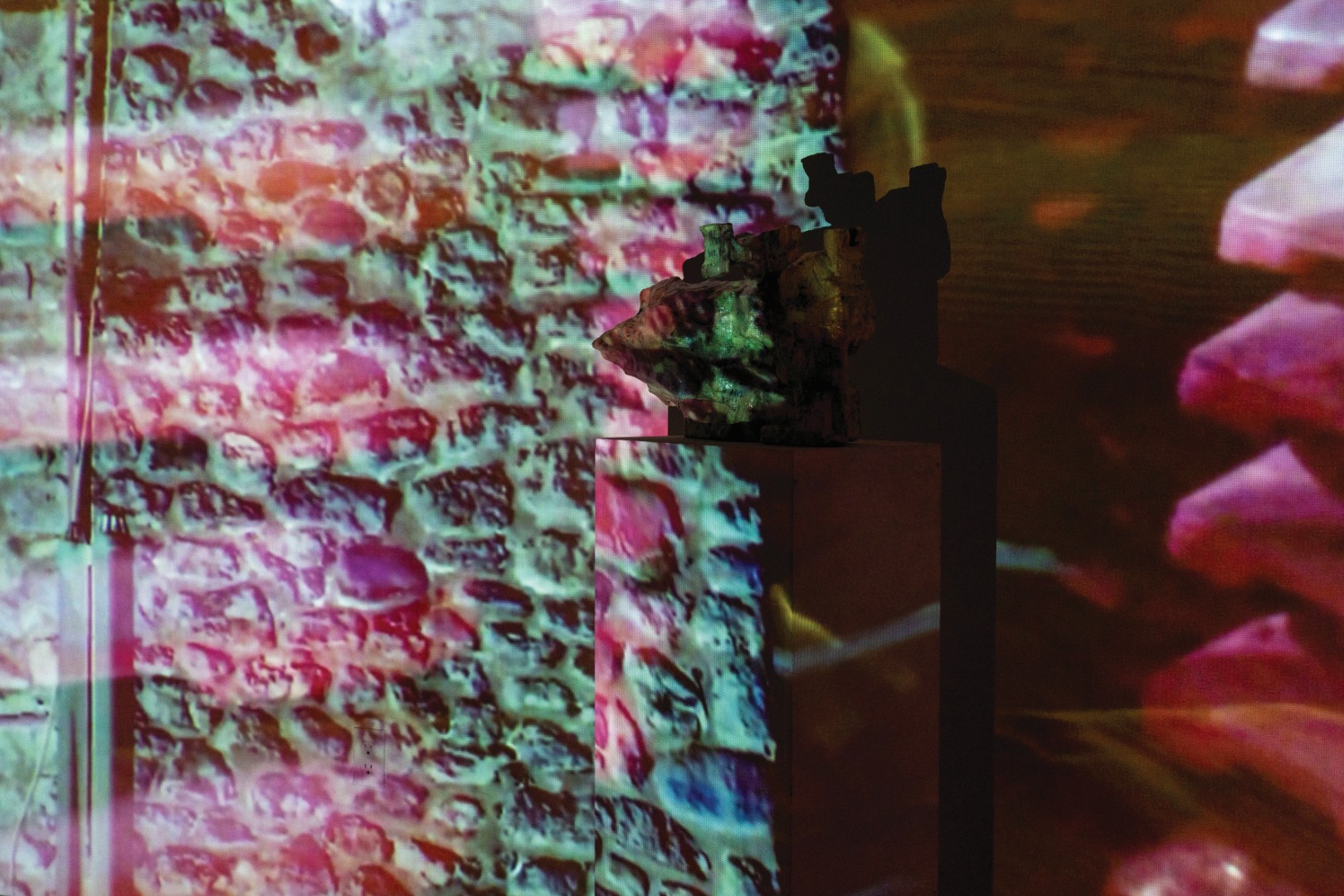
I think in terms of behaviour rather than medium. Some ideas want to loop, some want to sit uncomfortably in a room, some want to feel half-functional. I’m drawn to moments where a medium starts to contradict itself, when a digital object feels bodily, or a sculpture behaves like an image. That friction creates compelling contention for me.
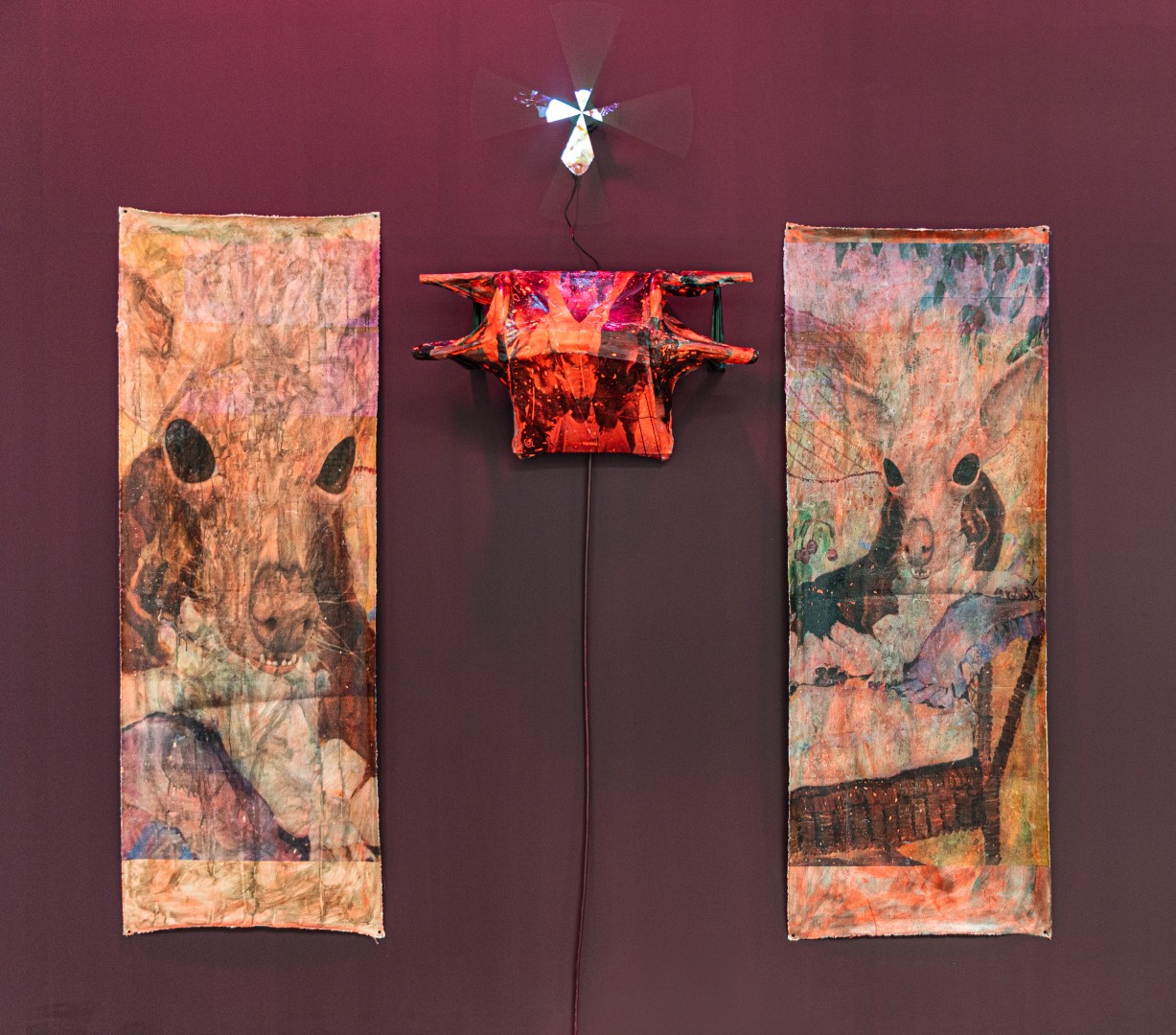
Archiving, collecting, and distorting are central to your process. How do these methods evolve into finished artworks?
I constantly collect images, files, objects, and notes without knowing what they’ll become. Even just spontaneous screenshots while doomscrolling (22,000 to date, apparently). Distortion happens when these materials are revisited, then compressed, mistranslated, re-rendered, or physically altered to become something new. Spanning ancient artefacts to medieval armour, modern philosophy, to contemporary imagery like memes, I frankenstein them into something together, forcing confrontation and contention, and of course further manipulating and re-contextualizing them, whether by hand or digital means.
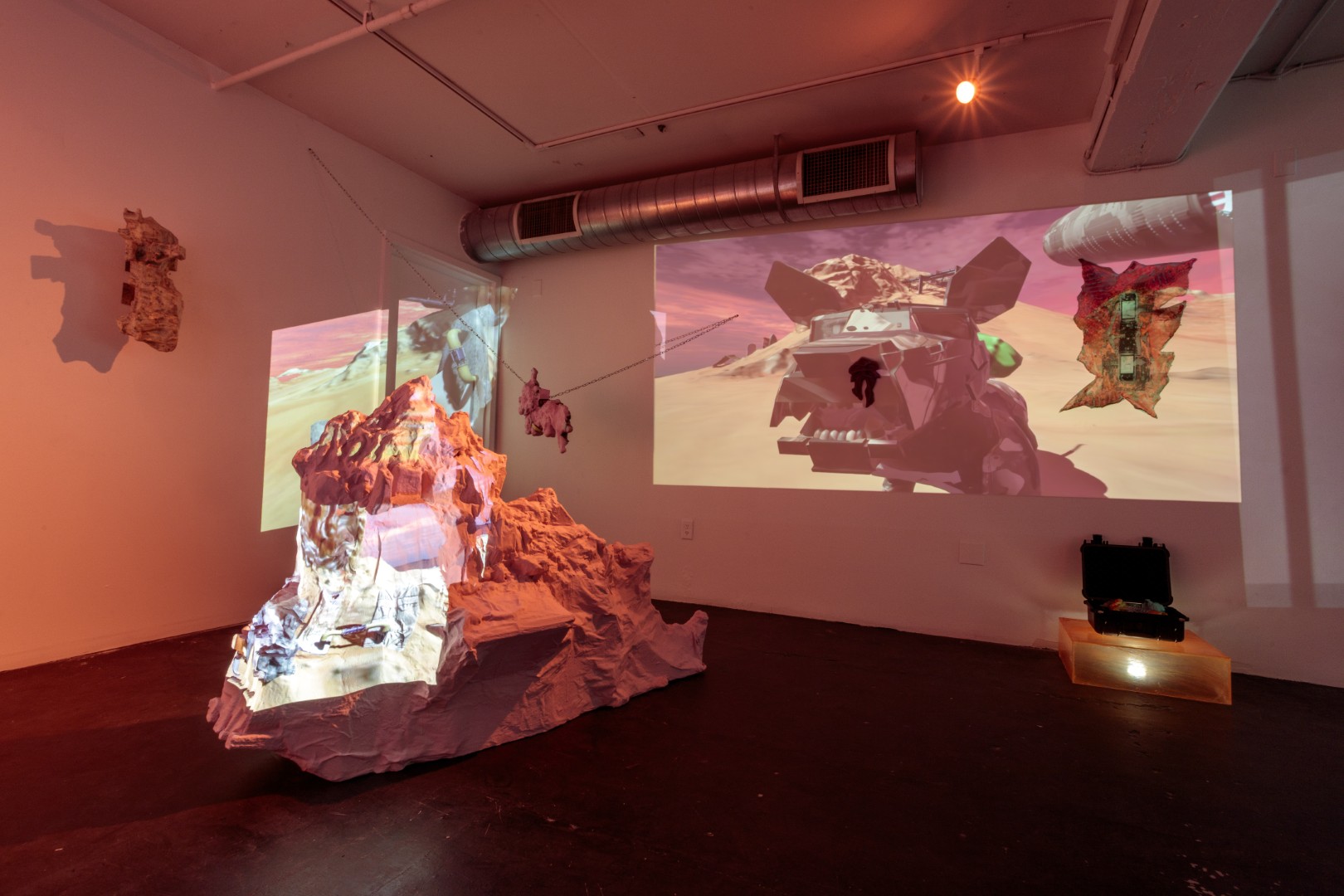
Defamiliarization and the uncanny are recurring in your work. How do you define the uncanny, and what role does it play?
It’s the psychological effect of the familiar made strangely alien and thus unsettling. I use it as a way to disrupt passive recognition, so the viewer can’t rely on immediate consumption or cultural preconceptions. It opens a space where attention becomes more physical and less automatic. In my work, the uncanny often comes from small violations: an artefact behaving like a character, a familiar landscape acting like a stage set, a “real” texture becoming suspiciously digital.
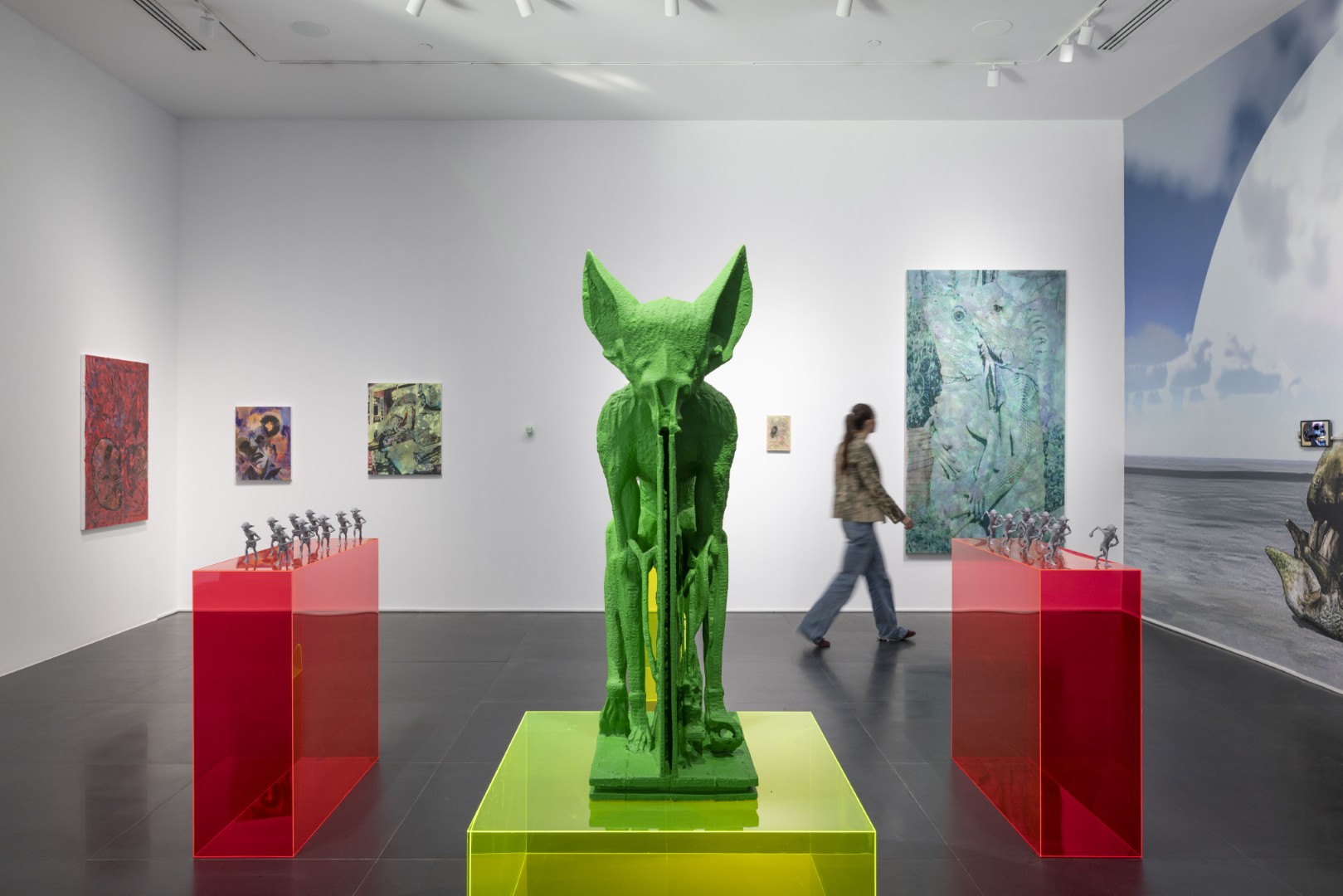
Absurdity and irony appear throughout your practice. How do humour and the absurd help communicate complex ideas about culture, history, or technology?
Absurdity mirrors the logic of the systems we’re already living inside. Practically, I also employ it as a tool of exaggeration and persuasion. It also lowers the viewer’s defences (and preconceptions), creating a gap where critical ideas can slip through without announcing themselves or crashing into a wall of stubbornness. Humour is a way for difficult or heavy ideas to remain accessible without flattening them. Trying to talk about technology or history seriously, without also acknowledging the absurdity, feels dishonest.
For more stories of art and culture, like this interview with Talal Al Najjar, visit our dedicated archives and follow us on Instagram.