Samar Hejazi’s work does not arrive fully formed, nor does it settle into a single medium or definition. It moves, expands, and reshapes itself over time, much like the questions that drive it. Selected by The Metropolitan Museum of Art’s Costume Institute to design bespoke mannequin heads for its Spring 2026 exhibition Costume Art, the Dubai-based Palestinian-Canadian artist brings this evolving language to a global stage, unveiled in the lead-up to the Met Gala. Yet even at this scale, her work resists spectacle, choosing instead to quietly shift the way we look, and what we see.
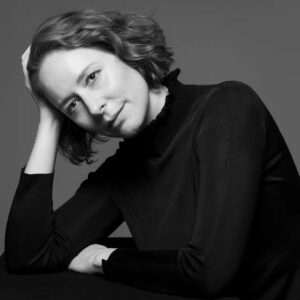
Her journey into art reflects the same sense of continuity rather than rupture. “I’ve always been making, mostly drawing and painting,” she says. “The shift wasn’t abrupt—each medium opened into the next.” What began with an early interest in image-making moved through architecture before finding form in a BFA in New Media, where video and installation became entry points into a broader, multidisciplinary practice. From there, sculpture, textiles, and printmaking followed naturally, each medium extending rather than replacing the last. The result is a body of work that is not bound by discipline, but guided by intention.
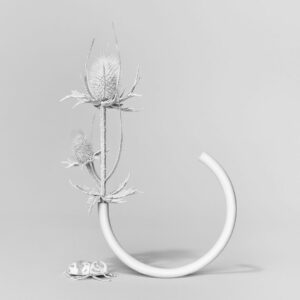
This fluidity is central to how Hejazi approaches material. Rather than beginning with form, she begins with an idea, allowing the material to emerge as a response. “The material follows the idea. I choose it based on what I’m trying to explore and what can hold it best,” she explains. Each material carries its own logic, its own limitations and possibilities, and her work moves between them accordingly. There is no hierarchy between textile and steel, print and sculpture, only a continuous negotiation between concept and form.
Underlying this approach is a deeper inquiry into meaning itself. Growing up between cultures shaped a perspective that resists fixed definitions, pushing her to question how identity is formed and understood. “Growing up between places with very different, sometimes conflicting, cultural narratives made me question how we assign meaning to things and how identity is formed in the first place,” she says. This questioning does not seek resolution. Instead, it opens up space for ambiguity, where identity is not a fixed state but something constructed, inherited, and continuously redefined.
This idea extends into her engagement with craft, particularly Palestinian embroidery, which she approaches not as static heritage but as a system of evolving symbols. “What interests me is that these symbols aren’t fixed, their meanings shift depending on context,” she explains. In her work, these references are not preserved in their original form but reinterpreted, layered, and transformed, allowing them to exist within new contexts while retaining their complexity.
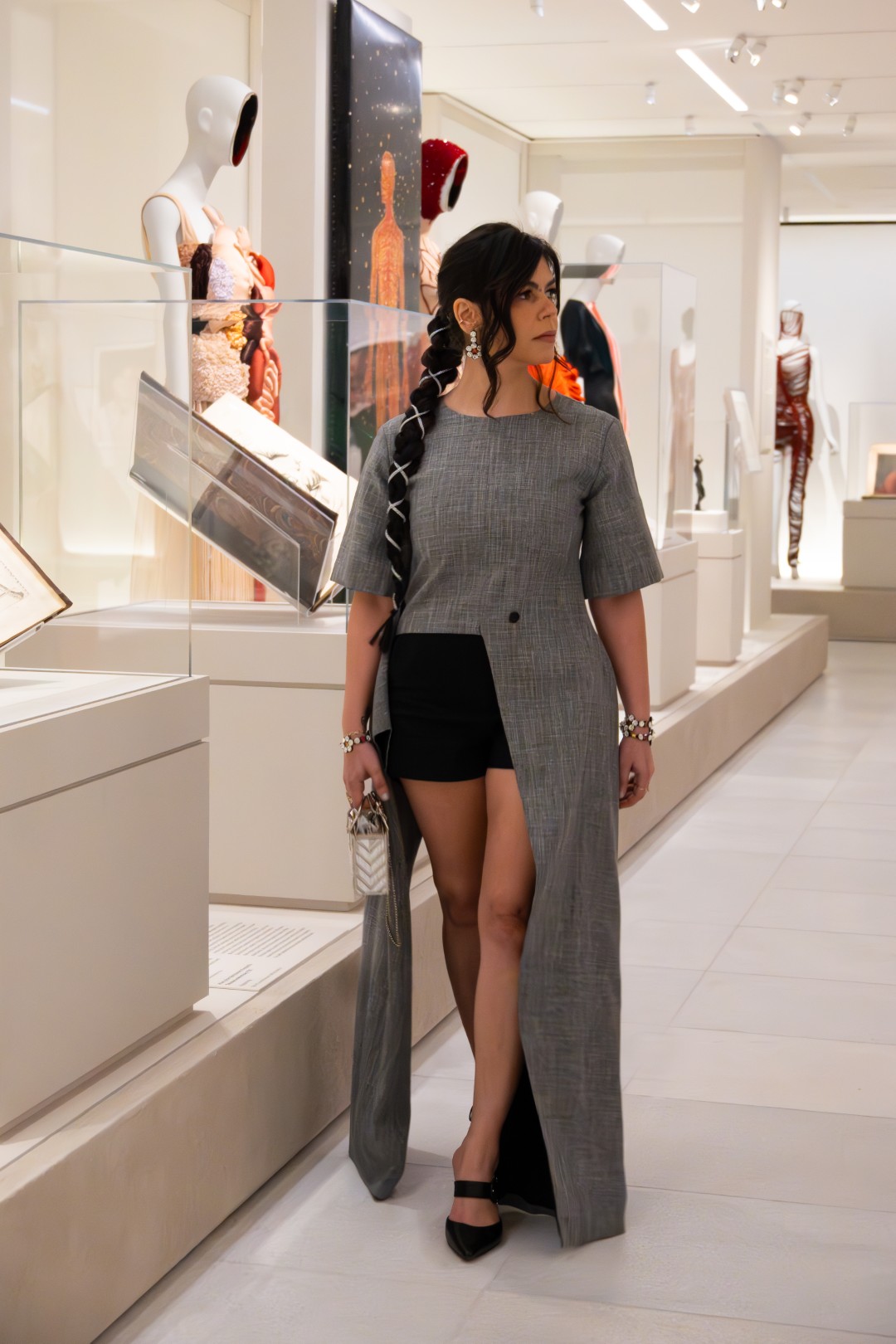
Her processes mirror this way of thinking. Layering, erasure, and reconstruction are not simply formal techniques but conceptual tools that reflect how meaning itself operates. “Layering holds multiple states, erasure leaves a trace, reconstruction brings something back differently,” she says. Nothing is ever fully removed, and nothing is entirely new. Instead, the work exists in a state of constant reworking, where traces of what came before remain visible, shaping what comes next. This is particularly evident in her solo exhibition In Circulation in Dubai, where textile, printmaking, and spatial intervention converge to create environments that feel both constructed and in flux.
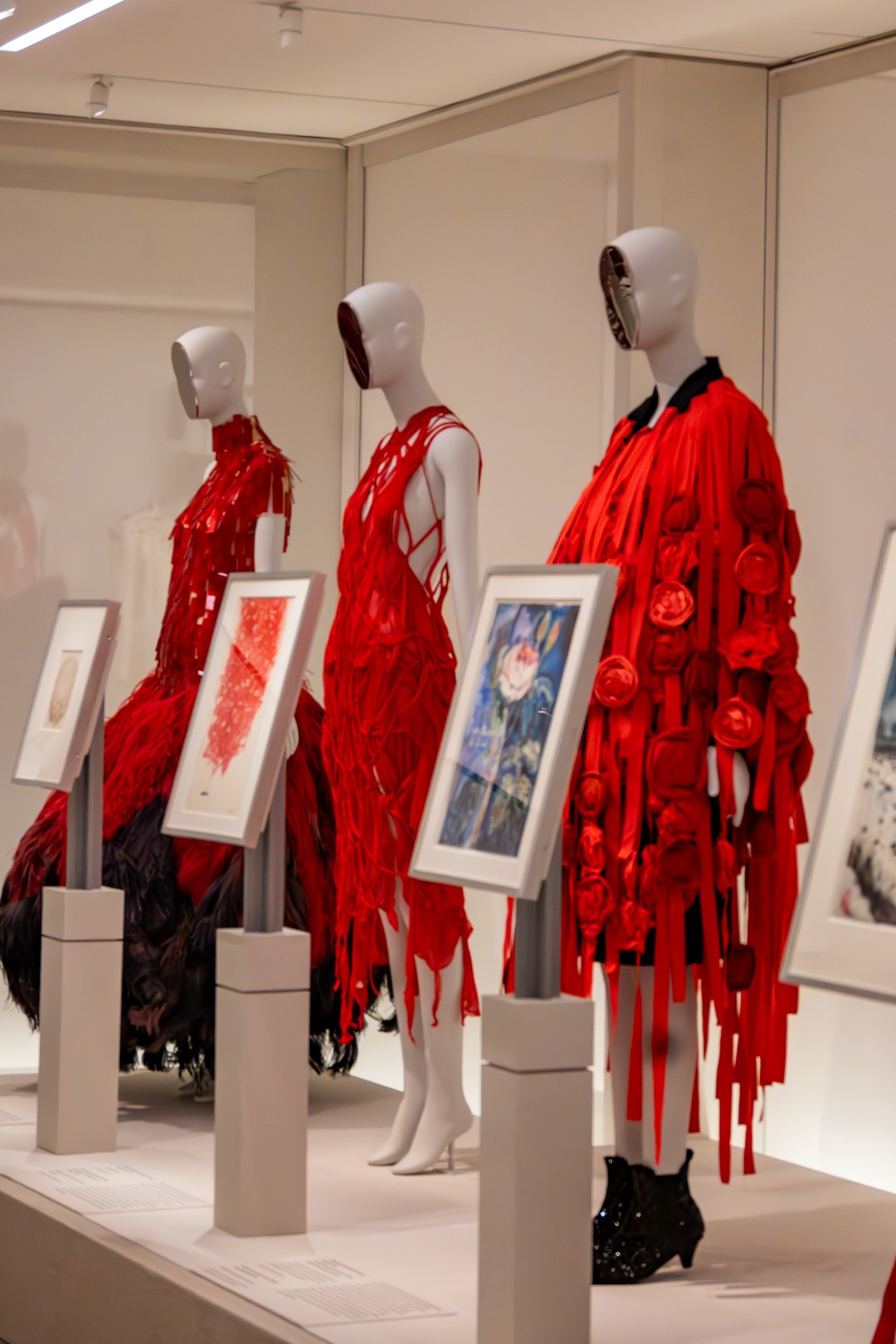
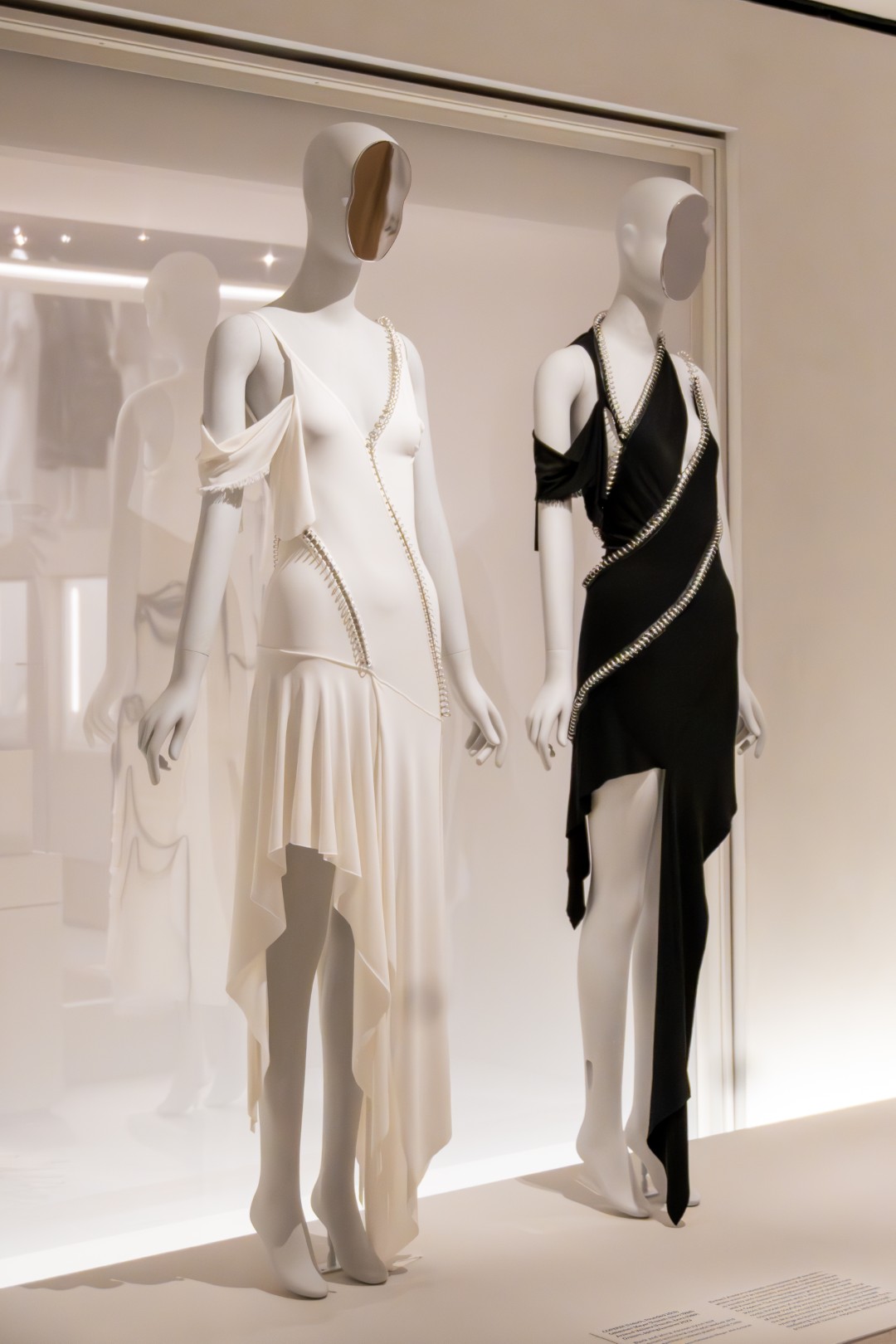
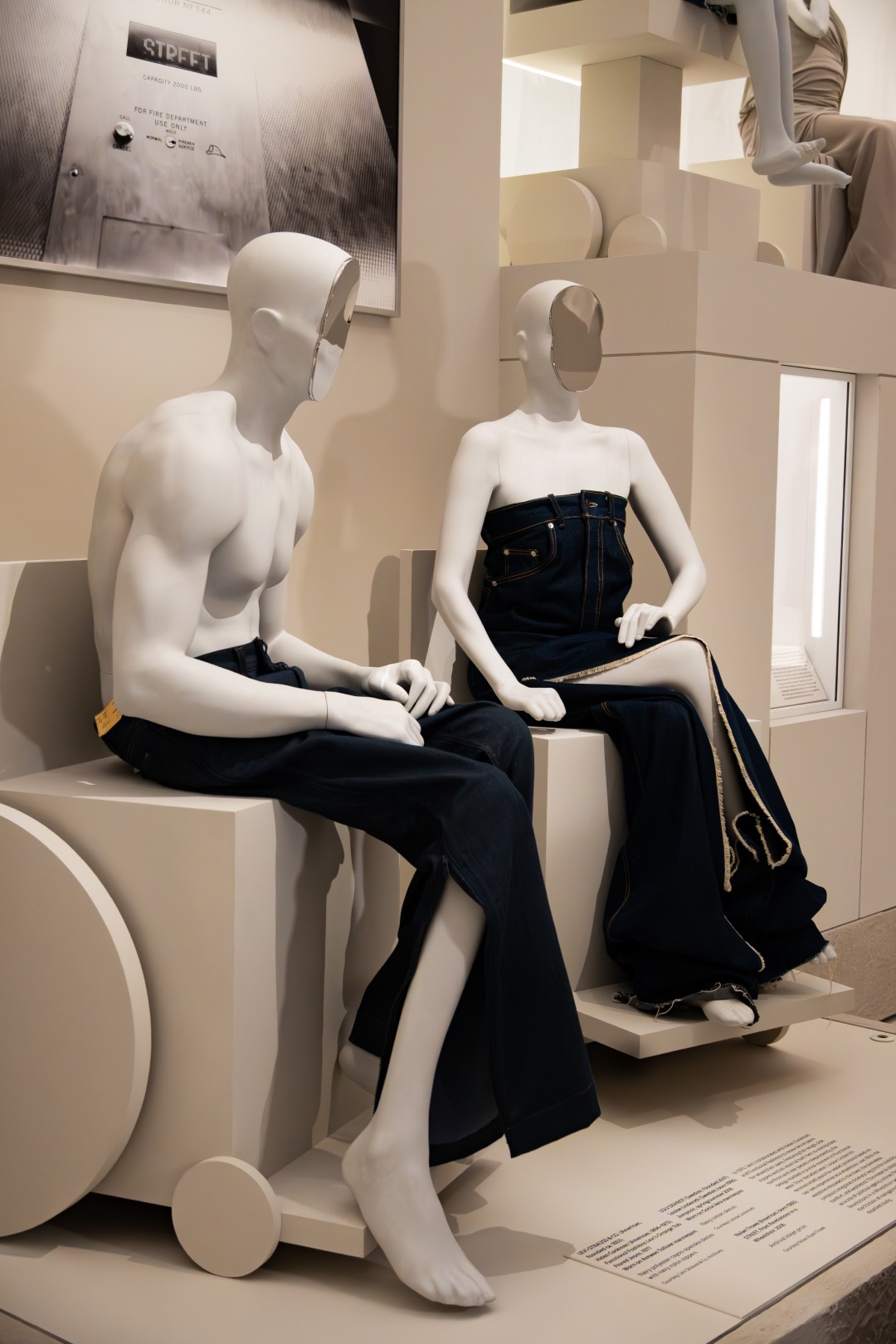
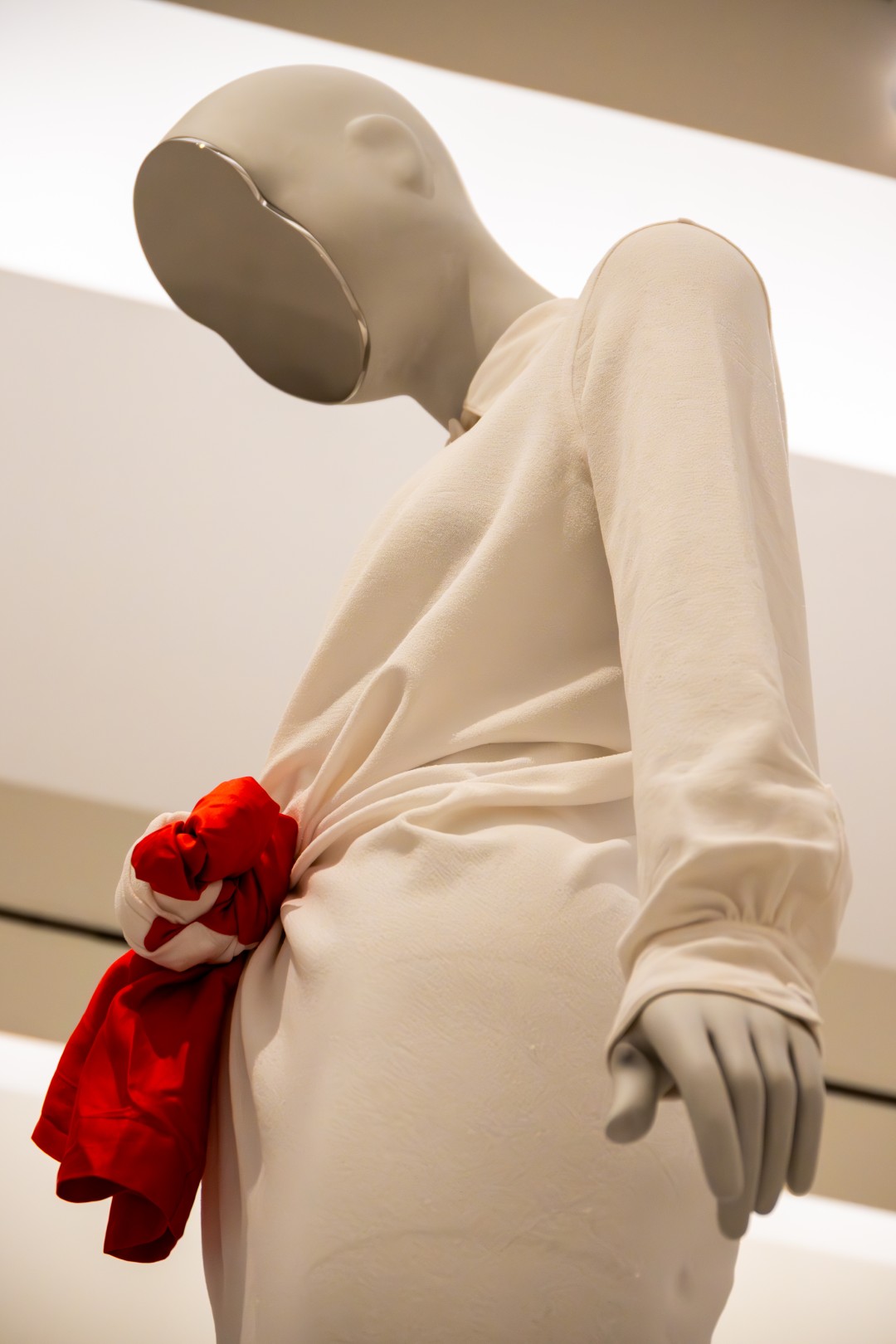
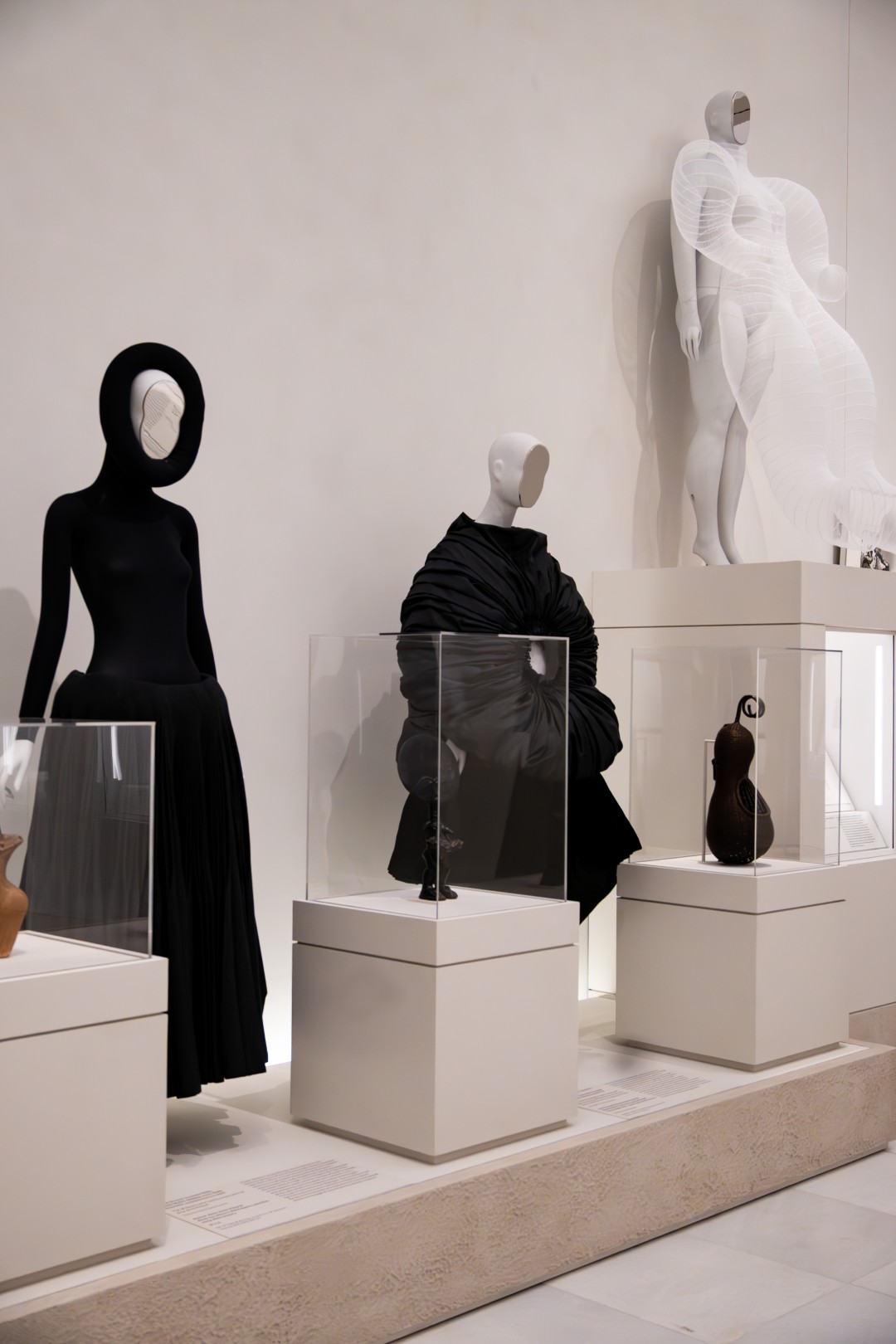
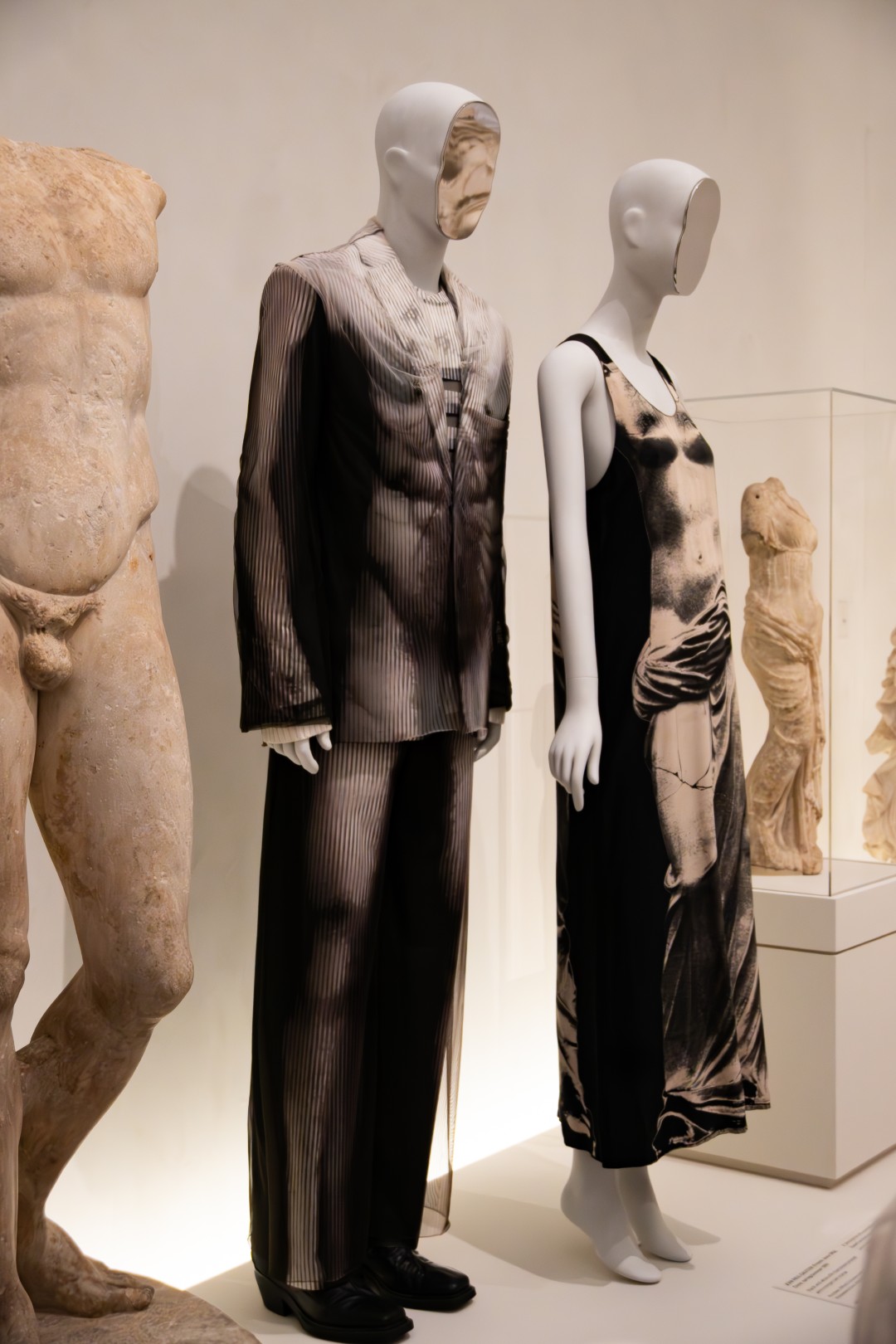
At The Met, these ideas take on a new form through her response to the mannequin, an object historically positioned as neutral, idealized, and largely invisible. Rather than accepting this neutrality, Hejazi interrogates it. “When Andrew Bolton first approached me, we started with questions around how the body is presented in fashion, especially the idea of the mannequin as neutral and idealized,” she says. Her solution is both minimal and radical: she removes the face entirely, replacing it with a polished steel surface that reflects the viewer.
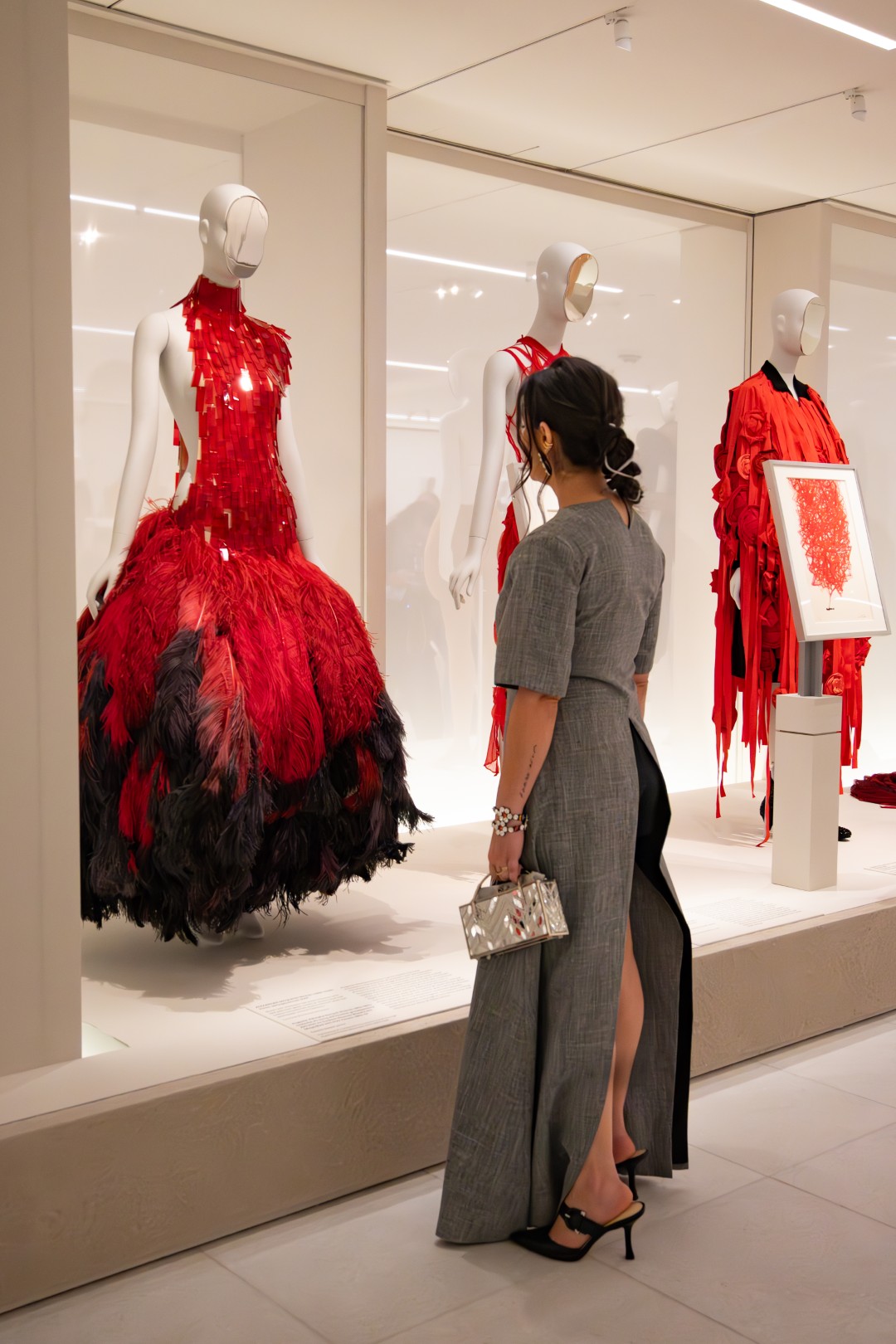
This gesture shifts the role of the mannequin from passive support to active participant. “As you approach, your reflection replaces the face. Sometimes it’s just you, sometimes others appear too,” she explains. The effect is immediate but subtle. The viewer is no longer observing from a distance but becomes embedded within the work itself. “Rather than presenting a fixed image, the mannequins become sites of exchange … the viewer becomes part of what they’re seeing.” In this way, the act of looking becomes reciprocal, destabilizing the traditional relationship between object and audience.
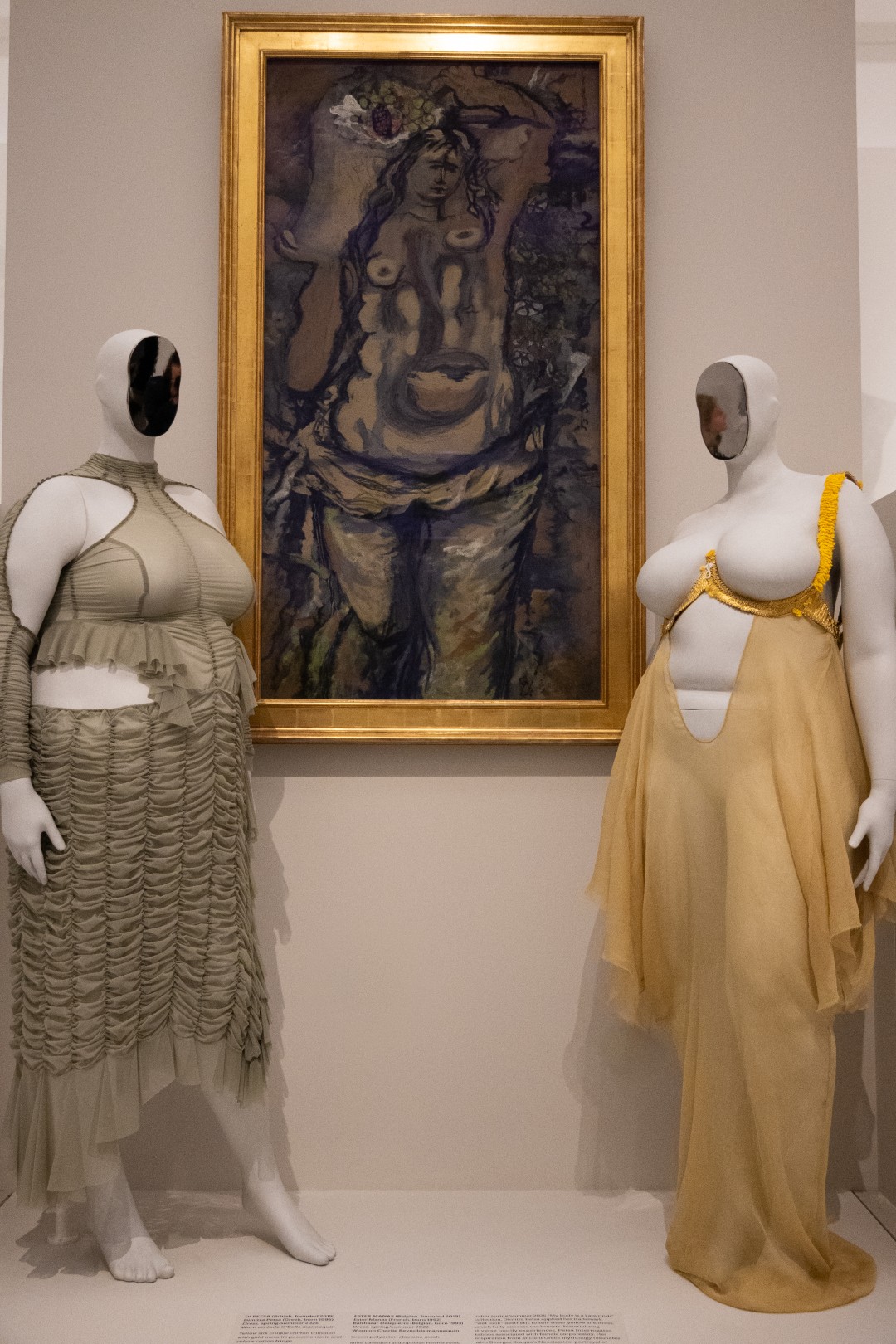
Working with polished steel marks a material expansion in her practice, one that opens new possibilities for this kind of interaction. “I’ve worked with reflective materials before, but this was my first time working with steel… This project created that entry point,” she notes. Reflection, in her work, is not simply visual. It is conceptual, pulling the viewer into the work and collapsing the distance between perception and presence. “Reflection brings the viewer directly into the work, which is something I want to keep exploring.”
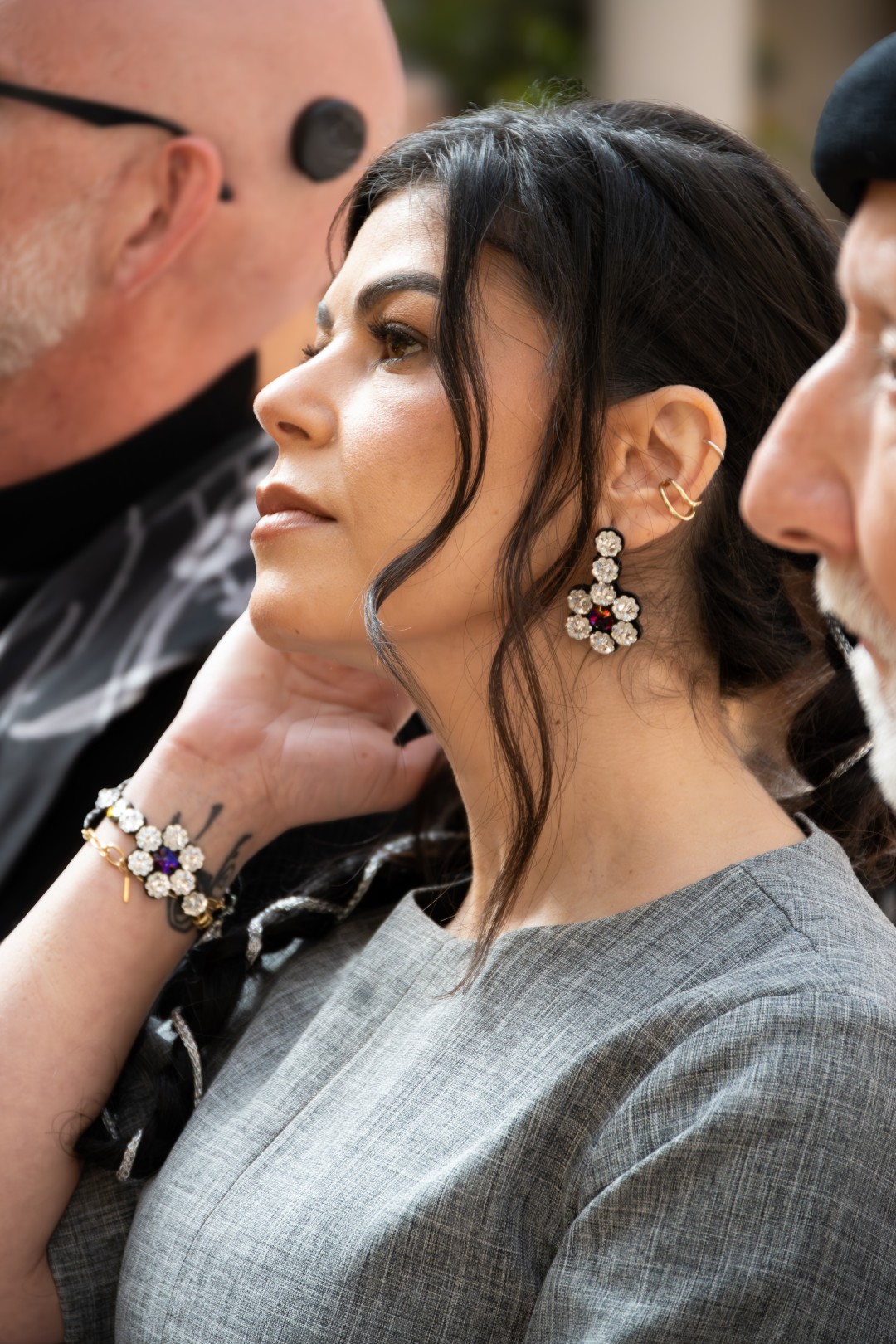
Presented within an exhibition of nearly 400 objects exploring the relationship between fashion and the body, Hejazi’s intervention quietly alters the narrative. The mannequin is no longer invisible, and the viewer is no longer separate. Instead, both exist within a shared space of reflection, where meaning is not given but created in the moment of encounter.
For Hejazi, the significance of this moment extends beyond visibility or recognition. “It felt meaningful to be part of The Metropolitan Museum of Art, not just for the visibility, but for what that presence can hold and represent,” she says. It marks a shift in scale, but not in intention. Her work continues to be driven by the same core questions, even as it expands into new contexts and materials. “Materially, I see the work moving further into sculpture, larger in scale and more structural, while staying grounded in the same core questions,” she reflects.
In Hejazi’s work, nothing is fixed. Not the body, not the object, not even the act of looking. What remains is a constant process of exchange, where meaning is not imposed, but continuously reshaped through presence, perception, and time.
For more stories of art and culture, visit our dedicated archives and follow us on Instagram.