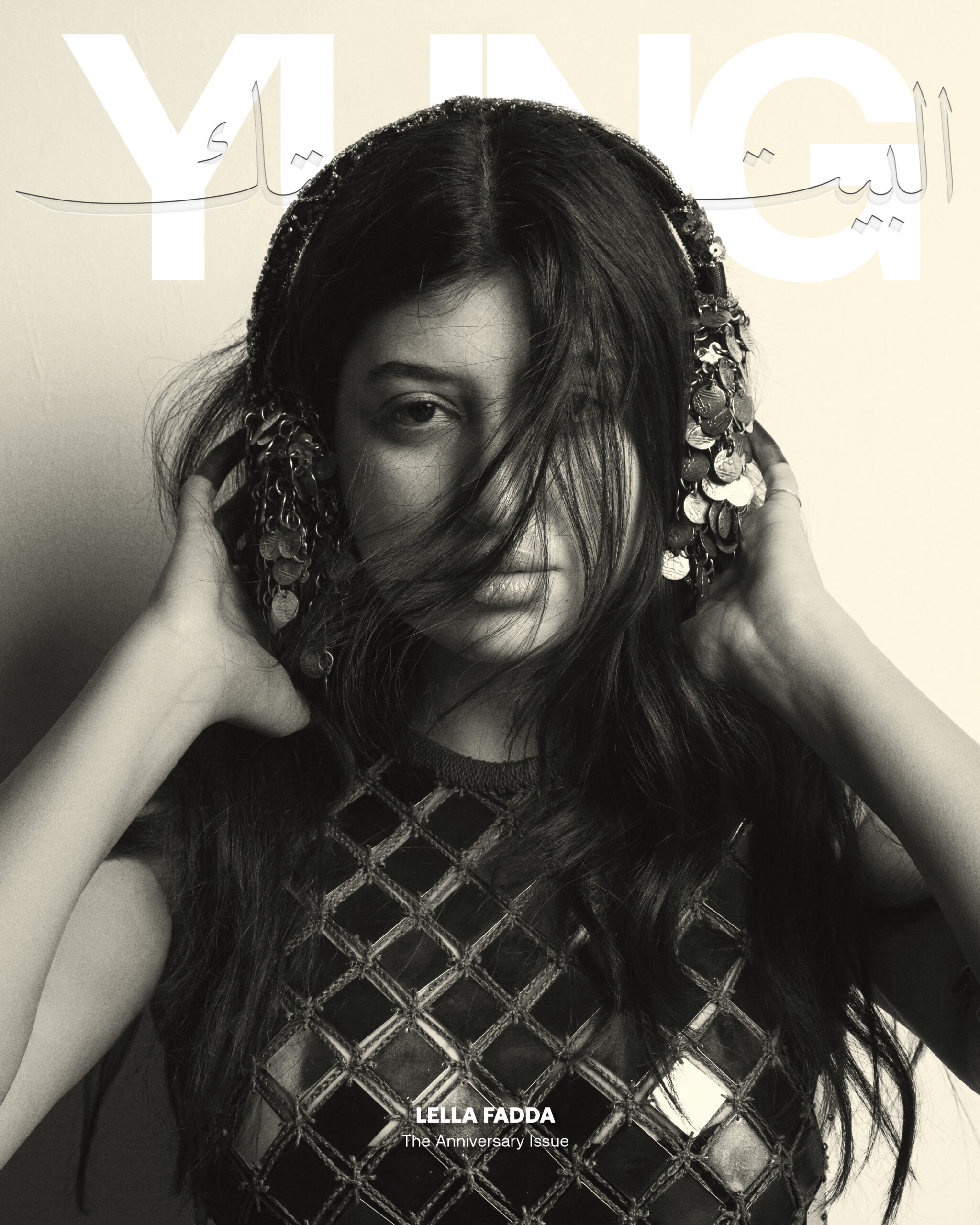
Long before anyone was listening, Lella Fadda had already decided who she was going to be. When she was twelve, she wrote it down in thick red crayon: “I will be a singer like Adele.”
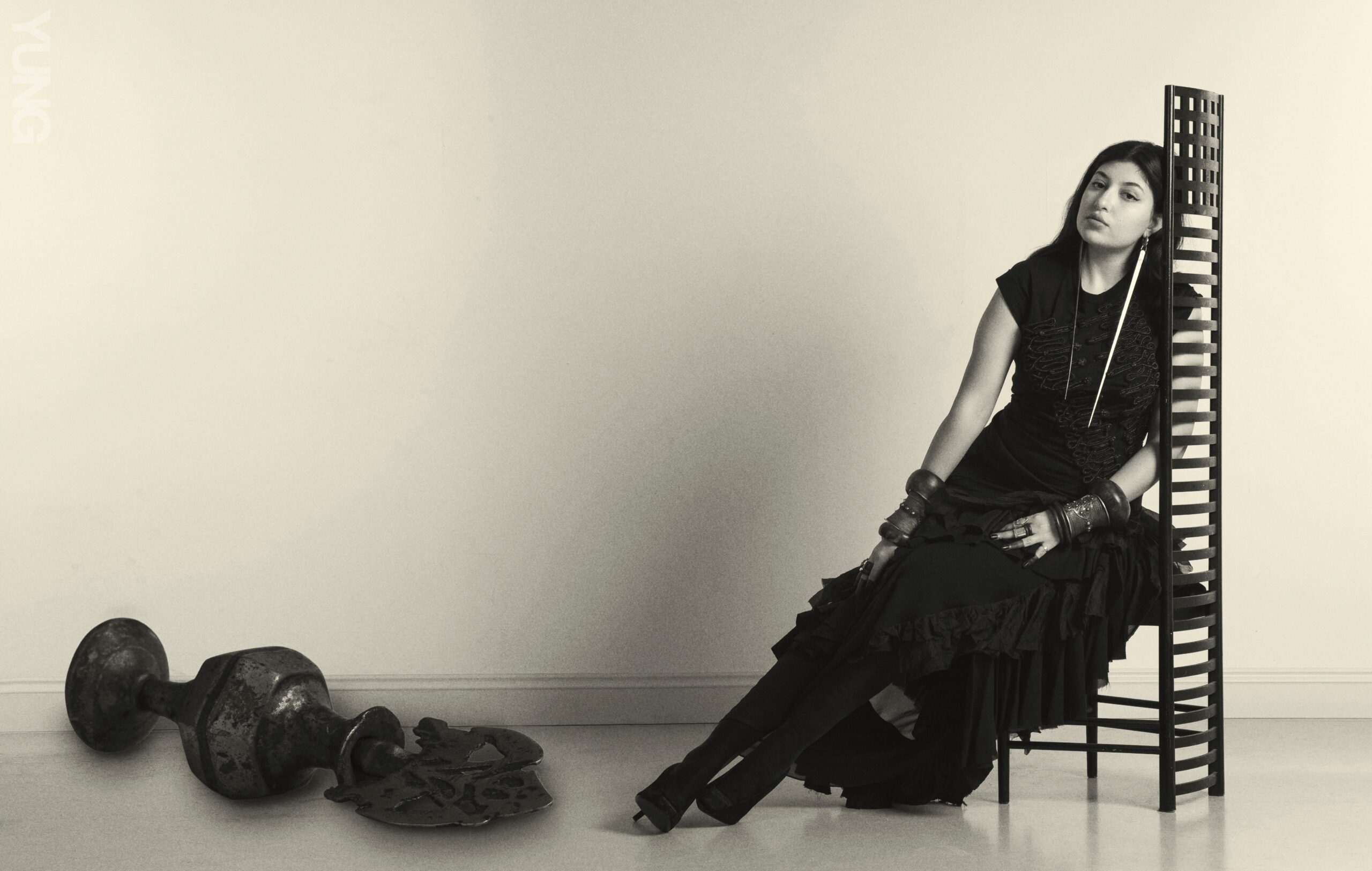
The letters were large and uneven, tilting upward across the page as if ambition itself had direction. The note resurfaced last year while her family was clearing out her grandmother’s apartment in Cairo. Mid-conversation, Fadda searches for the photograph on her phone, narrating the wait as it loads. When it appears, she laughs — a mix of embarrassment and vindication, the reaction of someone discovering that her younger self might have been right.
Children don’t hedge their ambitions. Somewhere along the way most of us learn the etiquette of doubt: the insertion of maybe, one day, if things work out. The girl who wrote it hadn’t learned that caution yet.
Her childhood, she tells me, was largely “school and home, school and home,” with little room for the extracurricular lives other children had. Music entered partly because there was little else to occupy her during her solitude. She was, by her own account, “that kid singing everywhere” — at school, at family gatherings, on any occasion where people could be mistaken for an audience.
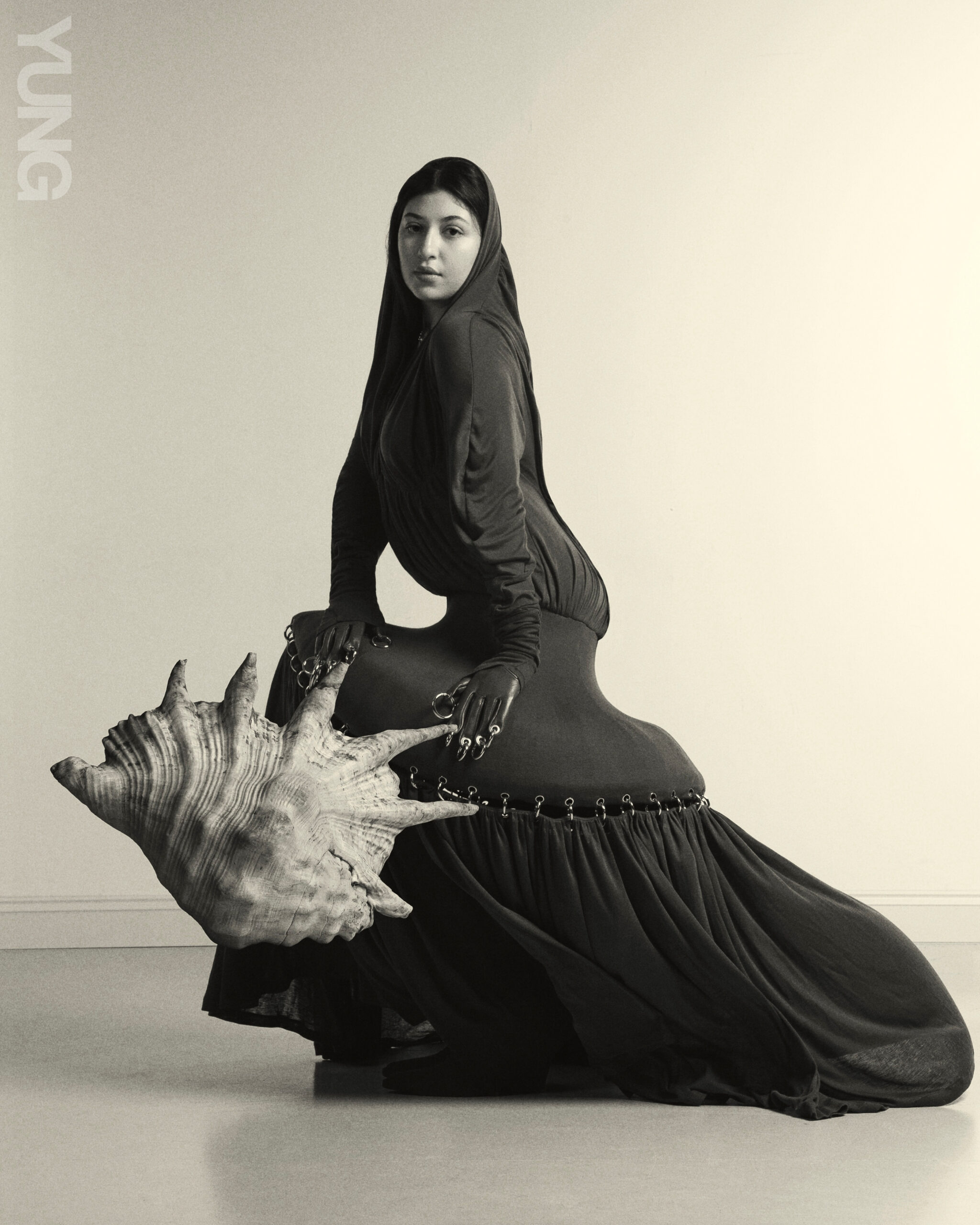
By ten she was already uploading covers online and worrying, with disproportionate urgency, about recording the next one. At eight she wrote a song and showed it to her social-studies teacher, proof of what she intended to become. “I remember telling her, one day I’ll write a song like this,” she says now, amused by the logic. “I didn’t even realise I had already written one.”
When I speak to her now on a quiet Ramadan afternoon in Cairo, the city is moving through its late-day lull before iftar. Fadda is twenty-five and already one of the most distinctive voices to emerge from Egypt’s new generation of musicians. Her debut album, MAGNÜN, introduced a world both playful and emotionally exacting: songs about relationships, ego, and the quiet humiliations of modern intimacy.
On “TARAT TARAT TAT,” one of the album’s sharpest tracks, the beat lands between Cairo street pop and bedroom rap: tight synthetic drums undercut by a hook that sounds almost teasing. Fadda’s delivery slips between melody and deadpan talk-singing, with the intimacy of a diary entry. The lyrics move with the speed and wit of Cairo conversation, full of slang, social intelligence, and the rhythm of people talking when they think no one important is listening.
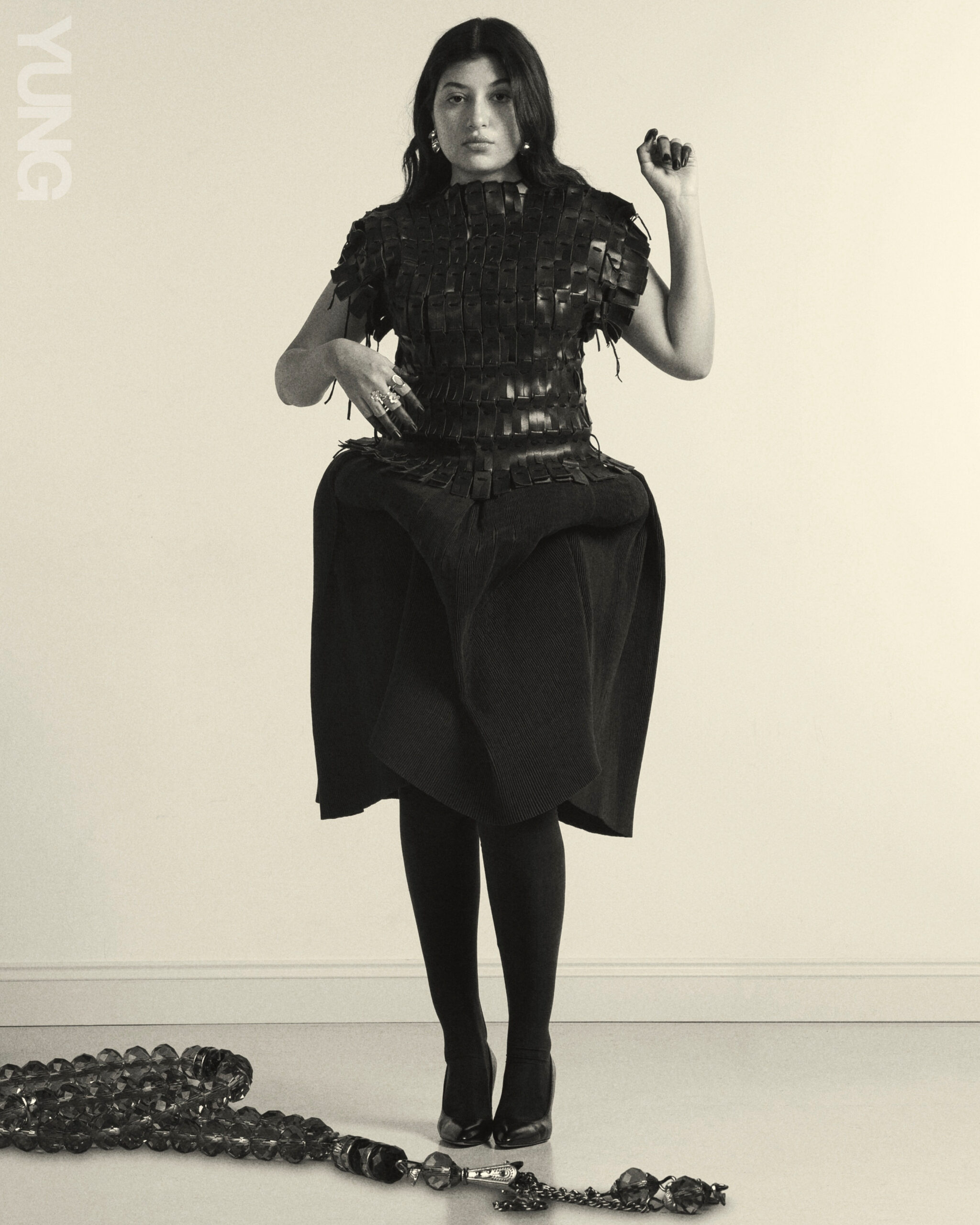
Much of MAGNÜN was shaped in collaboration with the producer Abuyusif, whom she describes as a provocateur. His role, she says, is often to turn a vague emotion into a task. “He’ll tell me, ‘Stay on that chair and write eight bars,’” she explains. “Start here. Use this beat.” The structure frees her up. “Then I have a task,” she says. “We started with the right idea. Let’s finish it.” What she values most is that he can “get things out of me”, things she would not have found alone.
On this particular afternoon, however, she is less interested in career strategy than in ballet. Every few years, she tells me, she tries to learn a skill she wanted to pursue as a child but never had the chance to. Ballet, in that sense, feels like repayment. “I love it,” she says immediately. “Oh my God, I love it.”
What fascinates her is the attention it demands. Ballet teaches you to notice the architecture of the body: the angle of a foot, the correction of the spine, the quiet shift of weight between muscles. “It makes me understand how my body can actually move,” she says. The interest feels oddly appropriate. Fadda’s career has unfolded through a similar process of calibration: the slow work of discovering what her voice can carry.
Mid-conversation, she reaches for her phone again and shows me another photograph: an old notebook scattered with lipstick kisses. The imagery is uncannily close to the visual world she later built for MAGNÜN. The symmetry feels suspiciously neat — the sort of coincidence that would seem heavy-handed if invented by a less persuasive publicist. Before she had an audience, she had iconography.
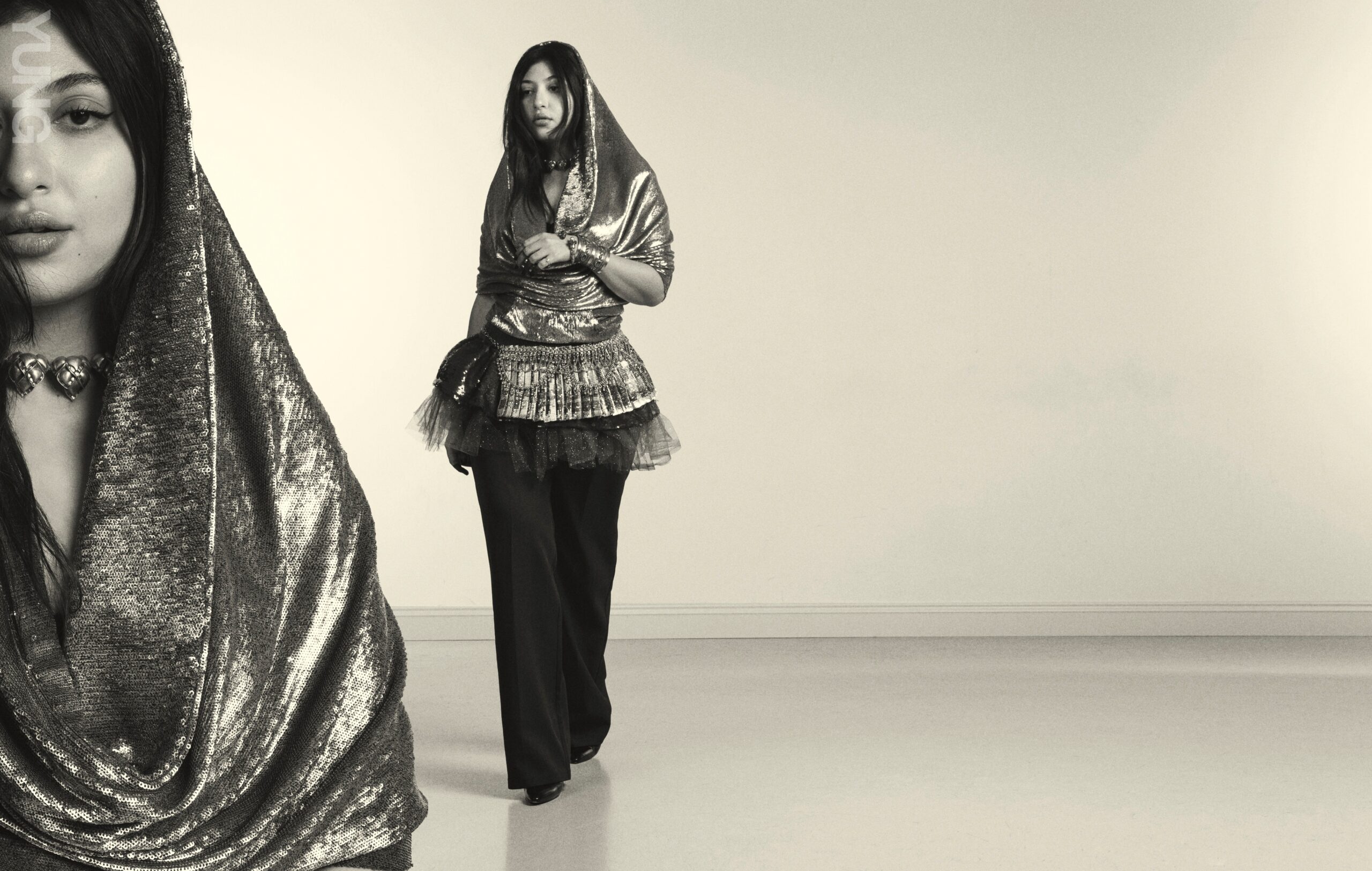
Many artists spend years trying to sound convincing as themselves. Fadda understood early that this was the whole task. “You can literally fake anything,” she says. “But not the audio.” It points to a problem that shadows much of contemporary pop: the confusion of image with conviction.
Fadda is not naïve about the machinery surrounding music — the styling, the algorithms, the persona-building. She simply refuses to confuse the spectacle with the thing itself. “You just have to be good and believable,” she says. “If you are hurt, you are hurt. You should make people feel that.”
When I ask about the way her music captures women’s realities — the irony, the sharpness — she corrects the premise almost immediately. “I don’t speak about women,” she says. “I am one.” The irony in her songs, she explains, is not stylistic decoration. “The irony actually is the reality.”
One night in Cairo, that reality took on a kind of accidental comedy. Midway through a performance of “TARAT TARAT TAT,” she looked down and realised that the entire front section was male. They were not listening politely. They knew every word. More than that: they were loudest on the very lines that might, under ordinary circumstances, have incriminated them.
“I burst out laughing into the mic,” she says. Not triumph. Disbelief.
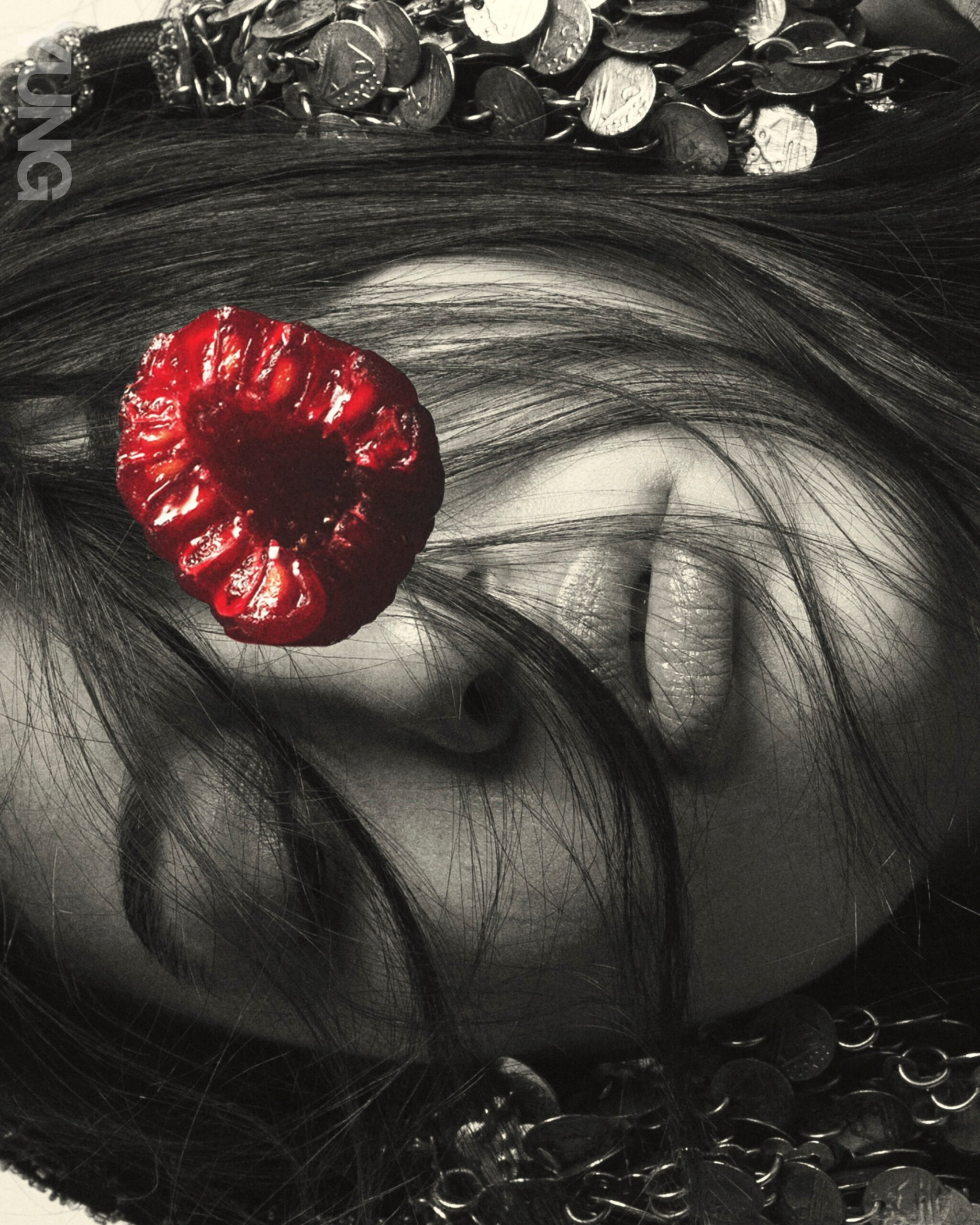
Irony, in her hands, becomes a courier, slipping truth into the room before anyone has time to object.
At home the influences that shaped her sound were wide and joyfully inconsistent. Her mother played Latin pop, Shakira above all. “I really wanted to be Shakira,” Fadda says, laughing. As a child she practiced the singer’s signature stomach rolls in front of the mirror — “the wavy thing,” as she calls it.
Weekends with her Egyptian grandmother belonged to another musical register entirely: black-and-white films, classic songs, the kind of nostalgia that arrives before you are old enough to understand it. “I had to love the songs,” she says. “Because that’s how I connected with her.”
The result was a childhood soundscape that refused to sit neatly inside one genre, which may explain her impatience for genre categories today. “I don’t believe in genres,” she says. “I believe in a good song and a bad song.”
Public perception tends to emphasise her rap tracks, but Fadda hears the balance differently. She is, she says, “a singer who started rapping,” not a rapper reaching belatedly toward melody. The distinction matters. It explains why some listeners are surprised to discover songs they already love are hers: they have learned one version of her voice and mistaken it for the whole.
Her relationship to identity is similarly direct. Though she was born in Milan, she brushes aside the diasporic framing people sometimes reach for. Asked what Milan and Cairo sound like to her, she says the distance between them is smaller than people assume. “The yelling,” she says, laughing. In both places, a conversation can sound to outsiders like an argument. Emotional volume travels well.
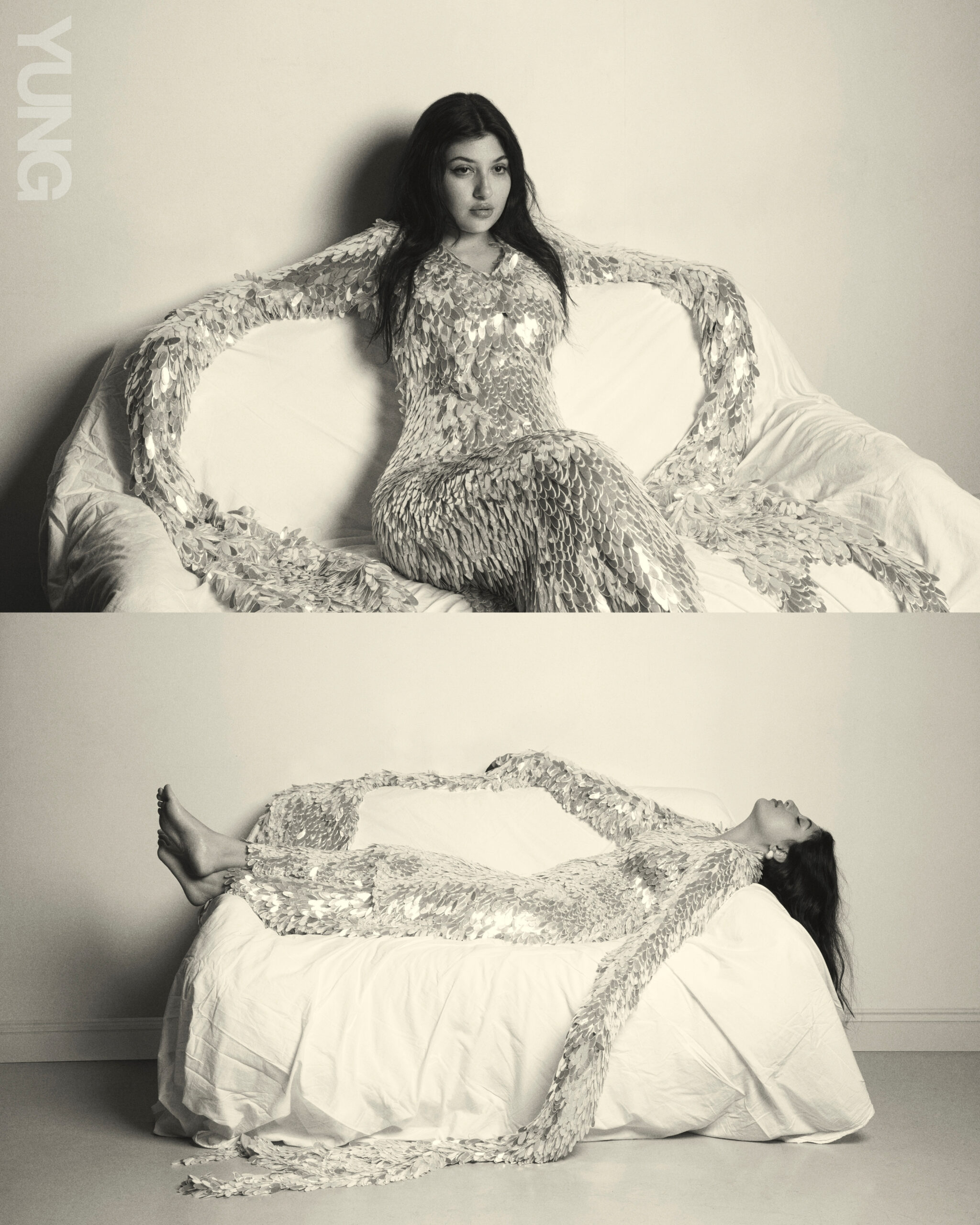
But the belonging itself, she insists, has never been confusing. “I’m Egyptian,” she says simply. “I know where I’m from.” Then she adds something even simpler. “These are the streets I know without direction.”
Arabic, she insists, is not a branding choice but simply the language in which she feels most precise. “I express myself in Arabic more,” she says. But she resists the idea that this makes the work niche or explanatory. “I’m not speaking about the Arab world,” she says. “I’m speaking about universal things.”
She has seen this most clearly while performing abroad. Listeners who understand none of the words still respond instinctively. “There can be someone standing in front of me who doesn’t know what I’m saying,” she says. “And they’re still dancing.” Emotion travels faster than translation.
If Fadda thinks about legacy at all, she thinks about it practically. She has little interest in the prestige of being the first to, or of anything. What matters instead is impact: whether what she is doing makes the path easier for someone else.
When she was younger, seeing artists like Dina El Wedidi and Maryam Saleh on stage did exactly that. It made the life she wanted appear possible. Now she imagines the same recognition happening in reverse — some twelve-year-old girl somewhere in Cairo watching the stage and arriving at the same conclusions she did.
Toward the end of our conversation, I ask what the younger version of Fadda — the girl writing in red crayon, uploading covers online, already treating the future as a fact — might think if she heard the music she is making now. She laughs immediately. “She’d be a fan.” Then she adds, with affectionate candour: “She was a little delusional. But that’s exactly what it takes.”
The red crayon letters tilted upward across the page, as if the sentence were already climbing toward its future. At twelve, Fadda wrote it down as fact. Everything since has simply been catching up.
For more stories of music from around the region, visit our dedicated archives and follow us on Instagram.