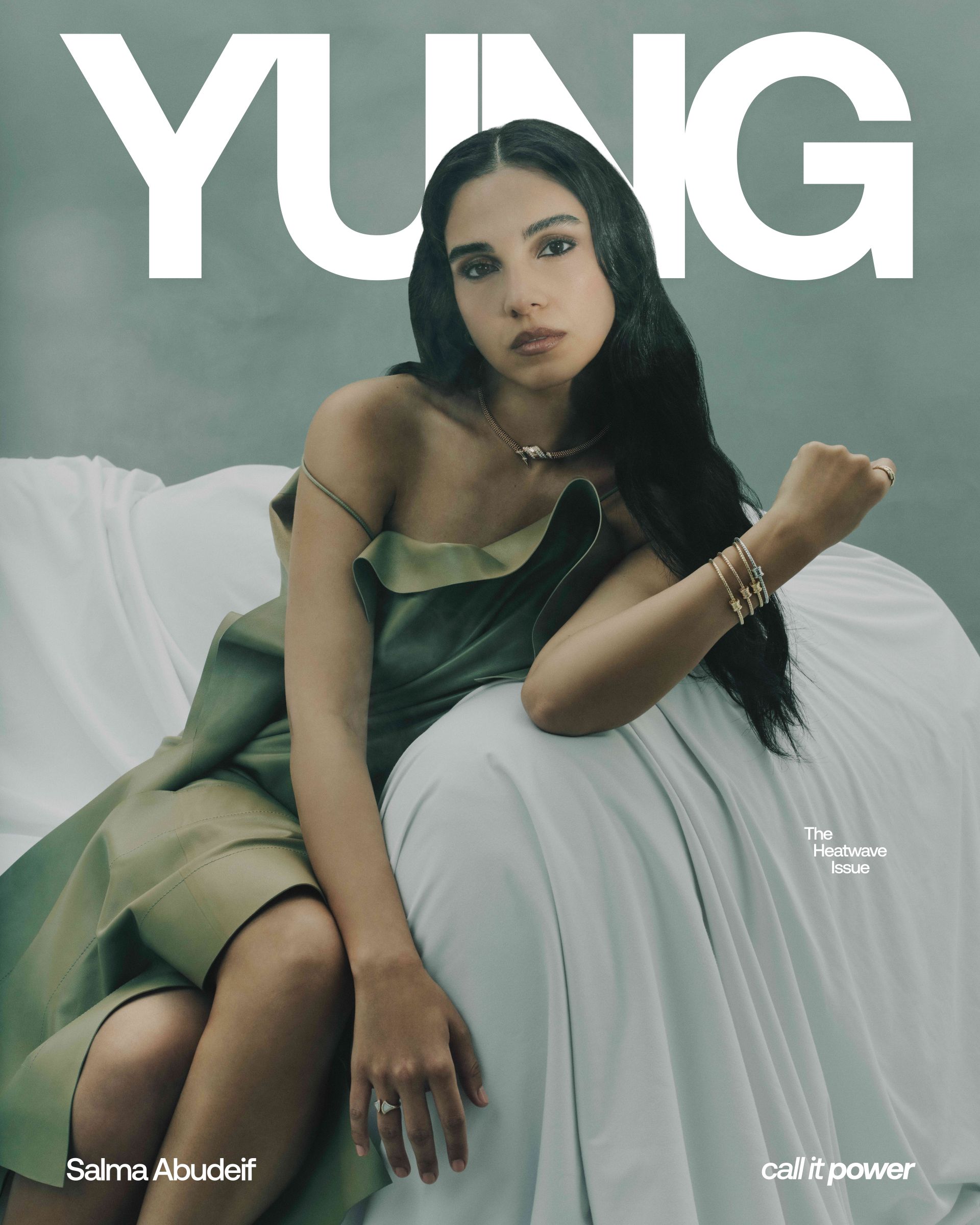
Salma Abu Deif is opting out in a landscape where celebrity is usually measured by how much you’re willing to leak. To the public, she is a constant: the face of Loewe in the region, a clear voice for social causes, and the lead of heavy-hitting dramas like A’la Nesbet Moshahda, and films like Ezma, Egybest and Sheikh Jackson. But to her, the “Salma” we see is merely the art she chooses to lend us. Everything else is sacred.
“I would rather be on the news for my work,” she says, her voice carrying a steadiness that seems to have solidified as she transitioned from her 20s into her 30s. “If I share more, I feel like it’s stolen from me.” This boundary is a survival mechanism for a woman who has spent years being a vessel for other people’s stories, not a PR strategy. “This is why I prefer to do very limited interviews,” she says.
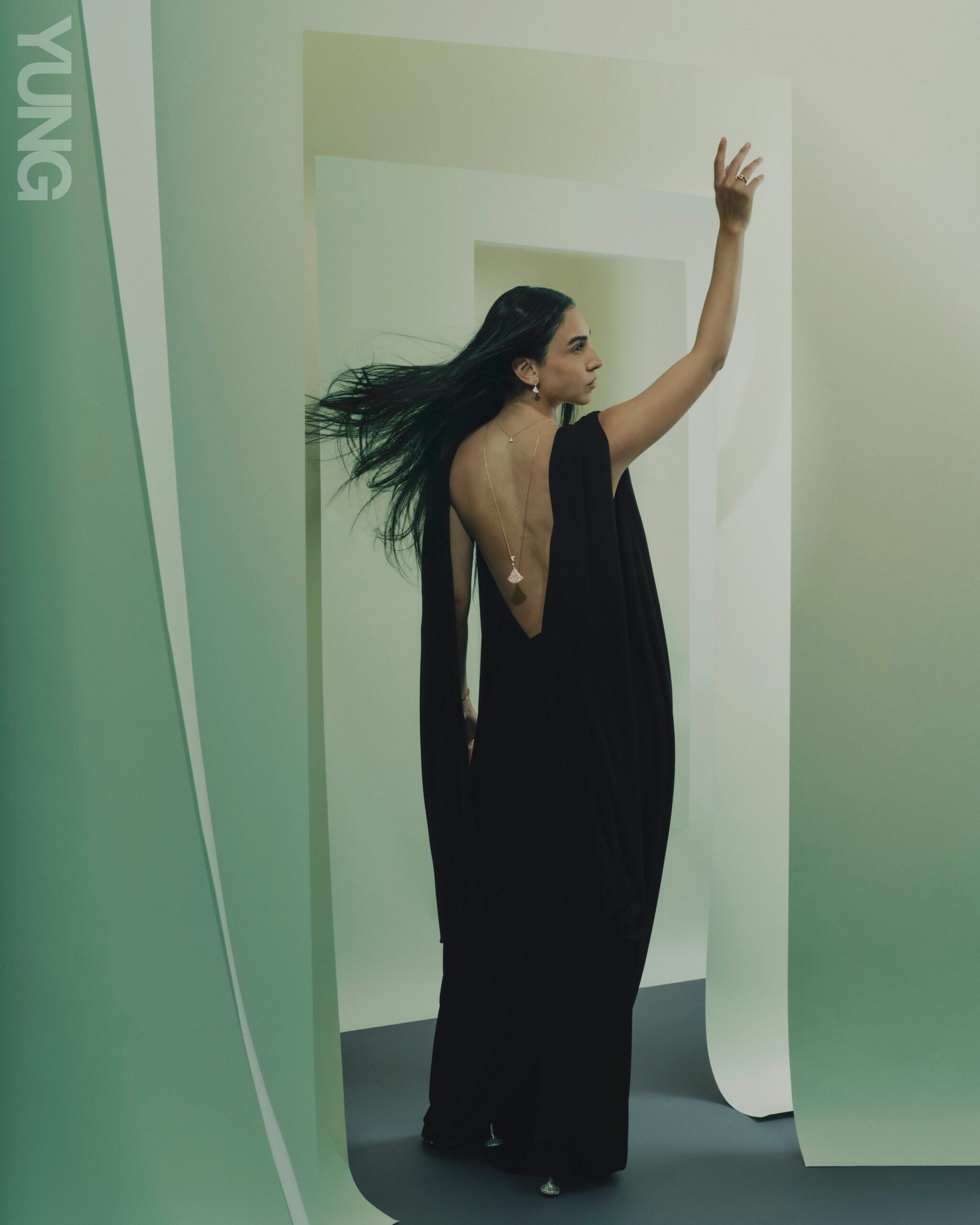
Before accepting a role, she imagines herself fully inside the script, interrogating its emotional truth. “Does the story make sense to me? How true can it be to reality?” If that gut-check fails, she walks away without a second thought. There is a fatalism in her career choices—a belief that this is rizq. “I never regretted turning down something. No matter what, it just wasn’t mine.”
When she does say yes, the process is almost meditative. To “disappear” into roles like the one in 2026 Ramadan’s 15-episode series Ard Wa Talab, Abu Deif relies on a cocktail of instinct and physical discipline, working closely with directors on breathing and grounding techniques. It’s a delicate balance of bringing her own beliefs and emotions to a role while ensuring the character doesn’t consume her. “You separate from who you are and the character you’re playing, just to be in the moment,” she explains.
Abu Deif recalls the intense, contained environment of Ard Wa Talab, where the emotional weight of playing a morally complex character like Heba, became so heavy, she had to physically separate herself from the role. “I was telling myself: This is not real. I’m Salma and this will be over. I take a moment away from everybody and stabilize.”
In Abu Deif’s eyes, acting, in a way, is a projection of a mindset. “Every artist, [be they an] actor, director, [or] writer, brings their emotions, thoughts, and beliefs onto the story.” By rejecting roles that don’t speak her mind and seeking out the rare “gift” of a good script, she is levelling up her game by staying picky. In her world, if it doesn’t speak to her, she doesn’t want to do it. Period.
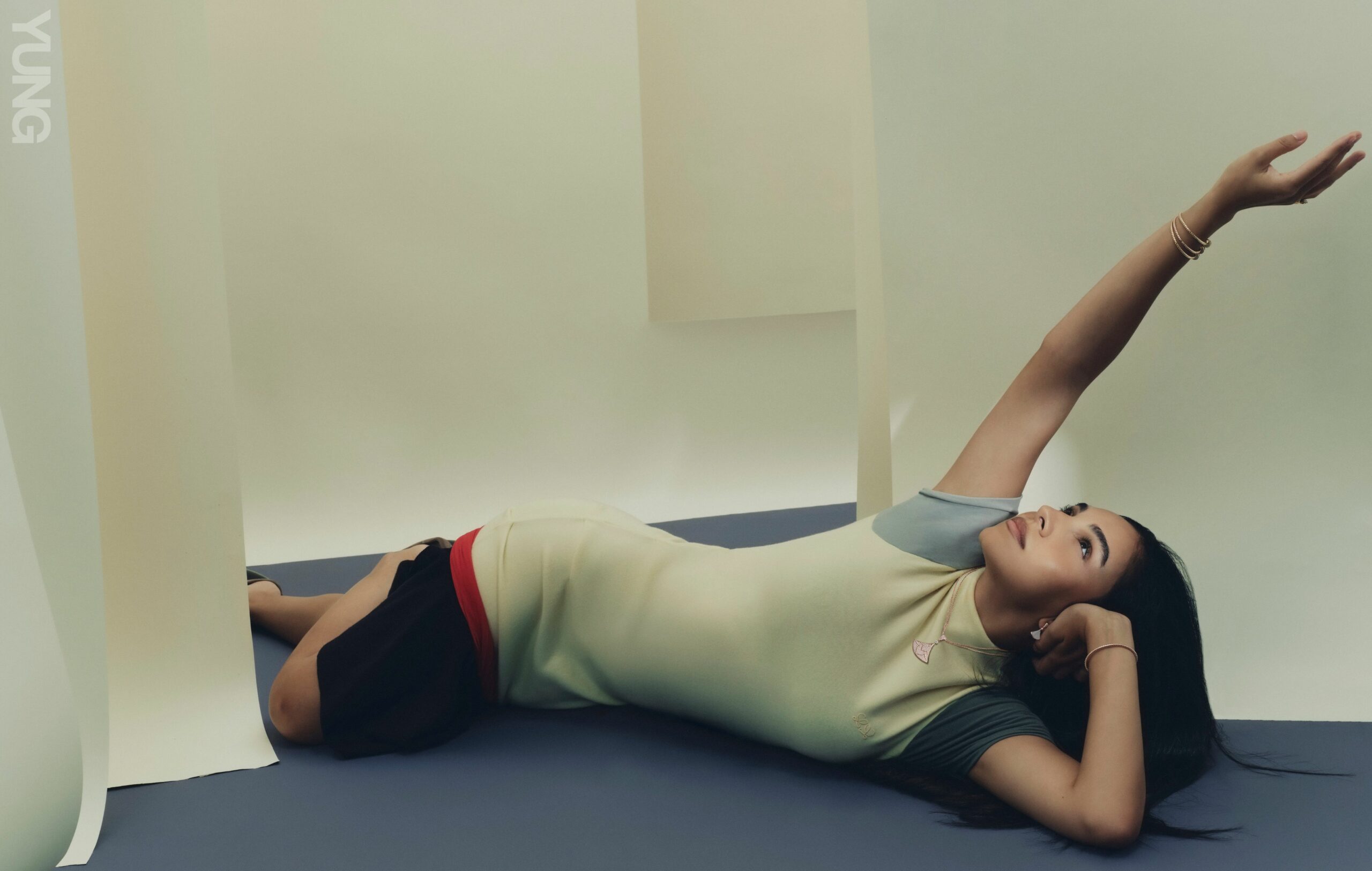
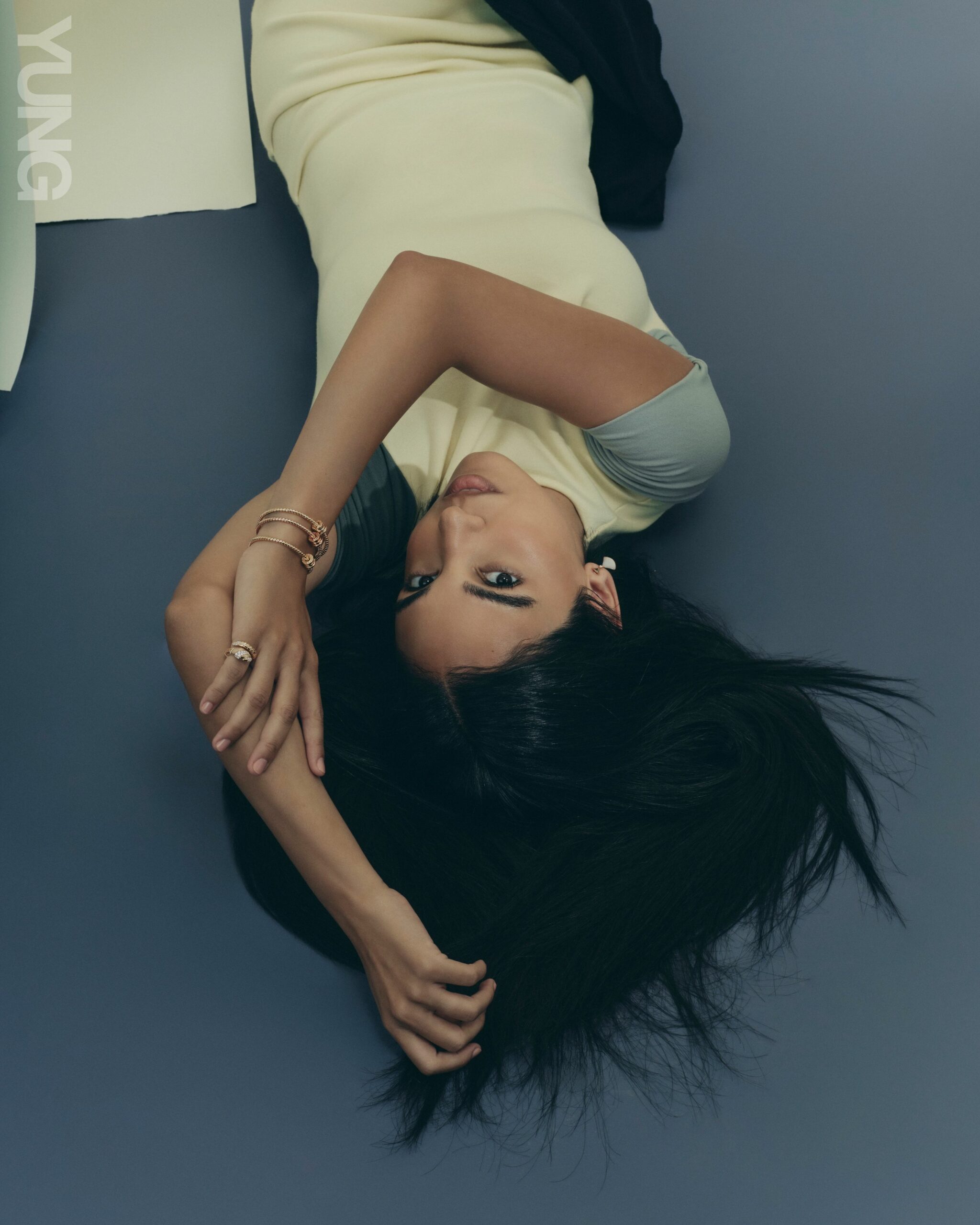
Salma’s career trajectory has been a lesson in learning to trust her gut—a lesson she admits she had to learn the hard way. “Every time I didn’t trust my gut feeling, I regretted it. Until I learned the hard way: I need to listen to it.” That intuition now dictates her refusal to be typecast or to accept roles that frame women as secondary ornaments.
Ironically, it took a blunt encounter with a famous international actor at a fashion event years ago to crystallize her self-belief. When she told him she didn’t think she was a good actress, his response was a sharp wake-up call. “If you think of yourself like that, I don’t know what to tell you.” He didn’t sugar coat things to her, and it turned out to be exactly what she needed. “The encounter upset me at first, but when I humbled myself and reflected on it, I realized that if I keep seeing myself that way, then that becomes my reality,” she shares with YUNG. “It’s the Law of Attraction. You have to believe in something before you can become it.”
While acting requires her to disappear—”The character wears me,” she notes—fashion offers her the rare chance to regain her own image. As Loewe’s first regional ambassador, she doesn’t see the brand as a costume, but as a medium. “When I do fashion, I can go crazy, classic, elegant, whatever my mood is. Usually, with fashion, I do more me.”
It’s a full-circle moment for the girl who used to dream of wearing the designer dresses she now commands on red carpets. Yet, even in the turbo-charged world of fashion weeks and flashing bulbs, her mind is often elsewhere—specifically, on the legacy she is building for her daughter.
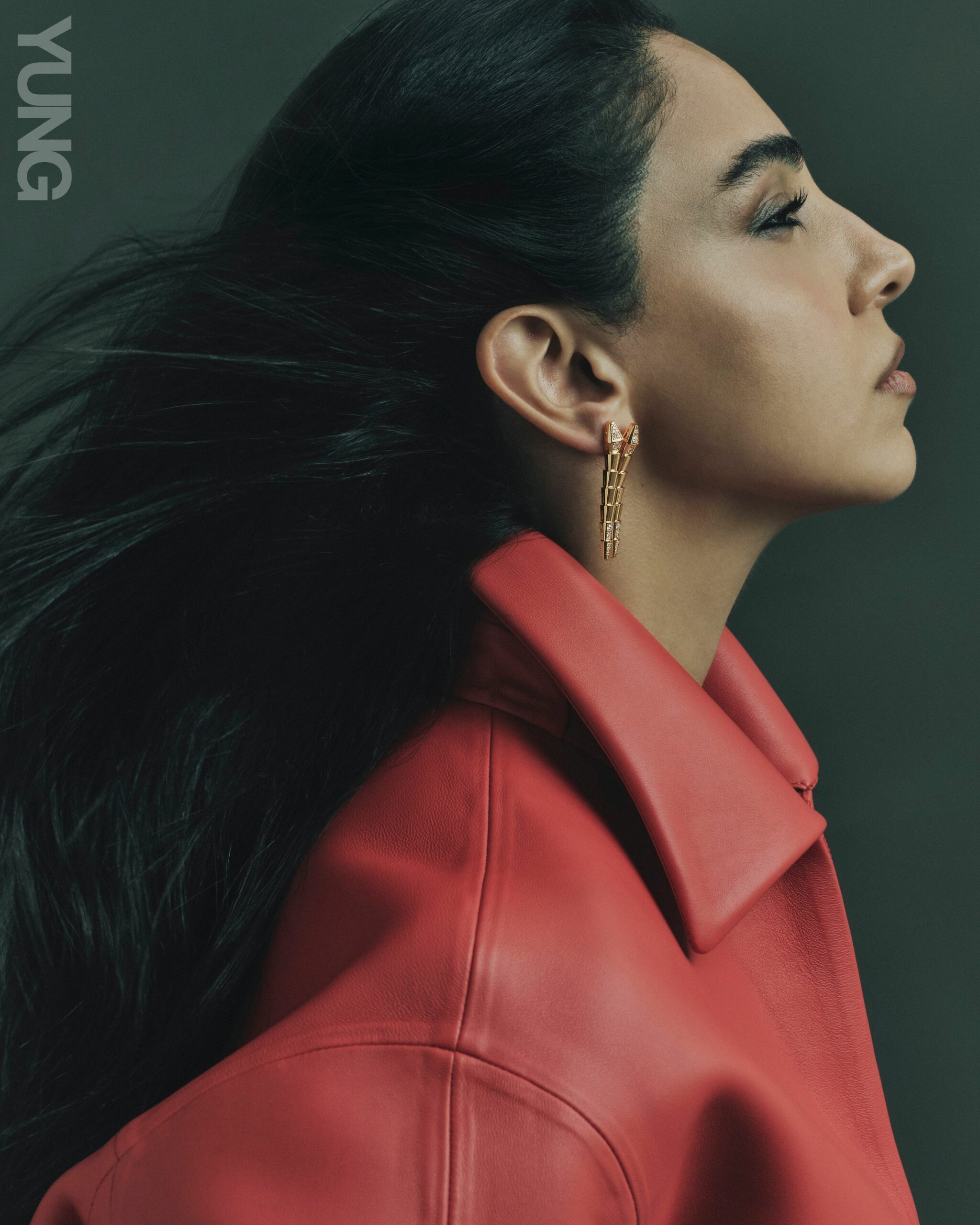
Motherhood, often framed by the industry as a point of “stagnation,” has had the opposite effect on Abu Deif. It hasn’t softened her ambition. “Now I want to do work that my daughter would be proud of. Motherhood gave my ambition a bonus.”
Abu Deif is not interested in roles that require her to be a “statement” for the Middle East. She is, however, advocating for a type of regional auteurism—stories that are local yet universally felt. “I want to play a human being, without any differentiation in colour or religion,” she explains. For her, the goal isn’t just to be an Arab actor in a foreign film; it’s to export the Arab experience on its own terms. “I want to do something that speaks our voice, our mind, our language, and take it outside the region.” It is a move away from performative representation and toward a “blood and flesh” reality where her characters aren’t shown through stereotypical rose-coloured-sunglasses.
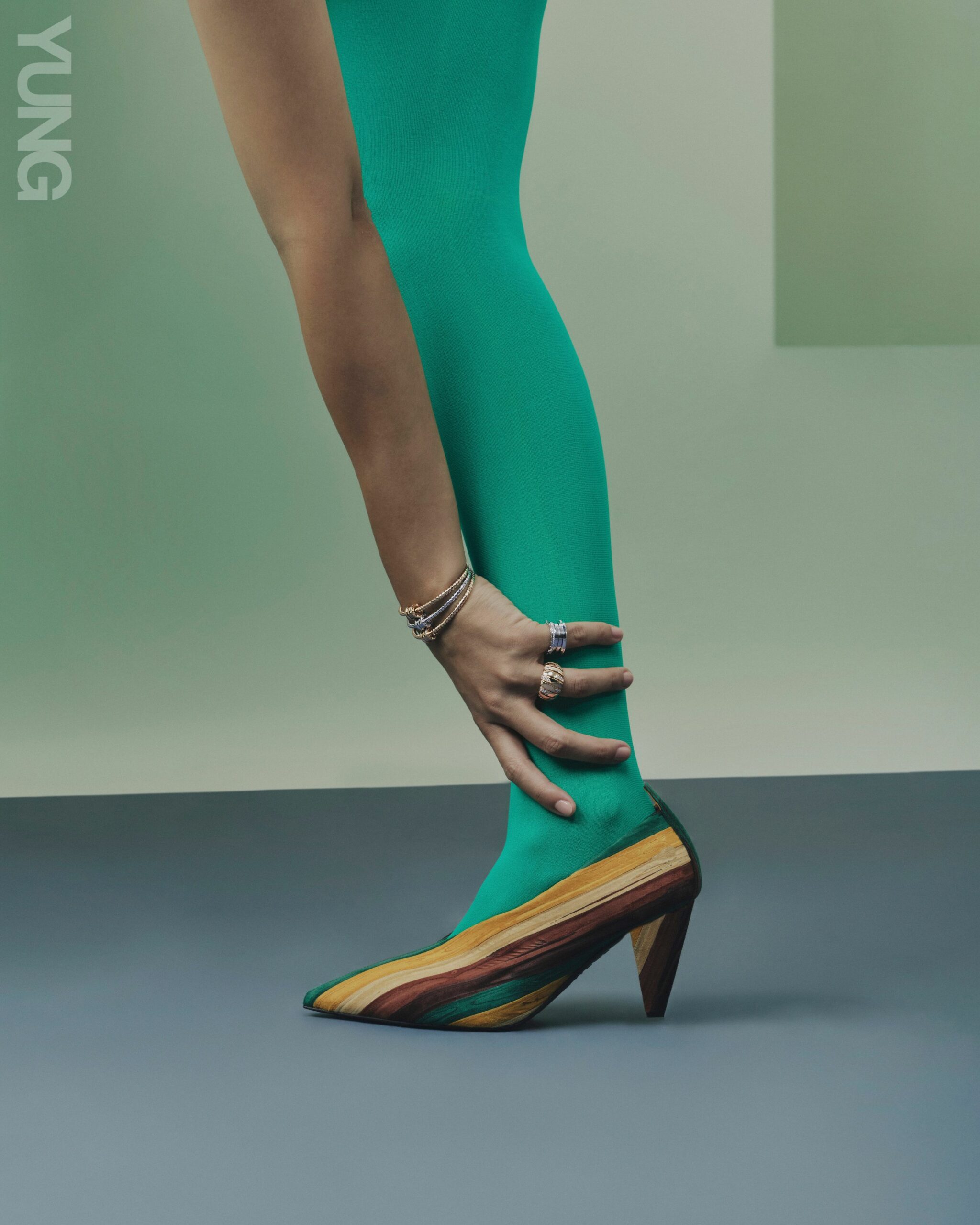
This insistence on authenticity extends to the Egyptian industry itself. The actress is vocal about the conversations the industry has historically avoided—domestic violence, harassment, and the voices that haven’t been heard yet. While she acknowledges the progress made in recent years, she views her work as a continuous push toward these un-told stories. For Abu Deif, the international stage isn’t a destination to reach; it’s a by-product of being herself in her own language.
She admits a preference for working with emotionally intelligent directors who understand the nuances of human behaviour without a “misogynistic lens”, highlighting the depth that comes when a director can truly put themselves in another person’s shoes. It’s this discipline—the ability to disappear into a role while maintaining the mental fortitude to tell herself this is not real—that has allowed her to navigate the most intense scripts without burning out.
“I enjoy working with women directors because I feel there’s usually a deeper emotional understanding there,” she explains. “But honestly, for me, it’s more about empathy. An empathetic, well-read, emotionally intelligent director or writer — someone who really understands people— that’s the perfect combination.”
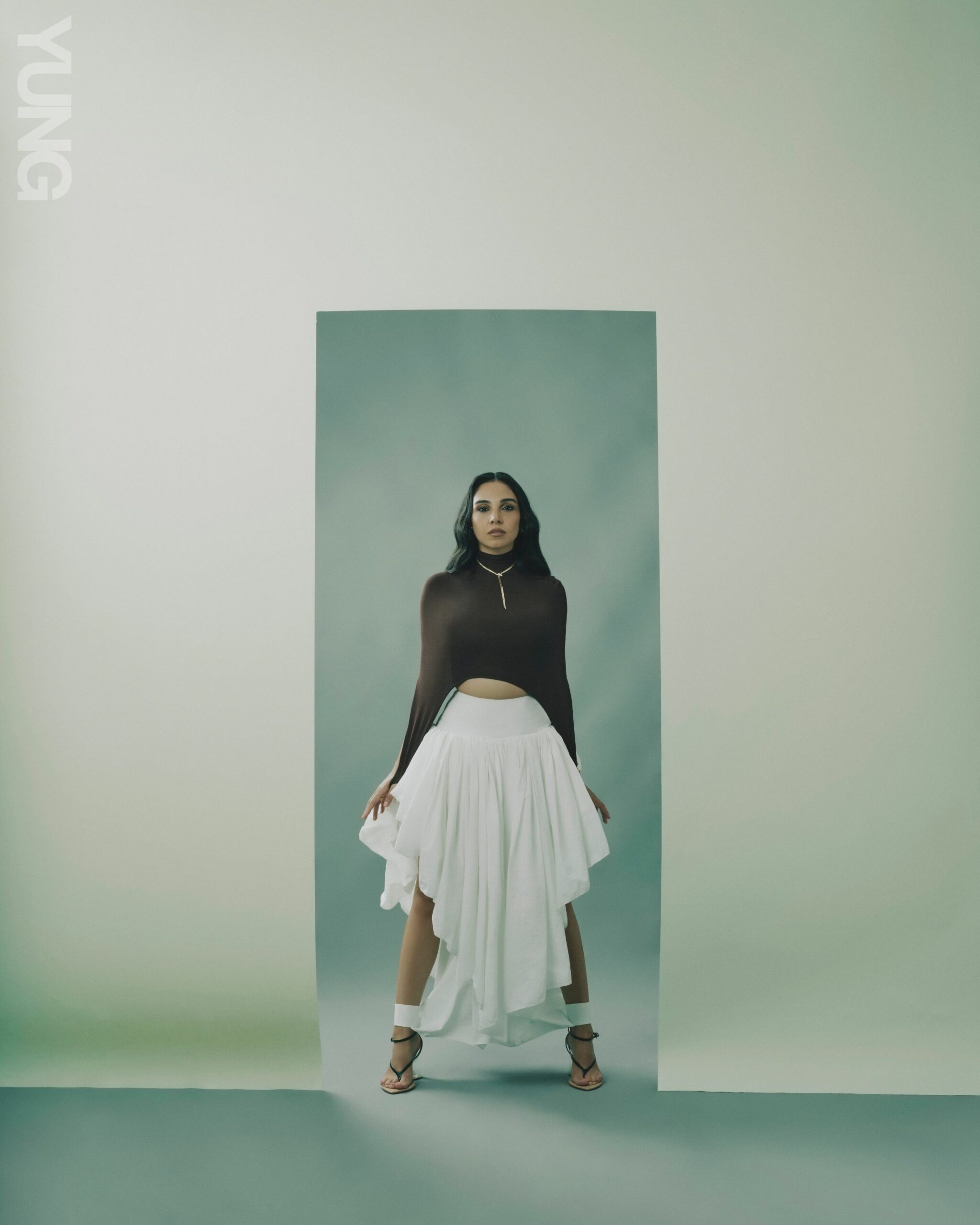
She pauses before adding that female writers and directors sometimes bring a particular sensitivity to emotional nuance and inner worlds. “Women often understand emotions differently,” she says. “When you’re writing a female character especially, it takes someone who genuinely understands feelings and emotional complexity to make that feel truthful.”
There is a kind of clarity that arrives with one’s thirties. While her twenties were a “phase of discovering and going with the flow,” her current decade has demanded a more substantiated, sometimes uncomfortable, introspection. “In my thirties, I’m more grounded,” she says, before adding with striking candour, “some parts I met in my twenties, I didn’t like.”
It is a rare admission in an industry constructed on the curation of perfection. Just as she learned in acting school never to judge a character—to seek the motives behind even the most morally uncomfortable roles—she is now applying that same non-judgmental lens to herself. By refusing to distance herself from her own shadow sides, she has found a deeper sense of internal peace. “I don’t like to present anything to anybody… I like to be myself, for me, and still stick to myself.”
This internal foundation is what allows her to navigate the strenuous world of global fashion and celebrity without losing her axis. She has stopped seeking validation for who she is, and redirected that need toward her work. “I don’t want validation for who I am,” she insists, “just my acting or work.” It’s a distinction that protects her spirit; by keeping her “private and sacred” parts off-limits, she ensures that even when the spotlight is at its brightest, the most authentic version of Salma Abu Deif remains entirely her own.
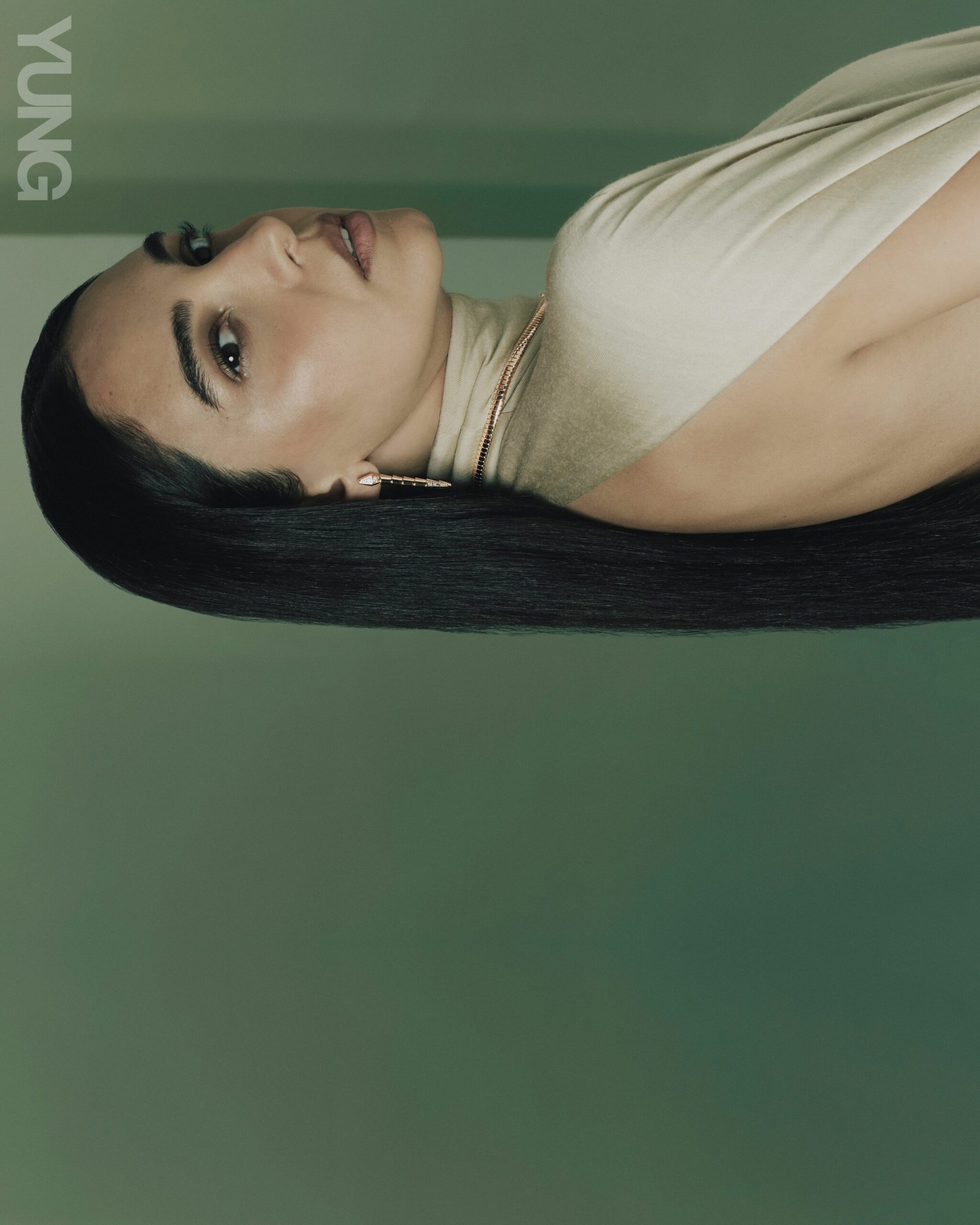
Validation is the industry’s primary currency, but she refuses to be spent by it. She doesn’t subscribe to the celebrity myth of not reading the comments. Abu Deif, instead, approaches her audience with a mix of genuine intimacy and iron-clad discipline. While her peers claim total digital abstinence to stay sane, she admits to looking for feedback —she just does it from behind a psychological shield.
“I think fans and people who watch are very smart,” she observes. “They’re well-read, watch a ton, and get alive from art itself.” This respect for the viewer’s intellect is why she values constructive criticism; she knows that a truly engaged audience can spot the authenticity of a “human behaviour” in a scene. She even recognizes the handles of long-time followers who have been with her since the start, acknowledging the time they give her with a sense of genuine gratitude.
However, she has also mastered the art of the emotional filter. She recognizes that the vitriol found in comment sections is rarely about her work and more about the person behind the screen. “Some people write stuff if they had a bad day,” she reflects. By categorizing certain negative noise as a “projection” rather than a personal failing, Abu Deif maintains her equilibrium. She seeks validation for the work, not for her existence. This high-level emotional intelligence allows her to stay connected to her community without being consumed by it. For her, the audience is a partner in the storytelling process, but they aren’t the authors of her self-worth.
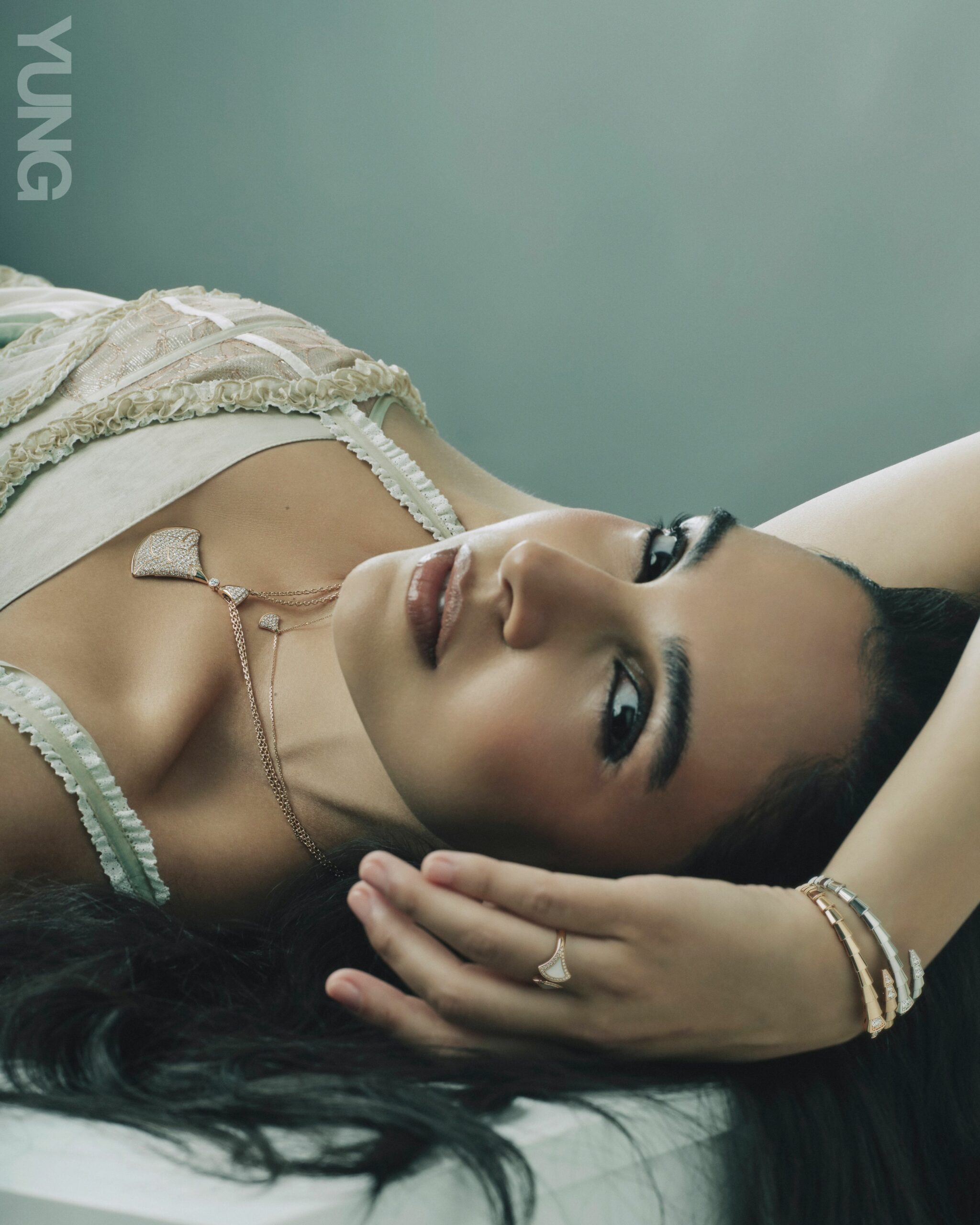
These days, she’s proving to herself—and to the daughter watching her grow—that you can be a good person and a powerhouse at the same time. As she looks toward her upcoming cinema releases and new TV roles, she does so with the confidence of someone who knows that even if the spotlight disappeared tomorrow, the woman standing in the centre of it would remain unchanged.
While Abu Deif presents as a picture of composure, there is an internal storm that she has learned to harness rather than suppress. “I get addicted to performing under pressure,” she admits, a revealing look into the psychological engine that drives her most intense roles. This isn’t the celebrity “I love my job” platitude; it’s a raw acknowledgement of the physiological toll of the craft.
She describes a nervous system that thrives on the edge—where the stress of a major scene or the chaos of a set becomes a form of fuel. “I can’t control my impulses or emotions,” she admits. “What I feel, I say.” It’s perhaps this exact openness — this resistance to over-curating herself — that makes Abu Deif feel compelling both on-screen and off. It is in these moments that she finds her “truth,” even if it means losing her temper or feeling stressed to an extreme.
“Your mind is here and there, and here and there,” she exclaims, describing the frantic mental state right before a major moment. But for Abu Deif, that scattered energy ends up being the catalyst. It’s the difference between a performance that is strictly “correct” and one that is electrically alive. By leaning into the pressure, not running from it, she has turned her anxiety into an understanding of exactly how to navigate the eye of the storm.
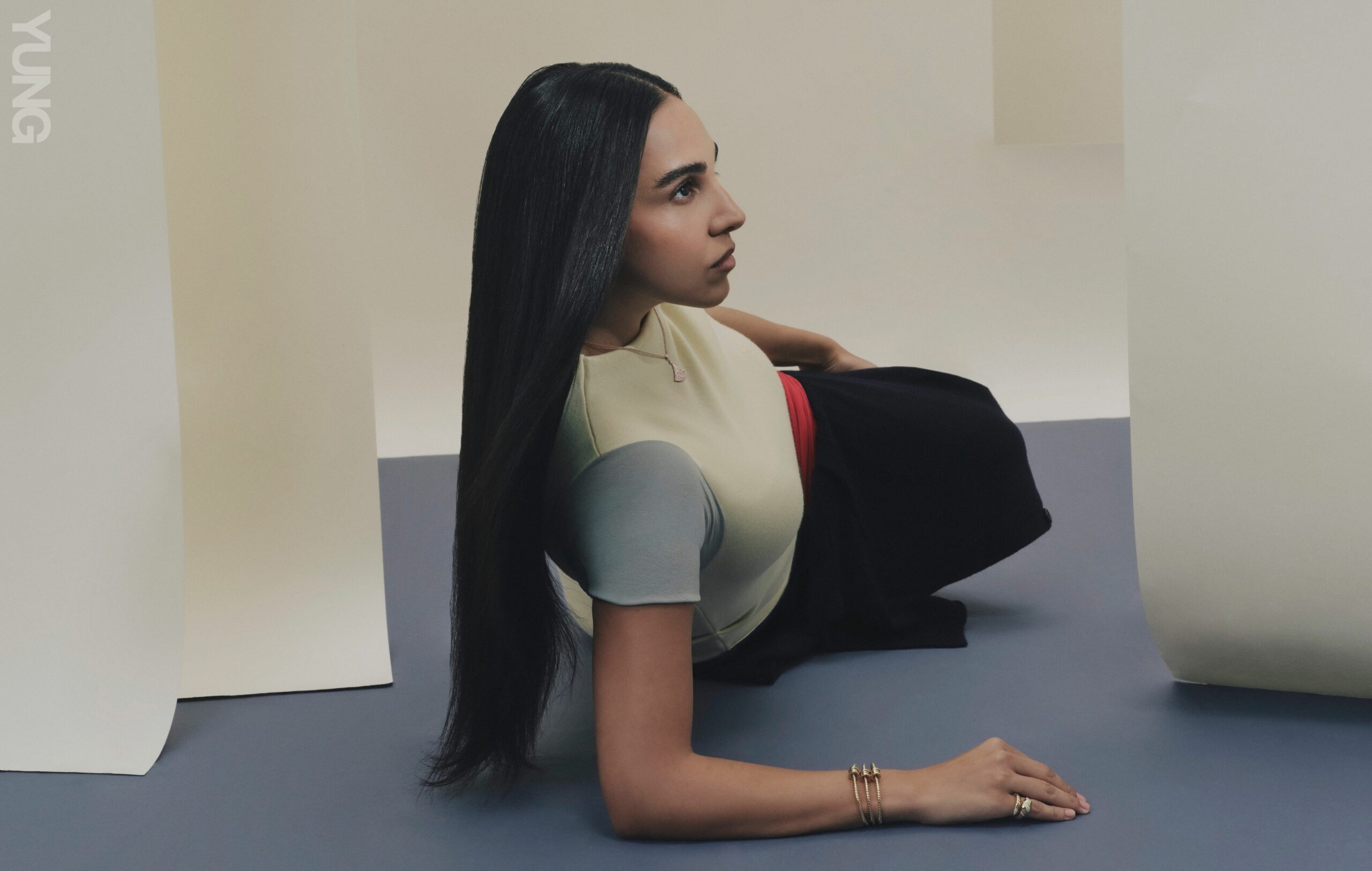
Behind the “sneaky questions of journalists” and the chatter of public opinion, Abu Deif remains a woman who is still discovering her own layers. She is comfortable being in between—neither overexposed nor out of the picture. Success, she concludes, isn’t found in the headlines she avoids, but in the healthy, stable life she returns to once the cameras are off. It’s the fact that after the cameras stop and the Loewe dress is tucked away, she is still exactly who she intended to be.
If everything she’s built were to disappear tomorrow, Abu Deif is confident that the core of her—that inner child who remains unshaped by the industry—would stay perfectly intact.
For more stories of art and culture from around the region, visit our dedicated archives and follow us on Instagram.