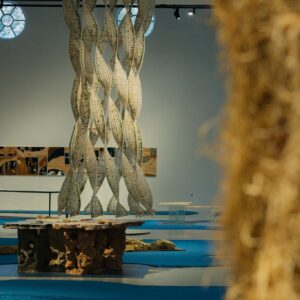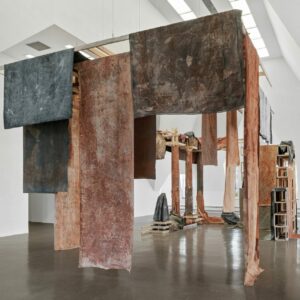
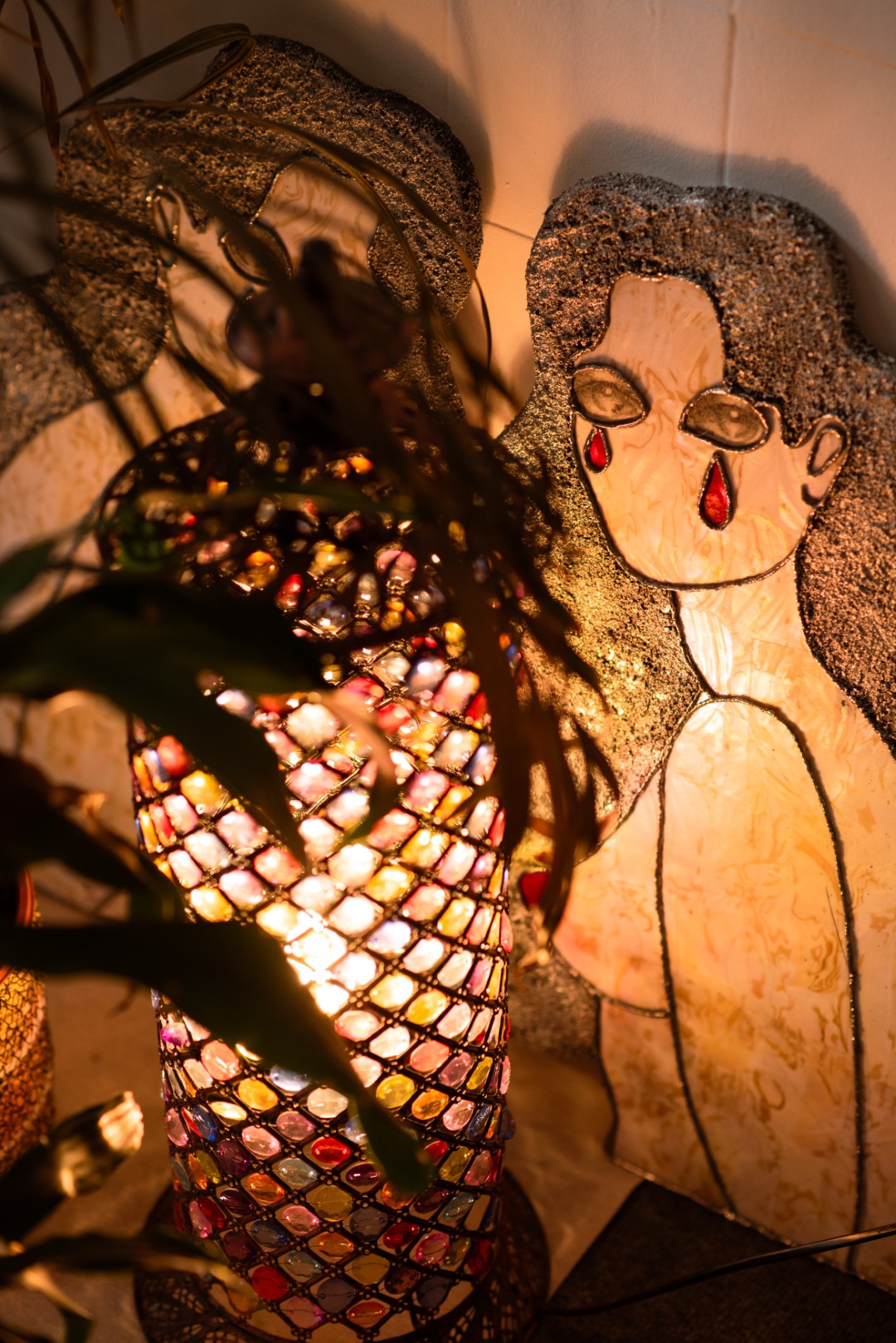
Zayn Qahtani works as both maker and archivist, building a visual language that feels unearthed rather than authored The Bahraini, London-based artist moves between drawing, painting, and sculpture to assemble what she describes as a personal, synesthetic archaeology. Her works read like fragments from an alternate lineage; objects that suggest a life before, and beyond, the hand that shaped them. Material is central to this illusion of discovery. Papers made from Bahraini date palms, bioplastics derived from sugarcane, and pigments sourced from plants, metals, crystals, and earth merge into animistic forms that hover between relic and invention. Rather than offering fixed narratives, Qahtani builds worlds of suggestion, where memory, myth, and imagination quietly coexist.
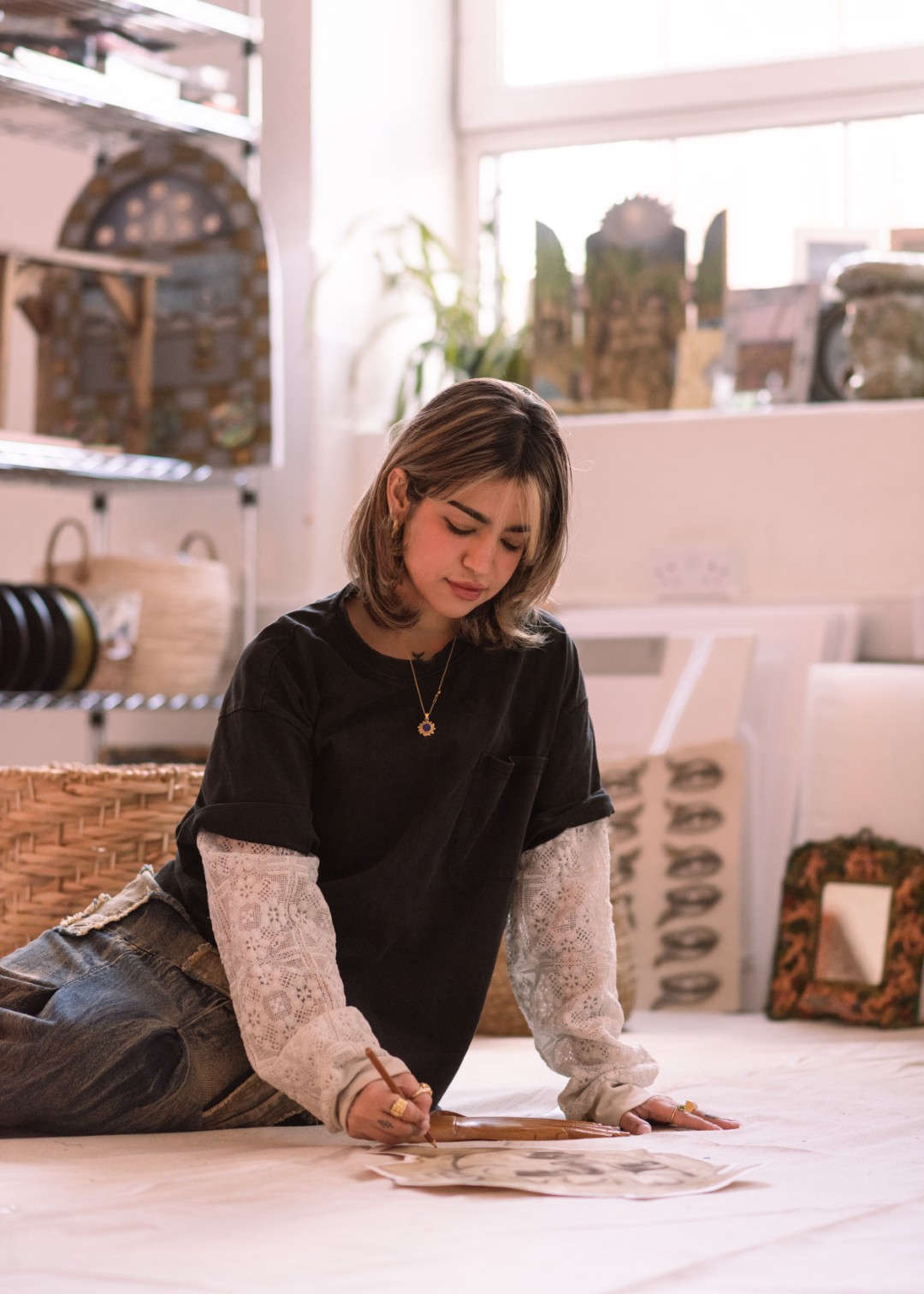
How your practice first began, and what led you to move between drawing, painting, and sculpture?
I first began as many do – drawing on the margins of school notebooks, all over my arms – I found the need to create was quite difficult to repress.
As for keeping a multidisciplinary practice, it is extremely natural to me. It is like a secret language that I can decipher by painting on this and forming on that – eventually an entire vocabulary forms.
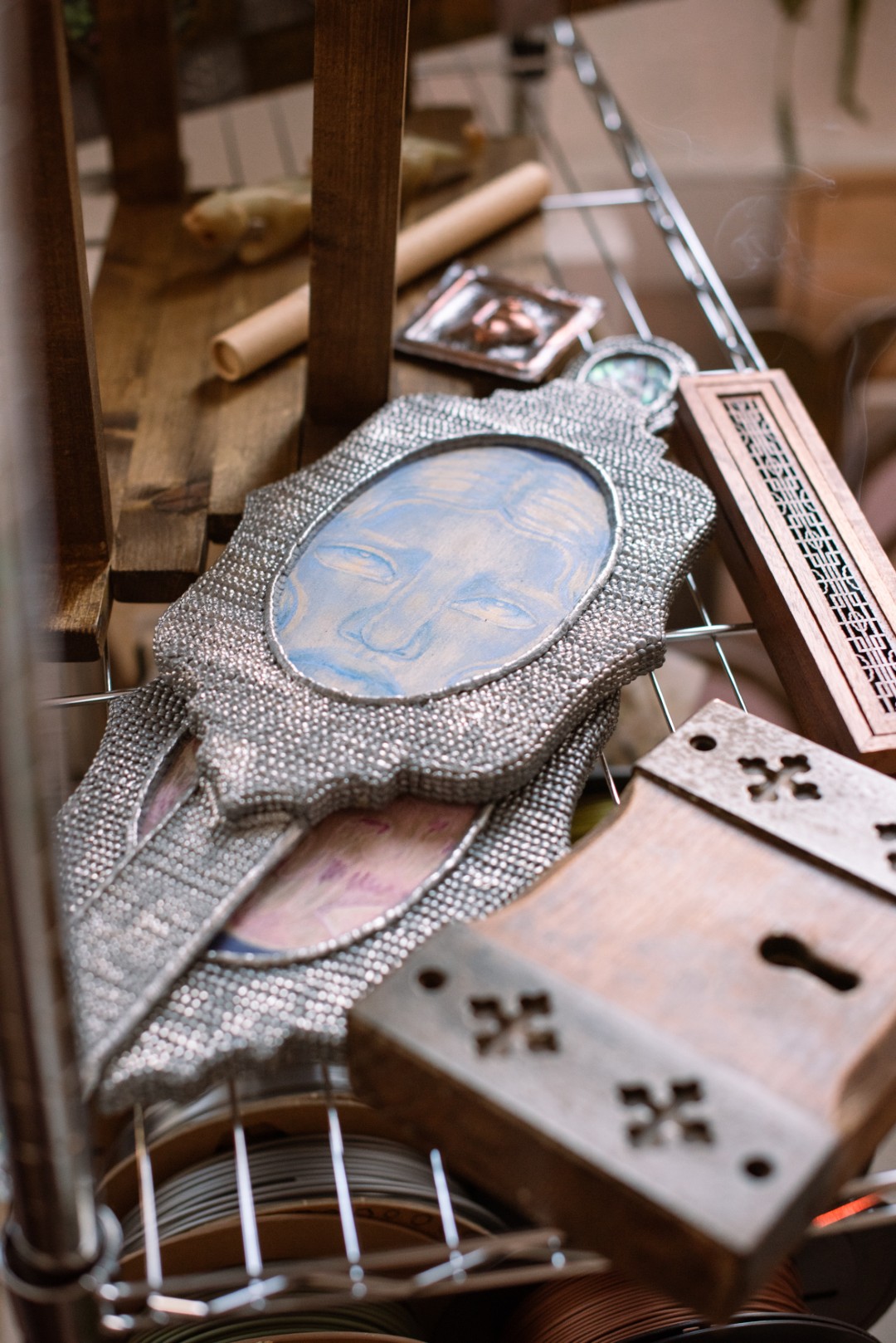
Your work feels archival, almost as if it existed before you found it. Tell us about your process.
The materials I use lend quite a natural, time-worn feeling to the works. Through the process of alchemy, these fibres or pigments that once lived full lives – perhaps on a tree or underneath the earth – are now lending this lived-in quality to a newer work.
I also love to use repurposed materials from found objects – prying the bells off of a wind chime or using the front-face of an antique frame. It’s almost like a patchwork of memory.
Gold and silver metals appear often in your work. How do these materials shape the story or mood of your pieces?
The bioplastics I use often give off an air of trompe-l’œil, mimicking spiritual artefacts and ancient relics using contemporary means. Work that sits in that liminal space often can mean that no matter how venerative the work feels, it can also feel equally as illusory, or “made up”. They are definitely the structural, containing element to many of my works, building what I like to call the “spiritual architecture” for the works to sit in.
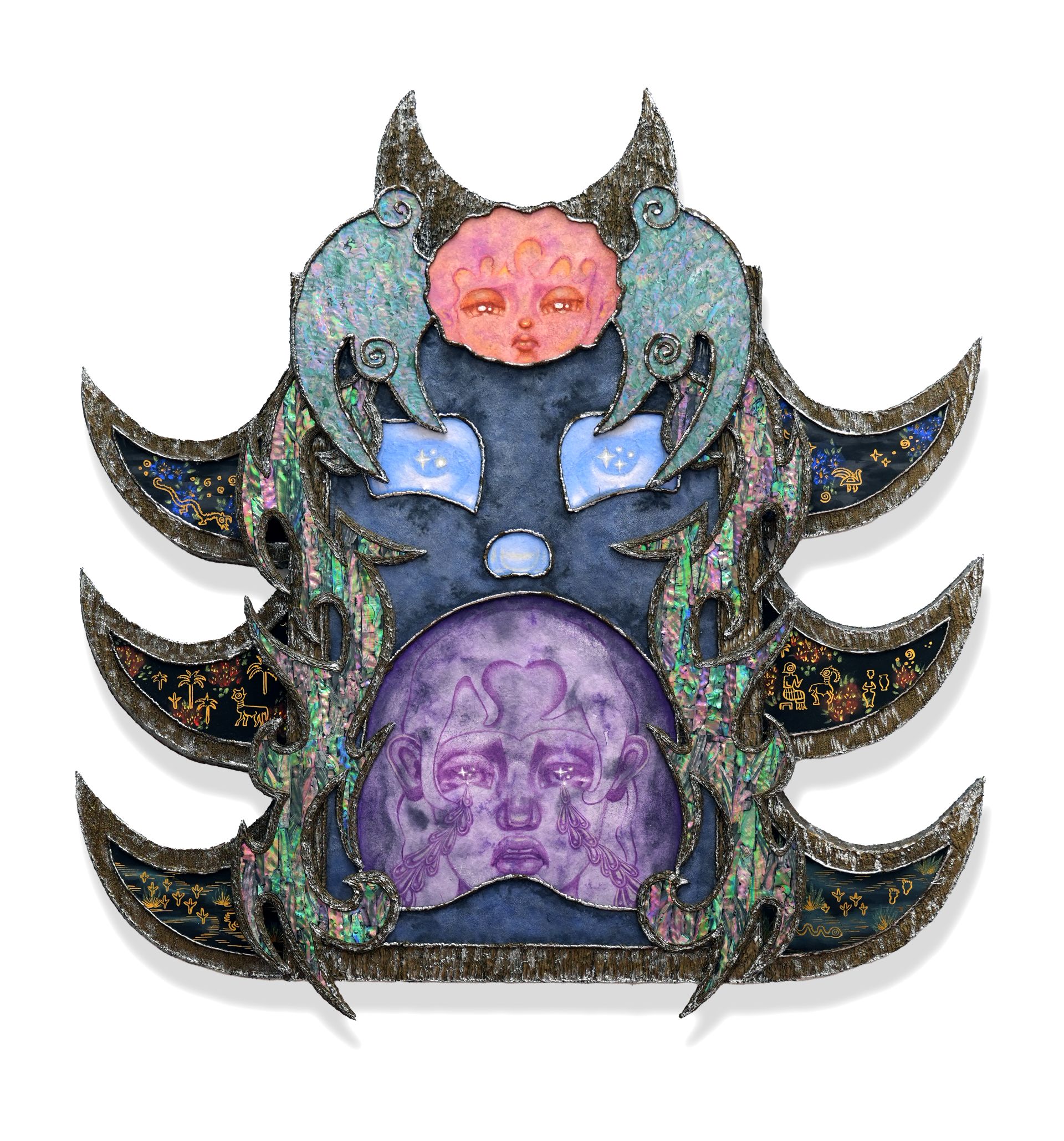
Your objects feel almost alive, as if they have their own energy. How do you approach giving life to materials that are, by nature, inanimate?
The materials are animate! Many times, they are derived from sources of life – plant, soil, crystal, the ocean – and I role play a sort of Dr. Frankenstein, welding this bit to that bit until an animistic quality becomes apparent to me.
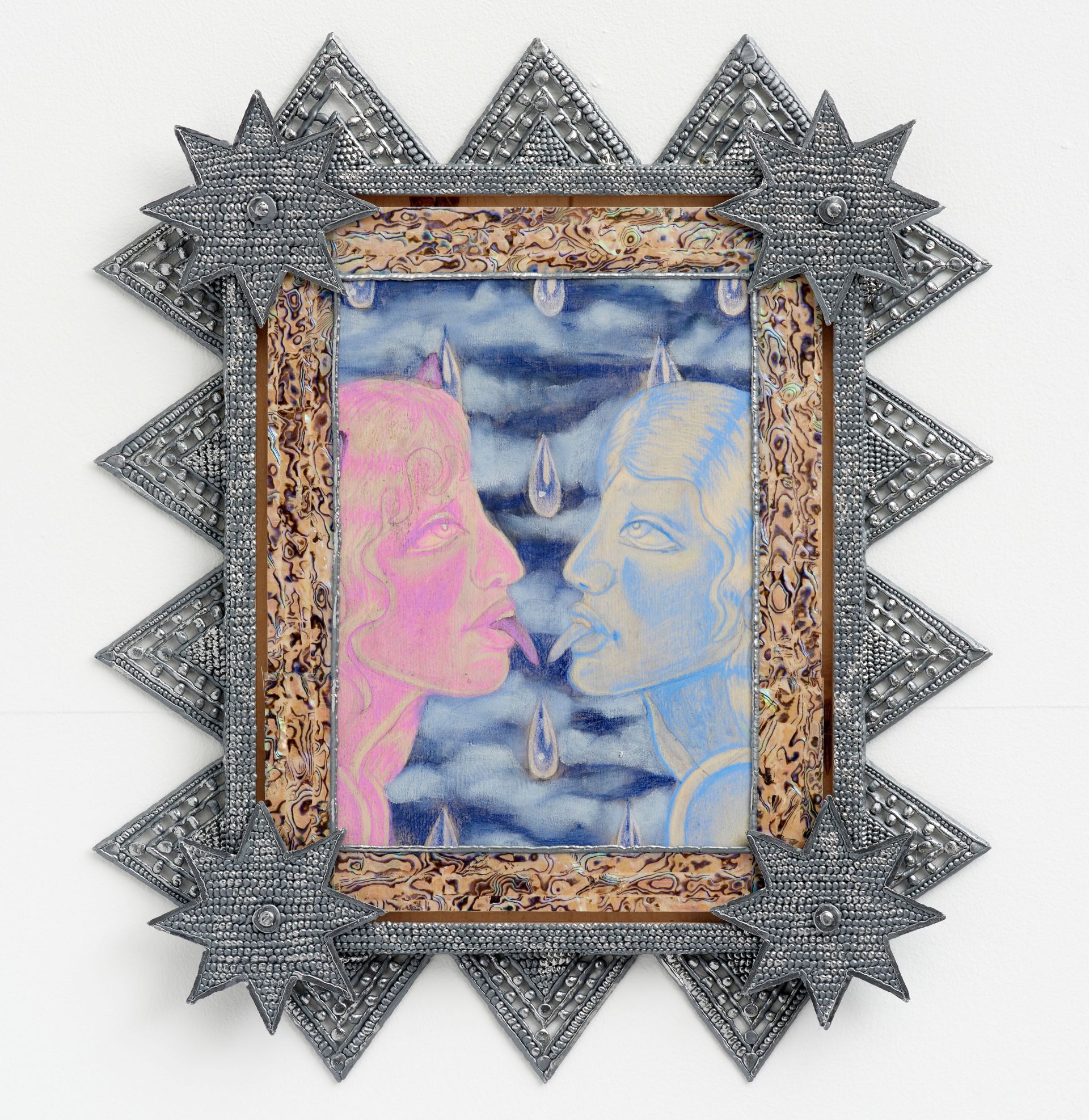
Many of your works hint at stories without fully revealing them. How do you decide what to leave open or unresolved?
It’s a constant dance between what to say and what says enough on its own – I try to follow my inner intuition, and stop when I feel like I’m about to force a narrative.
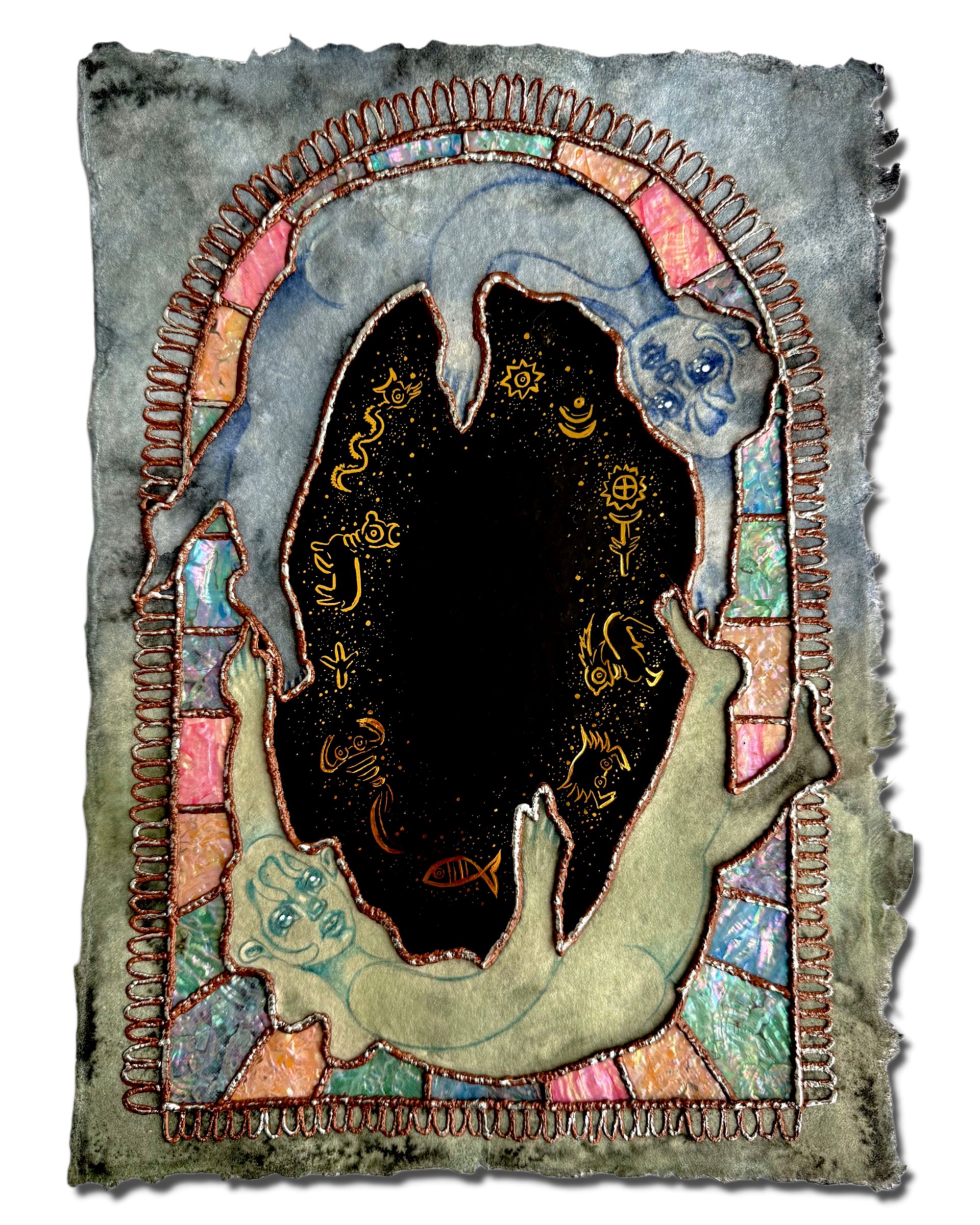
Your work blurs the line between what’s real and imagined. How do you decide which elements to leave familiar and which to distort?
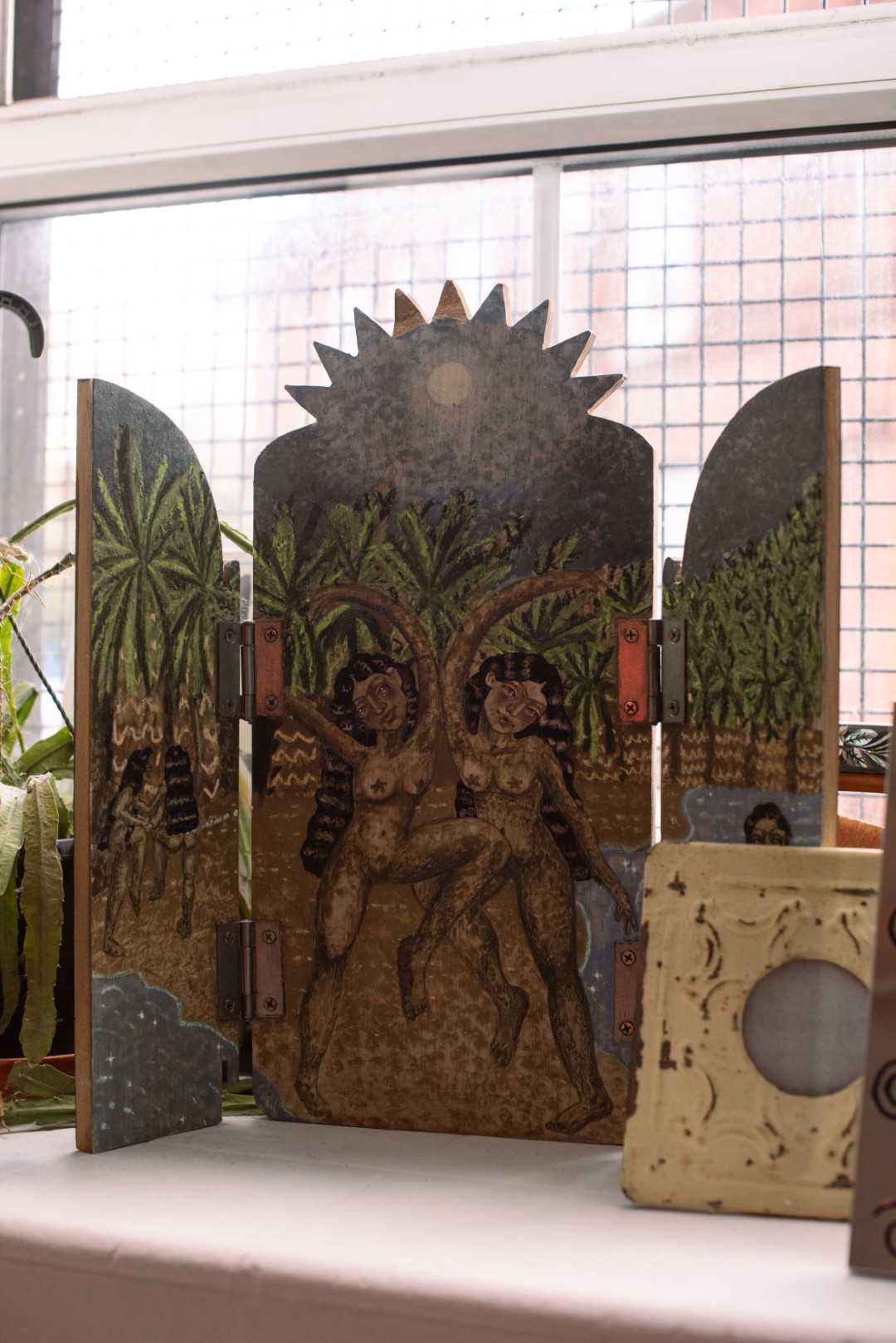
I think the uncanny valley feeling or distortion comes from viewing traditionally decipherable imagery through imagined context – floating body parts, an overly saturated landscape, natural materials in unnatural formations – it all works together to create a dialogue between what already is and what is yet to be expressed.
For more stories of art and culture, visit our dedicated archives and follow us on Instagram.