
Wegz paints the day for us quickly, almost without thinking. The blue of the sea everywhere. A boat with friends, sharing a meal under the sun. Music equipment is sitting somewhere on deck, waiting without pressure. Maybe some catch-and-cook. Maybe do nothing for hours except swim, eat, laugh and disappear from the city and its harsh frequencies.
This, to Wegz, is close to being the perfect day. “Every time you find yourself in these situations, in nature, by the sea, you feel really good. You feel happy,” he says.
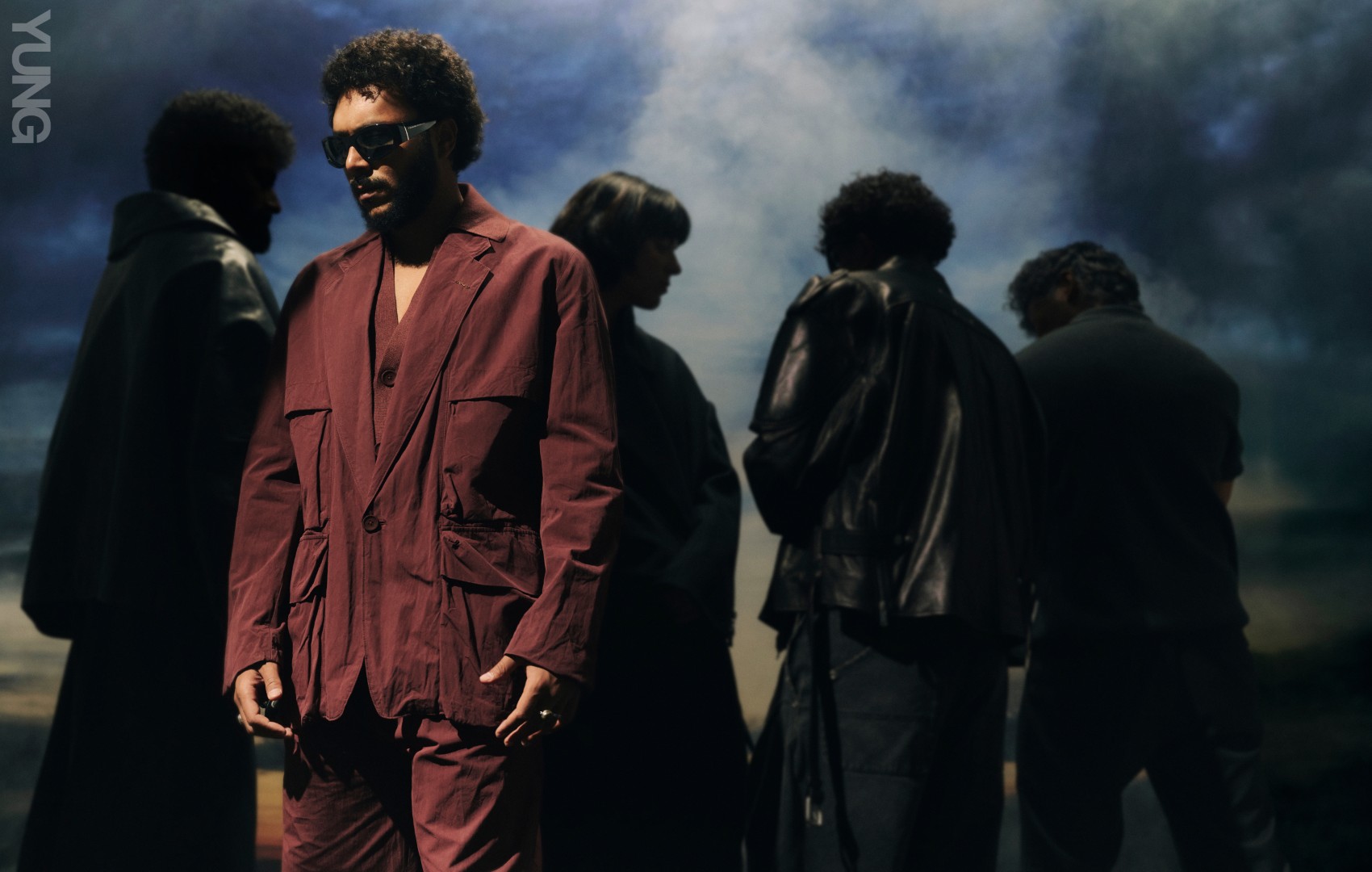
The sentiment sounds so simple. Maybe almost too simple. But then the sentence begins to widen. “When I am by the water, I feel I attract more happiness and more good energy. More good things happen to you when you tend to be thankful and grateful to God for positions like this. You don’t have your phone with you, so there’s no vibrations. There’s no 5G. You’re in the middle of nothing. And you just leave your phone and jump into the water and start saying things like ‘Praise God’.”
This is the register Wegz speaks in when he is not trying to make a statement. He kept slipping in and out of it during our interview. His ideas would often arrive dressed up in a joke but they kept their weight. He is funny, bodily, disarmingly literal and then suddenly devotional. His thoughts do not come out polished or wearing a philosophical veneer. He lets them come out half story, half instruction and half confession. And that maths does not need to check out. It is part of it.
The sea kept resurfacing throughout our conversation, and not in the sense of a decorative metaphor. It seems water for him is a condition – a physical space where the body itself changes its register. It becomes a way to clear the vessel enough for the music to find its way in there.
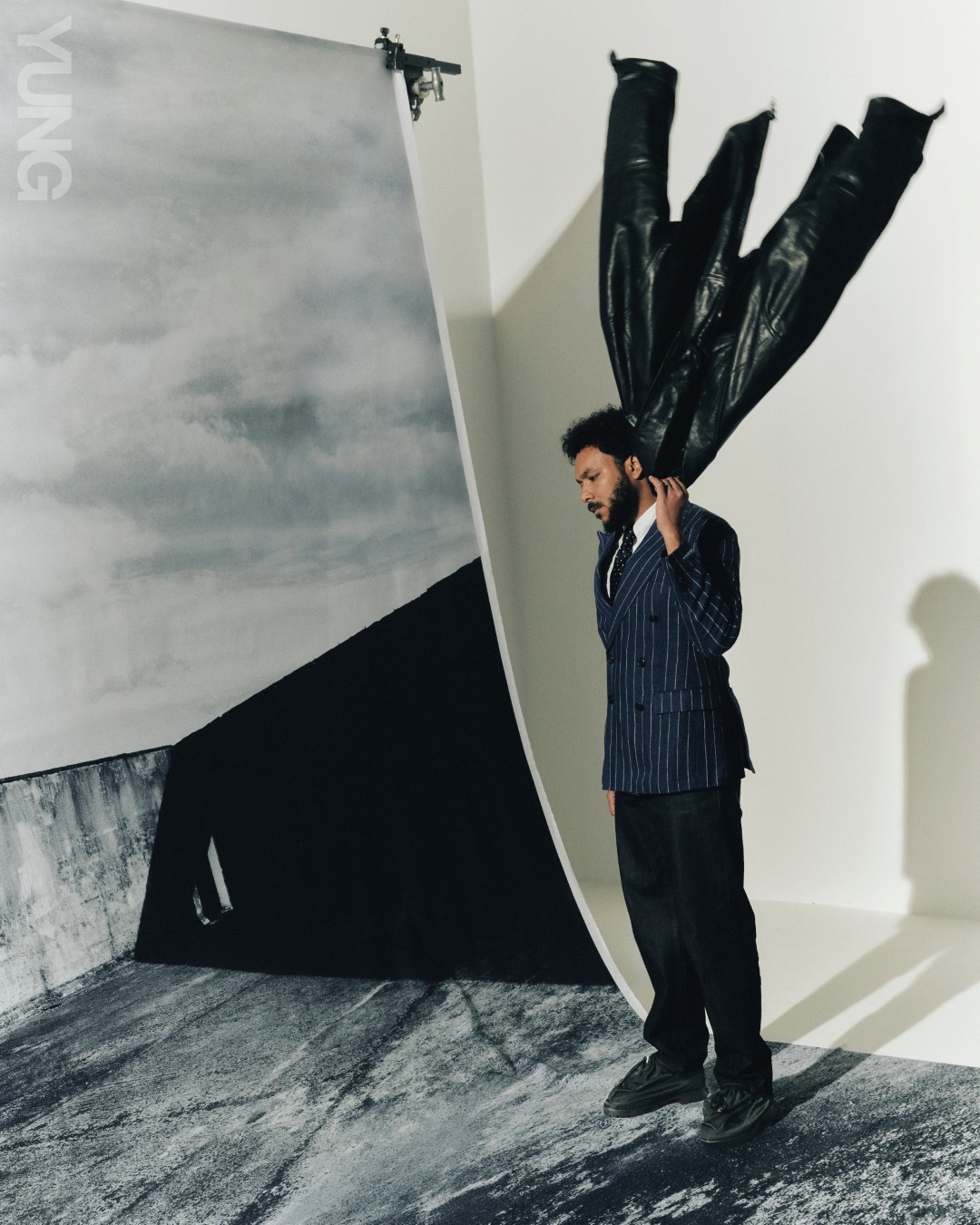
From the way he describes it, water is an operating system, a medium where attention itself changes density. “I was born around it, too,” he says, referencing his hometown on Egypt’s Mediterranean coast, Alexandria. Around water and around that salt-stung openness. “That’s why Alexandria has a lot of artists,” he says, “because in the North Coast, the whole situation is sea.”
He tells me about a street in Bahary where “the two ends of it are a beach.” If you look one way, you see the water and if you turn your head the other way, you see water again.
He begins searching for the word to describe that special place. Almost an island. We pause there. Then we search together. Peninsula. “Peninsula, exactly,” he says, satisfied. That small moment stayed with me – the two of us trying to locate the exact word for a place that had already done its work on him long before it needed to be put into language.
There is something important here about being surrounded. Not just looking at the sea from a distance, but being held inside its perimeter. The sea encloses, salts, and cleans, hugging the city’s edges. Maybe that is why Alexandria has this particular melancholy brightness.
Wegz seems to understand immersion in his body as a felt experience, before he understands it as a concept. Later on, when we were discussing his approach to music and also his reverence for Arabic music, he ended up using the language of water. Depth. Drowning. Falling in. Water as method.
I asked him about his earliest music and what he hears now in it that others probably do not. His answer comes from the space between the distance of these two selves, “I feel like I was projecting a couple of things that I can see right now,” he says. “I judge myself for my music, but it is because I’m not the same person, right?” Then, softer, “I feel like if this person sees me today, he’s going to love me for doing this for both of us.”
His answer is full of tenderness but not necessarily sentimentality. There is just recognition of the journey and that he was not wrong or misguided, just a necessary work in progress. “I feel acceptance,” he says. “I used to think like that, but now I don’t. But I had to think like that, so deeply, to come back from it. I had to have this rooted in me in order to avoid having it later.”
He talks about change in the same way that he discusses water and music. You go in and you come out altered. You have to take that leap of faith and plunge though. That is your offering and duty. Growth and descent are only possible together. “Seeing someone who’s really, really, really brave, it’s because they probably were really, really, really scared. And then they just developed whatever is the opposite,” he says. “I feel like I had to be at rock bottom to be at the top.”
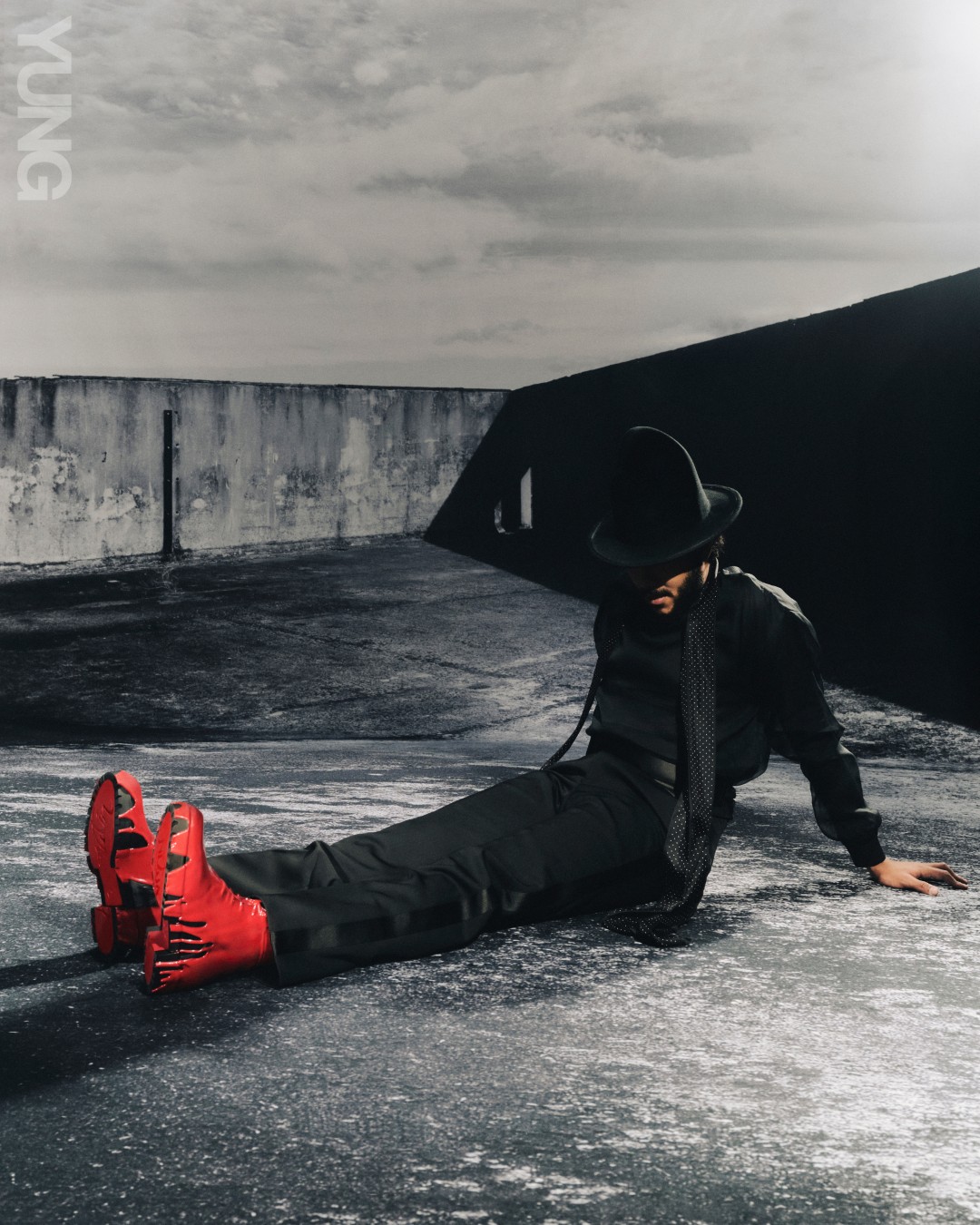
That is the kind of line that, if stripped of its original context, is gold for a motivational quote. But in our conversation, it is carrying sediment, it is more granular. He is describing the mineral process of becoming. Pressure. Like how diamonds are formed. Fear hardens and forms into courage. He now recognizes and forgives the interior weather his younger self was writing from. And he refuses to enter that space again.
And for everyone asking, he has no intention of making music like he did in the early days. He is not that person anymore. “It’s not my perspective,” he says. “People who listen to me right now don’t understand that I will never go back to making music like the old days.” Those songs belong to the life that made them and he is simply saying no to the sentimental trap that asks of artists to inhabit rooms they already survived.
“My music as Ahmed,” he says, using his given name, “it’s something that I had no hand in making. I feel like it was called for. And I was filling a gap. I was making music that I really wanted to listen to in Arabic, but I couldn’t.”
This may be one of the cleanest-cut explanations of his career. That desire was planted in him and he had to do something about it. He had to answer the call that came from that absence. And soon enough, that gap in the soundscape he started out trying to fill for himself turned out to be shared. A whole generation heard itself differently because he had first heard the missing shape and acted on it.
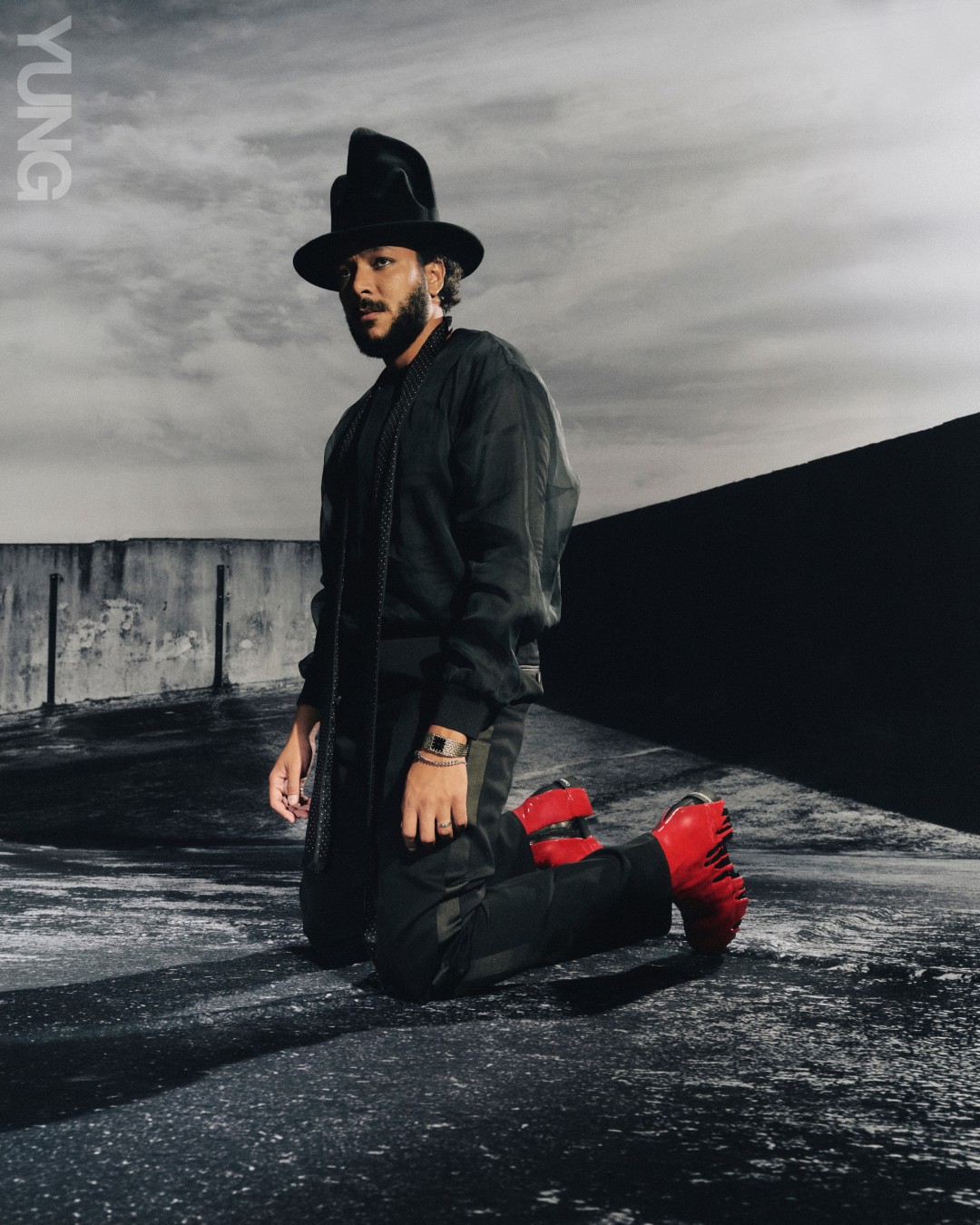
But the task is different now. He knows that. “When I got big enough, when I got global enough, now I’m doing the opposite. I’m actually representing Arabic music abroad for people who listen to Arabic music that is not just surface level. I’m actually digging deep to get you stuff that you’ve never listened to before in your life.”
He speaks as if he is excavating strata, sifting through old recordings, neglected textures, poetic density, obscured routes of feeling.
Sounds buried below the obvious layer. He asks the listener to come closer, then lower and then lower again. “As long as I go deeper and deeper, this is how deep I want you to be with Arabic music. I don’t want you to just listen to it at the surface level and just leave. I want to be the one who gets you drowning into the deepness of everything around it.”
Drowning, to him, carries a positive connotation. And to him drowning is the initiation. He asks of the listener to feel the music first, then that should naturally make you curious enough to translate it, look for the meaning, what he is saying, to find the poetry after the sound has already entered the body, the heart.
He laughs at the idea of someone translating an Arabic song only to find out the words are thin and decorative. “You feel the music first and then you get interested in knowing,” he says. “I don’t want you, once you translate it, to find out, ‘Oh, I love you, my love. You’re my dear darling.’ No, I want stuff that I actually am saying in Arabic, which is super poetic.”

The listener comes closer, the language should reward that effort. The music can travel, enter foreign rooms and sit inside unfamiliar ears. Still, he wants it to arrive intact enough that the translation reveals more, not less.
“I understand the long life that this music is going to have,” he says. Digging is a seeking of the Truth. And what is True stays around. A song survives when it keeps offering up rooms the listener did not enter the first time. “The curiosity of people gets filled with the true self-reflection that I’m doing and the truth of the song itself,” he says. “If you’re going to tell me a story, it has to be something that’s worth listening to. And if you have to tell me that story, it has to be true.”
When I ask whether the sea still shows up in his music, he does not hesitate. “Every time we went to the beach,” he says, “I made a song that changed my career. Every time. When I wrote ‘Al Bakht,’ I went to Al-Sahel. And when I wrote the next song that I’m dropping, we were in Gouna.”
The beach is leisure for most, but for him it is the studio before the studio, pre-production. A practical sequence. Leave the phone. Go to the water. Enter the body. Praise God. Clear the head. Feel more. Receive. Write.
At the beach, he is tuning, a way of making the body available and open to receiving. “Practice in moving water is something totally different,” he says. “Once you dip in, you get washed. You get washed away from everything that you’ve been doing. That’s why there’s so much difference between being on the land, and once you get into the water, there’s an instant hormone change.”
He explicitly said moving water. Not stillness or a view of the sea from the shore. He is describing the contact water makes with the body; it submits to another rhythm, a nervous reset. “You do this for a day, and then you go back home and your mind is just clear,” he says. “You just want to say something because you’re feeling something. You feel more when you’re in positions like this. You went in the middle of your element and your happiness. You have friends around you, or your wife around you, or everyone around you. You feel more. You tend to be more empathetic, more sympathetic. This is what makes art art.”
In his opinion, city life tends to dull that sensitivity. “People feel less in the city because everyone is crowded,” he says. “They don’t care that much because they care about their own survival instinct.”
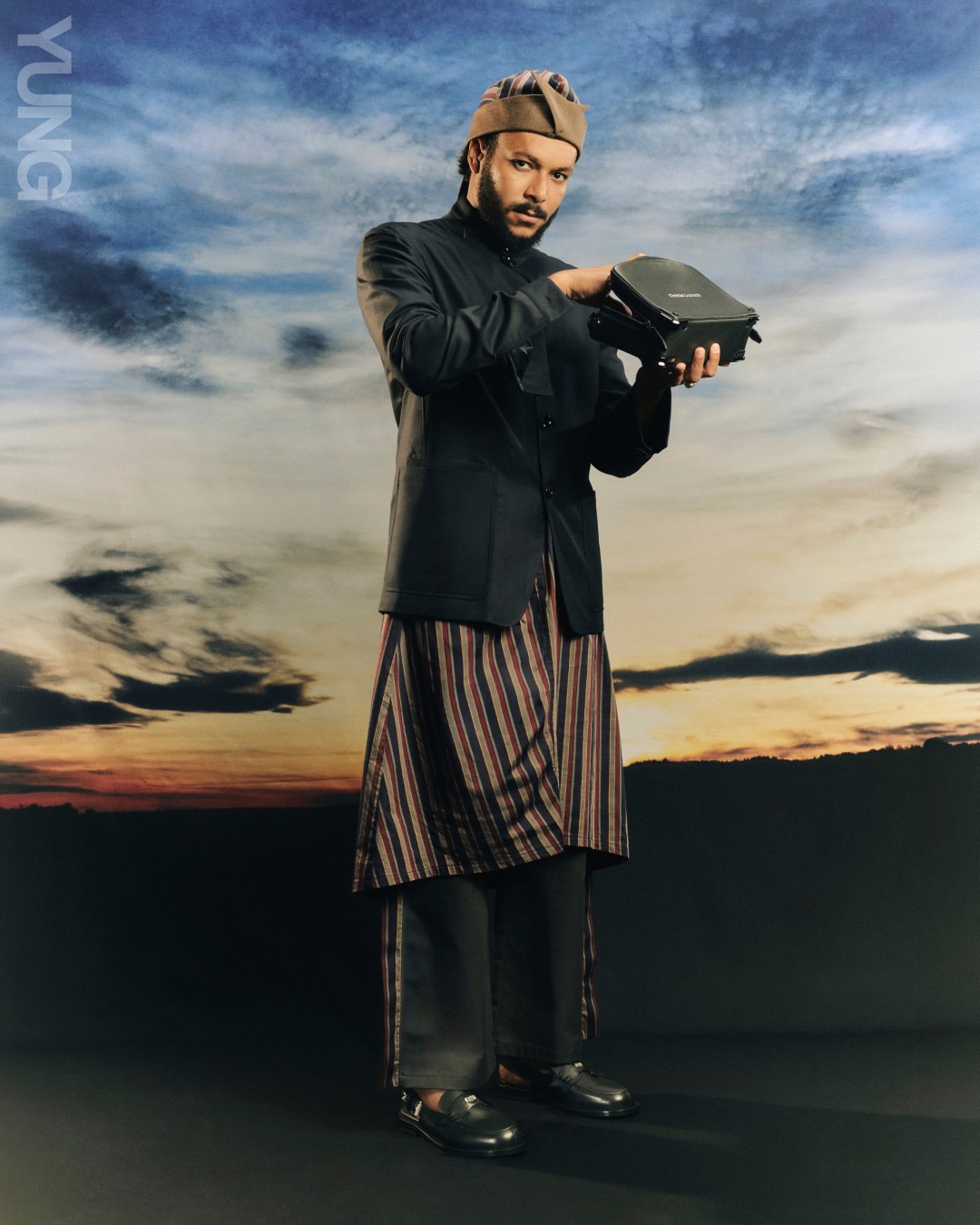
The city narrows our perception, while the sea widens it. In the city, our bodies are occupied by so many different elements and frequencies – threat, deadlines, noise, tomorrow. In the water, he says, something primitive and abundant returns. “You can eat for free because if you catch a fish, that is all you need for food,” he says. “No one is stressing or anxious because they’re thinking about tomorrow. They just wake up and go. They will find something to eat. This is how the universe works.”
This could sound naïve from someone else. From Wegz, it sounds like a man describing a state he has deliberately learned to access. He is at the top of his career, recently married, busy, photographed, styled, managed and booked (mashallah). Still, when asked, what he wishes he had more time for in his life, he immediately answers, “Beach time.”
His life is larger now. He does not pretend otherwise. “I don’t have to move because I have to stay where the work is,” he says. “Whenever I find a week that we’re not doing anything in, I just take my car. Alhamdulillah, we have everything we need to just be somewhere else. We just take the bags, put it in the car, call a good friend and we just go.”
This freedom he is describing now is not the old fantasy of being unbound. There is a new domesticity in his language. He compares the fear of change to the false freedom of wanting to remain single forever. “It’s like the feeling of, ‘Oh, I want to be single because I’m free now. I can move. I can do anything I want.’ But this is not the feeling that you should be surrendering to,” he says. “I should start a family. This is what you need to do. This is the right call.”
Surrender kept coming up throughout our talk. But it was never framed as a defeat or with passivity. More like a release of useless force.
Then he delivers a line that folds the story back into his creative life. “If you just want something and you’re genuine about trying to get it and you’re okay without getting it, you just keep good vibes, good vibes, good vibes. Sometimes it just happens.”
This is also how he talks about music. “When you’re trying to make music so hard, it doesn’t work,” he says. “All you need to do is just stop working. You’re not supposed to be working. You’re supposed to be getting something out of it.”
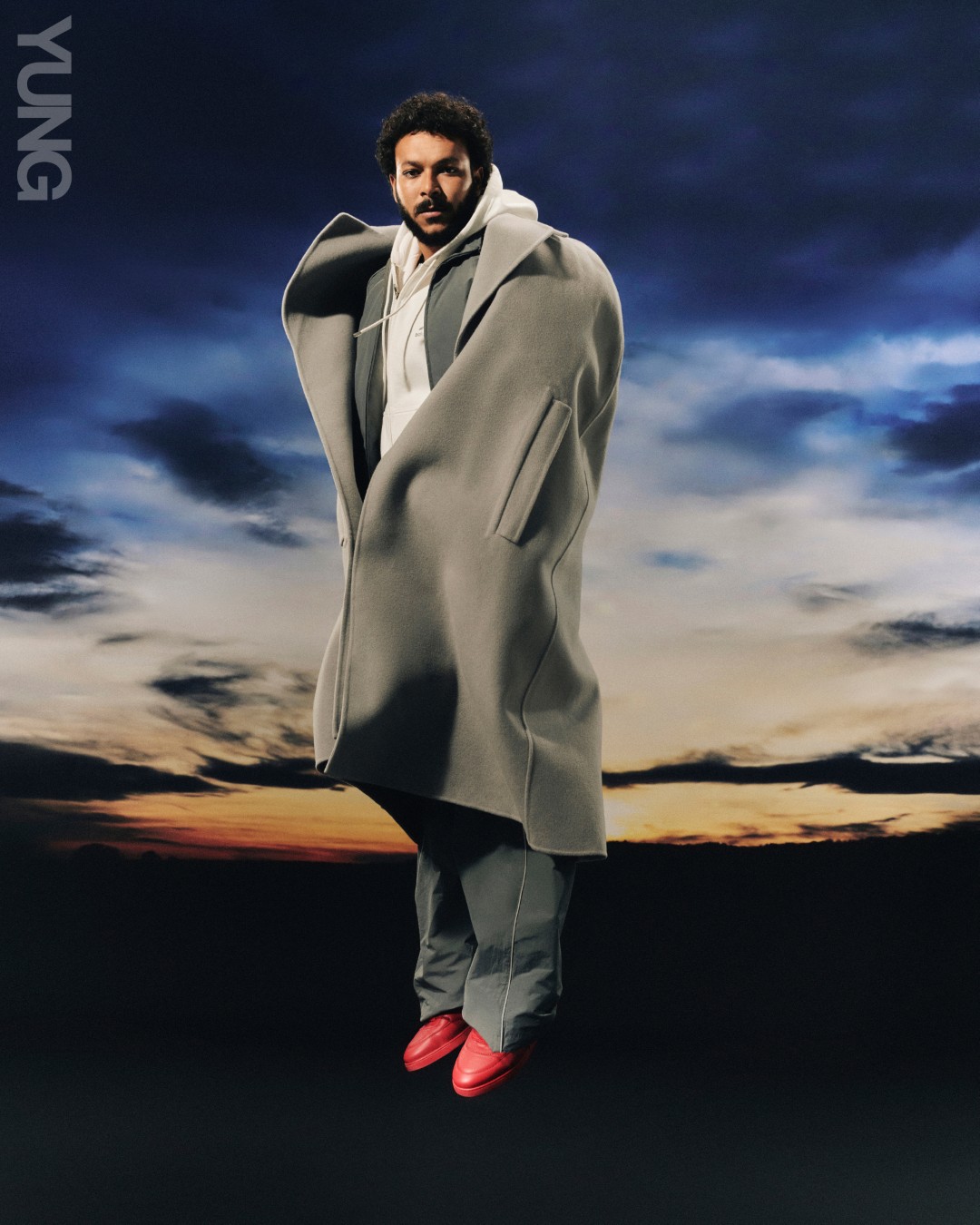
The music has to arrive from the life being lived around it. He cites Michael Jackson, then turns the lesson back into something plain and portable. “You have to live and enjoy and just be grateful for it. Vocally grateful for it. If you can’t change it, smile about it.”
Upon initially hearing this, you might mistake it for ease. Or even a form of spiritual bypassing. But it is neither of these is. It is practice. A kind of moral discipline that is rooted in a deep faith and an active trust in God.
“Faith is what makes joy present,” he says. “Once you have faith in God and you understand that I want money for good reasons. I want money to make my family happy. I want money to do the good things in life and do the good deeds and be the one who is able to help. Without myself in it. It’s just nature giving nature and life giving life. It’s not you in between.”
There is the ego question, answered without the word ego. Success, in this frame, becomes dangerous when the self appoints itself as source. Money, fame, music, opportunity, generosity – none of it begins or ends with him. “Once you remove yourself from being the middle man,” he says, “without you it was going to happen. Once you feel that. Once you forget about tomorrow. Once you forget about your past. Keep your battles inside. Say less when you feel bad. Stop nagging. Stop bugging. Stop tripping. All you need to do is just live your life and that’s it.”
The advice is blunt – almost comically so. Stop nagging, bugging and tripping. Then suddenly, again, the spiritual undertow: remove yourself from the middle. Let nature give nature. Let life give life.
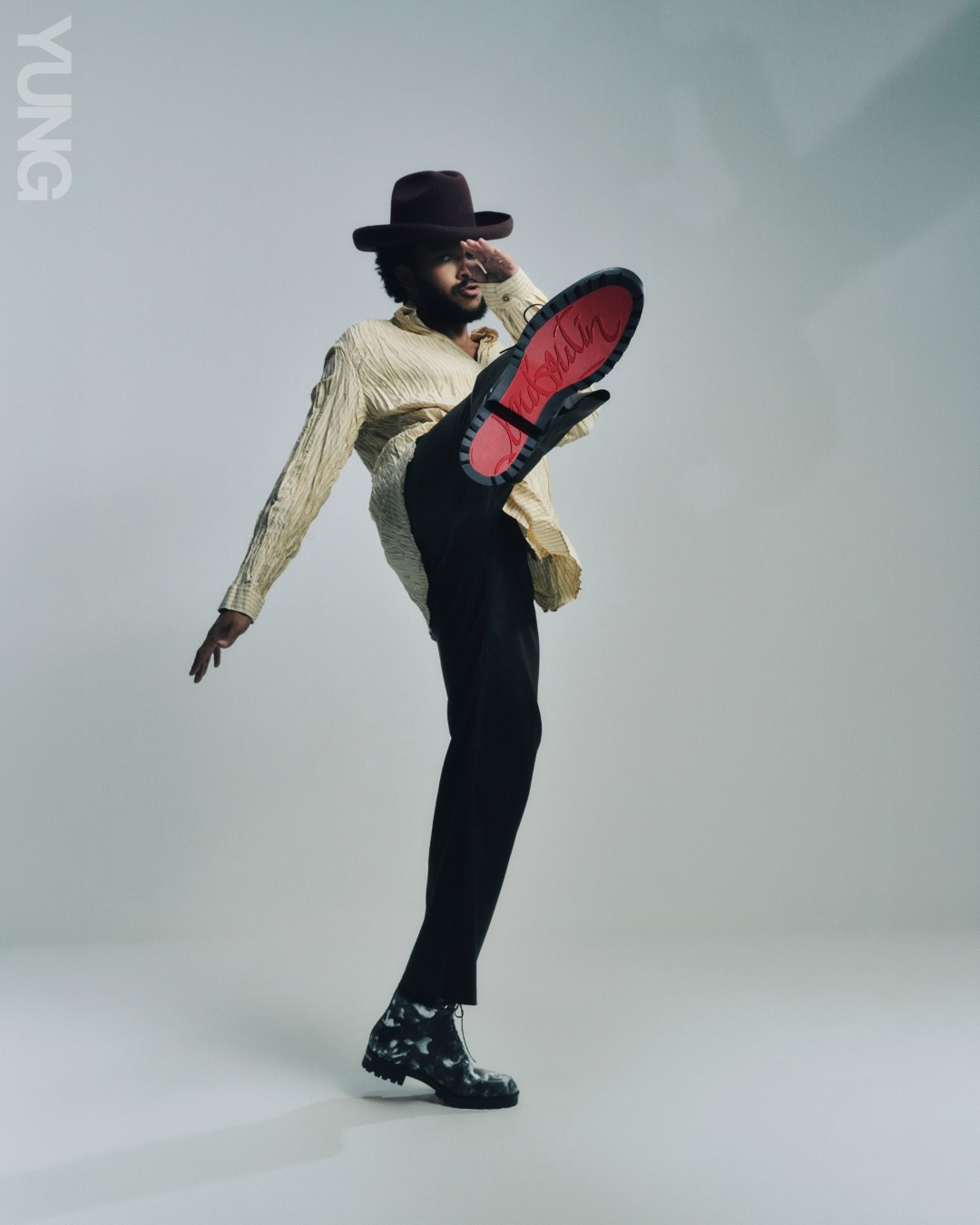
This is why he can feel, in the same breath, like a superstar and an ordinary man. He knows he is inside the machine. He is aware of the temptations of money and image. What keeps him from flattening might be the same thing that continues pulling him back to the sea: contact with something larger and less impressed by him.
At the end of the interview, after all the talk of Arabic music and fear and surrender and the city and God and old selves, he says, “I was living life in a very different way. The morals are very different from what I’m living today.” Then: “Flowing with it is way better than fighting it.”
Flowing. Of course. The word was there the whole time.
He flows with old selves by accepting them. He flows with Arabic music by going deeper into it. He flows with success by refusing to treat himself as its origin. He flows with marriage by recognizing the false glamour of unanchored freedom. He flows with creative blocks by stopping the hard chase and living until the song has something to come from. He flows with water because water, more than anything, seems to return him to proportion.
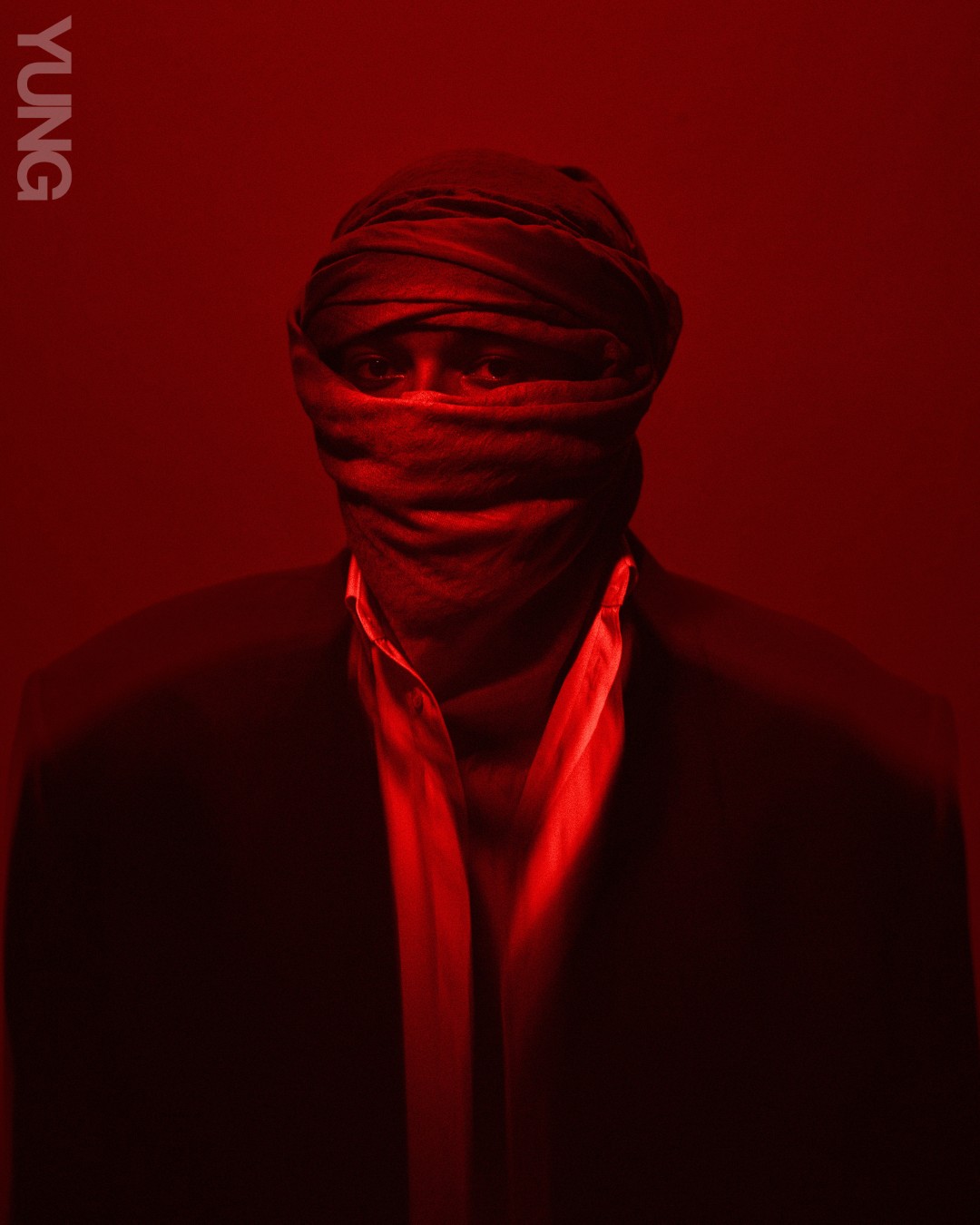
When I asked what he wanted more time for, he did not say studio time or sleep or family, though family is everywhere in the answer. He said, “beach time.”
By then, it no longer sounded like leisure. It sounded like maintenance and devotion and tuning. A way to keep the instrument clean. A body washed back into feeling. A mind clear enough to say something true and make people want to listen.
For more stories of music from across the region, visit our dedicated archives and follow us on Instagram.